

Even with the 140% requirement waived, forced liquidation can still proceed: What account-specific conditions apply at each brokerage?
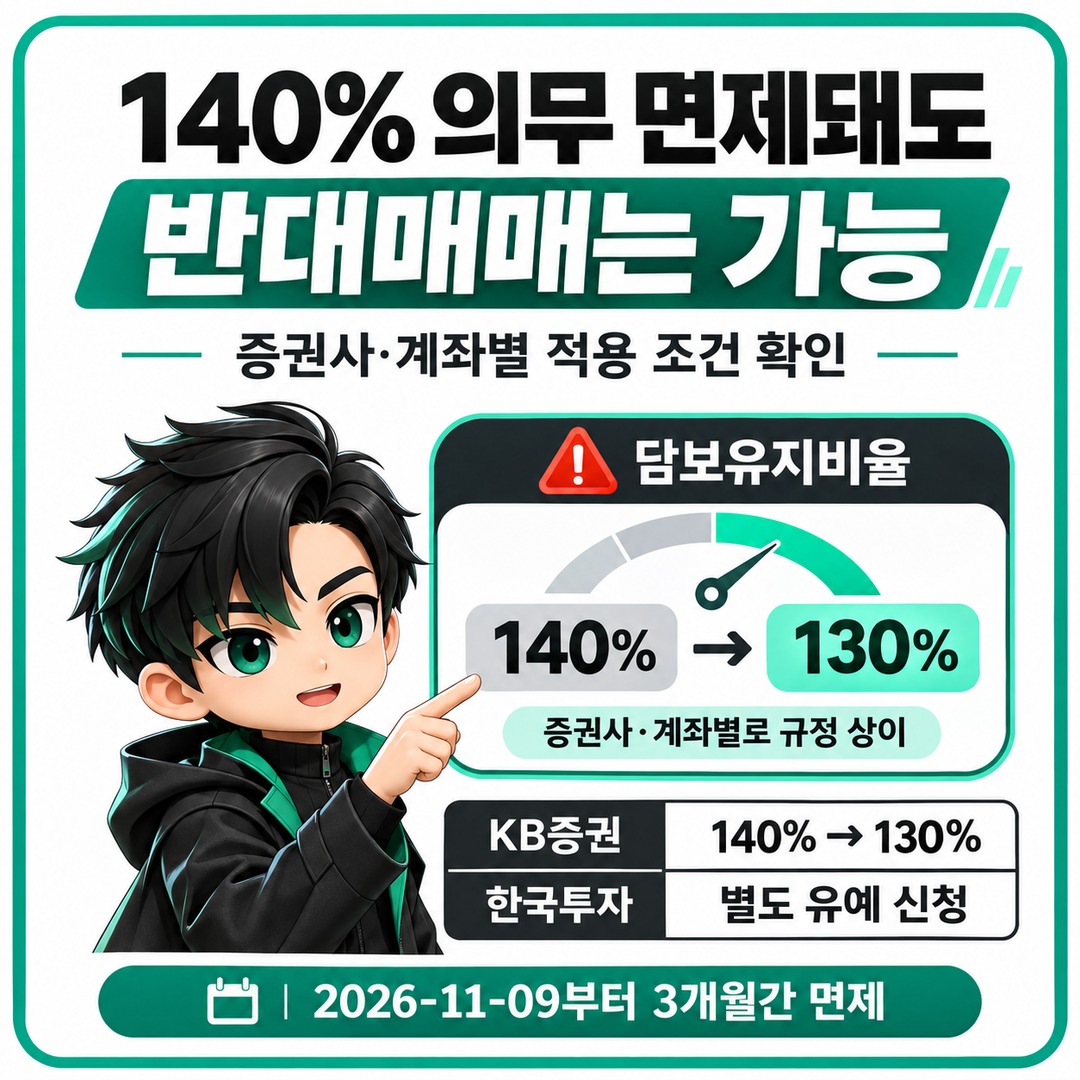
From 2026-11-09, brokerages were temporarily exempt from the obligation to maintain the 140% collateral ratio for margin loans for 3 months. However, forced liquidations for individual investors are not automatically suspended across the board. How each brokerage changes its maintenance ratio, and whether a separate deferral request is required, determine how individual accounts are handled.
In particular, if your account has already received a collateral shortfall notice or is scheduled for forced liquidation on the next business day, do not rely on the government announcement alone and simply wait.
Waiving the 140% maintenance requirement is different from banning forced liquidations for individual investors
The key point of this measure is not to ban forced liquidations for investors across the board, but to temporarily waive the obligation imposed on securities companies to maintain the collateral ratio.
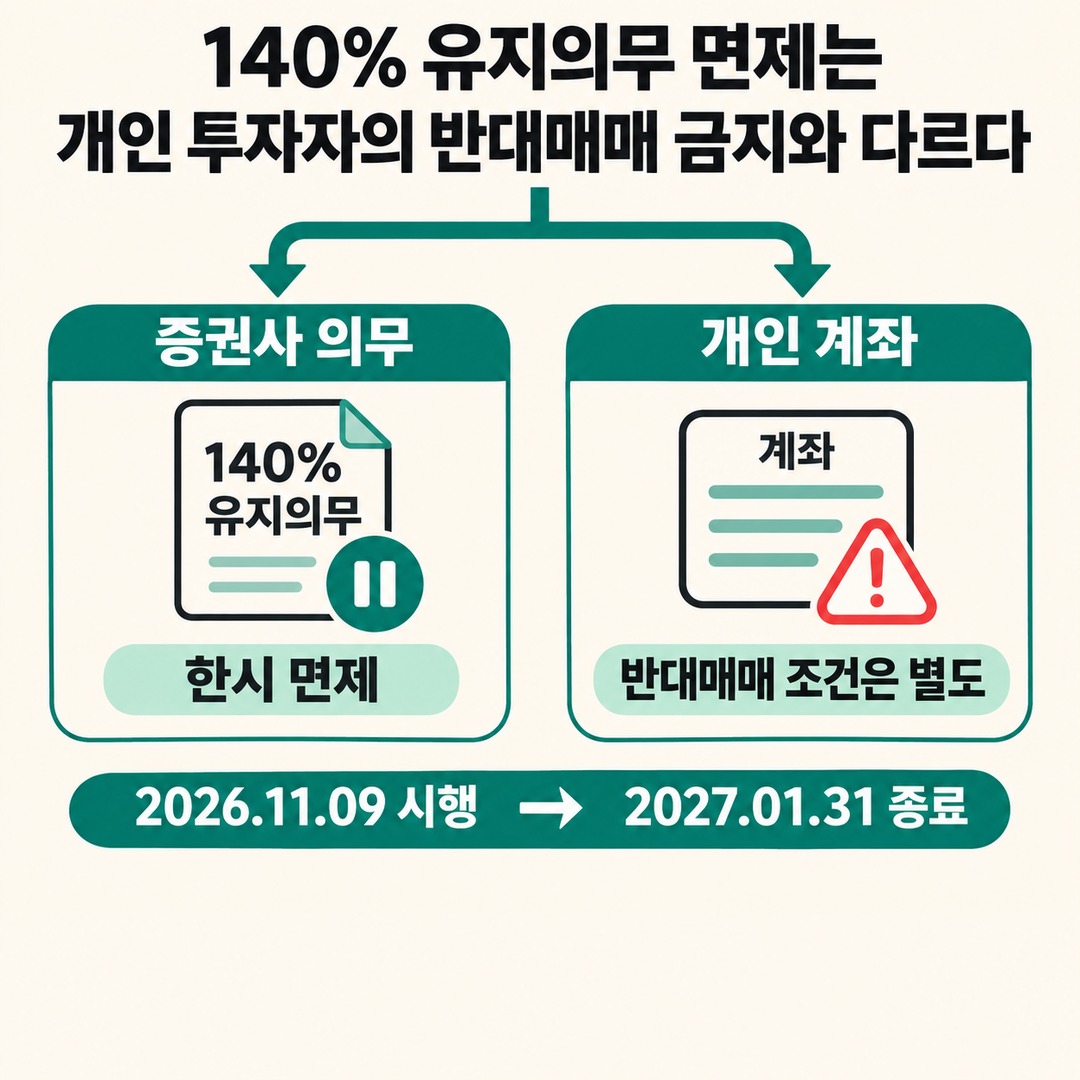
According to the results of the joint market-situation review meeting announced by the 2026-11-06 Financial Services Commission, brokerages are exempt from the obligation to maintain the 140% collateral ratio for margin loans for 3 months starting November 9.
The applicable period announced by the Financial Supervisory Service and the Korea Financial Investment Association is as follows.
| Category | Details |
|---|---|
| Effective date | 2026-11-09 |
| End date | 2027-01-31 |
| Applicable requirement | Securities companies' obligation to maintain collateral ratios for margin lending |
| Previous requirement | 140% |
| Change | Temporary exemption from brokerages’ maintenance obligation |
There is an important distinction here.
Exempting 140% as a regulatory maintenance obligation and removing the forced-liquidation conditions for my account are two different matters.
Based on this measure, brokerages may adjust their own collateral maintenance ratios or operate a separate forced-liquidation grace-period program.
Investors should therefore check the actual changes made by the brokerage they use.
The implementation date and applicable period can be confirmed in the Financial Services Commission’s official announcement, 2026-11-06, and in Yuanta Securities’ notice about the Financial Supervisory Service measure.
Why the results differ by brokerage even though 140% is exempted
The key point to watch in this measure is that each brokerage may apply it differently.
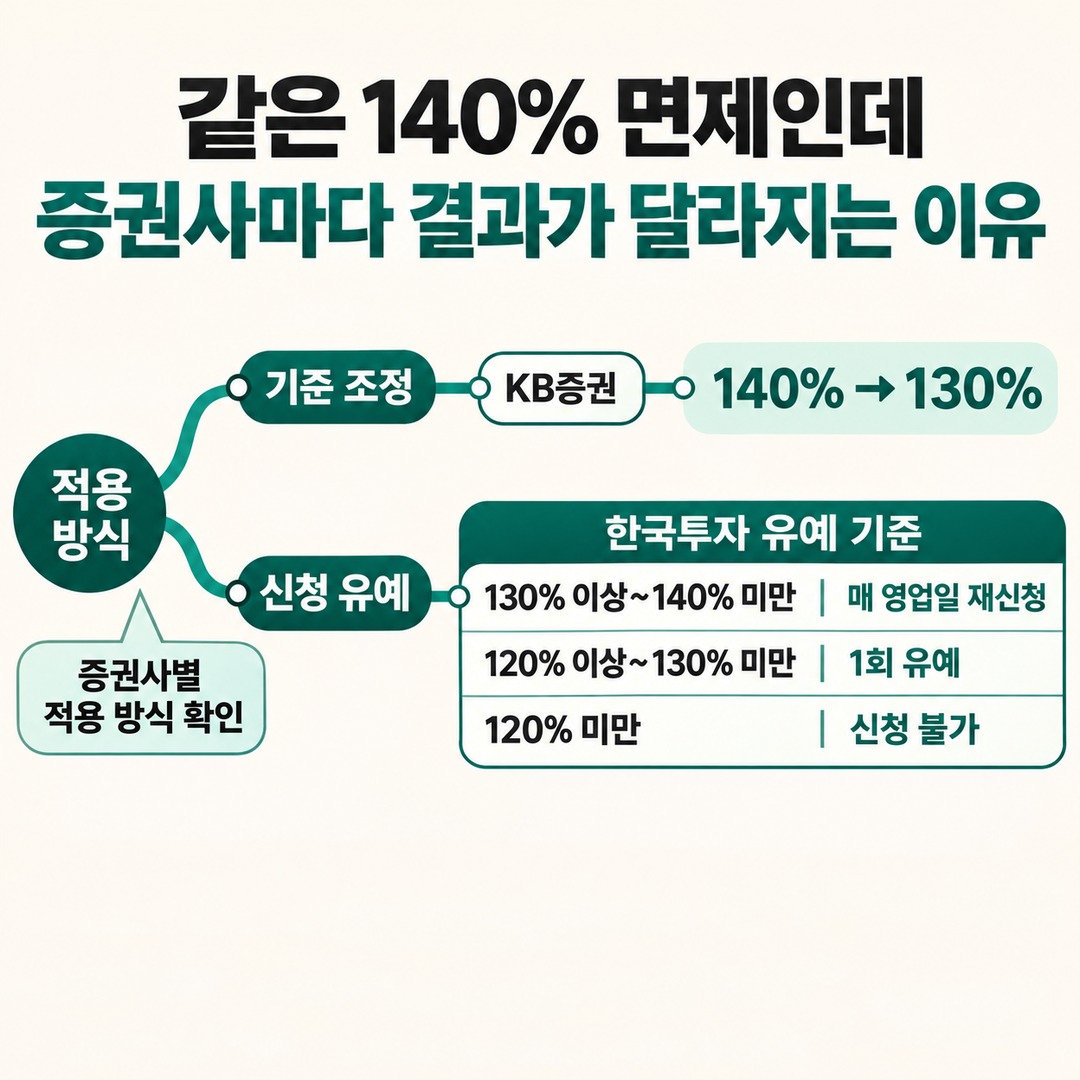
November 6–9, 2026 The published measures from individual brokerages show two main approaches.
Lowering the collateral maintenance ratio itself
Granting a grace period for a set time if customers subject to forced liquidation apply separately
The two approaches have different effects for investors in practice.
KB Securities changes from 140% to 130%
In a 2026-11-06 notice, KB Securities said it would temporarily change the collateral maintenance ratio for credit and loan products from 140% to 130%.
The change applies from 2026-11-09, based on the forced-liquidation date, until a separate notice is issued.
However, the change does not cover every product.
Collateral maintenance ratio for credit and loan products: 140% → 130%
Overseas stock loans: excluded from the change
CMA demand deposit collateral loans: excluded from the change
Method for calculating the collateral shortfall: unchanged
Forced-liquidation procedure: unchanged
In other words, lowering the threshold to 130% does not mean forced liquidations are prohibited for accounts below 130%.
KB Securities stated that it would not change the method for calculating collateral shortfalls or the forced-liquidation procedure.
Korea Investment & Securities requires a separate application
Korea Investment & Securities announced a temporary grace period for forced liquidations resulting from collateral shortfalls.
According to the brokerage-specific operating details reported by Yonhap on 2026-11-06, the conditions differ as follows.
| Collateral ratio at market close | Conditions for requesting a grace period |
|---|---|
| 130% or higher and below 140% | Reapply on each business day |
| 120% or higher and below 130% | 1 grace period |
| Below 120% | Grace-period application not allowed |
These conditions apply to Korea Investment & Securities’ specific grace-period program; they are not a standard shared by all brokerages.
Even if you qualify for a grace period, forced liquidation may proceed if you miss the application procedure. Check the actual application window and submission method.
Kiwoom Securities also announced a separate temporary grace period
Kiwoom Securities also posted a notice about a temporary grace period for forced liquidation due to collateral shortfalls on credit and loan products on 2026-11-06.
However, the notice text currently available does not specify the detailed conditions, so you should not assume that another brokerage’s application requirements also apply to a Kiwoom Securities account.
How much difference does it make in practice when the collateral maintenance ratio is lowered from 140% to 130%?
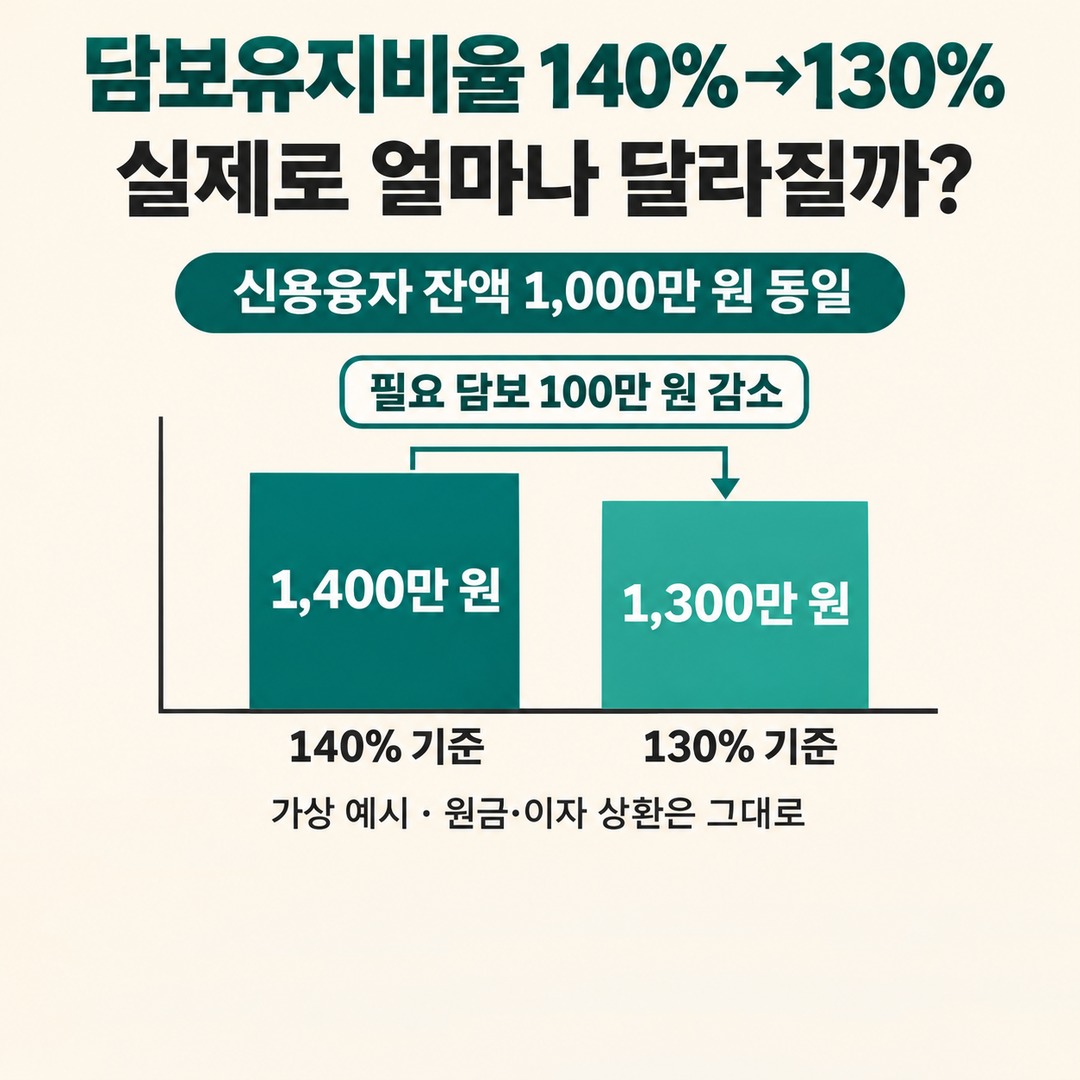
A lower collateral ratio reduces the required collateral amount. It does not reduce the loan balance itself.
A hypothetical account can help illustrate the difference.
Hypothetical example · Author’s calculation
Assume the credit-financing balance is KRW 10,000,000 and the collateral maintenance ratio changes from 140% to 130%.
| Item | At 140% | At 130% |
|---|---|---|
| Credit-financing balance | KRW 10,000,000 | KRW 10,000,000 |
| Required collateral amount | KRW 14,000,000 | KRW 13,000,000 |
| Difference | - | KRW 1,000,000 |
The calculation is as follows.
140%: KRW 10,000,000 × 1.4 = KRW 14,000,000
130%: KRW 10,000,000 × 1.3 = KRW 13,000,000
Reduction in required collateral: KRW 1,000,000
Even for the same account, if the collateral maintenance ratio is changed to 130%, the account will meet the requirement with KRW 1,000,000 less collateral than under the previous 140% threshold.
However, there is an important limitation.
This is a simplified calculation that assumes only the collateral maintenance ratio changes. Actual account results may differ depending on factors such as the collateral valuation of individual securities, the recognized collateral ratio, the type of credit extension, and other conditions.
Also, a lower collateral requirement does not eliminate the obligation to repay principal or interest.
Situations where forced liquidation may still occur after the 140% requirement is exempted
This measure did not eliminate every reason for forced liquidation.
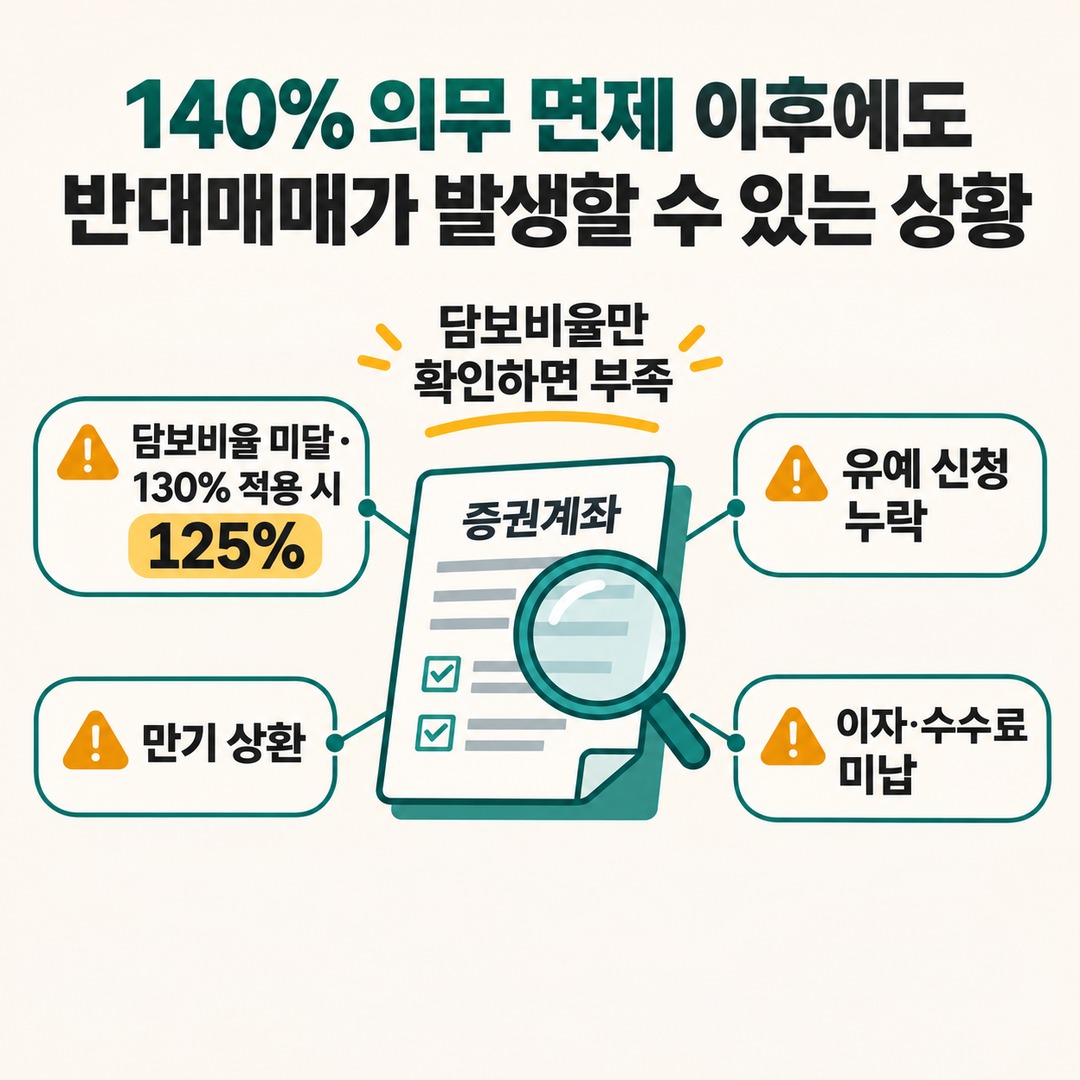
In particular, check the following situations separately.
First, the account may still fall below the revised collateral maintenance ratio.
For example, if a brokerage applies 130% as the new collateral maintenance ratio, an account at 125% may still face a collateral shortfall.
Second, some accounts may require a separate grace-period application.
If a brokerage offers an application-based grace period instead of lowering the ratio for all accounts, the existing procedures may still apply to accounts that have not applied.
Third, there may be an issue with repaying the credit-financing balance at maturity.
Exemption from the collateral maintenance obligation does not mean the loan term is extended or principal repayment is waived.
Fourth, there may be other debt obligations, such as interest or fees.
Under the brokerage’s margin trading terms and the conditions for each product, separate circumstances such as missed payments or an overdue balance may lead to forced liquidation.
Therefore, do not assume your account is safe based only on the collateral ratio.
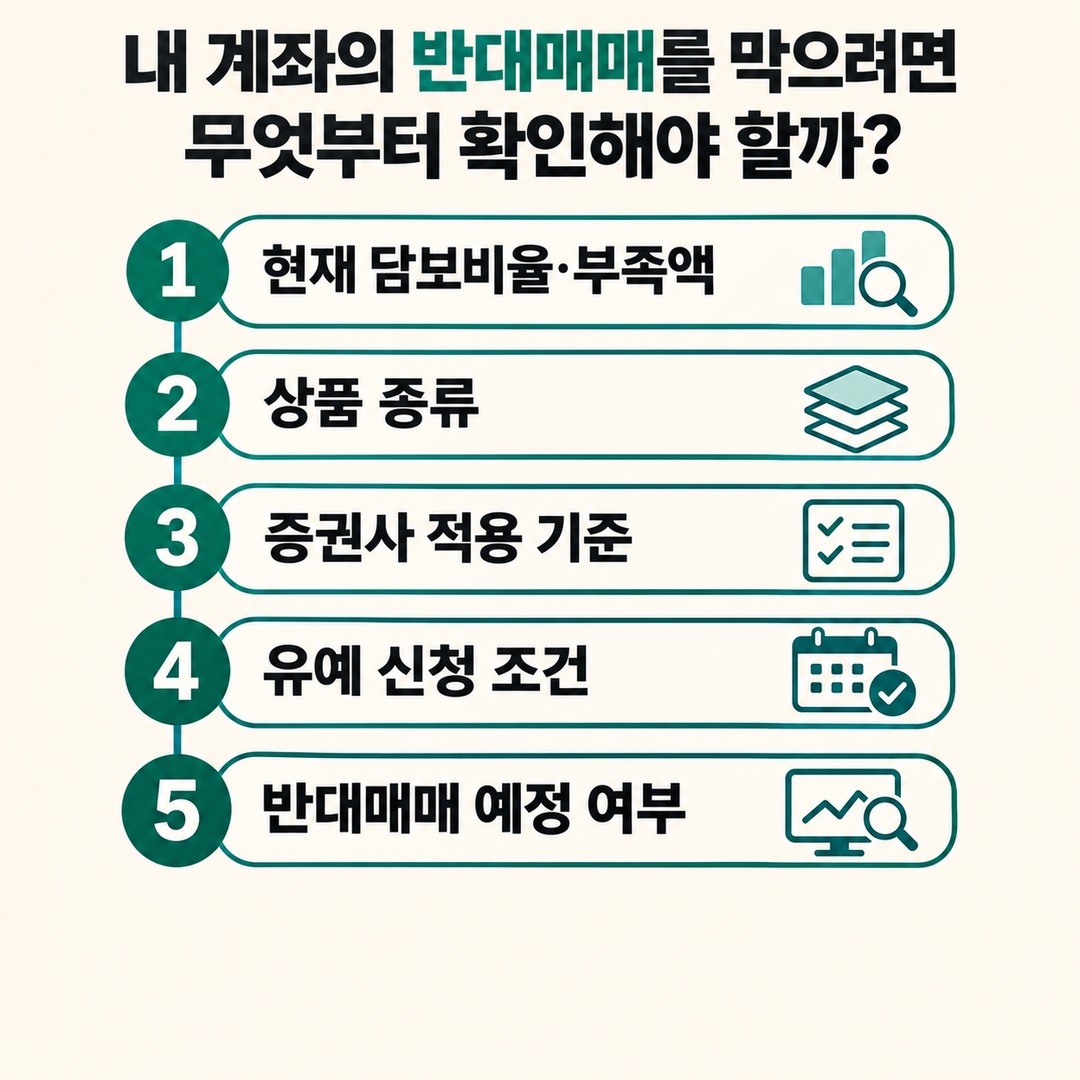
What should I check first to prevent forced liquidation of my account?
If you have already received a collateral-shortfall alert, it is best to check the following in order.
1. Check your current collateral ratio: In MTS or HTS, check your account’s actual collateral ratio and the collateral shortfall amount.
2. Check the product type: Determine whether it is domestic stock credit financing, a stock-backed loan, or an overseas stock-related loan.
3. Check the revised threshold: Confirm the collateral maintenance ratio applied by your brokerage since November 9.
4. Check whether you need to apply for a grace period: Confirm whether it applies automatically or requires a separate application, and check the number of applications allowed and the application window.
5. Check whether forced liquidation is scheduled: Contact customer service directly to ask whether your account has already been classified as subject to forced liquidation.
In particular, if you have been notified that forced liquidation is scheduled for the next business day, do not simply wait after checking the notice on the brokerage’s website.
Ask the brokerage specific questions such as these.
Does the revised collateral maintenance ratio apply to my account now?
Does this measure apply to a collateral shortfall that has already occurred?
Are accounts already scheduled for forced liquidation eligible for a grace period?
If I need to apply separately, what is the application deadline?
How will my account be handled if the collateral ratio falls further during the grace period?
Checking these five points helps you understand not only the government’s 140% exemption announcement, but also the conditions that apply to your actual account.
Check when this measure ends, on 2027-01-31
This measure is not a permanent change to the collateral maintenance ratio.
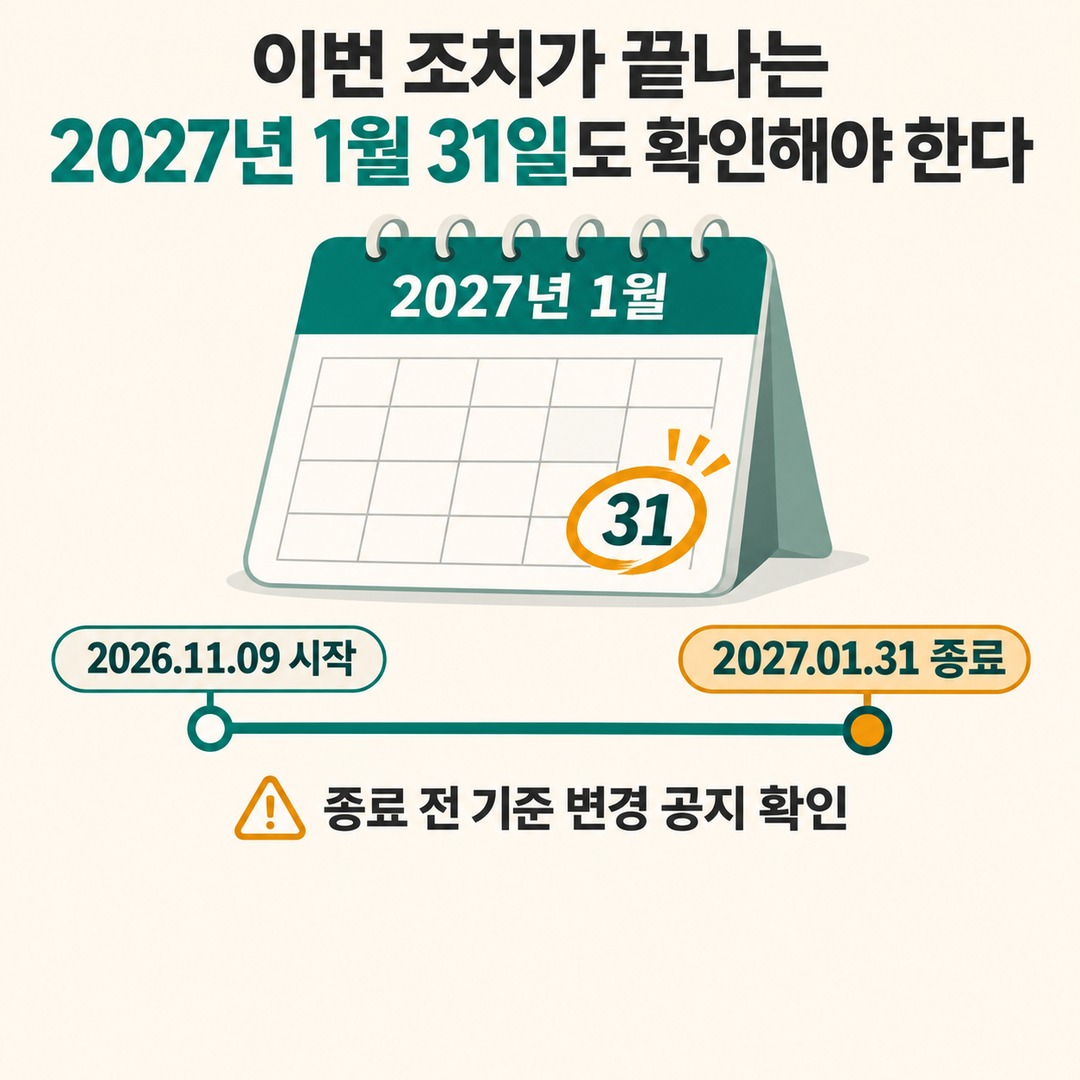
The temporary exemption period announced by the Financial Supervisory Service and the Korea Financial Investment Association runs from 2026-11-09 to 2027-01-31.
Even if a brokerage independently applies a relaxed threshold such as 130%, check when it ends and review any notices about changes.
KB Securities said that after the temporary operating period ends, it may reinstate the 140% collateral maintenance ratio, which could result in a collateral shortfall.
Therefore, if the collateral ratio has not recovered during the grace period or the share price has fallen further, a new collateral shortfall may arise after the period ends.
A temporary delay in forced liquidation does not mean the risk to the account has been resolved.
In conclusion, exemption from the 140% maintenance obligation does not automatically suspend forced liquidation.
This measure is a temporary regulatory relaxation that allows brokerages to manage collateral maintenance ratios more flexibly.
Whether forced liquidation actually occurs depends on each brokerage’s revised threshold, grace-period application requirements, and the account’s collateral ratio and repayment status.
If you have already been notified that forced liquidation is scheduled, first contact your brokerage to confirm whether the measure applies to your account and whether you can receive a grace period.
※ This article is for reference to help readers understand market trends and is not an investment recommendation for any specific security or asset. You are responsible for your own final decisions and investments.