

2026 Small Business Employment Insurance Premium Subsidy: When Will It Be Deposited? How to Calculate the Refund Date, Approximately 2 Months After Payment

The 2026 small business employment insurance premium subsidy is not deposited immediately after application. Business owners must first pay their employment insurance premiums, and the subsidy is refunded to their bank account approximately 2 months after payment is verified. If your application has been approved but the money has not arrived, check the premium payment date and whether payment has been verified before focusing on the application date.

In particular, seeing that 50~80% of the monthly premium is subsidized may lead people to assume that the discount is applied directly to their insurance bill from the beginning.
However, the actual process is different. Because business owners pay the full premium first and receive a subsidy afterward, they need to distinguish between their monthly cash outflow and their final out-of-pocket cost.
*Information verified as of 2026-10-13, based on the Ministry of SMEs and Startups' 2026 official program announcement.*
1. How Many Days After Applying Will the Employment Insurance Premium Subsidy Arrive?
The 2026 small business employment insurance premium subsidy program operates on a reimbursement basis after premium payment has been verified. The official announcement states that the subsidy is refunded approximately 2 months after the premium is paid.
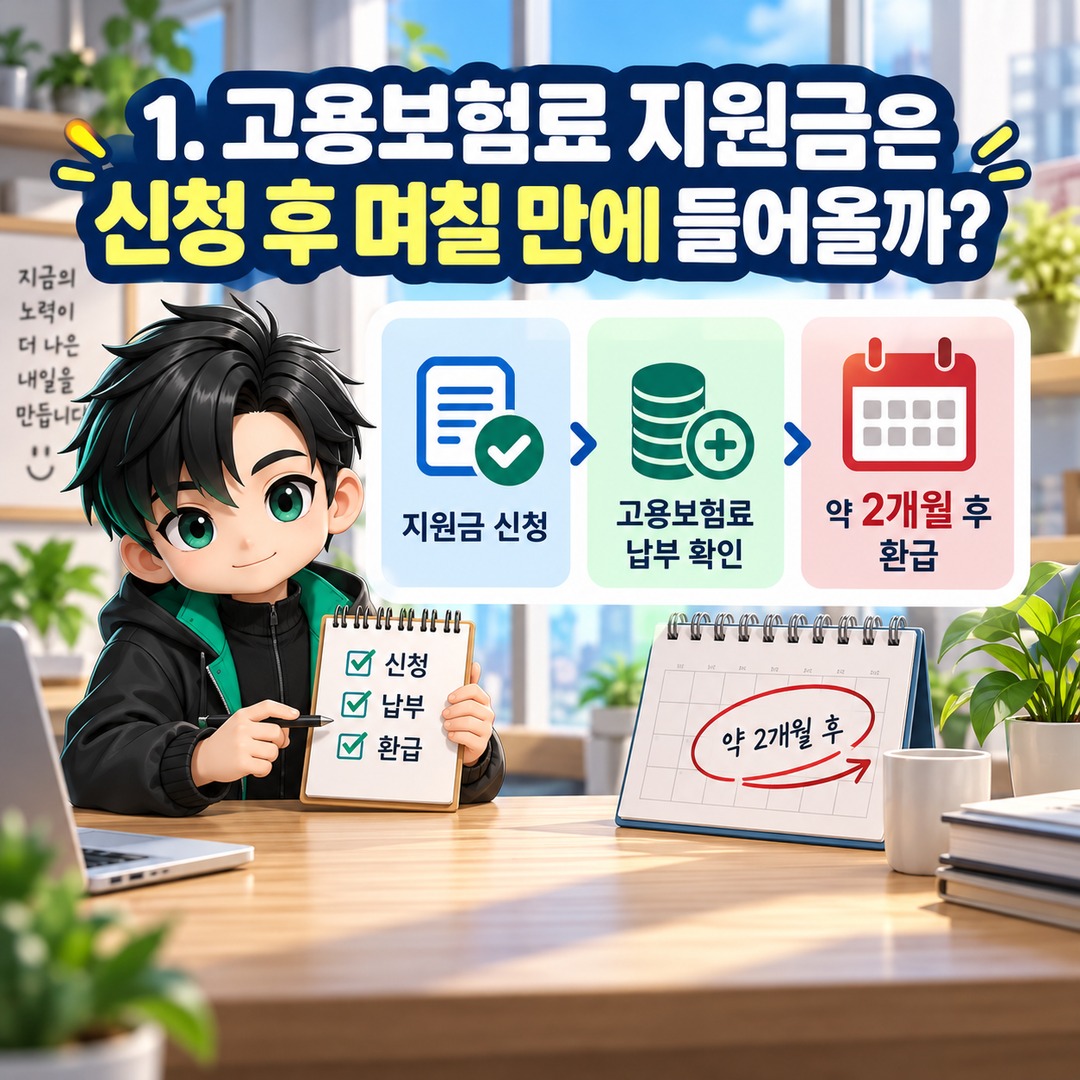
Importantly, this does not mean the money will be deposited exactly 60 days after the application date.
The official announcement provides the following example.
| Category | Example From the Official Announcement |
|---|---|
| Premium coverage month | January 2026 |
| Statutory payment deadline | 2026-02-10 |
| Expected refund date | Around 2026-03-23 |
| Payment method | Bank transfer |
In this example, if the premium for January is paid by February 10, the subsidy is expected to be refunded around March 23.
There are 41 days between February 10 and March 23. Calculating from the payment date on the calendar, this represents approximately 6 weeks.
This calculation was made by the author using the example in the official announcement. It does not mean that the same refund date applies to every applicant.
Therefore, before concluding that a subsidy payment is delayed, check both the actual premium payment date and the processing status.
2. If You Pay KRW 40,950 in Insurance Premiums, How Much Will You Actually Get Back?
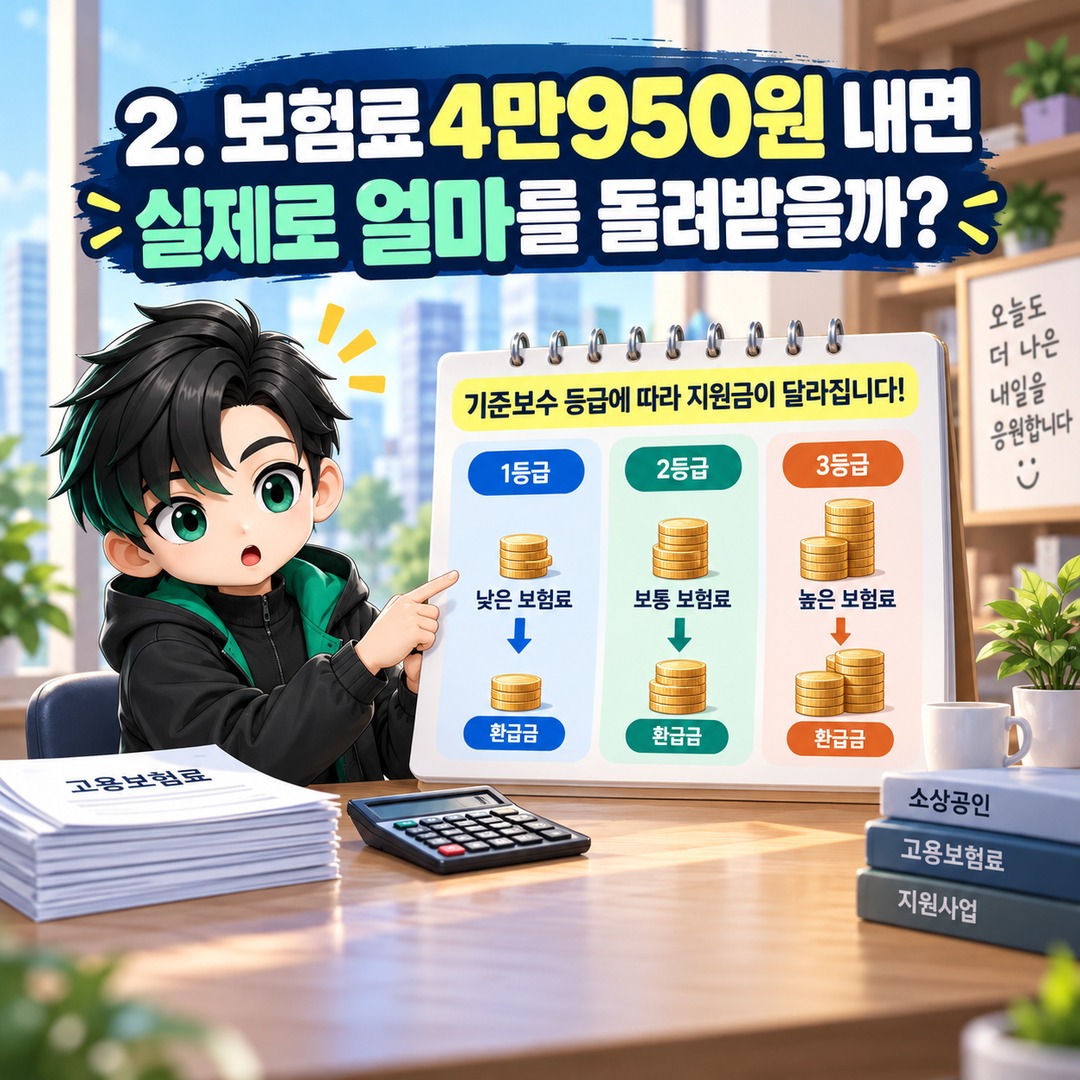
The 2026 small business employment insurance premium subsidy varies according to the standard remuneration grade selected by the policyholder.
Standard remuneration is not a self-employed person's actual sales revenue or net profit. It is the amount used to calculate employment insurance premiums.
The subsidy rates are as follows.
Grades 1~2: 80%
Grades 3~4: 60%
Grades 5~7: 50%
Comparing monthly premiums with the amounts payable after reimbursement makes it easier to understand the actual financial burden.
| Grade | Monthly Premium | Effective Cost After Refund |
|---|---|---|
| Grade 1 | KRW 40,950 | KRW 8,190 |
| Grade 2 | KRW 46,800 | KRW 9,360 |
| Grade 3 | KRW 52,650 | KRW 21,060 |
| Grade 4 | KRW 58,500 | KRW 23,400 |
| Grade 5 | KRW 64,350 | KRW 32,175 |
| Grade 6 | KRW 70,200 | KRW 35,100 |
| Grade 7 | KRW 76,050 | KRW 38,025 |
For example, if a Grade 1 policyholder pays a monthly premium of KRW 40,950, they receive a refund of KRW 32,760, equivalent to 80%.
The calculation is as follows.
KRW 40,950 - KRW 32,760 = KRW 8,190
In other words, the final out-of-pocket cost is KRW 8,190, but KRW 40,950 is required when paying the insurance premium.
The key point is that policyholders must cover the full premium until the subsidy is deposited.
3. Why Has the Subsidy Not Arrived?
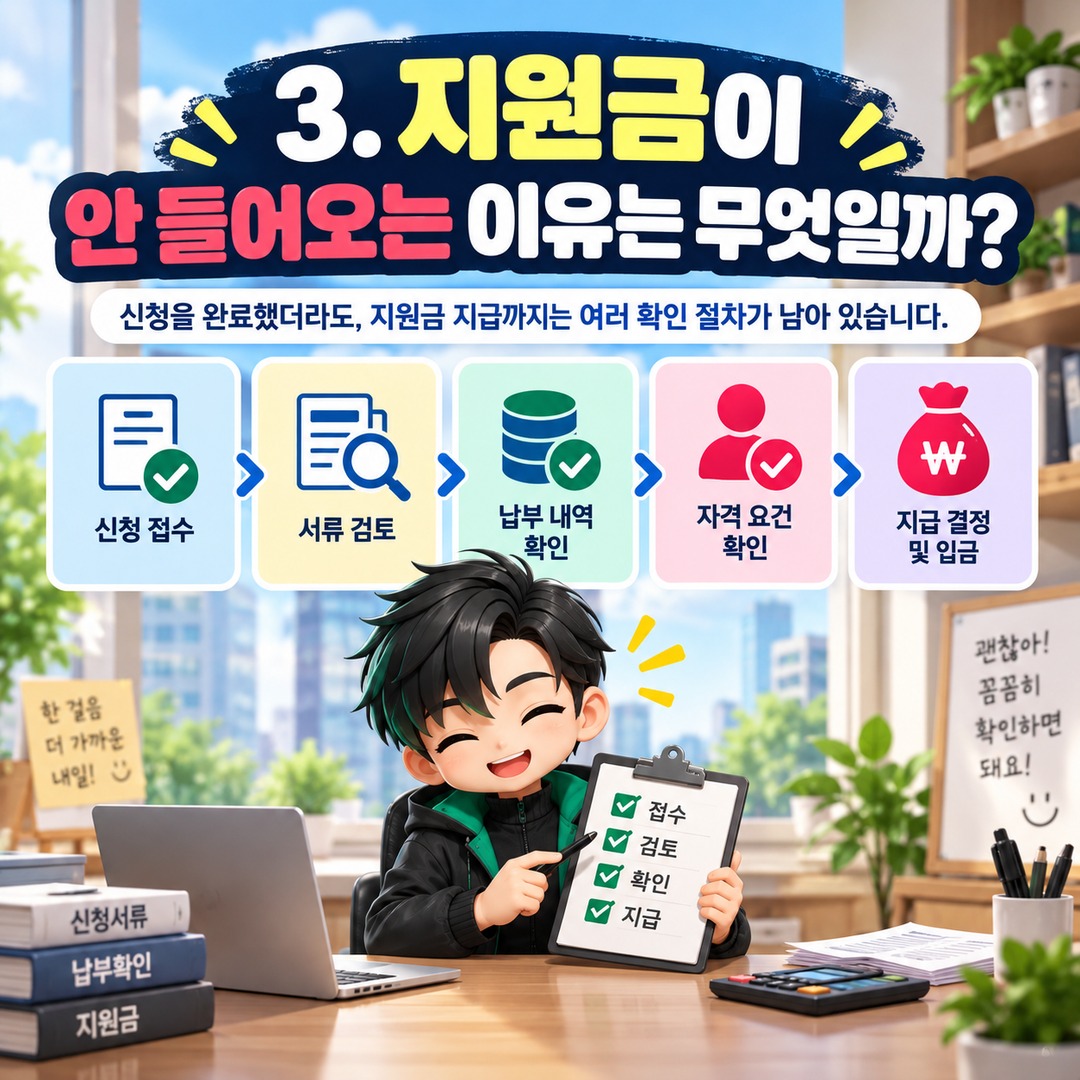
Even after an application has been submitted, several verification steps remain before the subsidy can be paid.
According to the Ministry of SMEs and Startups' announcement, the process is as follows.
① Apply for Employment Insurance Premium Support
Verification of small business eligibility and application details.
② Pay Employment Insurance Premiums
The policyholder pays the monthly premium first.
③ Verify the Amount Paid
Payment information is verified between the Korea SMEs and Startups Agency (SEMAS) and the Korea Workers' Compensation and Welfare Service (COMWEL).
④ Receive the Subsidy Refund
The subsidy is transferred to the designated bank account based on the verified premium payment.
If the money has not arrived, it is important to distinguish between the following situations.
First, the Insurance Premium Has Not Yet Been Paid.
The subsidy is calculated based on premiums actually paid. If an applicant has submitted an application but has not paid the premium, the amount eligible for reimbursement cannot be verified.
Second, the Premium Has Been Paid, but Verification Is Still Pending.
Premium payment and reimbursement do not occur simultaneously. There is a time lag between verifying payment information and disbursing the subsidy.
Third, Application Eligibility or Supporting Documents Require Additional Verification.
According to the official announcement, support may be suspended if application details or small business eligibility documents contain information that differs from the facts.
It is therefore important to determine whether the payment is simply pending, whether premium payment information has not yet been verified, or whether there is an eligibility issue.
4. Will You Lose the Subsidy If You Pay Your Premium Late?
Paying an insurance premium after the deadline does not automatically mean that all subsidy eligibility is lost.
The 2026 official announcement explicitly provides an exception: Employment insurance premiums that remain unpaid after the support period begins may still qualify for support if they are paid later.
However, premiums incurred before the support application must be treated separately.
| When the Premium Was Incurred | Subsidy Eligibility |
|---|---|
| Premiums for months before the support application | Retroactive support unavailable |
| Premiums paid normally for the application month and subsequent months | Eligible if requirements are met |
| Premiums incurred after support begins and paid after becoming overdue | Support available after payment verification |
For example, consider a business owner who applies for support in July 2026.
If the premium for July is paid normally, it may qualify for support.
However, the premium for June, which was incurred before the application, does not qualify even if it is paid in July.
If the premium for July was initially unpaid but later settled, eligibility can be checked because the premium was incurred after the support period began.
The important factor here is not simply the payment date but the relationship between the month the premium was incurred and the month the support application was submitted.
The actual refund date for overdue premiums may vary depending on payment verification and processing circumstances.
5. Where Can You Check Your Employment Insurance Premium Refund History?
If the subsidy has not been deposited, it is helpful to distinguish between inquiries about employment insurance enrollment and premium payments and inquiries about the premium subsidy program.
Existing employment insurance policyholders can check their subsidy application details through Small Business 24.
Small Business 24
Inquiries about employment insurance premium subsidy applications and processing
1533-0100
Korea Workers' Compensation and Welfare Service
Inquiries about employment insurance enrollment and premium payments
1588-0075
If your subsidy payment is later than expected, preparing the following information before making an inquiry can help.
Month of application for the employment insurance premium subsidy program
Processing status of the subsidy application
Coverage month of the premium for which reimbursement is requested
Actual premium payment date
Refund bank account registered when applying
The exact expected deposit date or reason for withholding payment must be checked individually for each application.
6. Will the Monthly Refund Amount Always Be the Same?
If a policyholder maintains the same grade and pays the same premium normally, the subsidy will be calculated at the same level.
However, if the premium amount or standard remuneration grade changes, the monthly refund amount may also change.
The official announcement also explains that monthly subsidy amounts may vary depending on the actual amount paid and the policyholder's enrollment grade.
In addition, the 2026 support program provides assistance for up to 5 years, equivalent to 60 months.
The maximum of 60 months does not mean that every applicant is unconditionally guaranteed payments for 60 months. Applicants must meet eligibility requirements, maintain their insurance enrollment, and satisfy the program's operating conditions.
The application period is also announced as running from 2026-01-01 until the budget is exhausted, so applicants should check whether applications are still being accepted when they apply.
7. What to Check First If Your Subsidy Payment Is Delayed
The small business employment insurance premium subsidy is not a program that discounts insurance premiums upfront. Instead, it reimburses part of the premiums already paid.
Therefore, if the subsidy has not been deposited, the most efficient approach is to check the following in order.
1. Confirm that the subsidy application was properly received and processed.
2. Confirm that the employment insurance premium for the month eligible for reimbursement was actually paid.
3. Check whether sufficient processing time has passed since payment.
4. If the expected refund date has passed, contact Small Business 24 or the responsible agency.
The Most Important Point Is That the Application Date, the Month the Premium Was Incurred, the Actual Payment Date, and the Refund Date Are All Different.
In the 2026 official announcement's example involving the premium for January, reimbursement is expected around March 23 if payment is made by February 10. This example should not be applied directly to refund dates for other months.
Even if the subsidy arrives late, checking premium payment records and the subsidy application's processing status first can help identify the reason.