

Do Those Born in 2009 Have to Pay National Pension Contributions Every Month After Receiving Support for Their First Payment? No Further Payments Are Required After 1 Month
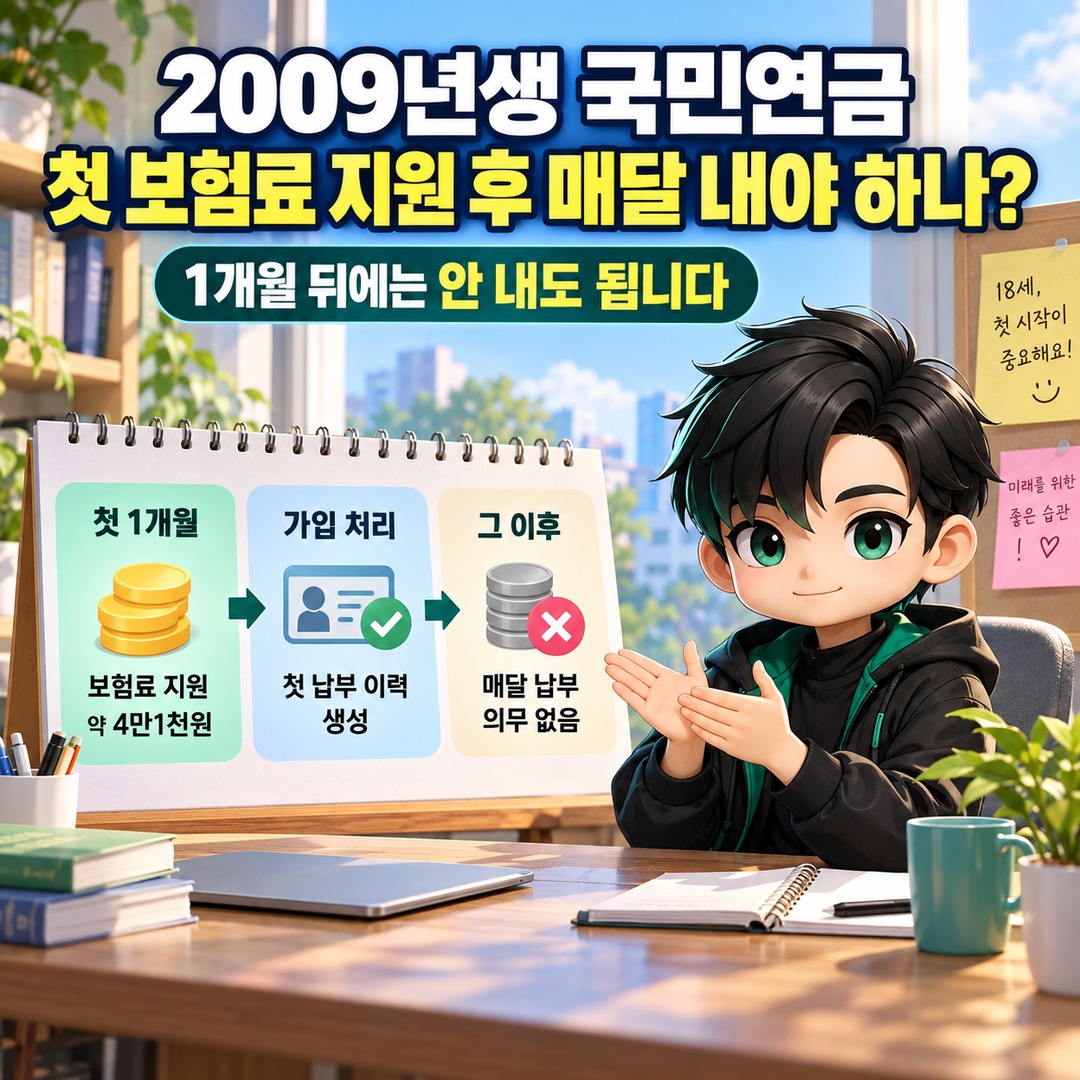
Even if someone born in 2009 receives the 'First Lifetime Pension Contribution Support for Young People,' they are not required to continue paying National Pension contributions from the following month. The National Pension Service explains that recipients are treated as having been enrolled for only the first 1 month, meaning no additional payments are required.
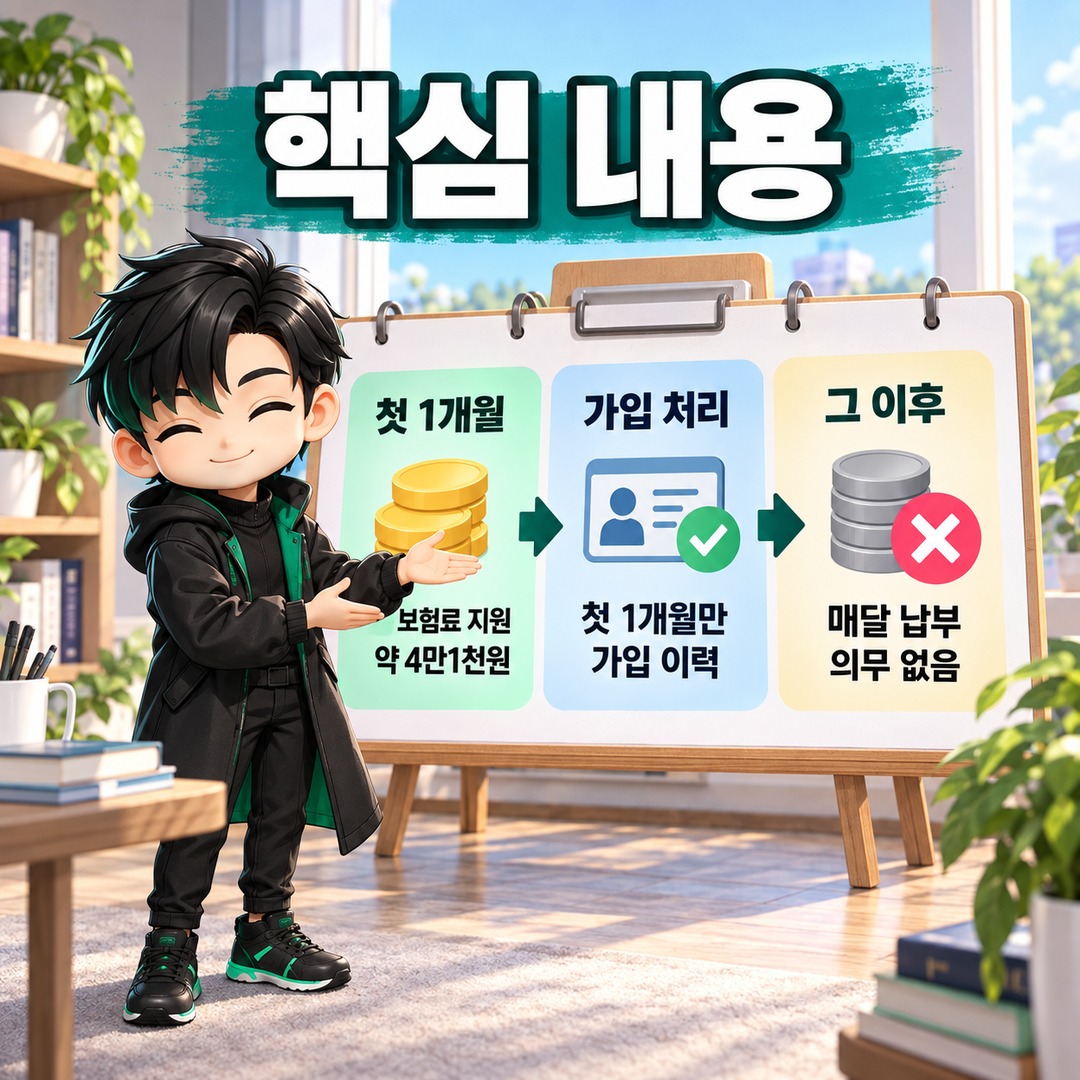
More important than the initial monthly contribution of around KRW 41,000 is establishing a first contribution record at age 18. Subsequent periods without contributions, such as while studying or preparing for employment, do not automatically become overdue contributions that must be paid immediately. If the eligibility requirements are met, those periods may later be counted toward the contribution period through the retroactive contribution system.
Receiving Support for the First Month Does Not Mean Bills Will Keep Arriving From the Second Month
This is one of the most easily misunderstood aspects of the program.
Just because the government pays the first contribution on someone's behalf does not mean that a young person born in 2009 immediately becomes obligated to pay National Pension contributions every month.
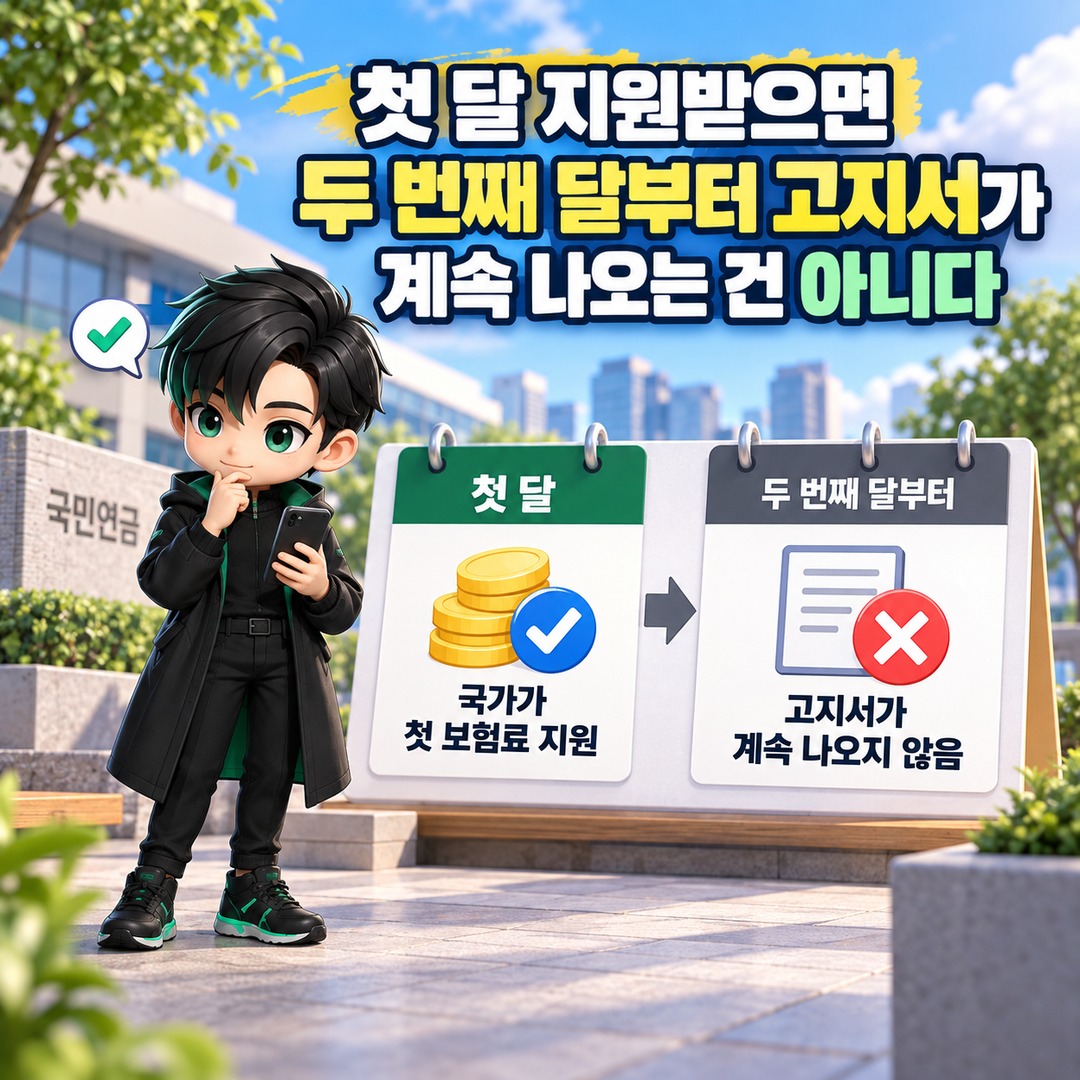
In its published guidance, the National Pension Service addresses the question of whether recipients must continue paying National Pension contributions after receiving this support. It explains that recipients are treated as having been enrolled for only 1 month and therefore do not need to make further payments. Those who wish to continue contributing and extend their contribution period can separately enroll in the National Pension system and make payments.
For example, the process for a student born in 2009 who has no income can be understood as follows.
| When | How It Is Handled |
|---|---|
| First contribution support | Government covers 1 month's contribution |
| Subsequent period without income | No need to continue paying every month |
| If the person wishes to continue enrollment | Contributions can be made after applying for enrollment |
| If the person later becomes enrolled through employment or another reason | General National Pension enrollment rules apply |
| If the person wishes to fill previous gaps | Check eligibility for retroactive contributions |
However, if the person later becomes an employee covered by workplace-based National Pension enrollment or otherwise becomes legally required to participate in the National Pension system, the same rules as those for other regular contributors will apply from that point onward.
The National Pension contribution rate for 2027 is 10%, and for workplace-based contributors, employers and employees each pay 5%.
Why Does the Government Support Only One Month?
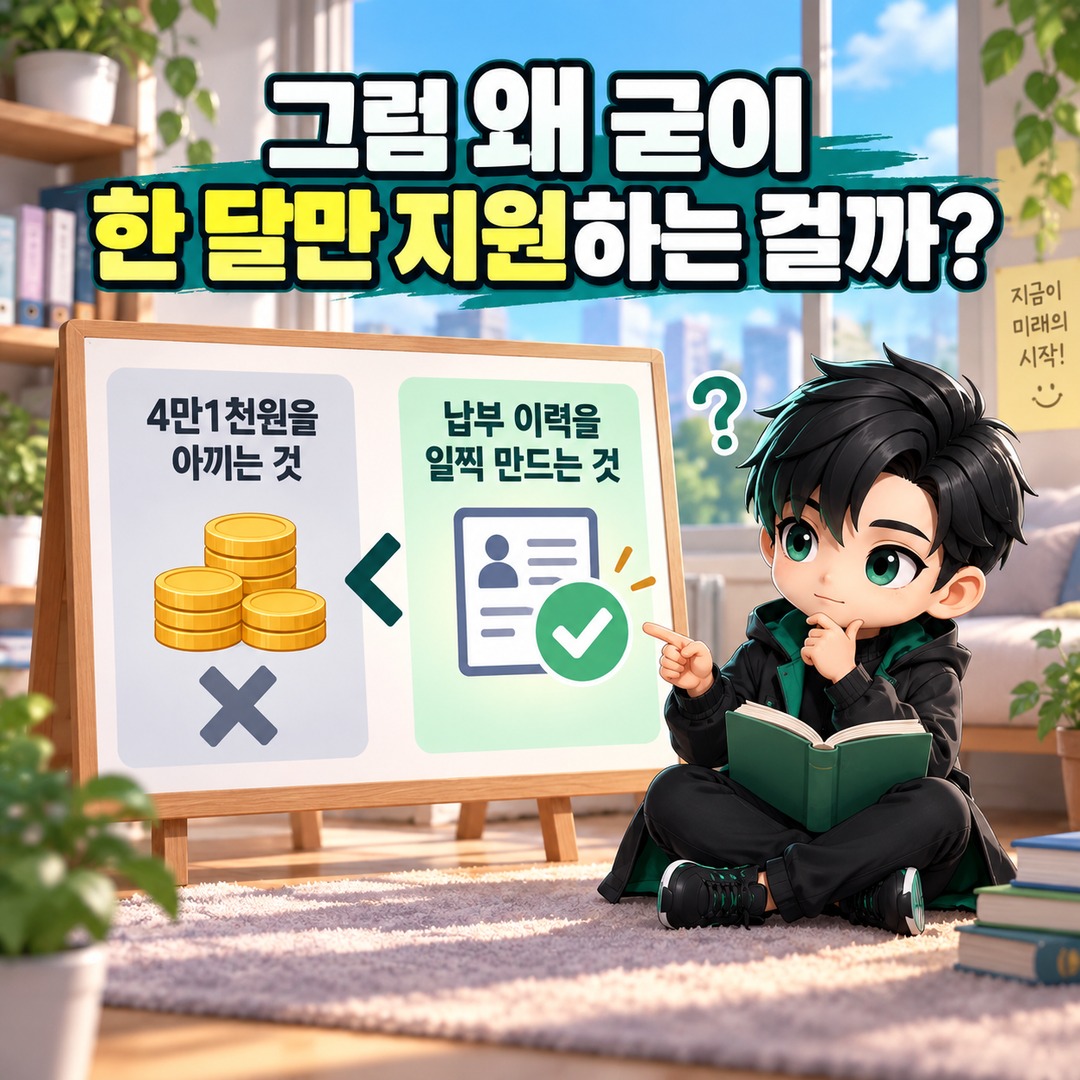
The main purpose is not simply to save KRW 41,000, but to establish a contribution record at an early age.
The minimum standard monthly income applicable from July 2026 through June 2027 is KRW 410,000. Applying the 2027 contribution rate of 10% produces an initial contribution of KRW 41,000. The National Pension Service also currently identifies this amount as the support provided for the first 1 month.
The calculation is as follows.
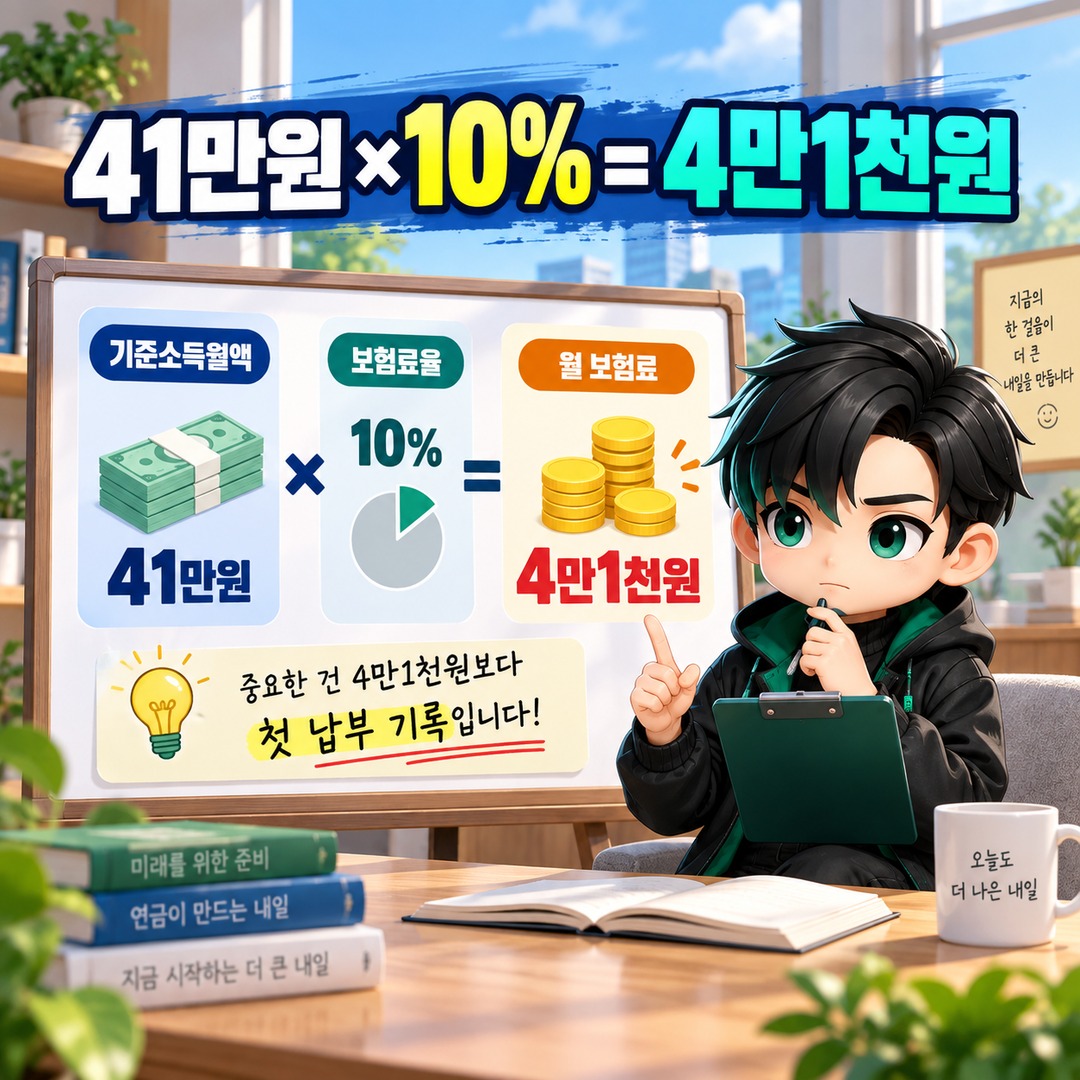
KRW 410,000 × 10% = KRW 41,000
However, the first contribution record is more important in the long term than the KRW 41,000 subsidy itself.
The Ministry of Health and Welfare explained that establishing a contribution record at age 18 can allow individuals to use the retroactive contribution system for periods when they were unable to pay contributions because of education, military service, or similar circumstances.
In other words, this program does not pay monthly contributions on behalf of young people indefinitely. Instead, it is designed to establish a starting point that may allow them to complete additional contribution periods later.
Periods Without Contributions Do Not Automatically Accumulate as Overdue Payments
Some people may worry, 'If I only pay for the first month and stop paying from the next month, won't unpaid contributions keep accumulating?'
A period without contributions for a young person who has no income after receiving the initial subsidy should not automatically be treated as equivalent to overdue monthly contributions.
A university notice explaining the National Pension Service program also states that the gap between the government-supported first month and subsequent enrollment after the person begins earning income is not considered a period of unpaid contributions. It explains that individuals may choose to make payments for that period later.
Therefore, if someone receives the one-month subsidy at age 18 and then has no income for several years while attending university or preparing for employment, it would be incorrect to assume that contributions for those years accumulate like debt and will eventually be billed all at once.
Will Retroactive Contributions Later Still Cost Only KRW 41,000 per Month?
No.
Just Because the Initial Contribution Is KRW 41,000 Does Not Mean the Same Historical Monthly Amount of KRW 41,000 Will Apply to Retroactive Contributions Several Years Later.
According to the National Pension Service, retroactive contributions are generally calculated using the standard monthly income applicable when the retroactive contribution application is submitted and the contribution rate for the month in which the payment deadline falls. The amount is then multiplied by the number of months for which retroactive contributions are being made.
Put simply, the formula is:
Retroactive Contribution Amount = Monthly Contribution Applicable at the Time of Application × Number of Months Being Covered Retroactively
Therefore, the first contribution subsidized by the government at age 18 may differ from the retroactive contribution amount the individual must pay later.
Retroactive contributions are also voluntary. The National Pension Service describes the system as allowing individuals to pay contributions later for eligible past periods and have those months recognized as part of their contribution period. It explicitly states that participation is not mandatory.
Retroactive Contributions Cannot Be Made at Just Any Time
Having an initial contribution record does not mean someone can pay to fill every previous gap whenever they wish, without meeting any conditions.
According to National Pension Service guidance, applicants for retroactive contributions must meet the requirements for currently participating in the National Pension system and paying contributions, such as by reporting income or participating through voluntary enrollment or voluntary continued enrollment. The periods eligible for retroactive contributions must also qualify under the law, such as recognized periods of contribution exemption or exclusion from coverage. A maximum limit also applies.
If the retroactive contribution amount is substantial, individuals can pay it in a lump sum or divide it into up to 60 monthly installments. However, installment payments incur the prescribed interest.
Therefore, it would be incorrect to assume that 'receiving KRW 41,000 in support at age 18 means I can later buy back my entire contribution gap during my 20s at a low cost.'
The first contribution record establishes a foundation for potentially using the retroactive contribution system. The actual eligible periods and amounts must be checked against the individual's enrollment status and the program rules in effect when the application is made.
Three Things People Born in 2009 Should Remember Now
First, people born in 2009 who turn 18 after 2027-01-01 become eligible for the First Lifetime Pension Contribution Support for Young People. The National Pension Service has been accepting advance applications from those born in 2009 since 2026-10-01.
Second, the contribution currently covered by the program is KRW 41,000 for 1 month. For advance applicants, the subsidy is calculated using the minimum standard monthly income applicable when they turn 18. For those who apply after turning 18, the minimum applicable at the time of their support application is used.
Third, receiving support for one month does not mean that a student without income must continue paying contributions from the following month. Instead, the program establishes an initial contribution record. When the person begins earning income in the future, they can continue participating in the National Pension system and, if necessary, evaluate the eligible periods and costs of retroactive contributions at that time.
Applications and individual enrollment status can be checked through or by contacting the National Pension Service customer center at 1355.
Because subsequent National Pension requirements may differ depending on an individual's enrollment category and whether they earn income, the most accurate approach is to confirm the National Pension Service rules in effect at the time of applying before deciding whether to make regular or retroactive contributions.