

South Korea's Job Market for College Graduates Worsens…Youth Employment Rate at 44.2%, With Employment Also Falling Among Those Aged 25–29
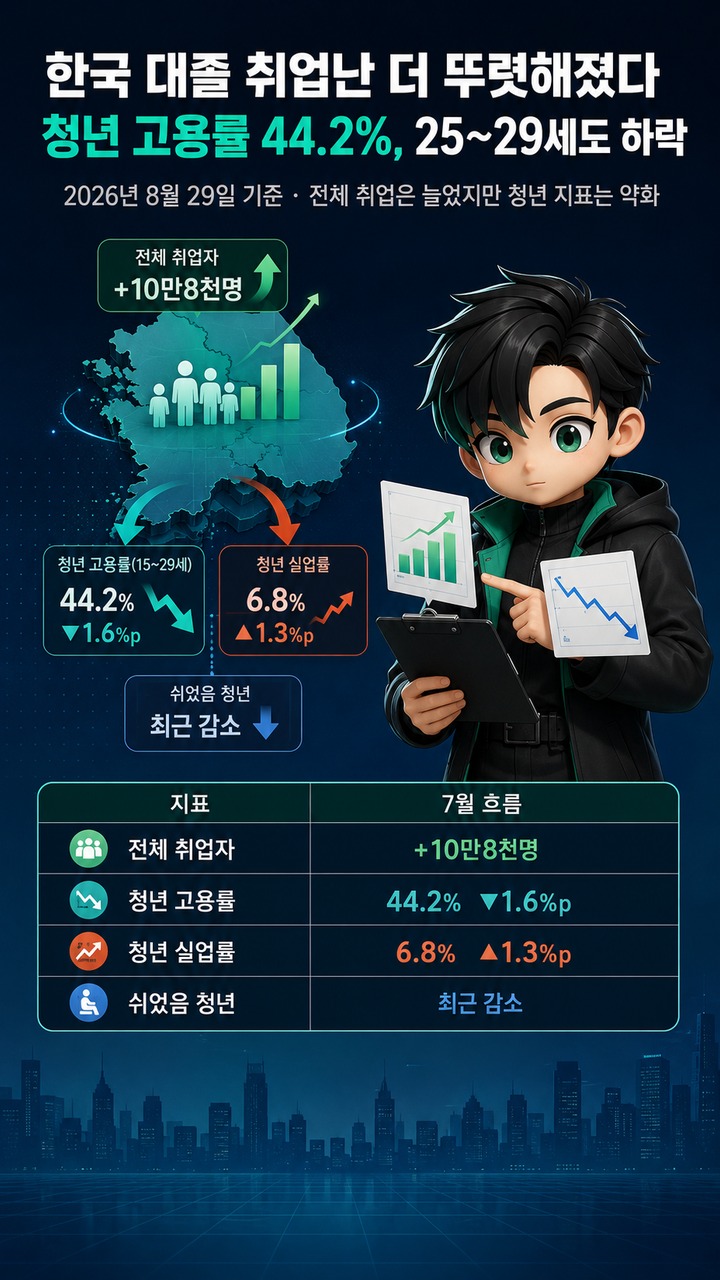
As of 2026-08-29, South Korea's youth employment situation is moving in a different direction from the overall labor market. In July, total employment increased by 108 thousand people from a year earlier, but the employment rate among young people aged 15–29 fell by 1.6% percentage points to 44.2%, while the youth unemployment rate rose by 1.3% percentage points to 6.8%. However, the number of young people classified as 'resting' has recently declined, so it would be inaccurate to say that all youth employment indicators have deteriorated simultaneously.
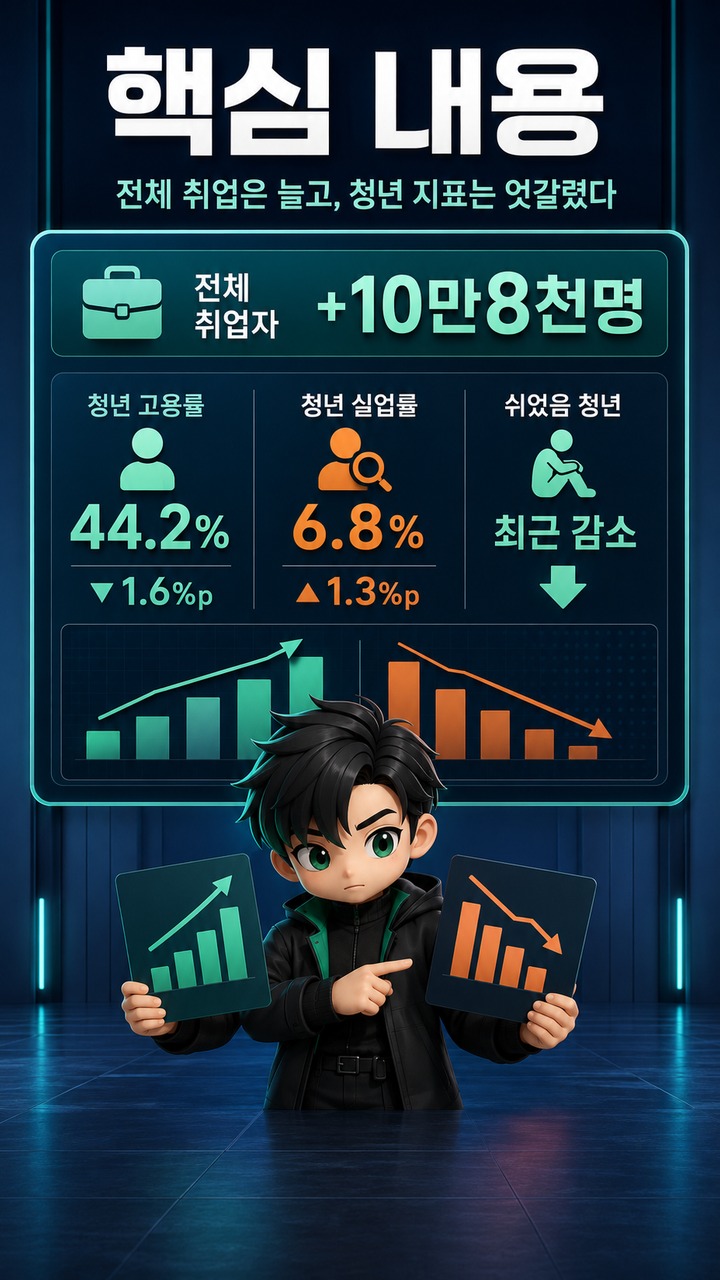
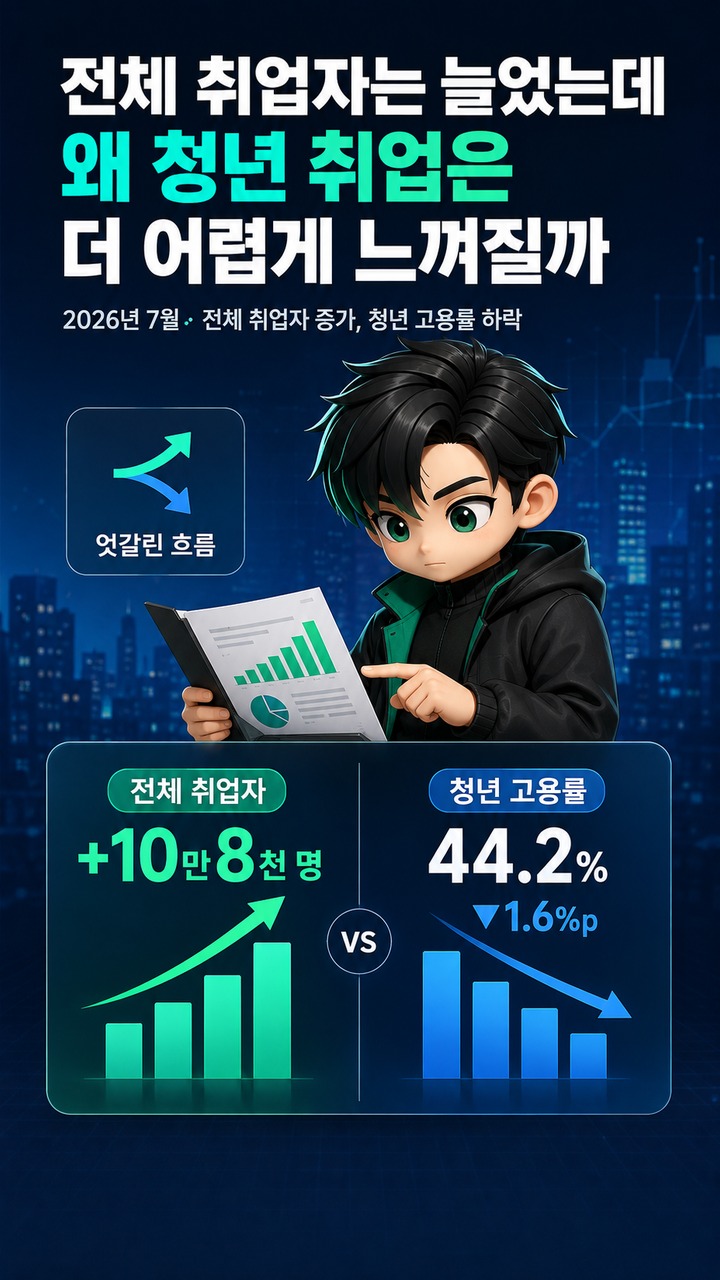
Why Does Finding a Job Feel Harder for Young People Even as Total Employment Rises?
According to the latest monthly figures for July 2026, total employment reached 2,9136 thousand people, an increase of 108 thousand from 1 years earlier. Meanwhile, the youth employment rate fell to 44.2% over the same period.
The differences become clearer when the figures are broken down by age group. According to the government's youth employment recovery plan announced on August 28, the employment rate among people aged 20–24 declined from 46.0% in 2022 to 45.7% in 2023, 45.1% in 2024, and 43.6% in 2025. It stood at 42.6% in July 2026.
People aged 25–29, when entry into full-time employment typically accelerates, have not been immune either. Their employment rate rose from 71.4% in 2022 to 72.3% in 2023 and 72.5% in 2024, before falling to 71.8% in 2025. It stood at 71.4% in July 2026.
The government has also concluded that, while employment rates among people in their early 20s have continued to decline, the employment rate among those aged 25–29, which had previously remained relatively strong, also began falling after 2025.
However, this should not be interpreted as evidence that the number of young people who have completely given up looking for work has continued to increase. Among people aged 15–29, the population classified as 'resting,' meaning those reporting no particular activity, stood at 367 thousand in July 2026, down 69 thousand from 1 years earlier. In other words, the employment and unemployment rates worsened while the number of people classified as resting declined, showing that different trends are occurring simultaneously.
Employment Rate Among College Graduates Also Declines Year on Year
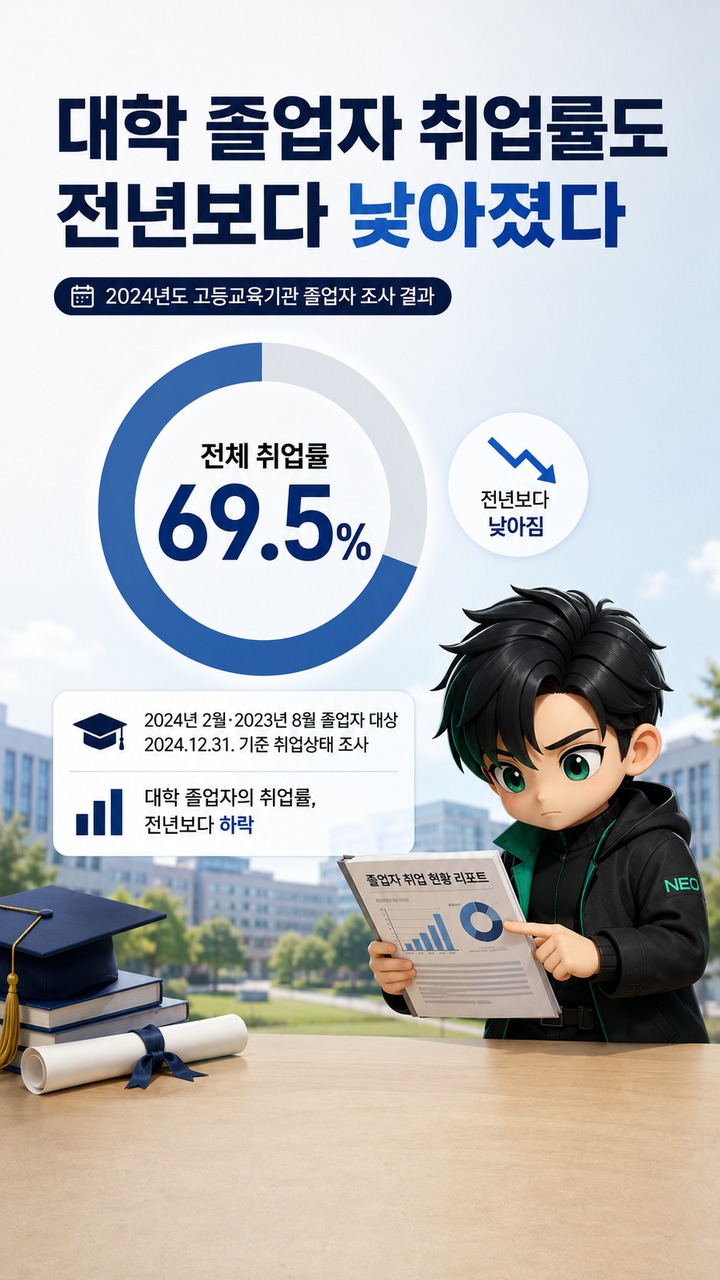
Looking specifically at college graduates, the latest finalized statistics currently available come from the 2024 survey of higher education institution graduates. The survey examined the employment status as of 2024-12-31 of people who graduated in February 2024 and August 2023, finding an overall employment rate of 69.5%.
That was 0.8% percentage points lower than the previous year's 70.3%. The number of employed graduates stood at 377,120 people, a decrease of 12,548 from the previous year.
There were also substantial differences by institution type. The employment rate for graduates of general universities was 62.8%, down 1.8% percentage points year on year. The corresponding rates were 72.1% for junior colleges and 82.1% for graduate schools.
By field of study, medical and pharmaceutical disciplines recorded a relatively high employment rate of 79.4%, followed by engineering at 70.4%, social sciences at 69.0%, arts and physical education at 66.7%, natural sciences at 65.4%, and humanities at 61.1%. Employment rates declined from the previous year across humanities, social sciences, engineering, natural sciences, medical and pharmaceutical disciplines, and arts and physical education, excluding education-related fields.
Therefore, it is difficult to explain the employment challenges facing college graduates with a single number. Employment rates vary by institution type and academic discipline, and general universities and certain fields in particular have recorded employment rates below the overall average.
Why Are the Youth Employment Rate of 44.2% and Graduate Employment Rate of 69.5% So Different?
The two figures should not be compared directly because they cover different populations and use different reference periods.
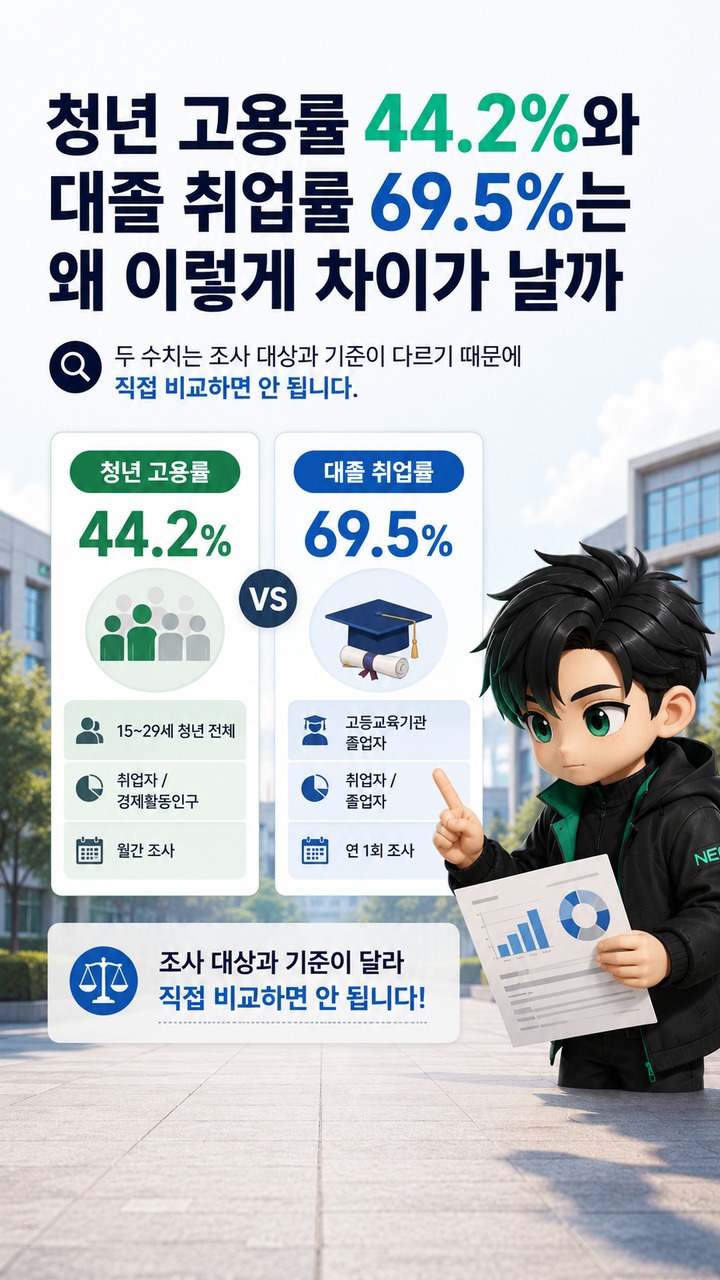
The youth employment rate of 44.2% is a monthly labor market indicator showing the proportion of employed people among the entire population aged 15–29 as of July 2026. Young people who are still attending school are included in the population if they fall within the specified age range.
By contrast, the higher education graduate employment rate of 69.5% is a separate statistic examining the post-graduation employment outcomes of people who completed university, junior college, graduate school, or similar programs in a particular year. The latest finalized results currently available cover graduates from 2024, with a survey reference date of 2024-12-31.
Therefore, the first answer to the question, 'Why is the youth employment rate 44.2% while the college graduate employment rate is 69.5%?' is that the two statistics use different populations and survey reference dates.
To understand rapid changes in the current labor market, it is appropriate to examine the youth employment figures for July 2026. To compare actual employment outcomes among college graduates, the higher education graduate employment statistics are the more appropriate source.
How Long Does It Take to Land a First Job After Finishing College?
According to the May 2026 supplementary survey of young people, those whose first job after graduating, dropping out, or completing their final educational program was paid employment took an average of 11.2 months to find work. That was 0.1 months shorter than the previous year.
By education level, people with a bachelor's degree or higher took an average of 8.5 months to secure their first job, a decrease of 0.3 months from the previous year. Therefore, a recent decline in employment rates does not necessarily mean that the time required to find a first job has increased for everyone who has already secured one.
Conversely, there are signs that the preparation period before entering the labor market is becoming longer. The average time required to complete a university degree reached 4 years and 5.7 months, an increase of 1.3 months from the previous year.
The proportion of young people with work experience while enrolled in school or on a leave of absence fell by 2.1% percentage points to 41.1%. Among those who graduated or dropped out of their final educational institution, the proportion with employment experience after leaving school also declined by 1.6% percentage points year on year to 84.8%.
In other words, today's youth employment challenges cannot be explained simply by saying that 'the time it takes to find a first job keeps getting longer.' Although the average time required to secure a first job has shortened slightly, other indicators, including declining youth employment rates and lower rates of employment experience, reveal difficulties in entering the labor market itself.
What Youth Employment Measures Did the Government Announce on August 28?
The government finalized its youth employment recovery plan on 2026-08-28. Its main goals include training more than 3030 people as specialists in advanced industries and fields preferred by young workers by 2030, while creating more than 3030 opportunities through private- and public-sector jobs and entrepreneurship combined.
For those seeking their first job, the plan includes reforming the existing National Employment Support System to expand eligibility to young people without previous employment experience. It also proposes raising the monthly job-seeking allowance from KRW 600,000 to KRW 650,000.
The Youth Employment Leap Incentive program will also be expanded. The policy proposal includes broadening eligibility and increasing financial support for young people to a maximum of KRW 18,000,000 over 2 years.
For young people working at small and medium-sized enterprises outside the capital region, the government also announced plans to combine benefits from the Youth Employment Leap Incentive, Youth Future Savings Program, and Youth Culture and Arts Pass to provide a maximum combined support effect of approximately KRW 1,000,000 per month over 2 years.
There is an important distinction here. The phrase 'up to KRW 1,000,000 per month' does not mean that KRW 1,000,000 will be paid directly in cash every month like a salary. It describes the maximum combined value of several support programs. The detailed amounts and implementation schedules are expected to be specified in the forthcoming 2027 budget proposal.
Therefore, eligibility conditions and benefit details that have not yet been finalized should not be treated as financial assistance that applicants can currently receive.
What Should Job Seekers Check First Right Now?
For those currently preparing to enter the workforce, it is more practical to examine their age group, academic major, preferred company size, and available support programs separately rather than relying solely on the overall youth unemployment rate.
Because employment rates have also declined among people aged 25–29, it would be unrealistic to assume that employment prospects will naturally improve simply after graduation. Conversely, an average employment rate of 62.8% among general university graduates does not determine the employment prospects of any particular major or individual.
Some of the government's newly announced policies will require the 2027 budget and detailed implementation criteria to be released before actual eligibility and payment amounts can be determined. It is important to distinguish between programs already in operation and those scheduled for expansion.
In particular, young people considering employment at regional small and medium-sized enterprises should examine not only the Youth Employment Leap Incentive but also how employment retention incentives and asset-building support programs can be combined. Rather than making decisions based solely on the maximum advertised benefit, they should check the eligible regions, employer requirements, required employment periods, and actual payment methods.
In short, the youth labor market in 2026 can be characterized as one in which improvements in overall employment have not translated directly into better outcomes for young people. Employment rates have declined not only among those in their early 20s but also among people aged 25–29, while the employment rate for general university graduates has also fallen year on year. However, some indicators have improved, including the time required to secure a first job and the number of young people classified as resting. Rather than exaggerating the situation by claiming that 'college graduates have no jobs at all,' it is more accurate to distinguish between indicators covering different age groups, academic disciplines, and survey periods.
※ This article is provided for reference to help readers understand market trends and does not constitute an investment recommendation regarding any particular stock or asset. Readers are responsible for their own final decisions and investment outcomes.
Related Articles
Household Debt Approaches 2 Trillion Won: Key Figures to Check in August 19 Official Statistics