

Trump's Birth Tourism Executive Orders: Will Babies Immediately Lose U.S. Citizenship? Who Is Affected and When the Rules Take Effect
이 포스팅은 쿠팡 파트너스 활동의 일환으로, 이에 따른 일정액의 수수료를 제공받습니다.
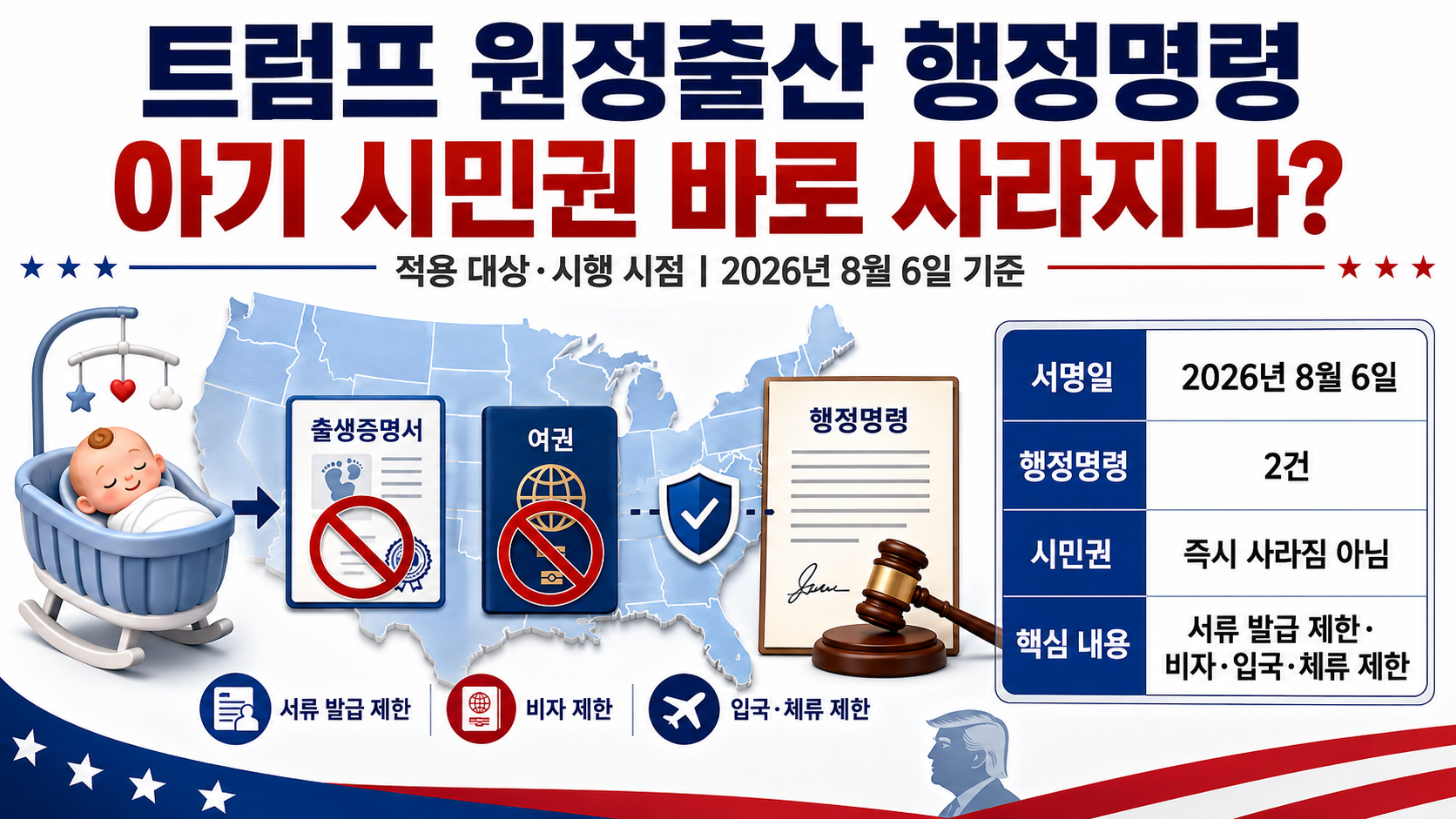
U.S. President Donald Trump signed 2 executive orders targeting birth tourism on 2026-08-06. However, this does not mean that all babies born in the United States have immediately lost their citizenship. One order restricts the issuance of citizenship documents for certain categories of children, while the other seeks to block visa issuance, entry, and stays in the United States.
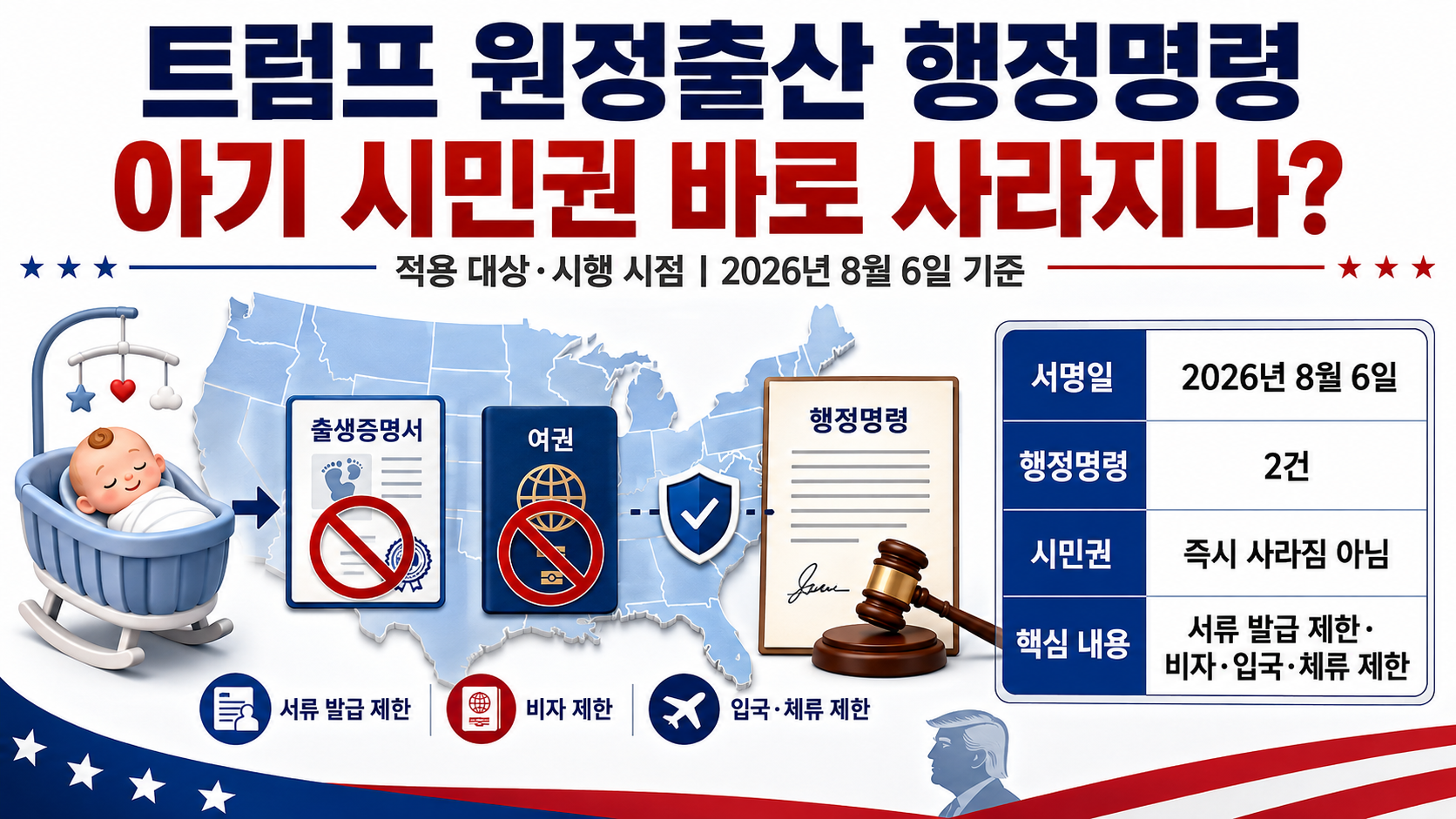
Birthright citizenship refers to citizenship granted to a person automatically at birth in the United States. These new measures follow a ruling by the U.S. Supreme Court on 2026-06-30 that found the Trump administration's earlier order restricting birthright citizenship unconstitutional.
What Do the 2 New Executive Orders Change?
The first executive order directs the federal government not to issue or accept documents recognizing U.S. citizenship for children who have no U.S. citizen parent and who meet additional conditions specified by the president.
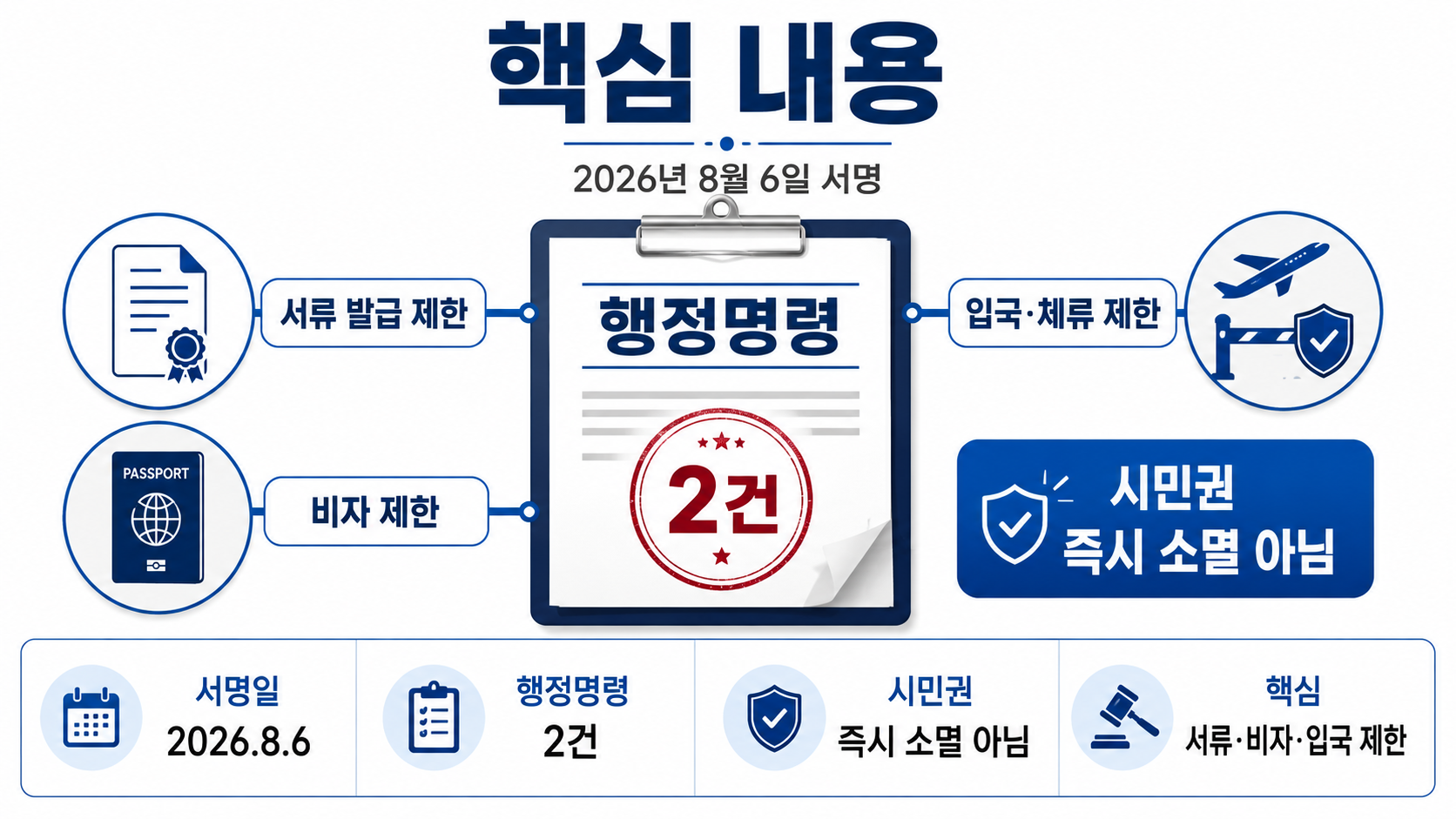
The second executive order defines birth tourism as entering the United States on a nonimmigrant visa for the purpose of giving birth. It delegates authority to the State Department and the Department of Homeland Security to prevent the issuance of visas and entry into the United States for individuals involved, and to revoke previously issued visas or travel authorizations.
The two orders serve different purposes.
The first order could affect recognition of a child's citizenship and the issuance of passports and Social Security-related documents. The second seeks to stop prospective parents and birth tourism agencies at the visa and entry stages.
Which Children Are Covered by the Citizenship Restrictions?
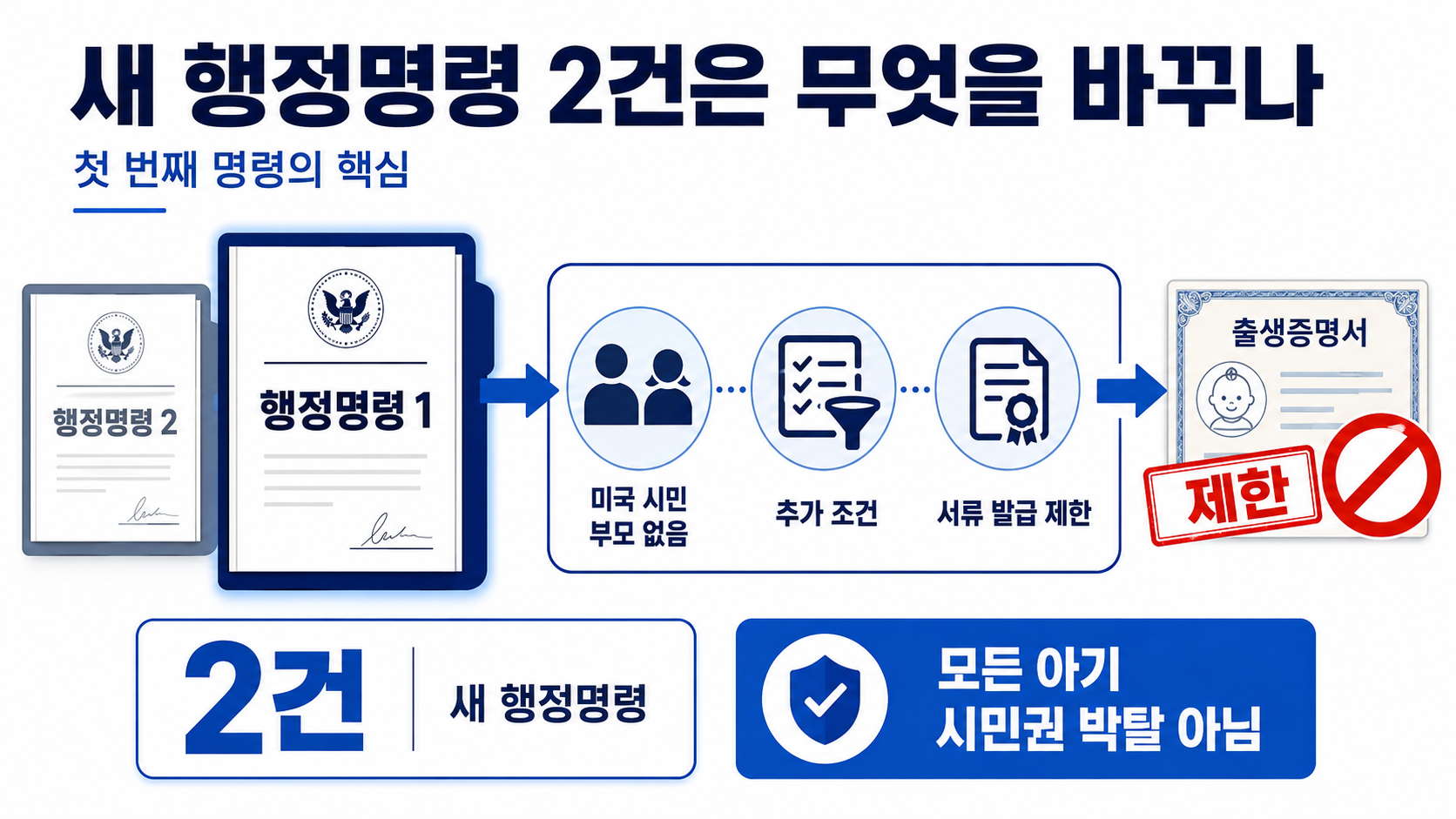
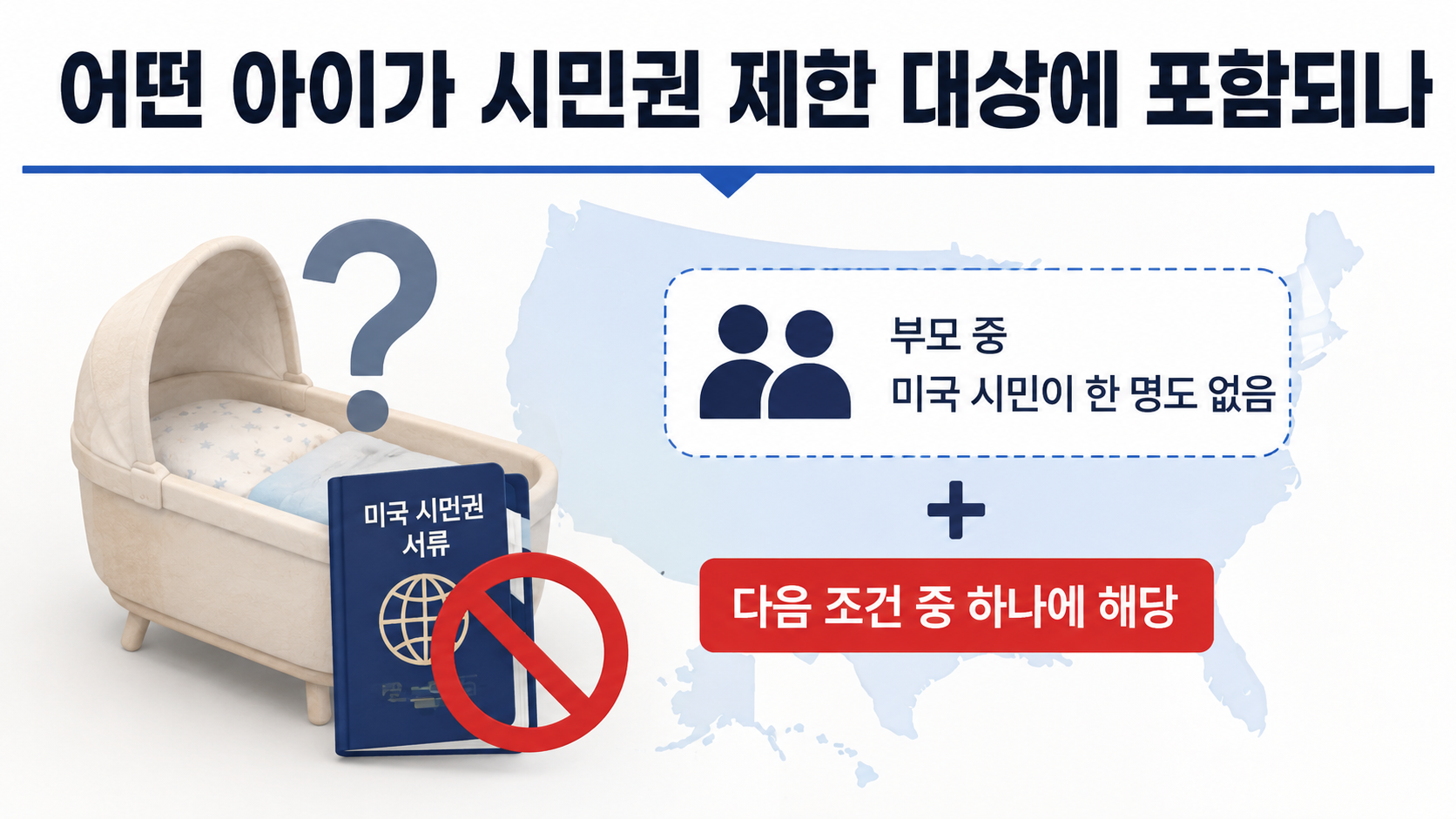
The first executive order applies to children who have no U.S. citizen parent and meet at least one of the following conditions:
One parent qualifies as an 'enemy alien' under the executive order, such as a member of a designated foreign terrorist organization.
One parent works officially for a foreign government, such as an employee of a foreign embassy or consulate.
The parents engaged in a commercial transaction or fraudulent activity to obtain birthright citizenship for their child.
The child was born in a U.S. territory or territorial waters where birthright citizenship is not granted under federal law.
The provision most directly connected to birth tourism concerns commercial transactions. The order includes cases in which a pregnant woman paid for services such as an agency, accommodation, or a childbirth package to give birth in the United States, or entered into a commercial agreement with a surrogate mother in the United States.
The first order does not state that its citizenship restrictions automatically apply simply because the parents hold nonimmigrant visas, such as tourist, student, or employment visas. A separate factual determination is required to establish whether the parents engaged in a commercial transaction or fraud to obtain citizenship.
Unlike the 2025 order, the new order does not explicitly exclude parents who hold permanent resident status. Even if one parent is a U.S. permanent resident, the child could potentially fall within the order's scope if neither parent is a U.S. citizen and the other applicable conditions are met. Further implementation guidance will therefore need to be reviewed.
Are All Pregnant Travelers Barred from Entering the United States?
The new executive order does not establish pregnancy itself as a blanket reason for denying entry. Under its wording, the determining factor is whether the primary purpose of entering the United States on a nonimmigrant visa is to give birth there.
If U.S. authorities determine that the purpose of travel is birth tourism, the order allows the following measures:
Denial of a visa or electronic travel authorization
Revocation of an existing visa or travel authorization
Denial of entry at a U.S. airport or border
Restrictions on stays or removal proceedings against individuals already admitted to the United States
Sanctions against birth tourism agencies and facilitators
Permanent entry bans, depending on the circumstances
Exceptions may be granted if the Secretary of State or the Secretary of Homeland Security determines that humanitarian grounds exist or that an exception serves the national interests of the United States.
Authorities have not yet disclosed what evidence will be used to determine the purpose of childbirth during entry screening or how the stage of pregnancy and medical appointments will be considered. Misrepresenting the purpose of a visit on a visa application or during immigration inspection could raise separate issues of false statements, regardless of the new executive order.
Can Birthright Citizenship Be Restricted Again After the Supreme Court Upheld It?
In 2026-06-30, the U.S. Supreme Court ruled in 'Trump v. Barbara' that children born in the United States to undocumented immigrants or temporary residents are U.S. citizens from birth under the 14 Amendment.
As a result of that ruling, broad restrictions on birthright citizenship based solely on the immigration status of parents, such as those imposed by the January 2025 order, lost their legal effect. The Supreme Court case's final judgment process was also completed on 2026-08-03.
The Trump administration argues that the new order does not contradict the Supreme Court's ruling but instead clarifies historical exceptions referenced by the Court.
However, the traditional exceptions explicitly identified in the Supreme Court's opinion involve very limited circumstances in which individuals are not subject to ordinary U.S. jurisdiction, such as children of foreign diplomats. The Court did not directly determine whether commercial birth tourism or children of ordinary foreign government employees fall within those exceptions.
Therefore, the citizenship restrictions in the new executive order could face further constitutional challenges in additional lawsuits. The fact that an executive order has been signed must be distinguished from a final legal determination that its citizenship restrictions are constitutional.
How Does the 2025 Order Differ from the New 2026 Orders?
The January 2025 order sought to deny birthright citizenship to children whose mothers were undocumented immigrants or temporary residents holding tourist, student, or employment visas, if their fathers were neither U.S. citizens nor permanent residents.
Because the restrictions were broadly defined around the immigration status of the parents, the Supreme Court ruled on June 2026 that the order was unconstitutional.
The August 2026 order does not restrict all children solely on the basis of their parents' immigration status. Instead, it redefines the targeted categories to include individuals connected to terrorism, foreign government employees, commercial birth tourism, and fraud. At the same time, a separate executive order seeks to prevent the use of nonimmigrant visas and entry into the United States for the purpose of childbirth.
While the previous order broadly restricted children's citizenship after birth, the new measures also seek to prevent parents from obtaining visas and entering the country before childbirth.
When Will the New Measures Actually Take Effect?
The first executive order requires relevant federal agencies, including the State Department, Justice Department, Department of Homeland Security, and Social Security Administration, to issue public implementation guidance within 30 days.
Adding 30 days to the signing date of 2026-08-06 gives a deadline of September 5 in local U.S. time. This is the author's calculation based on the period specified in the executive order.
However, the executive order does not specify a separate cutoff date determining which births will be subject to the citizenship restrictions. Agency-specific guidance will need to clarify whether the restrictions apply to children who have already been born, what documents must be submitted, and what standards will be used to establish commercial transactions.
The executive order restricting entry for birth tourism also does not specify a separate detailed implementation date. The actual scope of enforcement is expected to become clearer as the State Department and Department of Homeland Security revise visa screening procedures, immigration inspection rules, and operational guidance.
What Should People Planning to Give Birth or Travel to the United States Check?
If the primary purpose of a U.S. visit is childbirth, or if a birth tourism agency is being used, travelers should first assess the risks of visa denial, cancellation of an existing visa, or refusal of entry at an airport.
An unexpected birth during ordinary travel or a family visit involves different circumstances from entering the country with the intention of giving birth from the outset. The evidence standards U.S. authorities will use to determine the purpose of a visit must be confirmed through subsequent guidance.
A child's citizenship status and passport eligibility may depend on the parents' nationalities, immigration status, use of an agency, childbirth agreements, and place of birth. Individual cases require review of the latest guidance from relevant U.S. authorities and consultation with a U.S. immigration law specialist.
What has been confirmed is that President Trump signed 2 new executive orders restricting birth tourism and certain categories of birthright citizenship. Interpreting these measures to mean that U.S. citizenship has already been universally abolished for all children of tourists, or that all pregnant women are immediately prohibited from entering the United States, goes beyond the actual wording of the new orders.
이 포스팅은 쿠팡 파트너스 활동의 일환으로, 이에 따른 일정액의 수수료를 제공받습니다.