

KOSPI Plunges 4.58%, Yet More Stocks Rise Than Fall…Samsung Electronics and SK Hynix Drive the Decline
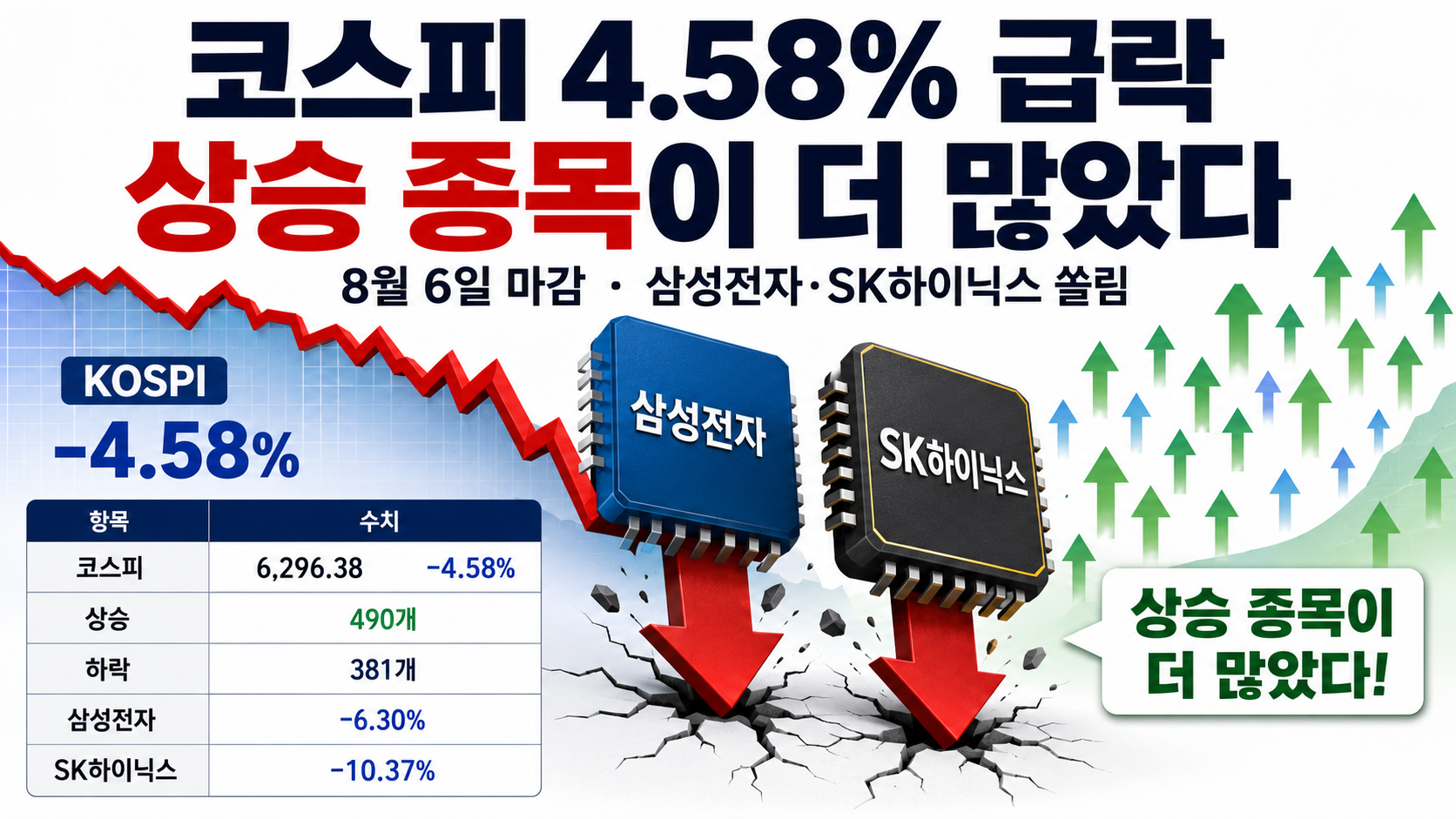
The KOSPI closed at 6,296.38, down 4.58% on August 6. However, 490 stocks rose on the main Korea Exchange market, outnumbering the 381 that declined. The sharp index decline was driven primarily by Samsung Electronics (-6.30%) and SK Hynix (-10.37%).
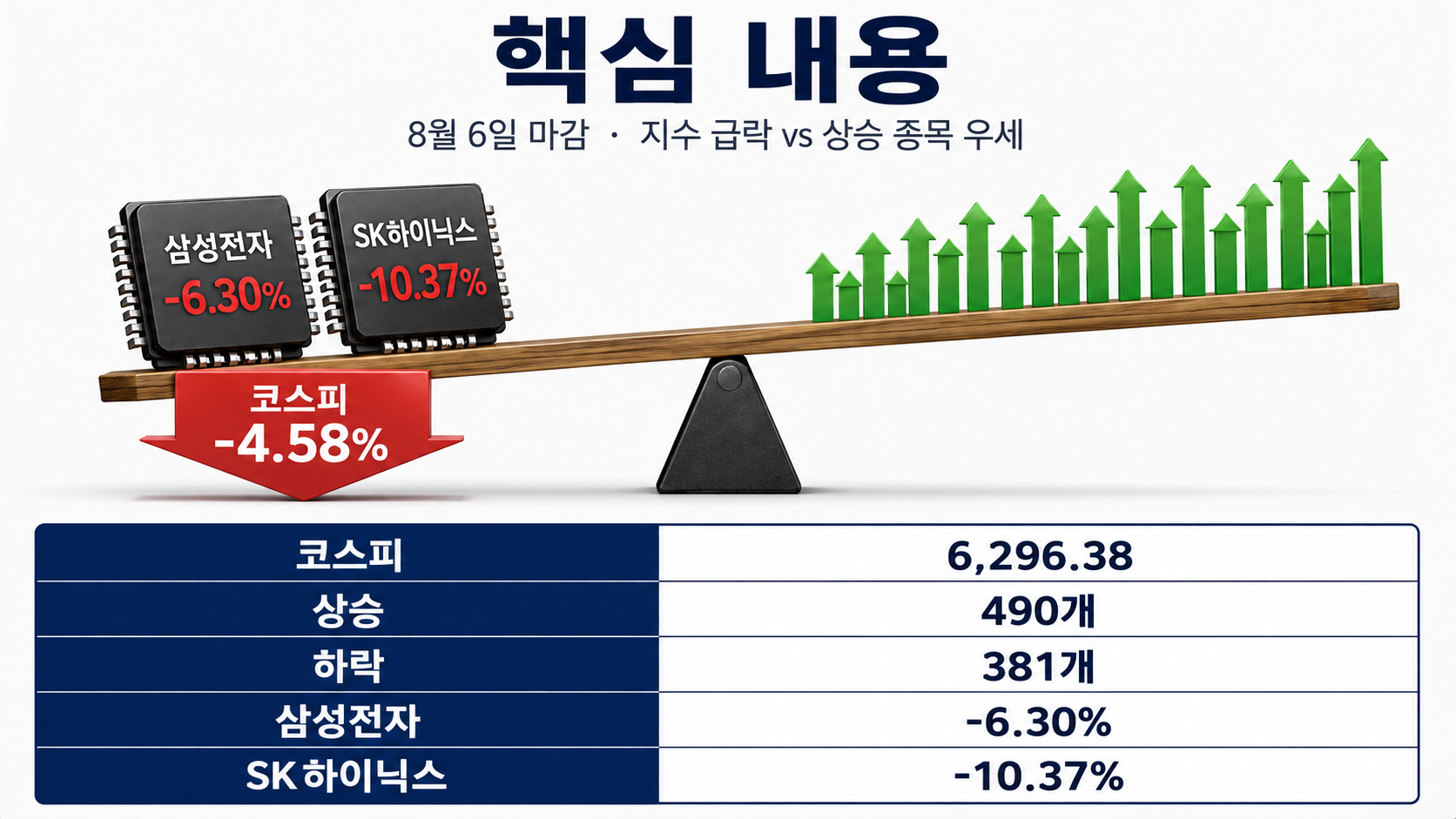
Why Did the KOSPI Fall by 4.58%?
The KOSPI's sharp decline resulted from weakening sentiment toward U.S. semiconductor stocks and heavy foreign selling concentrated in large-cap semiconductor shares. Samsung Electronics closed at KRW 230,500, while SK Hynix finished at KRW 1,495,000.
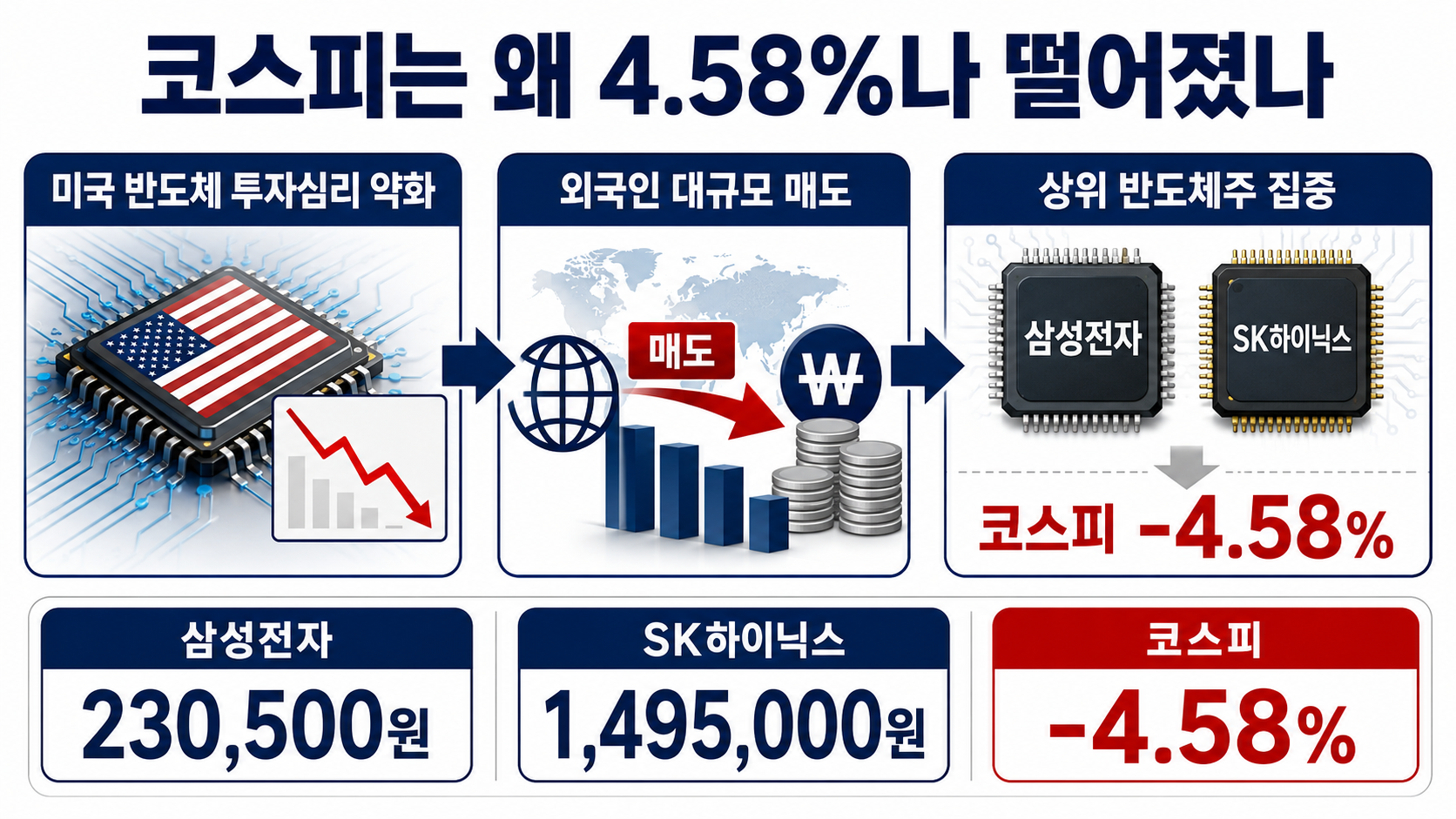
U.S. data storage company SanDisk reported solid results for the previous quarter, but its future revenue outlook was viewed as falling short of elevated market expectations. With expectations for rising memory prices and investment in artificial intelligence data centers already heavily reflected in share prices, even a relatively small disappointment triggered substantial selling.
Foreign investors recorded net sales of 3 trillion KRW 349,200,000,000 on the main Korea Exchange market. Individual investors, by contrast, made net purchases of KRW 3,339,000,000,000, but their buying was insufficient to absorb the selling concentrated in Samsung Electronics and SK Hynix and prevent the index from falling.
Why Did More Stocks Rise Even Though the Index Plunged?
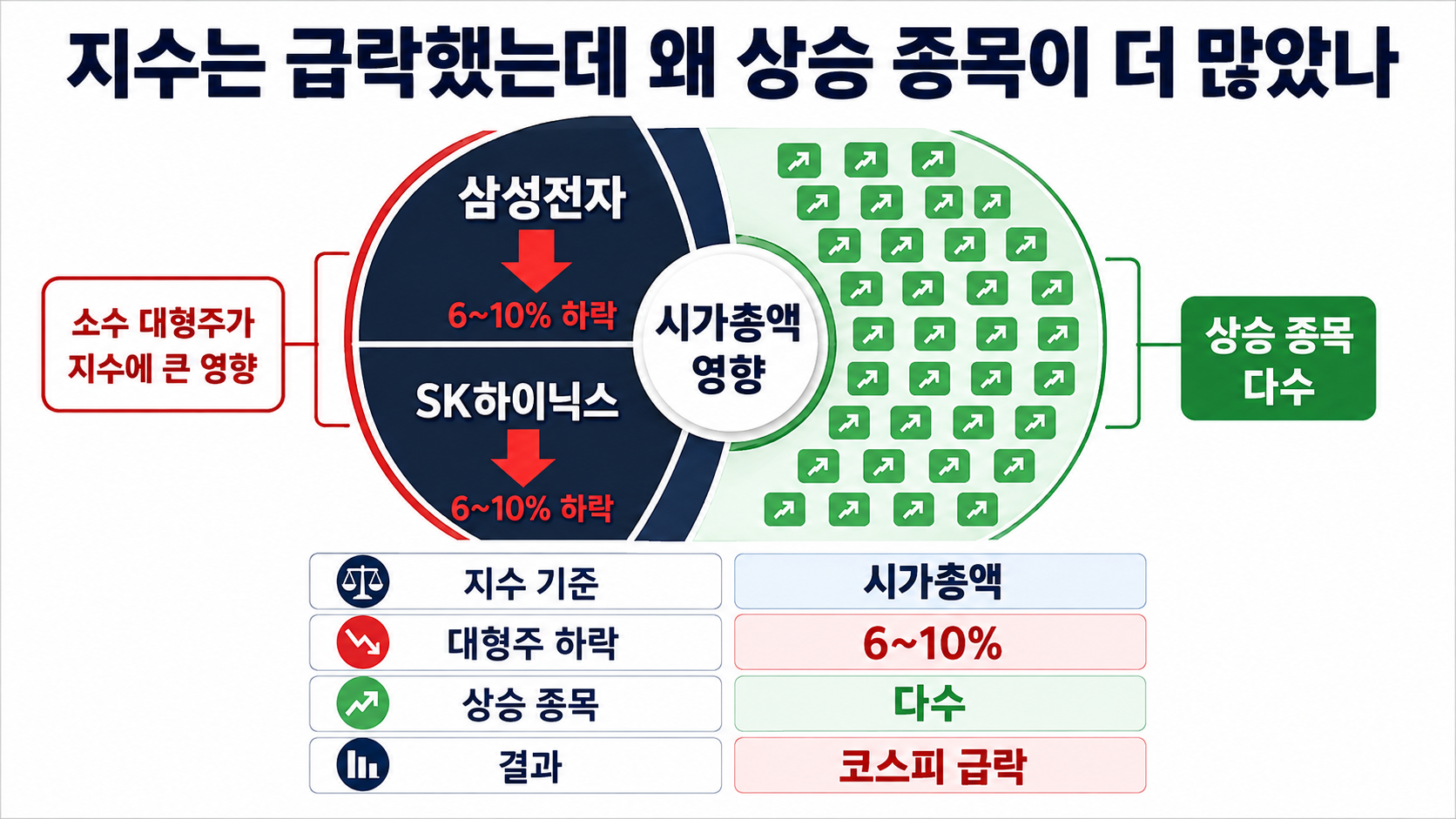
The KOSPI is influenced more heavily by movements in companies with large market capitalizations than by the number of stocks rising or falling. When heavily weighted companies such as Samsung Electronics and SK Hynix simultaneously decline by 6~10%, the KOSPI can fall sharply even if many small- and mid-cap stocks advance.
In fact, 490 stocks rose on the main Korea Exchange market that day, while 381 declined. The KOSDAQ also closed at 801.67, up 0.26%.
Therefore, the market movement on August 6 was less a broad-based collapse across all Korean listed stocks than a session in which falling large-cap semiconductor shares dragged the index sharply lower. This also explains why the actual returns on individual holdings may have differed substantially from the KOSPI's performance.
Does a Sell-Side Sidecar Trigger Halt Trading?
A sell-side sidecar does not halt trading across the entire stock market. It is a mechanism designed to limit the rapid transmission of sharp futures-market declines into the cash equity market through program trading by suspending the effectiveness of program sell orders for 5 minutes.
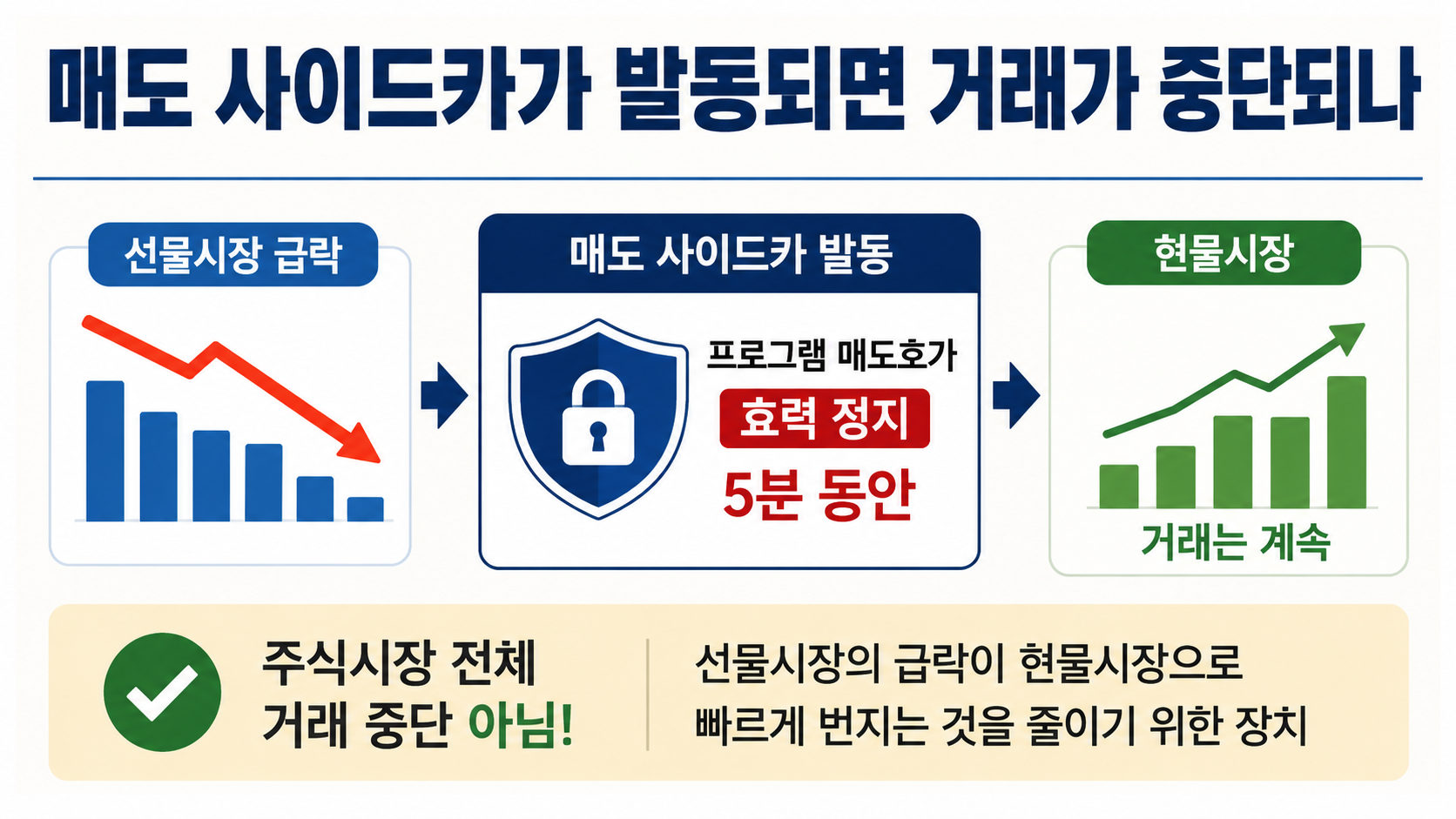
The Korea Exchange activated a sell-side sidecar at 10:18:12 a.m. after the KOSPI 200 futures index fell 5.04% below its reference price.
A circuit breaker, by contrast, suspends stock market trading itself in stages when a stock index falls beyond specified thresholds. The mechanism activated that day was a sell-side sidecar, not a market-wide trading suspension caused by a circuit breaker.
Looking Only at Daily Percentage Changes Can Misrepresent Market Trends
The KOSPI rose 3.76% on August 5 before falling 4.58% the following day. Because percentage gains and losses cannot simply be added together, the actual index levels must be compared.
Comparing the closing level of 6,358.95 on August 4 with the closing level of 6,296.38 on August 6 shows a cumulative change of approximately -0.98% over the two days.
Author's calculation:
(6,296.38 ÷ 6,358.95 - 1) × 100 = approximately -0.98%
This calculation shows that daily price swings have become exceptionally large, rather than establishing a clear market direction. The previous day's sharp rally did not mean volatility had ended, and a single day's plunge does not confirm the beginning of a new downward trend.
Does This Plunge Signal a Collapse in the Semiconductor Industry?
It is too early to conclude from share prices on August 6 alone that the memory semiconductor industry's business conditions have deteriorated. SanDisk's actual quarterly results were strong, but its stock price also reflected concerns about already elevated market expectations and the pace of future growth.
However, stocks carrying high expectations can experience substantial price swings even when earnings continue to increase, particularly if the rate of growth slows more than anticipated. Investors assessing Samsung Electronics and SK Hynix should examine not only memory prices, data center investment, and demand for high-bandwidth memory, but also the level of expectations already priced into their shares.
What to Check in the August 7 Trading Session, in Order
First, investors should check whether losses deepen among U.S. memory-related stocks, including SanDisk and Western Digital. Movements in U.S. semiconductor shares could affect investor sentiment toward Samsung Electronics and SK Hynix during the next Korean trading session.
Second, investors should watch whether foreign investors continue selling in both the cash equity and futures markets. More important than a one-day reversal to net buying is whether selling pressure eases early in the session and remains subdued through the close.
Third, investors should monitor whether losses in Samsung Electronics and SK Hynix narrow while separately tracking the number of advancing and declining stocks. If the index rebounds while most stocks continue falling, overall market sentiment may remain weak.
Fourth, investors should review their exposure to margin trading and leveraged products linked to individual stocks. During periods of substantial price volatility, market orders or impulsive additional purchases can result in losses larger than expected.
This sharp decline demonstrated how strongly concentration in large-cap semiconductor stocks and foreign investor trading flows can influence the KOSPI. Rather than attempting to predict a short-term rebound, a more practical approach is to review changes in the earnings of stocks held, semiconductor sector exposure, margin and leverage exposure, and the amount of loss one can tolerate.
This article summarizes publicly available market information for investment reference purposes and does not guarantee returns or recommend buying or selling any particular stock.
※ This article is provided for informational purposes to help readers understand market trends and does not constitute investment advice regarding any particular stock or asset. Final investment decisions and responsibility rest with the individual investor.