

Why Do Overseas Stocks Keep Moving During the Chuseok Holiday When South Korea's Stock Market Is Closed? Key Factors to Watch During the 3-Day Gap
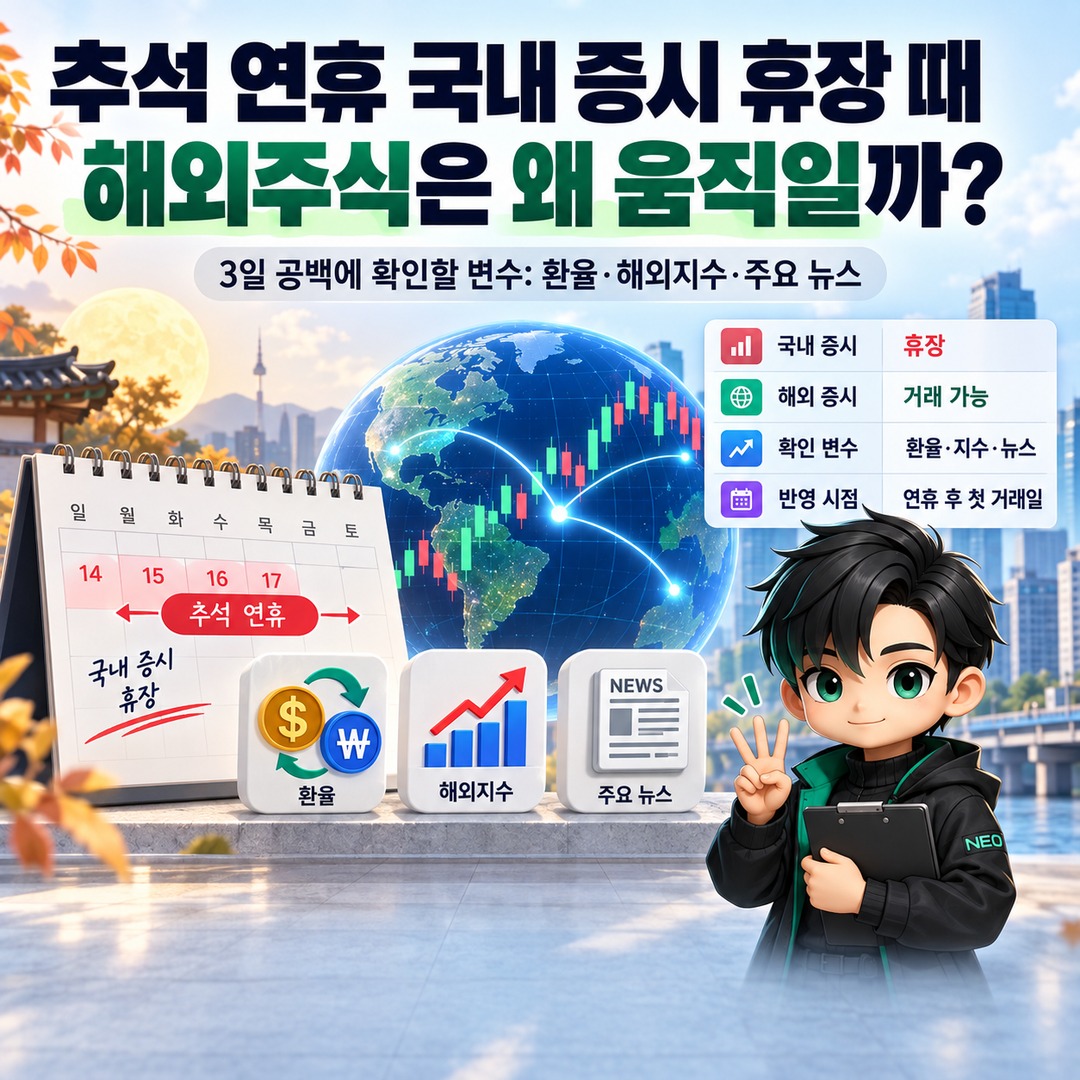
Even while South Korea's stock market is closed for the Chuseok holiday, overseas markets, including the U.S. stock market, may continue trading. Korean investors therefore need to monitor exchange rates, overseas stock indexes, and major news developments separately. International developments that occur while the domestic market is closed may be reflected in stock prices on the first trading day after the holiday.
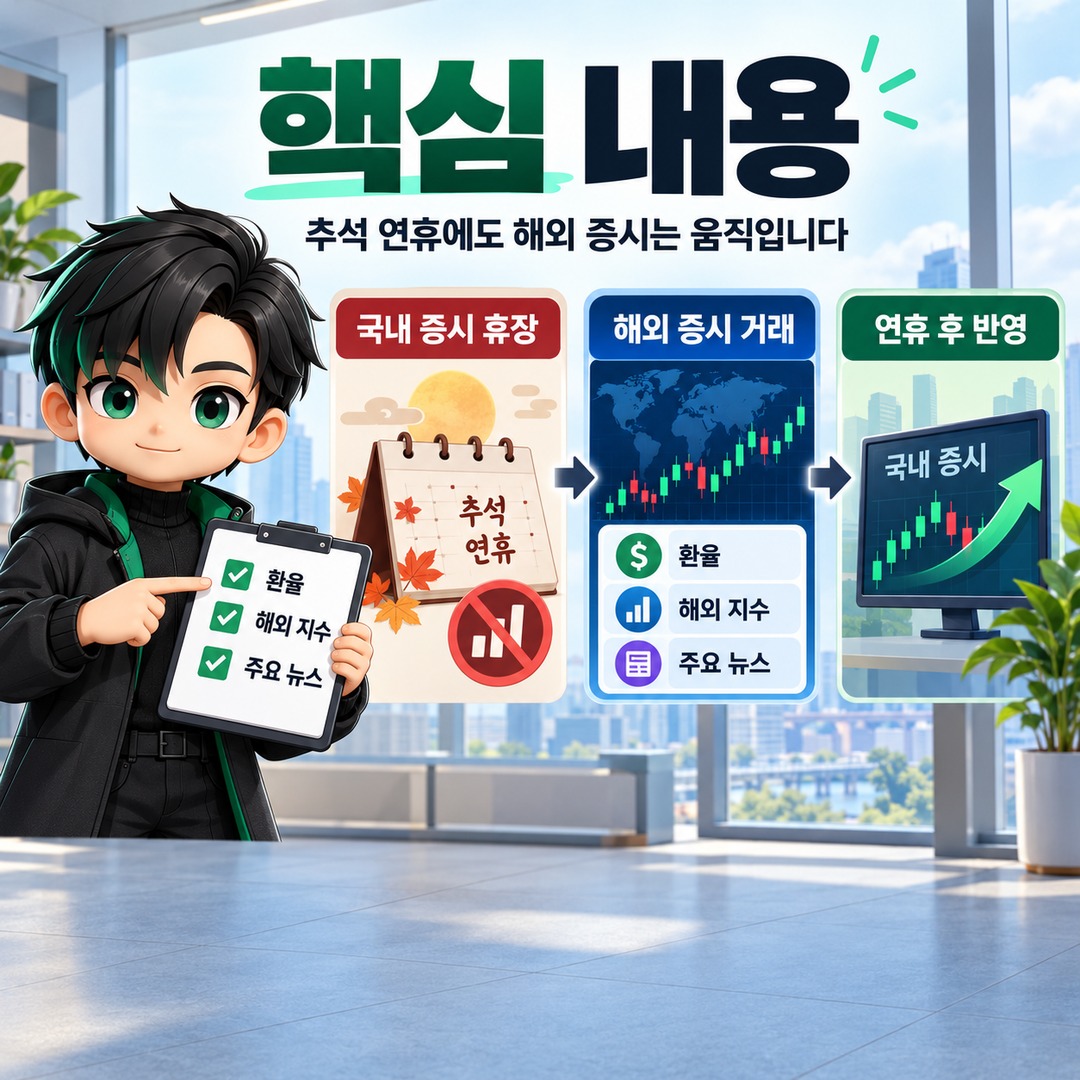
Do My Stock Prices Also Stop Moving While the Korean Stock Market Is Closed?
Domestic stock prices move according to the Korea Exchange's trading calendar, so trading in KOSPI and KOSDAQ stocks stops when the Korean stock market is closed. However, information from overseas markets connected to the companies investors hold does not stop flowing.
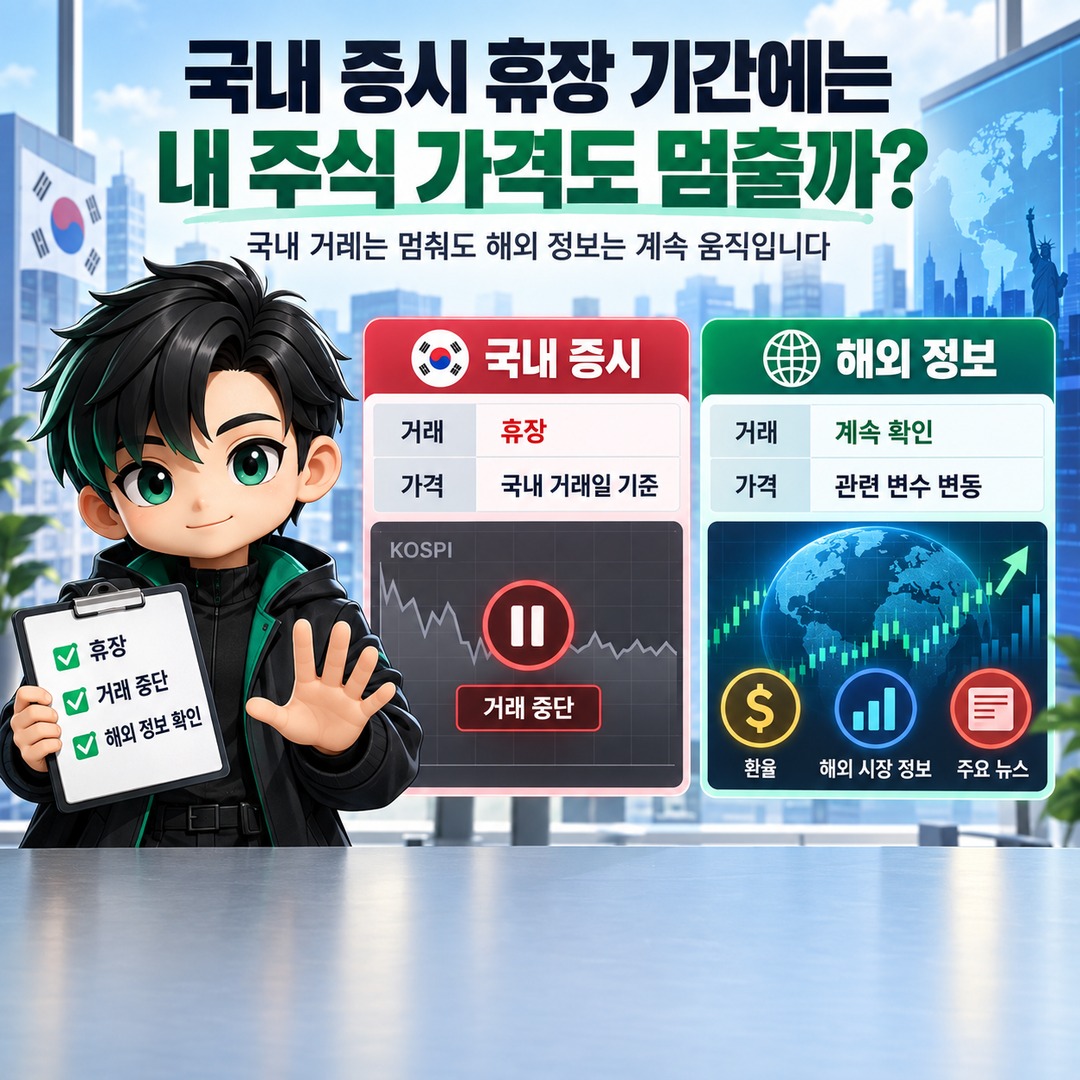
For example, if the share prices of companies in the same industry change significantly in the U.S. market, exchange rates fluctuate, or overseas economic indicators are released, these developments may influence investor sentiment when the Korean stock market reopens.
The U.S. S&P500 index has also continued to fluctuate from one trading day to another, with its closing level recorded at 7,764.64 as of 2026-09-22.
What Should Investors Check First on the First Trading Day After the Holiday?
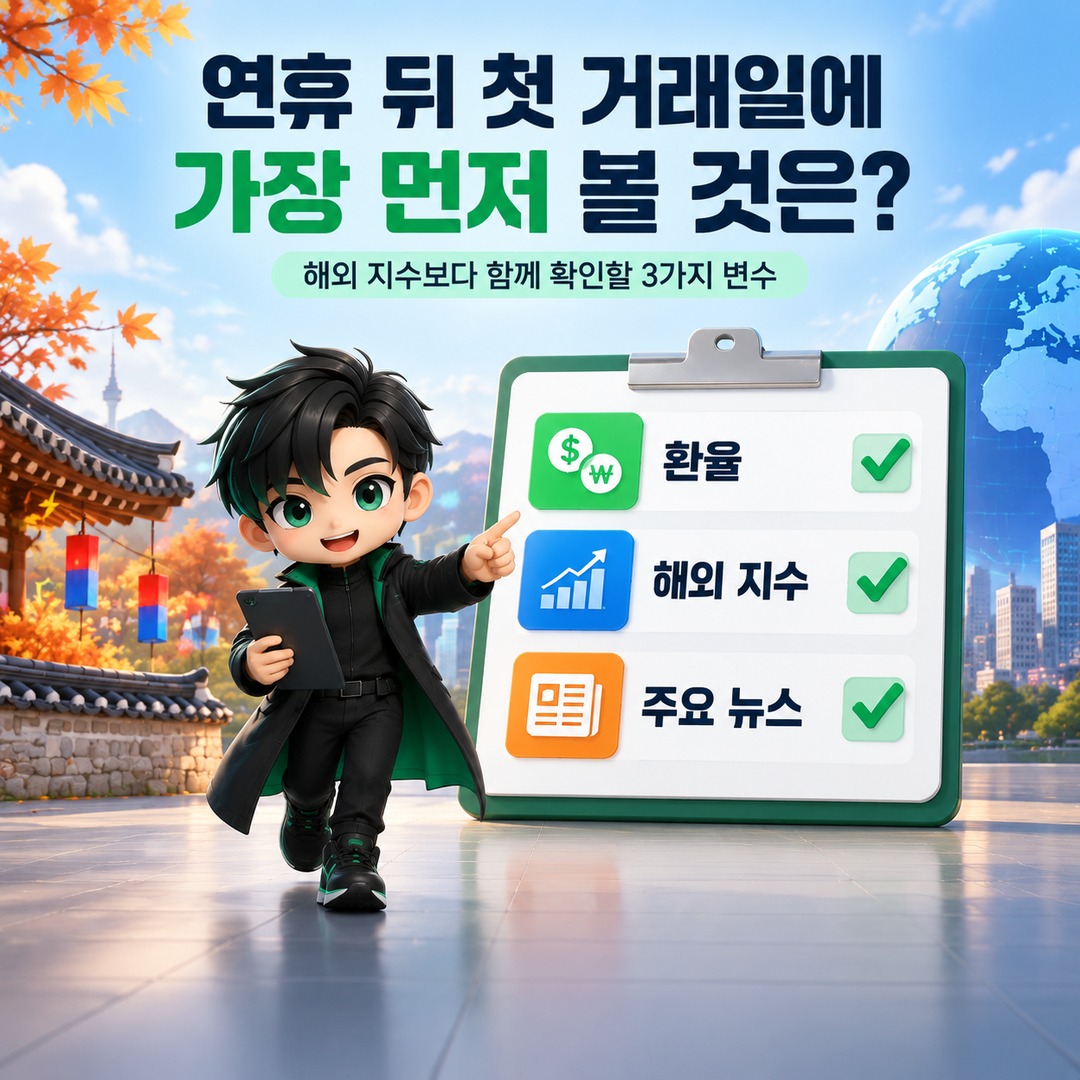
After a holiday trading gap, it is important to examine three factors together rather than simply checking whether overseas stock indexes rose or fell.
| What to Check | Why It Matters |
|---|---|
| Major U.S. stock indexes | Assess global risk appetite |
| KRW/USD exchange rate | Influences foreign investor flows and the valuations of Korean companies |
| Key industries such as semiconductors and energy | Identify sectors with significant influence on the Korean market |
In particular, even when overseas markets rise, Korean stock prices may react differently depending on exchange rate movements or negative developments affecting specific industries.
This is why the direction of a single stock index is not enough to predict the movements of individual Korean stocks.
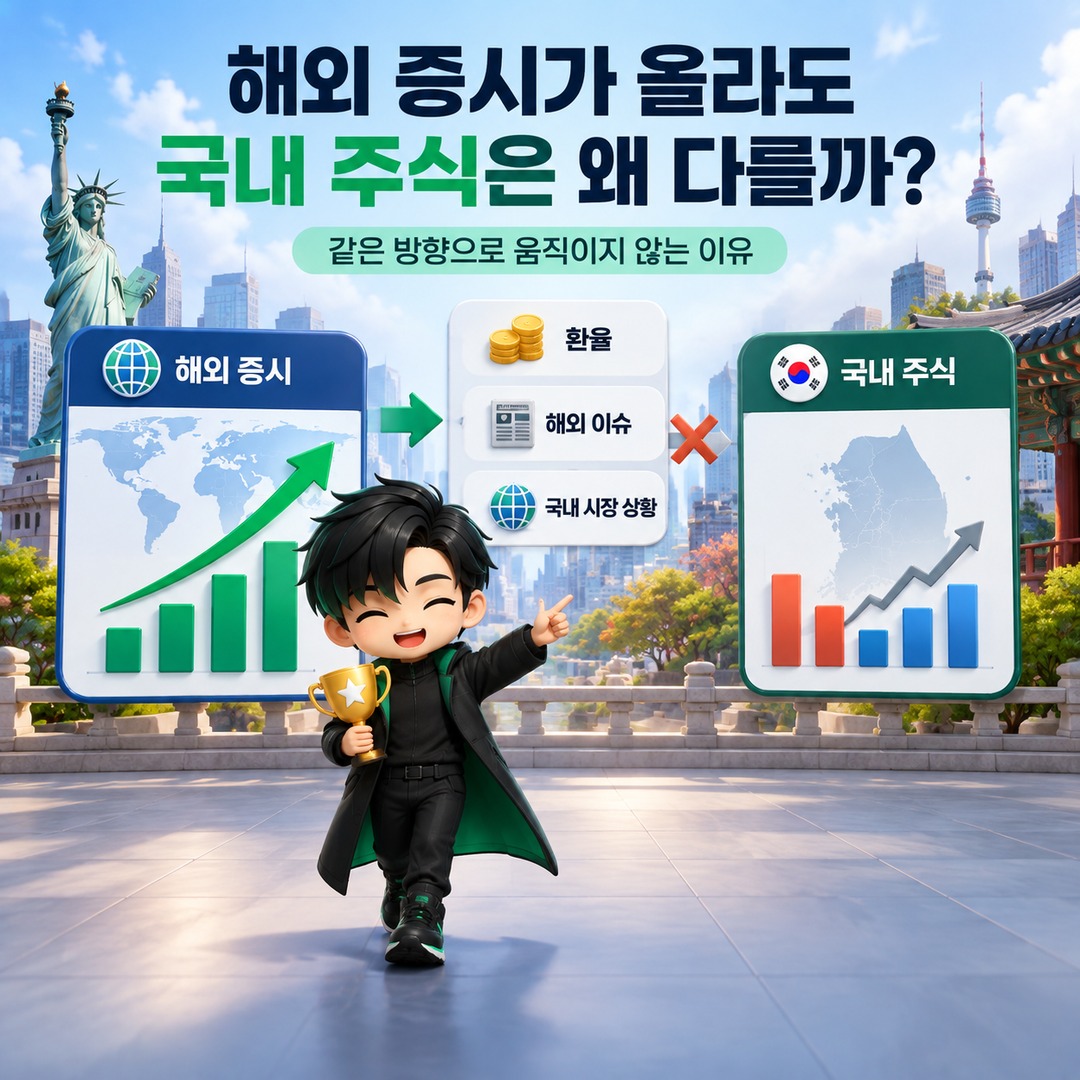
Why Korean Stocks May Not Rise Immediately Even When Overseas Markets Gain
A rise in overseas stock markets can be a positive signal for the Korean market, but the two do not always move in the same direction.
The main reasons for these differences are as follows.
1. Market Participants Are Different
The U.S. stock market is heavily influenced by American investors and global capital flows, while Korean stock prices also reflect domestic buying and selling activity by foreign investors, institutions, and individual investors.
2. Exchange Rates Have an Impact
Even when overseas stock markets rise, changes in the value of the Korean won can affect how foreign investors calculate their actual returns.
For example, even if U.S. stocks rise, a decline in the value of the dollar may reduce returns when measured in Korean won.
3. Korea Has Its Own Market-Specific Factors
Domestic factors such as corporate earnings, policy changes, regulatory disclosures, and industry-specific capital flows can influence Korean stocks independently of overseas market trends.
Investor Checklist Before and After the Holiday
Before and after the Korean stock market's holiday closure, investors can check the following items in order.
1. Check the closing direction of major overseas stock indexes
2. Check changes in the KRW/USD exchange rate
3. Review statements related to U.S. interest rates and economic indicators
4. Check major news about Korean companies
5. Monitor volatility during the opening hours of the first trading day
Not every news development during the holiday will be reflected directly in stock prices. Actual market reactions may vary depending on how market participants interpret the information and on buying and selling activity.
Precautions When Making Investment Decisions During Market Closures
Even if overseas markets move sharply while the Korean market is closed, it is difficult to determine in advance which direction individual Korean stocks will take.
Stock investments are influenced by multiple factors, including overseas indexes, exchange rates, corporate earnings, and market supply and demand. There is no guarantee that past market reactions will repeat in the same way.
Therefore, after the holiday, investors need to ask not just whether overseas stock markets rose, but why they rose and whether those reasons are relevant to Korean companies.
※ This article is provided for informational purposes to help readers understand market trends and does not constitute an investment recommendation for any specific stock or asset. Investors are responsible for their own final decisions and investment outcomes.
Related Articles
What Is a Gap-Up? Understanding Why a Stock Opens Higher and How to Check for Gap Filling