

Is It Safe to Pass Out From a Chokehold? Symptoms to Check Immediately Even After Regaining Consciousness
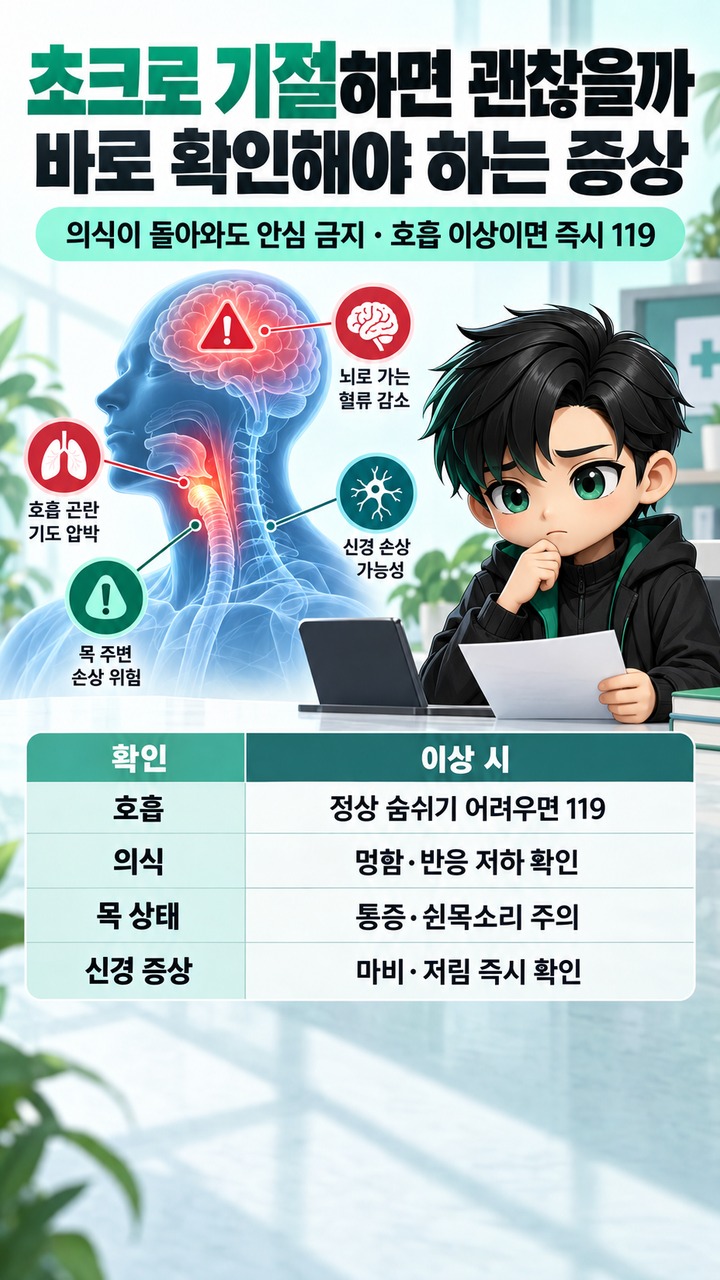
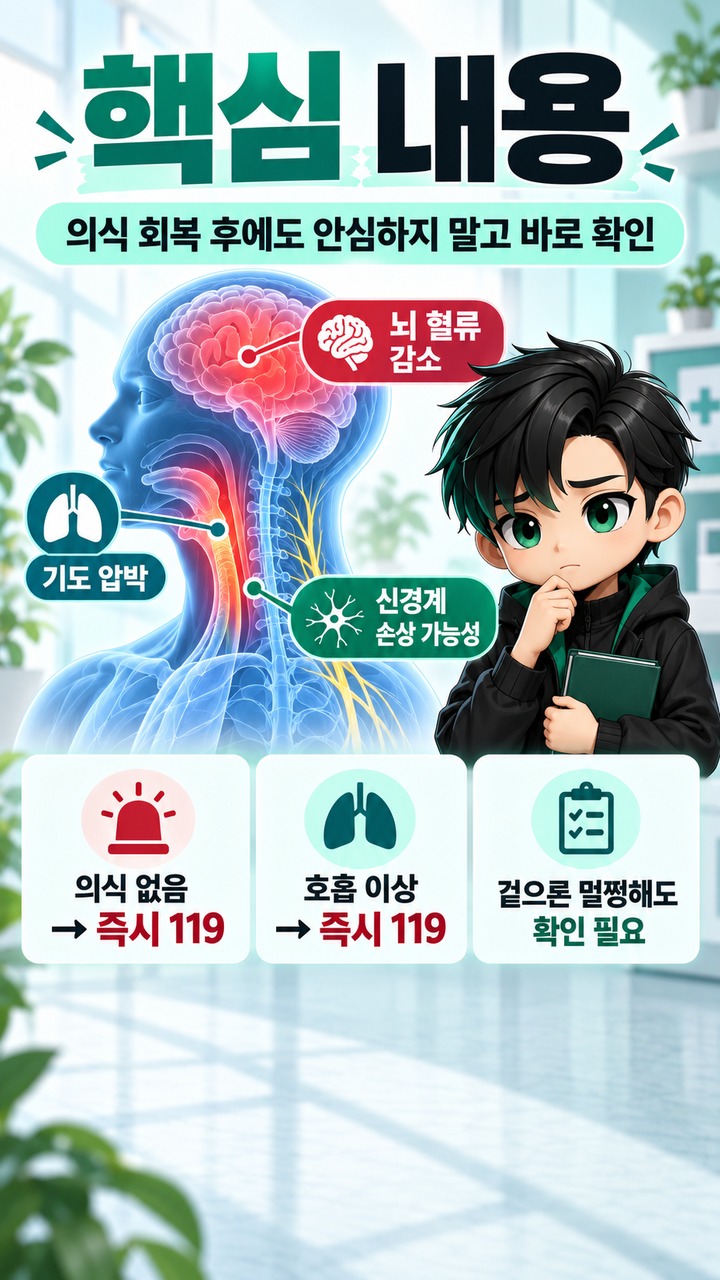
If someone loses consciousness even once after a chokehold that compresses the neck, it should not be dismissed as simply 'passing out briefly and waking up.' Pressure on the neck can reduce blood flow to the brain, and injuries to the airway, blood vessels, or nervous system may become apparent later, even if the person initially appears fine. If someone is unconscious or not breathing normally, call 119 immediately.
Following a recently reported incident in which a man in his 20s lost consciousness after being placed in a guillotine choke during a YouTube livestream and received hospital treatment, one important question remains: If someone loses consciousness from a chokehold and then wakes up, are they really safe?
Passing Out From a Chokehold Is Not Simply a Matter of Being Unable to Breathe
A so-called vascular chokehold used in combat sports can compress blood vessels around the neck and rapidly reduce blood flow to the brain. Research has identified reduced cerebral blood flow caused by carotid artery compression as an important mechanism behind loss of consciousness.
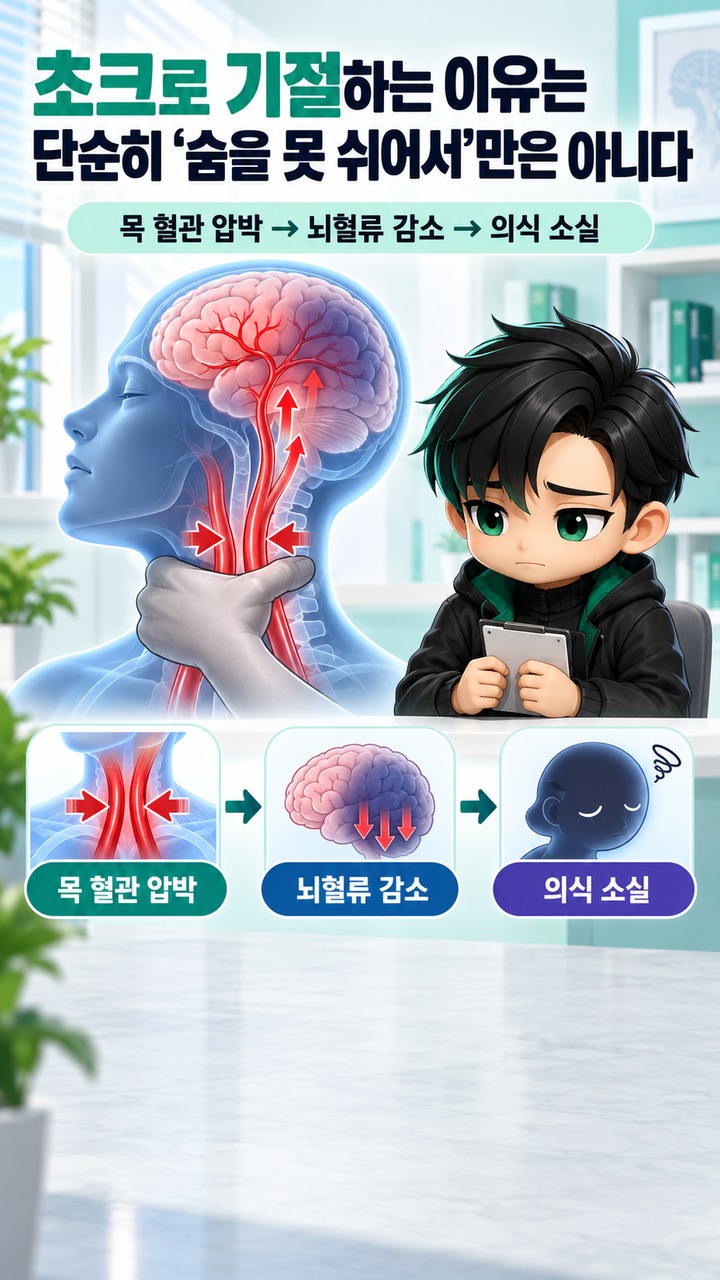
Therefore, the fact that someone was still breathing while being subjected to a chokehold does not necessarily mean they were safe.
The neck contains numerous vital structures, including the airway, carotid arteries, jugular veins, nerves, and larynx. The risks can vary depending on where pressure is applied, how much force is used, how long it lasts, and whether the person strikes their head while falling.
In particular, losing consciousness during neck compression is itself an important warning sign that blood flow to the brain may have been insufficient.
Why Medical Evaluation Is Necessary Even After Consciousness Returns
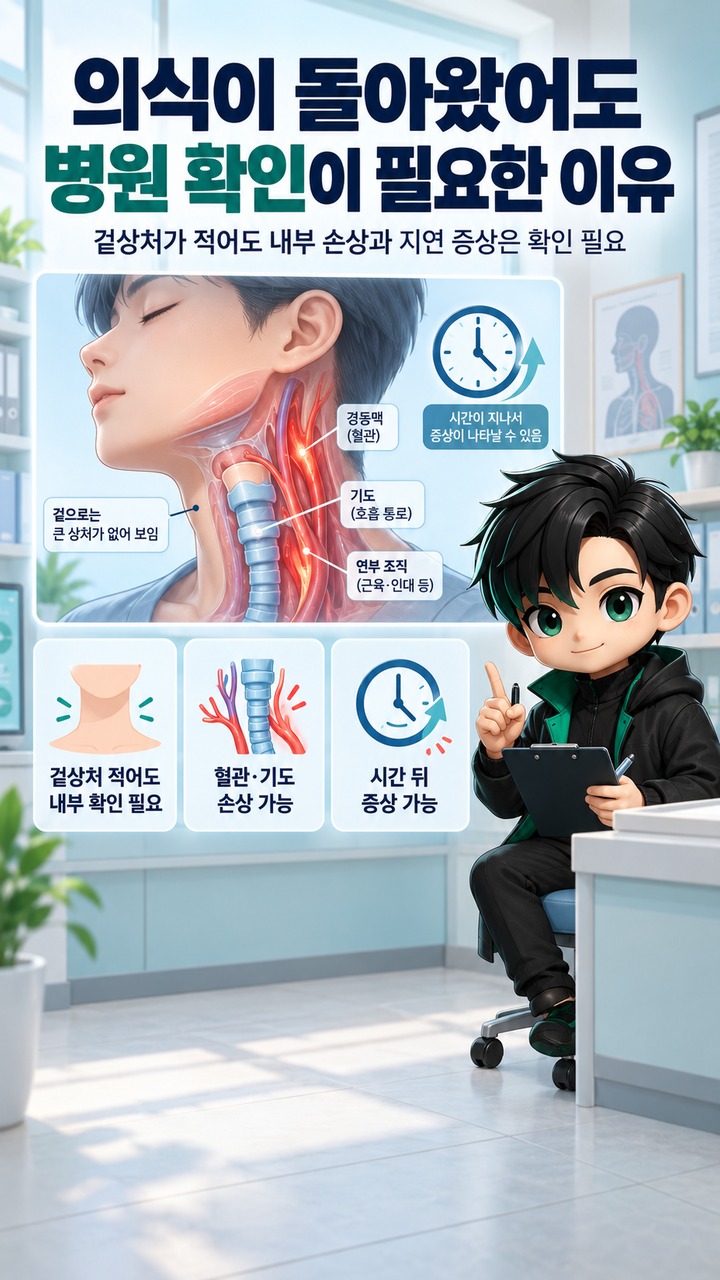
After neck compression, external injuries may not be readily visible. Even when there is little or no bruising or other visible injury, internal blood vessels or the airway may have been damaged. Some symptoms may not appear immediately and can develop later.
Medical literature has documented rare cases of carotid or vertebral artery injuries and strokes following chokeholds or other forms of neck compression. A review of research involving chokeholds in sports also identified cases of carotid artery dissection, vertebral artery dissection, and ischemic stroke. However, these case reports should not be interpreted as evidence that everyone subjected to a chokehold will necessarily experience the same complications.
The key point is not that 'the danger is over because consciousness has returned,' but that the person's condition must continue to be assessed afterward.
Symptoms That Require Immediate Emergency Evaluation
If any of the following changes occur after someone has been subjected to neck compression, the situation should be treated as a potential medical emergency.
| Change to Watch For | Why It Matters |
|---|---|
| Loss of consciousness or becoming dazed again | Reduced blood flow to the brain or a head injury must be evaluated |
| Difficulty breathing | Possible airway injury or swelling |
| Sudden hoarseness or voice changes | Possible injury to the larynx or airway |
| Difficulty swallowing saliva or food | Possible internal neck injury |
| Severe headache or dizziness | Possible neurological or vascular problems require evaluation |
| Weakness or abnormal sensations in the arms or legs | Possible neurological abnormalities |
| Confusion, memory problems, or vision changes | Possible brain or nervous system abnormalities |
| Seizures | A warning sign requiring immediate emergency evaluation |
Medical guidelines addressing nonfatal neck compression also identify breathing difficulties, voice changes, confusion, visual disturbances, seizures, and loss of consciousness as symptoms requiring urgent assessment.
In particular, if someone strikes their head against the floor or a wall during a chokehold, neck compression and head trauma should not be considered separate, unrelated concerns.
What Should You Do First if Someone Passes Out in Front of You?
The first step is to stop the chokehold or neck compression immediately and check whether the person responds.
If the person is unresponsive, even someone without medical training should not wait while trying to assess the situation alone. The general rule is to call 119 first. The Korea Disease Control and Prevention Agency's cardiopulmonary resuscitation guidelines also advise calling 119 after finding an unresponsive person and then checking their breathing.
Follow the instructions of the 119 emergency dispatcher to determine whether the person is breathing normally. If the person is unresponsive and is not breathing or is breathing abnormally, begin cardiopulmonary resuscitation (CPR).
Repeatedly slapping someone's cheeks or shaking them in an attempt to wake them up, as commonly depicted in movies and videos, is no substitute for assessing their condition. In particular, if the person may have injured their head or neck while falling, it is safer to avoid unnecessary movement.
Do Not Assume a Chokehold Is Safe for a Certain Number of Seconds
One of the most dangerous misconceptions about chokeholds is the idea that there is a specific number of seconds during which they are safe.
Research has shown that vascular compression of the neck can substantially reduce blood flow to the brain and cause loss of consciousness within a relatively short period. However, average times observed under research conditions do not provide a basis for declaring that a chokehold is safe for an individual as long as it remains below a particular duration.
There are too many variables in real-world situations, including the location and force of compression, an individual's vascular condition, preexisting medical conditions, alcohol consumption, and whether a head injury also occurs.
Therefore, allowing a chokehold to continue until someone passes out should never be used as a way to determine whether the technique is safe.
How Are Chokeholds in a Gym Different From Those in Other Situations?
Combat sports have safety measures such as rules, referees, tap-outs, and trained athletes. However, even in these environments, the fundamental nature of a chokehold remains the same: it is a technique that reduces blood flow to the brain.
Recent medical literature continues to investigate the long-term safety of vascular neck compression performed in appropriate sporting environments and notes that there is still insufficient research to establish its long-term effects conclusively.
In particular, applying a chokehold to an untrained person, using it during drinking sessions, broadcasts, or practical jokes, or continuing to apply pressure after the other person loses consciousness cannot be considered equivalent to the conditions of an officially regulated sporting competition.
If a 2ary accident also occurs, such as the person striking their head against the floor while falling, the risk factors become even more complex.
Ultimately, the Most Important Question Is Whether the Person Lost Consciousness
After someone has been subjected to a chokehold, the first things to assess are not the technique's name or how long it lasted, but whether the person lost consciousness and what symptoms developed afterward.
If someone has lost consciousness even once, or experiences symptoms such as difficulty breathing, voice changes, difficulty swallowing, severe headache, dizziness, paralysis or abnormal sensations, confusion, visual disturbances, or seizures, the incident should not be dismissed as a simple fainting episode. Neck compression can cause internal injuries even when there are almost no visible external signs.
If someone in front of you is currently unresponsive, the priority is not to compare symptoms online but to call 119 and follow the emergency dispatcher's instructions.
Medical professionals must determine whether an injury has occurred and which examinations are necessary by considering factors such as the degree of neck compression, whether consciousness was lost, any associated head trauma, and neurological symptoms.