

Youth Future Savings Preferential Government Contribution: 12% to 15%, 25% for Regional SME Workers? Will 2026 Subscribers Receive Retroactive Payments?
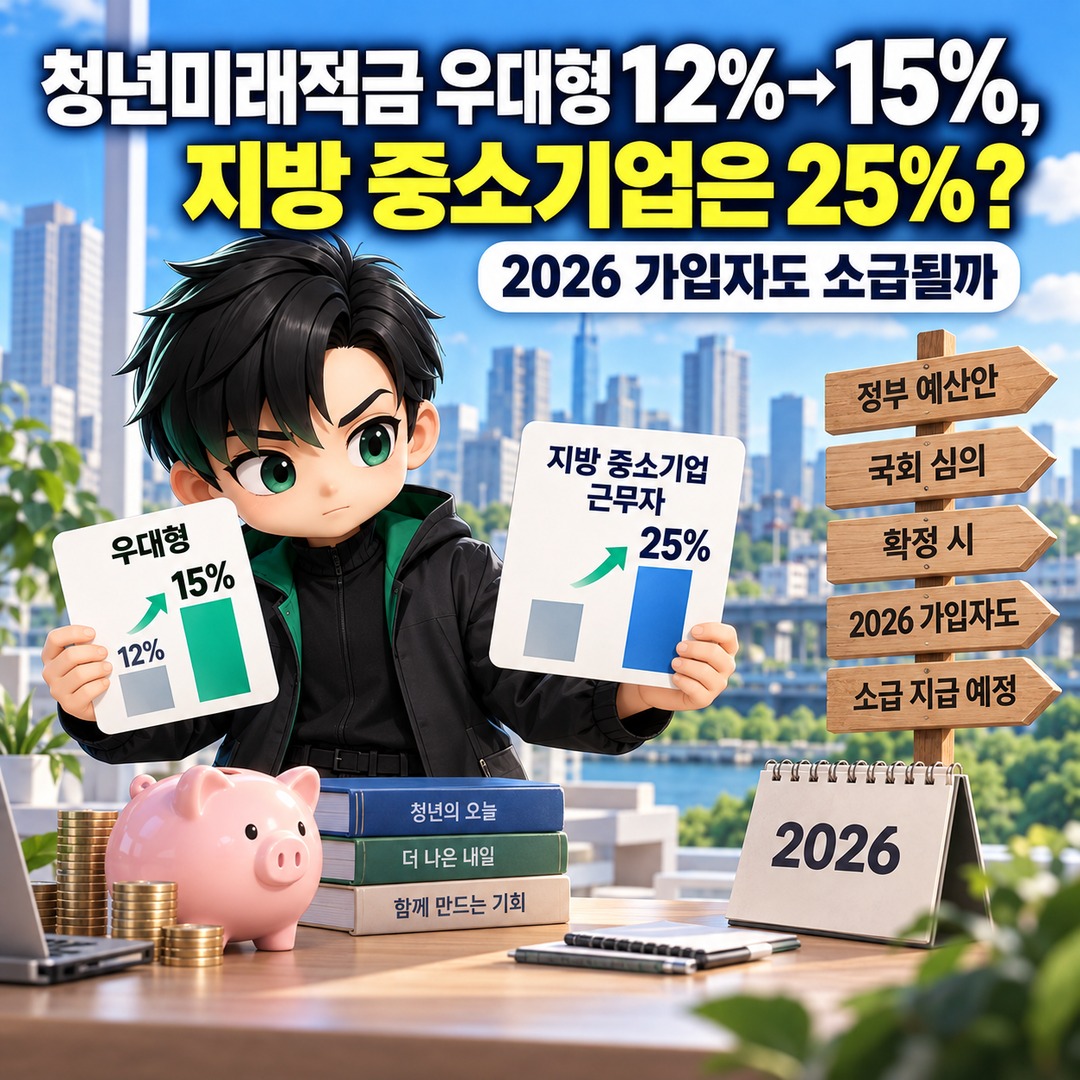
As of 2026-10-02, the government's budget proposal includes a plan to raise the government contribution rate for the preferential tier of the Youth Future Savings program from the current 12% to 15%, and to 25% for employees of regional small and medium-sized enterprises (SMEs). If the budget is finalized following National Assembly deliberations, the government plans to retroactively pay the increased contributions to preferential-tier subscribers who already enrolled in 2026. However, the proposed contribution rates have not yet been finalized.
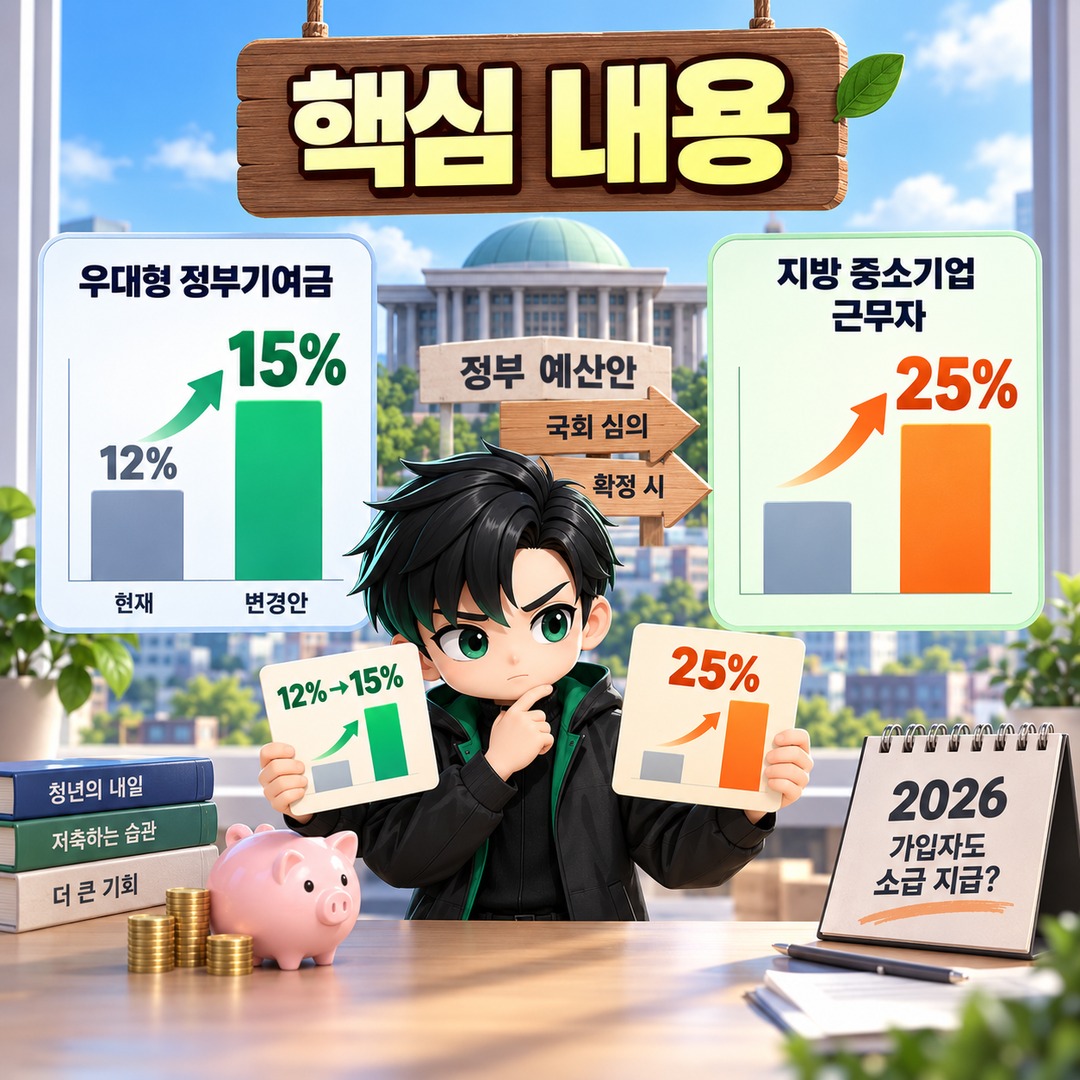
Following reports that existing government contributions and tax-exempt benefits will be preserved when switching from the Youth Leap Account to the Youth Future Savings program, the next question for prospective subscribers is how much the government contribution they receive after joining the new savings program could change.
The Currently Confirmed Preferential Contribution Rate Is 12%
Under the current Youth Future Savings program, the government contribution rate is 6% for the standard tier and 12% for the preferential tier. Government contributions are calculated by matching a specified percentage of monthly deposits. Subscribers can make flexible monthly deposits ranging from a minimum of KRW 1,000 to a maximum of KRW 500,000.

Therefore, assuming a subscriber deposits KRW 500,000 every month for all 36 months, the total principal will be KRW 18,000,000.
Under the current preferential contribution rate of 12%, the maximum government contribution is KRW 2,160,000.
KRW 500,000 × 36 months = KRW 18,000,000
KRW 18,000,000 × 12% = KRW 2,160,000
Bank interest is added to this amount, and the interest income is tax-exempt.
In examples provided by South Korea's Financial Services Commission (FSC), the estimated maturity payout for the preferential tier is approximately KRW 22,270,000 assuming an annual interest rate of 7%, and approximately KRW 22,550,000 assuming an annual interest rate of 8%. Each amount consists of the principal of KRW 18,000,000, government contributions of KRW 2,160,000, and interest. The actual amount received will vary depending on the applicable interest rate, actual deposits, and other factors.
The 2027 Budget Proposal Would Raise the Rate from 12% to 15%
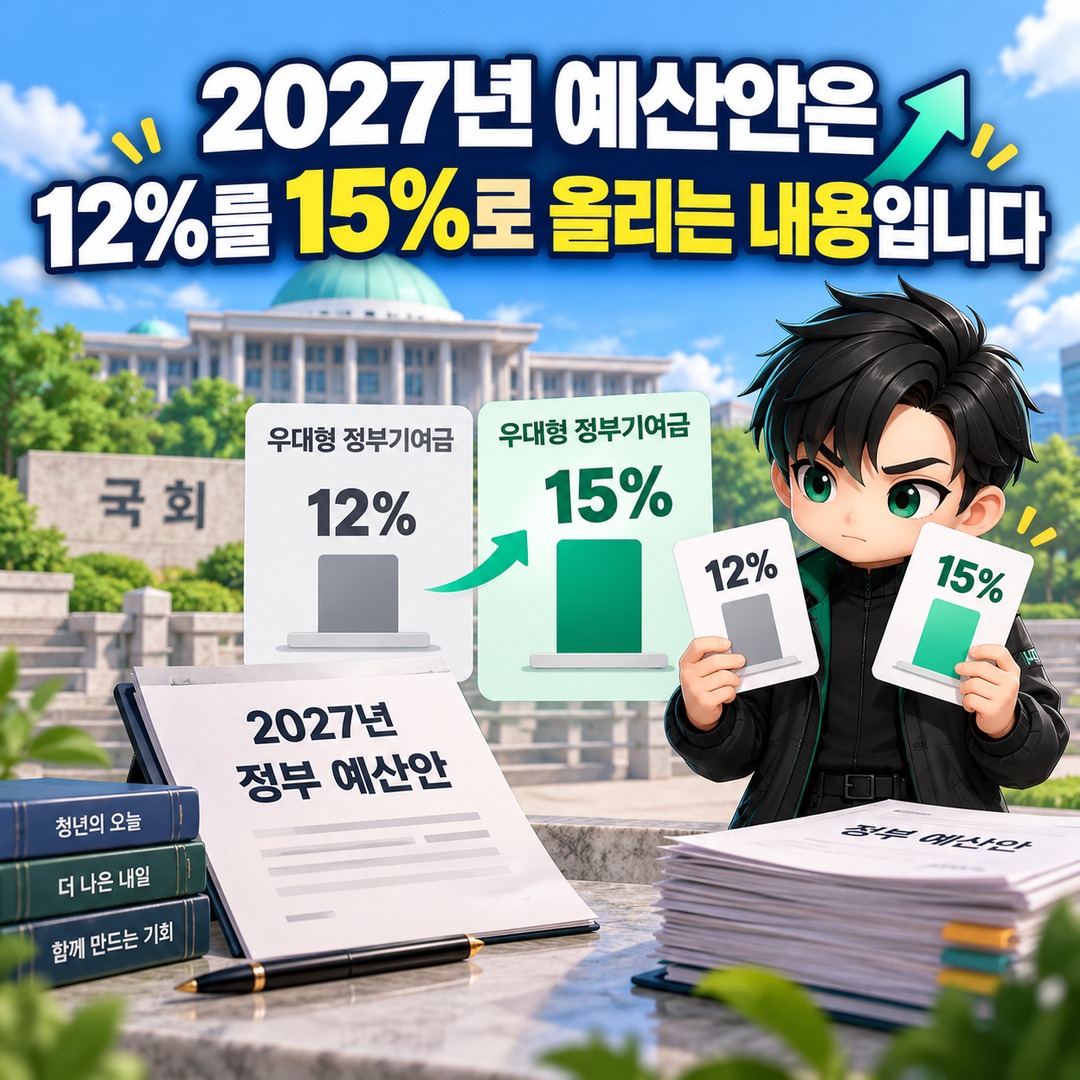
The government's 2027 budget proposal for the Youth Future Savings program, submitted to the National Assembly, includes an increase in the preferential government contribution matching rate from 12% to 15%.
In particular, the proposal includes applying a contribution matching rate of 25% to employees of regional SMEs.
Assuming monthly deposits of KRW 500,000 for 36 months, a simplified comparison between the current system and the budget proposal is as follows.
| Category | Contribution Rate | Contributions Over 36 Months |
|---|---|---|
| Current standard tier | 6% | KRW 1,080,000 |
| Current preferential tier | 12% | KRW 2,160,000 |
| Preferential tier under the 2027 budget proposal | 15% | KRW 2,700,000 |
| Regional SME employees under the 2027 budget proposal | 25% | KRW 4,500,000 |
The amounts above are calculations by the author assuming that monthly deposits of KRW 500,000 are made for all 36 months. It is important to distinguish that, as of 2026-10-02, 15% and 25% are proposed improvements included in the government's budget proposal, not contribution rates already approved by the National Assembly.
Compared with the current preferential rate of 12%, applying 15% would increase government contributions by KRW 540,000, while applying 25% would increase them by KRW 2,340,000.
Can People Who Already Enrolled in 2026 Receive 15%?

Yes, If the Budget Proposal Is Finally Approved.
The Financial Services Commission has stated that if the 2027 budget proposal is finalized following the National Assembly's budget review, the increased preferential government contributions are expected to be paid retroactively to existing Youth Future Savings subscribers.
Therefore, subscribers who enrolled through the 1th or 2th recruitment round in 2026 do not necessarily need to assume that the current 12% rate will remain fixed throughout 3.
Conversely, subscribers should not treat 15% or 25% as guaranteed benefits when making calculations now. The proposal is still subject to National Assembly deliberations.
The appropriate approach is to assess eligibility and financial plans using the currently confirmed terms, while separately checking whether the proposed increases are ultimately approved.
15% and 25% Will Not Apply to Everyone
This is one of the most easily misunderstood aspects of the proposed contribution increase. 15% and 25% do not mean that government contributions will increase uniformly for every Youth Future Savings subscriber.
Under the current system, the standard-tier contribution rate is 6%, while the preferential rate of 12% applies to eligible new hires and existing employees of SMEs, as well as eligible small business owners, who meet specified conditions. The government's 2027 budget proposal would raise the preferential rate to 15% and apply 25% to regional SME employees.
Under the current preferential-tier rules, SME employees must have worked at an SME for a total of at least 29 months by one month before maturity. Additional requirements apply, including a limit of 2 permitted job changes during the subscription period.
Therefore, simply being enrolled in the Youth Future Savings program does not automatically establish eligibility for 15% or 25%.
What Should Applicants in the 2th Recruitment Round Use as Their Basis?
Applications for the 2th Youth Future Savings recruitment round in 2026 are accepted from October 7 through 16. Following eligibility screening, accounts are scheduled to be opened from November 16 through 27. This screening uses confirmed income for 2025.
When deciding whether to enroll, applicants should first use the currently confirmed contribution rates of 6% and 12%, together with the bank interest rate that will actually apply to them, as their basis.
They can then consider the possibility that the preferential contribution rate may increase and be applied retroactively to existing subscribers if the 2027 budget proposal is approved.
In particular, both assuming that 15% or 25% will apply immediately because benefits may improve later and assuming that the current 12% rate can never change are inconsistent with what has been announced so far.
The Key Question Is Whether the National Assembly Approves the Proposal
As of 2026-10-02, the confirmed preferential government contribution rate for the Youth Future Savings program is 12%.
If the 2027 budget is approved as proposed by the government, the preferential rate will increase to 15%, while the rate for regional SME employees will rise to 25%. The government also plans to pay the increased preferential contributions retroactively to existing Youth Future Savings subscribers.
Therefore, people who have already enrolled or intend to apply during the 2th recruitment round should not yet assume that they must open a new account or wait to qualify for retroactive benefits. The most important developments to monitor are the outcome of the National Assembly's deliberations on the 2027 budget and the finalized detailed eligibility and application criteria.