

Stock Market: Tech Stocks Rose Even After the September FOMC Meeting—Key Factors to Watch Beyond the 3.75–4.00% Interest Rate
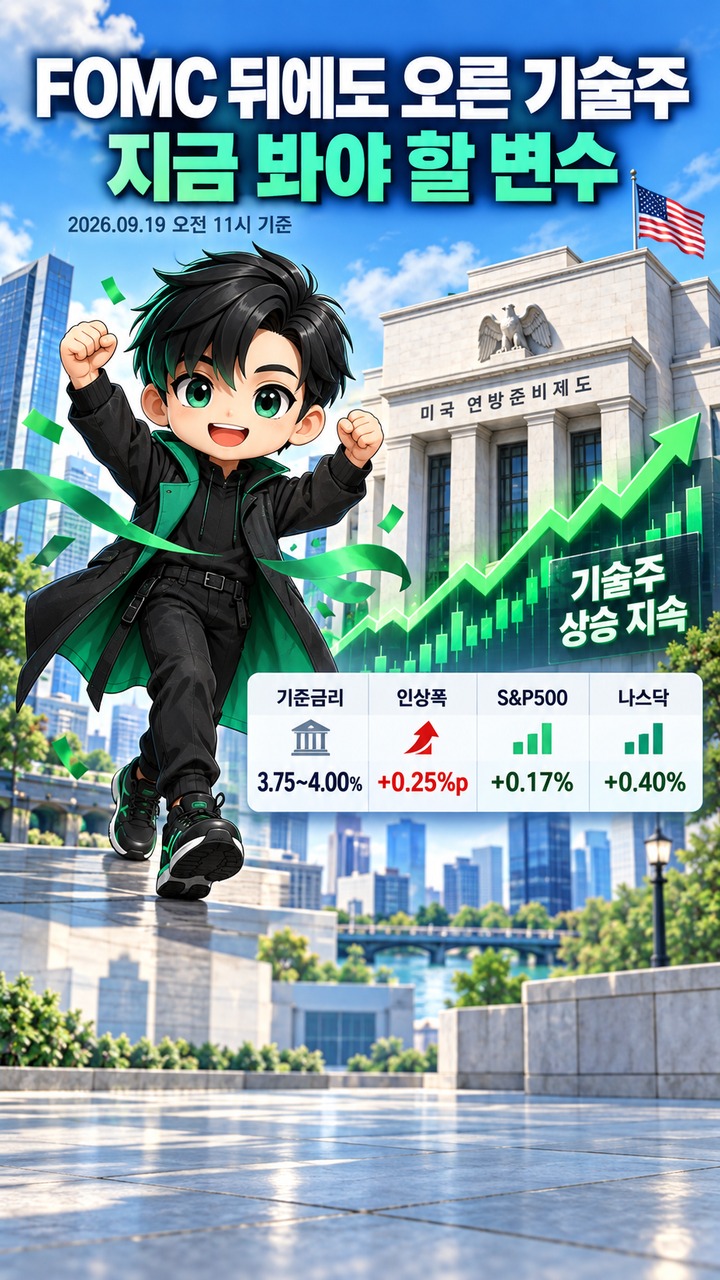
As of 2026-09-19 at 11 a.m. Korea time, the U.S. Federal Reserve had raised its benchmark interest rate target range by 0.25% percentage points to 3.75–4.00% at the September FOMC meeting. Yet in U.S. trading on 18, the S&P500 and Nasdaq rose by 0.17% and 0.40%, respectively. This makes it difficult to judge the direction of the stock market based solely on an interest rate increase.
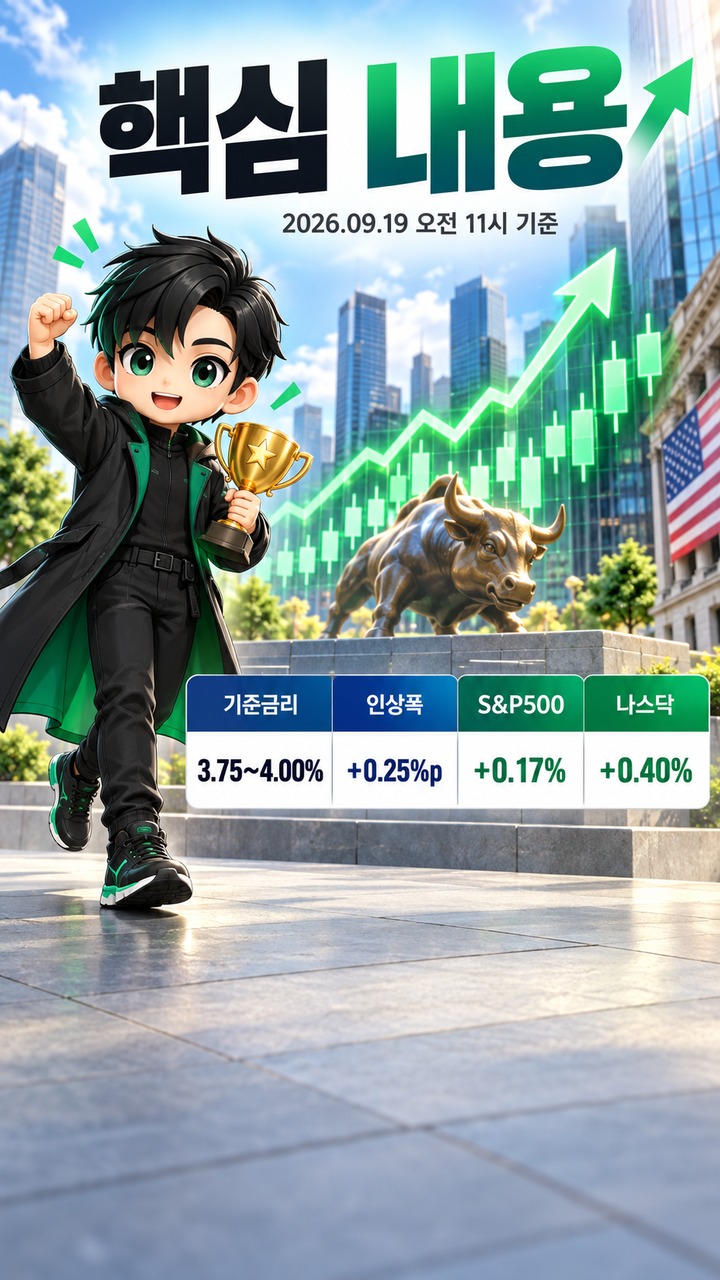
The South Korean stock market is closed for regular trading on Saturday, 19. Ahead of the next trading session, the key issue is not simply the rise in U.S. technology stocks, but the fact that U.S. Treasury yields and international oil prices remain elevated.
Why Didn't U.S. Stocks Immediately Collapse After the Rate Hike?
On September 18, U.S. stock indexes moved in different directions. The S&P500 rose 0.17% to 7,650.50, while the Nasdaq Composite gained 0.40% to 26,522.55. In contrast, the Dow Jones Industrial Average fell 0.18% to 51,682.64.
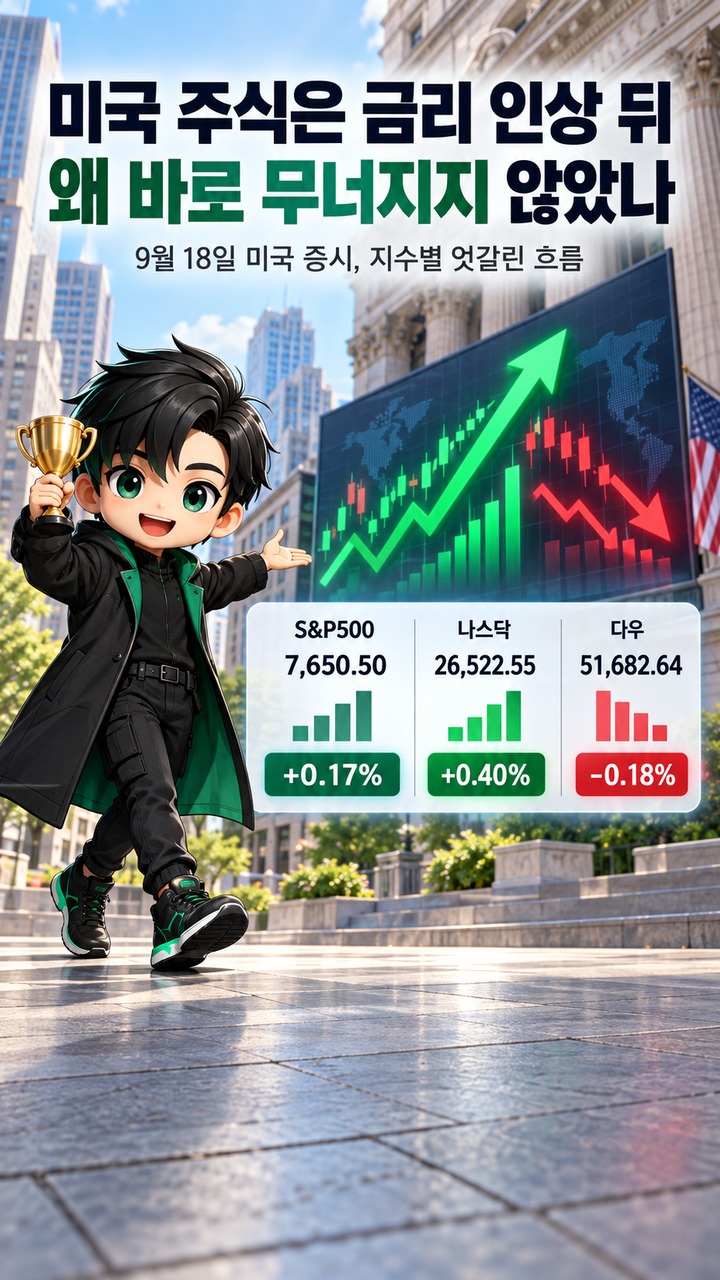
The gains were not evenly distributed across the market. On the New York Stock Exchange, declining stocks outnumbered advancing stocks. On the Nasdaq, 2,810 stocks declined while 1,973 advanced.
Looking only at the rising indexes could give the impression that the entire market was strong, but the underlying picture was different. Strength in semiconductor stocks helped lift the S&P500 and Nasdaq, even as declining stocks outnumbered advancing stocks across the broader market.
What Was Actually Decided at the September FOMC Meeting?
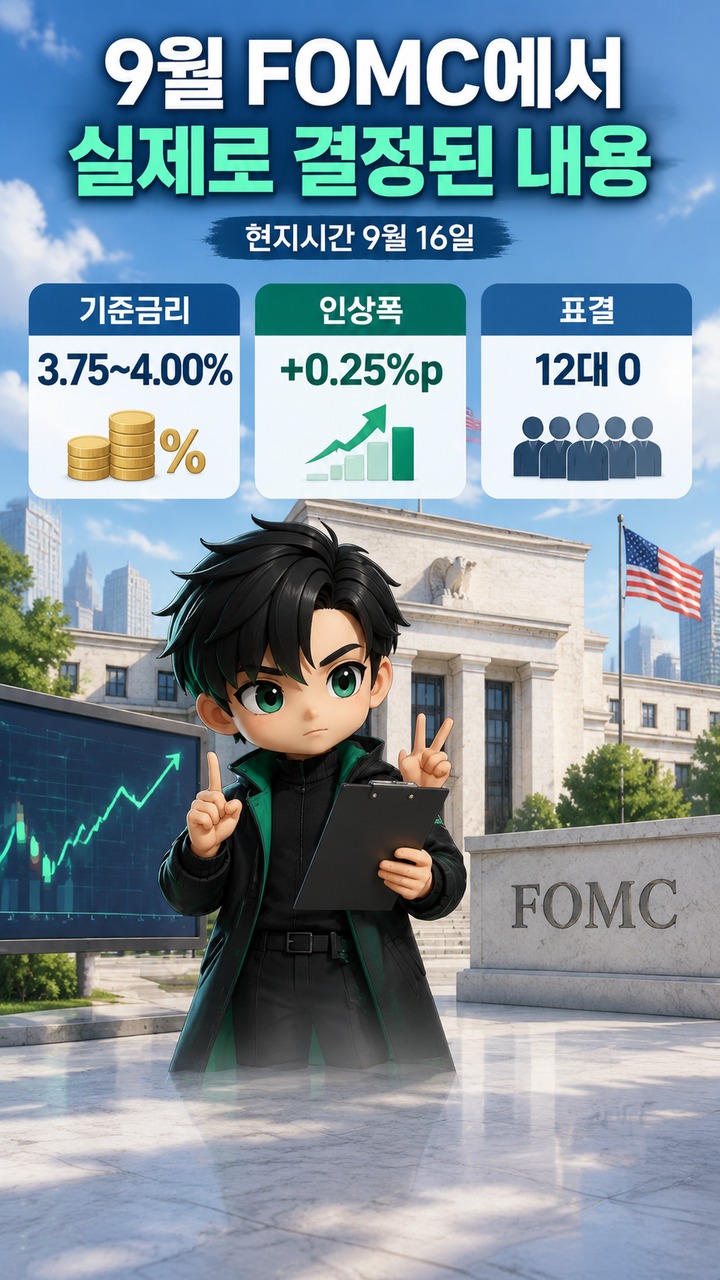
On September 16 local time, the Federal Open Market Committee raised the federal funds rate target range by 0.25% percentage points to 3.75–4.00%. The vote was 12 to 0.
The Fed assessed that economic activity was expanding at a solid pace and domestic spending remained resilient. At the same time, it stated that inflation was still elevated.
Rather than interpreting the latest stock market movements simply as 'stocks rose despite a rate hike,' investors need to examine how bond yields, oil prices, and sector-specific investment flows respond after the increase.
U.S. 10-Year Treasury Yields Will Be Important in the Next Trading Session
On September 18, the yield on the U.S. 10-year Treasury rose to around 5%. International oil prices also remained above 100 dollars per barrel that day.
If elevated market interest rates and high oil prices persist simultaneously, there is no guarantee that stocks will continue moving in the same direction. In fact, on 18, technology-heavy indexes advanced while the Dow declined, and falling stocks outnumbered rising stocks overall.
For the next trading session, it will therefore be more useful to monitor the direction of U.S. 10-year Treasury yields around 5% and whether international oil prices remain above 100 dollars, rather than focusing solely on the fact that the Nasdaq rose.
Trading Rules for South Korean Stocks Have Also Changed, With Trading Available Until 8 p.m.
For domestic investors, changes to the trading system itself are another important consideration, separate from the direction of the market.
The Korea Exchange introduced the KRX Aftermarket on 2026-09-14. Following regular trading from 9 a.m. to 3:30 p.m. and the after-hours closing-price trading session, investors can trade stocks in real time from 4 p.m. to 8 p.m.
The previous after-hours single-price trading session, which operated from 4–6 p.m., has been abolished. Previously, orders were collected and matched at 10-minute intervals. In the KRX Aftermarket, orders are executed in real time through continuous trading.
However, not all products can be traded until 8 p.m. ETFs and ETNs are excluded from KRX Aftermarket trading. Market orders are also prohibited, while limit orders, best-limit orders, and best-available-limit orders are permitted.
Be Especially Careful With Low-Volume Stocks in the Aftermarket
Longer trading hours do not mean that trading conditions are identical to those of the regular session.
On September 14, the first day of KRX Aftermarket operations, static and dynamic volatility interruption mechanisms were triggered a total of 1,637 times. During the regular session on the same day, they were triggered 400 times.
Based on the number of activations alone, the aftermarket recorded approximately 4.1 times as many triggers as the regular session. However, this figure should not be interpreted as meaning that overall price volatility in the aftermarket was 4 times greater than during regular trading. The number of volatility interruption triggers and the overall market price fluctuation rate are different indicators.
According to the Korea Exchange, the high-low price volatility of individual stocks on the KOSPI was 4.1% during regular trading and 2.9% in the aftermarket. For the KOSDAQ, the corresponding figures were 5.8% and 4.6%.
On the first day, the number of tradable stocks increased significantly, but some small- and mid-cap stocks experienced sharp price movements even on relatively small orders because there were insufficient buy and sell quotes. This is why investors using the afternoon trading session should check both trading volume and order-book conditions.
Key Figures Stock Investors Should Check Before the Next Trading Session
At this point, investors need to examine different market signals separately rather than determining market direction from a single index.
The U.S. benchmark interest rate has risen to 3.75–4.00%, and the U.S. 10-year Treasury yield reached around 5% on September 18. On the same day, the S&P500 rose 0.17% and the Nasdaq gained 0.40%, while the Dow fell 0.18%.
In other words, technology-heavy indexes advanced despite the interest rate increase, but the broader market did not move uniformly in the same direction.
In South Korea, the KRX Aftermarket now operates until 8 p.m., giving investors more time to respond to overseas market developments and company-related information after the regular session closes. Conversely, investors in thinly traded stocks need to pay attention to gaps in the order book and potential price fluctuations.
To prepare for the next trading session, one approach is to first examine U.S. 10-year Treasury yields, international oil prices, and the performance of U.S. semiconductor and technology stocks, then separately assess investment flows and trading volumes for individual South Korean stocks.
A single day's rise or fall in a particular index cannot reliably predict future stock prices. Stock prices are influenced by multiple factors, including corporate earnings, investment flows, exchange rates, and geopolitical developments, as well as interest rates and oil prices. Investors may lose their principal.
※ This article is provided for informational purposes to help readers understand market developments and does not constitute investment advice or a recommendation to buy any particular stock or asset. All final investment decisions and responsibility for those decisions rest with the individual investor.