

Why a Stock Stop-Loss Order May Not Fill—and How Market and Limit Orders Affect Your Loss
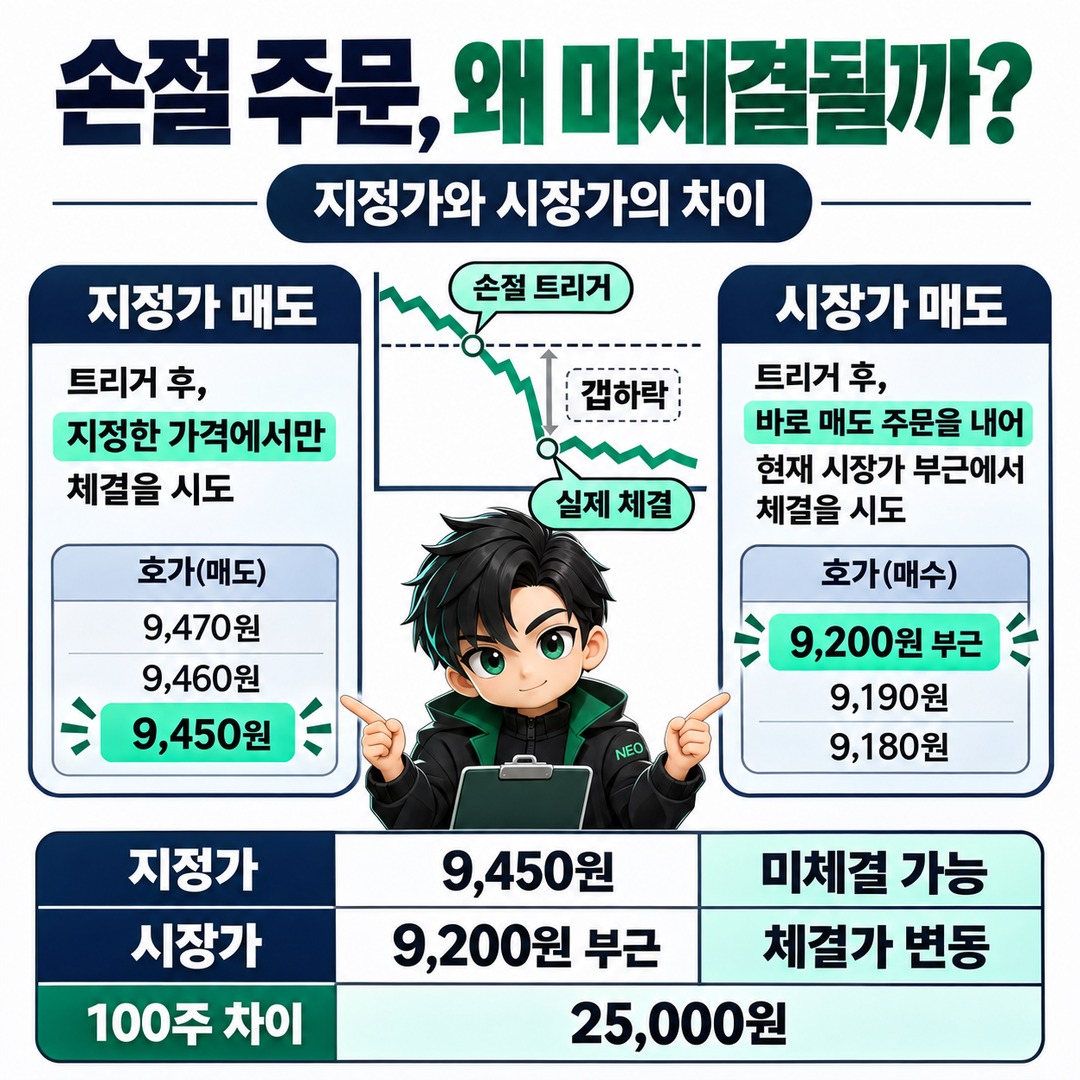
A stock reaching your stop-loss price does not guarantee a sale at that price. A limit sell order can help you maintain your desired price, but it may not fill; a market sell order is more likely to fill, but it may execute at a lower price than expected. The gap between the stop price and the actual execution price can widen, especially during a sharp drop or just after the market opens.
A stop-loss order does not fill the moment the price is reached
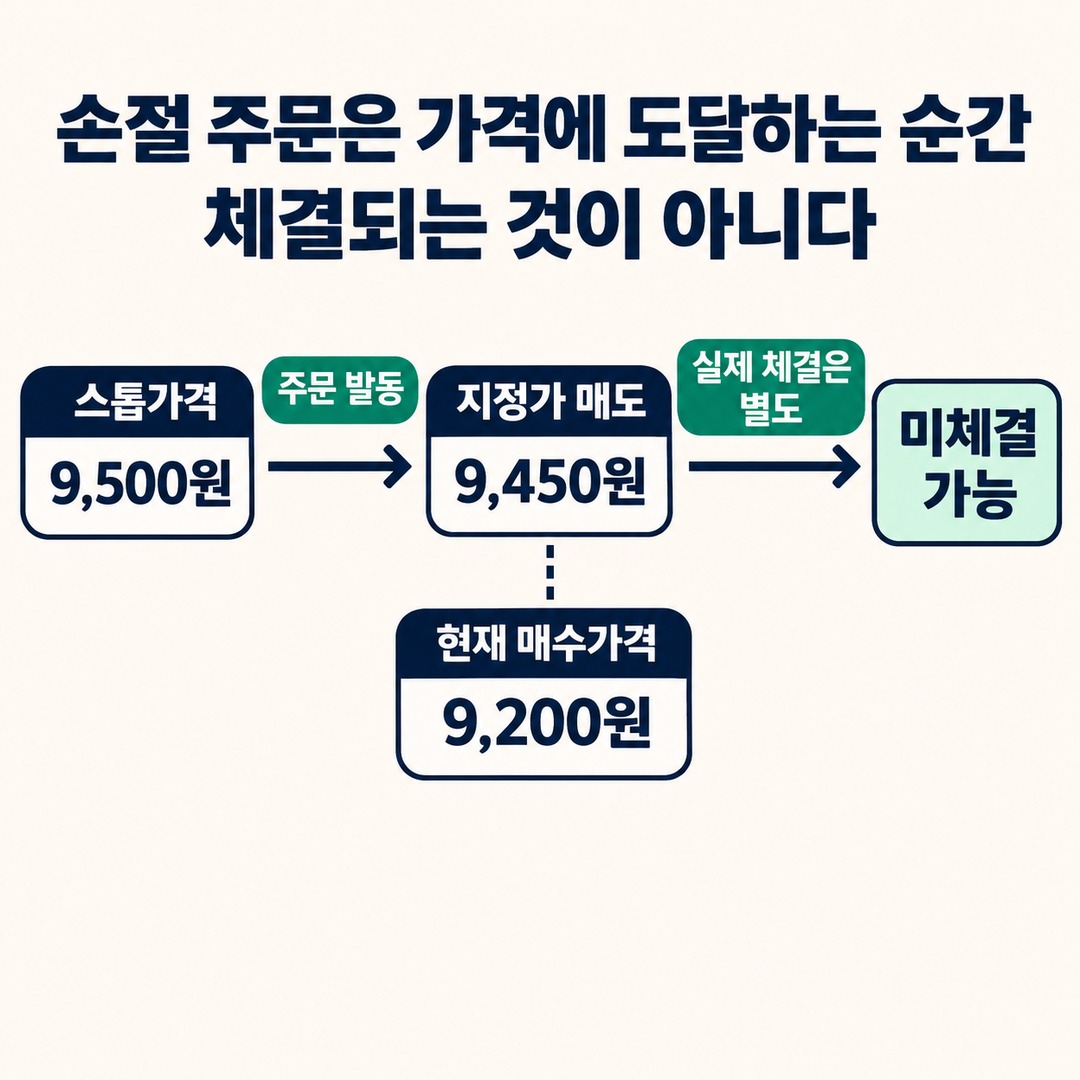
For domestic stocks, standard limit orders and market orders have different execution conditions. A stop-limit order, in particular, enters the market as a limit order at the specified price once the set stop price is reached. This means triggering the order and completing the sale are separate events.
The differences reflected in the Korea Exchange’s order methods and brokerage trading guides are as follows.
| Order type | Price condition | Key feature |
|---|---|---|
| Limit sell | Specifies the desired selling price | Maintains the price, but may not fill |
| Market sell | No price specified | Fills based on available buy quotes |
| Stop-limit sell | Sets a stop price and a limit price | Enters the market as a limit order once the condition is met |
The key distinction here is between price protection and the likelihood of execution.
A limit sell order sets a price condition so the stock will not be sold below the specified price. However, the trade may not go through if there are not enough buyers.
A market sell order does not specify a price and trades against available buy quotes, so it may fill relatively quickly. However, during a sharp drop, it may execute at a lower price than expected.
With a stop-limit order, the stop price and the actual order price are separate
A stop-limit order has two distinct prices:
Stop price: The threshold price that activates the order
Limit price: The price applied when the activated order enters the market
Suppose the order is set up as follows:
Shares held: 100 shares
Stop price: KRW 9,500
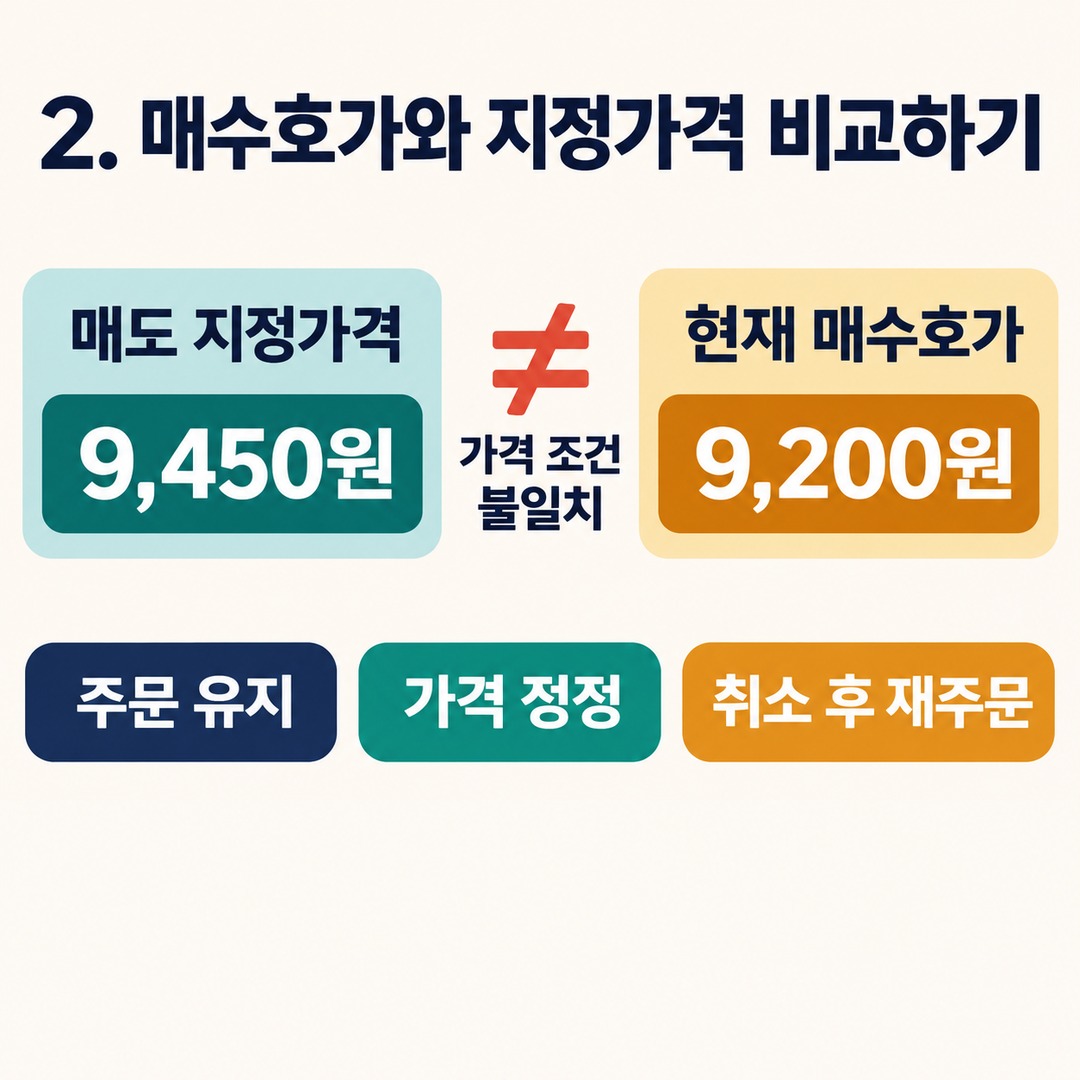
Limit sell price: KRW 9,450
When the stock price reaches KRW 9,500, the stop-limit order activates and enters the market as a limit sell order at KRW 9,450.
But a problem arises if the stock price has already fallen to KRW 9,200.
Investors looking to buy at KRW 9,200 will not match with an order to sell at KRW 9,450. As a result, if the buy quotes do not rise to KRW 9,450 or higher, the order may remain unfilled.
Setting a stop price does not guarantee that your loss will be fixed at that price.
How much can the difference be? A calculation based on 100 shares
Let’s calculate an example in which an order is set for 100 shares, with a stop price of KRW 9,500 and a limit sell price of KRW 9,450.
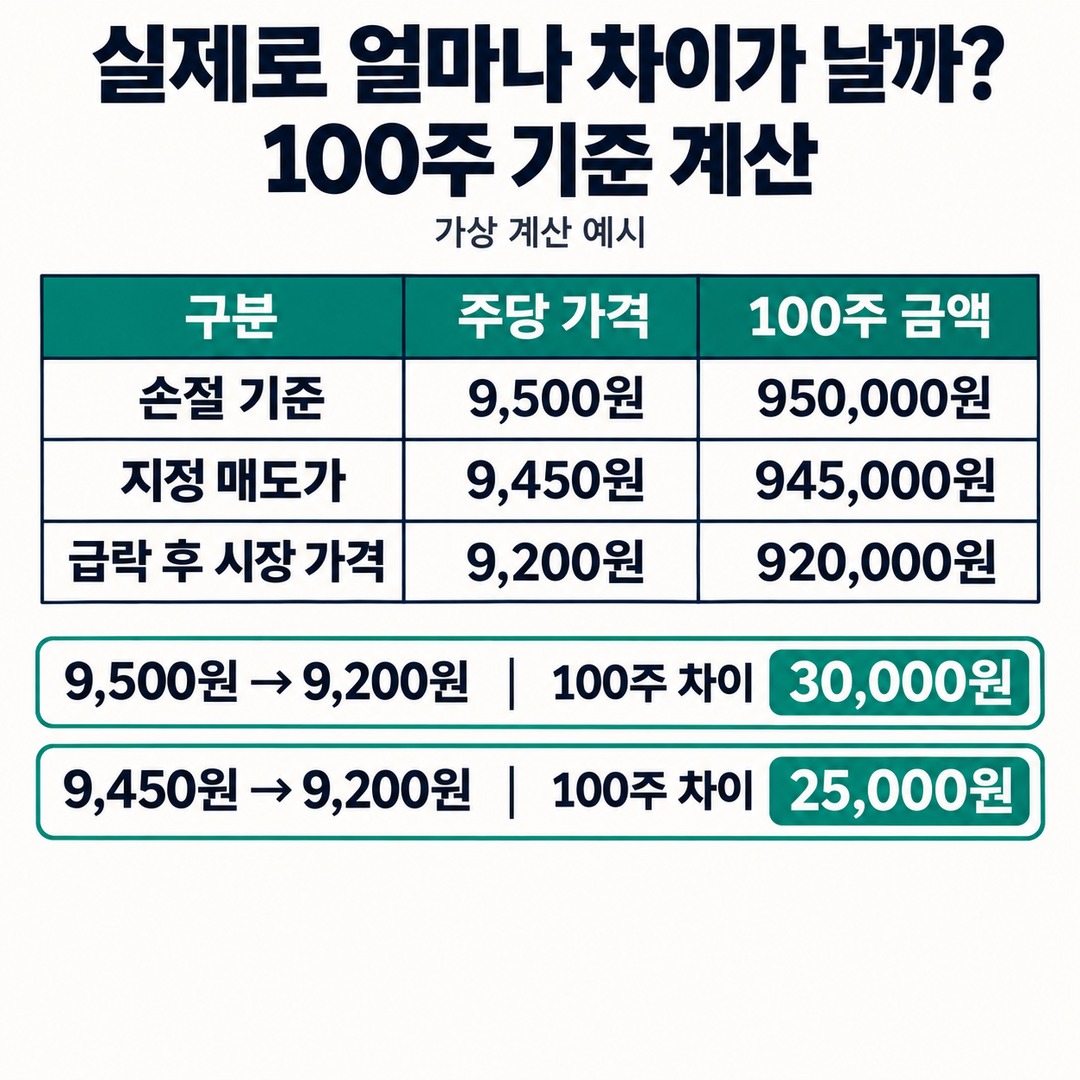
This is a calculation example using hypothetical prices, not an actual trade.
| Scenario | Price per share | Proceeds from selling 100 shares |
|---|---|---|
| Planned stop-loss level | KRW 9,500 | KRW 950,000 |
| Limit sell price | KRW 9,450 | KRW 945,000 |
| Market price after a sharp drop | KRW 9,200 | KRW 920,000 |
Comparing the price differences based on the author’s calculations:
Drop from KRW 9,500 to KRW 9,200: a difference of KRW 300 per share
Difference for 100 shares: KRW 30,000
Difference between KRW 9,450 and KRW 9,200: KRW 250 per share
Difference for 100 shares: KRW 25,000
In this situation, the limit order at KRW 9,450 may not fill.
By contrast, a market sell order may fill against buy quotes around KRW 9,200, but the actual average execution price depends on the available quote volume and order size.
A market order does not guarantee that the entire quantity will fill at a single price.
Why is it risky when the stock price gaps past the stop price?
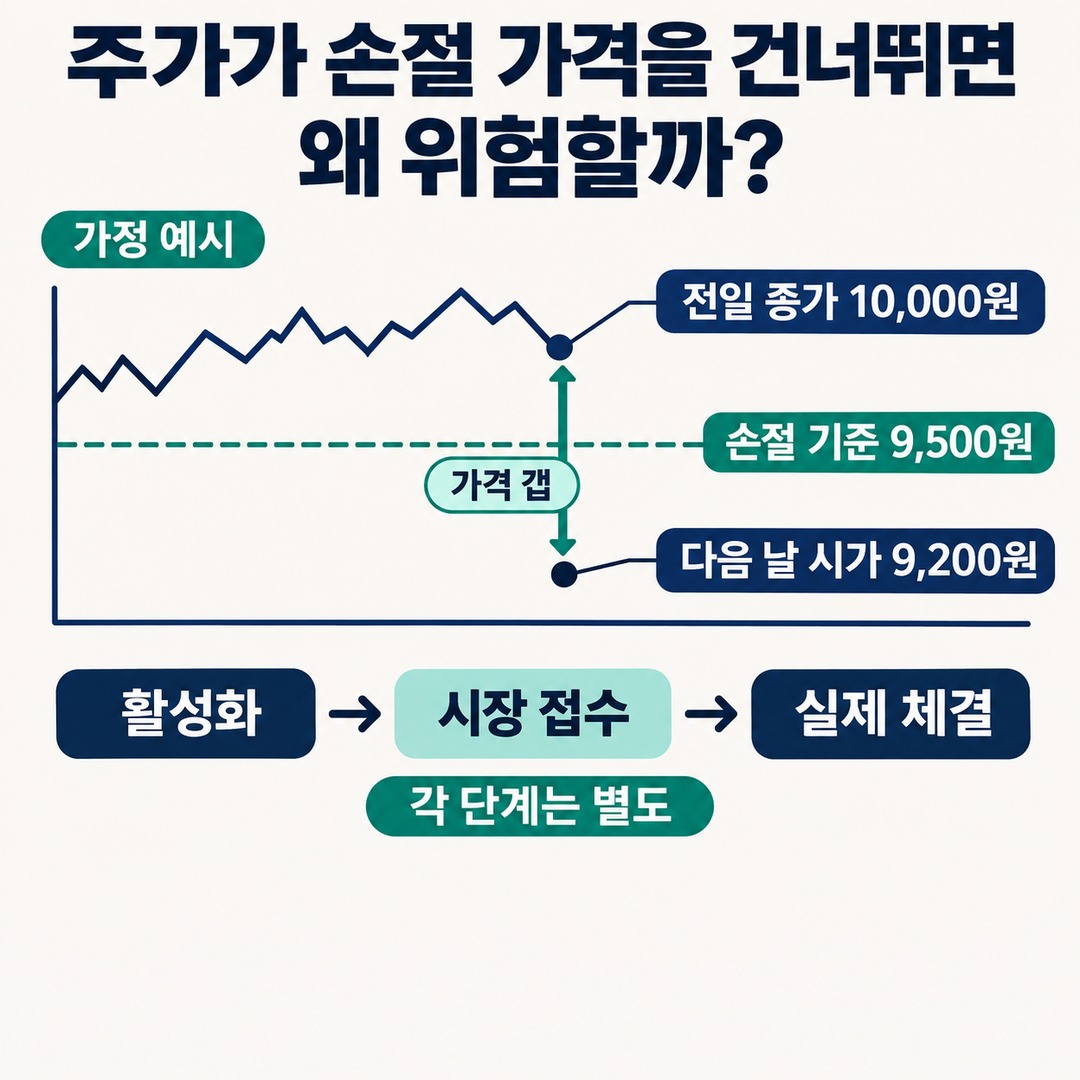
A gap down is the situation that calls for the most caution.
A gap down occurs when the next trading day’s opening price is significantly below the previous trading day’s closing price. It can happen when bad news emerges before the market opens or when views of a company’s results change sharply.
For example, suppose the previous day’s closing price was KRW 10,000 and the stop-loss level was KRW 9,500.
If the stock opens at KRW 9,200 the next day, there may have been no opportunity to sell normally at KRW 9,500.
There are three things to check:
1. Was the stop-loss order actually activated?
2. Was the activated order submitted to the market?
3. Was the submitted order actually filled?
These are three separate stages.
In particular, do not assume that all your shares have been sold just because the screen shows that the order was activated.
That is why you need to check whether any unfilled quantity remains.
What to check when a stop-loss order does not fill
If the order was triggered but shares remain in your account, check the following in order.
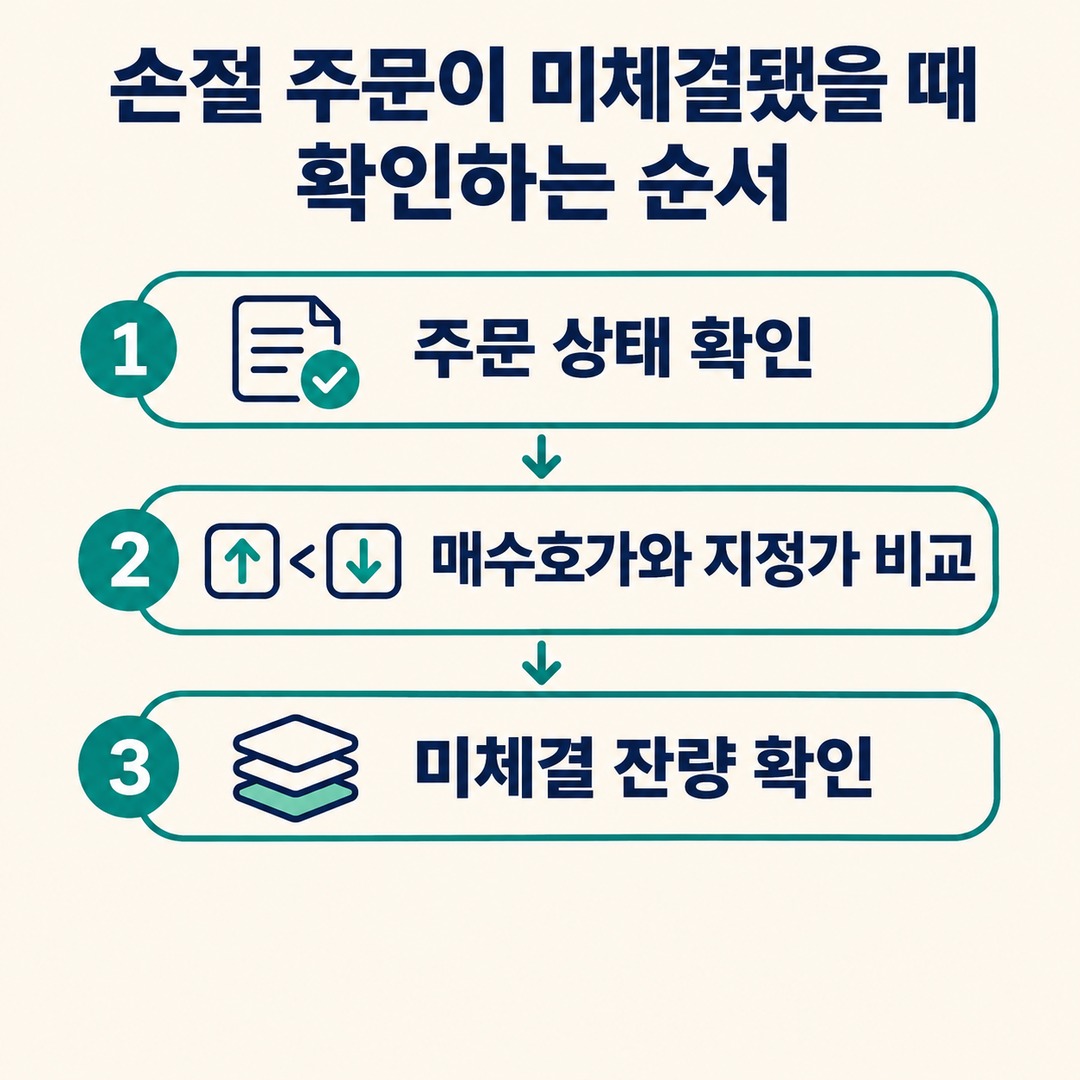
1. Check the order status first
Check the following statuses on the unfilled orders or order history screen in your brokerage app:
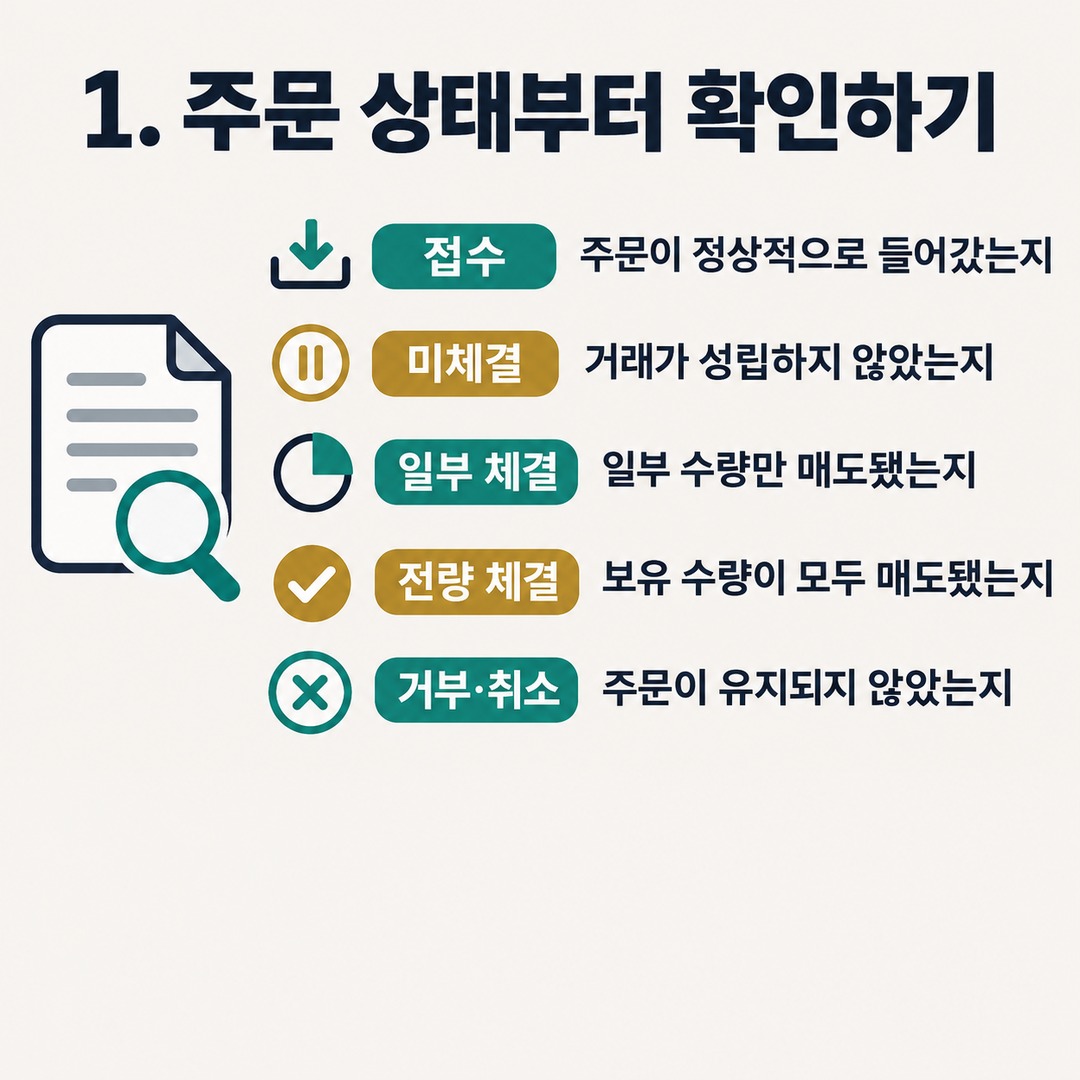
Accepted: Whether the order was successfully submitted
Unfilled: Whether the order was submitted but the trade was not completed
Partially filled: Whether only some of the order quantity was sold
Fully filled: Whether all the shares held were sold
Rejected or canceled: Whether the order failed to remain active
2. Compare the buy quote with the limit price
If the limit sell price is KRW 9,450 and the current buy quote is KRW 9,200, the price conditions do not match.
At that point, decide whether to leave the unfilled order open, change its price, or cancel it and submit a different order.
3. Check the remaining quantity
If only 40 shares out of 100 shares have filled, you still hold the remaining 60 shares.
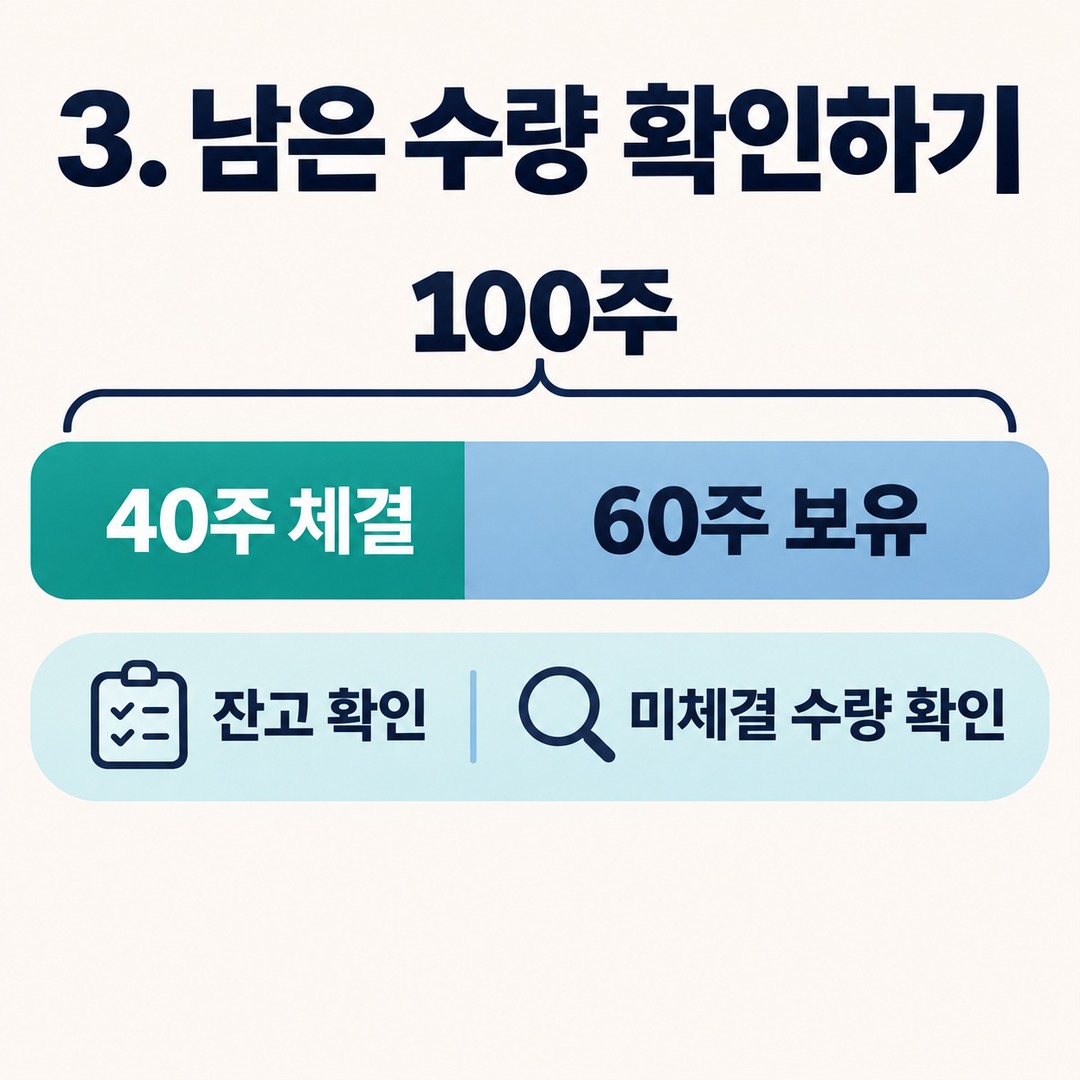
Check both your holdings and the unfilled quantity so you do not mistake a partial fill for a sale of all your shares.
4. Check whether the order is available in that market
For domestic stocks, trading hours and order types may differ between the Korea Exchange (KRX) and the alternative trading system Nextrade (NXT).
The order types supported also vary by brokerage.
For example, Mirae Asset Securities’ domestic stock trading guide lists stop-limit orders as supported in the KRX regular market, but does not list stop-limit orders among the NXT order types. Therefore, check which market you are routing the order to, even for the same stock. Mirae Asset Securities+1
4 situations that call for particular caution with stop-loss orders
| Situation to watch | Possible problem |
|---|---|
| Gap down before the market opens | The price may skip past the stop level |
| Low trading volume | Limit order may not fill |
| Rapid quote changes | Market order may fill at a worse price |
| Partial fill | Remaining shares continue to be held in the account |
Market conditions such as trading halts, volatility interruption (VI), order entry hours, and price limits must also be considered.
Under the Korea Exchange’s order system, a market order trades at the price formed in the market without specifying a price. The Exchange also notes that prices can move sharply when supply and demand in buy and sell quotes are imbalanced. Stock Market Trading System+1
When setting a stop-loss price, account for the order type too
Setting the stop-loss price at KRW 9,500 does not guarantee that the actual loss will be limited to KRW 9,500.
In the 100-share example calculated earlier, selling at KRW 9,500 versus selling at KRW 9,200 results in a difference of KRW 30,000.
Therefore, when calculating how many shares to buy, consider potential gap downs, the difference between the expected and actual execution price, fees, and taxes—not just the stop price.
If you need to manage your account’s loss limit strictly, check each of the following separately:
Planned stop-loss price
Expected execution price
Number of shares held
Trading fees
Taxes related to the sale
Potential additional losses from sharp price movements
A stop-loss order does not completely cap your loss at a fixed amount. It is a trading tool whose price conditions and likelihood of execution depend on the order type.
Frequently Asked QuestionsQ. Why are my shares still in my account after the stock reached my stop-loss price?
Even if a stop-limit order is triggered, it may not fill if there are no buy quotes at the limit price. Check the order status and any remaining unfilled quantity.
Q. If I sell at market, will the order always fill immediately?
A market order trades at the current buy quotes without specifying a price. However, depending on market conditions—such as available quote volume, trading halts, and order restrictions—execution may be delayed or some of the order may remain unfilled.
Q. What is the difference between a stop-limit order and a standard limit order?
A standard limit order enters the market with its limit-price condition as soon as it is submitted. A stop-limit order first has to meet the stop-price trigger condition before entering the market as a limit order.
Q. Do stop-loss order features vary by brokerage?
Yes. Supported order types, eligible markets, and order validity periods may differ. For the most accurate information, check the latest trading guide and order screen from your brokerage.
※ This article is for reference to help readers understand market movements and is not an investment recommendation for any particular stock or asset. You are responsible for your final decisions and investments.