

Does Lee Hyun-jung's Gold Medal Mean Military Exemption? The Rules Require 34 Months of Service and 544 Hours of Public Service
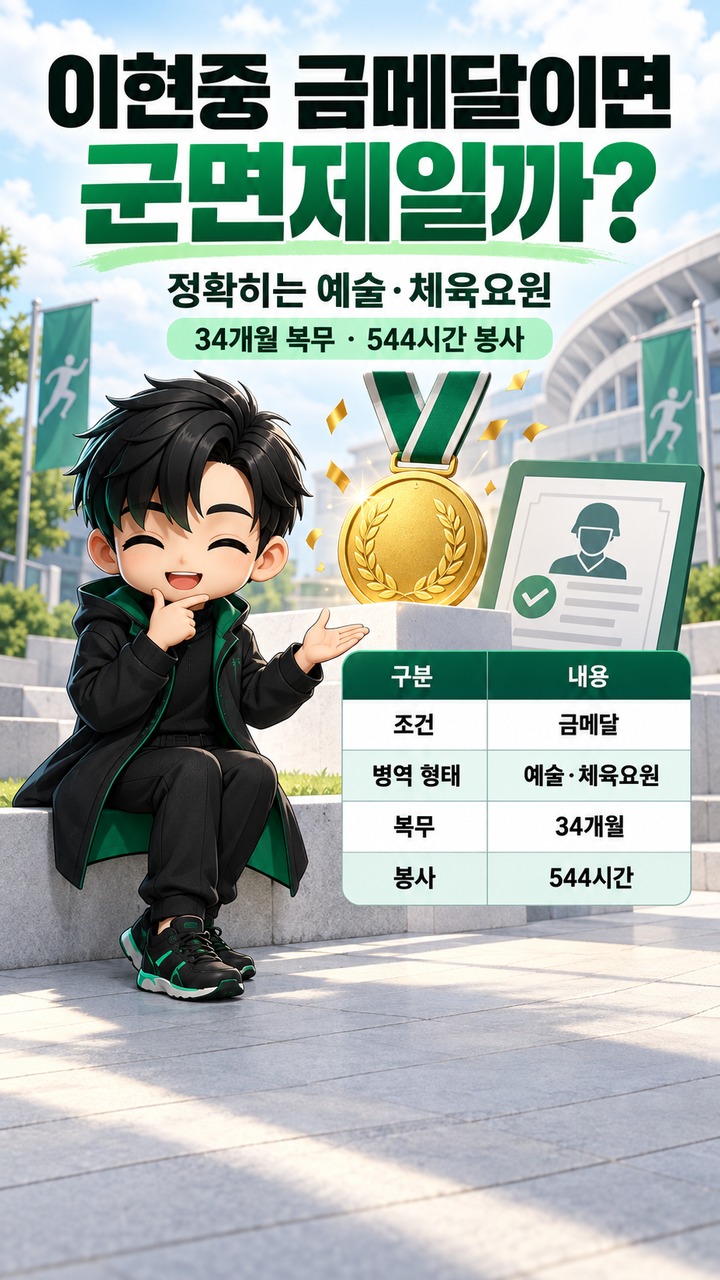
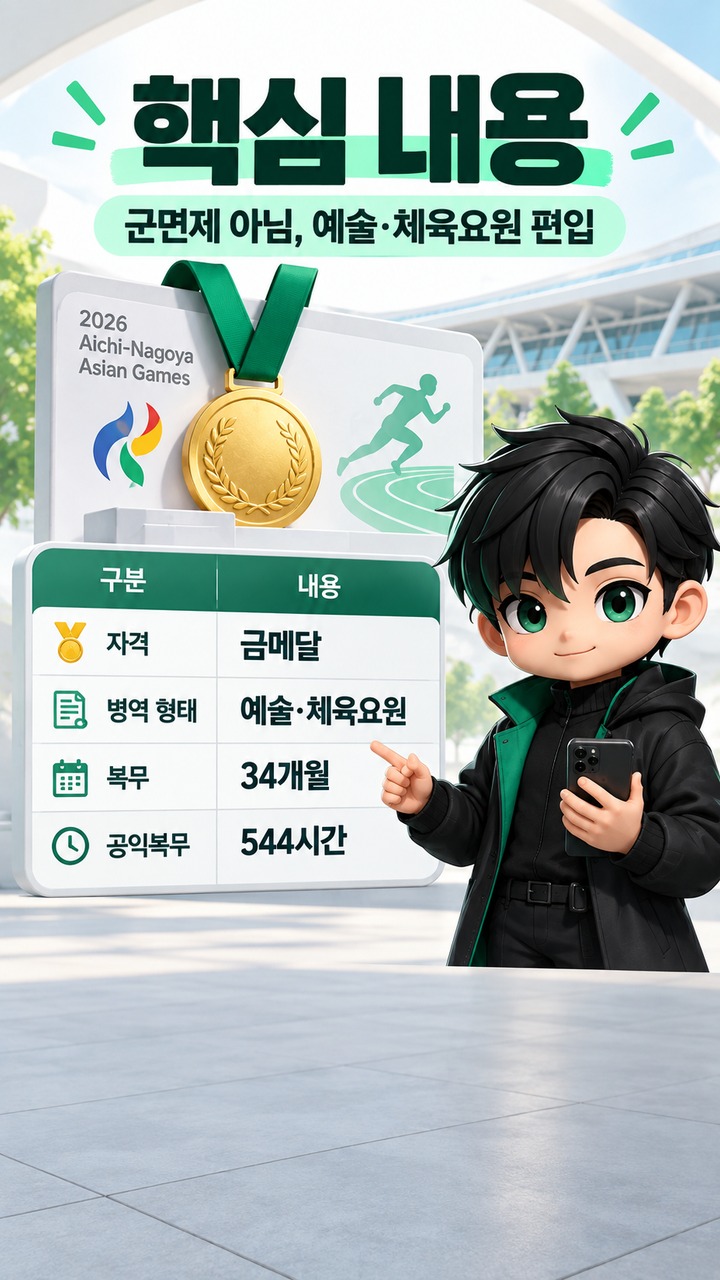
By winning a gold medal at the 2026 Aichi–Nagoya Asian Games, Lee Hyun-jung has met the eligibility requirements for assignment to South Korea's Arts and Sports Personnel program as an athlete. Although this is commonly described as a 'military exemption,' it does not mean that all military service obligations disappear. After completing the assignment process, he must serve in his designated field for 34 months, undergo military training, and complete a total of 544 hours of public service.
Lee Hyun-jung recorded 27 points and 18 rebounds in the Asian Games men's basketball final against Japan on September 20, helping South Korea secure a 67-57 victory and the gold medal. Following the game, attention has also turned to how his military service benefits could affect his pursuit of an NBA career.
What Exactly Are the Military Service Benefits Lee Hyun-jung Has Earned?
The official designation is Arts and Sports Personnel.
Under the Enforcement Decree of South Korea's Military Service Act in effect as of September 2026, eligible athletes include Olympic medalists who finish 3 or higher and Asian Games medalists who finish 1. By winning gold in men's basketball at the Asian Games, Lee Hyun-jung meets the requirement of finishing 1 at the Asian Games. Source: Korea's Ministry of Government Legislation.
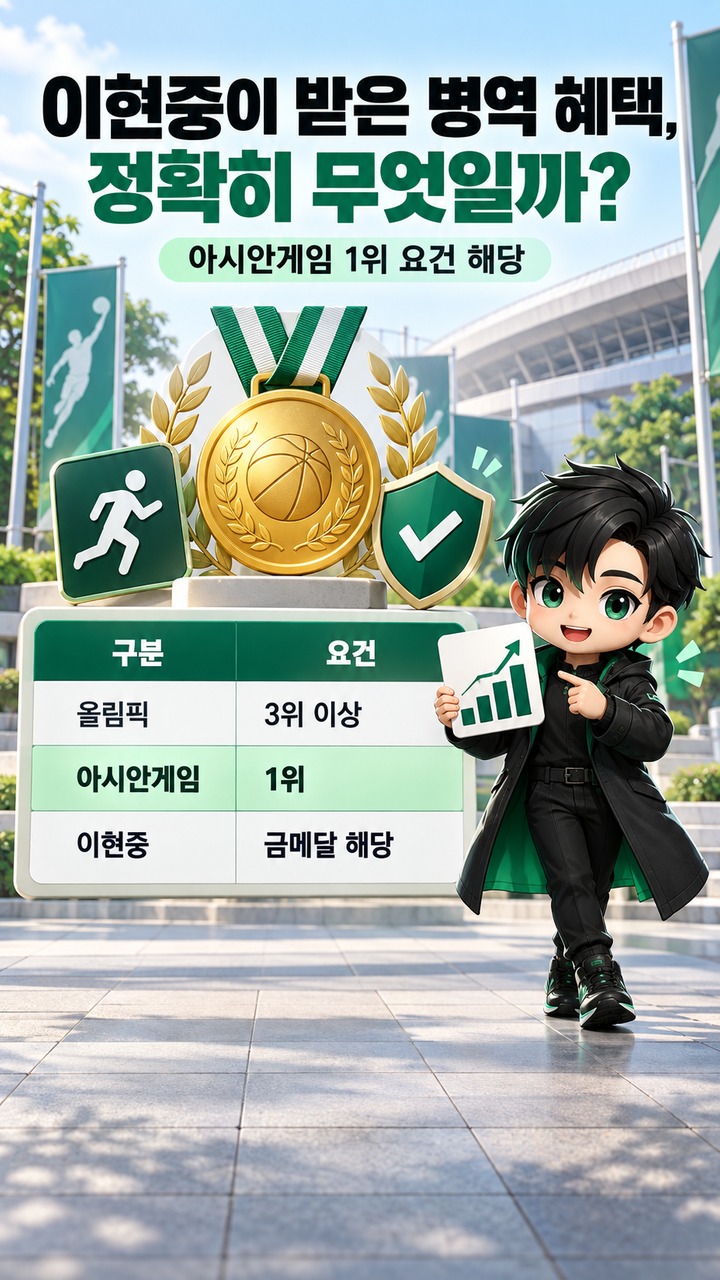
Therefore, although people commonly say that he 'received a military exemption by winning Asian Games gold,' the legal arrangement differs from simply having his obligation to serve in the military eliminated.
| Category | Requirements as of 2026 |
|---|---|
| Eligibility requirement | 1 at the Asian Games |
| Military service classification | Arts and Sports Personnel |
| Mandatory service period | 2 years and 10 months, equivalent to 34 months |
| Public service | Total of 544 hours |
| Military training | Subject to a separate military training call-up |
South Korea's Military Service Act establishes the mandatory service period for Arts and Sports Personnel as 2 years and 10 months. The period spent undergoing military training also counts toward this mandatory service period.
If It Is Called a 'Military Exemption,' Does He Still Have to Undergo Training?
Yes, he does.
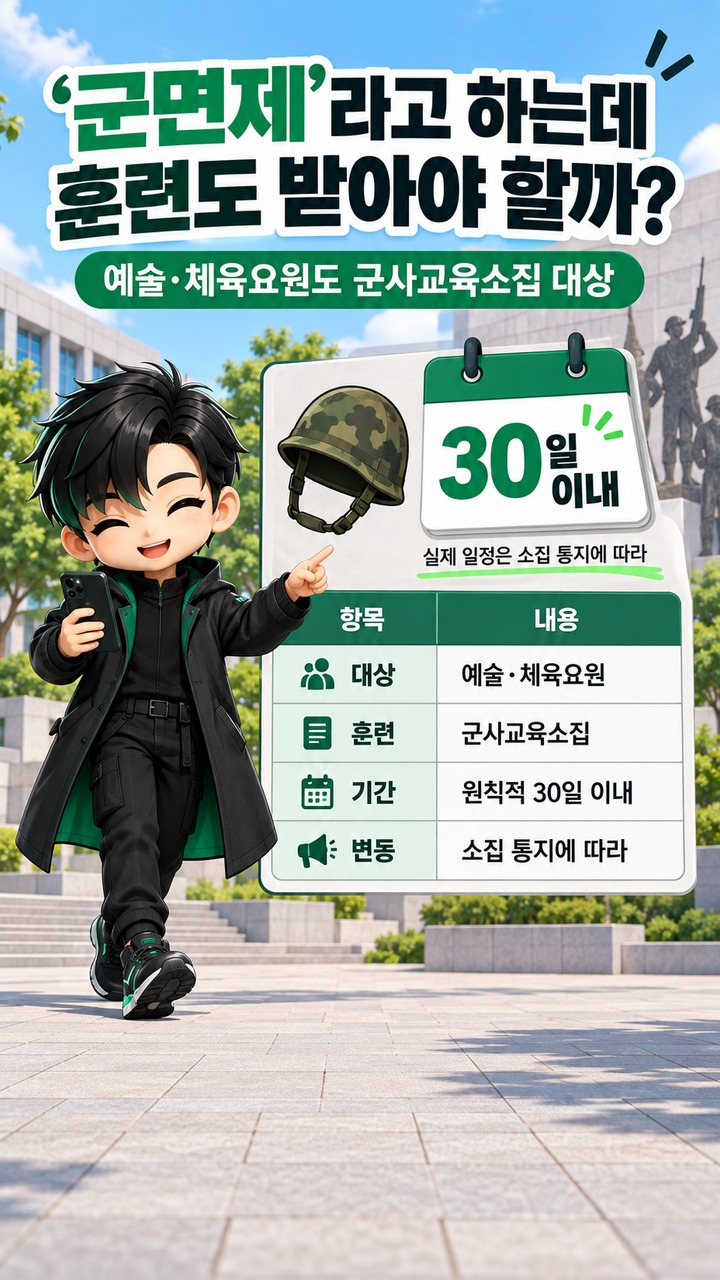
Individuals assigned to the Arts and Sports Personnel program are also subject to military training call-ups under the Military Service Act. Under the current Enforcement Decree, the military training period for supplementary service personnel is generally limited to 30 days. The actual schedule and duration may vary according to the call-up notice.
It would therefore be inaccurate to interpret 'Asian Games gold medal = no military service obligations whatsoever.'
For athletes such as Lee Hyun-jung who qualify for the program, the arrangement allows them to continue working in their sport while fulfilling the prescribed obligations.
Must He Stop Playing Basketball and Perform Separate Service for 34 Months?
No, that is not how the system works.
South Korea's Military Manpower Administration explains that Arts and Sports Personnel serve for 34 months in their designated field, as determined by the Commissioner of the Military Manpower Administration, under the direction and supervision of the Minister of Culture, Sports and Tourism. In principle, a basketball player can therefore fulfill the mandatory service period while continuing to compete and develop their athletic abilities.
However, continuing athletic activities alone does not satisfy every obligation.
Arts and Sports Personnel must also perform public-interest activities using their specialized skills. Under the current rules, the total requirement is 544 hours. These activities include sports instruction and education for socially vulnerable groups, children, and adolescents, as well as public-interest campaigns.
In simplified terms, the arrangement consists of the following:
Continuing an athletic career + military training call-up + 34 months of mandatory service + 544 hours of public service using athletic skills.
Do Asian Games Silver or Bronze Medalists Also Qualify for Military Service Benefits?
No. Under the current regulations, athletes must finish 1 at the Asian Games, meaning they must win gold, to qualify for assignment to the Arts and Sports Personnel program.
The standard differs from the Olympics. Olympic athletes qualify by finishing 3 or higher, whereas the Asian Games provision covers only those who finish 1. Source: Korea's Ministry of Government Legislation.
Consequently, even after South Korea defeated Iran in the semifinals and secured at least a silver medal, the military service benefit was not yet guaranteed. The team fulfilled the relevant eligibility requirement only after defeating Japan in the final and winning gold. South Korea beat Japan 67-57 in the championship game.
Does Winning Gold Automatically Make an Athlete a Member of the Arts and Sports Personnel Program?
Winning a gold medal and completing the formal assignment process are separate matters.
Under the Enforcement Decree of the Military Service Act, eligible individuals seeking to serve as Arts and Sports Personnel must submit the required documents, including a recommendation application and proof of their competition result, to the Minister of Culture, Sports and Tourism. After receiving the application, the minister follows the prescribed procedures and forwards the list of recommended individuals to the Commissioner of the Military Manpower Administration. Source: Korea's Ministry of Government Legislation.
The most accurate interpretation of Lee Hyun-jung's gold medal is therefore not that 'his military service obligations immediately disappeared in their entirety,' but that he has satisfied the statutory requirements for assignment to the Arts and Sports Personnel program.
Neither the actual assignment date nor the military training schedule is automatically finalized on the day the gold medal is won.
Why Is the Gold Medal Important for Lee Hyun-jung's NBA Ambitions?
For Lee Hyun-jung, the biggest change is that the possibility of a lengthy interruption to his playing career because of active-duty military service has been reduced.
Shortly before the Asian Games, Lee Hyun-jung signed an Exhibit 10 contract with the Portland Trail Blazers. This type of agreement does not guarantee a place on an NBA regular-season roster. Instead, it is a 1-year, non-guaranteed contract that gives a player an opportunity to compete during training camp.
After winning gold, Lee Hyun-jung expressed happiness about the military service benefits but also emphasized that his ambitions did not end there. According to reporting published on September 21, he planned to return to the United States on 26. Source: Hankook Ilbo.
In other words, winning gold does not automatically mean entering the NBA.
The Asian Games gold medal has reduced uncertainty surrounding Lee Hyun-jung's military service obligations. Whether he earns an NBA position will be determined separately through the Portland Trail Blazers' training camp and subsequent competition for a roster spot.
Key Takeaways
Describing Lee Hyun-jung's Asian Games gold medal as a 'military exemption' is common in everyday conversation. Legally, however, the more accurate explanation is that his 1 finish at the Asian Games has made him eligible for assignment to the Arts and Sports Personnel program.
Arts and Sports Personnel must serve in their designated athletic field for 34 months, undergo military training, and complete a total of 544 hours of public service. Because the arrangement allows athletes to continue their playing careers, it represents a significant career development for Lee Hyun-jung as he pursues an opportunity to enter the NBA through an overseas league.