

Samsung Electronics Faces Growing Smartphone HDI Procurement Pressure as Component Costs Rise
이 포스팅은 쿠팡 파트너스 활동의 일환으로, 이에 따른 일정액의 수수료를 제공받습니다.
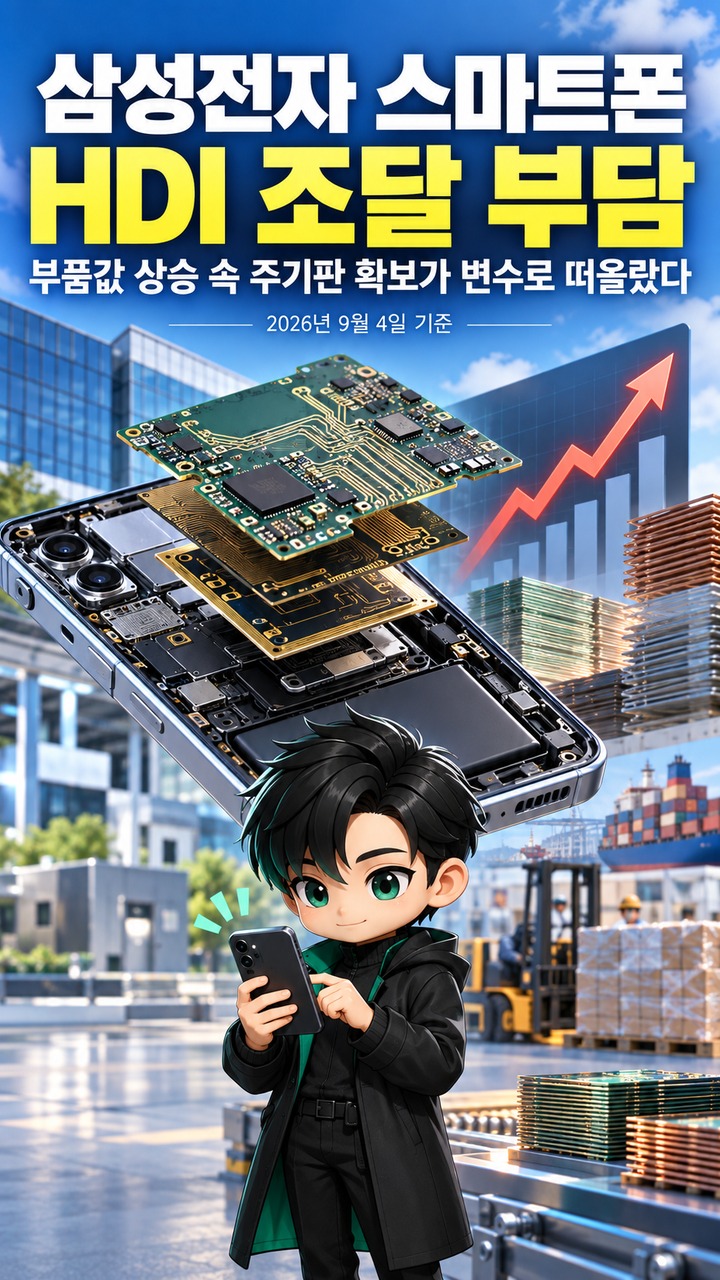
As of 2026-09-04, industry reports indicate that Samsung Electronics is facing increasing pressure to secure HDI supplies for its smartphone business. HDI is the main circuit board that connects semiconductors and various components at high density inside smartphones. Although Samsung has not officially disclosed the extent of any HDI shortage or its procurement prices, the company confirmed in its 2-quarter earnings announcement that rising component costs were weighing on the profitability of its MX business. It also stated that it would pursue market share growth while protecting profitability in the second half of the year.
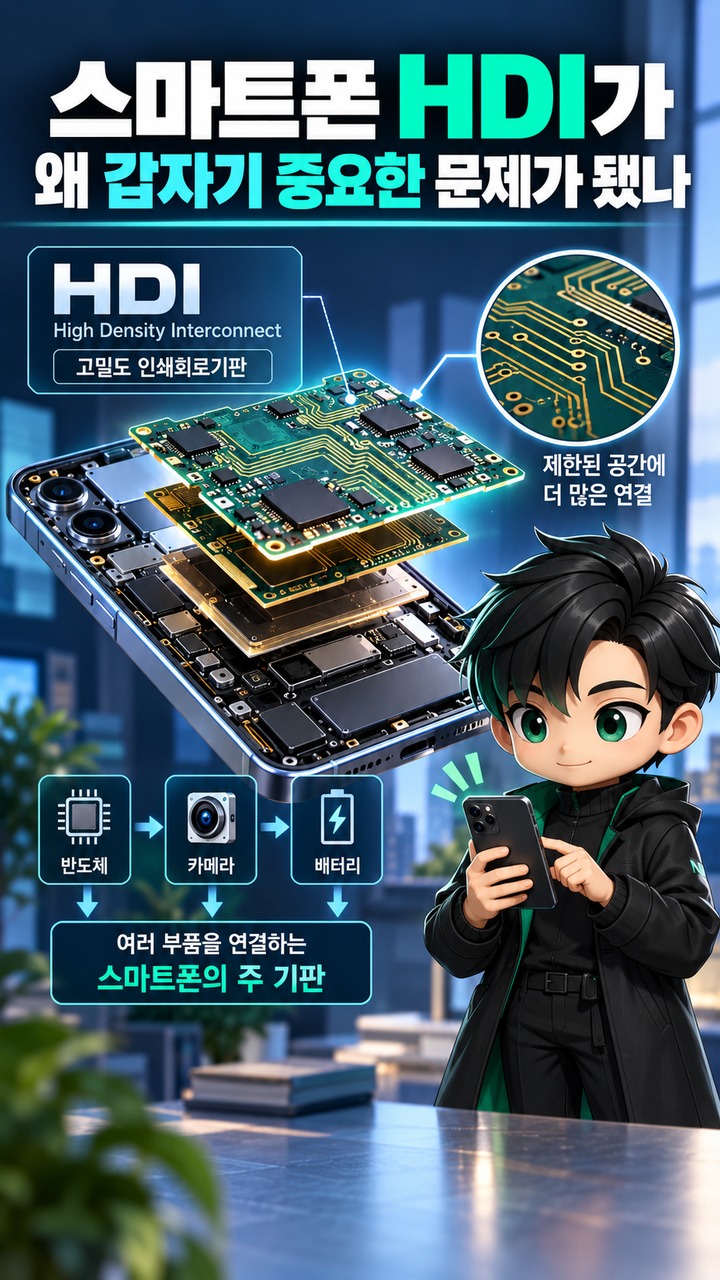
Why Has Smartphone HDI Suddenly Become Such an Important Issue?
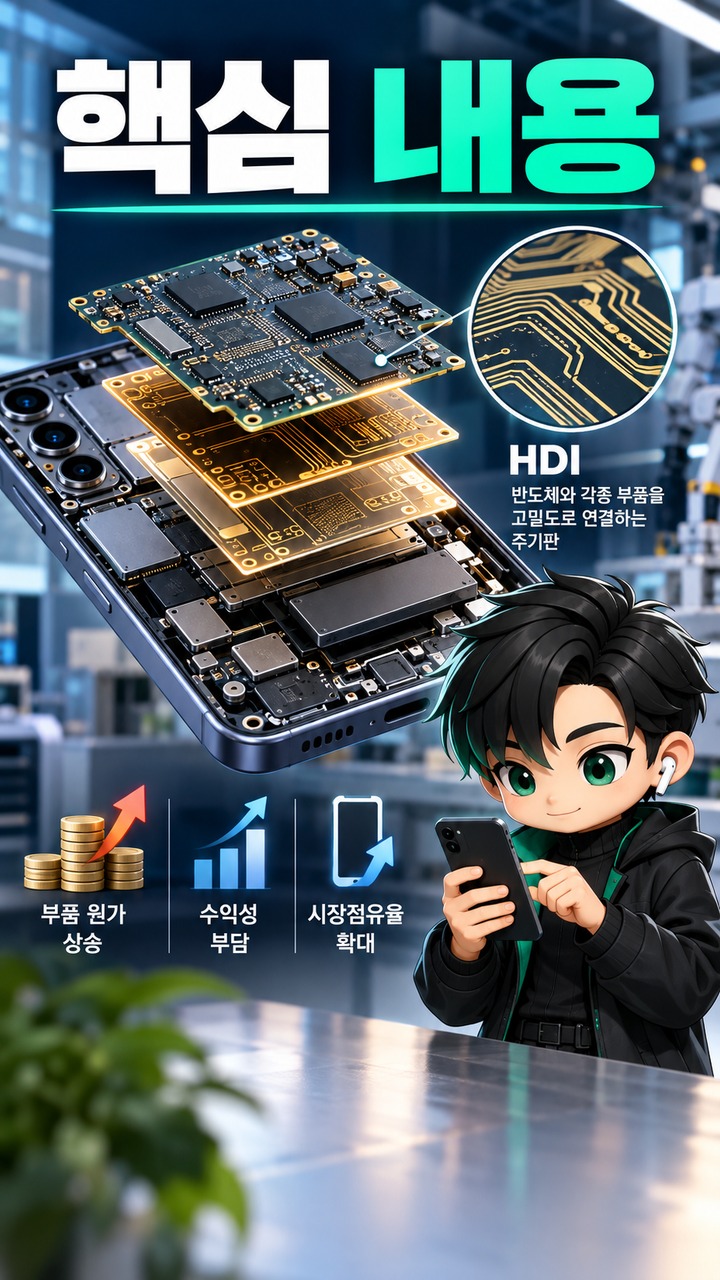
HDI stands for High Density Interconnect. It is a high-density printed circuit board that enables numerous electrical connections within the limited internal space of a smartphone. Because it serves as the main board connecting various smartphone components, manufacturers must secure a stable supply of HDI boards to increase finished-device production.
Reports based on industry interviews published by September 4 indicate that domestic and overseas PCB manufacturers are increasingly using some equipment previously dedicated to smartphone HDI production to manufacture semiconductor-related PCBs, including memory module PCBs. Even within the same PCB manufacturer, shifting production capacity toward relatively more profitable semiconductor-related products can reduce the capacity available for smartphone HDI production.
PCB is a broad term referring to printed circuit boards in general, while HDI refers to high-density boards used in smartphones and other devices requiring tightly packed circuit connections. Semiconductor PCBs and smartphone HDI boards are not identical products, but they can compete for certain manufacturing equipment and manufacturers' investment resources. This is the central issue in the current situation.
Why Are PCB Manufacturers Increasing Production of Other Boards Instead of HDI?
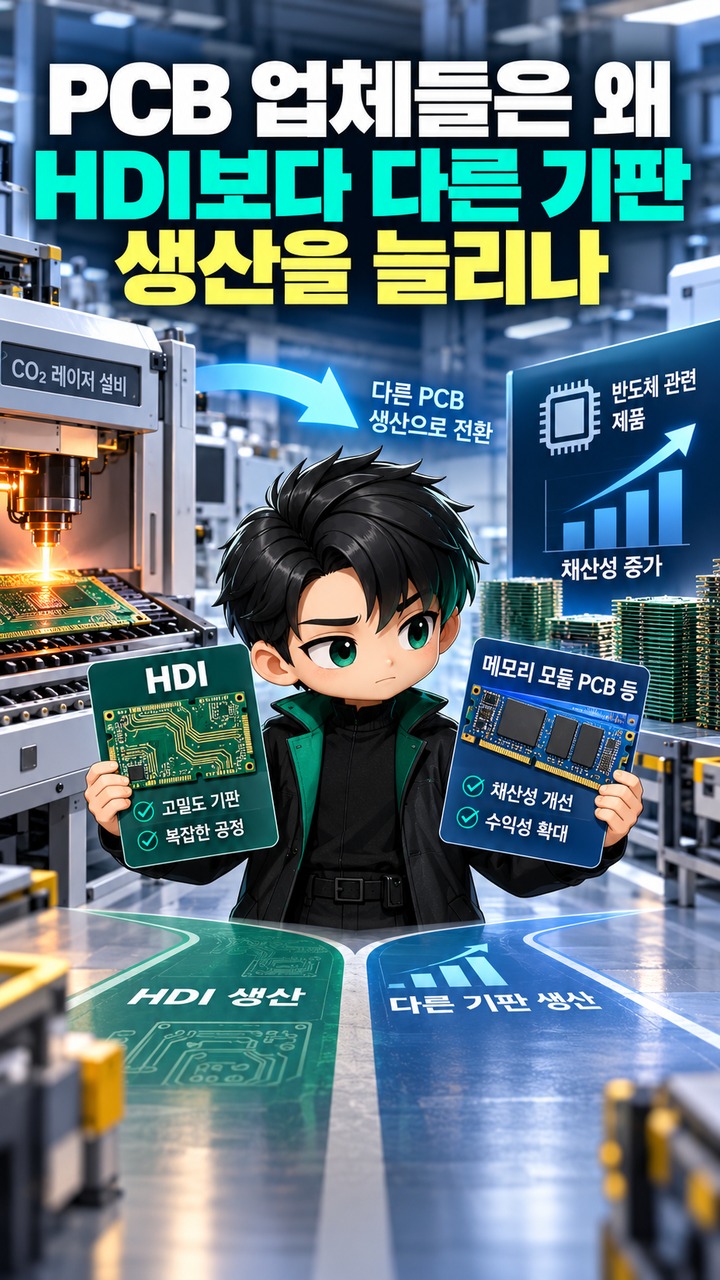
The reason cited in currently available industry reports is the difference in profitability. As semiconductor-related products such as memory module PCBs become more profitable, some manufacturers are reportedly converting CO2 laser equipment and other machinery previously used for HDI production to manufacture other PCB products.
HDI manufacturing requires processes that create microscopic holes to connect multiple circuit layers. The availability of specialized equipment, such as CO2 lasers used in these processes, also determines production capacity.
According to September 4, industry sources have reported that newly ordered CO2 laser equipment supplied by Japanese manufacturers and others currently takes approximately 2~3 years to arrive. When equipment is scarce, deciding which products receive existing production-line capacity becomes increasingly important. Manufacturers may therefore have stronger incentives to prioritize more profitable products. However, the reported 2~3-year equipment delivery period comes from industry sources cited in news reports, rather than an official announcement by Samsung Electronics or equipment manufacturers.
Can Samsung Electronics Solve the Problem by Paying More for HDI?
Simply increasing purchase prices could encourage suppliers to expand HDI production, but it would create another problem for Samsung Electronics: higher costs. In its official 2026 2-quarter earnings materials, Samsung stated that operating profit in its MX business had declined because of increasing industry-wide cost pressures, including higher component prices.
Although Samsung's MX business recorded higher year-over-year revenue thanks to strong sales of the Galaxy S26 series and A series, profitability faced pressure in the opposite direction. The company expects global uncertainty and rising component costs to continue into the second half of the year.
If HDI purchase prices also increase under these conditions, the cost of manufacturing each device will rise further. Conversely, maintaining existing prices may make it difficult to reverse the trend of PCB manufacturers allocating production capacity to more profitable products. This is the dilemma highlighted in the September 4 report.
Importantly, Samsung Electronics has not officially announced plans to increase HDI purchase prices. Publicly available information only indicates that the industry is discussing the need for possible price adjustments. Actual contract prices and whether future increases will occur remain unconfirmed.
How Does This Relate to Samsung's Second-Half Smartphone Sales Expansion Plans?
Samsung Electronics has officially stated that it intends to increase its overall smartphone market share in the second half of 2026. Its strategy involves expanding the sales proportion of high-value products, including Ultra models and the new foldable Z8 series, while protecting profitability.
Ultimately, increasing sales volume or market share requires sufficient finished-device production capacity. Manufacturers must secure not only highly visible components such as application processors, memory, and displays, but also the main circuit boards connecting the various components inside smartphones when they are needed.
This is why the current HDI issue is attracting attention. It is not merely a question of the price of a single circuit board. Instead, component procurement conditions have emerged as an additional variable affecting Samsung's two officially stated objectives: expanding market share and protecting profitability. However, currently available information does not establish that HDI procurement difficulties have actually caused smartphone production disruptions or declining sales. Samsung Electronics has not officially announced any such production disruptions either.
How Is Samsung Electronics' HDI Supply Chain Currently Structured?
The September 4 report identified South Korean manufacturers DAP and Korea Circuit, along with China's Fastprint, as companies mass-producing HDI boards for Samsung smartphones. According to the report, DAP does not manufacture semiconductor-related PCBs, while some other suppliers, including Korea Circuit, also produce other PCB products such as memory module PCBs and semiconductor substrates.
Because manufacturers differ in their product portfolios and equipment operations, it would be incorrect to assume that all HDI suppliers are reducing production equally. The currently available information consists of industry reporting indicating an increasing number of cases in which certain domestic and overseas PCB manufacturers are reallocating equipment to produce other products.
The original publicly available report does not establish how much HDI Samsung purchases from each manufacturer, what share of supply each supplier accounts for, or how much contract prices have changed. It is therefore difficult at this stage to estimate specific manufacturers' production volumes or reductions in the quantities supplied to Samsung Electronics.
What Matters Going Forward Is the Actual Production Impact, Not Just the HDI Shortage Itself
The first thing to examine when assessing this situation is whether Samsung's smartphone production actually changes, rather than focusing solely on descriptions of an HDI supply shortage. Samsung's official announcements reviewed so far do not state that Galaxy production has been reduced because of an HDI shortage. What has been officially confirmed is the component cost pressure facing its MX business and its plans to expand market share while protecting profitability in the second half of the year.
Going forward, it will be important to examine how component cost pressures in the MX division change in Samsung's subsequent earnings announcements, whether PCB manufacturers continue adjusting HDI production capacity, and whether additional suppliers enter the supply chain.
If HDI prices are actually adjusted, the critical factor will be how much supply increases, rather than the price increase itself. Conversely, if more production capacity shifts toward other PCB products without changes in contract prices, Samsung's procurement difficulties could persist. Neither outcome has been officially confirmed at present.
As of 2026-09-04, the situation can be summarized in one sentence: Samsung Electronics is pursuing greater smartphone market share while facing rising component costs that pressure profitability, and industry reports suggest that procurement pressure is increasing as production capacity for HDI, the main circuit board used in smartphones, shifts toward more profitable PCB products. Actual device production disruptions and any HDI price increases have not yet been publicly confirmed.
Related Articles
August 21 KOSPI Outlook: The Previous Day's 5.89% Surge Is Key After the Nasdaq's -1% Move
이 포스팅은 쿠팡 파트너스 활동의 일환으로, 이에 따른 일정액의 수수료를 제공받습니다.