

Bitcoin ETFs: Do You Actually Own Bitcoin When You Buy a Spot ETP? 2026 Structure and Fee Differences
이 포스팅은 쿠팡 파트너스 활동의 일환으로, 이에 따른 일정액의 수수료를 제공받습니다.
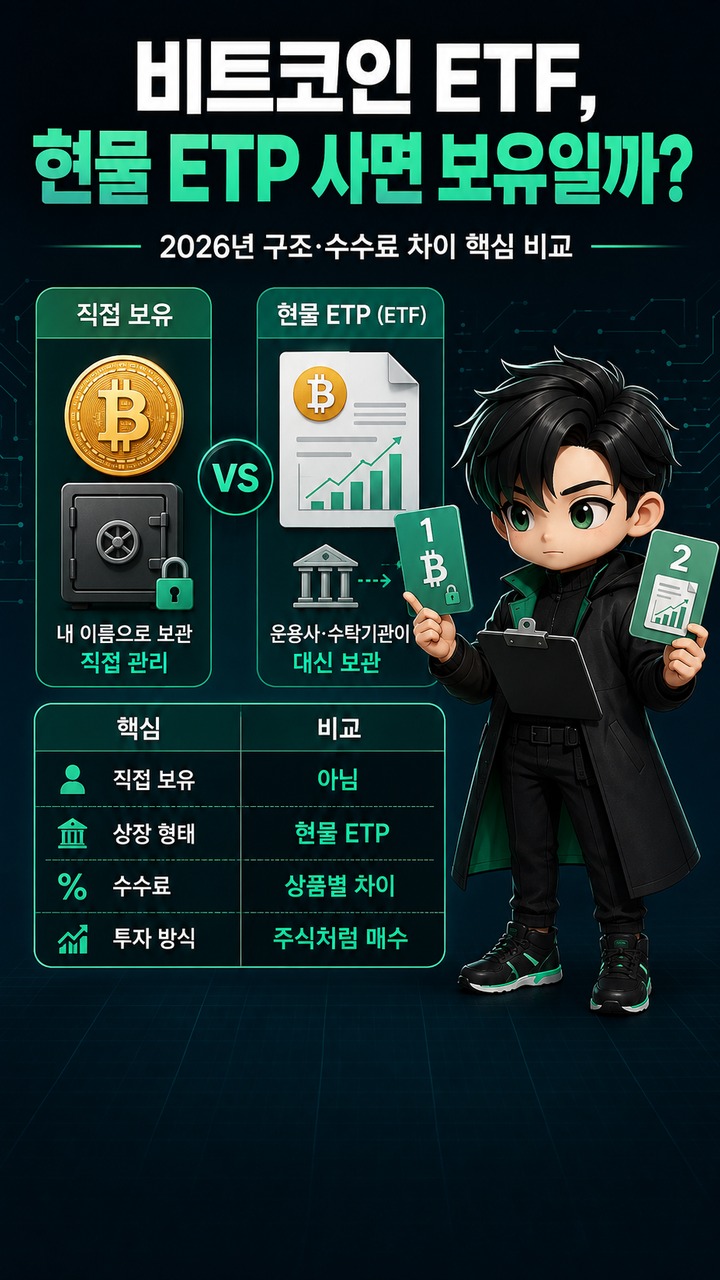
U.S. spot Bitcoin products are exchange-traded products designed to make investing in Bitcoin's price more accessible. However, buying one as you would a stock does not mean you directly own Bitcoin in your name. As of 2026-08-23 at 22:31 Korea time, spot Bitcoin ETPs are trading in the United States, and investors should compare their fees and operating structures before choosing a product.
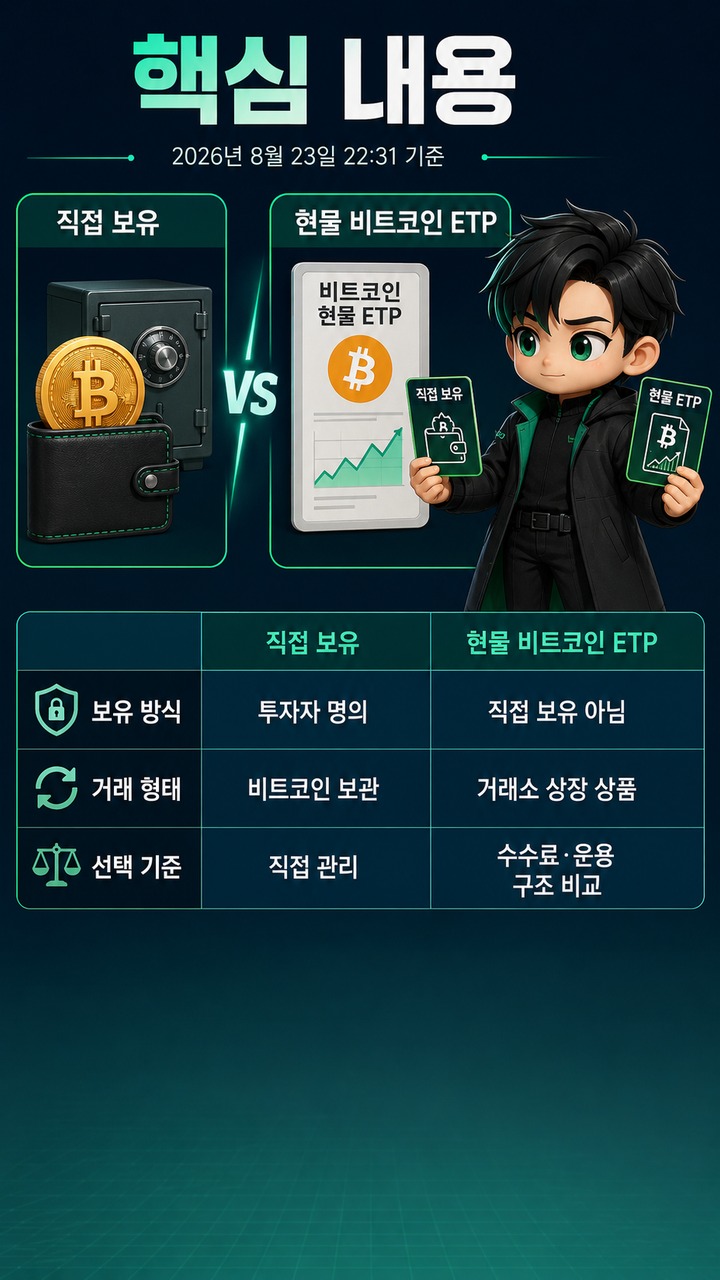
Importantly, the regulatory framework changed again in 2025. In-kind creations and redemptions were permitted for spot Bitcoin ETPs, but this does not mean ordinary investors can sell their ETF shares and receive Bitcoin directly.
Are Bitcoin ETFs and Spot ETPs the Same Thing?
Although the term 'Bitcoin ETF' is widely used, U.S. regulatory documents refer to spot Bitcoin products as ETPs, or exchange-traded products. The U.S. Securities and Exchange Commission approved the listing and trading of shares of several spot Bitcoin ETPs on 2024-01-10.
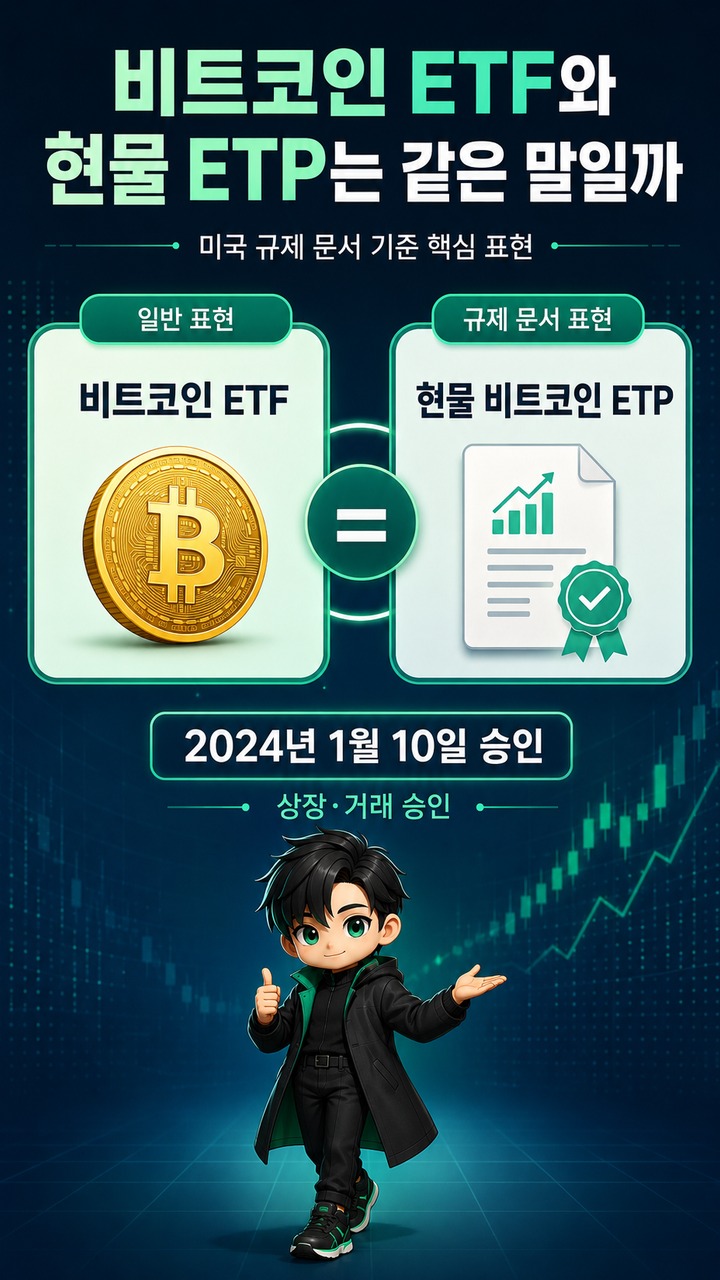
This distinction goes beyond terminology.
It would therefore be inaccurate to assume that a product labeled an ETF necessarily has exactly the same regulatory structure as a conventional stock ETF.
The basic structure of a spot Bitcoin ETP is relatively straightforward. The investment product holds Bitcoin, while investors buy and sell shares or interests in that product through brokerage accounts to gain exposure to Bitcoin's price movements.
Buying a Bitcoin ETF Does Not Mean Receiving Actual Bitcoin
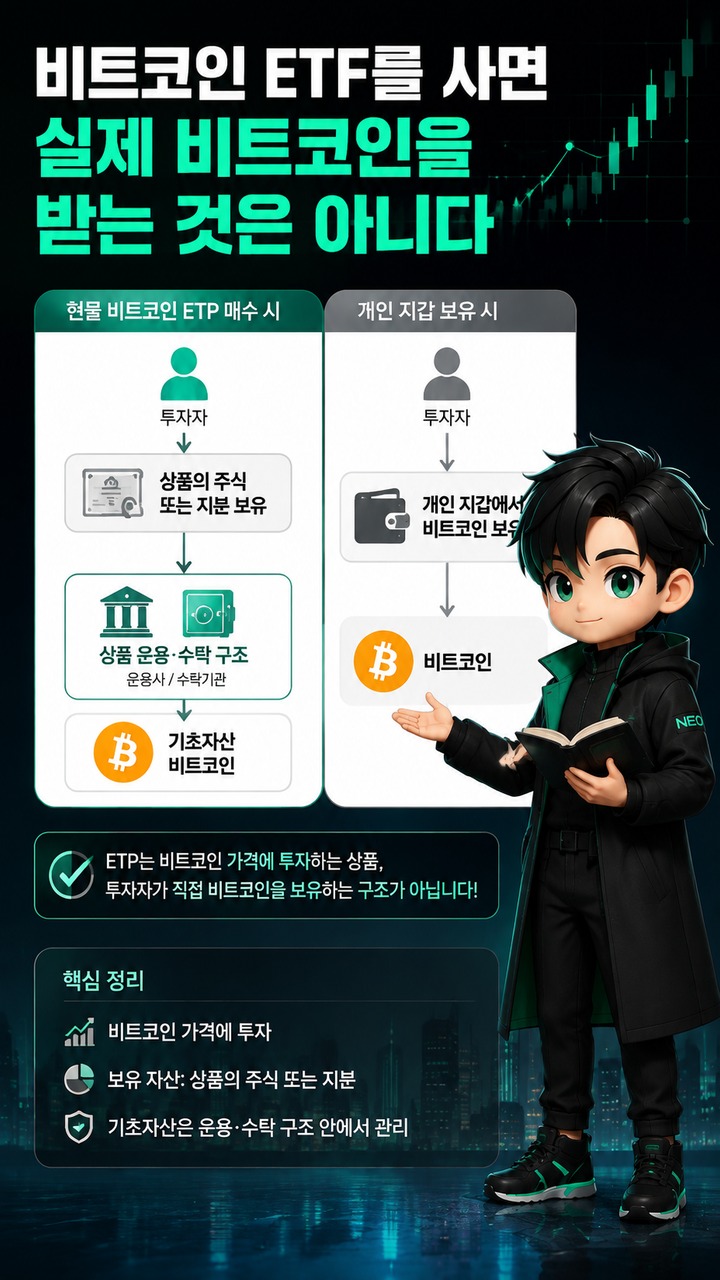
Buying a spot Bitcoin ETP provides exposure to Bitcoin's price, but it is different from holding Bitcoin in a personal wallet. Investors own shares or interests in the product, while the underlying Bitcoin is managed within the product's operational and custody arrangements.
Fidelity explains that FBTC investors do not have the rights they might have if they purchased Bitcoin directly, nor do they have the right to receive redemption proceeds in Bitcoin.
Understanding this distinction is essential to avoid confusing 'investing in Bitcoin's price through a brokerage account' with 'directly owning Bitcoin.'
| Category | Spot Bitcoin ETP | Direct Bitcoin Ownership |
|---|---|---|
| Investment asset | Shares or interests traded on an exchange | Bitcoin itself |
| Custody method | Uses the product's management and custody arrangements | Requires choosing a direct custody method |
| Bitcoin withdrawals | Ordinary investors cannot redeem product shares for Bitcoin | Holders can transfer the Bitcoin they own |
| Ongoing costs | Product-specific management and sponsor fees must be checked | Cost structure differs from product management fees |
Ultimately, one factor in choosing between the two is whether you simply want a convenient way to track Bitcoin's price or need to own and transfer Bitcoin itself.
What Changed When In-Kind Creations and Redemptions Were Permitted in 2025?
The U.S. Securities and Exchange Commission permitted in-kind creations and redemptions for crypto asset ETPs on 2025-07-29. The initially approved spot Bitcoin and Ethereum ETPs had been restricted to cash creations and redemptions, but the subsequently approved structure allowed authorized participants to use in-kind transactions as well.
This is where one of the most common misunderstandings arises.
The statement 'in-kind redemptions are now permitted' might sound as though individual investors can sell ETF shares in their brokerage accounts and receive Bitcoin. However, the SEC's decision concerns the creation and redemption procedures of Authorized Participants.
These procedures must be distinguished from ordinary investors buying and selling product shares on an exchange.
From an individual investor's perspective, therefore, the 2025 change is better understood as a change to the market structure governing product creations and redemptions, not as permission to withdraw Bitcoin directly.
How Much Does the 0.25% Fee Actually Cost?
Even when products track the same Bitcoin price, their costs must be compared carefully. IBIT, a major U.S. spot Bitcoin product, charges an annual sponsor fee of 0.25%, while FBTC also lists an annual expense of 0.25%.
For example, if the investment amount is USD 10,000 and, for simplicity, its value remains unchanged throughout 1 year, an annual fee of 0.25% would amount to approximately USD 25.
Author's calculation
USD 10,000 × 0.25% = USD 25
In actual investing, Bitcoin's price and the product's net asset value fluctuate continuously, so the actual cost may vary. Taxes, currency conversion costs, and brokerage transaction fees must also be checked separately according to the investor's country, account, and trading method.
Even a fee difference of just 0.1% percentage points can accumulate into a substantial difference over a long holding period or with a larger investment. That is why investors should examine the cost disclosures in the latest prospectus rather than focusing only on the product name or asset manager.
Do Bitcoin Prices and ETF Prices Always Move Exactly Together?
A spot Bitcoin ETP aims to reflect Bitcoin's price performance, but it is not a product in which the price of 1 Bitcoin and the price of one ETF share move identically. Each product has its own number of outstanding shares and net asset value, and operating expenses are also reflected.
For example, IBIT aims to reflect Bitcoin's price performance using the CME CF Bitcoin Reference Rate - New York Variant as its benchmark index.
Therefore, the U.S. dollar price of Bitcoin is not the only figure investors should examine.
When choosing a product, it is advisable to consider at least the following factors.
Which benchmark the product uses to track Bitcoin's price
Its annual management and sponsor fees
Whether there is a difference between net asset value and market price
Trading volume and the size of the bid-ask spread
How the product actually holds and safeguards its Bitcoin
Even when Bitcoin moves in the same direction on a given day, different ETPs do not necessarily have identical market prices or investment returns.
Does the Introduction of Spot ETFs Eliminate the Risks of Direct Bitcoin Investing?
Spot Bitcoin ETPs can reduce the complexity of creating a personal wallet and storing the underlying asset, but they do not eliminate Bitcoin's price volatility. Fidelity describes spot crypto asset ETPs as products intended for investors who can tolerate high levels of risk and explicitly warns of substantial price fluctuations and the possibility of losing the entire investment.
If Bitcoin's price falls sharply, products tracking it can also suffer significant losses.
Furthermore, the fact that spot ETPs trade on U.S. securities markets should not be interpreted as meaning that U.S. securities regulators recommend Bitcoin investments or guarantee their safety. Approving the listing and trading of spot Bitcoin ETPs is different from approving or endorsing Bitcoin itself.
For this reason, determining an acceptable loss limit and investment horizon is more important than focusing solely on potential gains when selecting a product.
What Order Should You Follow When Evaluating a Bitcoin ETF?
First, confirm whether the product is a spot product that actually holds Bitcoin. Even if Bitcoin appears in its name, its investment performance may differ if it uses futures, options, or other Bitcoin-related products.
Next, examine its management costs and benchmark price. Even among spot products, fee structures and benchmark indices can differ.
Third, review the custody arrangements and product documents. Because Bitcoin involves custody and cybersecurity considerations in addition to price volatility, investors should determine who holds the underlying assets.
Finally, check whether the product can actually be traded through your brokerage account. Regulations and the range of products offered by brokers vary by country, so a product trading in the United States is not necessarily available for purchase through every brokerage account in every country.
Which Is Better: A Spot ETP or Direct Bitcoin Ownership?
Neither option can be considered universally better for all investors. A spot ETP may be suitable for those who prioritize the convenience of managing Bitcoin price exposure within a brokerage account. However, it is fundamentally different from direct ownership for those who value the right to hold and transfer actual Bitcoin.
Three questions are particularly important when comparing the options.
'Do I need Bitcoin itself, or do I only need exposure to its price?'
'Am I willing to pay annual product fees in exchange for the convenience of a brokerage account?'
'How much loss can I tolerate from Bitcoin's substantial price fluctuations?'
Once these three questions have been answered, the logical next step is to compare the costs and structures of individual products such as IBIT and FBTC.
※ This article is provided for informational purposes to help readers understand market developments and does not constitute an investment recommendation for any particular security or asset. All final investment decisions and responsibilities rest with the individual investor.
Related Articles
Bitcoin Is 4.1% Away from USD 80,000: Three Things to Check After Its 21.9% Rise on 7
이 포스팅은 쿠팡 파트너스 활동의 일환으로, 이에 따른 일정액의 수수료를 제공받습니다.