

If the Funeral Procession Is at 7 AM, How Late Can You Pay Your Respects? Why Visiting the Day Before Is Safer
이 포스팅은 쿠팡 파트너스 활동의 일환으로, 이에 따른 일정액의 수수료를 제공받습니다.

If a funeral notice says “Funeral procession: 19 at 7 AM,” it does not mean that visitors can pay their respects until 7 AM. The funeral procession marks the departure of the deceased from the funeral hall for the burial site or crematorium. For ordinary mourners, the safest option is to visit the funeral hall by the day before rather than on the morning of the procession.
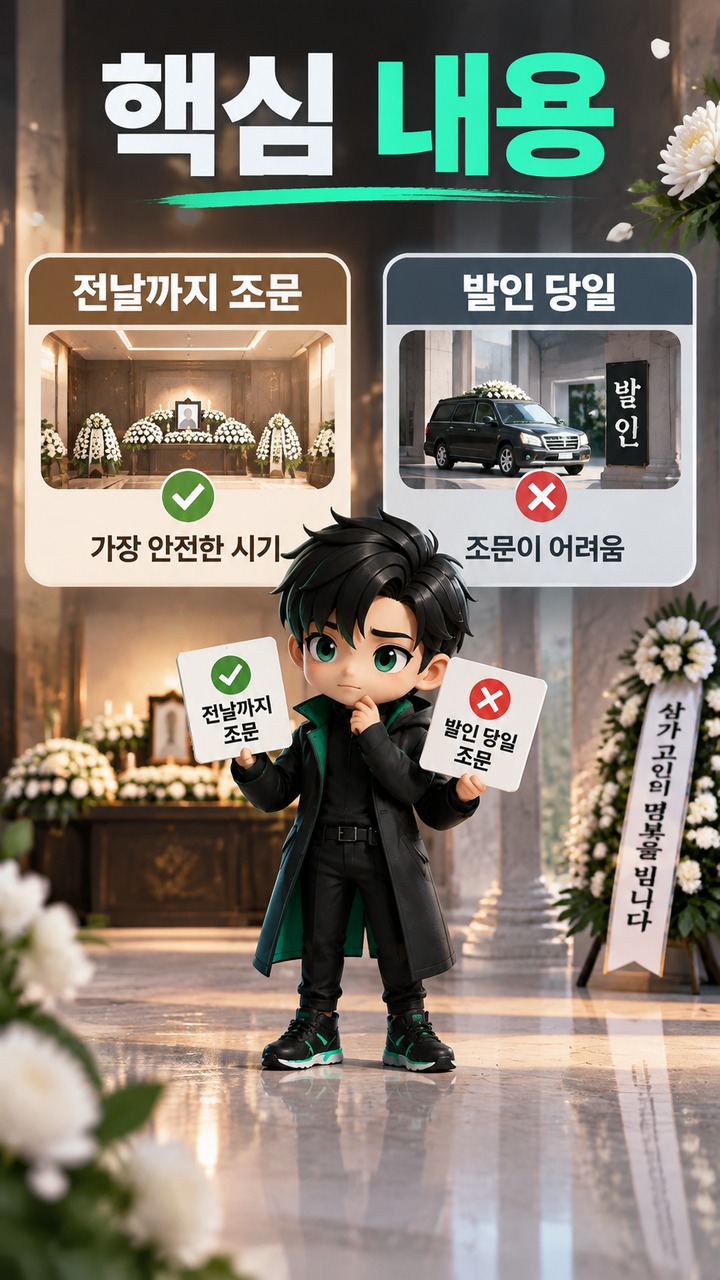
Reports concerning the death of Lee Geum-hee's mother also stated that the encoffining ceremony was scheduled for 18 at 10 AM, while the funeral procession was scheduled for 19 at 7 AM. So, if someone learns of the death notice late, when is the latest they should visit?
A Funeral Procession at 7 AM Does Not Mean Visitation Ends at That Time
Simply put, the funeral procession marks the point when the deceased is taken from the funeral hall.

In a typical funeral, a departure ceremony or farewell service takes place before the coffin is carried out and transported to the crematorium or burial site. Therefore, if the procession is scheduled for 7 AM, the bereaved family will begin preparing for the departure before that time.
In other words, you should not interpret the schedule as follows:
Funeral procession at 7 AM = Visitation is possible until 7 AM
The procession time listed in a funeral notice is better understood as indicating when the funeral enters its final stage, rather than as a deadline for calculating how long visitors can pay their respects.
So, When Is the Best Time to Visit?
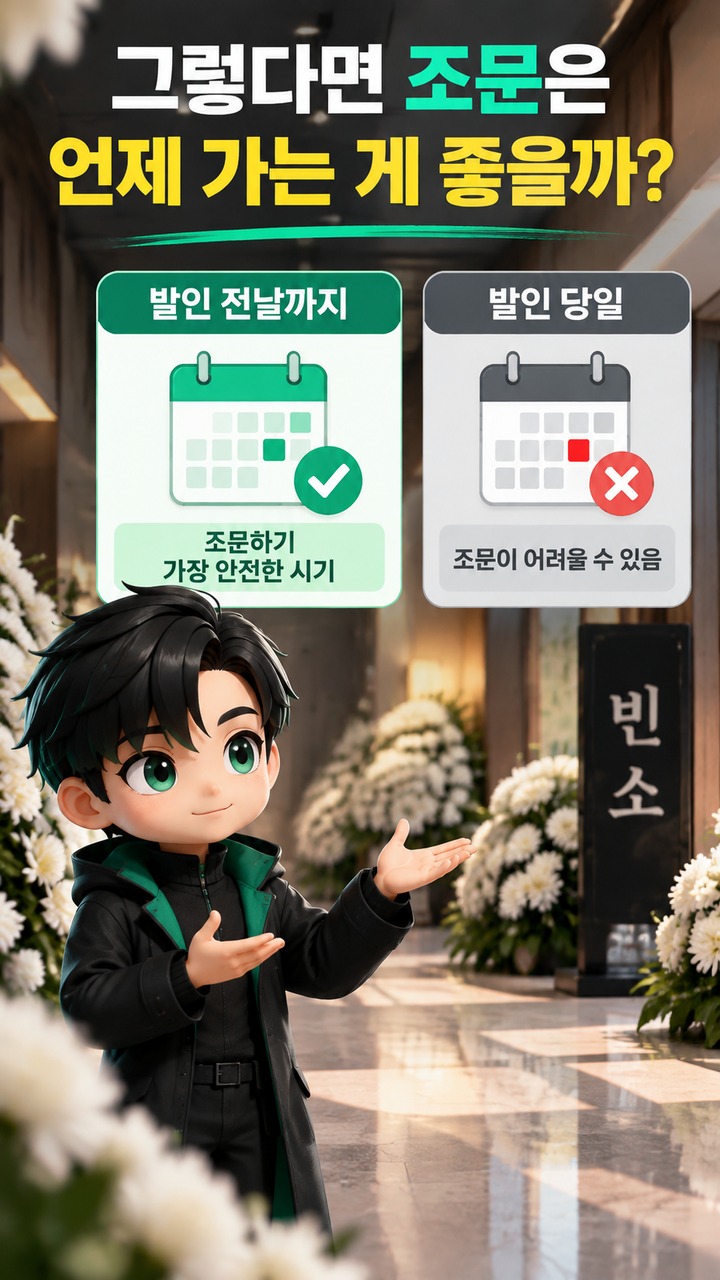
If the procession is scheduled for early in the morning, it is best to pay your respects by the previous day whenever possible.
In particular, during the early hours or morning of the procession, the bereaved family may be occupied with settling funeral hall expenses, preparing for the departure ceremony or farewell service, carrying the coffin, and arranging transportation. The actual hours during which visitors can be received may also vary depending on the funeral hall and the family's circumstances.
For example, if the procession is scheduled for 7 AM, the following table provides a useful guide.
| Timing | Visitation Guidance |
|---|---|
| The day before the procession | Generally an appropriate time to visit |
| Early morning on the day of the procession | Check with the bereaved family or funeral hall first |
| Immediately before the procession | Preparations for departure are likely to take priority over receiving visitors |
| After the procession | Paying respects at the funeral hall is effectively no longer possible |
However, funeral halls differ in how they operate their visitation rooms, and family circumstances also vary. If you need to visit late, the most reliable approach is to contact the funeral hall or use the contact information provided in the funeral notice to confirm availability beforehand.
What Is the Difference Between Encoffining and the Funeral Procession?
Funeral notices often list both the encoffining ceremony and the funeral procession. These are two different procedures.
Encoffining is the procedure of placing the deceased in a coffin, while the funeral procession is the procedure in which the coffin containing the deceased leaves the funeral hall. In a typical 3-day funeral, encoffining takes place first, followed by the funeral procession.
Therefore, if a funeral notice states:
“Encoffining: 18 at 10 AM; Funeral procession: 19 at 7 AM”
this does not mean that the funeral ends at 10 AM on 18. The visitation room continues to operate after encoffining, and the subsequent funeral procedures take place according to the scheduled procession time.
Does the Deceased Go Directly to the Final Resting Place After the Procession?
The procedures following the funeral procession depend on the type of funeral.
For cremation, the process may generally follow this sequence: departure from the funeral hall → transportation to the crematorium → cremation → collection of cremated remains → placement at a columbarium, natural burial site, or other final resting place. For a burial funeral, the coffin is transported to the burial site, where the interment ceremony takes place.
It is also important to distinguish between the funeral visitation room and the final resting place.
The visitation room is where the deceased's memorial portrait is displayed and the bereaved family receives mourners during the funeral period. The final resting place is where the deceased is ultimately laid to rest after the funeral procession.
What Should You Do If You See the Funeral Notice Too Late?
If the procession is approaching, it is better to confirm whether visitation is still possible rather than rushing to the funeral hall immediately before the scheduled departure.
In particular, if you discover the funeral notice on the morning of the procession, preparations may already be underway, or the deceased may have already left the funeral hall. If the procession has ended, you can also express your condolences to the bereaved family separately.
Ultimately, if a funeral notice lists an early-morning procession time, the rule to remember is simple.
The funeral procession time is not the visitation deadline. Ordinary mourners should visit by the day before whenever possible. If they must visit on the day of the procession, they should first confirm whether visitation is still possible.
※ This article is provided for reference to help readers understand market trends and does not constitute investment advice regarding any particular stock or asset. Final investment decisions and responsibility rest with the individual.
Related Articles
이 포스팅은 쿠팡 파트너스 활동의 일환으로, 이에 따른 일정액의 수수료를 제공받습니다.