

How to Remove Frost from a Top-Opening Kimchi Refrigerator: Power Off, Defrost Naturally, and Check for Recurrence
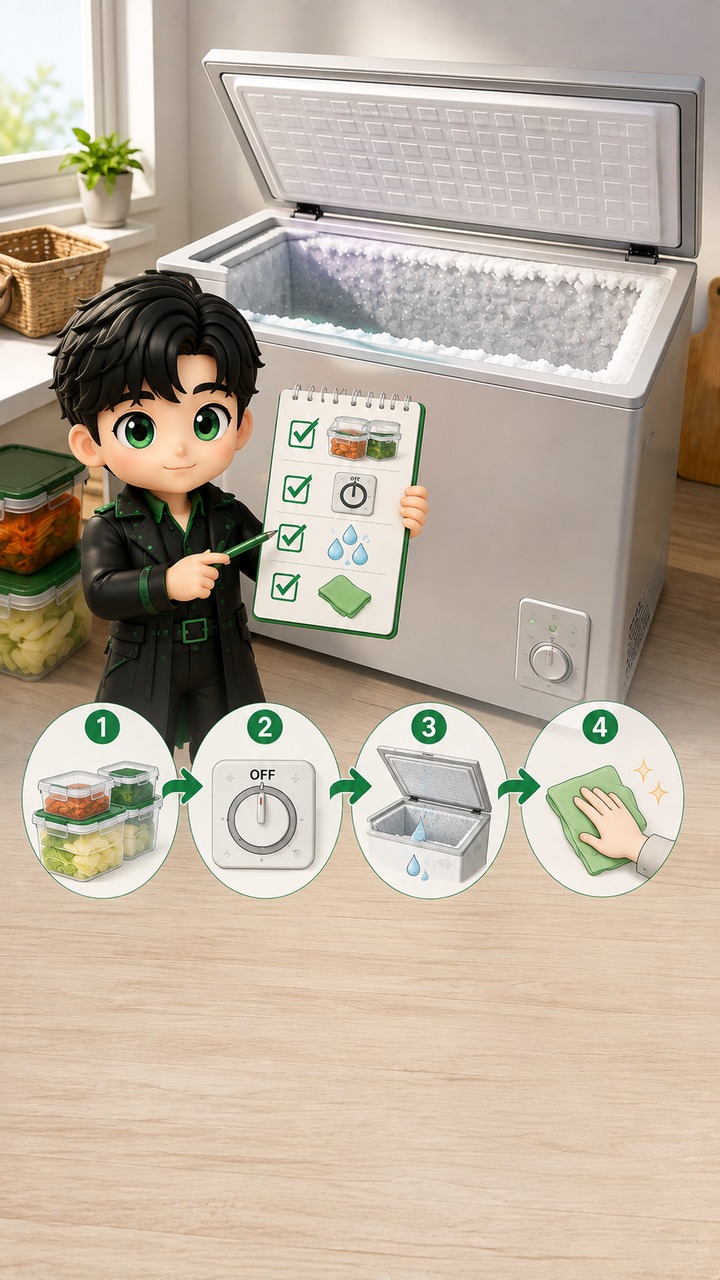
Key question: How can frost be safely removed from a top-opening kimchi refrigerator, and what should be checked if it returns after removal?
Main flow: Characteristics of frost formation → Preparation before defrosting → Natural defrosting procedure → Methods to avoid → Checks for recurring frost → Returning food after restarting
Key information:
Step-by-step natural defrosting procedure
Differences between normal frost and severe ice buildup
What to check when frost returns
Differences in frost removal features and controls by model
How to Remove Frost from a Top-Opening Kimchi Refrigerator: Power Off, Defrost Naturally, and Check for Recurrence
The basic way to remove frost from a top-opening kimchi refrigerator is to move food to another refrigerated space, turn off the affected compartment, leave the lid open to allow the frost to melt naturally, and then thoroughly wipe away all moisture. This information is current as of 2026-08-24. Because power controls and frost removal functions vary by product, always follow the instructions in your model's user manual first.
Why Frost Forms in Top-Opening Kimchi Refrigerators
Some top-opening kimchi refrigerators use a direct-cooling system that chills the interior walls themselves. Frost can naturally form during operation in these models. When moisture in the air comes into contact with the cold walls, it freezes, creating anything from a thin layer of frost to thick ice buildup.
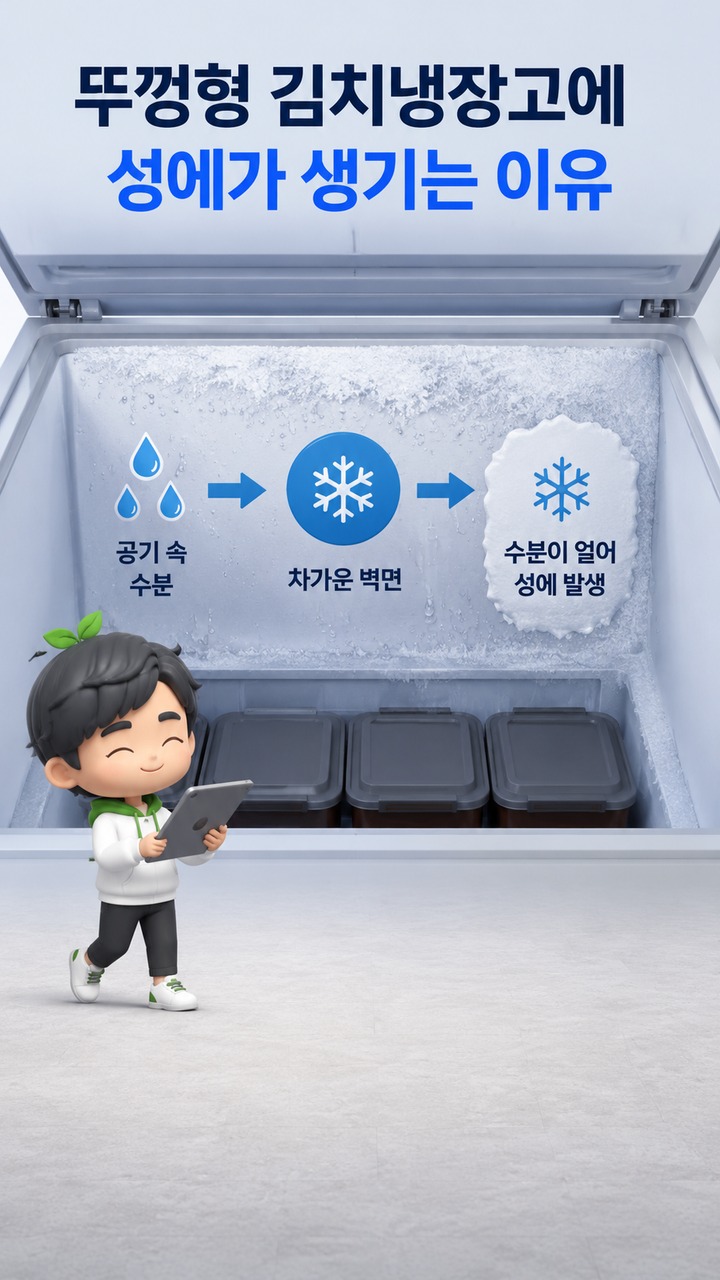
Therefore, seeing a thin layer of frost on the interior walls does not necessarily mean the refrigerator is malfunctioning. What matters is whether the frost continues to thicken, fills the space between containers and the walls, or becomes thick enough to interfere with cooling.
LG Electronics advises that frost in top-opening kimchi refrigerators should be removed when it reaches approximately 1cm or more in thickness, because it may prevent cold air from reaching stored food effectively.
However, this threshold should not be applied universally to every manufacturer and model. Operating procedures vary, and some products, including certain top-opening Dimchae models, support a dedicated 'One-Touch Frost Removal' function.
Prepare Food and the Surrounding Area Before Removing Frost
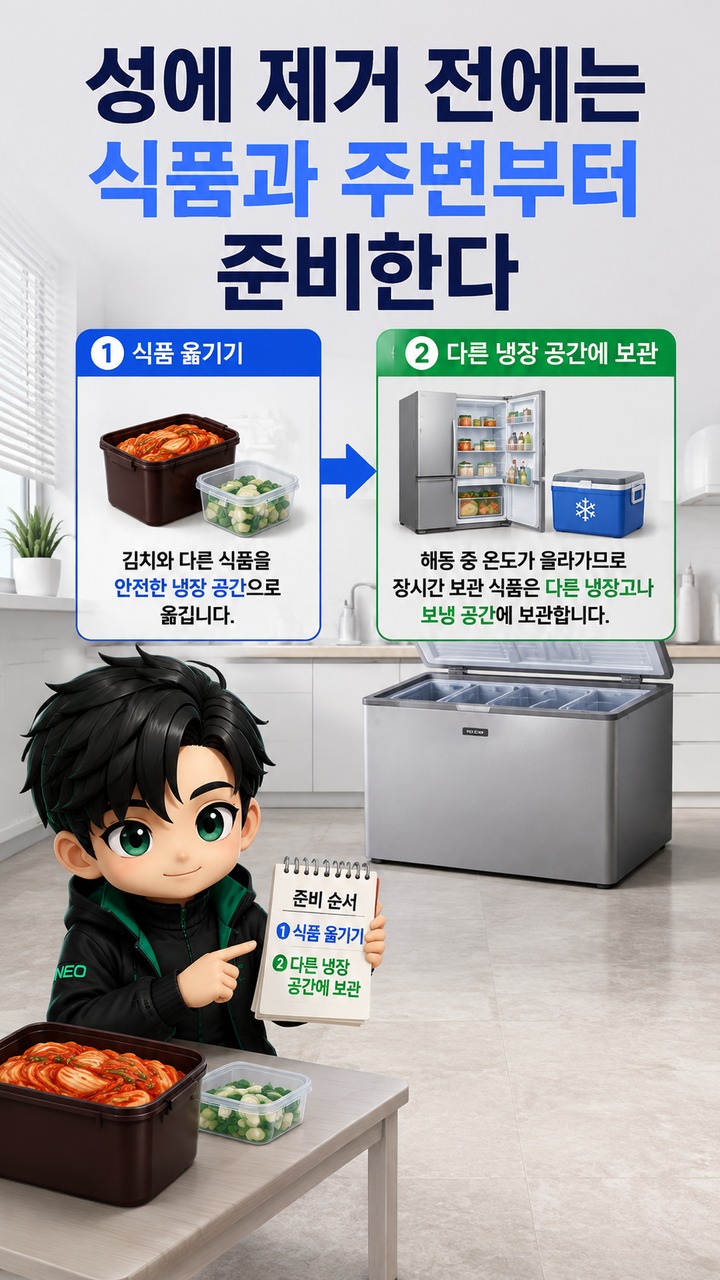
Before turning off the power, the first priority is to move kimchi and other food to a safe refrigerated storage area. Because the internal temperature will rise during defrosting, food that requires continued cold storage should be kept in another refrigerator or an appropriately insulated cooling space.
If a kimchi container is frozen to the ice and cannot be moved, avoid pulling it forcefully. Turn off the power and wait until some of the frost melts and the container naturally separates from the wall.
Meltwater may flow onto the floor, so place dry towels around the refrigerator and prepare additional towels to wipe moisture from the interior. The amount of water produced during defrosting may be substantial, depending on how much frost has accumulated.
Step-by-Step Instructions for Turning Off the Power and Defrosting Naturally
The general natural defrosting procedure is Move food → Turn off the affected compartment → Open the lid → Allow natural defrosting → Remove moisture → Turn the power back on. However, button labels and whether individual compartments can be switched off vary by model, so check the user manual before operating the controls.
In its general instructions for top-opening models, LG explains that users should unlock the display panel and then press and hold the power button for the frosted compartment for approximately 3 seconds to turn it off.
Follow these steps when carrying out the procedure:
1. Remove all kimchi and other food and transfer it to another refrigerated storage area.
2. If the model has a control lock, unlock it.
3. Turn off the compartment affected by frost. If individual compartments cannot be switched off, follow the power-off procedure in the model's manual.
4. Open the lid and allow the frost to melt naturally at room temperature.
5. Wait until the ice can be separated easily, then remove any loosened pieces.
6. Thoroughly wipe away meltwater and moisture from the walls using a dry towel.
7. Check that no moisture remains inside, turn the power back on, and restore the storage mode previously in use.
Defrosting time depends on the thickness of the frost and the room temperature. Thin frost and severe ice buildup extending deep into the interior cannot be expected to melt in the same amount of time.
LG Electronics also advises unplugging the refrigerator and leaving its doors open for at least 24 hours to allow natural defrosting in certain cases of severe ice buildup in refrigerator or freezer compartments. This guidance applies to more serious freezing conditions than ordinary thin frost on the walls. It does not mean that every frost removal procedure requires 24 hours.
Do Not Use Knives, Sharp Tools, or Hot Hair Dryers
Even if the ice is firmly attached, avoid breaking or prying it off with sharp metal tools such as knives or awls. Damaging the cooling walls or internal components beneath the ice could lead to repairs far more serious than the original frost problem.
In particular, striking or scraping the walls forcefully may damage the cooling system, even if it appears that only the ice is being removed.
Using hot air to shorten defrosting time is also discouraged. In its refrigerator defrosting guidance, LG Electronics warns that hot air from a hair dryer may deform internal plastic components or increase the risk of fire, and therefore recommends natural defrosting.
The basic approach is to turn off the power, leave the lid open, and wait for the ice to melt on its own. Once the ice has softened enough to separate easily from the walls, it can be removed without excessive force.
If Frost Quickly Returns, Check These Four Things First
If thick frost returns shortly after it has been completely removed, it is more effective to investigate conditions that allow moisture to keep entering the refrigerator than to repeatedly remove the ice. Check the lid seal, rubber gasket, moisture from stored food, and how frequently the lid is opened.
First, check whether kimchi containers, plastic bags, or other items are pushing the lid upward. When the refrigerator is overfilled, small gaps may remain even though the lid appears closed from the outside.
Next, inspect the door's rubber gasket. Wipe away food residue or sticky contamination, and check for folded, displaced, or improperly seated sections. If the lid does not seal properly, humid outside air can enter and cause frost to form.
Store foods with high moisture content in suitable sealed containers. Moisture released from food can freeze again when it reaches the cold interior walls.
Also consider whether the lid is being left open for extended periods or opened excessively often. Every time it is opened, room air and moisture enter the refrigerator.
When frost repeatedly forms, check the following four conditions in order:
Whether kimchi containers or other food items are preventing the lid from closing properly
Whether the rubber gasket is dirty, loose, lifted, or folded
Whether high-moisture foods are stored in sealed containers
Whether the lid is left open for long periods or opened too frequently
If these conditions have been corrected and all frost has been removed, but extremely thick ice quickly returns in a particular area, cooling becomes unusually weak, or an error appears on the display, it is advisable to consider having the appliance inspected.
When Should Food Be Returned After Restarting the Refrigerator?
The interior does not immediately return to its original storage temperature when the power is switched back on. The refrigerator needs time to lower the temperature that rose during defrosting, so food should be returned only after sufficient cooling has been restored.
The time required depends on the refrigerator's size, room temperature, season, and extent of defrosting. Rather than assuming one fixed recovery time, follow any specific guidance provided in the user manual for your model.
Weak cooling immediately after restarting does not necessarily indicate a malfunction. Conversely, if the refrigerator still does not cool at all after sufficient time has passed, or error indicators remain visible, further inspection may be needed to distinguish the issue from ordinary frost buildup.
The most important part of frost removal is not how quickly the ice can be chipped away. The key is to follow the correct sequence: Move the food, turn off the power, allow the frost to melt naturally, remove all moisture, and then restart the refrigerator. If frost quickly returns afterward, begin by checking the lid seal, rubber gasket, moisture management for stored food, and lid-opening habits.