

What to Do When You Feel Sick From the Heat: The 119 Emergency Warning Signs to Check Before Drinking Water
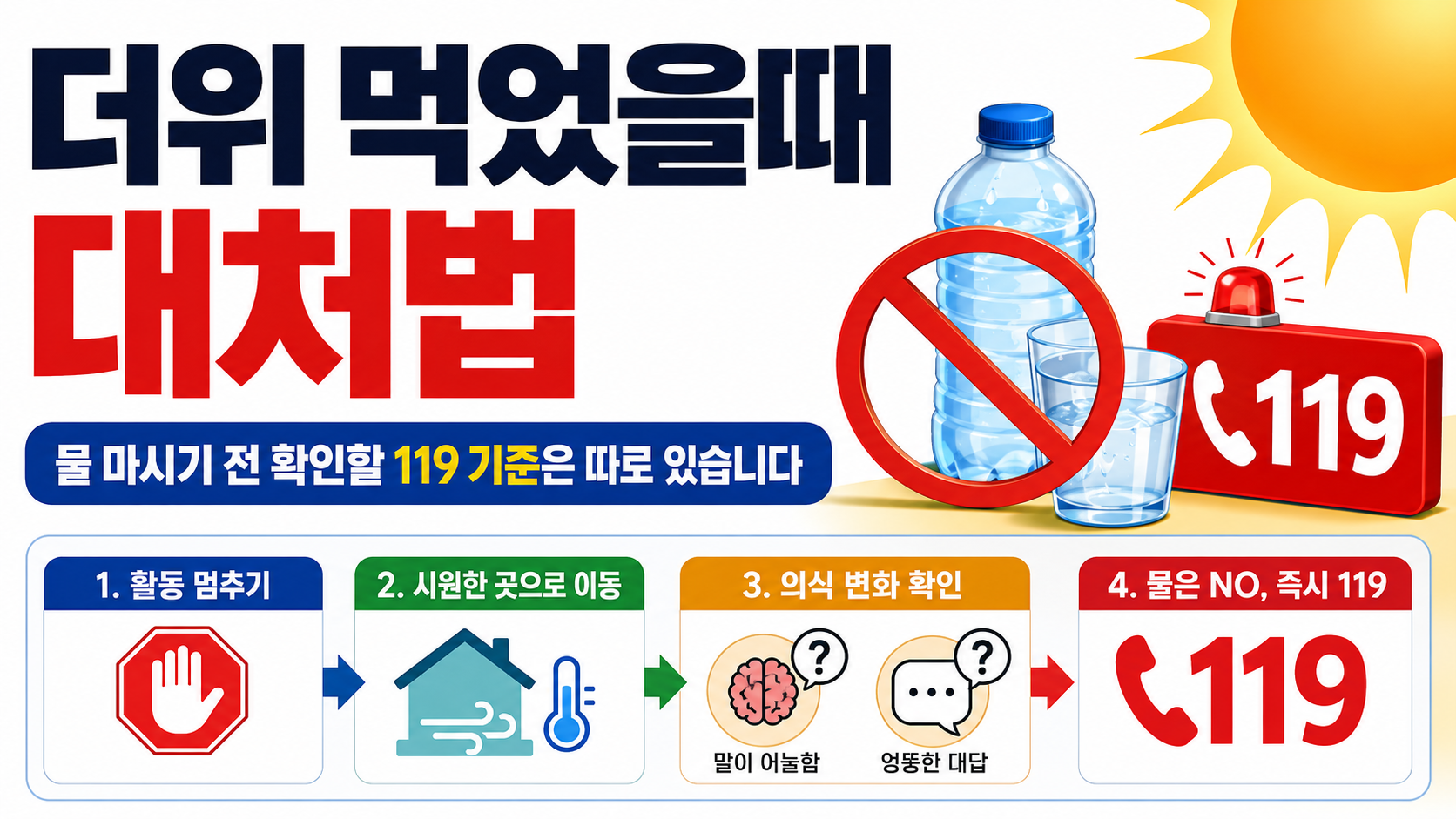
If you suddenly feel dizzy, develop a headache, or become nauseated after spending a long time in the sun or being active in a hot environment, stop what you are doing and move somewhere cool. However, if you notice changes in consciousness, such as slurred speech or inappropriate answers to questions, do not give the person water. Call 119 immediately.
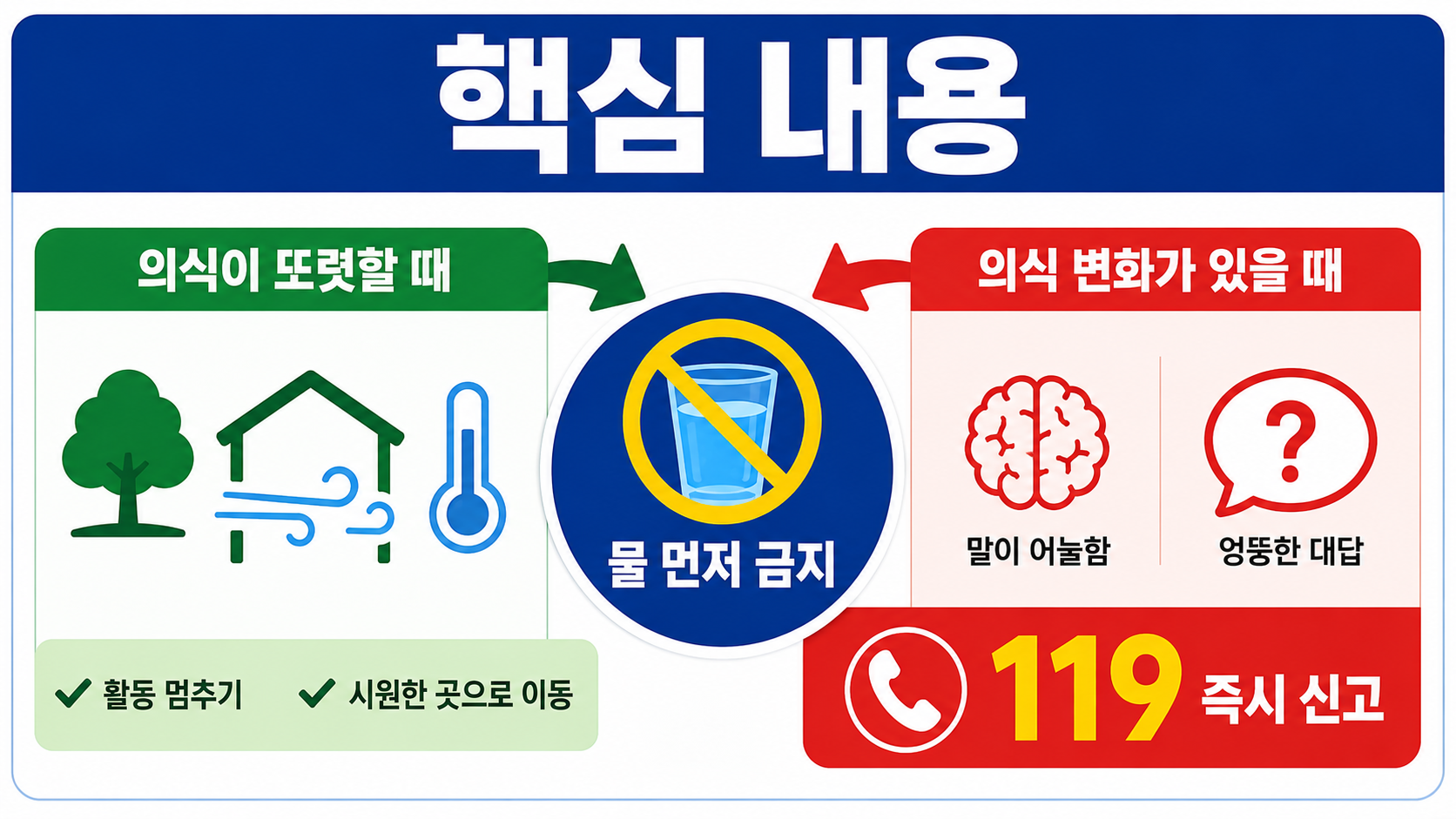
The common expression 'feeling sick from the heat' can describe several different conditions, ranging from mild dehydration to heat exhaustion and life-threatening heatstroke.
That is why the first thing to check is not simply the person's body temperature, but whether they can communicate and respond normally.
What to Do First When You Feel Sick From the Heat
If you experience dizziness, a headache, nausea, or heavy sweating, stop your activity and move to a cool place, such as an air-conditioned room or a shaded area.
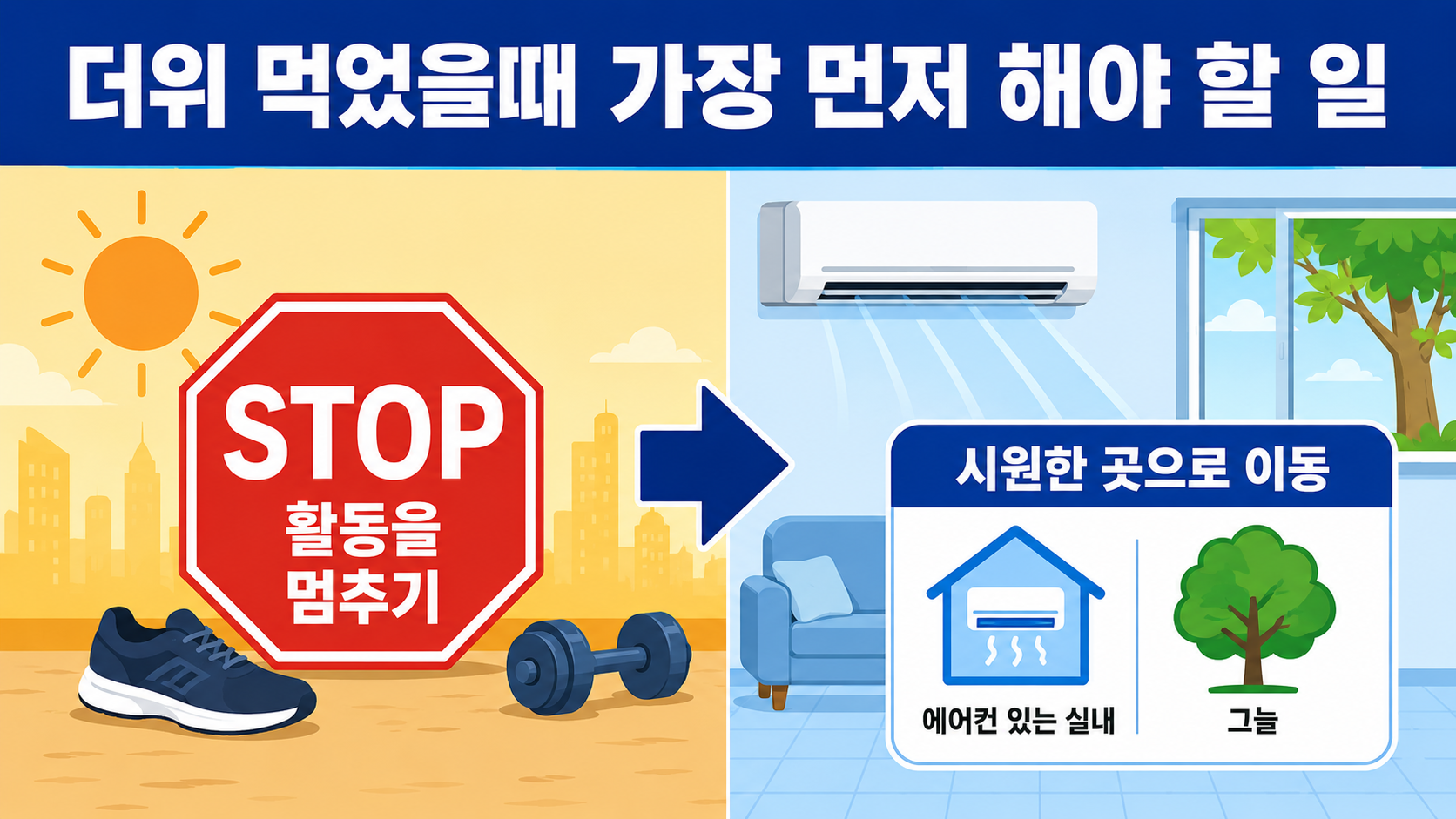
Loosen tight clothing and belts, wet the skin with cool water, and use a fan or handheld fan to help cool the body.
If ice packs or cold water bottles are available, wrap them in a towel and apply them around the neck, armpits, and groin to help lower body temperature.
These measures are important whenever heat exhaustion or heatstroke is suspected.
However, what you do next depends on whether the person is fully conscious and alert.
If the Person Is Fully Alert, They Can Drink Water Slowly
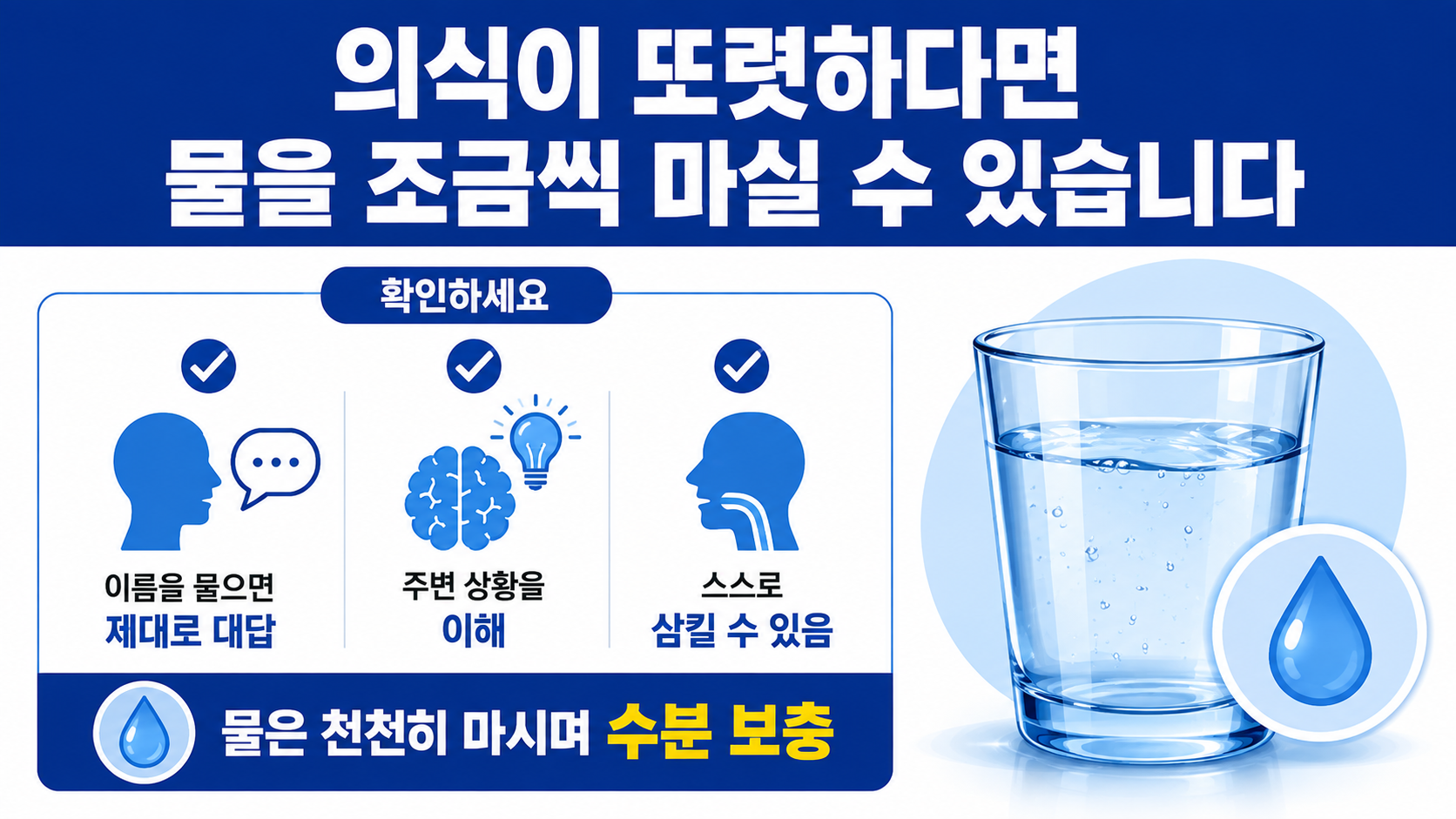
If the person can correctly answer when asked their name, understands what is happening around them, and can swallow independently, they can gradually replenish fluids by drinking water slowly.
If they have been sweating heavily, an electrolyte-containing drink may also be an option. Rather than drinking a large amount all at once, it is better to take small sips while cooling the body.
Do not force someone to drink if they are vomiting severely or having difficulty swallowing.
If dizziness, headaches, nausea, severe weakness, or similar symptoms persist or worsen despite resting in a cool place and cooling the body, do not rely solely on rest at home. Seek medical evaluation.
If You Notice These Signs, Call 119 Before Giving Water
If someone who has been in a hot environment suddenly begins speaking incoherently, cannot answer questions properly, staggers, collapses, or has seizures, heatstroke should be suspected.
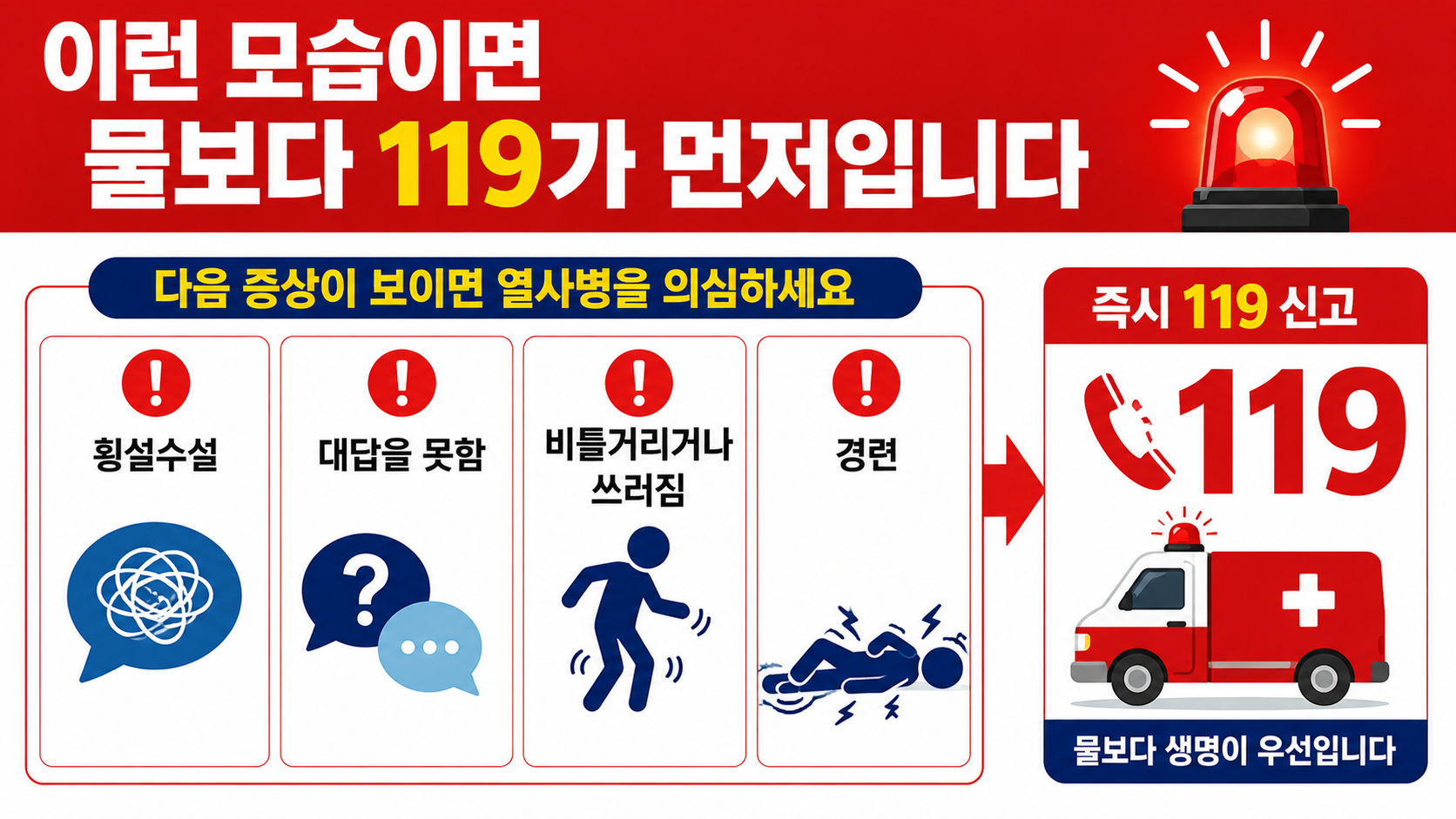
It is especially important not to wait for the person to recover if any of the following signs appear.
Their consciousness becomes impaired, or they are difficult to wake.
They appear unusually confused or say things that do not make sense.
They collapse or experience seizures.
Their body feels extremely hot, suggesting a dangerously high temperature.
Their condition deteriorates to the point that they can barely stand or walk properly.
In these situations, call 119 immediately and continue cooling the person in a cool location until emergency responders arrive.
In heatstroke, body temperature can exceed 40°C, but there is no need to delay calling for help or cooling the person while searching for a thermometer. If someone develops altered consciousness after heat exposure, the safest approach is to treat it as an emergency without waiting for a temperature reading.
Why You Should Never Give Water to Someone With Impaired Consciousness
It is natural to think that drinking water will resolve dehydration, so people may instinctively offer something to drink first. However, doing so can be dangerous when someone's level of consciousness is reduced.
If a person cannot swallow normally, putting water or an electrolyte drink into their mouth can cause the liquid to enter the airway, potentially resulting in choking or aspiration into the lungs.
Therefore, never give water, electrolyte drinks, or food to someone who is unconscious or unable to swallow properly.
After calling 119, loosen the person's clothing, cool their skin, and focus on lowering their body temperature.
What Is the Difference Between Heat Exhaustion and Heatstroke?
Heat exhaustion can develop when someone loses excessive amounts of water and salt through sweating in a hot environment.
Symptoms may include heavy sweating, dizziness, headaches, nausea, fatigue, and weakness, but consciousness is generally preserved.
Heatstroke, by contrast, is a medical emergency in which the body's temperature-regulation system fails and the central nervous system becomes affected. Confusion, reduced consciousness, and seizures are important warning signs.
Dry skin is not a requirement for heatstroke. People experiencing heatstroke may still sweat, so you should never assume that 'sweating means it is not heatstroke.'
When trying to distinguish between these conditions at home, the following practical guidelines are more useful than attempting a complicated diagnosis.
The person can communicate normally → Move them to a cool place, actively cool their body, and provide fluids if they can swallow safely. Their consciousness or behavior is different from normal → Consider the possibility of heatstroke and prioritize calling 119 and cooling the body.
Cooling the Body Requires More Than Simply Drinking Water
When dealing with heat-related illness, it is important not only to replace lost fluids but also to actively reduce elevated body temperature.
Move the person into an air-conditioned space or shaded area, remove unnecessary outer clothing, and loosen tight garments.
Wetting the skin with cool water while directing airflow from a fan or handheld fan can help remove heat through evaporation. If cold packs are available, they can be applied around areas where major blood vessels pass, such as the neck, armpits, and groin.
If heatstroke is suspected, calling 119 and taking these cooling measures should happen simultaneously.
Taking Fever-Reducing Medication First Is Not the Solution to a Heat-Related Headache
It is easy to mistake headaches and a sensation of intense body heat after heat exposure for an ordinary fever.
However, the elevated body temperature associated with heatstroke develops through a different mechanism from fever caused by infection. Taking fever-reducing medication and waiting to see whether the condition improves must not replace emergency first aid.
Especially when altered consciousness or dangerously high body temperature is suspected, calling 119 and cooling the person rapidly take priority over looking for medication.
Can You Resume Your Activities Immediately After Feeling Better?
Even if symptoms subside, it is best to avoid immediately returning to a hot environment to continue exercising or working.
Experiencing symptoms of heat-related illness means the body has already been placed under strain by heat exposure and fluid loss. Rest adequately, replenish fluids, and watch for recurring dizziness or nausea.
Medical attention is necessary if symptoms persist, worsen again, or repeated vomiting prevents adequate fluid intake.
Older adults, infants and young children, pregnant women, and people with chronic conditions such as heart or kidney disease may be more vulnerable to heat. Some may also have individual restrictions on fluid or salt intake, so extra caution is needed when symptoms occur.
The Steps to Remember Are Simple
When you begin feeling sick from the heat, the first priority is not asking 'What should I drink or eat?' but getting out of the hot environment, cooling the body, and checking the person's level of consciousness.
If the person is fully alert and can swallow normally, they can slowly replenish fluids.
However, if their speech becomes abnormal, their consciousness deteriorates, or they collapse or experience seizures, heatstroke is a possibility. Call 119 immediately. Do not give them anything to drink, and continue actively cooling their body until emergency responders arrive.
The most important principles are not dismissing every episode of dizziness on a hot day as simply 'feeling sick from the heat' and not waiting when changes in consciousness occur.
※ This article provides general information about responding to heat-related illnesses and is not a substitute for an individual medical diagnosis. If emergency symptoms such as impaired consciousness, seizures, or fainting occur, seek immediate assistance from 119. If symptoms persist or you are unsure how serious the condition is, seek medical care.
The essential emergency first-aid guidance in this article is consistent with the latest recommendations from the Korea Disease Control and Prevention Agency (KDCA). The KDCA describes heatstroke as a medical emergency that can involve high body temperature and central nervous system abnormalities. It advises immediately calling 119, moving the affected person to a cool location, and cooling their body. Fluids must not be given to an unconscious person. The CDC likewise emphasizes requesting emergency medical assistance and beginning immediate cooling when heatstroke is suspected.