

What If the Price Has Moved Far Beyond the Darvas Box Breakout? How to Avoid Chasing an Entry Before Confirming Volume and Set a Stop-Loss
Even if a Darvas box breakout occurs, it is more reasonable to wait than to enter immediately when you cannot confirm volume and the price has already risen sharply above the box top. The key is to calculate your loss limit first based on the bottom of the existing box and whether a new box is forming, rather than raising your purchase price because you missed the breakout. A late entry in particular can increase the distance to the stop-loss price,
This post contains Coupang Partners affiliate links. We may earn a commission from qualifying purchases.
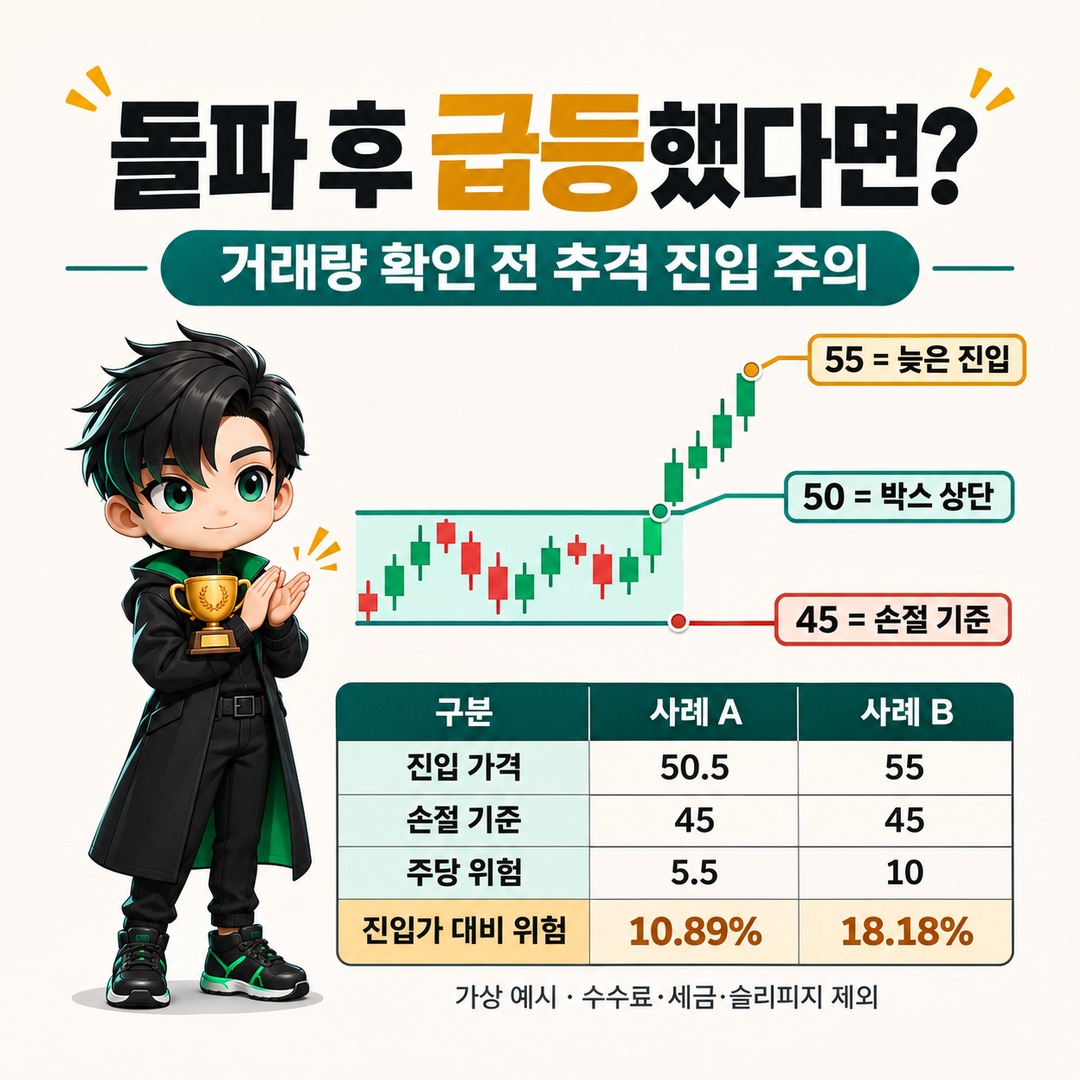
Even if a Darvas box breakout occurs, it is more reasonable to wait than to enter immediately when you cannot confirm volume and the price has already risen sharply above the box top. The key is to calculate your loss limit first based on the bottom of the existing box and whether a new box is forming, rather than raising your purchase price because you missed the breakout.
A late entry in particular can increase the distance to the stop-loss price and worsen the risk-reward ratio. So treat volume confirmation, re-entry on a pullback, formation of a new box, and position sizing as separate considerations.
It Is Best Not to Treat a Breakout as a Confirmed Entry Signal When You Cannot Verify Volume
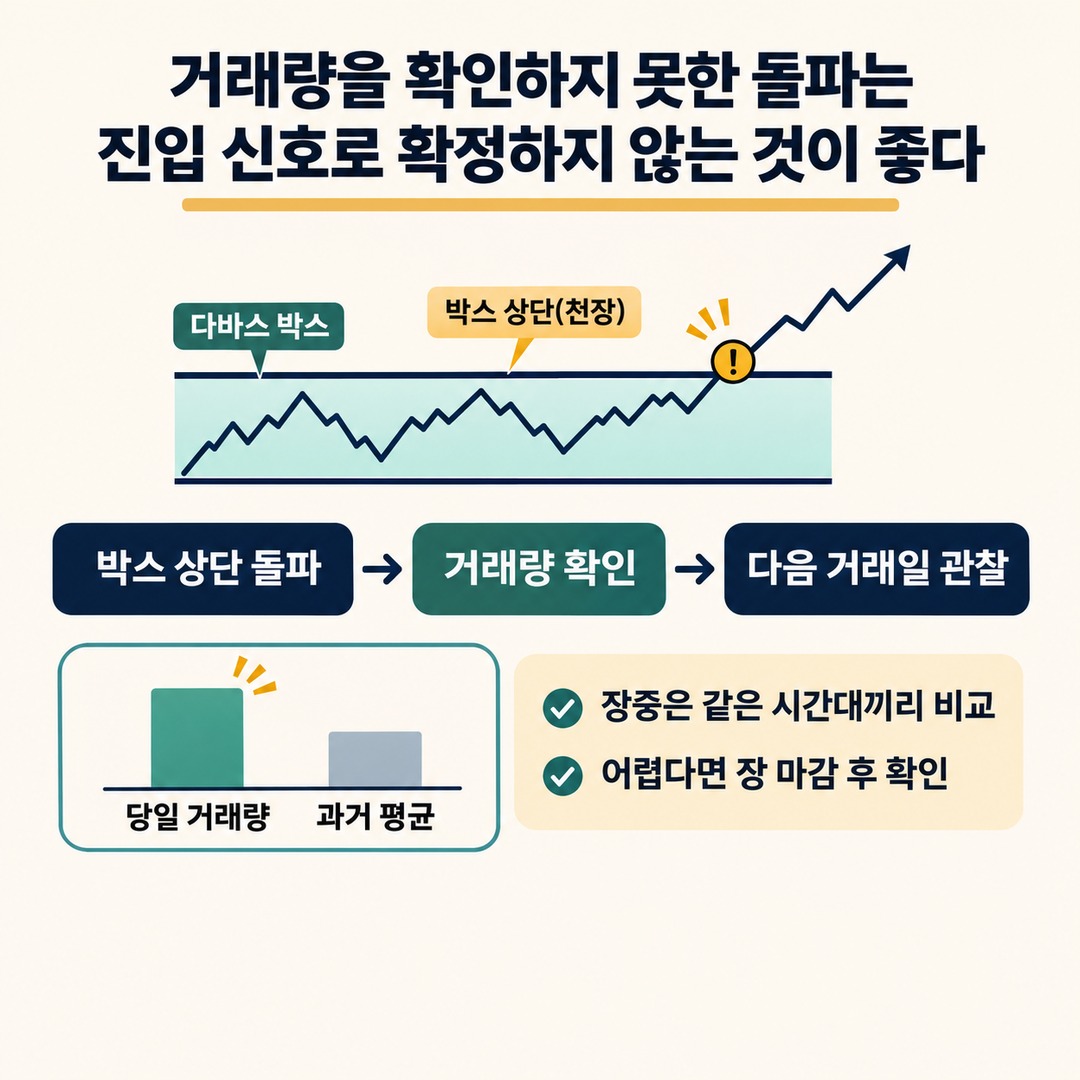
In the Darvas trading method, price and volume play different roles. Price shows whether the stock has moved above the top of its previous box, while volume provides supporting evidence for judging how much trading accompanied that move.
In his book 《How I Made $2,000,000 in the Stock Market》(1960), Nicolas Darvas described a method of observing price and volume together.
However, an increase in volume does not necessarily mean that the rise will continue.
2026-06-05 Charles Schwab's technical analysis materials also explain that volume can be used to confirm price movements, but a spike in volume alone should not determine a trade.
In practice, you can respond as follows.
If you cannot check volume during the trading session, do not enter without confirming volume.
After the market closes, compare the day's volume with the historical average volume.
After confirming that volume was sufficient, observe price action on the next trading day.
If volume is not confirmed, leave the breakout as an unverified signal.
There is one point to keep in mind.
A simple comparison between cumulative intraday volume and the previous day's full-day volume uses different measurement periods. If you use an intraday figure, it is more appropriate to compare it with historical volume at the same time of day.
For example, compare cumulative volume as of 10 in the morning with cumulative volume through 10 in the morning on past trading days.
If this comparison is not possible, it is better to check after the market closes.
Why Does Chasing a Price That Has Moved Above the Box Top Worsen the Risk-Reward Ratio?
In the Darvas trading method, what matters is not only the breakout itself, but also the distance between the entry price and the bottom of the box.
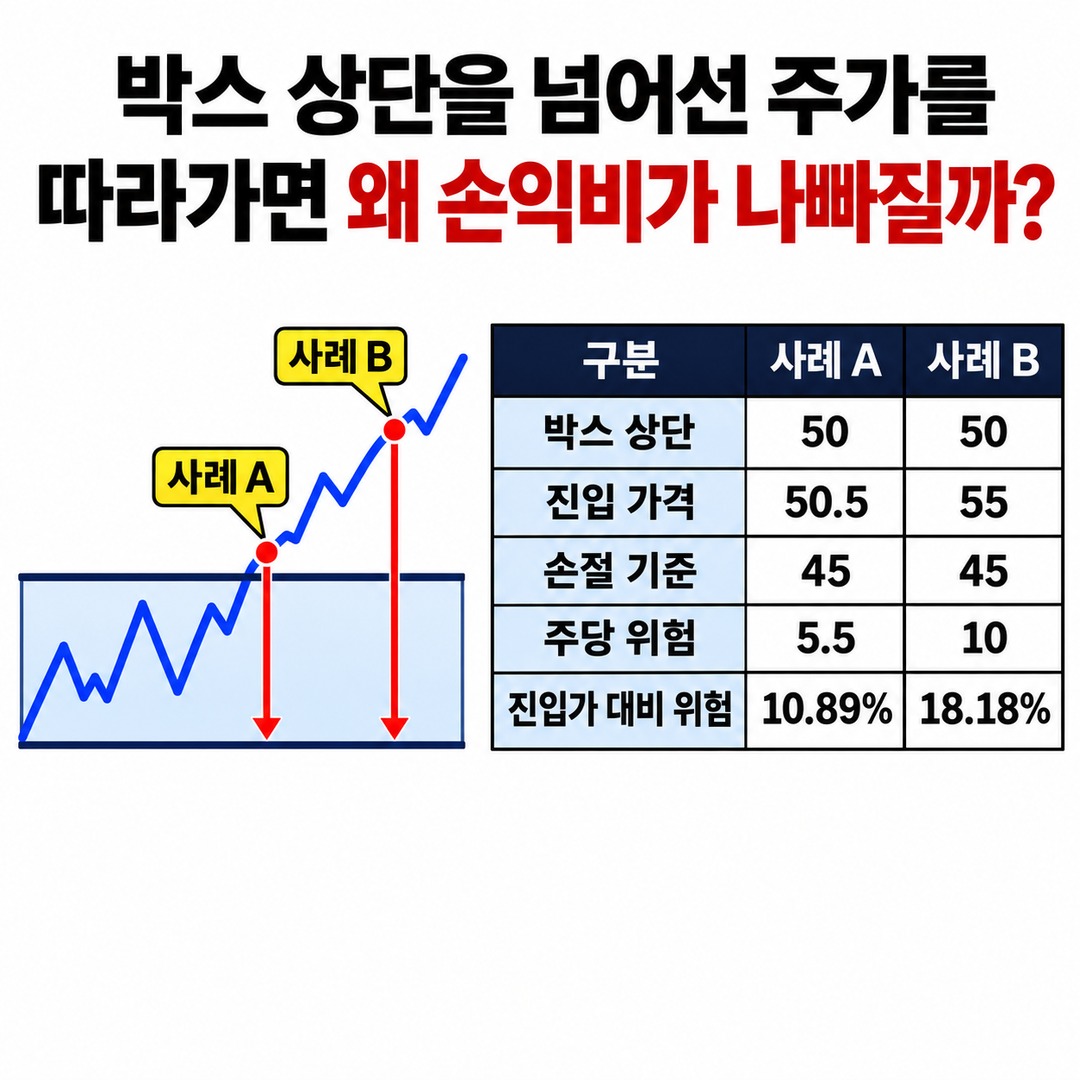
The farther the price moves from the box top, the greater the price movement you have to withstand if you use the bottom of the previous box as your stop-loss level.
Nicolas Darvas's book includes a real example that illustrates this problem.
Darvas identified the top of the previous box as 59¾ and considered 61 the price for entering a new box. But while he was waiting for a reply, the price rose to 63.
Afterward, the price rose to 63½, 64½, and 65.
Thinking he had missed his chance, Darvas eventually bought at 65. He later recorded that this entry was made at the top of a new box.
The lesson from this example is simple.
Missing your planned entry price is not a reason to enter at a higher price.
Calculating Risk Using Box Prices
The following is a hypothetical example, not the historical return of an actual stock.
Suppose the existing box is 45~50.
| Category | Example A | Example B |
|---|---|---|
| Box top | 50 | 50 |
| Entry price | 50.5 | 55 |
| Stop-loss level | 45 | 45 |
| Risk per share | 5.5 | 10 |
| Risk as a percentage of entry price | 10.89% | 18.18% |
Author's calculation · Excludes commissions, taxes, and slippage
The calculation is as follows.
Loss rate = (entry price − stop-loss price) ÷ entry price × 100. If the entry price rises from 50.5 to 55, the price difference down to the bottom of the existing box increases from 5.5 to 10.
In other words, if you arbitrarily move the stop-loss level closer to the current price because your entry price has risen, it will no longer match the stop-loss level based on the structure of the existing box.
That is why you should assess a post-breakout entry carefully rather than chase the price.
If You Spot a Breakout Late, Wait for a Pullback or a New Box
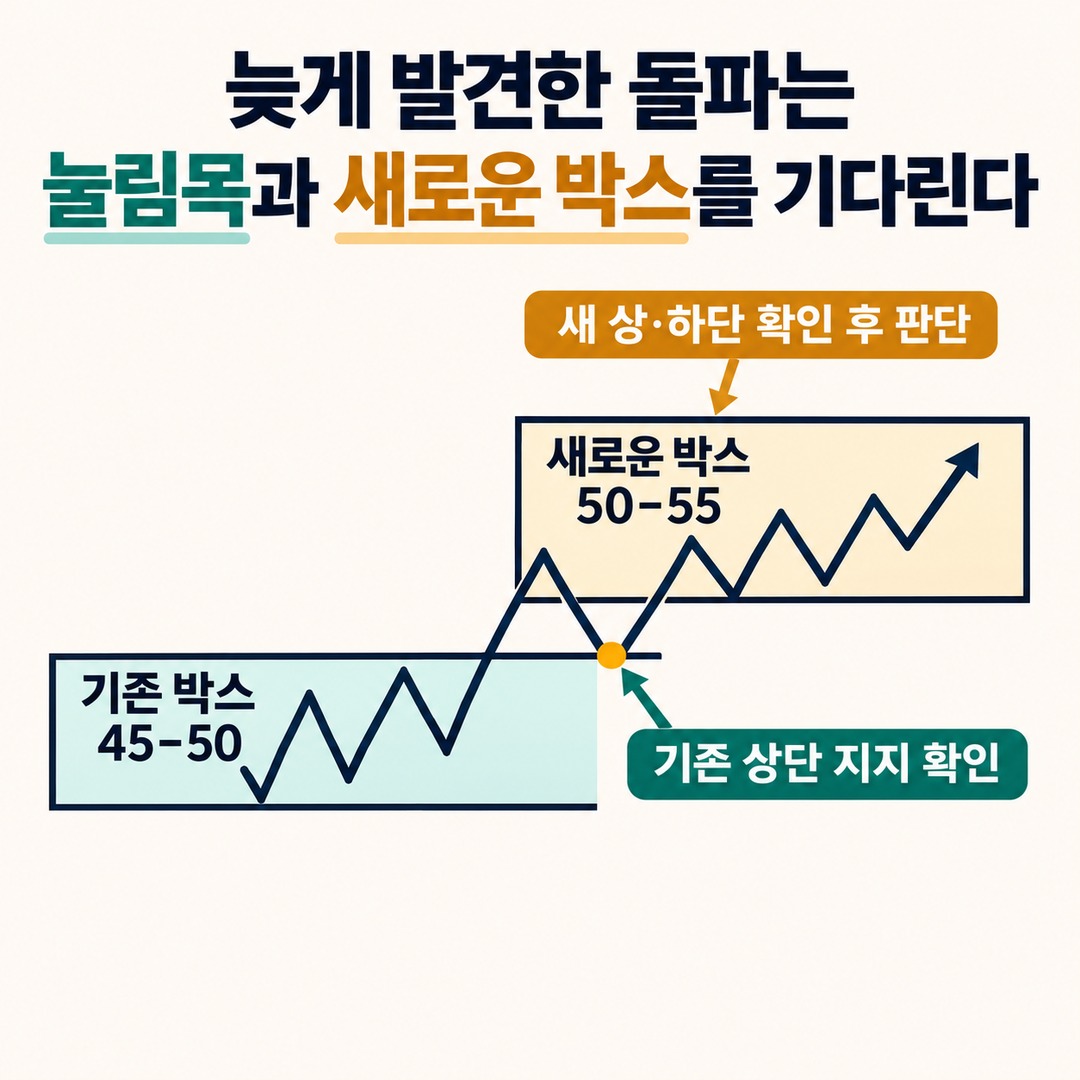
If the price has already moved well above the box top, you need to distinguish between two situations.
The first is a pullback toward the previous breakout price.
The second is the formation of a new box at a higher price level.
The entry criteria and stop-loss levels differ between these two situations.
1. When the Price Returns to the Top of the Existing Box
Suppose the top of the existing box is 50 and the price rises to 55, then pulls back toward 50~51.
At this point, do not buy simply because the price has fallen.
Check the following:
Is the price holding near the top of the existing box?
During the pullback, does it move deeply back inside the existing box?
Is the rebound accompanied by volume?
Does the price action since the breakout show a new upward structure?
If the price is confirmed to be finding support near the top of the existing box, you can consider it as a new entry candidate.
Conversely, if the price falls back inside the existing box and stays there, it is better to wait and treat the initial breakout as having failed to hold.
However, do not automatically conclude that the breakout has failed just because the price briefly dips below the box top. Consider the stock's volatility along with the price levels you set in advance.
2. When a New Box Forms at a Higher Price
If the price rises from the existing box and then starts moving within a new price range, watch for a new box to form.
The core of the box theory Darvas described is a structure in which the price moves between a defined ceiling and floor, then shifts to the next higher price level.
If the existing box was 45~50, a new price range might then form at 50~55.
The important thing here is not to predict the bottom of the new box in advance.
If a new box has not yet formed, there is not enough basis to enter by calculating a stop-loss level arbitrarily.
Only after the new top and bottom have been confirmed can you calculate risk using the bottom of the new box.
Where Should You Set the Stop-Loss?
In line with Darvas box theory, it is better to set the stop-loss at a price that invalidates the trading thesis than to mechanically place it a certain percentage below the current price.
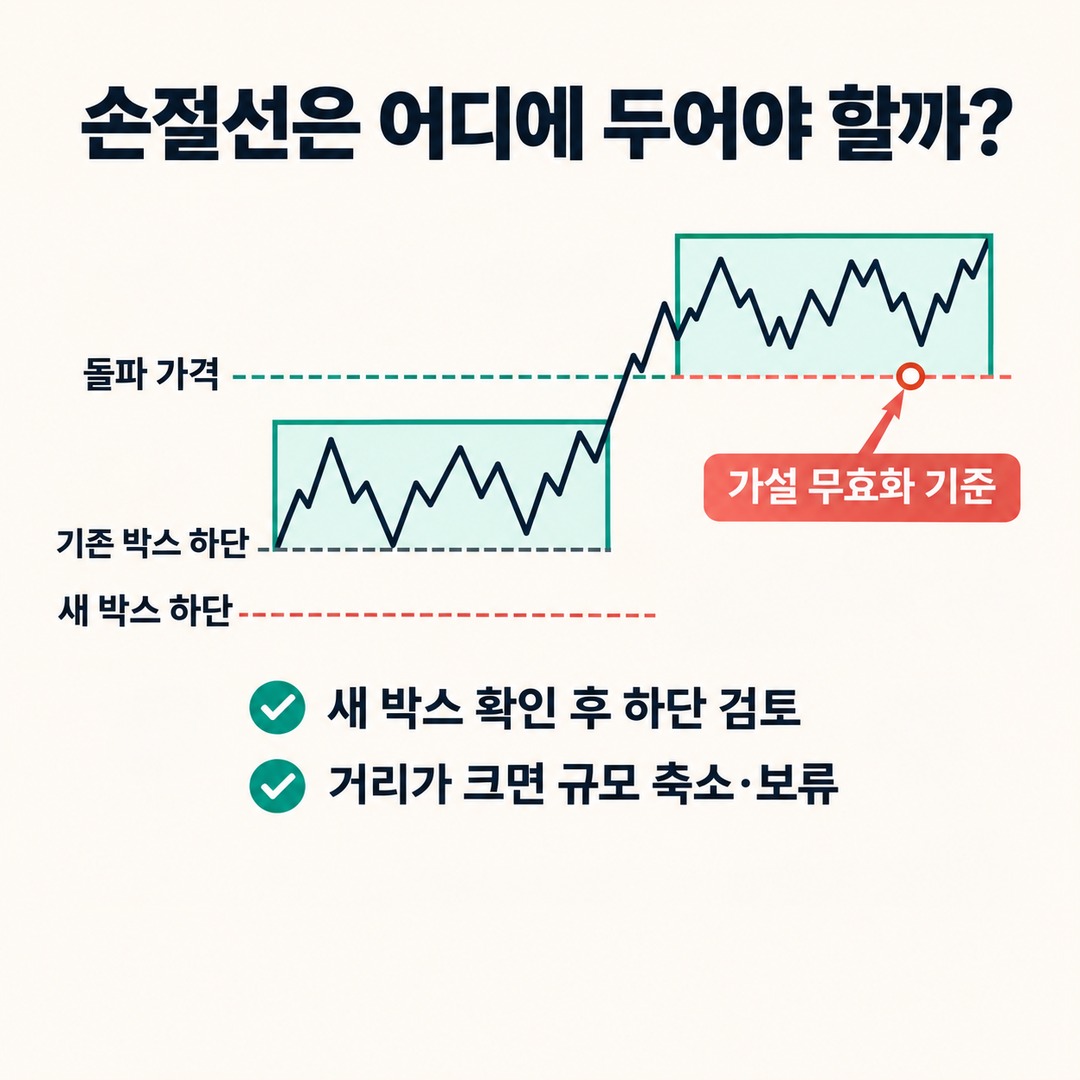
There are three price levels to distinguish.
| Price level | Role |
|---|---|
| Bottom of the existing box | Level at which the existing box structure is invalidated |
| Breakout price | Level used to check whether the breakout is holding |
| Bottom of the new box | Structural stop-loss level after a new box has formed |
Darvas's original book describes the principle of closing a position when the price clearly falls below the bottom of the existing box.
It also describes an approach in which, after the price moves into a higher box, you do not immediately raise the stop-loss to the new price level, but instead watch as the new box's top and bottom take shape.
This can be applied as follows.
First, if a new box has not formed, calculate risk using the bottom of the existing box.
Second, if a new box has been confirmed, consider using its bottom as the stop-loss level.
Third, if the distance to the stop-loss is too large, do not try to justify the entry price.
In particular, if the stop price is too far below the entry price, you can reduce the position size or hold off on the trade altogether.

If the Stop-Loss Distance Has Increased, Recalculate the Number of Shares First
Even with the same stock, the risk you need to bear changes when the entry price changes.
The following calculation can be used.
Number of shares to buy = allowable loss amount ÷ (entry price − stop price). As a hypothetical example, suppose the allowable loss amount is set at KRW 1,000,000.
Entry price: KRW 50,000
Stop price: KRW 45,000
Risk per share: KRW 5,000
1,000,000÷5,000=200 shares. The theoretical calculation gives 200 shares.
However, in actual trading, commissions, taxes, slippage, a gap down, and other factors can cause losses to exceed the calculated amount.
Therefore, the calculated share count does not represent a guaranteed loss limit.
Conversely, if the price has already risen to KRW 55,000 and the stop-loss level is KRW 45,000, the risk per share is KRW 10,000.
Applying the same risk budget of KRW 1,000,000 brings the calculated position size down to 100 shares.
A late entry, then, is not just a matter of reducing the number of shares to buy; it also requires reassessing whether the price is worth trading at in the first place.
A Stop Order Does Not Guarantee the Actual Sale Price
Setting a stop price does not guarantee that the shares will be sold at that price.
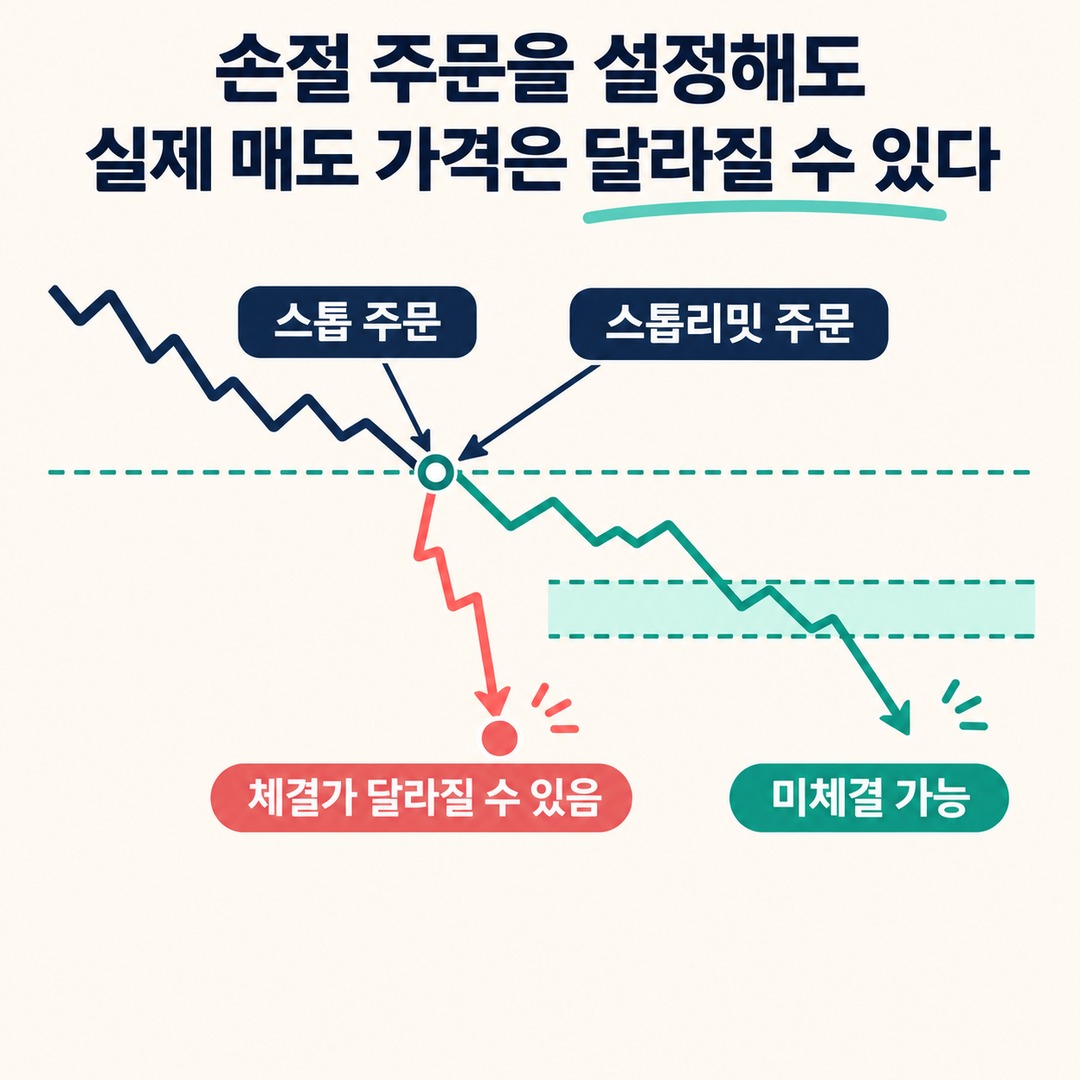
The U.S. Securities and Exchange Commission (SEC) investor guidance explains how stop orders work in its 2026-08-18 updated edition.
A stop order becomes a market order when the specified price is reached. As a result, during sharp price moves or periods of low liquidity, the actual execution price can differ significantly from the stop price you set.
A stop-limit order, by contrast, can prevent execution at a price worse than the limit you set, but if the price moves sharply, the order may not be filled.
So when setting a stop-loss level, consider the order type as well as the price.
This is especially important for volatile stocks, where the stop price and the actual loss may differ.
An Entry Decision Sequence for Investors Who Cannot Easily Check Volume
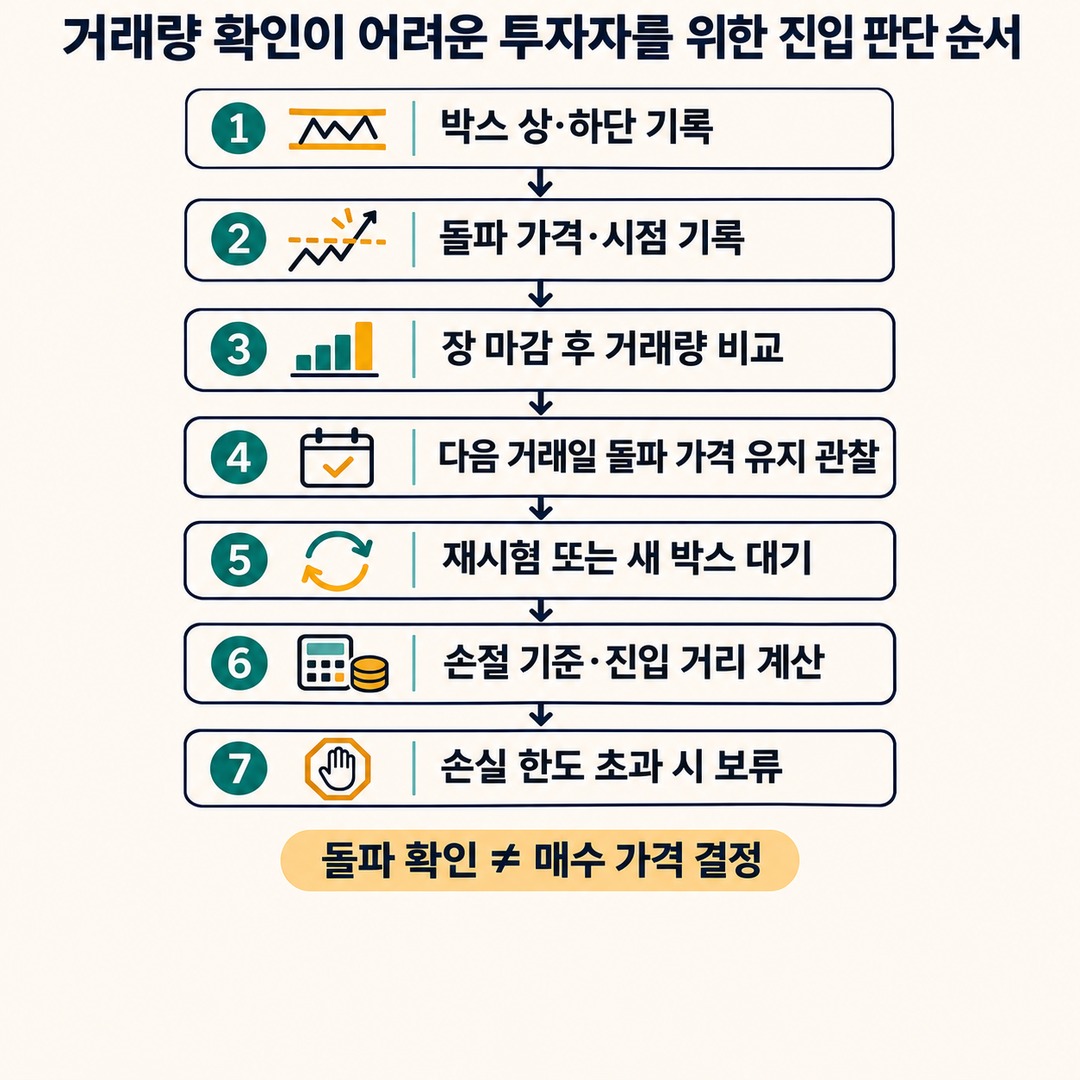
If you cannot keep checking volume throughout the trading session, you can manage potential trades in the following order.
1. Record the top and bottom of the existing box.
2. Record the price that moved above the box top and when the breakout occurred.
3. After the market closes, compare volume with the historical average.
4. Watch to see whether the price remains above the breakout level on the next trading day.
5. Wait for a retest near the top of the existing box or for a new box to form.
6. Set the stop-loss level first and calculate its distance from the entry price.
7. If the trade does not fit within your loss tolerance, hold off.
The most important thing in this process is to treat confirming a breakout and deciding what price to buy at as two separate judgments.
Even if the breakout is proceeding successfully, the opportunity may not be right for you if the entry price has already become too high.
Conclusion: A Price You Can Enter at With a Manageable Stop Matters More Than a Missed Breakout
If you did not spot the Darvas box breakout during the trading session, there is no reason to chase the price later without confirming volume.
One way to respond is to check volume after the market closes and wait for a pullback toward the top of the existing box or for a new box to form.
Consider setting the stop-loss based on the bottom of the existing box or the bottom of a newly formed box. Do not arbitrarily raise the stop-loss just because the price has moved farther away.
Finally, calculate whether the distance between the entry price and stop price is within an acceptable range.
Missing a trading opportunity and entering at a price where you cannot absorb the loss are entirely different things.
In Darvas trading, waiting is not simply delaying a purchase. It is the process of watching until the risk you can bear and the price structure align again.
※ This article is for informational purposes to help readers understand market trends and is not an investment recommendation for any specific stock or asset. You are responsible for your own final decisions and investments.
This post contains Coupang Partners affiliate links. We may earn a commission from qualifying purchases.