

What Happens if Former 707 Unit Commander Kim Hyun-tae Appeals? 2 Trial Procedures, Detention Status, and Possible Sentence Changes
이 포스팅은 쿠팡 파트너스 활동의 일환으로, 이에 따른 일정액의 수수료를 제공받습니다.

Former 707 Special Mission Unit Commander Kim Hyun-tae was sentenced to 12 years in prison in the 1 trial on 2026-08-27 and taken into custody in court. He appealed on the same day the verdict was delivered. Therefore, the 12-year prison sentence is not yet final, and the appellate court may reexamine the 1 court's factual findings, application of the law, and sentencing. However, filing an appeal does not automatically result in release from detention.
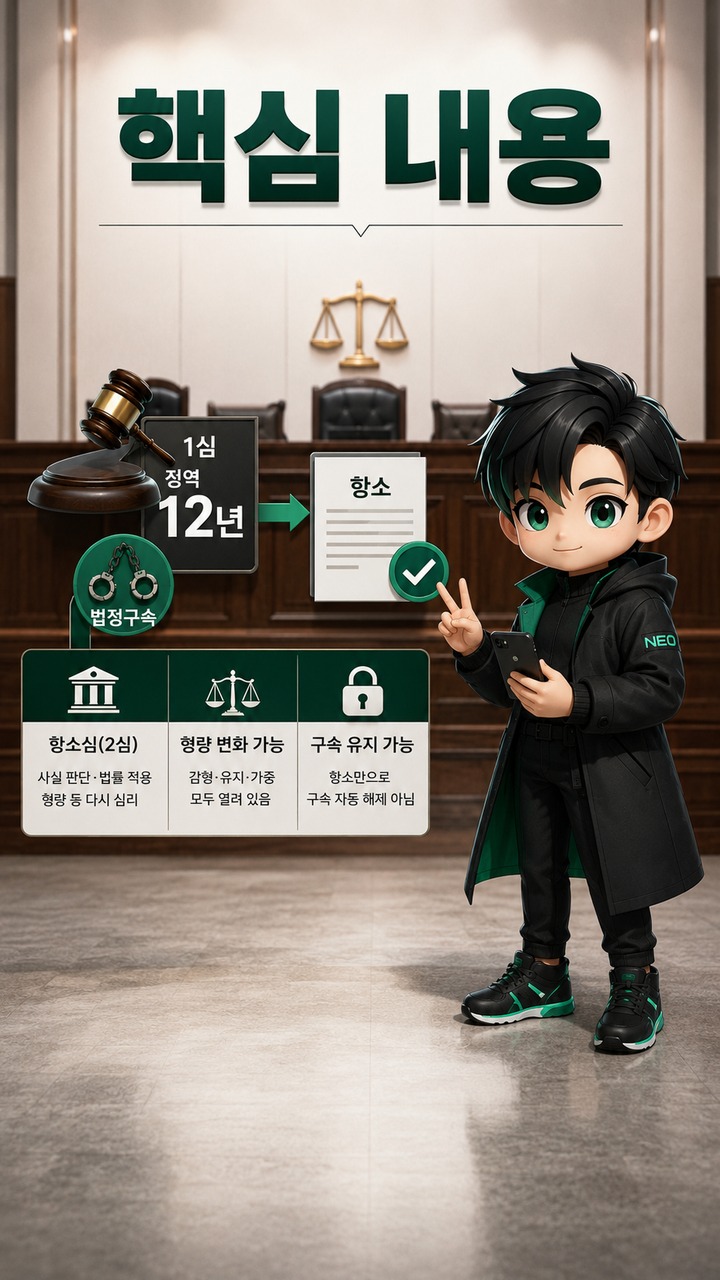
An Appeal Means the 12-Year Prison Sentence Does Not Immediately Become Final
In criminal proceedings, an appeal is the process of challenging a judgment issued in the 1 trial and seeking a new review by a higher court. Because former Commander Kim Hyun-tae appealed on the day the 1 verdict was delivered, the 12-year prison sentence imposed in that trial is not a final judgment until the appellate process has been completed.

On 2026-08-27, Criminal Division 37-2 of the Seoul Central District Court sentenced former Commander Kim to 12 years in prison on charges including performing an important role in an insurrection and ordered his immediate detention in court. In the same trial, former 1 Airborne Special Forces Brigade Commander Lee Sang-hyun received a 10-year prison sentence, while former Defense Counterintelligence Command Investigation Unit Chief Kim Dae-woo was sentenced to 5 years in prison. Some defendants were acquitted.
However, an appellate trial involves more than simply rereading the 1 court's judgment. After identifying which parts of the ruling the appellant claims were incorrect, the appellate court examines the relevant facts, evidence, application of the law, and sentencing to the extent necessary.
What Is the Deadline for Filing a Criminal Appeal?

The deadline for filing an appeal in a criminal case is 7 days from the date the 1 judgment is pronounced. A party wishing to appeal must submit a notice of appeal to the original court that delivered the 1 judgment within this period.
According to reports, former Commander Kim Hyun-tae appealed immediately on August 27, the day the verdict was delivered, meaning the appeal itself has already been filed.
It is important to distinguish between the notice of appeal and the statement of grounds for appeal.
Submitting a notice of appeal initiates the appellate process. Once the case records have been transferred to the appellate court, the appellant receives a notification that the court has received the case records. The appellant or defense attorney must submit a statement of grounds for appeal within 20 days of receiving this notification. The opposing party may submit a written response within 10 days of being served with a copy of the statement of grounds for appeal.
The overall process can be summarized as follows.
1 judgment pronounced → Appeal filed within 7 days → Case records transferred to appellate court → Notification of receipt of case records → Statement of grounds for appeal submitted within 20 days → Issues identified and hearings held → Appellate judgment
The Supreme Court's published guidance on criminal appeals also explains that the process proceeds through receipt of the case records, submission of grounds for appeal, preparation for hearings and examination of evidence, final arguments, and delivery of the judgment.
What Will the Court Reexamine in the 2 Trial?
The central question in an appeal is whether the 1 judgment contained errors that constitute valid grounds for appeal.
Under the Criminal Procedure Act, grounds for appeal may include not only violations of law that affected the judgment but also errors in factual findings and inappropriate sentencing. Therefore, the arguments that former Commander Kim's legal team actually presents in its statement of grounds for appeal will be an important basis for identifying the central issues in the upcoming 2 trial.
For example, the scope and central issues of the appellate proceedings may differ depending on whether the defense challenges certain facts established in the 1 trial, disputes the application of the offense of performing an important role in an insurrection, questions the court's assessment of intent or responsibility, or contests the 12-year prison sentence.
However, as of 2026-08-27, the mere fact that an appeal has been filed does not establish the specific grounds for that appeal. The actual arguments will need to be confirmed through the statement of grounds for appeal and subsequent appellate hearings.
Filing an Appeal Does Not Automatically End Detention Ordered in Court
This is one of the most commonly misunderstood aspects of the process. Filing an appeal and being released from detention are separate matters.
Former Commander Kim Hyun-tae was taken into custody in court when the 1 judgment was delivered. The court ordered the detention of several defendants, including Kim, after determining that there were concerns about flight and destruction of evidence.
Therefore, submitting a notice of appeal does not automatically mean that the defendant can remain free while awaiting trial. Some defendants undergo appellate proceedings while detained. Actual release may depend on a separate decision granting bail, cancellation of detention, issues concerning the detention period, or other legally recognized grounds for release.
According to court guidance, not only detained defendants but also their attorneys, legal representatives, spouses, and certain relatives may apply for bail. However, filing a bail application does not guarantee that bail will be granted. The court makes its decision after examining the specific circumstances.
Therefore, when monitoring former Commander Kim's custody status, it is important to check whether bail has been requested, how the court has ruled, and any detention-related decisions, rather than focusing solely on the fact that he appealed.
Could an Appeal Result in a Sentence Longer Than 12 Years?
The key question here is who filed the appeal.
The Criminal Procedure Act recognizes the principle prohibiting changes to a defendant's disadvantage. If only the defendant appeals and the prosecution does not, the appellate court cannot impose a heavier sentence than the original court.
Therefore, if the case ultimately remains one in which only the defendant has appealed, restrictions will apply to imposing a sentence heavier than the 12-year prison term handed down in the 1 trial.
However, the situation may change if the prosecution also appeals. The range of possible sentencing changes in the appellate court may depend on whether the prosecution appeals and the purpose of its appeal. The fact that former Commander Kim Hyun-tae has appealed does not, by itself, establish whether the sentence will be reduced or remain unchanged in the 2 trial.
As of 2026-08-27, the latest confirmed reports establish only that Kim appealed immediately after sentencing. Whether the prosecution ultimately files an appeal must be checked separately, taking into account the statutory appeal period and subsequent official confirmation.
When Will the 2 Judgment Be Delivered?
At this stage, it is not possible to determine the exact date of the 2 judgment.
The first appellate hearing does not take place immediately after an appeal is filed. Several procedures must first be completed, including preparation and transfer of the case records by the 1 court, assignment of the case to the appellate court, notification of receipt of the records, and submission of the statement of grounds for appeal and written response. Depending on the issues involved and the volume of evidence, pretrial preparations or additional examination of evidence may follow.
In particular, in a case such as this one, where multiple defendants were tried together and the factual and legal issues are complex, the duration of the appellate proceedings may vary depending on which evidence and arguments the court decides to reexamine.
Therefore, rather than attempting to calculate a judgment date on the assumption that a verdict will be delivered a certain number of months after the appeal, it is more accurate to monitor the following publicly announced developments: Assignment of the appellate case → First hearing date → Identification of major issues → Final hearing → Judgment date.
Supreme Court Review May Still Be Possible After the 2 Trial
The appellate judgment does not necessarily bring all legal proceedings to an end.
A party dissatisfied with the appellate judgment may, in principle, file a further appeal to the Supreme Court within 7 days after the judgment is pronounced. The Supreme Court handles this final level of review.
However, appellate proceedings and Supreme Court review serve different purposes. In an appellate trial, parties may broadly challenge factual findings and sentencing decisions. By contrast, the Supreme Court primarily reviews questions of law, focusing on whether the law was applied incorrectly. In certain cases involving severe sentences, grounds for Supreme Court review relating to factual errors or markedly inappropriate sentencing may also be recognized within the limits established by law.
Ultimately, the date on which the judgment in former Commander Kim Hyun-tae's case becomes final will depend on the outcome of the appellate proceedings and whether a further appeal to the Supreme Court is filed.
Three points are particularly important at present. The 12-year prison sentence is not yet final, filing an appeal does not automatically result in release, and the outcome of the 2 trial has not yet been determined. Going forward, the key developments to monitor are the issues raised in the statement of grounds for appeal, whether the prosecution appeals, and the date of the first appellate hearing.
※ This article is provided for reference purposes to help readers understand market trends and does not constitute an investment recommendation concerning any particular stock or asset. Readers are responsible for their own final investment decisions and the associated risks.
Related Articles
이 포스팅은 쿠팡 파트너스 활동의 일환으로, 이에 따른 일정액의 수수료를 제공받습니다.