

Why Announcer Kwak Min-seon, Great-Granddaughter of Independence Activist Kwak Byeong-do, Spoke Out Before Liberation Day—and How Her Post Relates to the Ha-young Controversy
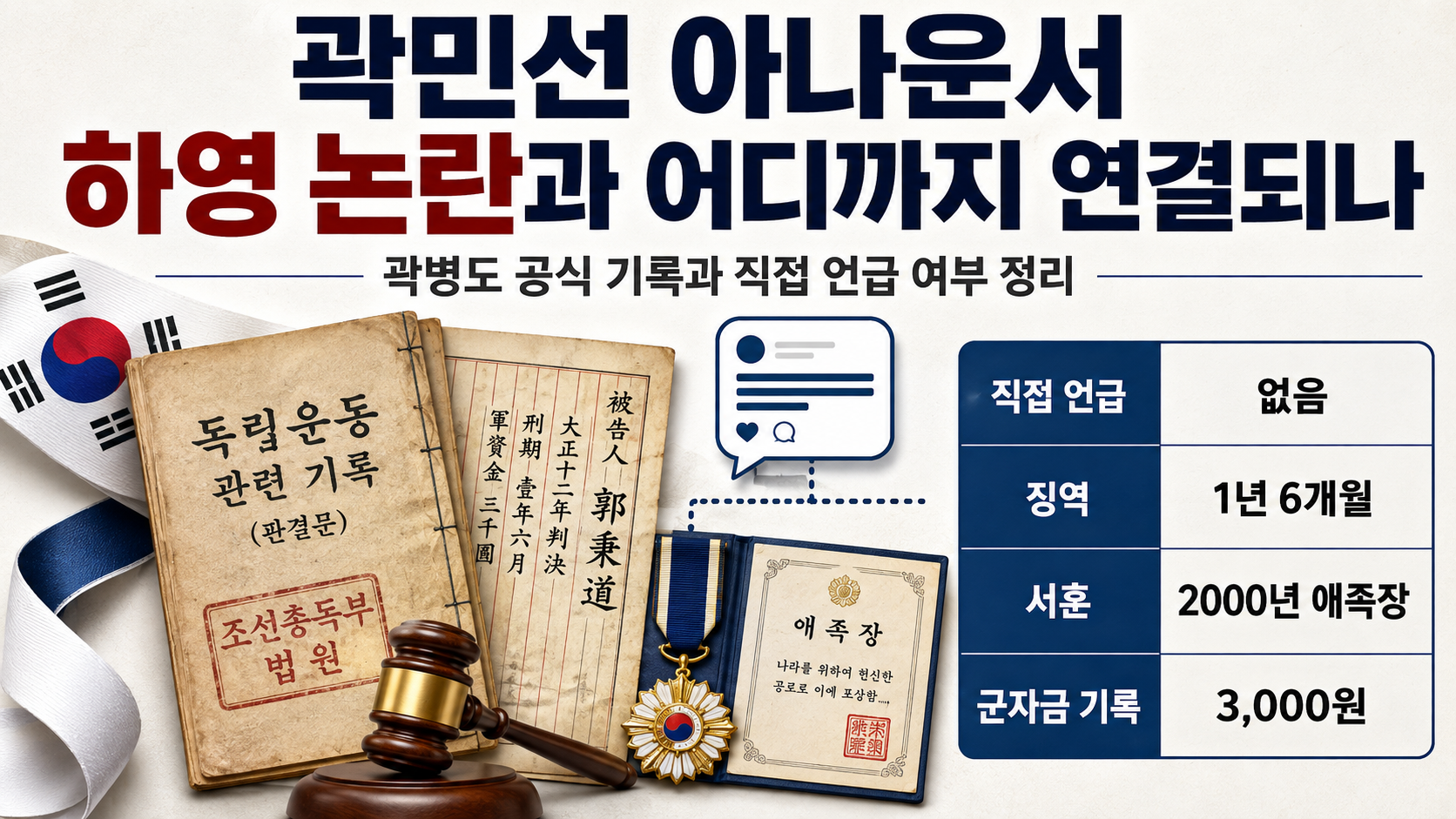
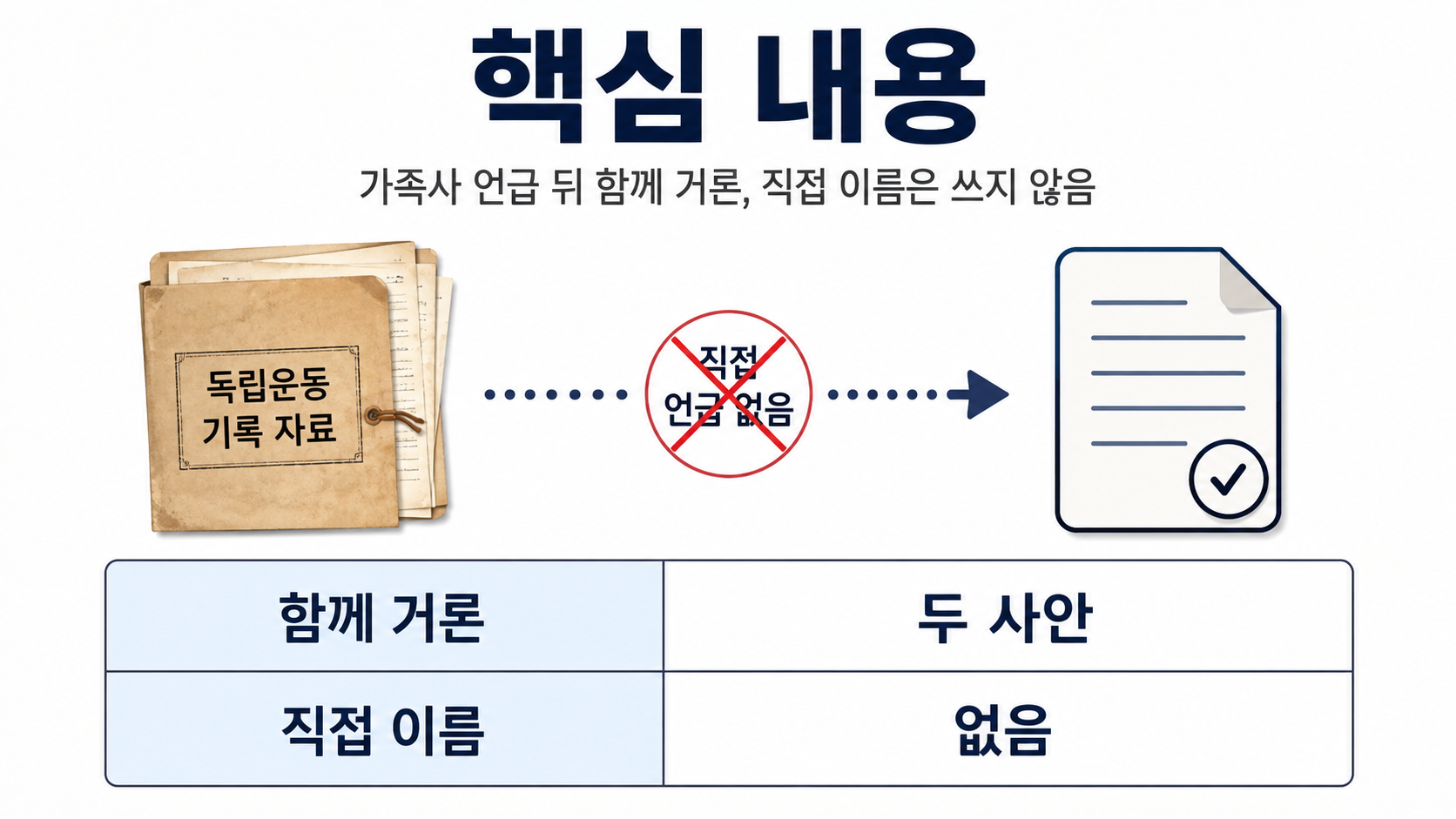
Announcer Kwak Min-seon has drawn renewed attention after discussing her family history and her great-grandfather, independence activist Kwak Byeong-do, ahead of Korea's Liberation Day. Because her post appeared shortly after controversy involving actor Ha-young's great-grandfather, Ahn Sang-ho, the two matters have been discussed together. However, Kwak Min-seon did not directly mention Ha-young by name in her post.
Some facts are firmly established. Kwak Min-seon's great-grandfather, Kwak Byeong-do, was an independence activist who raised funds for the Korean independence movement and served as a special representative of the Joseon 13 Provincial General Headquarters. He was arrested and sentenced to 1 years and 6 months in prison. The South Korean government posthumously awarded him the Order of Merit for National Foundation, Aejok Medal, in 2000.
Why Did Kwak Min-seon Share Her Family History Ahead of Liberation Day?
The immediate reason Kwak Min-seon wrote her post was the emotion she felt after hearing that a participant on a recent television program had proudly introduced their great-grandfather. This prompted her to reflect on the hardships experienced by descendants of independence activists and her childhood memories of her family's poverty.
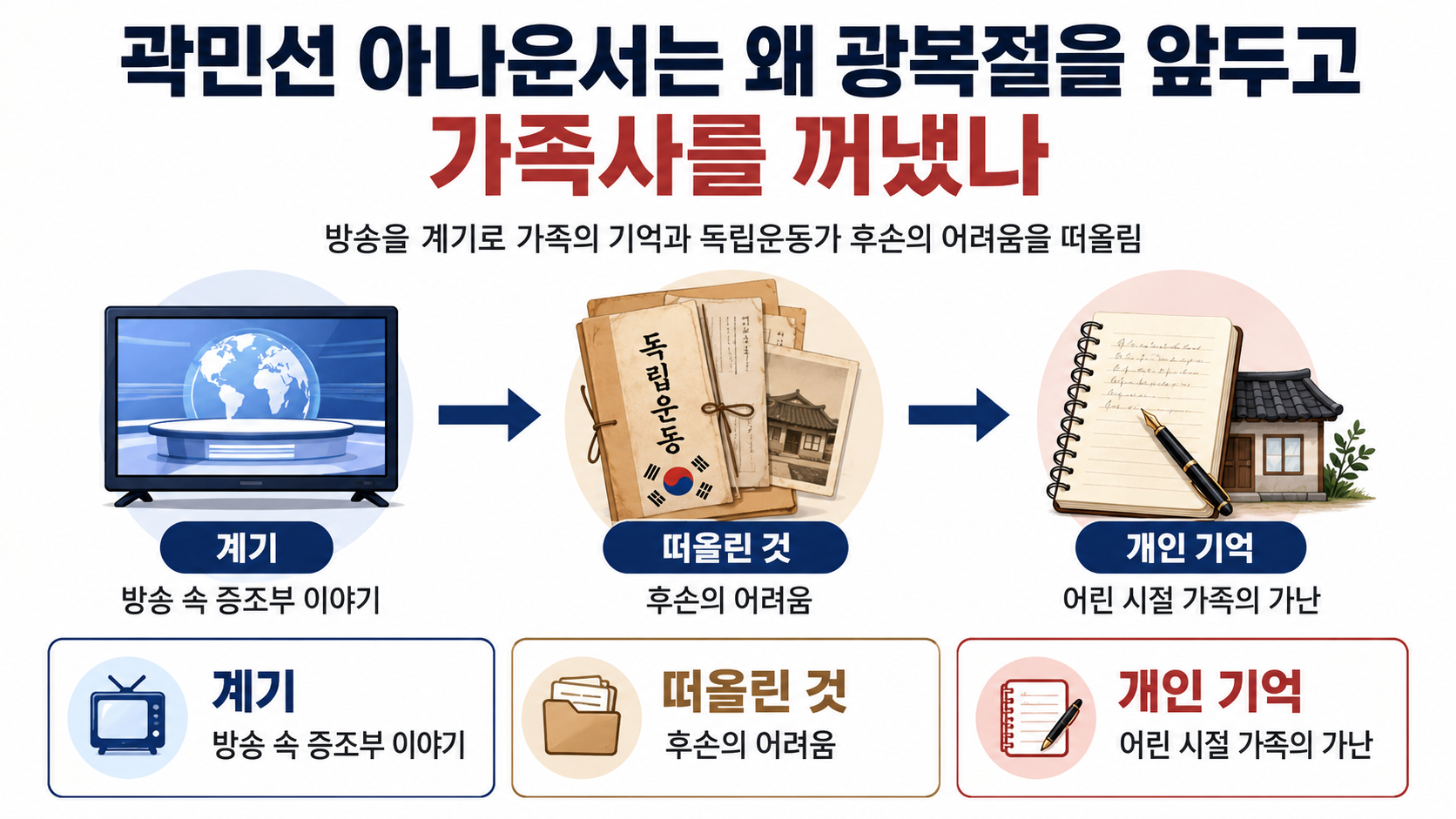
The central purpose of her post was not simply to criticize someone else. Rather, it was closer to a personal reflection on how she had failed to fully understand her grandparents' generation and its circumstances when she was young, and how she had only later realized that her present circumstances had not come about without sacrifice.
In particular, Kwak explained that her great-grandfather's participation in the independence movement had exposed his family to financial hardship and surveillance by Japanese colonial authorities. Because the post appeared one day before Liberation Day, it quickly spread beyond the context of an individual family story and became part of a broader discussion about the lives of independence activists' descendants.
Kwak Min-seon Did Not Directly Name Ha-young
It is important to distinguish the wording precisely. Kwak Min-seon did not directly use the name 'Ha-young' in her post. Instead, she referred to someone who had recently spoken proudly about their great-grandfather on television and used the expression 'she.'
Nevertheless, the post became associated with Ha-young because of the overlapping timing and circumstances.
August 7 Ha-young appeared on a KBS 2TV entertainment program and explained that her family had produced medical professionals for 4 generations. She shared a family account that her great-grandfather had studied Western medicine in Japan and treated Emperor Gojong. After her great-grandfather was identified as physician Ahn Sang-ho, controversy emerged over his activities during Japan's colonial rule of Korea.
August 11 Ha-young's agency announced that, after reviewing additional materials, it had confirmed the existence of a record listing Ahn Sang-ho as a council member of the Taisho Friendship Association in 1916. The agency also apologized for its initial response dismissing the allegations as groundless, acknowledging that its verification had been insufficient.
Ha-young also issued a personal apology August 12, explaining that she had spoken proudly of her great-grandfather based on stories passed down by her family and that, after examining historical materials following the controversy, she had learned about his pro-Japanese activities.
Because Kwak Min-seon's post appeared after these developments, several media reports interpreted it as an indirect reference to the Ha-young controversy. Therefore, rather than definitively stating that Kwak directly singled out Ha-young, it is more faithful to the original post to say that she published remarks that evoked the controversy surrounding Ha-young.
What Kind of Independence Activist Was Kwak Min-seon's Great-Grandfather, Kwak Byeong-do?
Kwak Byeong-do's independence activities can be verified in detail through the Korean Independence Movement Information System operated by the Independence Hall of Korea. Kwak was born in Daejeon, South Chungcheong Province, in 1880. His activities are classified under 'Domestic Anti-Japanese Resistance,' and his affiliated organization is recorded as the Joseon 13 Provincial General Headquarters.
Beginning in 1912, he raised funds for the independence movement in Seoul, Gyeonggi Province, South Chungcheong Province, and North Chungcheong Province. He was arrested by Japanese colonial police during these activities. In 1919, he participated in the activities of the Joseon 13 Provincial General Headquarters, which was connected to the Provisional Government of the Republic of Korea, and was dispatched as a special representative to the Yeongju area of North Gyeongsang Province.
Official records also document the funds actually collected.
| Category | Information Confirmed in Official Records |
|---|---|
| 1912 | Fundraising for the independence movement across Seoul, Gyeonggi, South Chungcheong, and North Chungcheong |
| 1919~1920 | Activities as a special representative of the Joseon 13 Provincial General Headquarters |
| Confirmed contributions | KRW 500 + KRW 500 + KRW 1,200 + KRW 400 + KRW 400, plus 20 geun of baeksam (white ginseng) |
| 1921 | Sentenced to 1 years and 6 months in prison |
| 2000 | Posthumously awarded the Order of Merit for National Foundation, Aejok Medal |
Adding together the individual cash contributions recorded in the official documents gives KRW 3,000.
Author's calculation:
KRW 500 + KRW 500 + KRW 1,200 + KRW 400 + KRW 400 = KRW 3,000
An additional 20 geun of baeksam (white ginseng) was recorded separately.
It would not be appropriate to convert these amounts directly into present-day monetary values. The result would vary significantly depending on whether historical rice prices, wages, gold prices, or another benchmark were used. Rather than attaching an unverified modern equivalent, it is more accurate to present the amounts as they appear in the historical records.
After being arrested November 1920, Kwak Byeong-do was held in pretrial detention and subsequently sentenced by the Gyeongseong District Court June 1921 to 1 years and 6 months in prison for violating the colonial-era provision known as the 'Decree on the Punishment of Political Crimes.' Recognizing his contributions to the independence movement, the South Korean government posthumously awarded him the Order of Merit for National Foundation, Aejok Medal, in 2000.
Do Official Records Confirm That He Spent His Entire Fortune on Independence Funds?
It is necessary to distinguish between the family history described by Kwak Min-seon and the official historical records of the independence movement.
In her post, Kwak explained that her great-grandfather had used his entire fortune to fund the independence movement and that his family subsequently lost its property and endured surveillance and persecution. This is the family history as recounted by Kwak herself.
By contrast, the currently available biographical entry for Kwak Byeong-do maintained by the Independence Hall of Korea specifically confirms his fundraising activities for the independence movement, his work as a special representative of the Joseon 13 Provincial General Headquarters, documented contributions, arrest, and prison sentence. However, the text of that official record does not explicitly state, in the same terms used by Kwak Min-seon, that he 'used his entire personal fortune to fund the independence movement.'
The two accounts therefore should not be treated as identical.
Official records confirm that Kwak Byeong-do participated in fundraising for the independence movement and served a prison sentence. Claims that he 'spent his entire fortune,' or that his descendants consequently suffered specific financial losses of a particular magnitude, go beyond what can be independently established from the currently available biographical record alone.
Maintaining this distinction allows Kwak Min-seon's personal family history to be respected without overstating the historical evidence.
What Has Been Confirmed So Far About the Controversy Involving Ha-young's Great-Grandfather, Ahn Sang-ho?
As of August 15, the most significant recent development is an official statement from the Institute for Research in Collaborationist Activities. The institute explained that Ahn Sang-ho was not included in the Dictionary of Pro-Japanese Collaborators published in 2009, but that his absence from the dictionary does not mean he had no record of pro-Japanese activities.
The institute identified several activities, including participation in a committee preparing a memorial gathering for Ito Hirobumi in 1909, service as a member of the Gyeongseong Municipal Council, membership on the council of the Taisho Friendship Association in 1916, and service as a council member of the Dongminhoe from 1925 onward. The institute assessed activities including his involvement with the Taisho Friendship Association as pro-Japanese conduct.
Why, then, was his name absent from the Dictionary of Pro-Japanese Collaborators?
According to the Institute for Research in Collaborationist Activities, decisions about inclusion in the dictionary were based on a comprehensive assessment of factors including not only whether actions were voluntary but also their degree of active involvement, repetition, and continuity. The institute explained that, based on the materials available when the dictionary was published in 2009, Ahn Sang-ho did not meet the selection criteria, so his inclusion was deferred.
In other words, 'not listed in the Dictionary of Pro-Japanese Collaborators' does not mean 'had no history of pro-Japanese activities.' This distinction is among the aspects of the recent controversy most likely to cause confusion.
At the same time, it is important to distinguish historical accountability from an approach that assigns personal responsibility to descendants for their ancestors' actions. The Institute for Research in Collaborationist Activities likewise expressed the view that the central issue should not be the mere fact of being someone's descendant, but rather the historical verification and reflection required when discussing family history in a public setting.
Kwak Min-seon's post should also be understood in this context. Rather than being a matter of judging someone's ancestry, the episode invites reflection on the lives of ancestors who made different choices and how the consequences of those choices are remembered by their descendants.
Who Is Announcer Kwak Min-seon, and When Did She Marry Song Min-kyu?
Kwak Min-seon is a broadcaster and former announcer who has worked primarily in sports and esports. She currently describes herself as a sports and esports announcer on her social media profile and has previously hosted esports broadcasts and events involving titles such as FIFA Online and PUBG: Battlegrounds.
In her personal life, she married footballer Song Min-kyu 2025-12-20. The couple met through an interview and subsequently began dating. Song also attracted attention when he publicly proposed after scoring during a K League match in 2025.
The reason Kwak Min-seon is attracting renewed search interest this time, however, is not her marriage or broadcasting career but her family history as the great-granddaughter of independence activist Kwak Byeong-do and the post she shared ahead of Liberation Day.
The established facts can be summarized by keeping several distinctions clear. Official records confirm Kwak Byeong-do's independence activities, his prison sentence of 1 years and 6 months, and his posthumous receipt of the Order of Merit for National Foundation, Aejok Medal, in 2000. The details of the family's property losses, which Kwak Min-seon said had been passed down through her family, must be considered separately. It is also essential not to overlook the fact that Kwak Min-seon did not directly mention Ha-young by name.
---