

High Oil Price Relief Payments End August 31: Rules for Remaining Balances, Gas Stations, and Delivery Apps
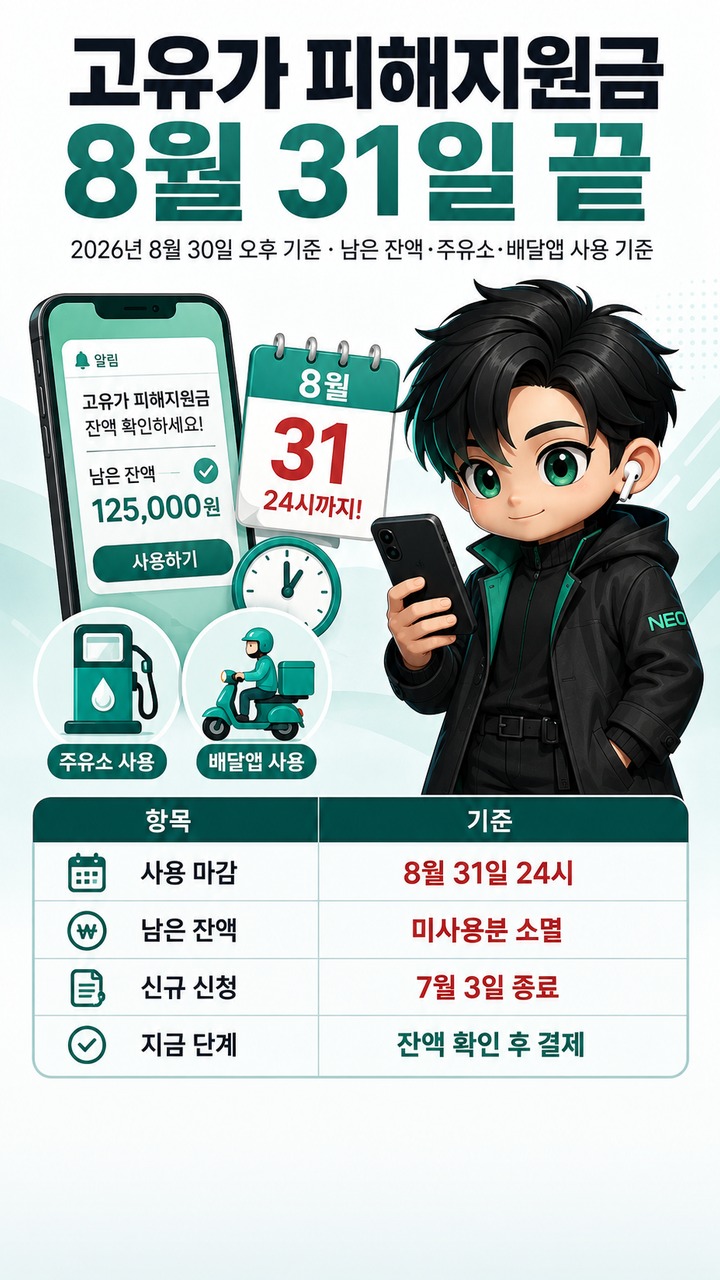
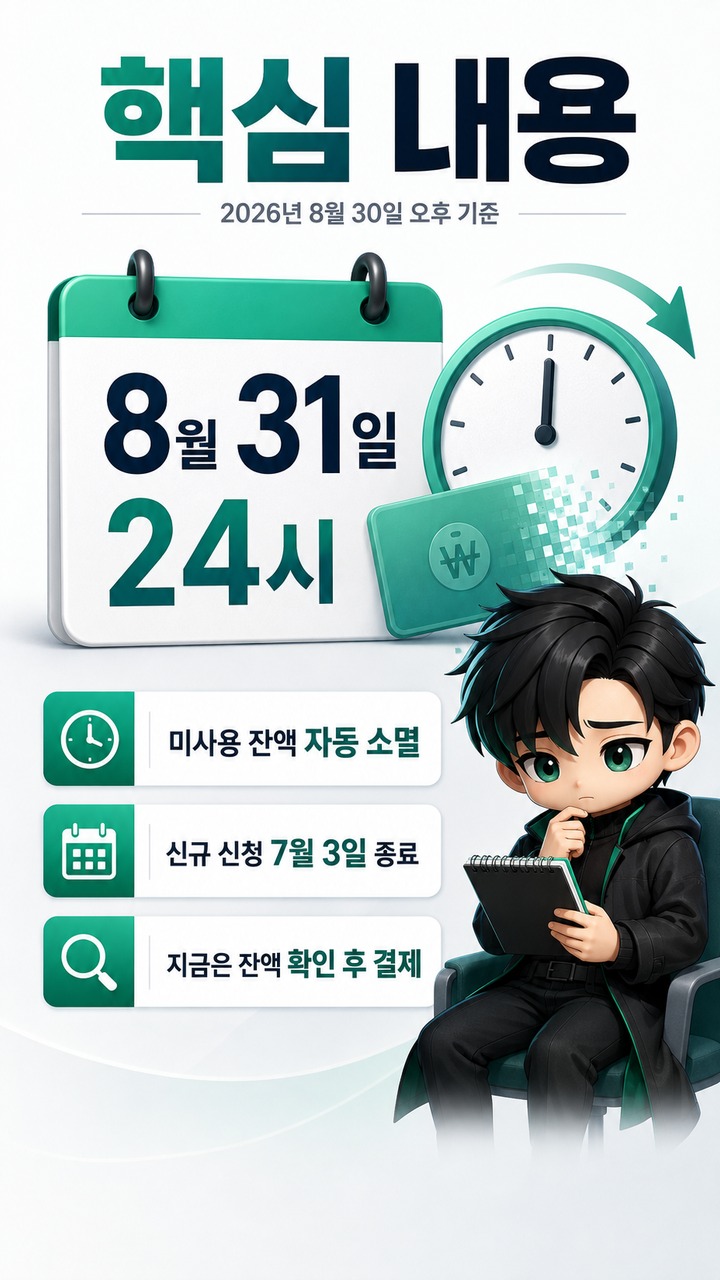
As of the afternoon of 2026-08-30, the most important deadline for recipients of high oil price relief payments is August 31, Monday, at 24. Any unused balance will automatically expire after that deadline, and new applications already closed on July 3. Rather than checking eligibility again, recipients should now check their remaining balances and complete payments at eligible merchants before the deadline.
Until What Time on August 31 Can the Relief Payments Be Used?
The deadline for using the payments is 2026-08-31, Monday, at 24. The same deadline applies to relief payments received in both round 1 and round 2. Any unused amount will automatically expire once the deadline passes.
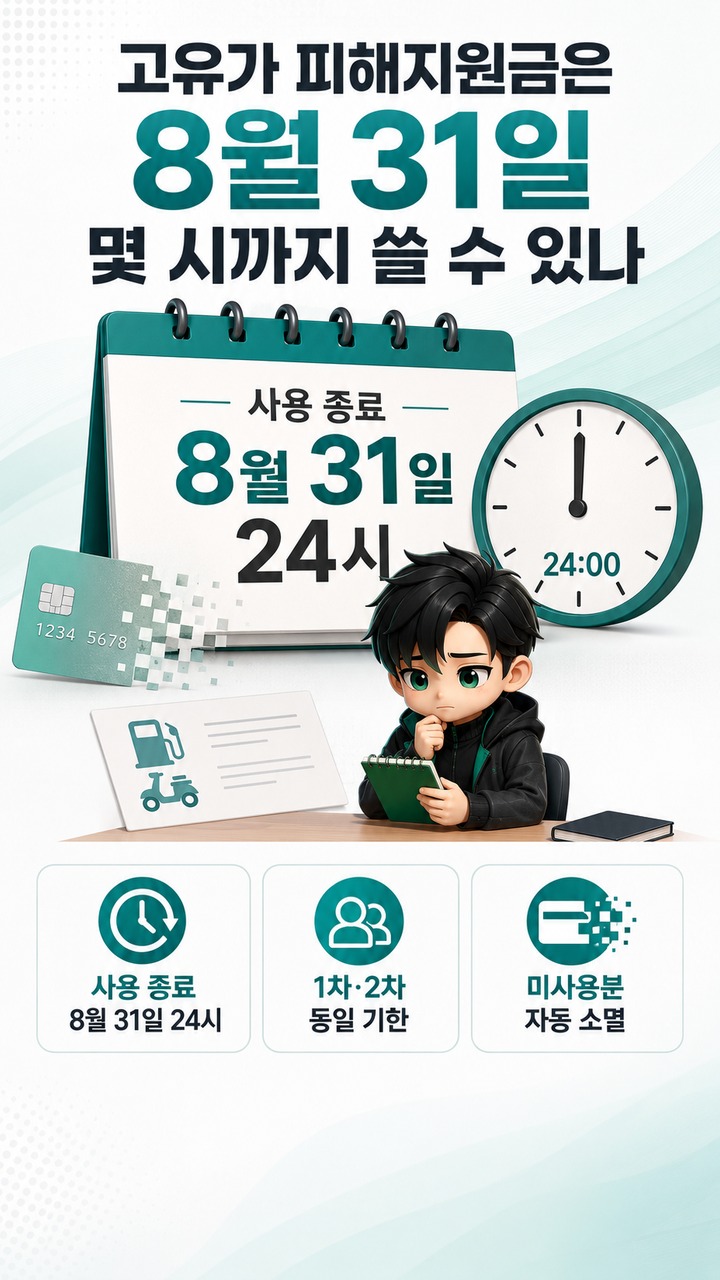
Therefore, anyone planning to use the funds on August 31 should consider not only the store's business hours but also whether the transaction will be successfully authorized before the deadline. Rather than leaving late-night transactions or merchants with uncertain eligibility as a last resort, it is better to check the balance first and pay at a merchant known to accept the relief payments.
According to data released by the Ministry of the Interior and Safety on August 24, KRW 3,454,200,000,000 had been used out of KRW 3,549,200,000,000 in high oil price relief payments distributed through credit and debit cards as of 8 on the morning of August 18. The utilization rate was 97.3%.
According to the author's calculation, subtracting KRW 3,454,200,000,000 from KRW 3,549,200,000,000 indicates that approximately KRW 95,000,000,000 of the credit and debit card payments remained unused at that time. This represented approximately 2.7% of the total amount distributed through credit and debit cards. However, because this calculation uses figures compiled at 8 on the morning of August 18, it does not represent the actual outstanding balance as of August 30.
Can People Still Apply for These Relief Payments?
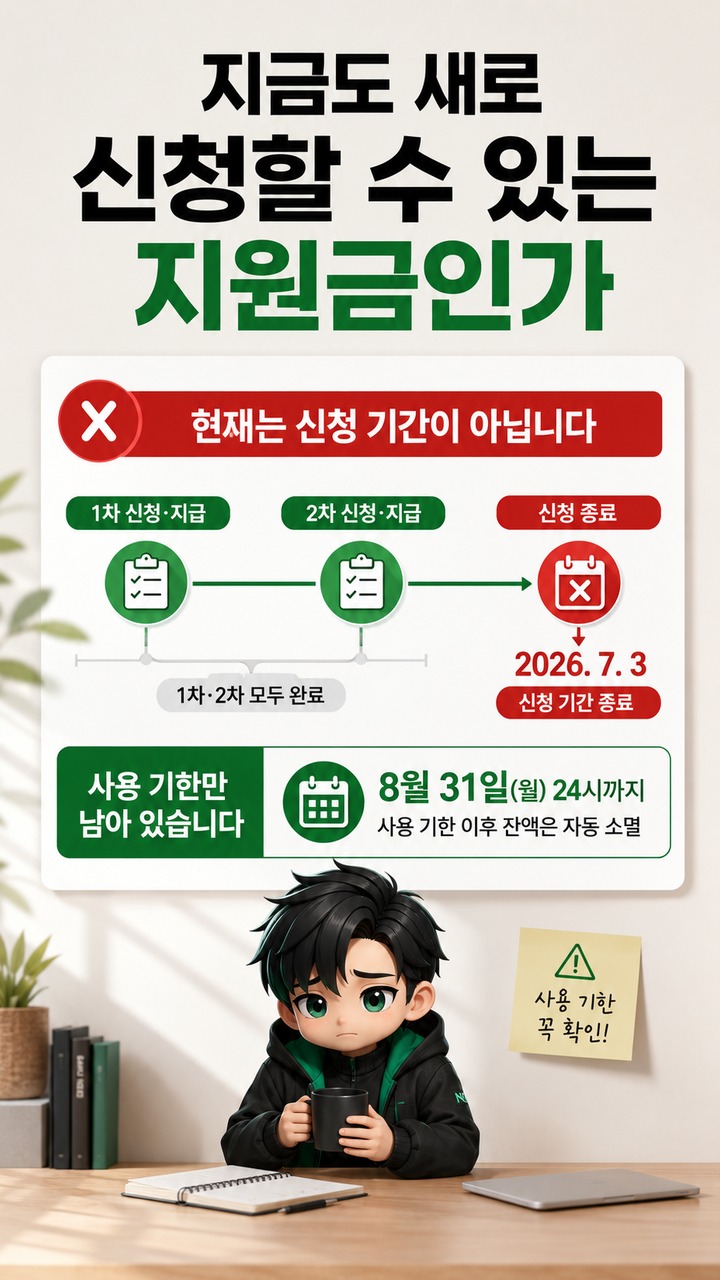
The application period is now closed. Applications and disbursements for the high oil price relief payments were conducted in round 1 and round 2, and the final application period ended on 2026-07-03. Only the spending deadline remains open until August 31.
According to the Ministry of the Interior and Safety's final application and disbursement figures, as of 6 on the afternoon of July 3, a cumulative 3,540만3,928 people had applied across rounds 1 and 2, with total payments amounting to KRW 6,112,300,000,000. The application rate was recorded at 98.0% of eligible recipients.
The high oil price relief payment program itself was designed to cover 70% of the population, with payments varying according to income, region, and other factors. According to official guidance, the payment amount ranged from KRW 100,000 to KRW 600,000 per 1 person. Recipients could choose among local gift certificates, credit or debit cards, and prepaid cards.
Those who have already received their payments do not need to recalculate their eligibility. The priority is to check how much has been spent, how much remains, and whether the intended merchant is eligible to accept the payment.
In Which Areas Can the Relief Payments Be Used?
High oil price relief payments are not nationwide points that can be spent anywhere in the country. As a general rule, they must be used within the designated area determined by the applicant's registered residential address.
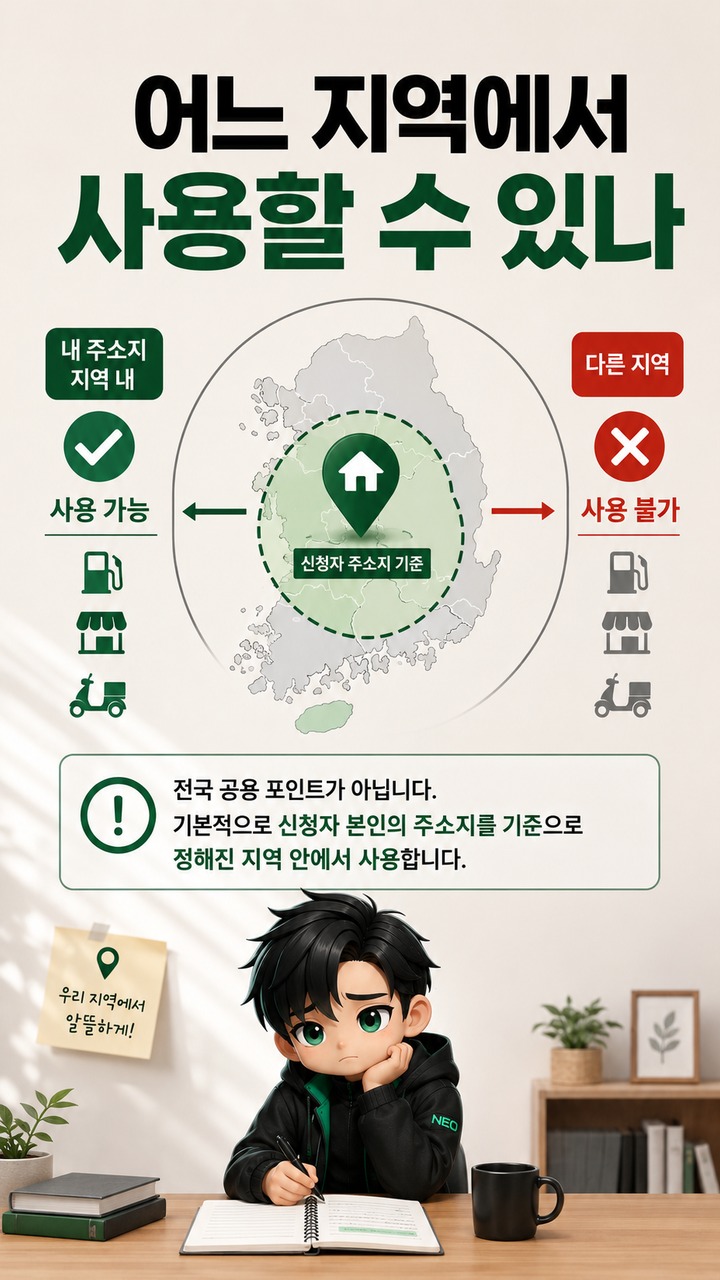
For residents of special cities and metropolitan cities, the eligible spending area generally covers the relevant special or metropolitan city. In provinces, the spending area is determined at the city or county level corresponding to the recipient's registered address. Therefore, someone living in Suwon may be unable to use the payment at a restaurant in Seoul or in another city or county within Gyeonggi Province because of regional restrictions.
Eligible business categories must also be checked according to the payment method. For recipients who chose local gift certificates, registered merchants accepting those certificates are the primary eligible locations. For credit cards, debit cards, and prepaid cards, the general eligibility standard is small-business establishments with annual sales of KRW 3,000,000,000 or less, excluding restricted categories such as entertainment and gambling businesses.
Potentially eligible businesses include traditional markets, neighborhood supermarkets, restaurants and cafes, clothing stores, hair salons, optical shops, private educational institutes, pharmacies and clinics, and franchise outlets such as convenience stores and fried chicken restaurants. Independently operated small-business tenants inside large supermarkets or department store buildings may also qualify if they meet the relevant requirements.
Even stores operating under the same brand may produce different payment results depending on whether they are company-owned or franchised and which business operator's payment terminal processes the transaction. It is therefore better not to judge eligibility based solely on the brand name.
Can the Payments Be Used at Gas Stations Even If Annual Sales Exceed KRW 3,000,000,000?
Gas stations are subject to an exception that differs from the general rules for small-business establishments. For recipients who received their relief payments through credit cards, debit cards, or prepaid cards, the eligibility rules were expanded from May 1 to allow payments at gas stations within their registered residential area regardless of annual sales.
Initially, gas stations with annual sales exceeding KRW 3,000,000,000 could be excluded under the general merchant eligibility rules. However, the sales threshold was subsequently relaxed for gas stations. Busan Metropolitan City's current merchant guidance also states that gas stations and LPG filling stations have been eligible regardless of sales revenue since May 1.
There is one exception. If a gas station and a nearby large retail establishment share the same business registration number and payment terminal, the gas station may not be recognized as an eligible merchant.
The rules are slightly different for recipients who received their payments through local gift certificates. These payments can be used at gas stations already registered as participating local gift certificate merchants or at gas stations temporarily added to the program specifically for relief payment use. Actual merchant registration may vary by local government. In such cases, checking the local gift certificate app or the relevant local government's participating merchant list is the most reliable approach.
For recipients with relatively large remaining balances, refueling at an eligible gas station within their registered residential area may be one of the more straightforward options to verify before the final spending deadline.
Are Delivery Apps, Online Shopping, and Kiosk Payments Allowed?
Online transactions are not processed in the same way as payments made at physical stores. Guidance for credit cards, debit cards, and prepaid cards identifies online e-commerce transactions, including online shopping malls and delivery apps, as restricted payment methods.
However, this does not mean all food delivery orders are ineligible. Advance online payment within a delivery app is restricted, but paying in person upon delivery may be permitted when the participating restaurant processes the transaction directly through its own card terminal. Of course, the restaurant itself must satisfy the applicable merchant requirements, including location and sales criteria.
Not all self-service payments are eligible simply because they take place inside a physical store. Kiosks and table-ordering systems that use payment gateway (PG) services are restricted. This explains why a payment may qualify when made directly to an employee using a standard card terminal at the same restaurant but fail to deduct the relief payment balance when processed through a table QR ordering system or certain kiosks.
Automatic payments for public utilities, transportation and telecommunications bills, insurance premiums, entertainment and gambling businesses, and businesses dealing in cash-convertible products are also listed among restricted uses. Therefore, recipients should not attempt to exhaust their remaining balances by purchasing gift certificates or other cash-convertible items online simply because the deadline is approaching.
What Is the Fastest Way to Check and Spend the Remaining Balance?
As the final day approaches, the simplest process is check the balance → confirm the eligible spending area → verify an eligible merchant → complete the payment. Remembering the wrong payment method can waste time when trying to locate the balance, so recipients should first confirm which card or gift certificate they used to receive the funds.
For example, recipients who received high oil price relief payments through Npay will find their balance information in different locations depending on the payment method. For in-store payment points and money, the balance can be checked in the in-store payment points and money balance section of the mobile Npay app. For the Money Card, recipients can open the full menu on the Npay home screen and select the high oil price relief payment menu to check their balance.
Recipients who used other credit or debit cards or local gift certificates should likewise first check the relief payment or balance section of the relevant app or website associated with the payment method through which they actually received the funds.
After checking the balance, it is practical to prioritize everyday purchases within the eligible spending area. Recipients can verify whether restaurants, neighborhood supermarkets, pharmacies and clinics, hair salons, private educational institutes, and other ordinary merchants qualify. If a substantial balance remains, they can also check eligible gas stations within their registered residential area.
It is better to avoid transactions whose approval status may remain uncertain until the last moment, such as advance online payments or kiosks with unclear eligibility, immediately before the deadline. This is because once 24 on August 31 has passed, any remaining high oil price relief payment balance cannot be carried over for use the following day.