

August 10 KOSDAQ Outlook: 3 Key Factors That Will Determine Whether the Index Reclaims 800 After Closing at 798.81
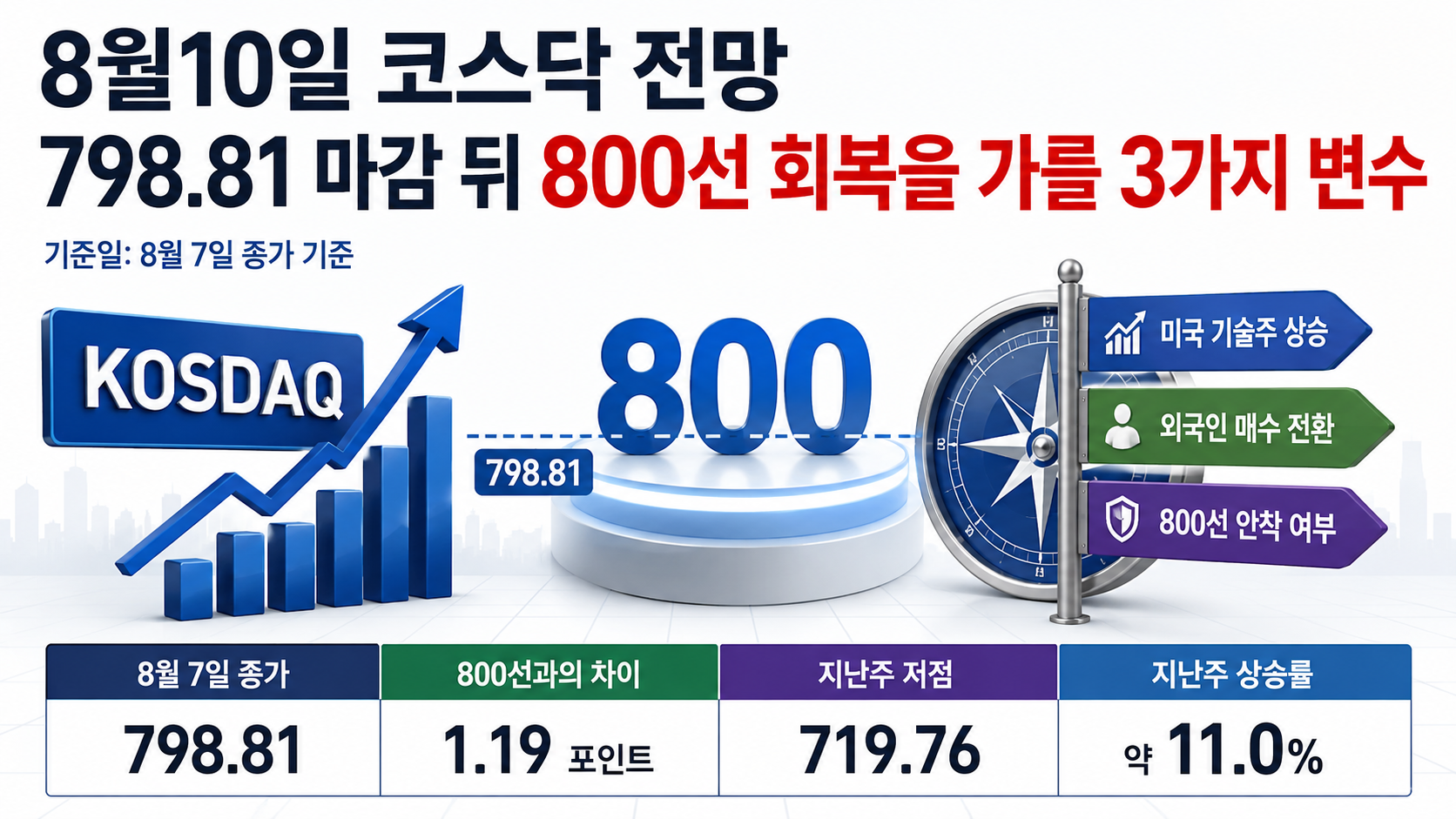
The KOSDAQ enters August 10 with a favorable backdrop from gains in U.S. technology stocks, but whether it can hold above 800 and whether foreign investors stop selling matter more than simply reclaiming that level. The August 7 closing level was 798.81, just 1.19 points away from 800.
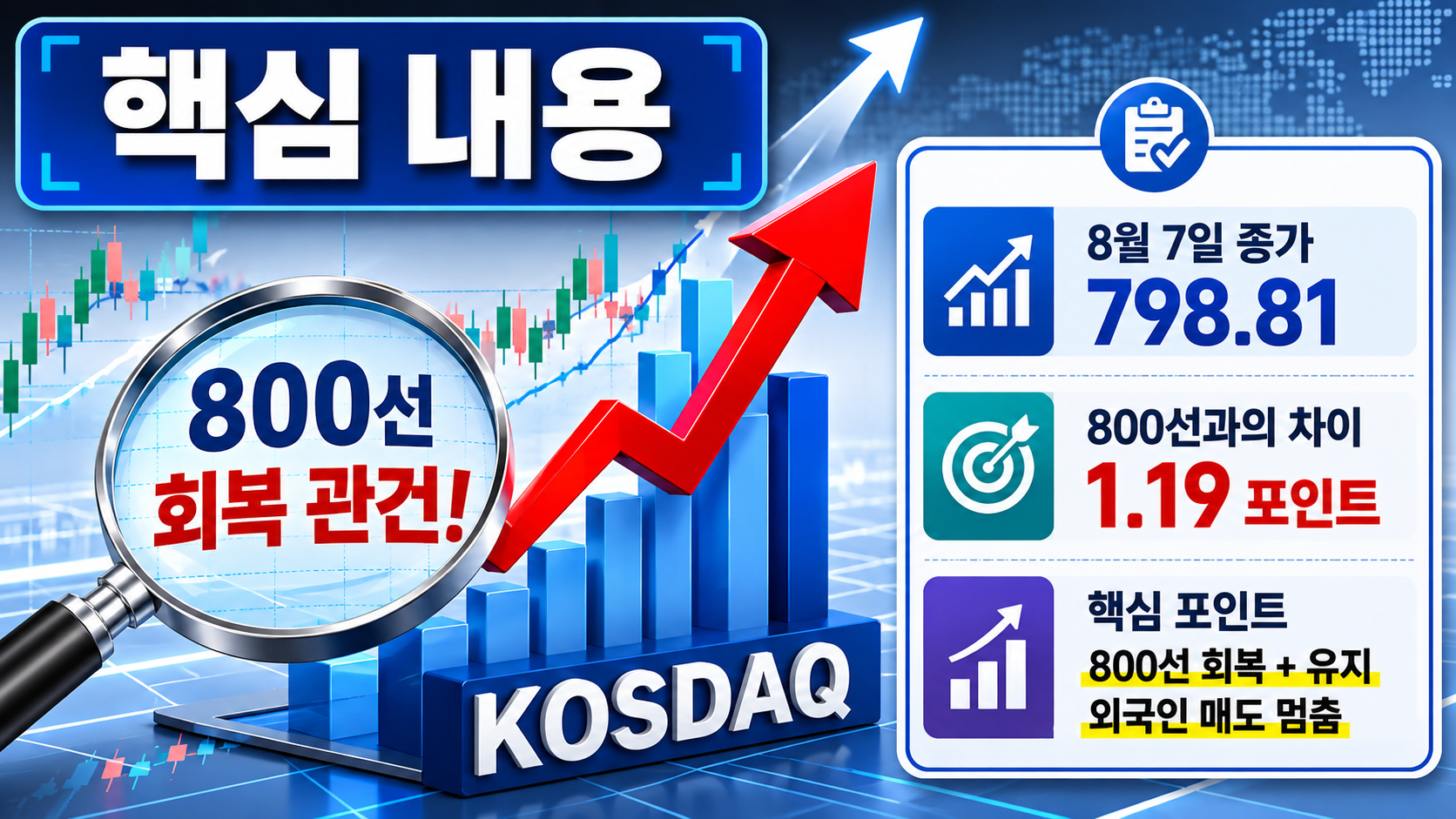
Last week, the KOSDAQ climbed from 719.76 to 798.81, rebounding approximately 11.0% over the week. With Monday following such a strong recovery, investors should examine early trading flows rather than assume further gains simply because U.S. stocks rose.
Holding Above 800 Matters More Than Briefly Breaking Through It
On August 7, the KOSDAQ opened at 807.62 and climbed as high as 814.80 during the session, but ultimately closed at 798.81. The intraday low was 776.60.
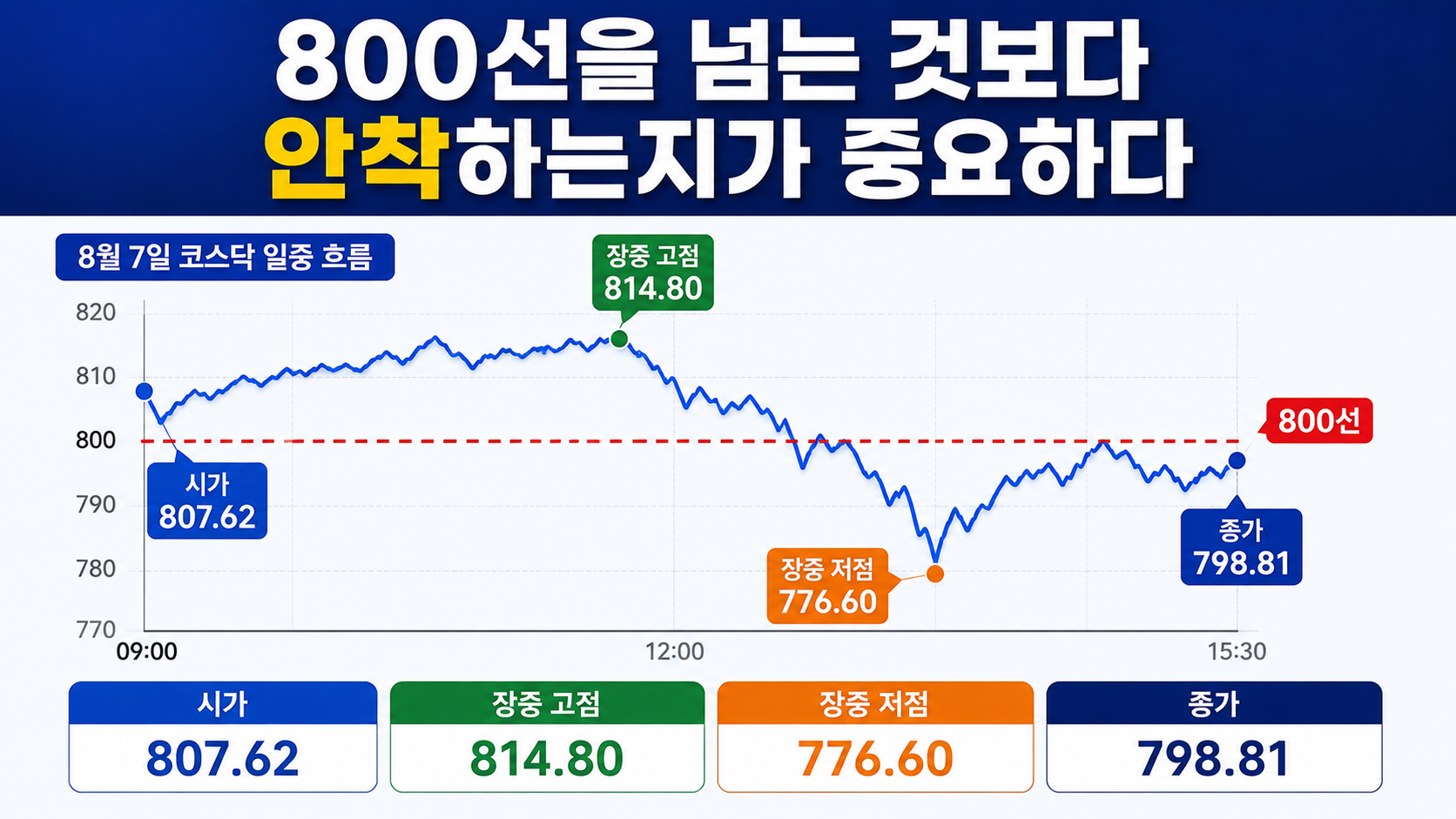
The difference between the session high and low was 38.20 points. According to the author's calculation, this represents a substantial intraday range of approximately 4.8% relative to the closing level of 798.81.
The calculation is `38.20 ÷ 798.81 × 100 = approximately 4.8%`.
Therefore, on August 10, simply watching whether the index briefly crosses 800 in early trading will not be enough.
If buying momentum remains intact after the index reclaims 800, investors can first watch whether selling pressure is absorbed around 807.62, the opening level on August 7, and subsequently near the session high of 814.80.
Conversely, if the index fails to break above 800 or falls back immediately after reclaiming it, this could signal that profit-taking following last week's sharp rally has not yet ended. In particular, if the index retreats toward the 7 low of 776.60, it would be prudent to view that as a sign of renewed volatility.
U.S. Stocks Have Created Favorable Conditions for the KOSDAQ's Monday Opening
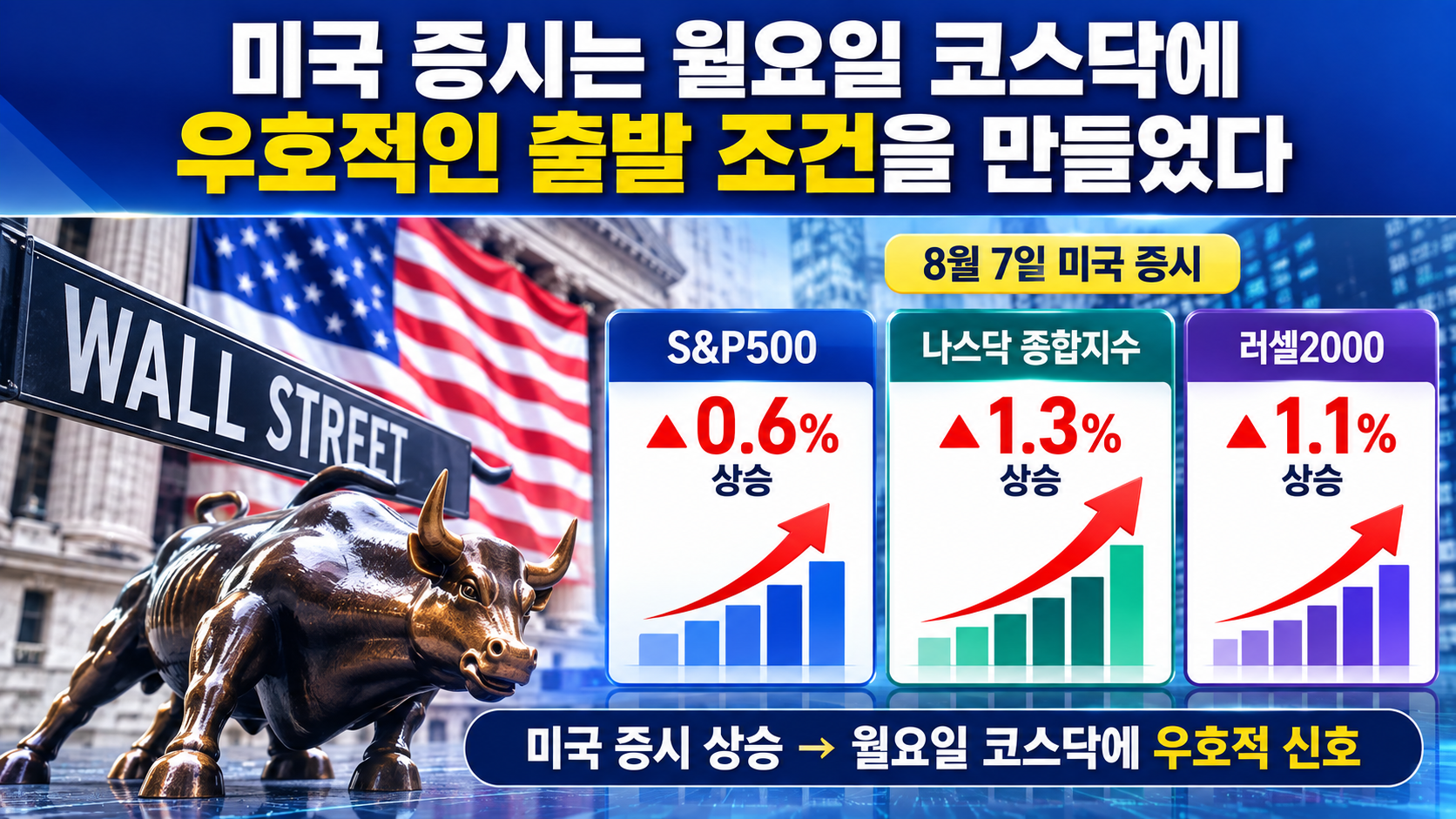
On August 7, U.S. stocks advanced, with the S&P500 rising 0.6%, the Nasdaq Composite gaining 1.3%, and the small-cap-focused Russell 2000 climbing 1.1%.
U.S. nonfarm payrolls for July declined by 2 3,000 people, while the unemployment rate stood at 4.1%. As the slowdown in employment became evident, U.S. Treasury yields declined, creating a relatively favorable environment for growth stocks.
Strength in both the Nasdaq and small-cap stocks could be positive for the KOSDAQ. The KOSDAQ also has a high concentration of growth stocks and smaller companies, making it sensitive to changes in U.S. interest rates and investor appetite for risk assets.
However, gains in U.S. stocks alone do not guarantee a rise in the KOSDAQ. The actual direction on August 10 can only be assessed after examining foreign investor trading flows in the domestic market.
Whether Foreign Investors Resume Buying Will Determine the Strength of a Move Above 800
On August 7, individual investors recorded net purchases of KRW 340,400,000,000 in the KOSDAQ market, while foreign investors sold a net KRW 254,000,000,000 and institutional investors sold a net KRW 102,800,000,000.
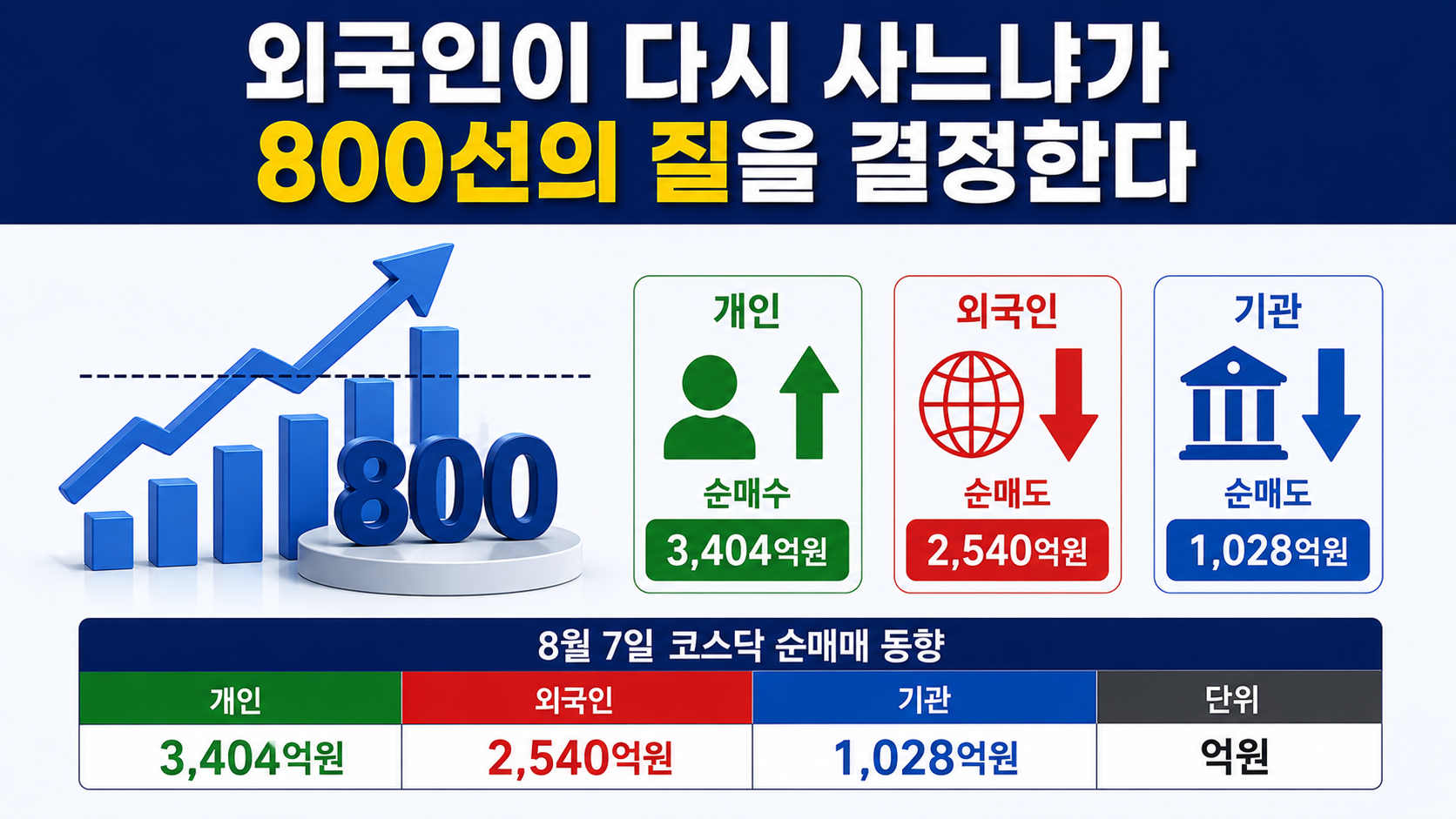
Although the index rebounded sharply compared with the previous week, foreign and institutional investors both took profits on the final trading day.
If the KOSDAQ reclaims 800 on August 10 and foreign investor flows simultaneously turn to net buying, the likelihood of last week's upward momentum continuing would increase.
Conversely, if the index merely crosses 800 while foreign investors continue selling, investors should remain alert to the possibility of a repeat of August 7, when the index surrendered its early gains.
In particular, it is better to monitor whether foreign selling continues to intensify throughout the morning rather than focus only on trading flows during the first few minutes after the market opens.
Watch Whether Strength in 2 Battery Stocks Continues
On August 7, 2 battery-related stocks showed notable strength in the domestic market. Contributing factors included expectations for North American energy storage system (ESS) orders, forecasts of improved second-half earnings, and sector rotation.
Considering the KOSDAQ's substantial rebound over a short period, investors should look beyond the index itself on August 10 and determine whether capital is returning to the stocks that led last week's gains.
If 2 battery stocks continue rising and buying interest spreads to other major KOSDAQ sectors, including biotechnology and semiconductor equipment, this would suggest strong underlying market momentum.
Conversely, if the index rises but gains remain concentrated in only a handful of large-cap stocks, the market's actual strength may be weaker than the headline index suggests.
Pressure From the Won-Dollar Exchange Rate Has Eased for Now
On August 7, the won-dollar exchange rate in Seoul's foreign exchange market closed at KRW 1,416.1, down KRW 7.7 from the previous trading session.
Working backward, the previous session's closing rate was KRW 1,423.8. According to the author's calculation, the daily decline was approximately 0.54%.
The calculation is `7.7 ÷ 1,423.8 × 100 = approximately 0.54%`.
A stronger Korean won can create favorable conditions for foreign investor flows into domestic equities. However, if the exchange rate rises again during trading on August 10 while foreign selling intensifies, this could make it more difficult for the KOSDAQ to establish a firm position above 800.
What to Watch During the August 10 Trading Session, in Order
First, check whether the KOSDAQ recovers from 798.81 to reclaim 800.
Second, after crossing 800, determine whether the upward momentum continues toward 807.62.
Third, watch whether foreign investor flows turn to net buying alongside gains in the index.
Fourth, determine whether buying remains concentrated in the 2 battery sector, which performed strongly last week, or whether gains broaden to other growth stocks.
Fifth, monitor whether the won-dollar exchange rate avoids another sharp increase.
If the index reclaims 800, foreign investors turn to net buying, and gains broaden across more stocks at the same time, confidence in the KOSDAQ's rebound on August 10 would strengthen.
Conversely, if the index fails to reclaim 800, foreign selling intensifies, and the market retests the August 7 low of 776.60, greater weight should be given to the possibility of a correction following last week's sharp rebound.
U.S. Inflation Data Are Also Due This Week
Looking only at August 10, slowing U.S. employment and gains in the Nasdaq are positive factors. However, when considering the entire week, U.S. inflation becomes the next major variable.
The U.S. Consumer Price Index for July is scheduled for release on August 12, followed by the Producer Price Index on August 13.
If inflation comes in stronger than expected, U.S. Treasury yields could rise again, potentially affecting interest-rate-sensitive growth stocks and the KOSDAQ. Therefore, even if the market strengthens on Monday, it would be inappropriate to assume in advance that the same direction will persist throughout the week.
The base-case scenario for the KOSDAQ on August 10 is an attempted rebound supported by gains in U.S. stocks and the possibility of breaking back above 800. However, given that the index surged approximately 11% last week and foreign and institutional investors were both net sellers on the final trading day, it is more reasonable to view this as a session in which confirmation of sustained trading above 800 and foreign investor flows should take priority over chasing further gains.
This article presents a market outlook based on publicly available market data and does not guarantee returns or recommend buying or selling any particular stock. Actual market conditions can change rapidly in response to exchange rates, investor flows, corporate disclosures, and unexpected news.
---
※ This article is provided for informational purposes to help readers understand market trends and does not constitute investment advice regarding any particular stock or asset. All final investment decisions and associated responsibilities rest with the individual investor.