

Where Are the 2026 Extreme Heat Emergency Warning Areas? July 27 Warning Status and Safety Guidelines
이 포스팅은 쿠팡 파트너스 활동의 일환으로, 이에 따른 일정액의 수수료를 제공받습니다.
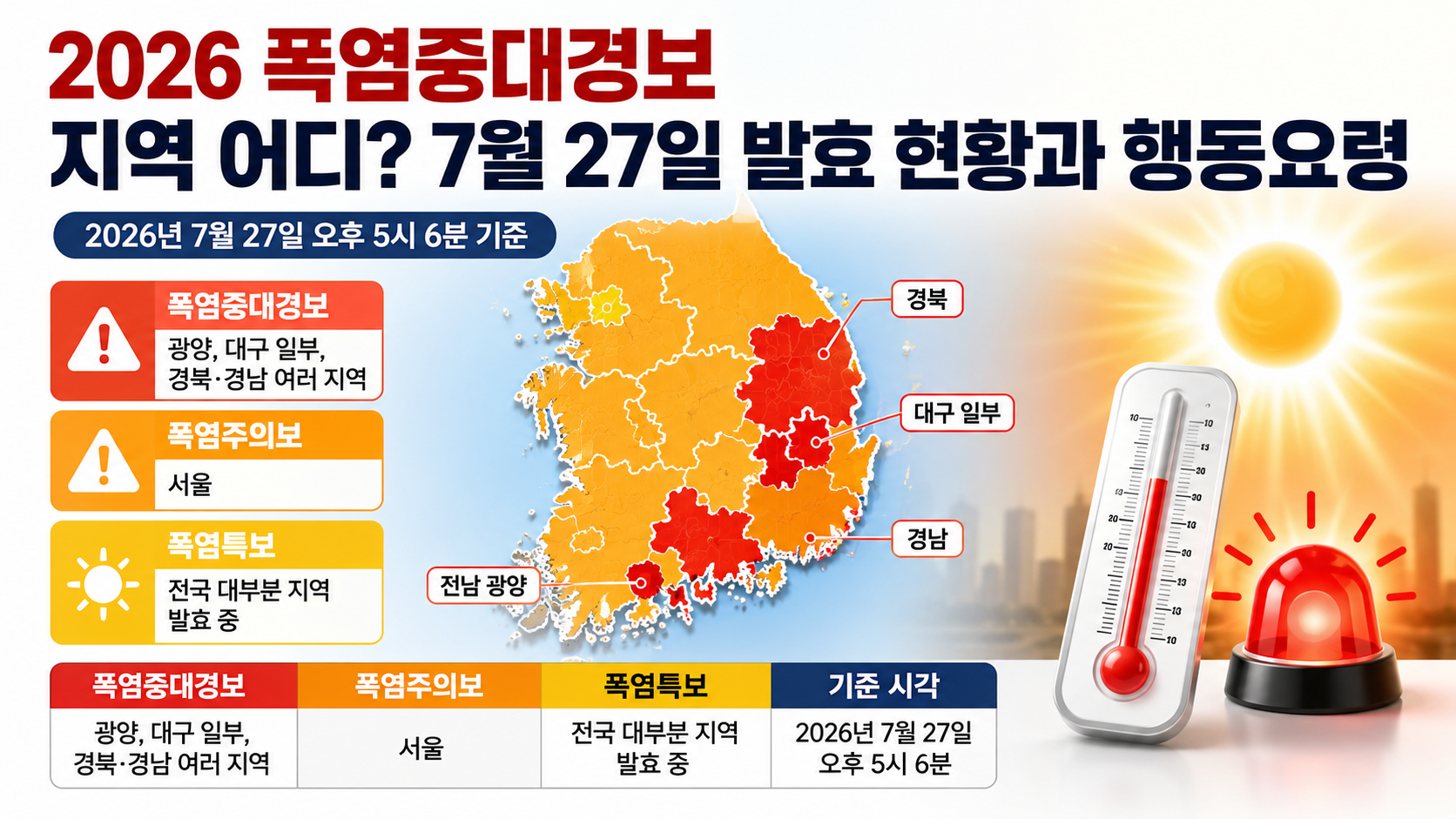
This article is based on the latest reports and official information available as of 2026-07-27 Korea Standard Time.
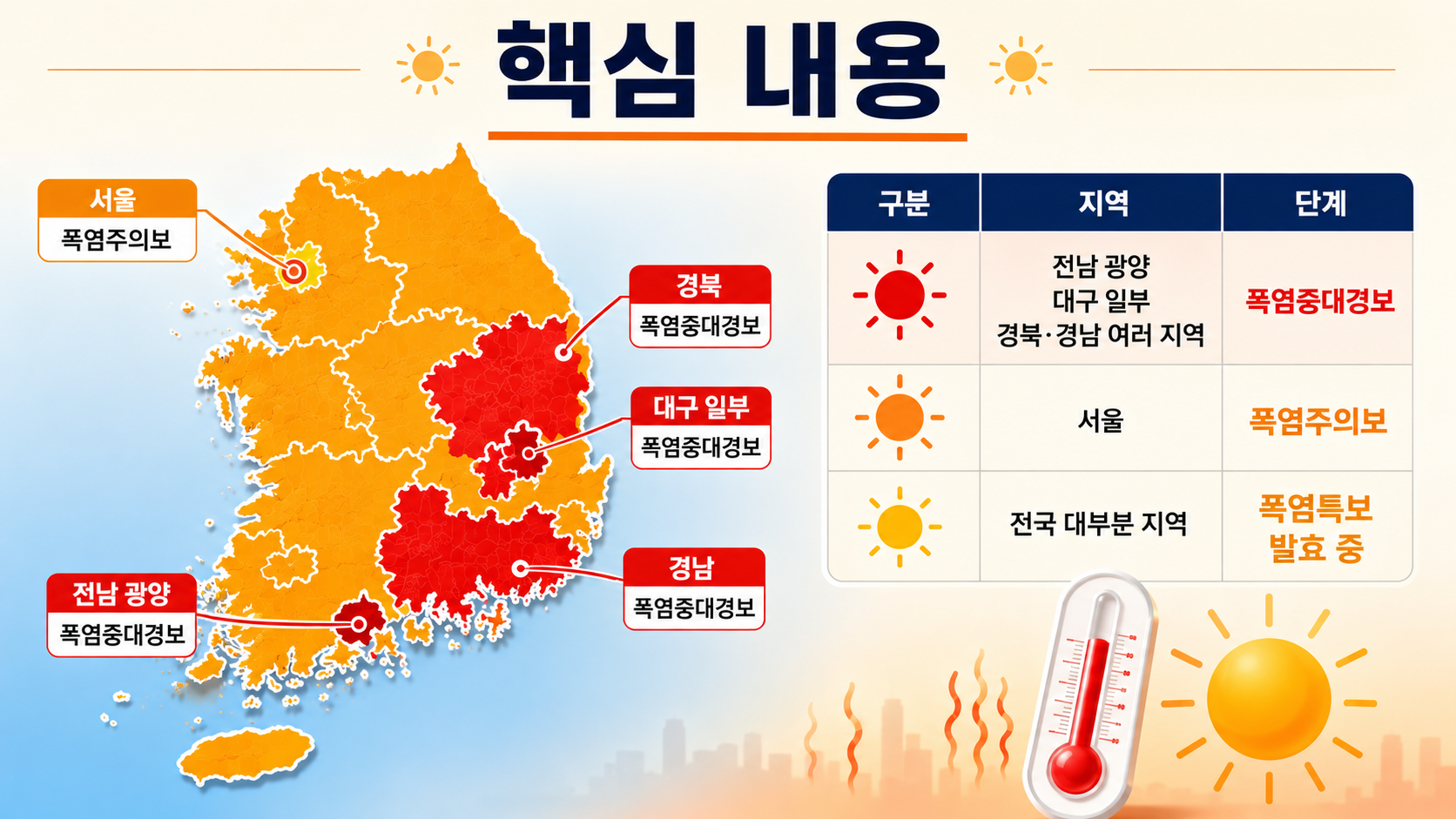
As of 5:6 p.m. on 2026-07-27, extreme heat emergency warnings were in effect for Gwangyang in South Jeolla Province, parts of Daegu, and several cities and counties in North and South Gyeongsang Provinces. Seoul was under a heat advisory rather than an extreme heat emergency warning, while heat alerts were in effect across most of the country.
In areas under an extreme heat emergency warning, simply being cautious about the heat is not enough. Outdoor activities and work should be stopped or postponed, and people should immediately move to air-conditioned locations. Because warning areas can change frequently, always check the latest issuance time before going outside.
Which Areas Are Under an July 27 Extreme Heat Emergency Warning?
As of 5:6 p.m., confirmed extreme heat emergency warning areas included Gwangyang in South Jeolla Province, parts of Daegu, and several cities and counties in North and South Gyeongsang Provinces. Other areas, including Seoul and Incheon, were not necessarily safe, as most were under heat advisories or heat warnings.
| Region | Areas Under Extreme Heat Emergency Warnings |
|---|---|
| South Jeolla Province | Gwangyang |
| Daegu | All areas except Gunwi |
| North Gyeongsang Province | Gyeongsan, Cheongdo, Goryeong, Pohang, north-central Gyeongju, southern Gyeongju |
| South Gyeongsang Province | Yangsan, Changwon, Gimhae, Miryang, Uiryeong, Haman, Changnyeong, Jinju, central Hapcheon |
Seoul was included among the areas under a heat advisory at the same time. Rather than assuming that Seoul is safe because it is not under an emergency warning, it is safer to reduce commuting exposure and time spent outdoors.
The Korea Meteorological Administration recorded the following maximum apparent temperatures at major observation sites through 3 p.m.
| Observation Site | Maximum Apparent Temperature |
|---|---|
| Gwangyang-eup | 38.3℃ |
| Gyeongju | 37.5℃ |
| Yangsan | 37.4℃ |
| Goryeong | 37.4℃ |
| Saengnim, Gimhae | 37.4℃ |
| Seoul | 32.7℃ |
At the same time, the difference in apparent temperature between Gwangyang-eup and Seoul was 5.6℃.
Author's calculation: 38.3℃-32.7℃=5.6℃
Observed apparent temperatures represent actual measurements, while heat alerts are issued based on forecast apparent temperatures and the potential for harm. This is why the current temperature alone cannot determine whether a warning is appropriate.
How Is an Extreme Heat Emergency Warning Different From a Heat Warning?
The extreme heat emergency warning is the highest level of heat alert, introduced in June 2026. Heat advisories and heat warnings are generally issued when qualifying conditions are expected to persist for at least two days, but an emergency warning may be issued even when extreme temperatures are expected for only one day.
| Alert Level | Basic Issuance Criteria | Meaning |
|---|---|---|
| Heat advisory | Daily maximum apparent temperature of 33℃ or higher expected for at least 2 days | Vulnerable groups and people engaging in outdoor activities should exercise caution |
| Heat warning | Daily maximum apparent temperature of 35℃ or higher expected for at least 2 days | Outdoor activities should be reduced, and proactive health precautions are necessary |
| Extreme heat emergency warning | In areas meeting heat warning conditions, an apparent temperature of 38℃ or a maximum air temperature of 39℃ or higher is expected for at least one day | Extreme heat that can threaten the lives of even healthy individuals |
| Tropical night advisory | Region-specific minimum nighttime temperature thresholds are expected to be met in areas under a heat advisory or higher | Conditions in which the body may struggle to recover from daytime heat overnight |
Heat alerts are primarily based on apparent temperature, which accounts for humidity, rather than simply the highest daytime air temperature. Even when the air temperature is below 33℃, a heat alert may be issued if high humidity pushes the apparent temperature higher.
Conversely, even if the air temperature exceeds 33℃, the same alert level may not be issued when humidity is low and the potential for harm is relatively limited.
What Should You Do First After Receiving an Extreme Heat Emergency Warning?
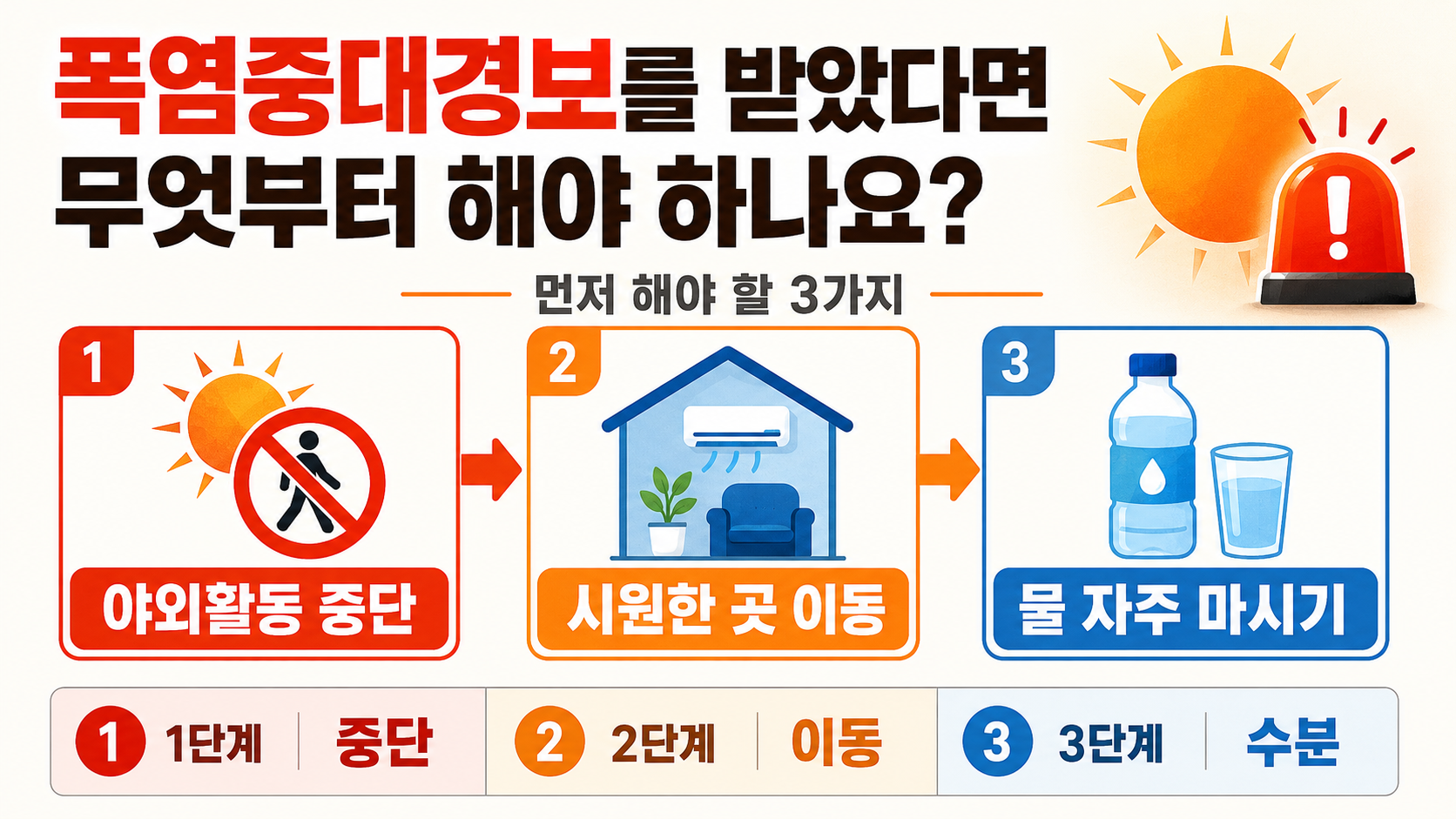
In areas under an extreme heat emergency warning, the priority is not to continue activities carefully but to stop what you are doing and move to safety. The Korea Meteorological Administration's key guidance consists of three steps: stop, relocate, and check on others.
1. Stop Outdoor Activities
Outdoor exercise, including hiking, running, cycling, and soccer, should be postponed to another day. Children's outdoor classes, events involving long waiting periods, and agricultural work should also be suspended or rescheduled for times when air-conditioned facilities are available.
For essential trips that cannot easily be postponed, such as commuting or hospital visits, avoid the period between 12 p.m. and 5 p.m., when sunlight is intense, and keep travel time as short as possible.
2. Move to a Cool Location
Move indoors to an air-conditioned space or to a nearby designated cooling shelter. Even indoors, lowering your body temperature should take priority over avoiding the use of air conditioning.
Drink small amounts of water frequently, even if you do not feel thirsty. However, if you have been instructed to restrict fluid intake because of a heart condition, kidney disease, or another medical condition, follow the guidance previously provided by your healthcare professional.
3. Check on Family Members and Neighbors
Contact older adults living alone, children, pregnant women, and people with chronic illnesses to check whether they are using air conditioning and how they are feeling. If someone does not respond to calls, has slurred speech, or appears confused, do not dismiss the symptoms as ordinary discomfort from the heat.
How Often Should Outdoor Workers Take Breaks?
At high-temperature workplaces where heat alerts are in effect, workers are advised to take regular breaks of 10~15 minutes every 1 hours. Outdoor work should be avoided particularly between 2 p.m. and 5 p.m., and work must be stopped immediately if the risk of heat-related illness becomes imminent.
In areas under an extreme heat emergency warning, outdoor work that is not essential emergency work should generally be suspended or postponed.
Rest areas should ideally be air-conditioned or well ventilated rather than merely providing temporary shade from direct sunlight. Workers should begin drinking water regularly before starting work and should not replace water with alcohol or highly caffeinated beverages.
How Can You Tell the Difference Between Heatstroke and Heat Exhaustion?
Heat exhaustion commonly causes heavy sweating, dizziness, and weakness. Heatstroke can involve central nervous system abnormalities, including confusion or unresponsiveness, and is a medical emergency requiring an immediate call to 119.
| Condition | Common Symptoms | Immediate Action |
|---|---|---|
| Suspected heat exhaustion | Heavy sweating, dizziness, headache, nausea, severe fatigue, muscle cramps | Move to a cool location, loosen clothing, and slowly drink water if conscious |
| Suspected heatstroke | Reduced consciousness, slurred speech, collapse, extremely high body temperature, severe headache | Call 119 immediately and begin cooling the body |
| Unconscious person | No response or inability to swallow water | Do not give water or other drinks; call 119 |
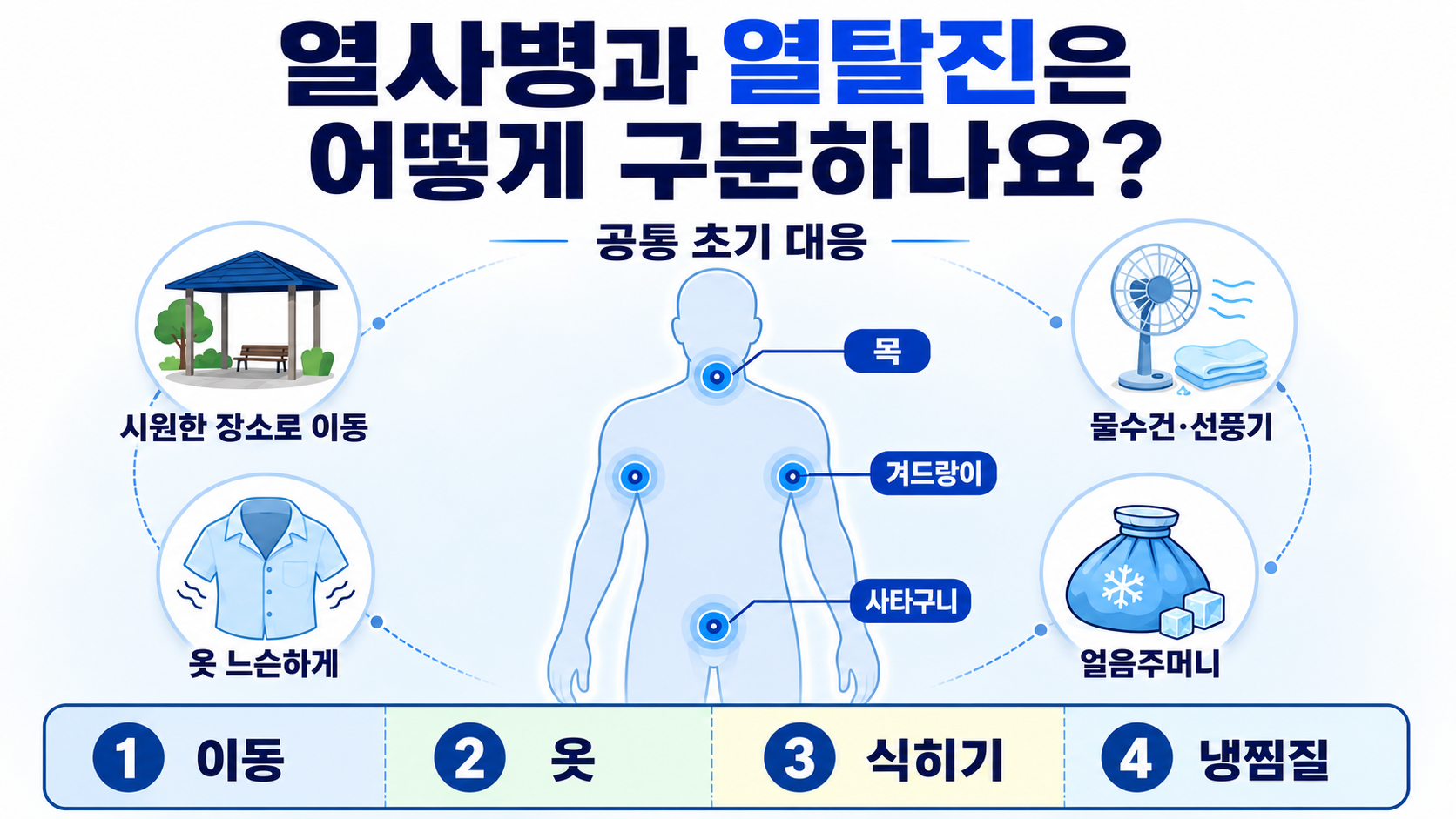
After moving the person to a cool location, loosen their clothing and cool their body using cool, damp towels or a fan. If ice packs are available, they can be placed near the neck, armpits, and groin.
Giving water to an unconscious person can obstruct their airway. In this situation, do not give fluids. Instead, focus on lowering the person's body temperature until emergency responders arrive.
Should You Also Check for a Tropical Night Advisory Tonight?
Areas under daytime heat alerts should also check for tropical night advisories at night. Several areas, including Seoul, Incheon, Daejeon, Gwangju, Daegu, Busan, and Ulsan, were included in tropical night advisory coverage, making it important to prepare cooling equipment and drinking water before bedtime.
The minimum nighttime temperature threshold for a tropical night advisory is 25℃ in general areas, 26℃ in major cities with populations of at least 50 ten thousand people and in coastal and island areas, and 27℃ on Jeju Island. The advisory is issued when these thresholds are expected to be met in areas already under a heat advisory or higher.
Before going to bed, check the following:
Keep indoor spaces cool using an air conditioner or fan.
Drink water before bedtime, but avoid alcohol and caffeinated beverages.
Contact older adults living alone and people with chronic illnesses.
If dizziness, nausea, or headaches continue at night, do not simply force yourself to sleep.
Ventilate indoor spaces periodically, even when using air conditioning.
Important Details That Are Easy to Miss When Checking Heat Alerts
The areas covered by heat alerts and their effective times change continuously. Do not rely solely on a screenshot saved in the morning. Check the latest issuance time again immediately before going outside.
Check alerts for your destination separately from those for your current location. Even if Seoul is under only a heat advisory when you depart, parts of Daegu and North and South Gyeongsang Provinces may be under extreme heat emergency warnings.
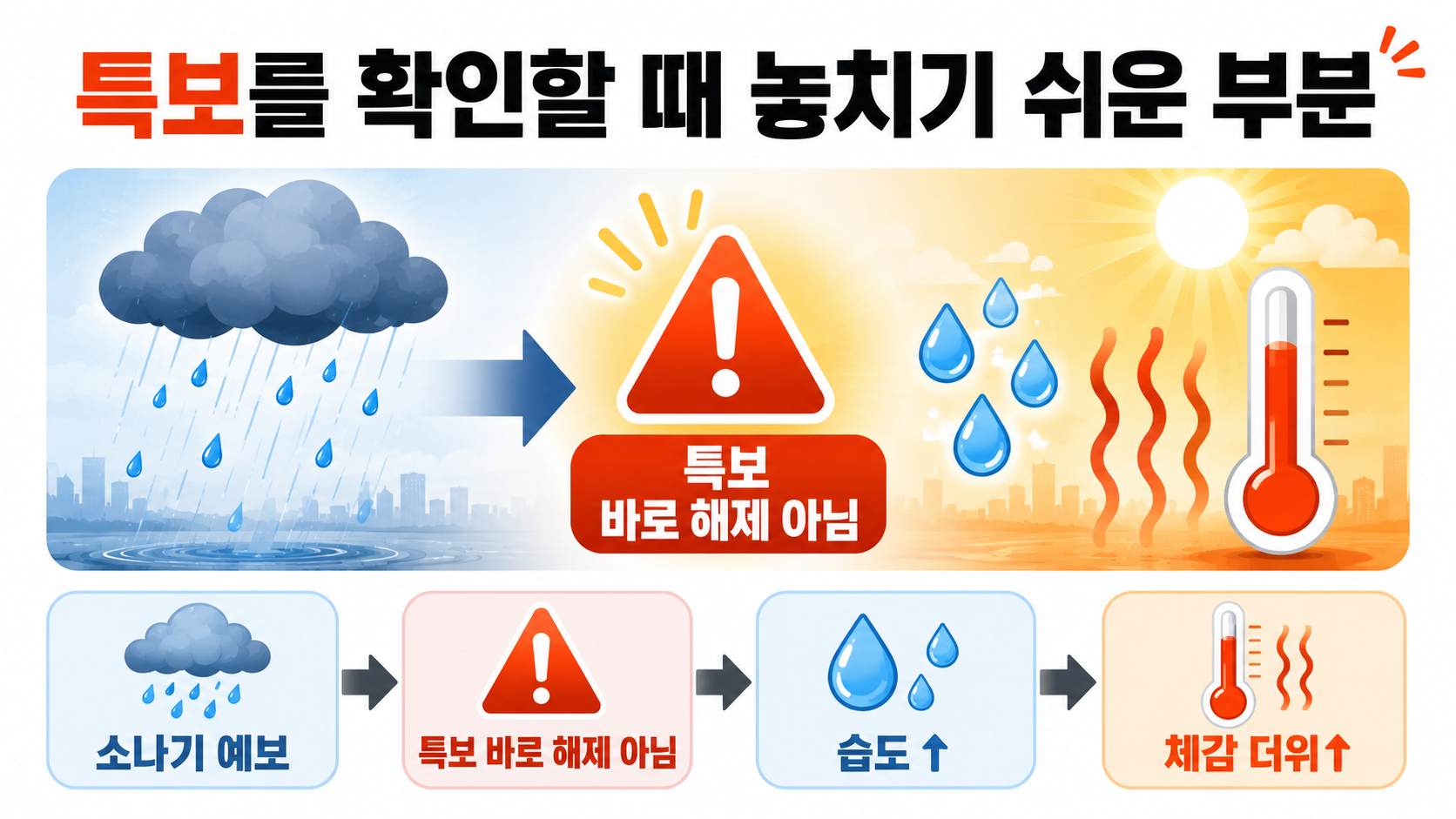
A forecast of rain showers does not mean that heat alerts will automatically be lifted. After a brief rainfall, increased humidity can make the apparent temperature feel higher than the actual air temperature.
Frequently Asked Questions
Has an Extreme Heat Emergency Warning Been Issued for Seoul?
July 2026 27
이 포스팅은 쿠팡 파트너스 활동의 일환으로, 이에 따른 일정액의 수수료를 제공받습니다.