

2026 Small Business Policy Loans: How to Choose Between Direct and Bank-Intermediated Loans, Duplicate Applications, and the 6-Month Reapplication Restriction
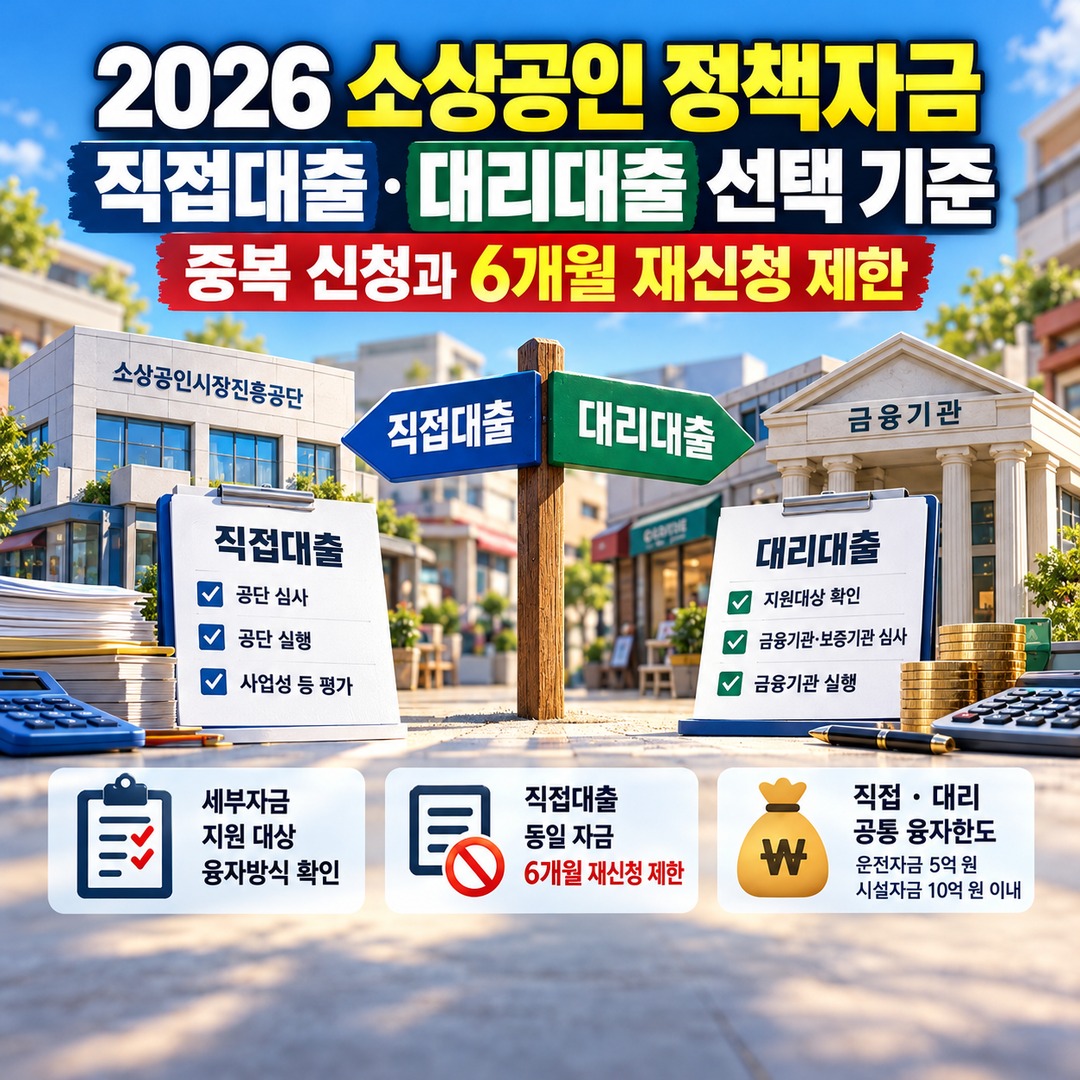
Under the 2026 small business policy loan program, applicants cannot simply choose between direct and bank-intermediated loans based on which appears to offer a lower interest rate. They must first check the eligibility requirements and lending method for the specific funding program they intend to apply for. In particular, direct loans are subject to a 6-month reapplication restriction following approval or rejection of an application for the same funding program within the same year, making it important to review previous applications first.
As of 2026-10-31, this article distinguishes the application procedures and assessment criteria based on the Ministry of SMEs and Startups' April 16 amended notice and the policy loan guidance issued by the Korea SMEs and Startups Agency (SEMAS). The notices in effect on the application date are the final authority on whether applications are being accepted for each funding program and what specific restrictions apply.
What Is the Difference Between Direct and Bank-Intermediated Loans?
The biggest difference is which institution conducts the final loan assessment. For direct loans, the Korea SMEs and Startups Agency handles everything from assessment to disbursement. For bank-intermediated loans, the agency first confirms eligibility, after which a financial institution or guarantee institution conducts its own assessment.
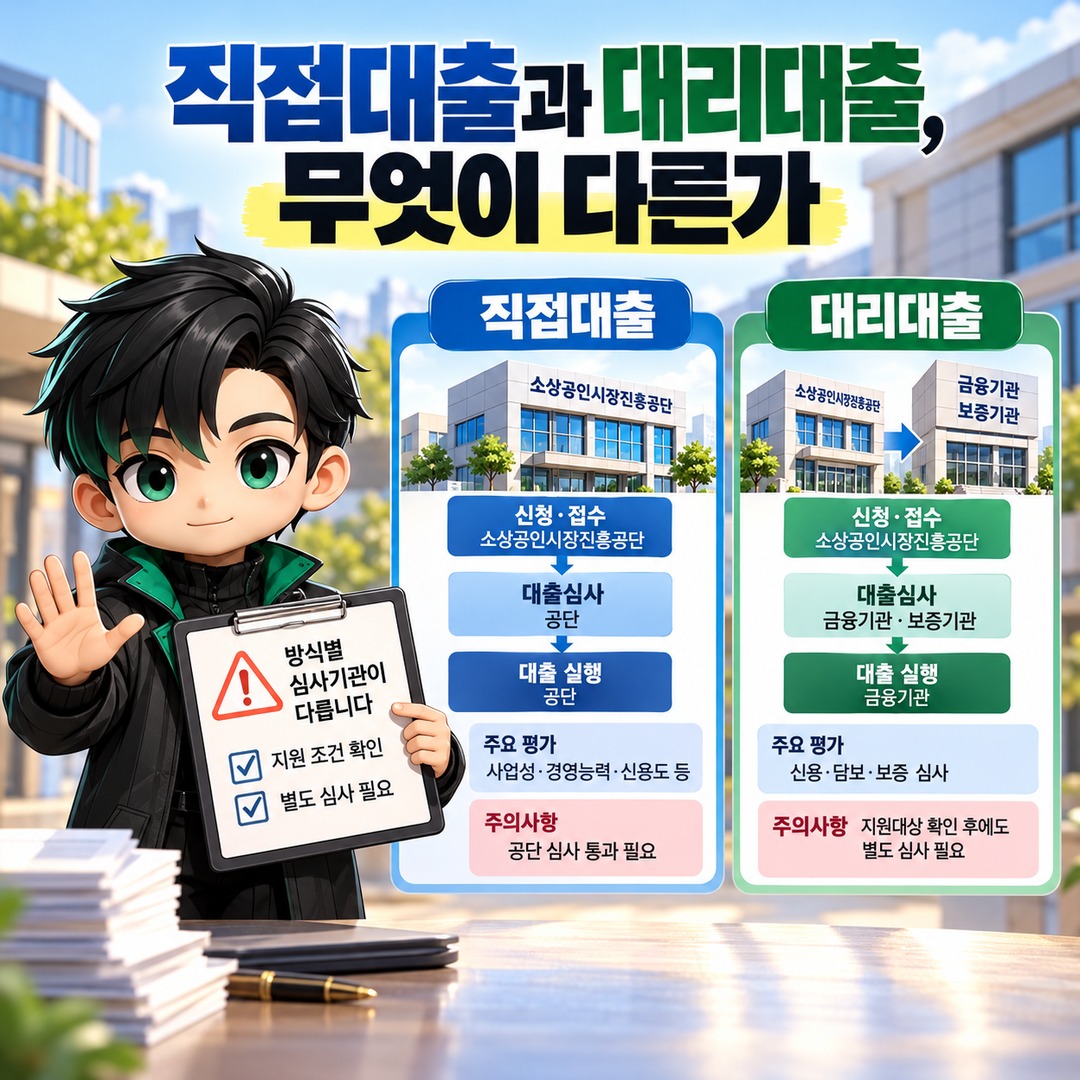
| Category | Direct Loans | Bank-Intermediated Loans |
|---|---|---|
| Application and Submission | Korea SMEs and Startups Agency | Korea SMEs and Startups Agency |
| Loan Assessment | Agency | Financial institution or guarantee institution |
| Loan Disbursement | Agency | Financial institution |
| Main Assessment Criteria | Business viability, management capability, creditworthiness, and other factors | Credit, collateral, and guarantee assessments |
| Important Considerations | Must pass the agency's assessment | A separate assessment is required even after eligibility is confirmed |
According to the Ministry of SMEs and Startups' amended notice on the 2026 small business policy loan program, direct loans also involve a comprehensive assessment of factors such as the feasibility of the business plan and its growth potential.
For bank-intermediated loans, confirmation of eligibility by the agency does not guarantee loan approval. If a guarantee certificate is required, an additional assessment by a guarantee institution is necessary. The financial institution then determines whether to approve the loan and how much to lend.
Which Funding Program Should My Business Check First?
Before considering the lending method, you need to match your business circumstances with the eligibility requirements of the specific funding program.
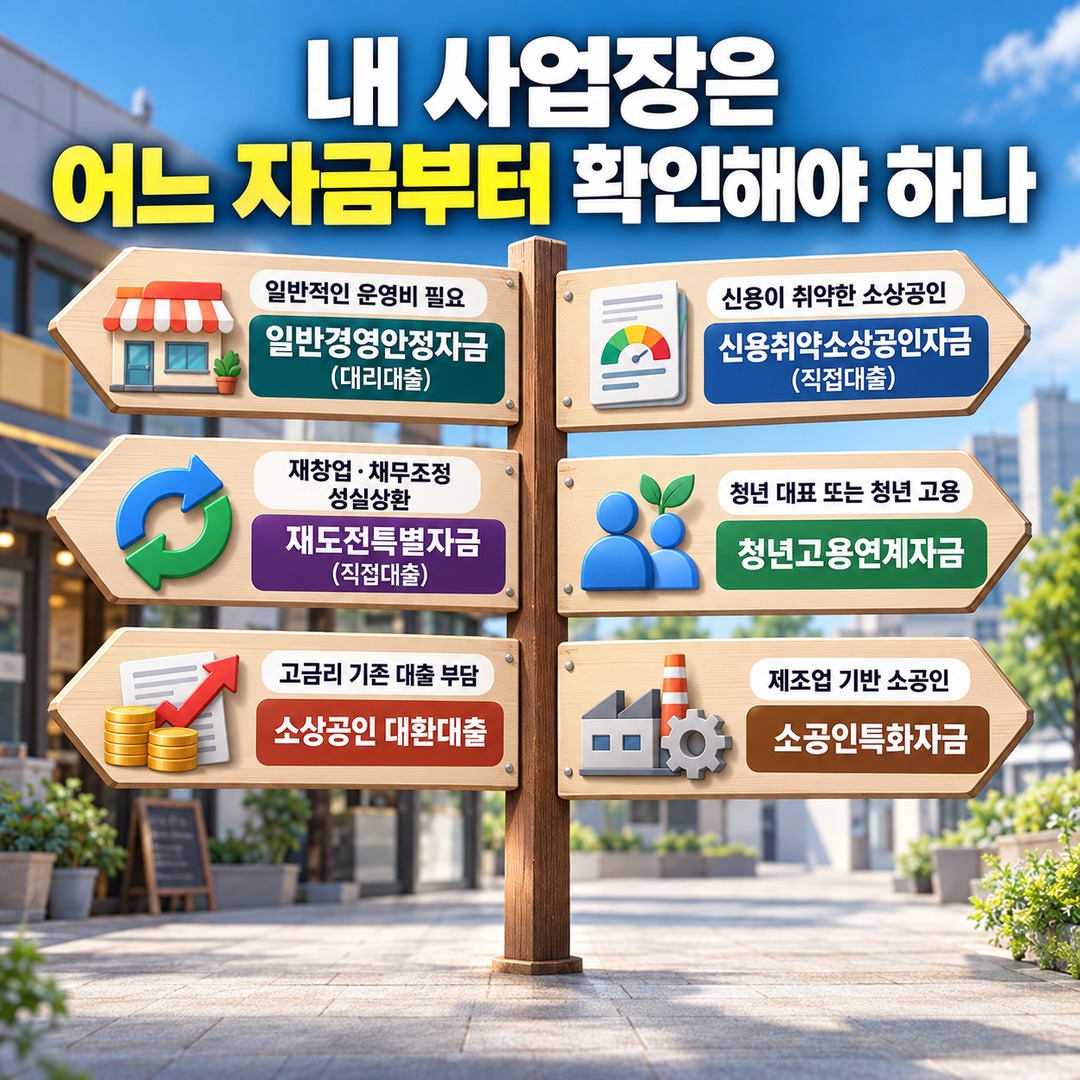
The main funding programs identified in the 2026 amended notice include the following.
| Business Circumstances | Funding Program to Check First |
|---|---|
| General operating expenses | General Management Stabilization Fund |
| Small business owners with weak credit | Credit-Vulnerable Small Business Owners Fund |
| Business restart or consistent repayment under debt restructuring | Special Rechallenge Fund |
| Young business owner or employment of young workers | Youth Employment-Linked Fund |
| Burden of existing high-interest loans | Small Business Loan Refinancing Program |
| Small-scale manufacturing businesses | Specialized Fund for Small Manufacturers |
The General Management Stabilization Fund operates through bank-intermediated loans. The Special Rechallenge Fund and the Credit-Vulnerable Small Business Owners Fund are direct loan programs.
Some programs, such as the Emergency Management Stabilization Fund, offer both direct and bank-intermediated loans depending on the specific grounds for support.
For example, someone running a typical restaurant who needs operating funds could first check whether they qualify for the General Management Stabilization Fund. By contrast, someone who has restarted a business should first review the business restart stages and detailed requirements under the Special Rechallenge Fund.
Even if both business owners apply for the same amount, the applicable assessment procedures and eligibility requirements may differ.
Can You Apply for Direct and Bank-Intermediated Loans at the Same Time?
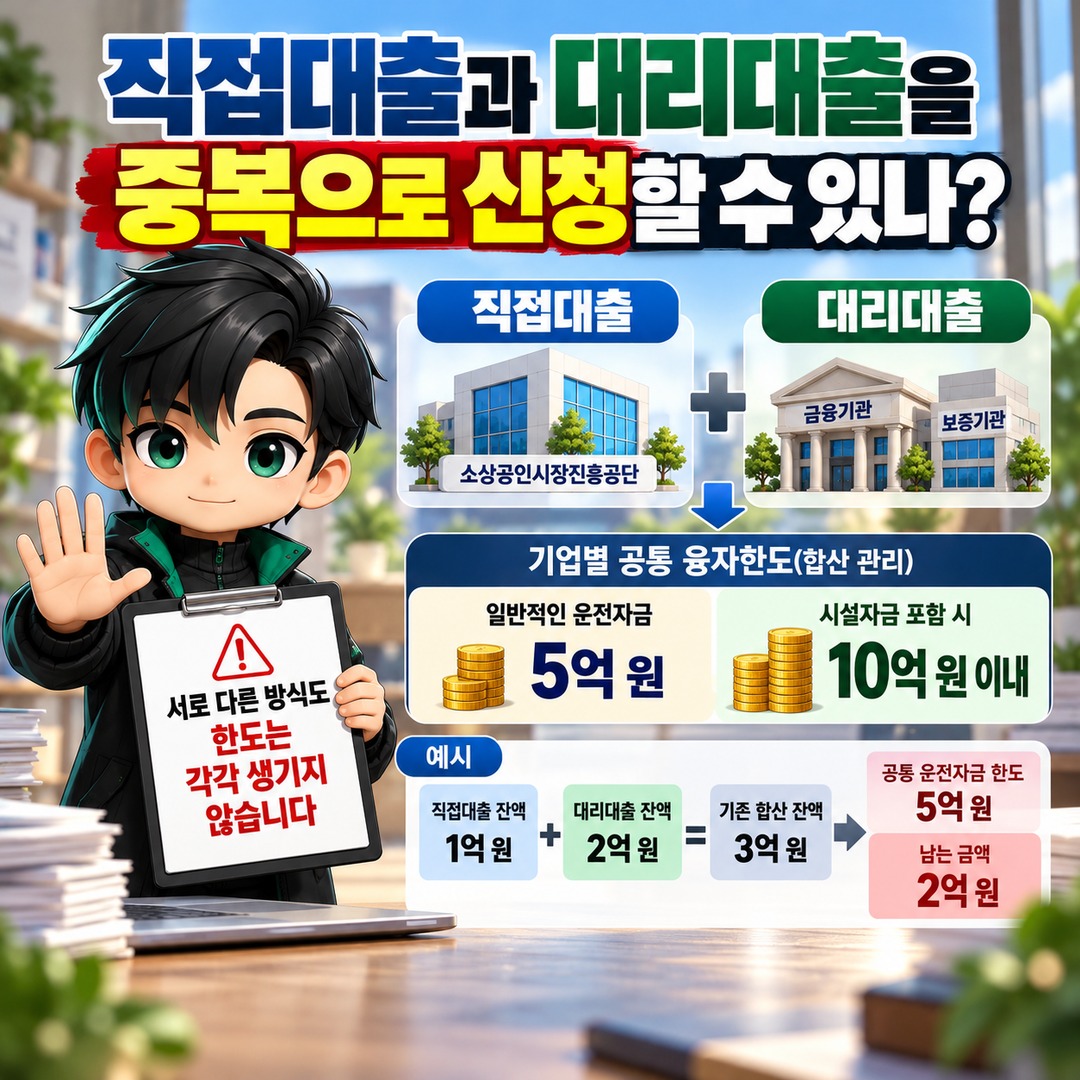
The 2026 notice establishes a shared financing limit for each business by combining existing outstanding balances and planned new loan amounts under both direct and bank-intermediated loans. Applying through different lending methods therefore does not create a separate borrowing limit for each.
Under the notice, the general combined limit for working capital loans is KRW 500,000,000, while the combined limit including facility financing is KRW 1,000,000,000. The Emergency Management Stabilization Fund operates under a separate limit.
However, these figures are not guaranteed loan amounts for individual businesses. The limits for each specific funding program and the results of the relevant assessments apply separately.
How Much Can You Borrow If You Already Have an Outstanding Loan?
Let's work through a hypothetical example.
Assume a business has outstanding policy working capital loans consisting of KRW 100,000,000 in direct loans and KRW 200,000,000 in bank-intermediated loans.
Outstanding direct loan balance: KRW 100,000,000
Outstanding bank-intermediated loan balance: KRW 200,000,000
Combined existing outstanding balance: KRW 300,000,000
Shared working capital financing limit: KRW 500,000,000
According to the author's calculation, subtracting KRW 300,000,000 from KRW 500,000,000 leaves KRW 200,000,000 in available capacity under the shared financing limit.
However, this does not mean the business can obtain an additional loan of KRW 200,000,000.
If the individual funding program being applied for has a limit of 7 thousand won, that program-specific limit applies first. The actual approved amount may be lower, or the application may be rejected entirely, depending on the applicant's eligibility and assessment results.
What Happens If You Apply for Multiple Funding Programs Simultaneously?
Whether applications are considered duplicates cannot be determined simply by whether they are labeled direct loans or bank-intermediated loans.
Several separate factors need to be checked.
1. Whether the applications are for different specific funding programs
2. Whether an existing application is at the submission, assessment, approval, or rejection stage
3. Whether the relevant application round has separate restrictions on duplicate submissions
4. Whether existing outstanding loan balances and planned new borrowing exceed the shared financing limit
The general 2026 notice alone does not establish that simultaneous applications for all direct and bank-intermediated loan programs are permitted.
In particular, application notices for individual direct-loan rounds may restrict additional applications for other direct loans, so applicants should check the status of any applications already in progress.
After a Direct Loan Rejection, Does the 6-Month Restriction Also Prevent Applications for Other Programs?
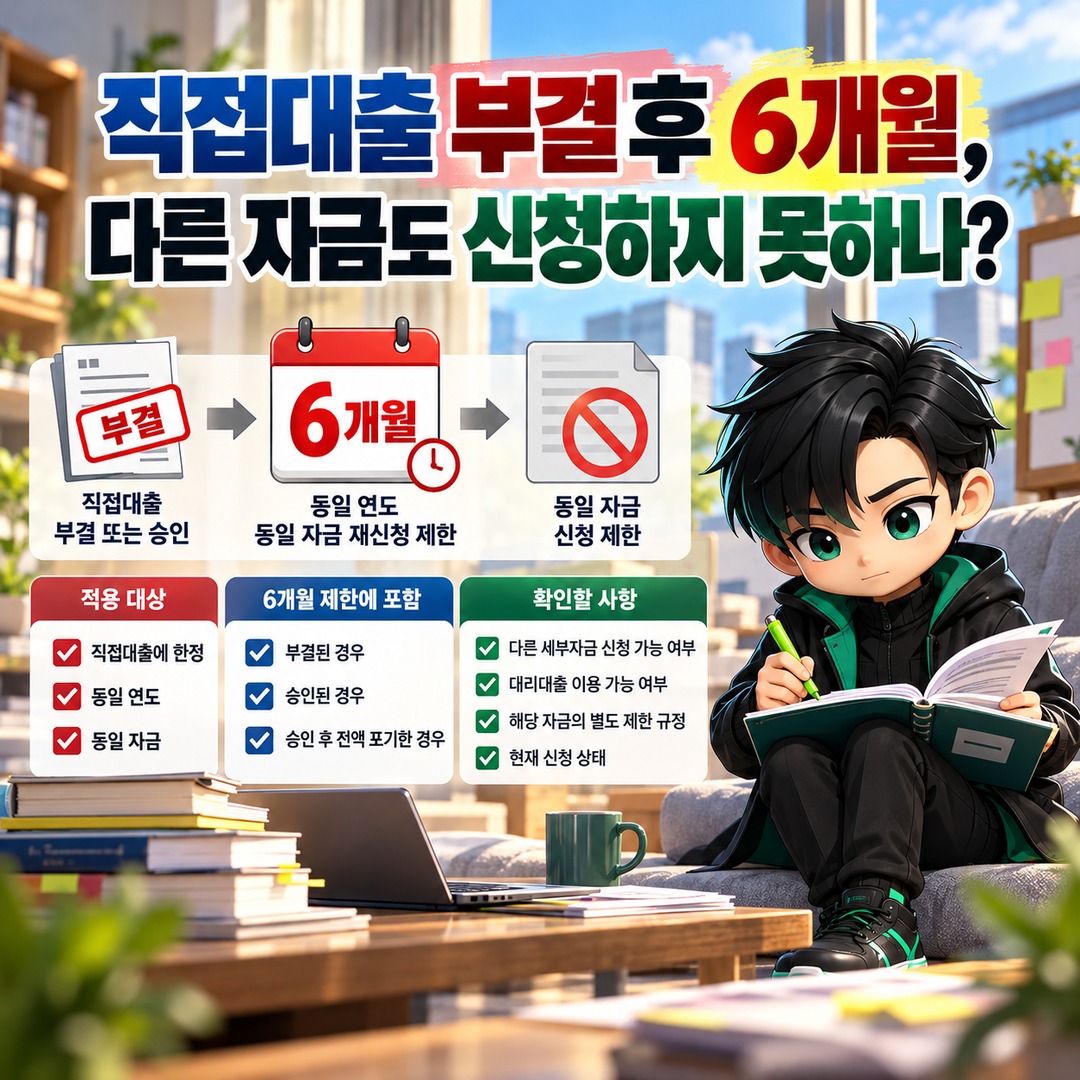
The 2026 amended notice issued by the Ministry of SMEs and Startups includes a provision restricting lending when less than 6 months have passed since an application for the same direct-loan program was rejected or approved within the same year.
The provision also covers cases in which an applicant voluntarily gives up the entire approved loan.
Three distinctions are important here.
First, this provision applies only to direct loans.
Second, it is subject to the conditions that the application concerns the same year and the same loan program.
Third, whether applicants can apply for other specific loan programs or use intermediated loans depends on the separate restrictions governing those programs and the status of their existing applications.
As a hypothetical example, if an application for a particular direct-loan program was rejected in 2026-07-15, the 6-month restriction would become relevant when applying again for the same program within the same year. This does not mean that applications for every type of policy loan are automatically prohibited for 6 months.
If you receive a rejection notice, the most reliable approach is to check the rejection date, loan program name, and application round, then ask the Small Enterprise and Market Service whether and when you can apply again.
What Factors Can Lead to Loan Rejection During Screening?
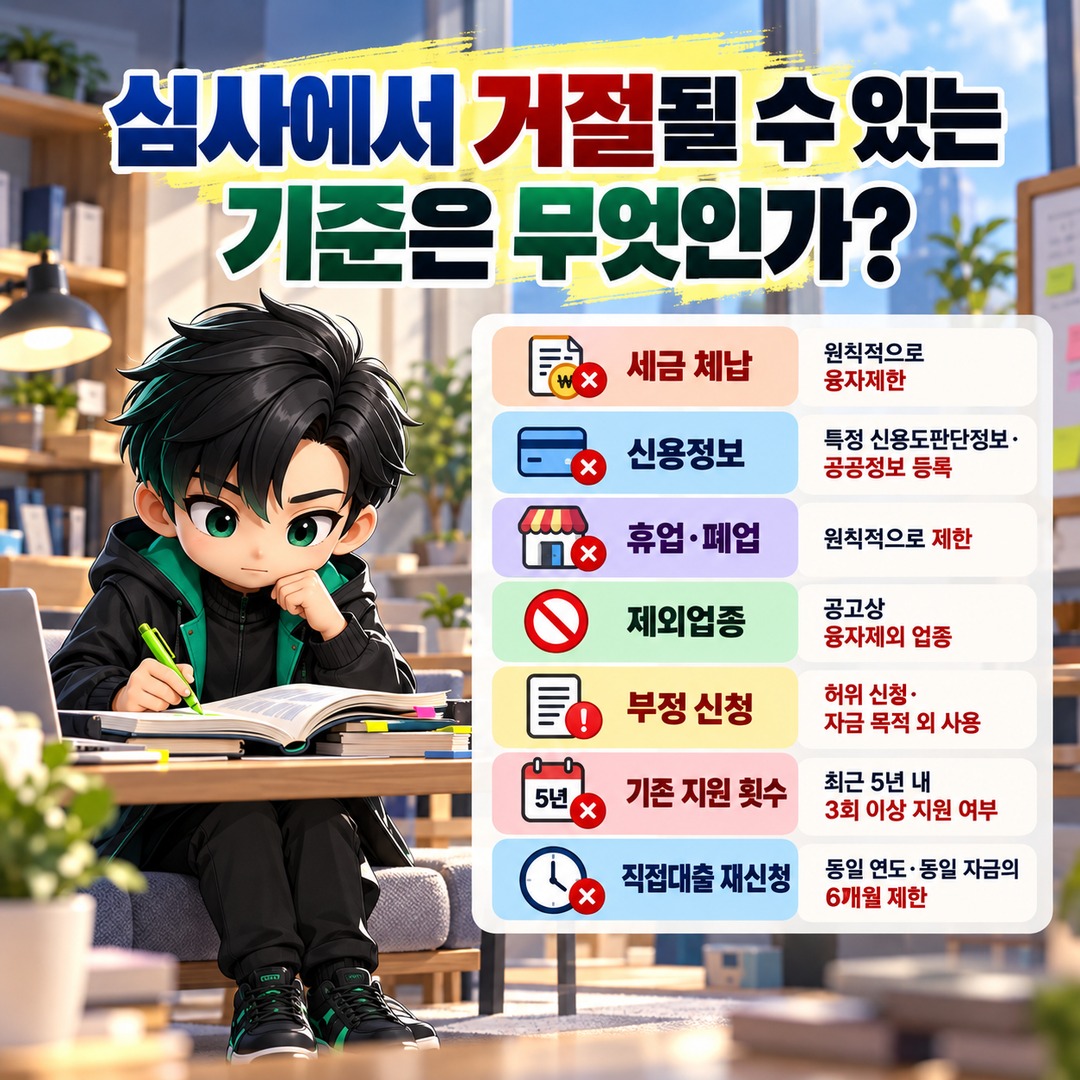
According to the 2026 notice, even businesses that meet the basic eligibility requirements may not receive a policy loan if they fall under a lending restriction or fail to satisfy the suitability criteria during screening.
The main grounds for restriction include the following.
| Item to Check | Restriction |
|---|---|
| Unpaid taxes | Lending is generally restricted |
| Credit information | Registration of certain adverse credit information or public records |
| Business suspension or closure | Generally restricted |
| Excluded industries | Industries excluded from lending under the official notice |
| Fraudulent applications | False applications or use of funds for unauthorized purposes |
| Previous funding frequency | Whether policy funding has been received 3 or more times within the past 5 years |
| Direct-loan reapplication | 6-month restriction for the same program within the same year |
There are exceptions for unpaid taxes. Small business owners who qualify for certain deferrals of seizure or asset sales, special tax collection arrangements, or other measures specified in the notice may remain eligible for support, but only through direct loans.
An exception may also apply to businesses that have temporarily suspended operations as a direct result of a disaster.
Applicants must also review how many times they have previously received policy funding. The 2026 notice identifies small business owners who have received policy funding 3 or more times within the past 5 years as subject to restrictions. However, Special Management Stabilization Funds are excluded from the count, and additional funding exceptions are available for certain facility loans and businesses with a record of reliable repayment.
Therefore, a business should not automatically be considered ineligible simply because it has received policy funding three times, without first reviewing the applicable exceptions.
Can an Applicant Be Rejected During Screening Despite Meeting the Eligibility Requirements?
Yes. For direct loans, confirming eligibility and conducting the actual loan assessment are separate stages.
The Small Enterprise and Market Service evaluates factors including technical capabilities, growth potential, management competence, business plan feasibility, and creditworthiness to determine whether to approve a loan and how much to lend.
The same principle applies to intermediated loans. Even if the Small Enterprise and Market Service confirms that a business meets the eligibility requirements, the loan may not be disbursed if the applicant fails the screening conducted by a guarantee institution or bank.
This is why applicants should prepare sales records, information about existing debts, business operating details, and plans for using the funds, ensuring that everything matches their actual supporting documents before applying.
Steps to Take Before Applying for 2026 Small Business Policy Loans
Applicants can check separate notices for direct and intermediated loans on the official Small Business Policy Funds website.
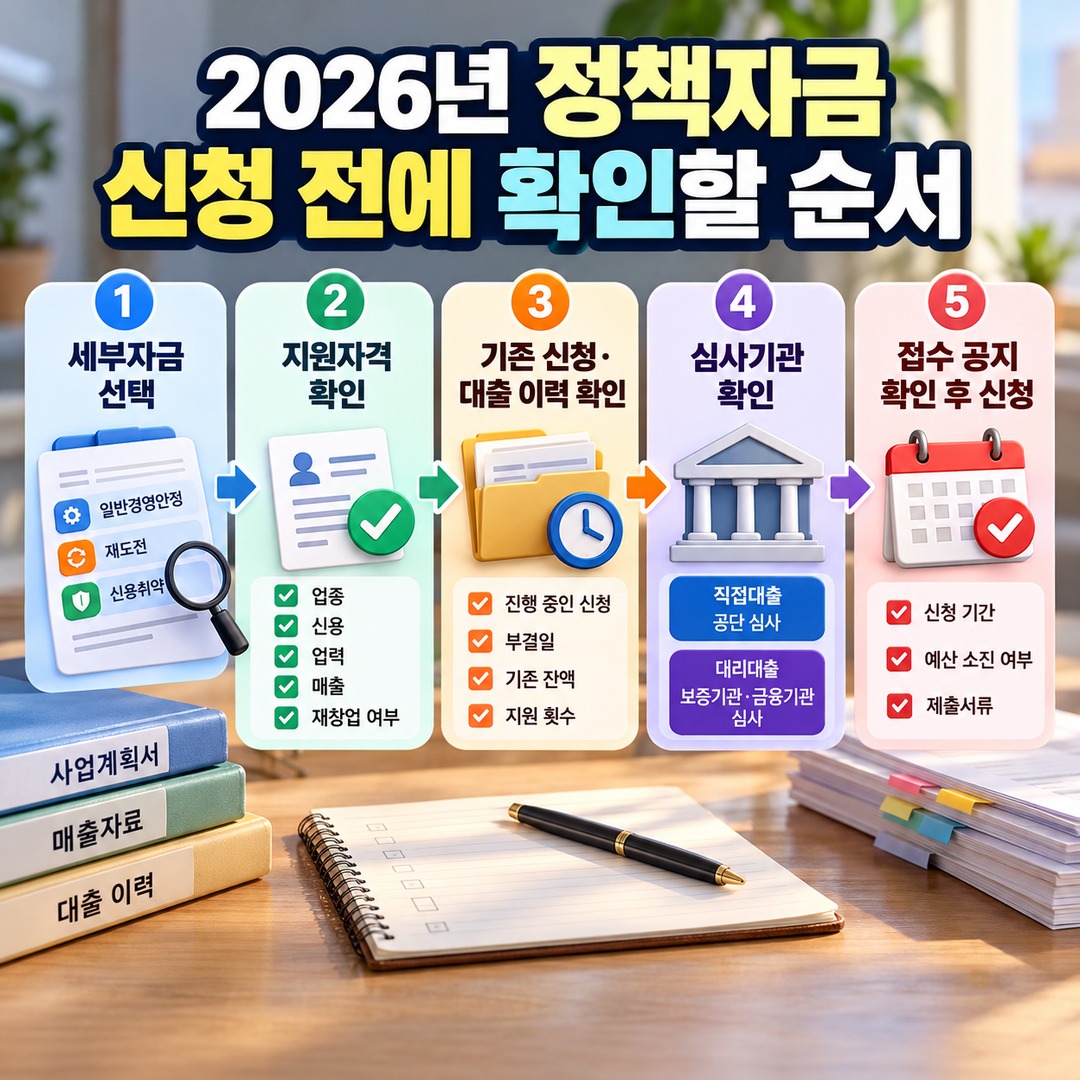
Before submitting an application, the following sequence is practical.
1. Choose a specific loan program: Find a program suited to your business, such as general management stabilization, business restart support, or funding for businesses with weaker credit.
2. Check eligibility: Review the specific requirements concerning industry, credit, years in operation, sales, and whether the business is being restarted.
3. Review previous applications and borrowing history: Check applications in progress, rejection dates, outstanding loan balances, and the number of times funding has been received.
4. Identify the screening institution: For direct loans, review the Small Enterprise and Market Service's screening process. For intermediated loans, check the procedures used by guarantee institutions and financial institutions.
5. Check application notices: Confirm the application period, whether the budget has been exhausted, and the required documents before submitting an application.
As of 2026-10-31, it is difficult to establish the real-time remaining budgets and complete application statuses of every individual loan program solely from the publicly available content on official websites. Inclusion in the annual lending plan does not necessarily mean that a program will still be accepting applications on the day you apply.
For assistance with small business policy loans, contact the Small Business Integrated Call Center at 1533-0100 or the SME Integrated Call Center at 1357.
If you are deciding between direct and intermediated loans, it is better to check the specific program's eligibility requirements, the status of existing applications, the combined borrowing limit, and the institution responsible for final screening before comparing interest rates or application processing speeds. Clarifying these four factors helps avoid unnecessary applications and identify which financing options are actually available.