

2026 Energy Voucher: Can It Be Deducted from Apartment Maintenance Fees? Electricity and Heating Eligibility Explained
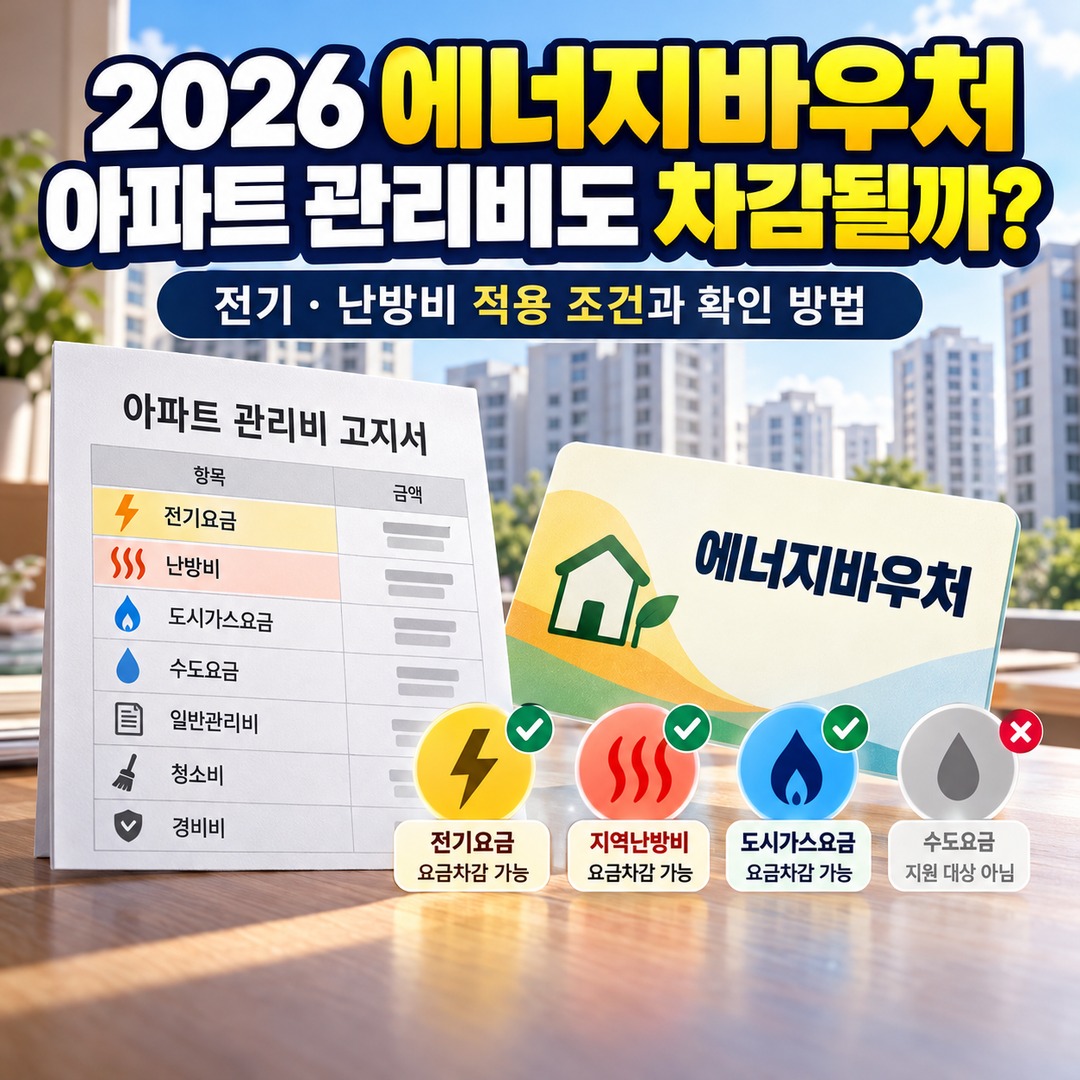
The 2026 Energy Voucher can also apply to electricity charges or district heating costs included in apartment maintenance bills. However, it does not provide a discount on the entire maintenance bill. Support applies to only one energy source registered for Energy Voucher bill deductions, so apartment residents should check both their maintenance statements and the type of energy selected in their application.
In particular, apartments with central or district heating and those with individual city gas heating have different billing arrangements, which means the verification process may also differ.
*Reference date: 2026-10-27*
1. Which Charges Included in Apartment Maintenance Bills Are Eligible for Deductions?
The Energy Voucher applies to eligible energy charges, not the entire apartment maintenance bill.
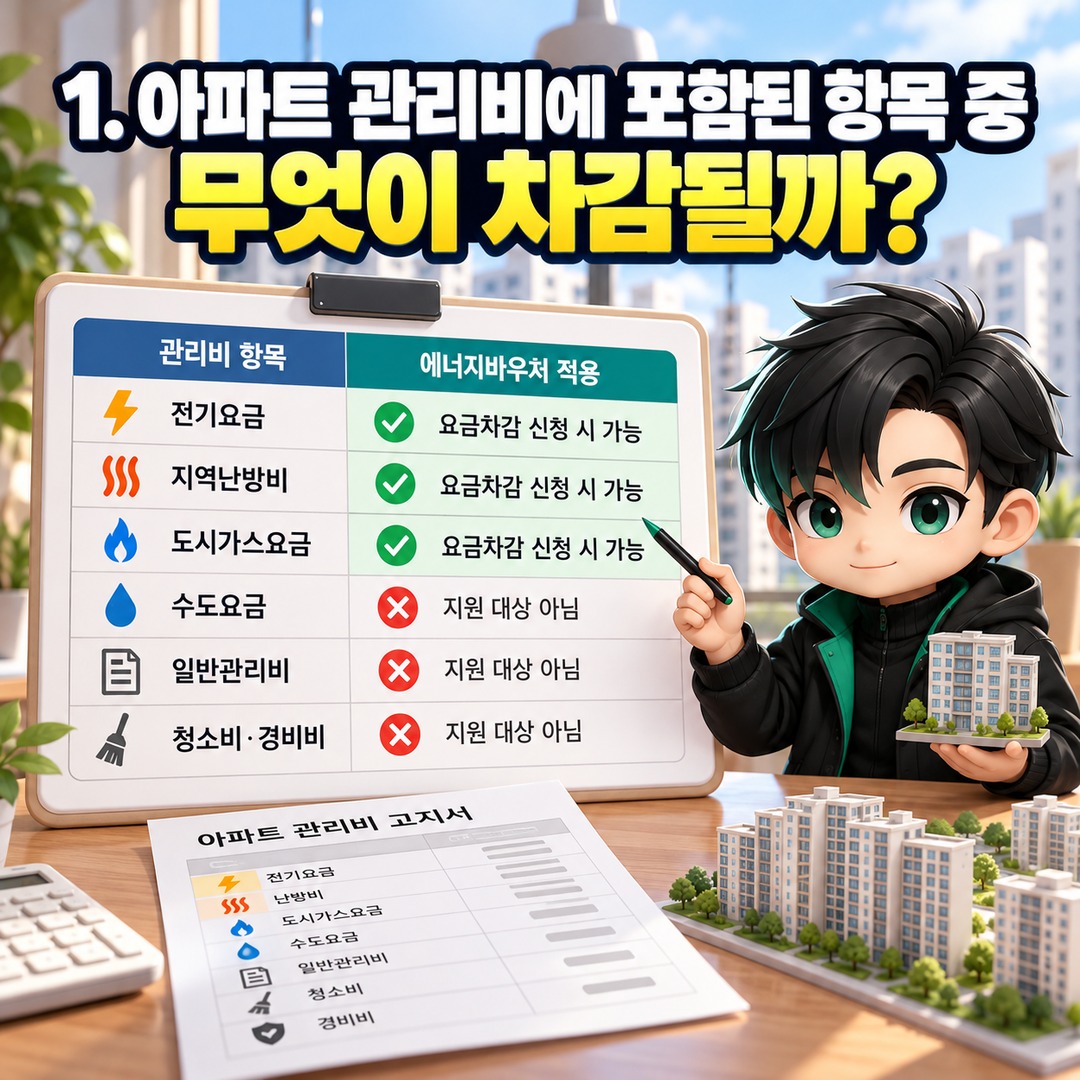
During the 2026 winter season, households can select one of three energy sources—electricity, city gas, or district heating—for bill deductions.
| Maintenance Bill Item | Energy Voucher Eligibility |
|---|---|
| Electricity charges | Eligible when registered for bill deductions |
| District heating charges | Eligible when registered for bill deductions |
| City gas charges | Eligible when registered for bill deductions |
| Water charges | Not eligible |
| General maintenance fees | Not eligible |
| Cleaning and security fees | Not eligible |
For example, even if an apartment maintenance bill totals KRW 250,000, with KRW 50,000 of that amount attributable to electricity, the Energy Voucher would generally apply only to the electricity charges if electricity was selected as the eligible energy source.
The remaining maintenance charges of KRW 200,000 are not automatically covered.
The actual deduction depends on the remaining voucher balance, the relevant energy charges, and the supplier's billing and settlement records.
2. Which Energy Source Should Residents of Centrally Heated or District-Heated Apartments Choose?
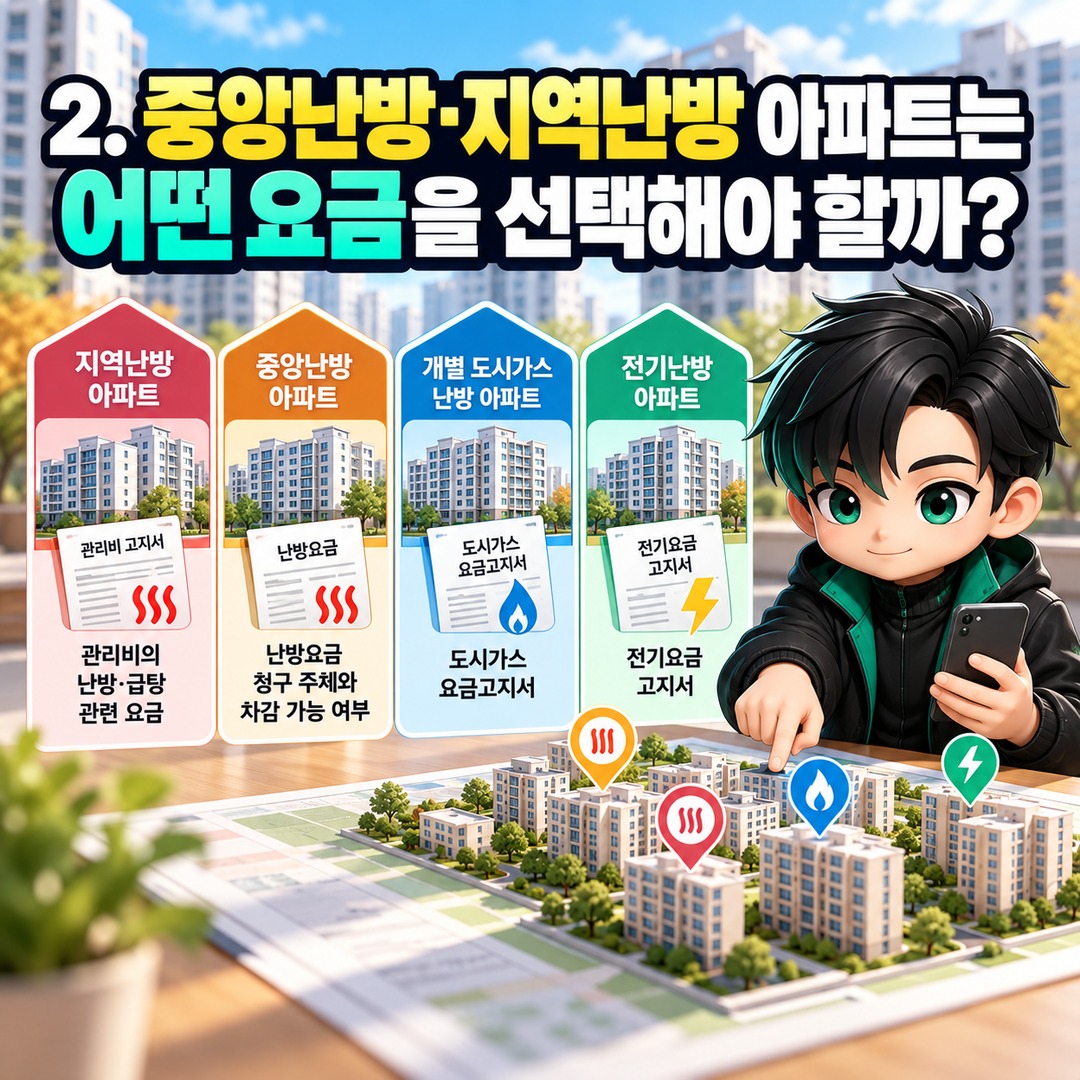
Because the winter bill deduction option allows households to select only one of electricity, city gas, or district heating, it is important to identify how and where the actual heating charges are billed.
| Apartment Heating System | What to Check First |
|---|---|
| District heating | Heating and hot-water charges on the maintenance bill |
| Individual city gas heating | City gas bill |
| Electric heating | Electricity bill |
| Central heating | Who bills the heating charges and whether deductions are available |
Living in an apartment with district heating does not mean that every heating-related maintenance charge is automatically eligible for support.
Residents should ask their apartment management office or energy supplier whether the building's heating charges can be processed through the Energy Voucher bill deduction system.
Can Electricity and District Heating Charges Be Deducted at the Same Time?
No. The winter bill deduction option does not allow households to select both simultaneously.
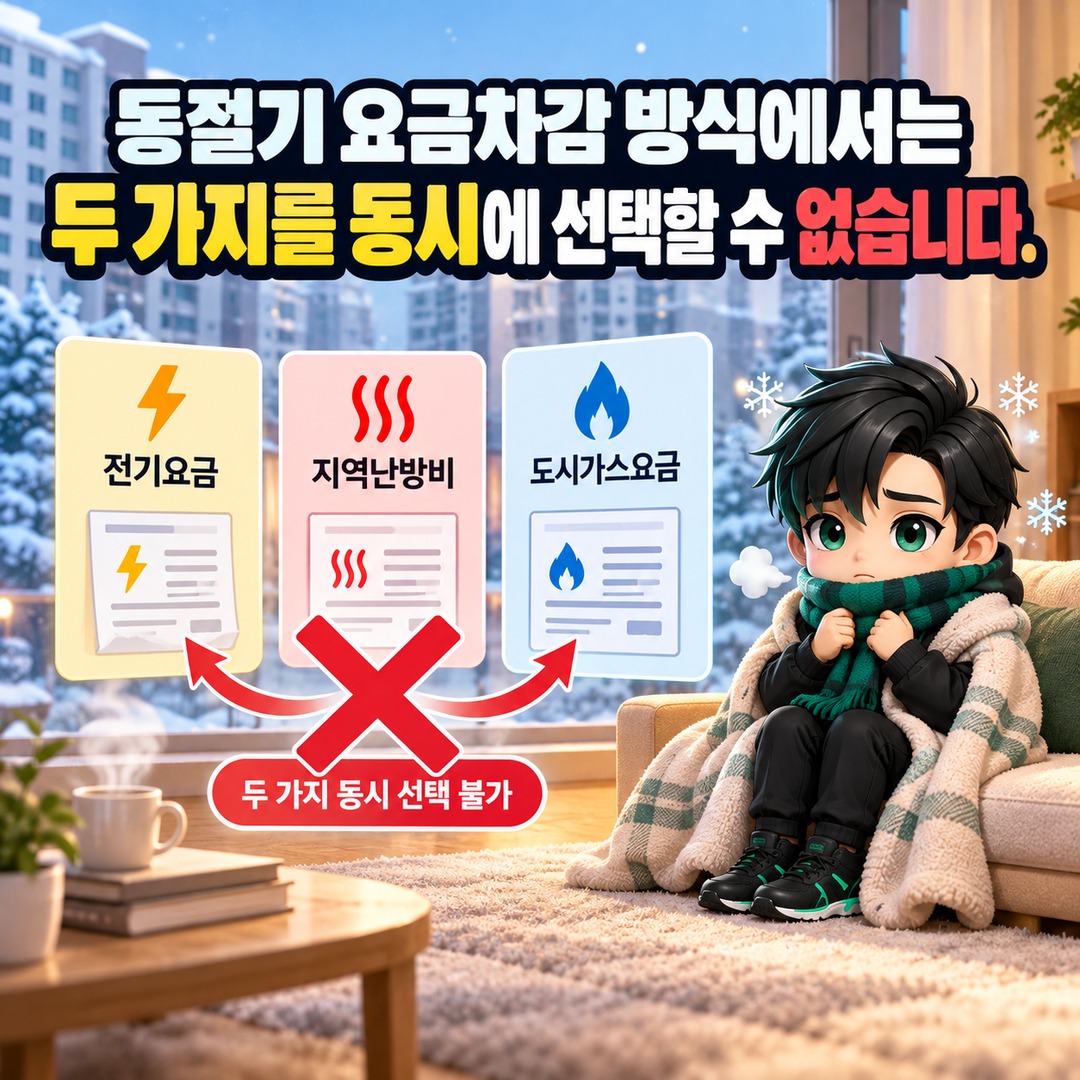
For example, if monthly electricity charges are KRW 40,000 and monthly district heating charges are KRW 120,000, the key factor is which of the two was selected for bill deductions.
However, higher monthly energy bills do not increase the total amount of support available. Energy Vouchers must be used within the support limit assigned to each household.
It is therefore advisable to compare which energy source the household uses most during winter and how the corresponding charges are billed.
3. How to Check Energy Voucher Deductions on an Apartment Maintenance Statement
Apartment residents can check their maintenance statements for Energy Voucher deductions.
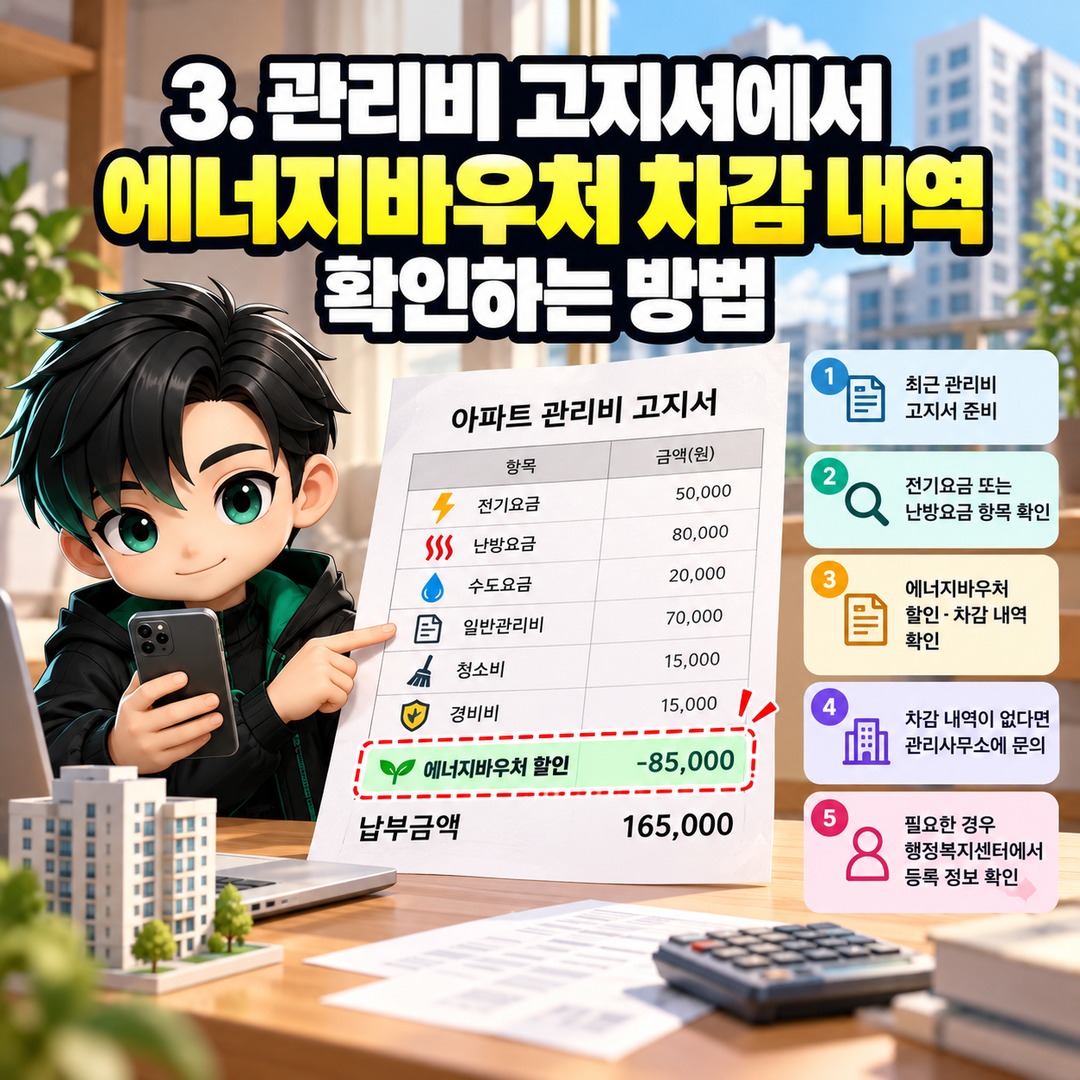
According to the Korea Energy Agency's Energy Voucher usage guidance, deductions for apartment residents may appear on their maintenance statements.
Follow these steps:
1. Prepare your most recent apartment maintenance statement.
2. Locate the electricity or heating charges.
3. Check whether an Energy Voucher discount or deduction is listed.
4. If no deduction appears, ask the apartment management office whether the supplier has billed and settled the relevant charges.
5. If necessary, contact your local Administrative Welfare Center to confirm which energy source is registered for deductions.
Importantly, the absence of an Energy Voucher deduction on a maintenance statement does not automatically mean the household has been found ineligible for support.
Residents should check the application processing status, supplier registration, and the date the statement was issued.
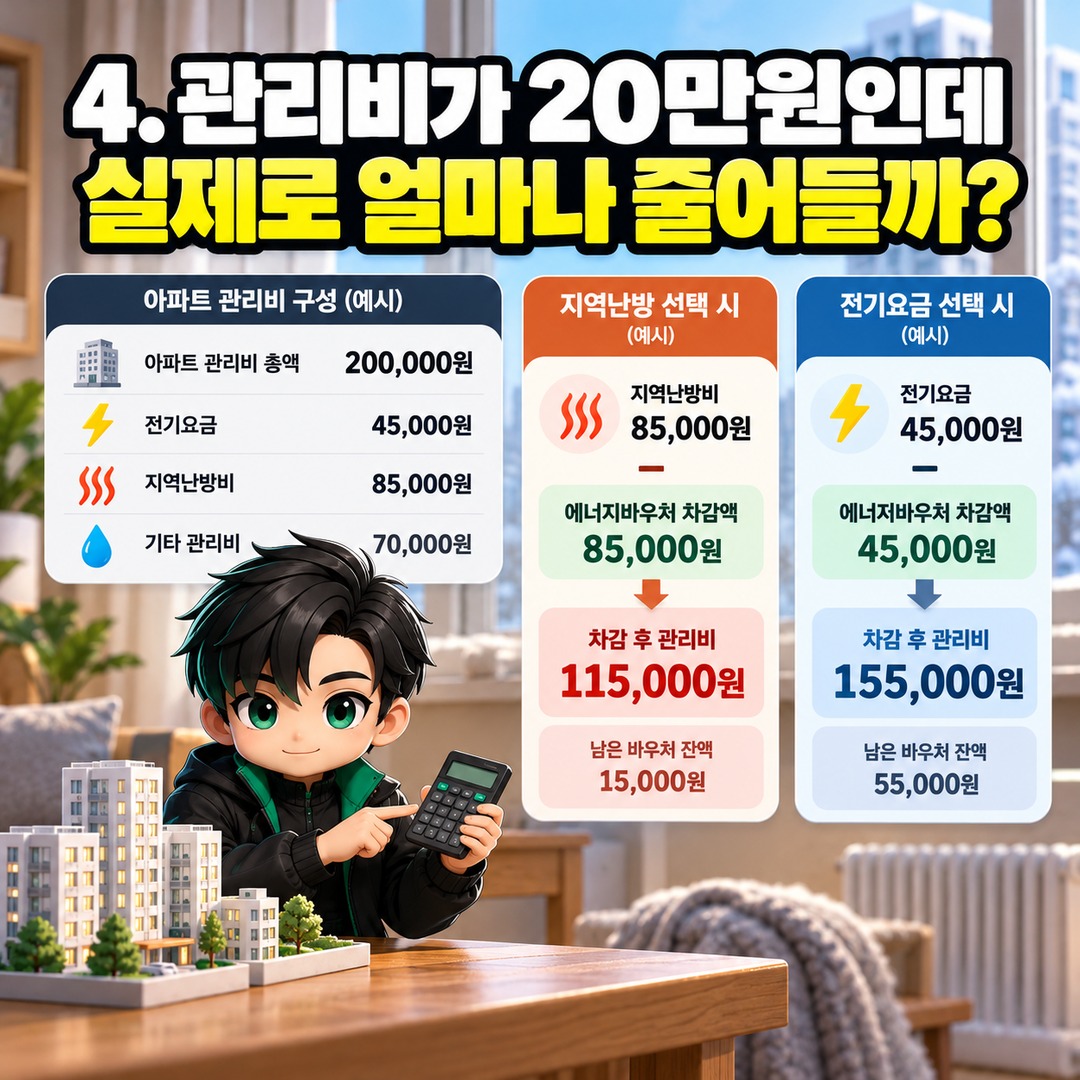
4. If Apartment Maintenance Fees Are KRW 200,000, How Much Could the Bill Actually Decrease?
The amount charged for the energy source registered for deductions matters more than the total maintenance bill.
The following is a hypothetical calculation for illustrative purposes.
| Category | Amount |
|---|---|
| Total apartment maintenance bill | KRW 200,000 |
| Electricity charges | KRW 45,000 |
| District heating charges | KRW 85,000 |
| Other maintenance charges | KRW 70,000 |
Assume that district heating was selected for Energy Voucher bill deductions and that the available voucher balance is KRW 100,000.
If the entire district heating charge of KRW 85,000 is eligible for deduction, the calculation would be as follows:
District heating charges: KRW 85,000
Voucher deduction: KRW 85,000
Maintenance bill after deduction: KRW 115,000
Remaining voucher balance: KRW 15,000
*Author's calculation: KRW 200,000 - KRW 85,000 = KRW 115,000*
Conversely, if electricity had been selected for deductions, only the electricity charges of KRW 45,000 would be deducted under the same assumptions, leaving a maintenance bill of KRW 155,000.
This calculation is an illustrative example intended to explain how bill deductions work. The actual eligible amount and the timing of the deduction on a statement may vary depending on the supplier's settlement procedures.
5. How Long Can the 2026 Winter Energy Voucher Be Used?
The bill deduction period for the 2026 winter Energy Voucher runs from 2026-10-01 through 2027-05-31.
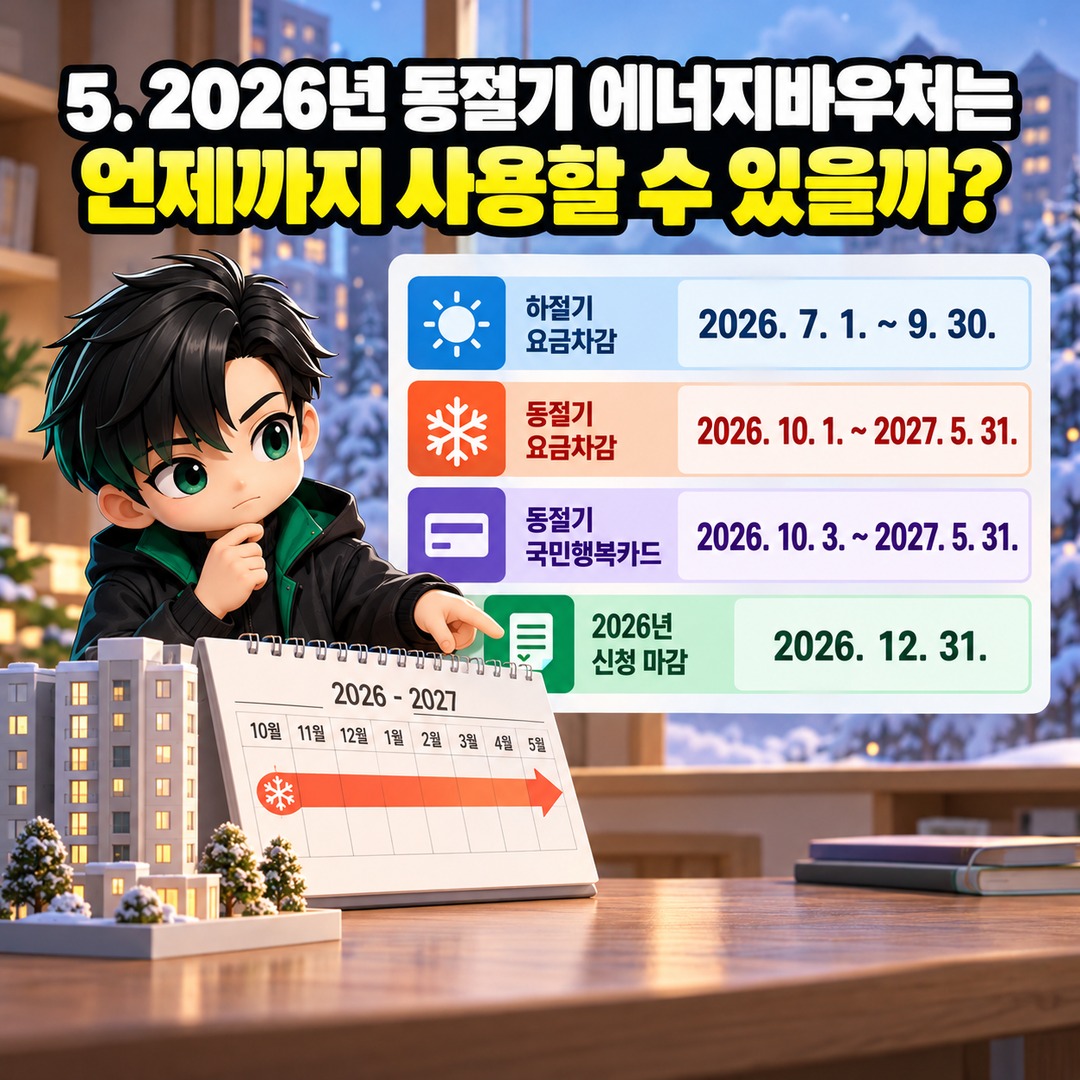
The Kookmin Haengbok Card (National Happiness Card) option can be used starting 2026-10-03.
| Category | Usage Period |
|---|---|
| Summer bill deductions | 2026.7.1.–9.30. |
| Winter bill deductions | 2026.10.1.–2027.5.31. |
| Winter National Happiness Card | 2026.10.3.–2027.5.31. |
| 2026 application deadline | 2026.12.31. |
An important distinction concerns how the bill deduction period is applied.
Winter bill deductions are available for statements issued and billed through 2027-05-31.
Residents therefore need to check not only when they used the heating but also when the corresponding bill was issued.
This is particularly important for apartment residents because the month in which maintenance charges are billed may differ from the month in which the energy was actually used. As the end of the usage period approaches, it is advisable to confirm the billing schedule with the apartment management office.
6. Documents Apartment Residents Need When Applying for an Energy Voucher
Apartment residents applying for Energy Voucher bill deductions should prepare a recent apartment maintenance statement.
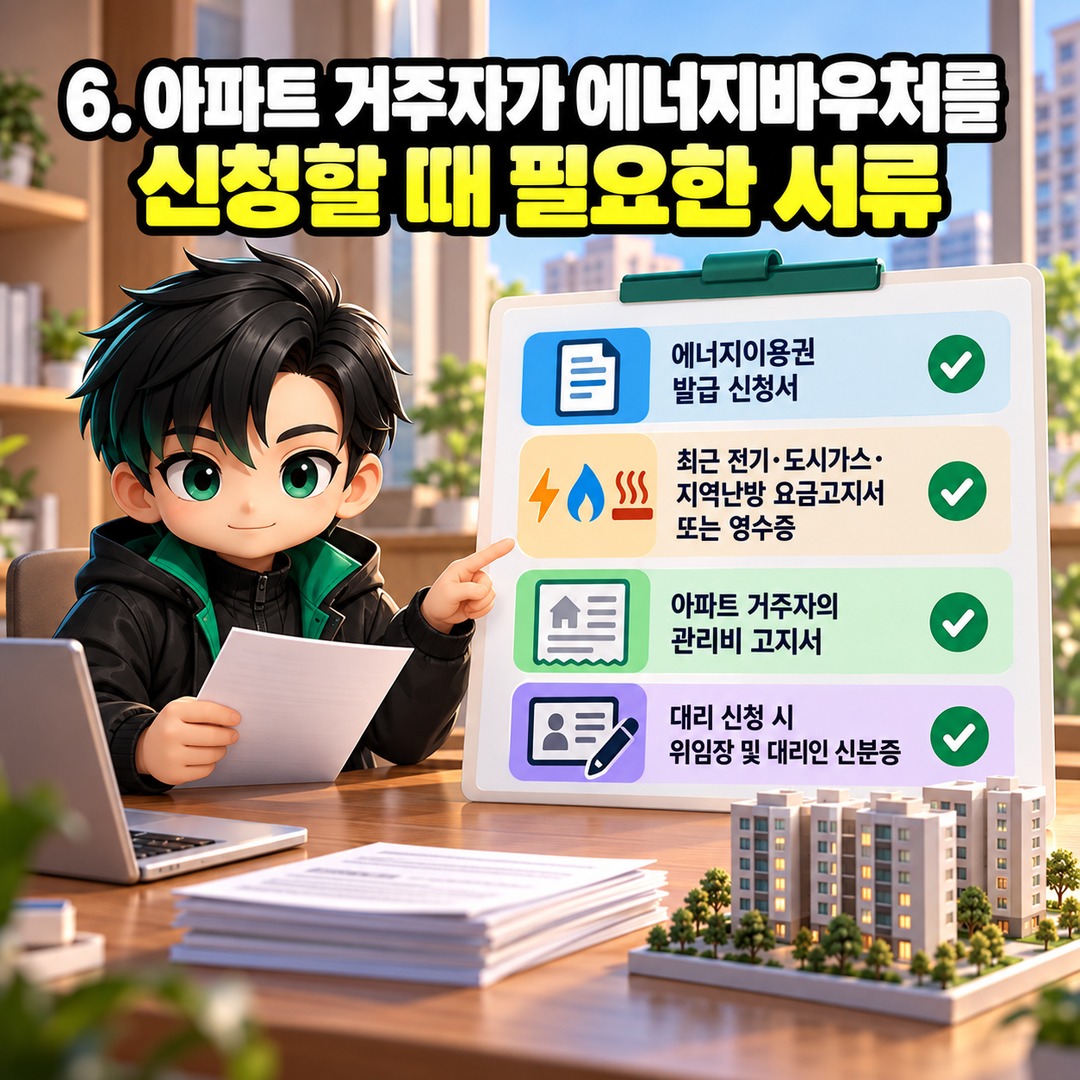
The basic documents listed in the official application guidance are as follows:
Application form for issuance of an Energy Use Voucher
Recent electricity, city gas, or district heating bill or receipt
Apartment maintenance statement for apartment residents
Letter of authorization and the representative's identification if applying through a representative
Applications can be submitted at the eup, myeon, or dong Administrative Welfare Center responsible for the applicant's registered residential address.
Online applications are available through Bokjiro, Korea's welfare services portal.
Anyone who has already applied for an Energy Voucher should first check the registered energy source and current deduction method before submitting another application.
7. Who Should You Contact If the Deduction Does Not Appear on Your Maintenance Bill?
If you have applied for an Energy Voucher but no deduction appears on your apartment maintenance statement, there are three places to contact, depending on the issue.
Apartment Management Office
The management office can explain how electricity or district heating charges are billed on the apartment maintenance statement.
Local Administrative Welfare Center
The center can confirm your Energy Voucher application and eligibility determination status, as well as the energy source registered for bill deductions.
Energy Voucher Integrated Support Center
The center can answer questions about using the Energy Voucher, remaining balances, and detailed usage records.
Energy Voucher Integrated Support Center: 1600-3190
Weekdays, 9 a.m. to 6 p.m., excluding the lunch break from 12 p.m. to 1 p.m.
For balance inquiries, consult the instructions provided through the official Energy Voucher balance inquiry service.
8. Frequently Asked Questions
Q. Can the Energy Voucher Still Be Applied If My Apartment Maintenance Fees Are Paid by Automatic Bank Transfer?
If the household is properly registered for bill deductions, the voucher may be deducted from the relevant energy charges regardless of whether the maintenance bill is paid automatically. However, residents should confirm that the supplier has processed the deduction and check the actual billing details.
Q. If Both Electricity and Heating Charges Appear on My Maintenance Statement, Will Both Be Discounted?
Under the winter bill deduction option, households must choose one of electricity, city gas, or district heating. The system does not automatically deduct both charges simultaneously.
Q. If My Remaining Energy Voucher Balance Exceeds My Maintenance Bill, Can I Receive the Difference in Cash?
The standard Energy Voucher is not a cash payment. It is a benefit used to reduce energy bills or purchase designated energy supplies. Remaining balances cannot be withdrawn as cash at the recipient's discretion. Separate exceptional payments are handled only under limited qualifying circumstances and specific procedures.
Q. Can I Receive Maintenance Bill Deductions If I Live in an Apartment Under a Jeonse or Monthly Rental Agreement?
Living in an apartment under a jeonse deposit-based lease or a monthly rental agreement does not, by itself, disqualify a household from receiving an Energy Voucher. Applicants must confirm that they meet the income and household-member eligibility requirements and can register the supplier information necessary for bill deductions.
What Apartment Residents Should Check First
For apartment residents using the 2026 Energy Voucher, the first priority is to check which energy source is actually registered for deductions and how the charges appear on the bill, rather than focusing on the total maintenance amount.
Residents of apartments with district heating, in particular, may assume that heating costs will automatically be deducted simply because they are included in the maintenance bill.
However, the registered energy source must match the supplier's billing information for the support to be applied correctly.
Prepare your apartment maintenance statement and check which of the three energy sources—electricity, city gas, or district heating—is registered for deductions.