

2025 Tax Year Employment and Child Tax Credits: If You Missed the May Application Period, You Can Apply Directly Until December 1
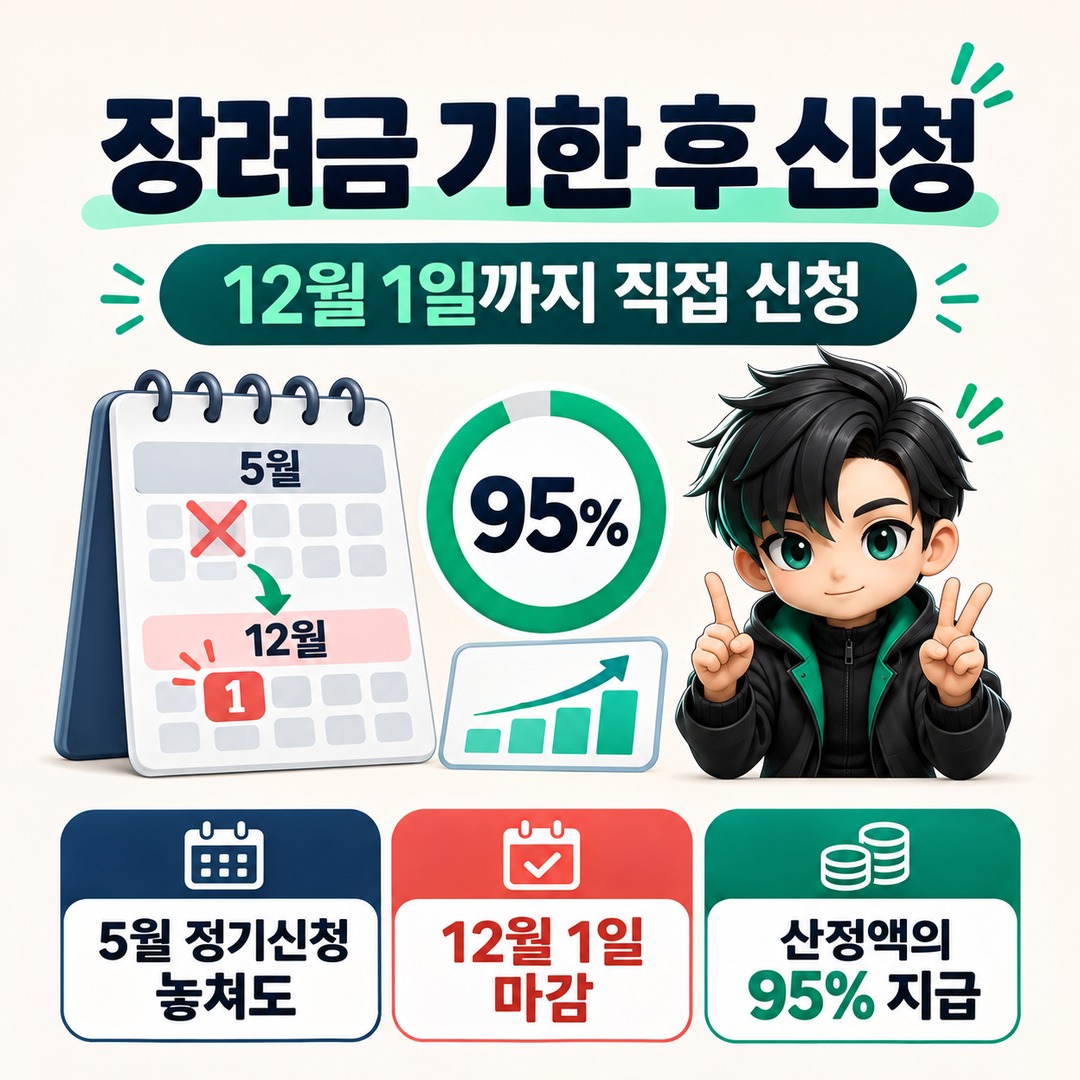
For tax year 2025, you can apply late for the employment and child tax credits until December 1, even if you missed the regular application period in May 2026. People who did not receive a notice from the National Tax Service can also apply directly through Hometax if they meet the eligibility requirements. However, late applicants receive only 95% of the calculated credit, so check the application process and income and asset requirements.
The National Tax Service said in its 2026-11-02 announcement that it would notify only 26 households that had not applied for the tax year 2025 credits about late applications.
The current reference date is 2026-11-16. The application deadline is December 1. After the deadline, late applications will no longer be accepted for this tax year 2025 credit.
Can you apply by December 1 even if you did not receive a notice? Yes. Receiving a notice and actually being eligible are separate matters.
In a press release announced on 2026-11-02, the National Tax Service said that people who did not receive a notice can still apply directly through Hometax on a PC or mobile device if they believe they meet the income and asset requirements.
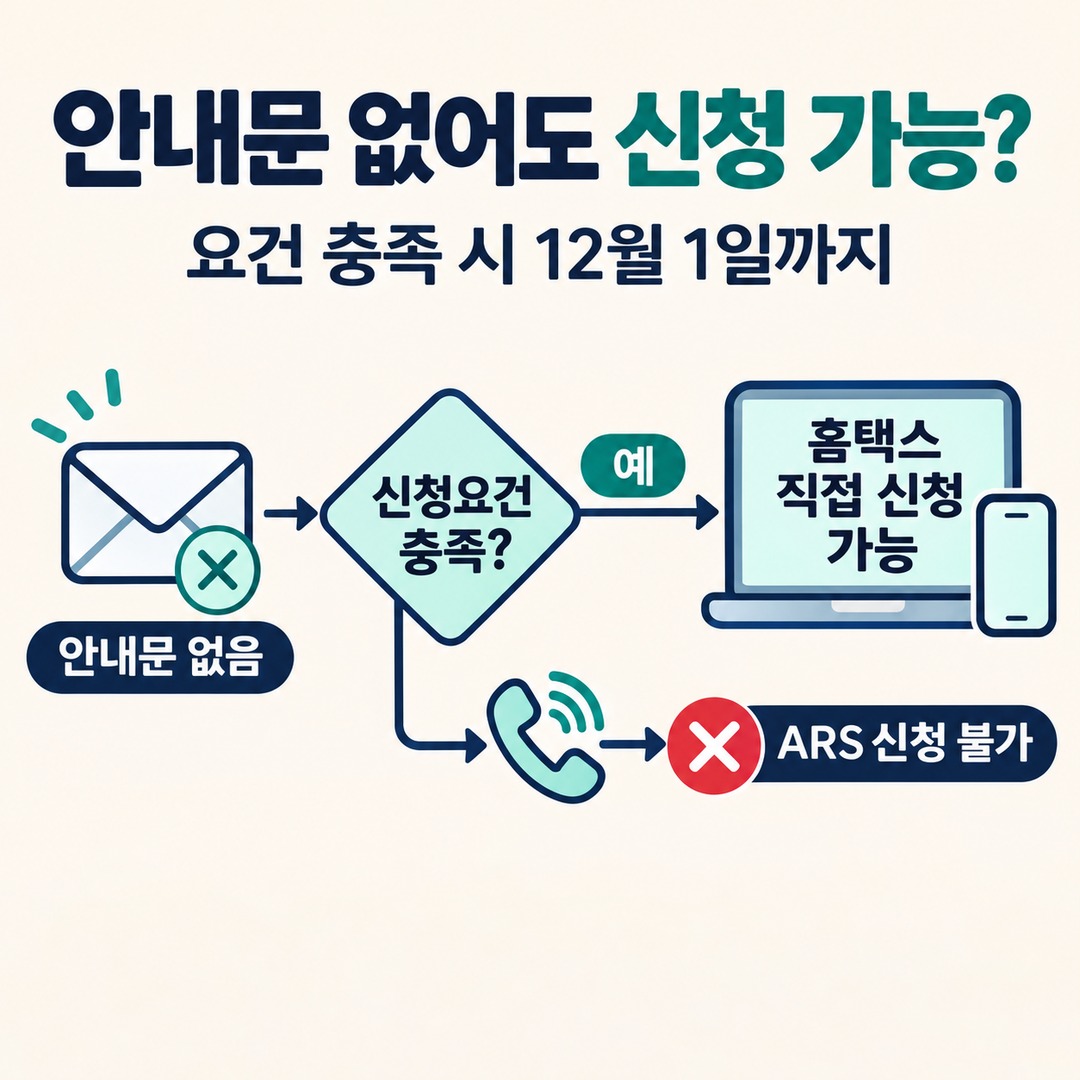
One difference is that people who are not among those notified of their eligibility cannot apply by phone through ARS.
| Category | Can you apply? | Method |
|---|---|---|
| Received a notice | Yes | Hometax, ARS, etc. |
| Did not receive a notice | Yes, if eligible | Apply directly through Hometax |
| Apply through ARS without a notice | No | Use Hometax |
So there is no need to give up applying just because a notice did not arrive by mail, KakaoTalk, or text message.
The National Tax Service’s 2026-11-02 late-application guide explains how people who did not receive a notice can apply directly.
How to apply directly through Hometax without a notice
If you did not receive a notice, log in to Hometax and apply directly from the tax credit application menu.
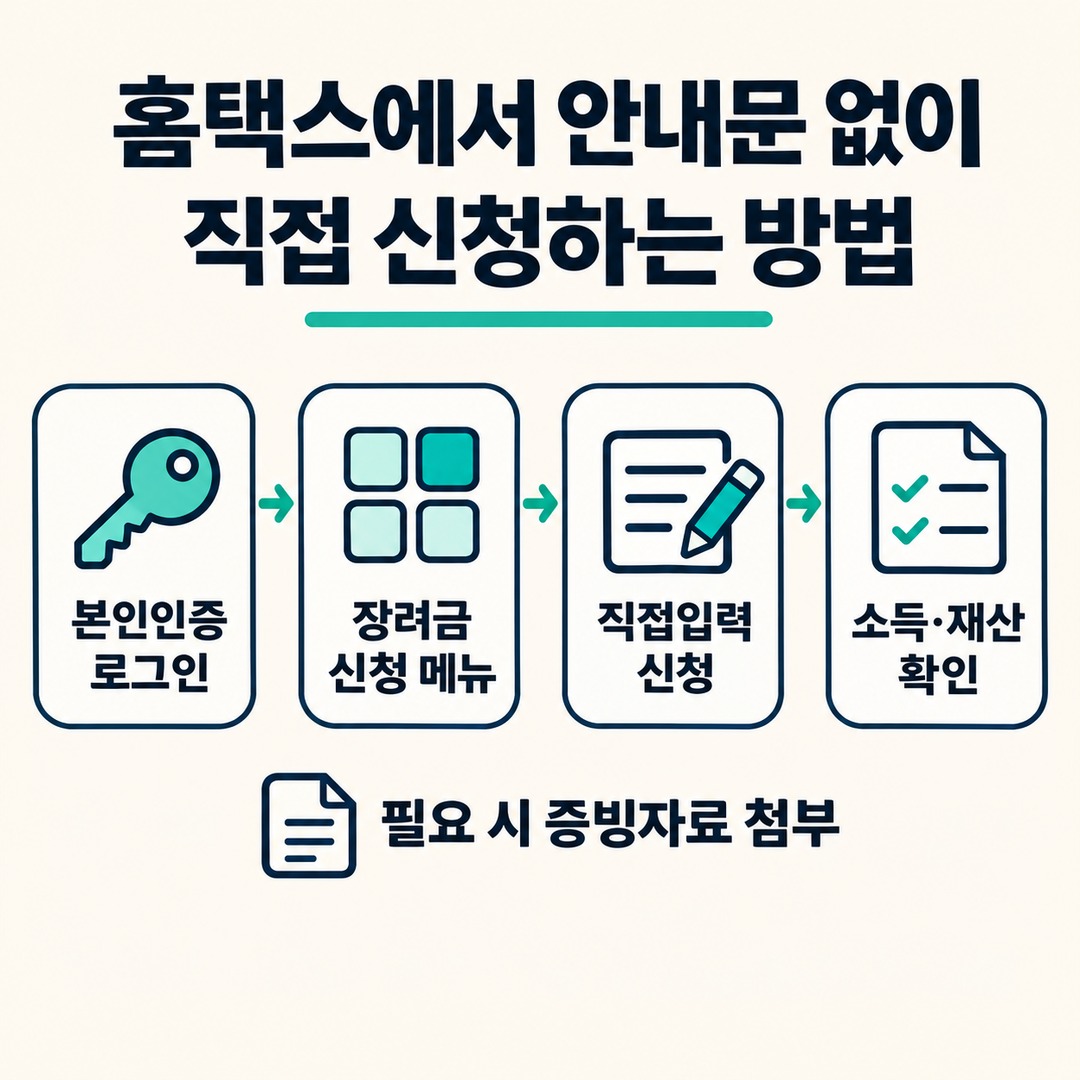
The National Tax Service lists the following application steps:
1. Visit the National Tax Service’s Hometax website.
2. Log in using a joint certificate, a financial certificate, or a simple authentication method.
3. Go to the tax credit menu.
4. Select the regular application for the employment and child tax credits.
5. Enter your application information in the direct-entry application menu.
6. Check your income and asset information, then enter your contact details and refund account.
7. If necessary, attach supporting documents such as an income verification certificate issued by your employer.
People who did not receive a notice apply directly after verifying their identity, rather than entering the individual authentication number shown on the notice.
You can also check in Hometax whether you are on the list of people eligible to receive a notice before applying.
If you have difficulty using a PC or mobile device, contact the tax credit consultation center at 1566-3636 for help applying. The National Tax Service says the center is open on weekdays from 9 a.m. to 6 p.m.
What is the income threshold for the 2025 employment tax credit?
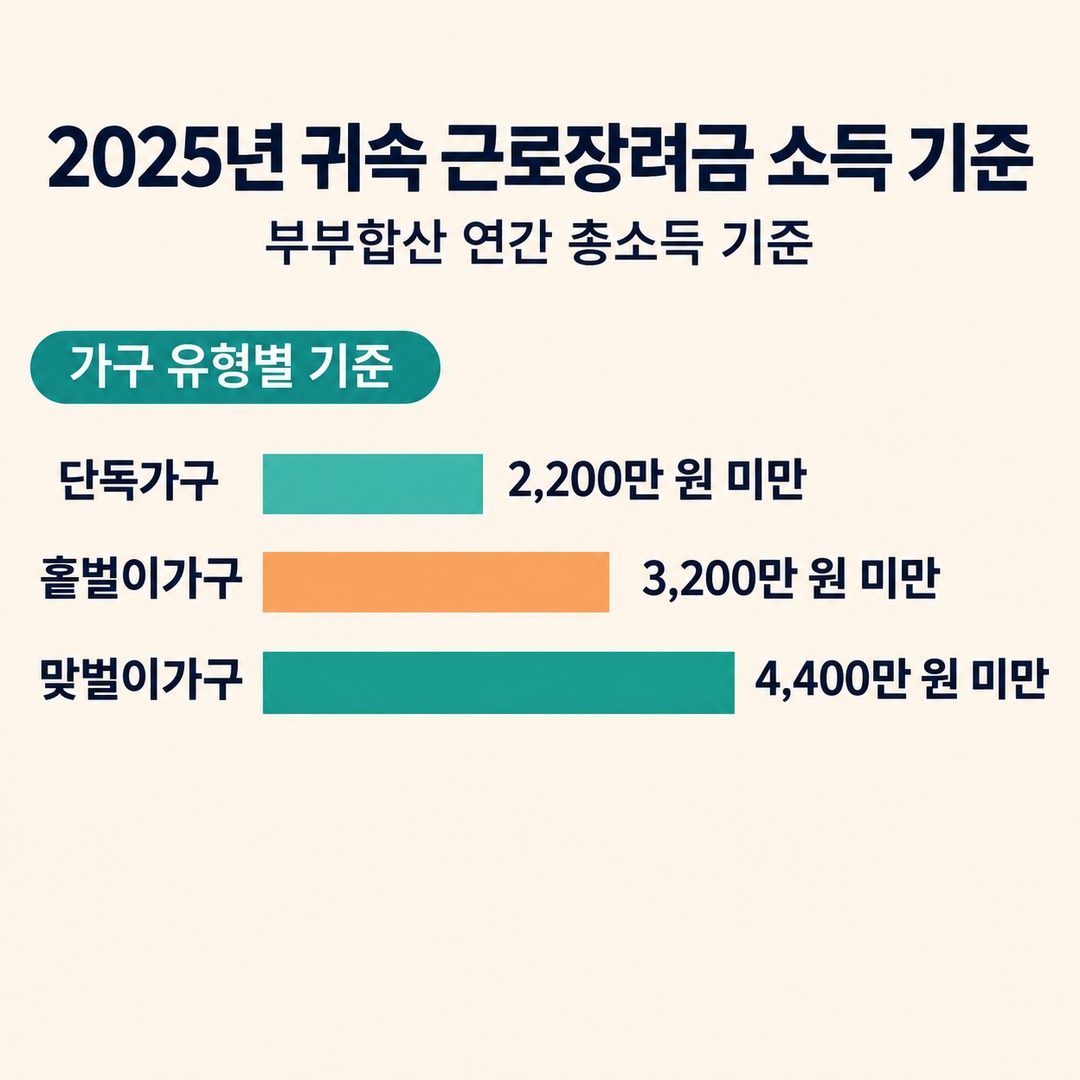
Eligibility for the employment tax credit is determined by household type, based on the couple’s combined annual income for 2025.
Income must be below KRW 22,000,000 for a single-person household, below KRW 32,000,000 for a single-earner household, and below KRW 44,000,000 for a dual-earner household.
| Household type | Combined couple income threshold for 2025 |
|---|---|
| Single-person household | Below KRW 22,000,000 |
| Single-earner household | Below KRW 32,000,000 |
| Dual-earner household | Below KRW 44,000,000 |
One key point is that the calculation considers more than just monthly pay or earned income.
Total income for the employment tax credit includes employment, business, and religious-person income, as well as interest, dividends, pensions, and other income.
For a dual-earner household, also check whether each spouse’s total wages and similar income are at least KRW 3,000,000 when determining the household type.
The child tax credit has a different income threshold
The child tax credit has a different income threshold from the employment tax credit.
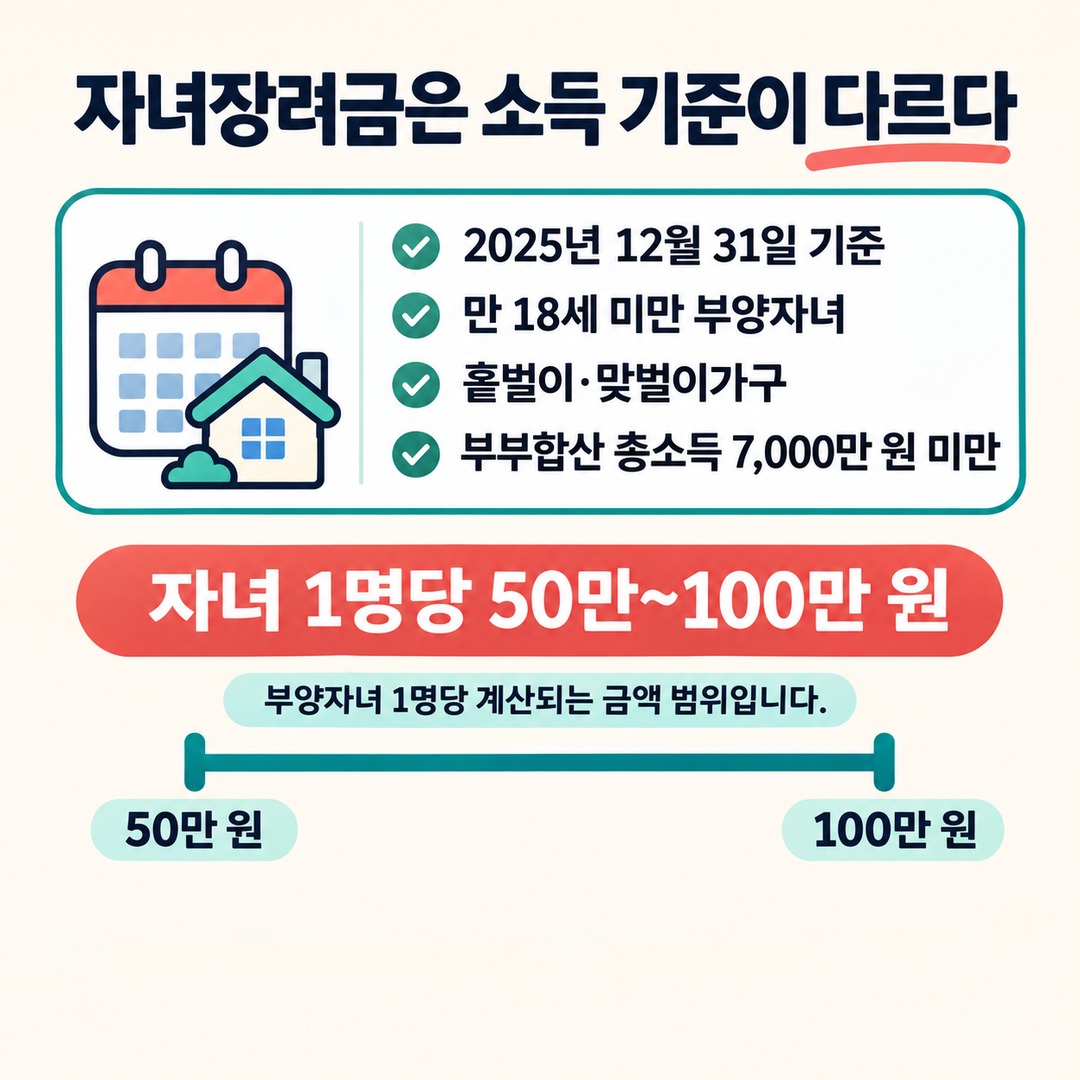
As of 2025-12-31, the household must be a single-earner or dual-earner household with a dependent child under 18 years of age, and the couple’s combined total income must be below KRW 70,000,000.
The child tax credit is calculated at a minimum of KRW 500,000 and a maximum of KRW 1,000,000 per 1 dependent child.
The employment and child tax credits have different eligibility requirements. Checking only the employment tax credit’s income threshold is not enough to determine whether you qualify for the child tax credit.
Both programs also have asset requirements.
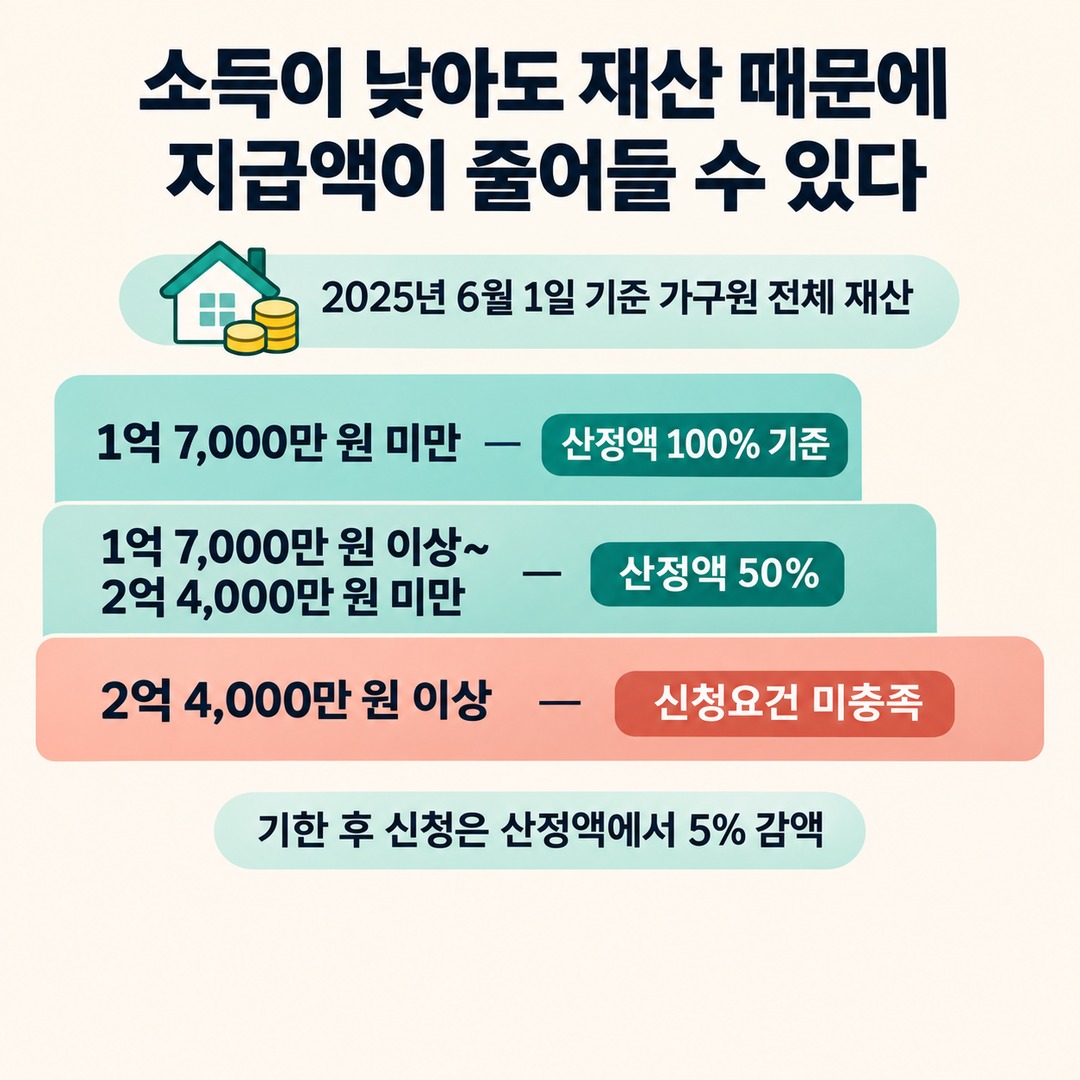
Your payment may be reduced because of your assets, even if your income is low
For employment and child tax credits for 2025, the total assets of all household members, as of 2025-06-01, must be below KRW 240,000,000.
Assets include housing, land, buildings, vehicles, rental deposits, bank deposits, stocks, and other items.
In particular, debt is not deducted from assets.
The payment amount also varies depending on the value of your assets.
| Total household assets | Payment standard |
|---|---|
| Below KRW 170,000,000 | 100% of the calculated amount |
| KRW 170,000,000 or more, but below KRW 240,000,000 | 50% of the calculated amount |
| KRW 240,000,000 or more | Does not meet the application requirements |
A 5% reduction for late applications also applies.
For example, if the calculated credit is KRW 1,000,000 and total assets are below KRW 170,000,000, the calculation is as follows:
Calculated credit: KRW 1,000,000
Late-application reduction: KRW 50,000
Final payment amount: KRW 950,000
This calculation was prepared by the author. The actual payment may vary depending on the income and asset review and applicable items such as the child tax credit.
When will payments be made for applications submitted by December 1?
In its 2026-11-02 announcement, the National Tax Service said that, after reviewing the income and assets for late applications, it plans to make payments by 2027-01-15.
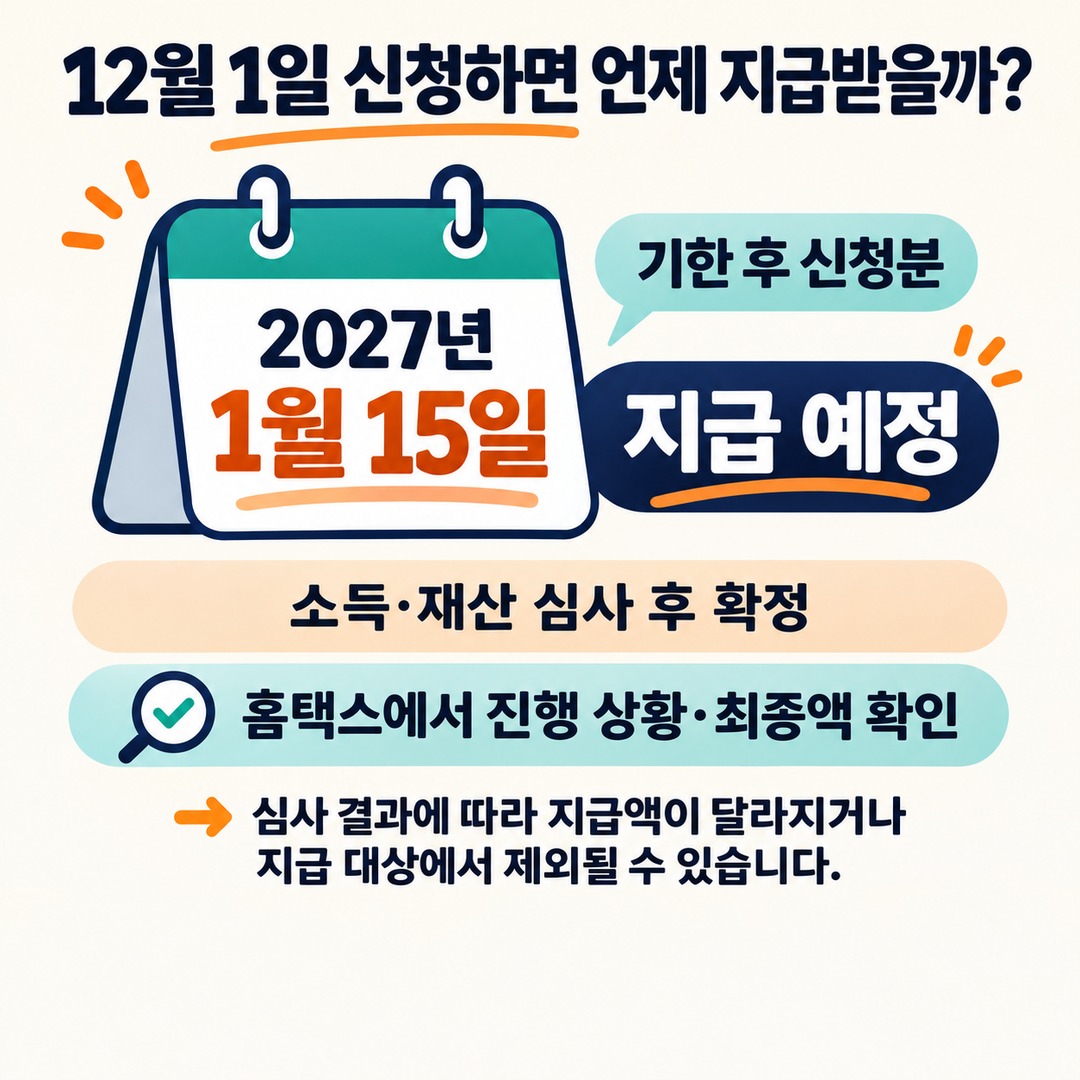
This is only a projected schedule. Applying does not guarantee that the estimated payment amount shown will be confirmed as is.
The payment amount may change, or the applicant may become ineligible for payment, depending on the review results, including the financial assets of all household members.
After submitting your application, check the review progress and final payment amount in Hometax.
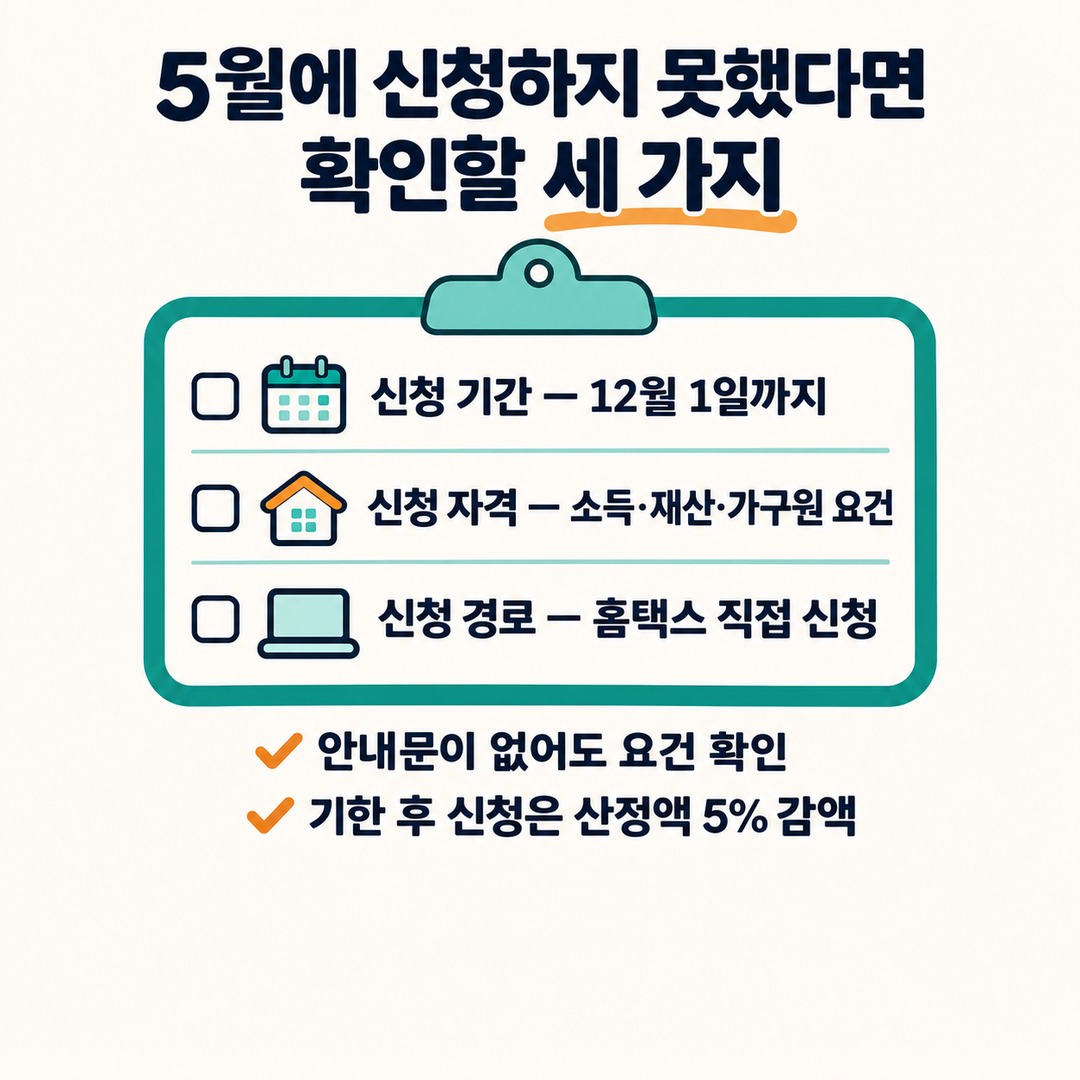
Three things to check if you missed the May application
If you missed the application for the 2025 employment or child tax credit, start by checking these three things:
1. Application period: Check whether you can still submit a late application through 2026-12-01.
2. Eligibility: Check your income for 2025, your assets as of 2025-06-01, and the household requirements.
3. How to apply: If you did not receive a notice, apply through the direct-entry option in Hometax.
In particular, do not put off applying simply because you did not receive a notice.
The National Tax Service said it is also advising households that were not included in the original May notice list to submit late applications, after additionally analyzing income data for 2025—including data submitted late by employers.
If you had employment, business, or religious-person income in 2025, it may be worth checking whether you qualify, even if you have since retired or earned only temporary income, such as from daily work.
In short, an application opportunity is still available even if you missed the May application or did not receive a notice. You can apply directly through Hometax by 2026-12-01, but remember that late applications are subject to a 5% reduction in the calculated amount.
※ This article is for informational purposes to help readers understand market trends and is not investment advice regarding any specific stock or asset. You are responsible for your own decisions and investments.