

Trump Pressures Fed to Cut Rates, but the Fed Is More Focused on 3.7% Inflation and the September Meeting
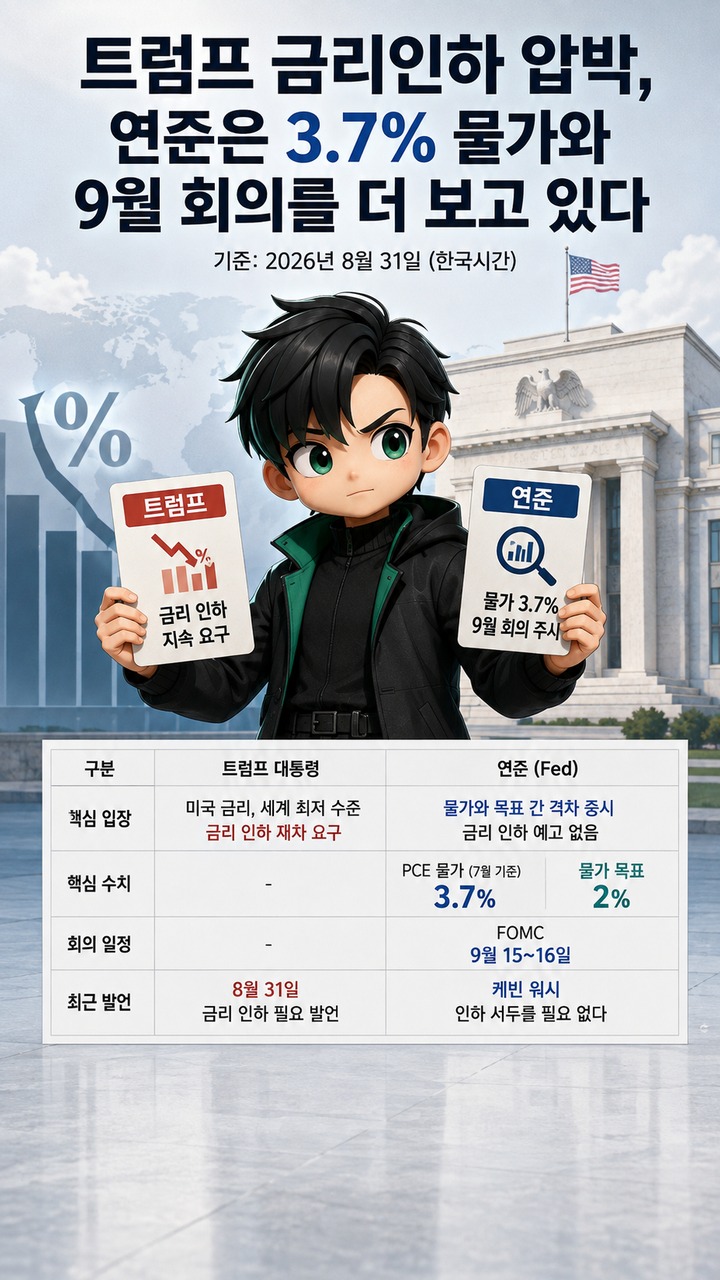
U.S. President Donald Trump renewed his call for interest rate cuts on August 31, arguing that U.S. interest rates should be the lowest in the world. However, the Federal Reserve is placing greater importance on the gap between PCE inflation, running at an annual 3.7% as of July, and its 2% inflation target. It has not signaled a rate cut ahead of the September 15–16 FOMC meeting.
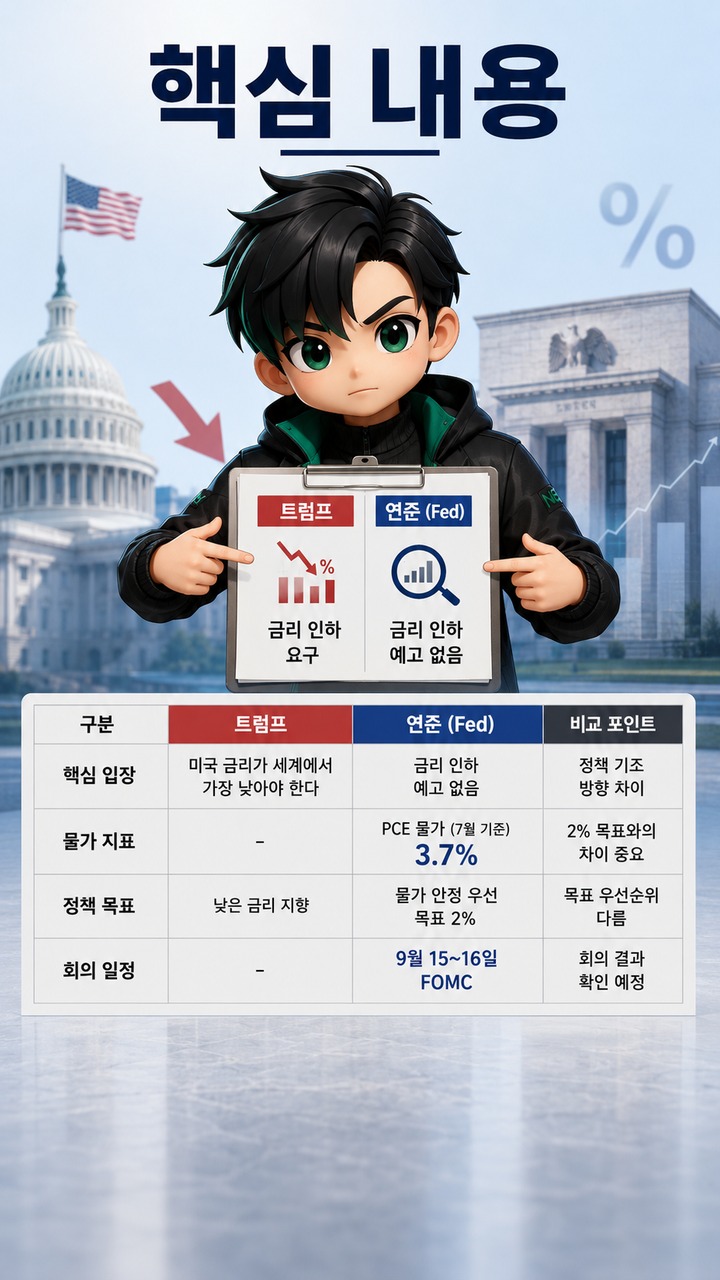
Instead, Fed Chair Kevin Warsh reaffirmed in his August 28 Jackson Hole speech that the inflation target remains fixed at 2% and that short-term interest rates are the primary instrument of monetary policy. This helps explain the considerable gap between Trump's demands for rate cuts and the Fed's actual policy assessment.
How Much Does Trump Want Interest Rates to Fall?
Speaking at the White House on August 31, President Trump said that although he respects Chair Warsh, he believes the United States should pay interest rates far lower than those of any other country. His remarks continue his longstanding demands for lower interest rates.

However, a president's demands do not automatically translate into changes in the benchmark interest rate. The U.S. benchmark rate is determined by the Federal Open Market Committee (FOMC), which maintained the federal funds rate target range at an annual 3.50–3.75% at its July 28–29 meeting.
The voting results also deserve attention. The decision to hold rates steady passed by 9 to 3, and the three dissenters did not favor cutting rates. Instead, they wanted to raise rates by 0.25% points.
In other words, judging solely from the July FOMC records, the debate within the committee was not about how quickly rates should be cut. The majority chose to hold rates steady, while some members wanted further increases.
This is why Trump's remarks should not be treated as equivalent to the FOMC's policy judgment.
Why the Fed Is Prioritizing Inflation Over Interest Rate Cuts
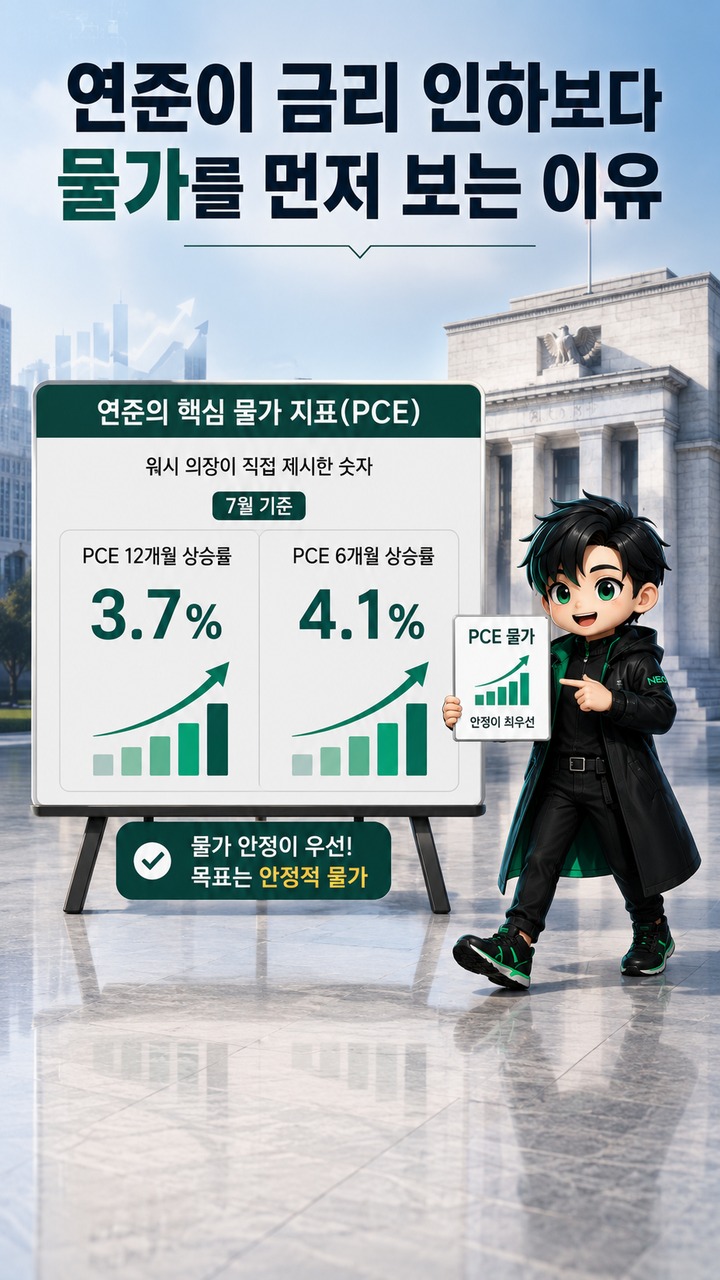
The figures Chair Warsh presented on August 28 were relatively clear. The 12-month increase in the Personal Consumption Expenditures (PCE) price index, the Fed's preferred inflation measure, stood at 3.7% as of July, while the 6-month increase was 4.1%.
The Fed's inflation target is 2%.
The July PCE inflation rate of 3.7% is 1.7% points above that target. According to the author's calculation, using the 2% target as the benchmark, the current 12-month inflation rate is approximately 85% higher than the target.
The calculation is as follows.
(3.7 - 2.0) ÷ 2.0 × 100 = 85%
This calculation does not mean that interest rates will necessarily rise. It does, however, help explain why Chair Warsh is placing inflation at the center of monetary policy.
Warsh stated that policymakers should not assume inflation will automatically return to 2% over time. He also assessed that it would be difficult to characterize broader financial conditions in the current U.S. economy as restrictive.
Nor did he base his labor market outlook on an assumption of imminent, sharp deterioration. Warsh cited an unemployment rate of 4.1% and assessed that the labor market was broadly consistent with full employment.
From the Fed's perspective, the case for examining persistently elevated inflation currently appears stronger than the case for rushing to cut interest rates.
The Current U.S. Benchmark Rate Is 3.50–3.75% and Was Held Steady at July
The federal funds rate target range established by the July FOMC is an annual 3.50–3.75%. This level has been in effect since July 30, and the next regularly scheduled meeting is set for September 15–16.
Importantly, the September decision has not yet been finalized.
Chair Warsh did not commit to a specific interest rate path at Jackson Hole. He explained that because the economic outlook itself is uncertain, policymakers must assess the latest developments collectively rather than relying on a single indicator or outdated data.
Therefore, simplifying the current situation to 'Trump has demanded rate cuts, so a cut at September has become more likely' would misrepresent the actual FOMC situation.
At the July meeting, three members instead called for a 0.25%-point rate increase. Chair Warsh's remarks in late August also emphasized the 2% inflation target and the responsibility to maintain price stability rather than signaling a rate cut.
Ultimately, economic data released before the September meeting will determine the direction of policy.
Why Have Markets Started Considering a September Rate Hike Instead?
During the Asian trading session on the morning of September 1, market movements also pointed in a direction different from Trump's demands for rate cuts. Following Warsh's Jackson Hole remarks, market participants were pricing in a greater likelihood of a Fed rate hike at September than before.
Futures market prices compiled on September 1 reflected an approximately 65% probability of a rate increase at September, up from 41% a week earlier. This was not an actual FOMC decision but a probability reflected in market participants' pricing at the time. It may continue to change as new economic data emerge and markets move.
Bond markets also showed yields rising rather than falling. During Asian trading on September 1, the yield on 10-year U.S. Treasury securities climbed to approximately 4.78%, reaching its highest level in about 20 months.
Meanwhile, renewed increases in international oil prices amid military tensions in the Middle East added to inflation concerns. Brent crude exceeded USD 91 per barrel that same day.
As a result, the central question for markets now is less about whether Trump wants rate cuts and more about how much inflation above 2% the Fed is willing to tolerate.
One of the most notable developments in this issue is that political demands on interest rates and actual rate expectations in bond and futures markets are pointing in different directions.
Why Isn't Warsh, Trump's Appointee, Cutting Rates Immediately?
Although Warsh was nominated as Fed chair by Trump, the role of Federal Reserve chair is not to carry out presidential instructions on interest rates.
The FOMC determines the benchmark interest rate through votes by multiple members. At the July meeting, Warsh himself voted to hold rates steady, and the final decision was 9 to 3.
Warsh also laid out his monetary policy principles relatively clearly in his Jackson Hole speech. He emphasized that the 2% PCE inflation target is fixed, that achieving price stability is the Fed's responsibility, and that under normal circumstances, short-term interest rates are the primary tool for achieving that objective.
This is why the fact that Trump appointed Warsh is not, by itself, a reliable basis for predicting future interest rate decisions.
As of August 31, Warsh had not finalized any specific September rate decision. Nor had Trump officially confirmed what decision Warsh would make.
Therefore, examining FOMC voting results alongside inflation and employment indicators provides a more direct basis for assessing the likely direction of interest rates than focusing solely on the relationship between the president and the Fed chair.
Three Things to Watch at the September FOMC Meeting
The first thing to watch ahead of the September 15–16 meeting is whether inflation is clearly declining toward the 2% target. Warsh has indicated that he will place greater emphasis on trends than on one or two recent data releases, making it difficult to assume that a single figure will determine the policy direction.
The second is the labor market. The 4.1% unemployment rate cited by Warsh and his assessment of labor market conditions do not assume a sharp deterioration in employment. What matters is whether subsequent employment data change that assessment.
The third is supply-side inflation pressure, including international oil prices. The July FOMC also explained that inflation remained above the 2% target because of supply shocks in certain sectors, including energy. With Brent crude again exceeding USD 91 on September 1, oil price movements are difficult to separate from the inflation outlook.
Changes in these three conditions could also alter the September interest rate decision. Conversely, there is currently no basis for treating Trump's demands for rate cuts alone as confirmation of what the FOMC will decide.
Why Trump's Pressure for Rate Cuts Matters to Korean Investors
U.S. benchmark interest rates are not a variable that affects only the United States. They can influence U.S. Treasury yields, the dollar, global bond markets, equities, cryptocurrencies, and the prices of various other assets.
However, making investment decisions immediately after Trump's remarks on the assumption that assets will benefit from rate cuts may not align with the circumstances currently confirmed. On September 1, markets were instead pricing in greater expectations of U.S. rate hikes, while yields on 10-year Treasury securities also rose.
In particular, short-term benchmark rates and long-term Treasury yields do not always move in the same direction. Even if the president calls for lower benchmark rates, long-term yields can rise if markets place greater weight on inflation risks or fiscal and geopolitical risks.
For this reason, it is important to distinguish three separate points in time rather than focusing on a single political statement: Trump's demand for rate cuts on August 31, Warsh's inflation-focused remarks on August 28, and the actual FOMC decision on September 15–16.
The situation confirmed so far is clear. Trump continues to demand interest rate cuts, but the Fed has not committed to cutting rates, and the benchmark rate remained at 3.50–3.75% as of July. The PCE inflation rate monitored by the Fed stands at 3.7%, above its 2% target, and the next policy assessment will take place at the September FOMC meeting.
In the meantime, the most important development will be how much inflation and employment data change Warsh's assessment, rather than how forcefully Trump demands lower rates.
※ This article is provided for informational purposes to help readers understand market developments and does not constitute an investment recommendation for any specific security or asset. Final investment decisions and responsibility rest with the individual investor.
Related Articles
Bitcoin Has 4.1% Left Until USD 80,000: Three Things to Watch After a 21.9% Rise on 7