

Winter Road Ice Response Begins November 15: Hazardous Areas to Check on Navigation Apps and Safe Driving Tips
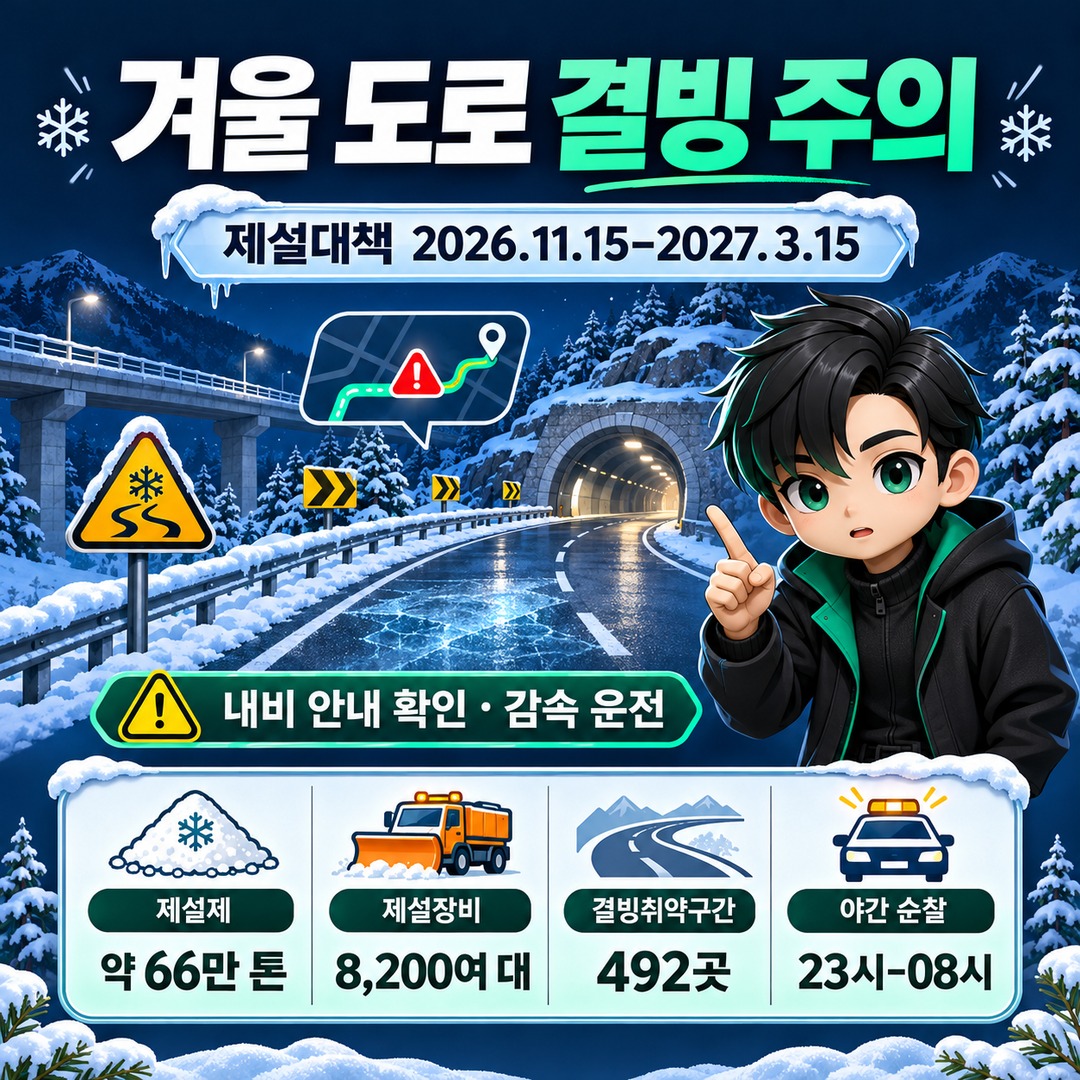
The winter road snow-removal period will run nationwide from 2026-11-15 to 2027-03-15. The Ministry of Land, Infrastructure and Transport has secured about 66 ten thousand tons of deicing materials and 8,200 or so pieces of snow-removal equipment, and will strengthen management of 492 ice-prone areas. Drivers should pay particular attention to alerts about potentially icy areas on Kakao Navi, TMAP, Naver Map, and other services, as well as to nighttime driving.
One point to watch in this plan is not just the number of snow-removal vehicles and equipment. It combines snow removal after snowfall with preventive measures for road black ice, which can be difficult to see.
How will the snow-removal plan operate from November 15 through next year’s March 15?
According to the Ministry of Land, Infrastructure and Transport’s announcement on 2026-11-10, the snow-removal period runs from 2026-11-15 to 2027-03-15. During this period, the ministry will operate its comprehensive snow-removal situation room for 24 hours and secure deicing materials, equipment, and personnel to respond to heavy snow and icy roads.
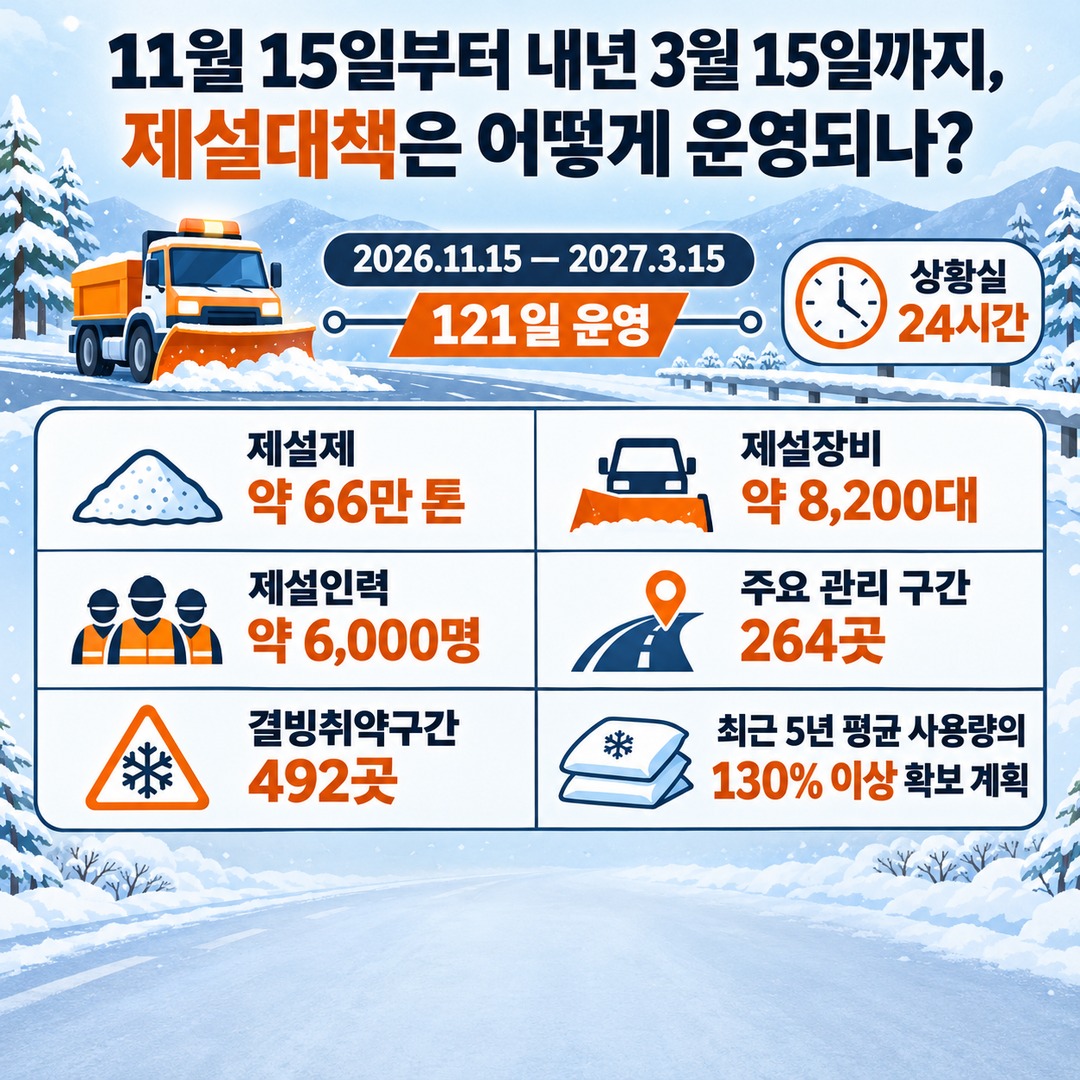
The main resources secured under the newly announced plan are as follows.
| Category | Resources secured or areas managed |
|---|---|
| Deicing materials | About 66 ten thousand tons |
| Snow-removal equipment | About 8,200 units |
| Snow-removal personnel | About 6,000 people |
| Key snow-removal management areas | 264 areas |
| Ice-prone areas | 492 areas |
The deicing materials include calcium chloride and salt. The plan is to secure at least 130% of the average amount used over the past 5 years.
Author’s calculation: Counting both the start and end dates, the period from 2026-11-15 to 2027-03-15 is 121 days.
In other words, winter road safety management is not limited to days when heavy snow occurs; it is set up to operate for about 4 months.
Details announced by the Ministry of Land, Infrastructure and Transport are available in its 2026-11-10 winter road snow-removal plan press release.
What is the difference between 264 areas and 492 areas?
Two figures in this announcement are easy to confuse: 264 areas and 492 areas. They do not refer to the same type of area under management.
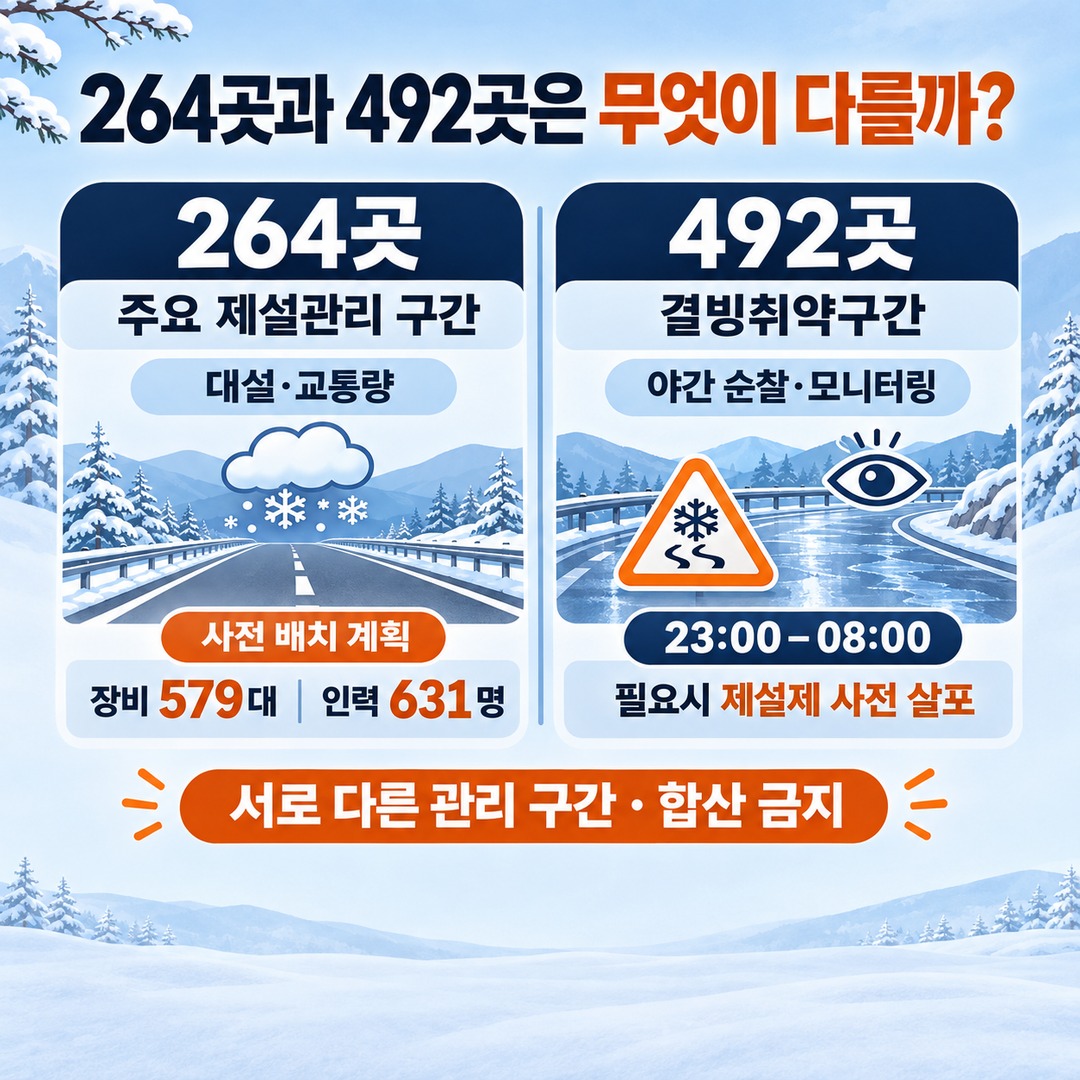
The 264 areas are key sections of expressways and national highways where heavy snow occurs frequently or traffic volumes are high.
Snow-removal equipment totaling 579 units and 631 personnel are to be deployed in advance there, in line with the Korea Meteorological Administration’s rain and snow forecasts.
By contrast, the 492 areas are sections at high risk of road icing. Safety facilities such as brine-spraying systems will be expanded there, and nighttime patrols and monitoring will be strengthened.
Because the two figures have different management purposes and classification criteria, they should not simply be added together to calculate the total number of hazardous road sections.
Management is strengthened in ice-prone areas especially during the following time periods.
Enhanced monitoring hours: from 11 p.m. to 8 a.m. the following day
Main management activities: road patrols and monitoring
Preventive measure: apply deicing materials in advance when needed
Drivers should pay attention not only to whether snow-removal work is underway, but also to advance alerts about areas at high risk of icing.
Can you check for potentially icy areas on Kakao Navi and TMAP?
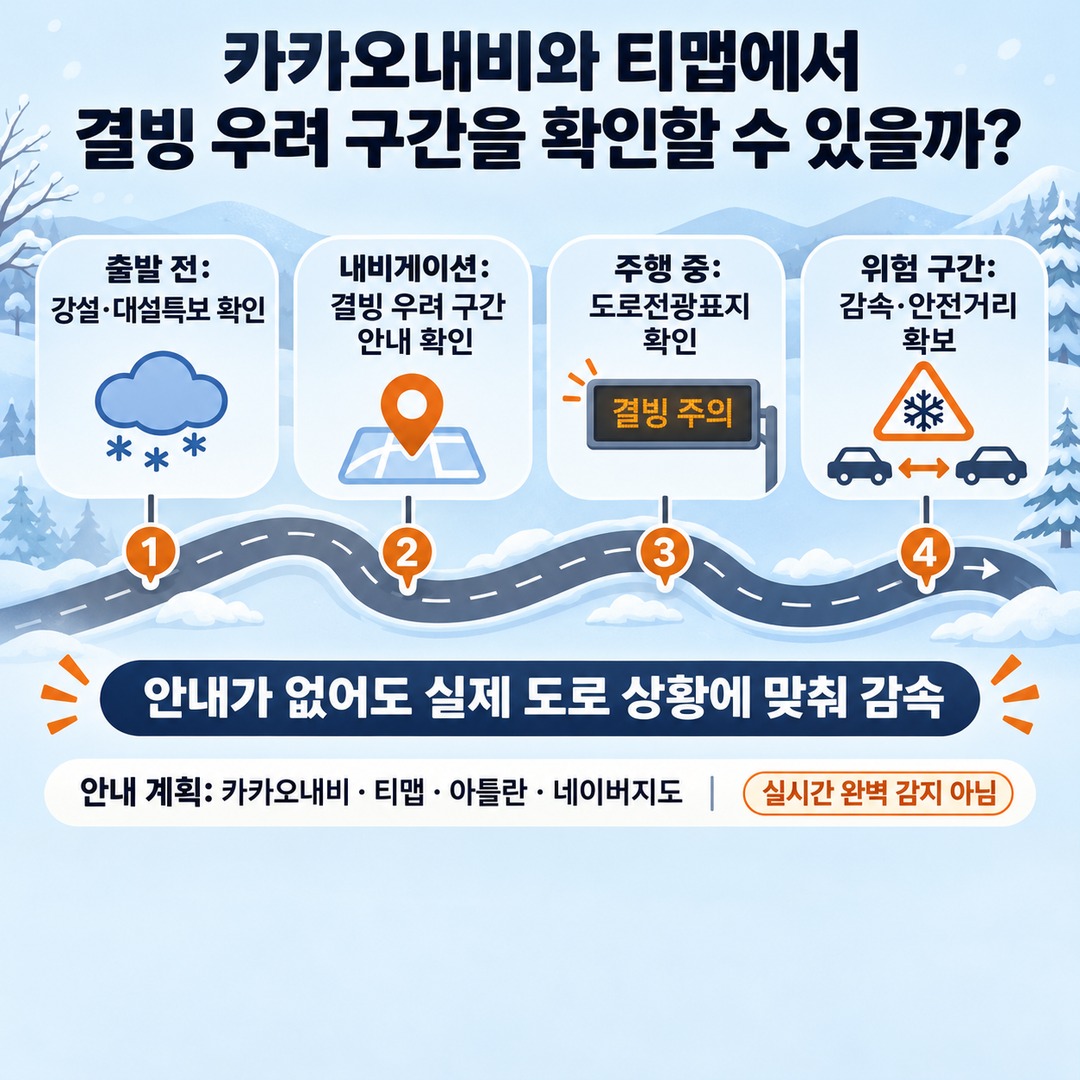
The Ministry of Land, Infrastructure and Transport announced plans to provide alerts about potentially icy areas through navigation service providers during the winter snow-removal period.
The following 4 companies are included:
Kakao Navi
TMAP
ATLAN
Naver Map
Variable message signs (VMS) will also provide information on weather conditions, falling temperatures, road conditions, and the deployment of snow-removal vehicles.
However, this does not mean that icy conditions on every road can be detected perfectly in real time.
So even if your navigation app does not alert you to a hazardous section, slow down and leave a safe following distance in response to actual road conditions.
Before driving, it is a good idea to check the following:
1. Before setting out, check the Korea Meteorological Administration’s snowfall forecasts and heavy snow advisories.
2. Check your navigation app for alerts about potentially icy areas.
3. While driving, check weather and road updates on variable message signs.
4. Slow down in areas at risk of icing, whether or not an alert is displayed.
Road heating systems at 32 locations and brine-spraying systems at 89 locations will also be expanded
In addition to applying deicing materials, the plan includes expanding infrastructure that helps roads themselves withstand icy conditions.
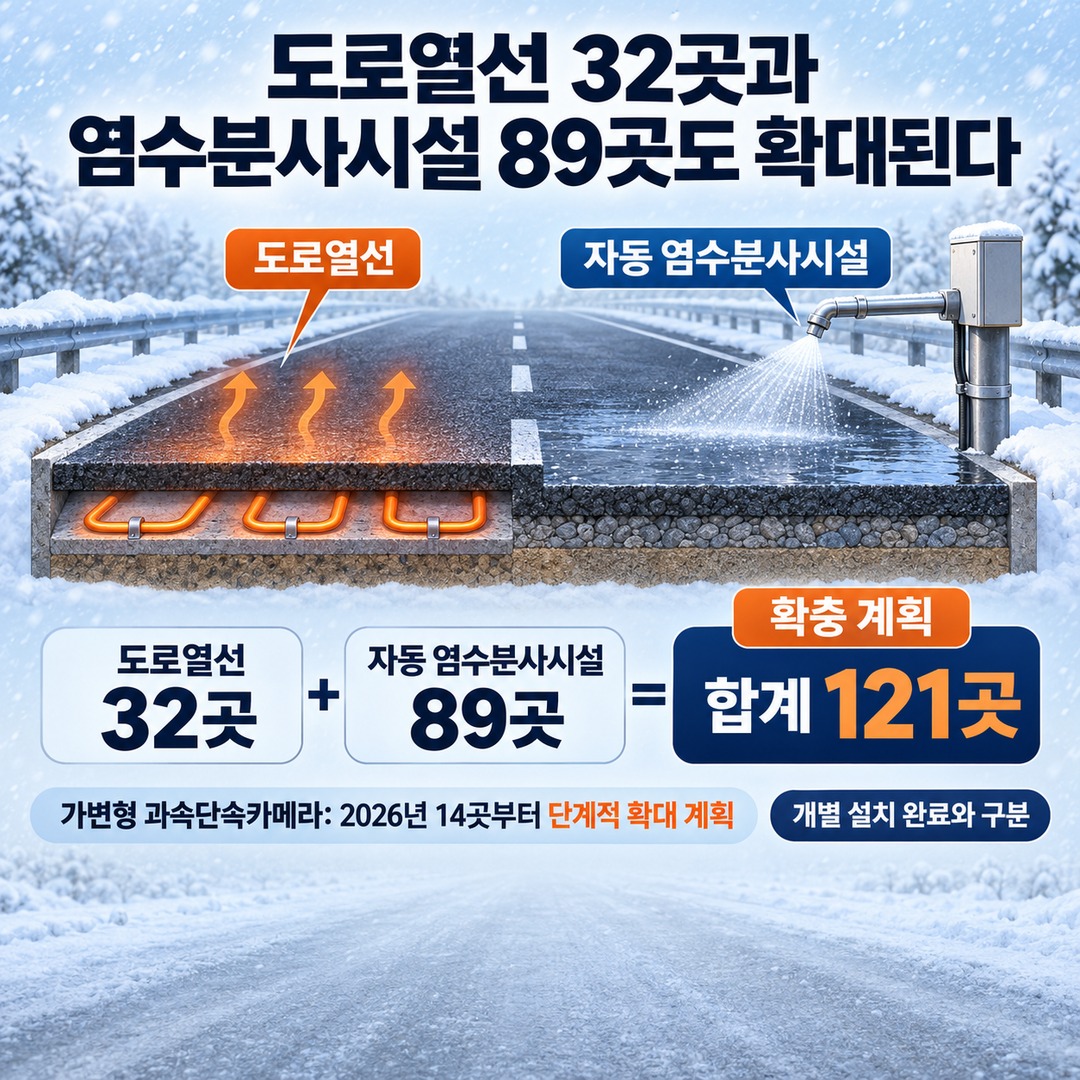
The Ministry of Land, Infrastructure and Transport said it would expand the following facilities at 121 ice-prone locations.
| Facility | Installation locations |
|---|---|
| Road heating systems | 32 locations |
| Automatic brine-spraying systems | 89 locations |
| Total | 121 locations |
Road heating systems warm the road surface, while automatic brine-spraying systems spray brine onto the road.
Although the two facilities work differently, both are designed to help prevent road icing.
Variable speed enforcement cameras, which are intended to encourage drivers to slow down, are also scheduled for phased expansion, starting in 2026 at 14 locations.
It is important to distinguish plans to expand these facilities from completed installations. The announcement sets out a plan to expand them by November, before heavy snowfall begins in earnest; it should not be taken to mean that installation has been confirmed at every individual location.
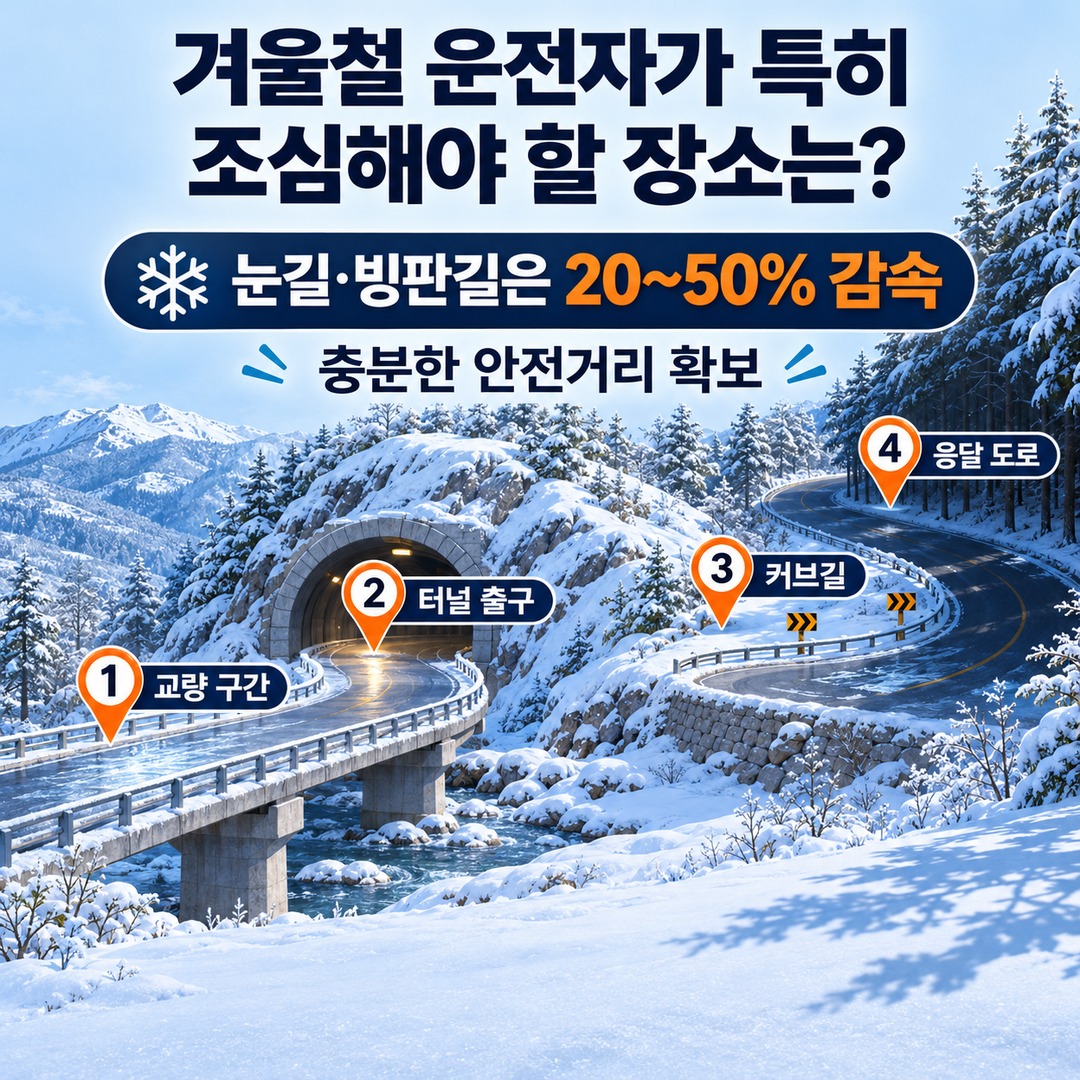
Which places require extra caution from drivers in winter?
The winter safe-driving guidance issued by the Ministry of Land, Infrastructure and Transport includes precautions for specific road settings.
Drivers should slow down especially in the following locations:
Bridges
Tunnel exits
Curves
Roads with shaded areas
When passing through these areas, watch the road surface and leave a much larger following distance than usual.
The Ministry of Land, Infrastructure and Transport advises drivers to leave plenty of following distance when entering snowy or icy roads and to reduce speed by 20~50% compared with usual.
When snowfall or a heavy snow advisory is announced, the ministry advises people to use public transportation whenever possible.
If you need to drive, it is a good idea to check the following before setting out:
Tire wear and whether winter tires are needed
Engine coolant condition
Whether the battery has any issues
Whether winter supplies such as snow chains are on board
Emergency supplies such as a folding shovel, flashlight, and blanket
When snow-removal vehicles are working, keep a safe distance from them and do not attempt to pass recklessly.
What to watch for next in this winter’s road safety plan
2026-11-15 marks the start of the snow-removal period. After that, actual snowfall conditions, management of ice-prone areas, and the operation of snow-removal facilities will be important things to monitor.
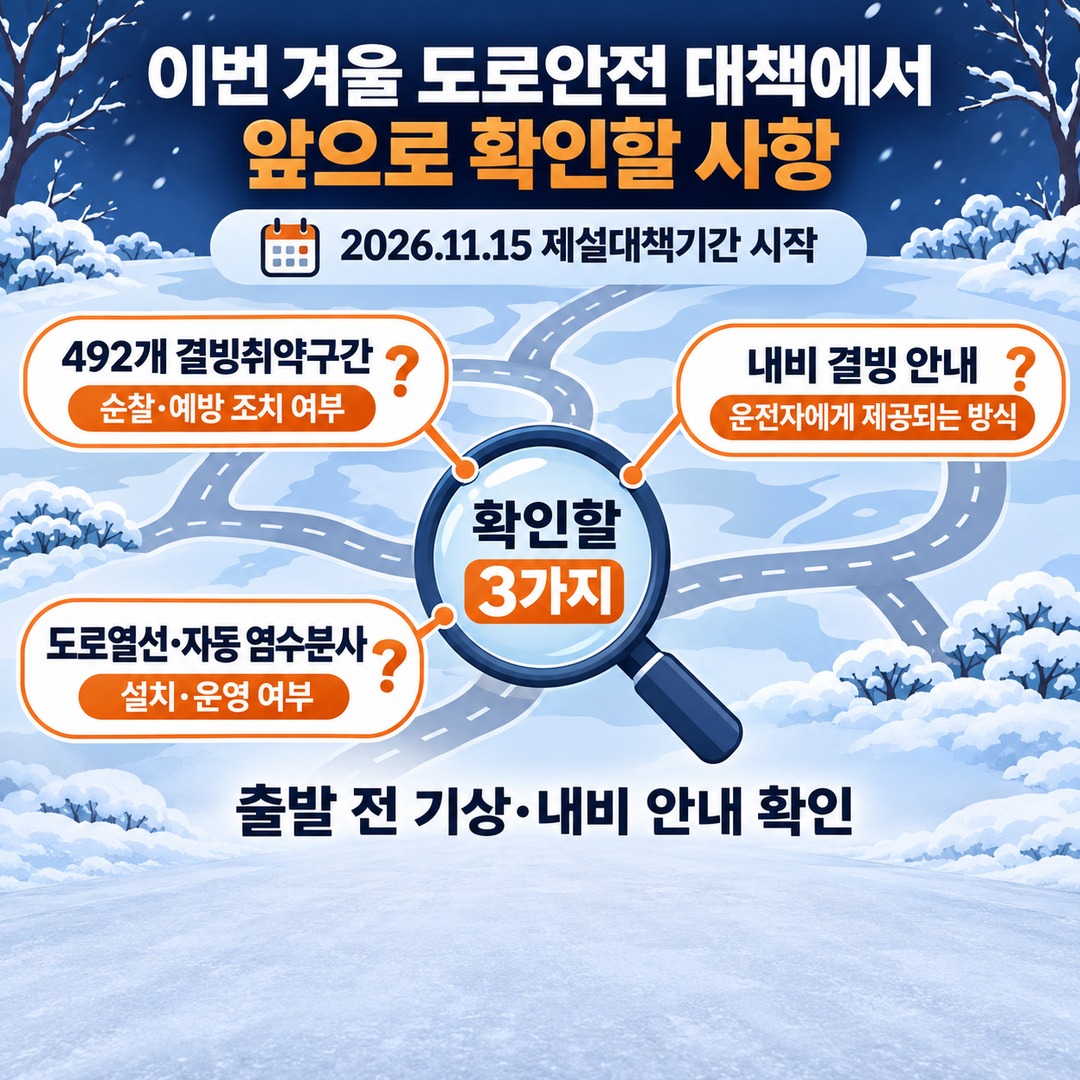
In particular, it is useful to keep an eye on these three separate points.
First, whether focused management of 492 ice-prone areas leads to actual road patrols and preventive measures.
Second, how alerts about potentially icy areas are provided to drivers through Kakao Navi, TMAP, ATLAN, and Naver Map.
Third, whether plans to expand road heating systems and automatic brine-spraying facilities lead to actual installation and operation.
Winter road safety is difficult to judge by the amount of deicing materials secured or the number of vehicles and equipment alone. It is also important for drivers to identify hazardous areas in advance and adjust their driving to actual road conditions.
If you are planning a long drive this winter, check the weather and navigation alerts about potentially icy areas before setting out.