

DR Congo Ebola Death Toll Reaches 2011, Nearly Doubling to 2 Thousand in 19 Days
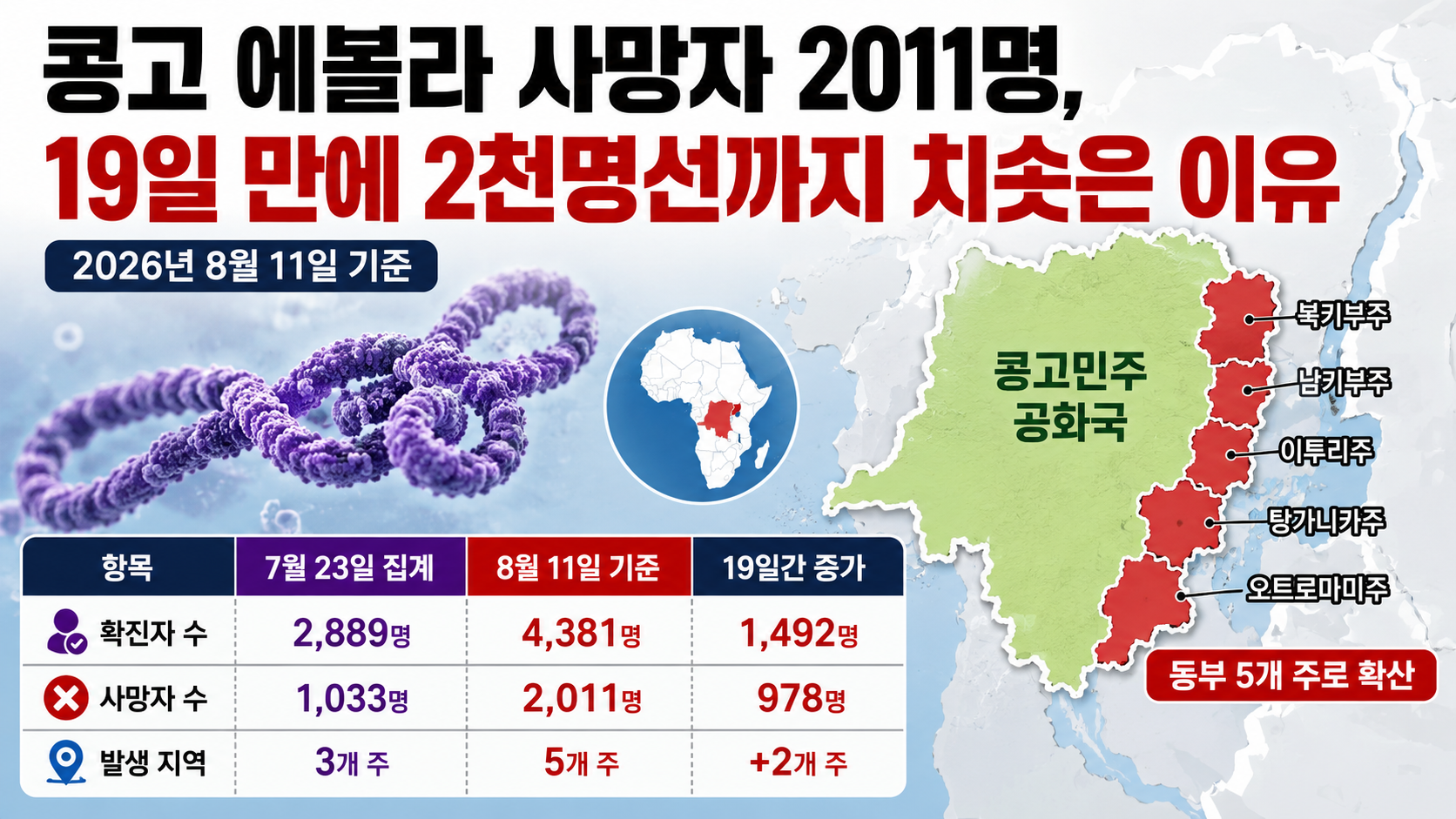
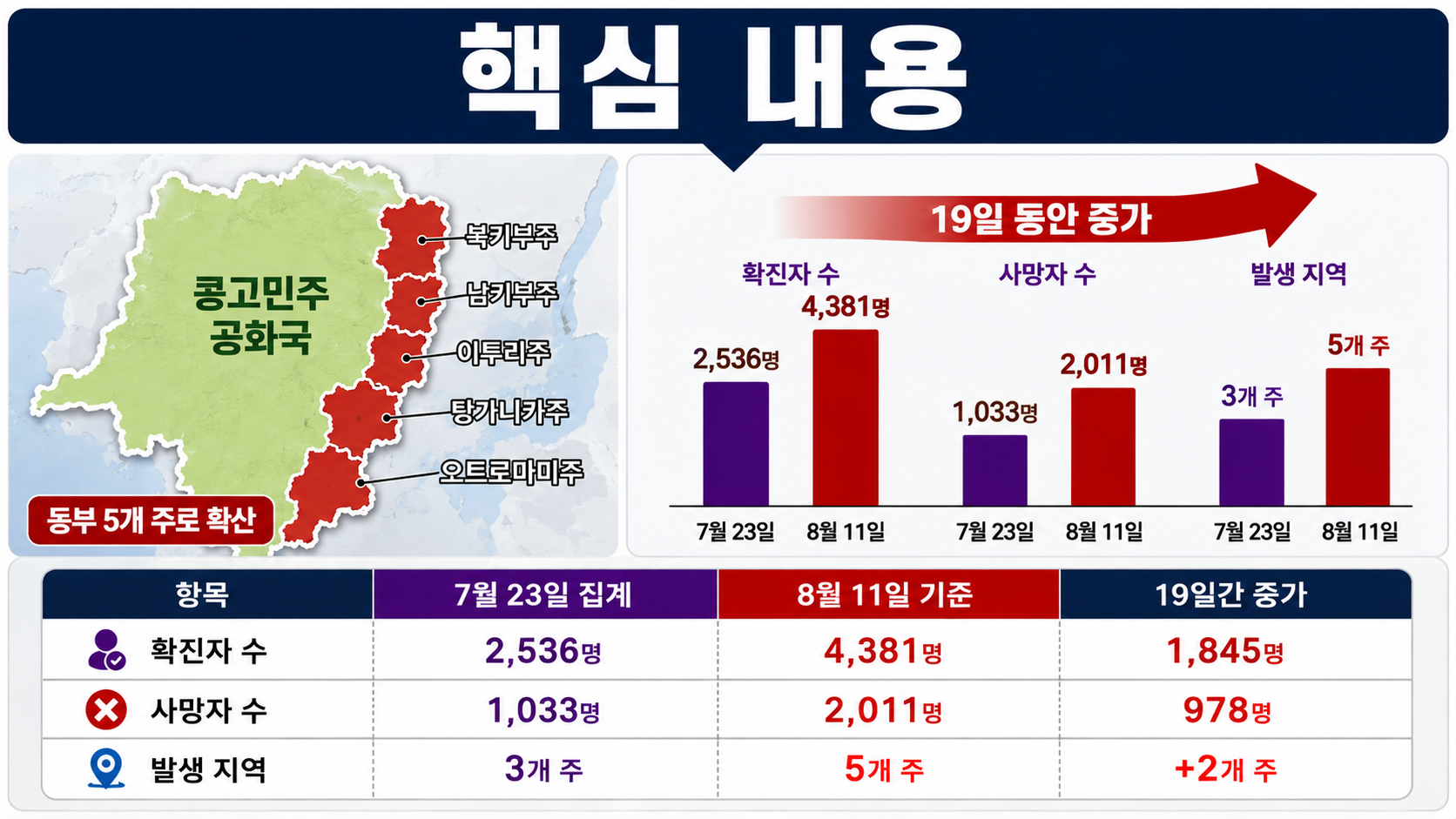
As of 2026-08-11, the current Ebola outbreak in the Democratic Republic of the Congo had reached 4,381 confirmed cases and 2,011 deaths. Compared with figures released on July 23, deaths increased by 978 over 19 days, nearly doubling, while the outbreak spread to 5 provinces in eastern DR Congo.
The outbreak is considered particularly dangerous not simply because the cumulative death toll has exceeded 2 thousand. Several factors have converged: the virus responsible is Bundibugyo virus, there is still no approved vaccine specifically targeting it or specific treatment, and community transmission is accelerating faster than health authorities can identify patients.
What Does '1 Thousand Additional Deaths in 19 Days' Actually Mean?
Figures released by DR Congo on July 23 showed 2,536 confirmed cases and 1,033 deaths. By August 11, those figures had risen to 4,381 confirmed cases and 2,011 deaths.
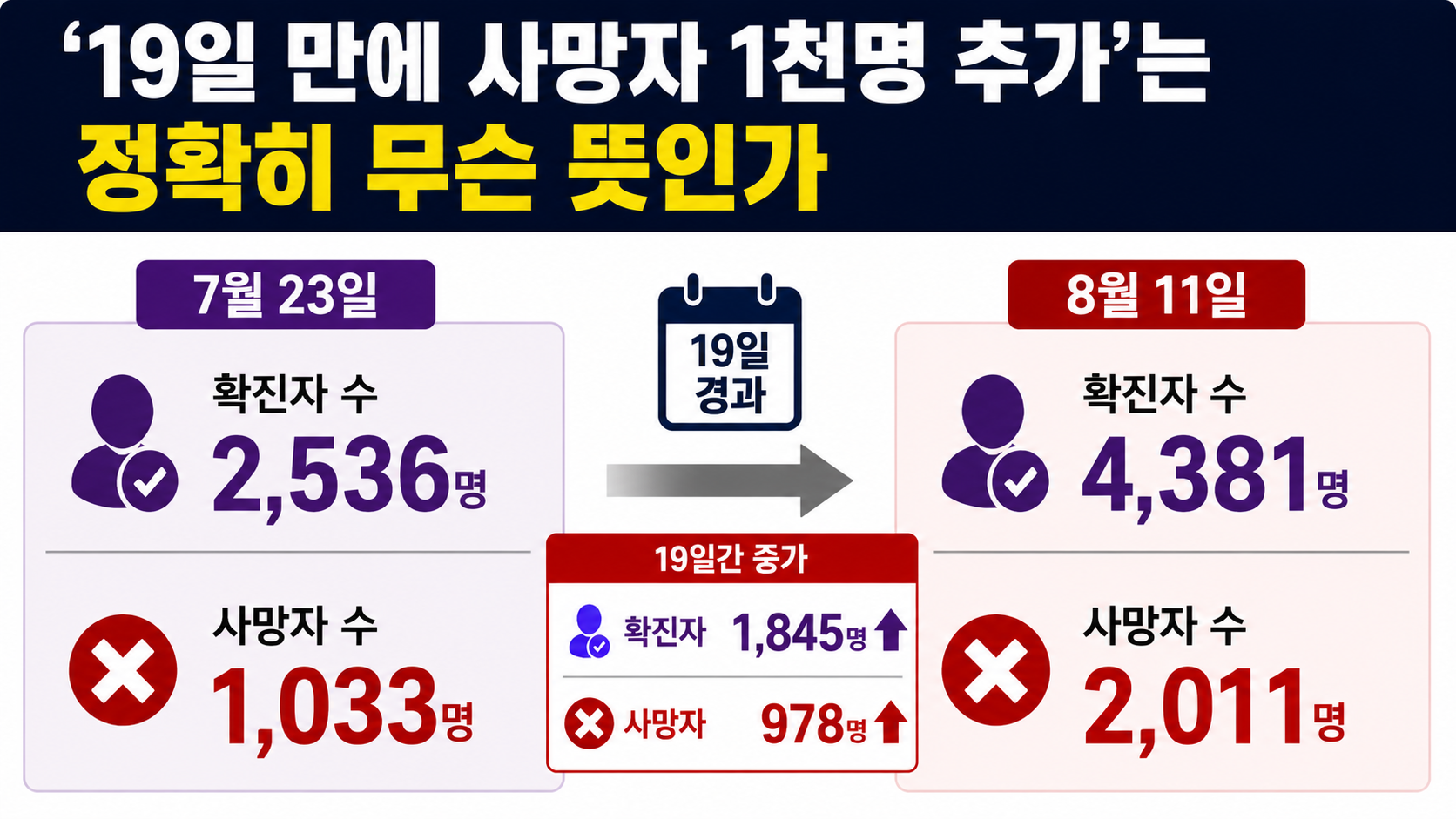
Comparing the two sets of figures directly, deaths increased by 978, from 1,033 to 2,011. That represents an increase of approximately 94.7%. Rather than saying exactly 1 thousand additional people died, it is more numerically accurate to say that the death toll rose from around 1 thousand to around 2 thousand in approximately 19 days.
Confirmed cases are also rising rapidly.
The number of confirmed cases increased from 2,536 on July 23 to 4,381 on August 11, an increase of 1,845 cases. According to the author's calculation, this represents an increase of approximately 72.8%.
An even more striking development is the change in the case fatality ratio. A simple calculation using the July 23 figures puts deaths as a proportion of confirmed cases at approximately 40.7%. By August 11, dividing 2,011 deaths by 4,381 confirmed cases produces a figure of approximately 45.9%. In other words, the crude case fatality ratio based on confirmed cases rose by approximately 5.2% percentage points in about 19 days. The latest reported figures also indicate a level of around 45.9%.
However, this ratio should not be interpreted directly as an infected individual's probability of dying. Some infections may remain undetected, while newly confirmed patients are included in cumulative case totals even before their treatment outcomes are known.
Why Is This Ebola Outbreak in DR Congo Spreading So Much Faster Than Before?
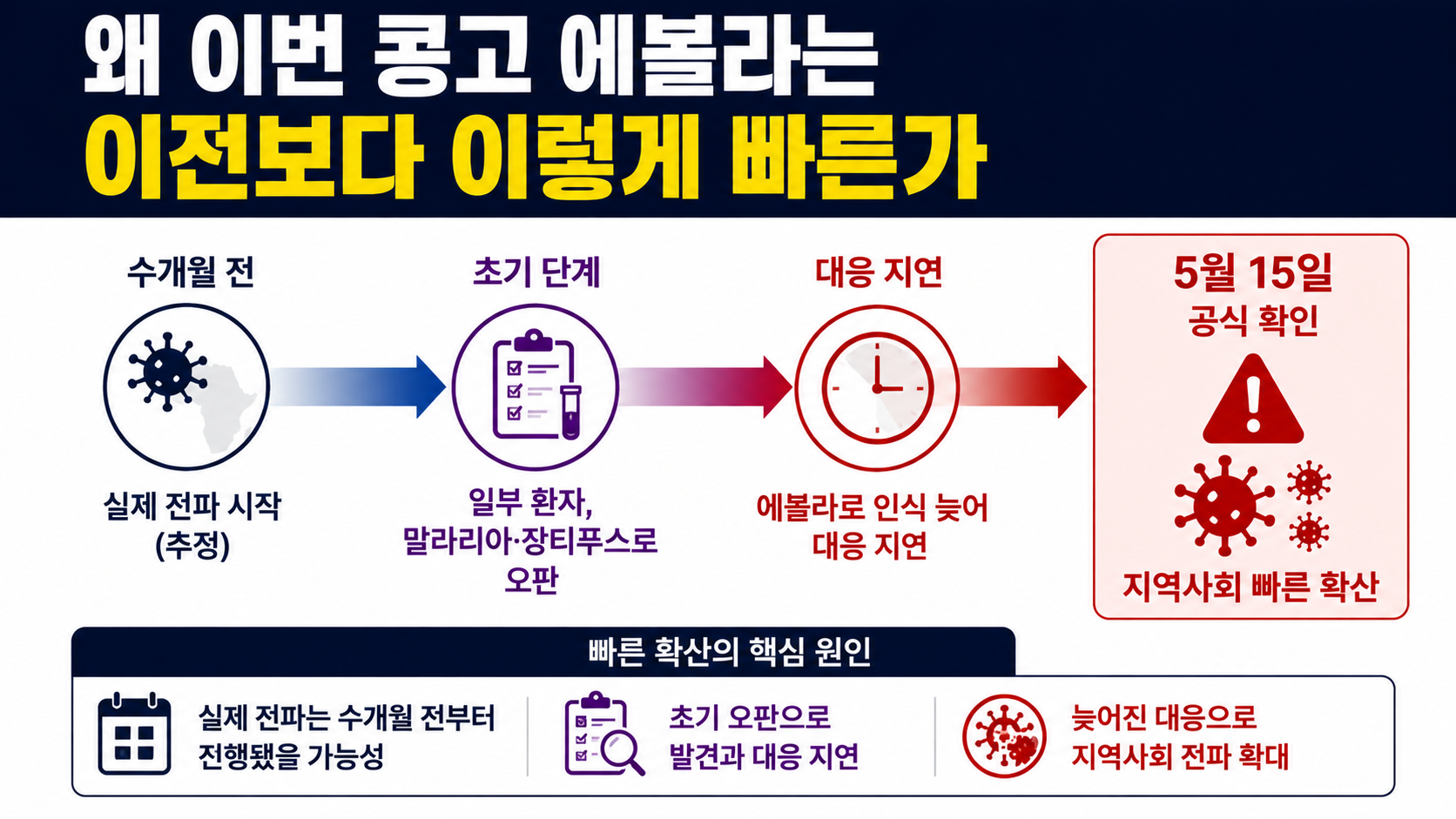
The biggest problem is delayed detection. Although the current outbreak was officially confirmed on May 15, subsequent genetic analysis raised the possibility that transmission had actually begun several months earlier. Some early patients were reportedly diagnosed with malaria or typhoid fever, delaying the Ebola response.
If the virus had already established multiple chains of transmission within communities during those initial months, tracing contacts after the outbreak was declared would become much more difficult.
The second problem involves access for healthcare and outbreak-response personnel. Eastern DR Congo, where the main outbreak areas are located, continues to experience armed-group activity and population movements. Poor road conditions in many areas can delay patient identification, specimen transportation, isolation, and contact tracing. Work stoppages linked to wage disputes involving some healthcare workers have also been identified as a factor weakening outbreak-response capacity.
The third problem is that new cases continue to be detected outside known contact networks. According to recently released information, approximately 60–70% of new patients were reportedly identified outside the groups of contacts already being monitored by outbreak-response teams. This suggests that managing only known patients and their identified contacts is insufficient to capture the full transmission network.
What Makes Bundibugyo Ebola Different?
The current outbreak is caused not by the more widely known Zaire Ebola virus but by Bundibugyo virus. It is one of the orthoebolaviruses capable of causing severe Ebola disease in humans.
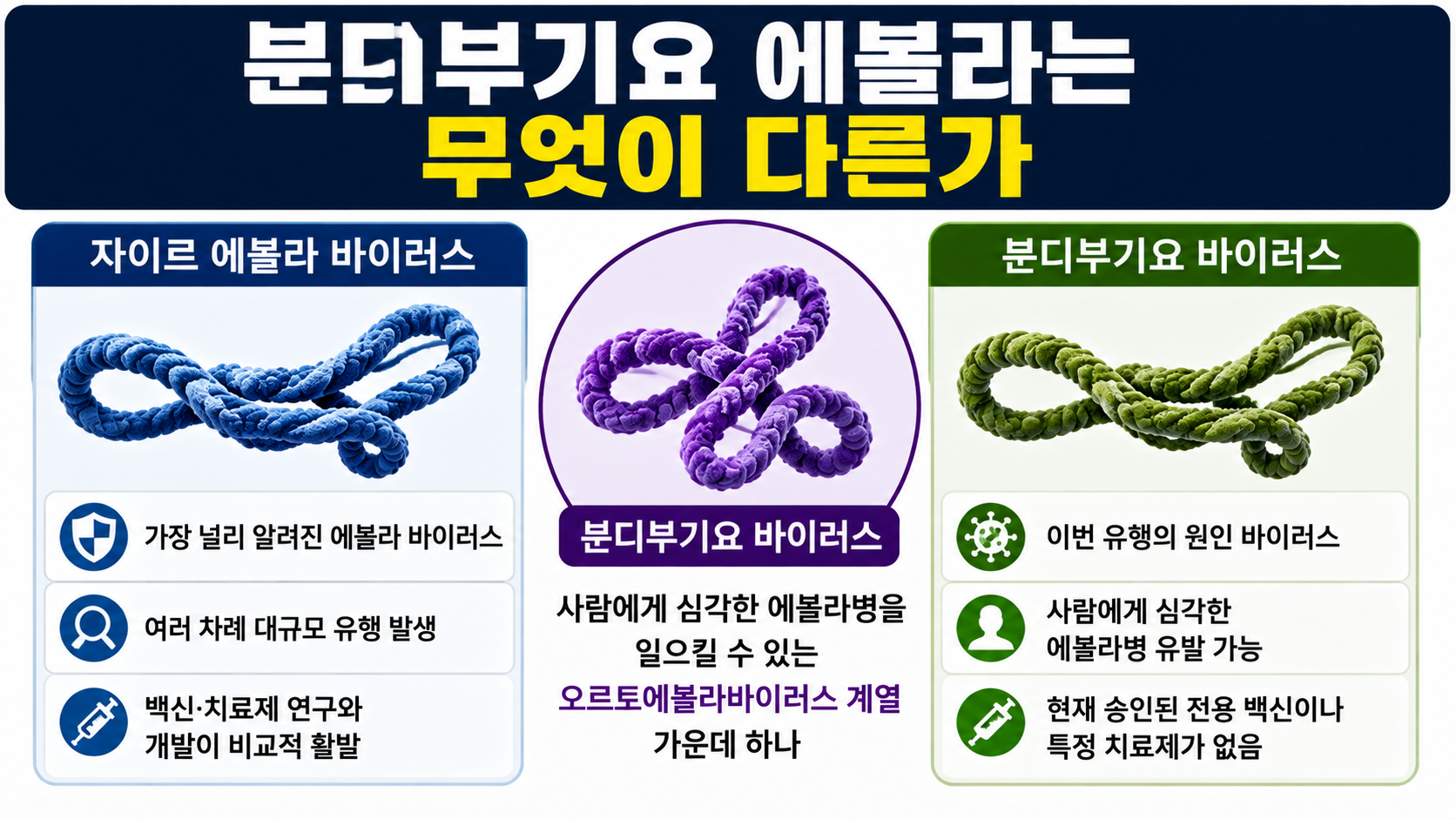
The most important difference is that there is currently no approved vaccine specifically targeting this virus and no specific treatment for it. Although clinical trials are underway, this does not mean an established vaccine is available for widespread use in routine outbreak-response settings.
As a result, outbreak control relies heavily on identifying and isolating patients quickly and providing intensive supportive care. At the same time, people who have been in contact with patients must be identified and monitored for a specified period, while precautions are taken to prevent exposure to infected people's blood or other bodily fluids.
The longer patients take to reach healthcare facilities, the more time the virus has to spread to family members and others around them, in addition to affecting their chances of receiving effective care. In areas with limited healthcare access, as is currently the case, this problem can influence both the death rate and the speed of transmission.
How Far Has the Outbreak Spread?
As of July 30, the World Health Organization (WHO) had identified cases in 5 provinces of DR Congo, including Ituri, North Kivu, South Kivu, Haut-Uélé, and Tshopo. At that time, confirmed cases had been reported in 49 health zones, and 33 of those areas had recorded confirmed cases within the previous 7 days, indicating that transmission was continuing. World Health Organization.
Ituri Province remains the epicenter. As of July 30, approximately 88% of confirmed cases and approximately 82.6% of deaths in DR Congo had been reported in Ituri. Large numbers of patients were identified in several areas, including Bunia, Rwampara, and Mambasa's neighboring outbreak areas represented by Mongbwalu. World Health Organization.
Although DR Congo's nationwide total had increased further to 4,381 by August 11, it would be inaccurate to describe the outbreak as having spread evenly across the country. The outbreak remains concentrated in the east, with particularly large numbers of patients in certain areas.
The situation in neighboring countries must also be considered separately. Uganda recorded cases associated with this Bundibugyo virus outbreak, but its local outbreak was declared over on July 28. WHO believes continued surveillance is necessary to prepare for possible reintroduction while transmission persists in DR Congo. World Health Organization.
How Likely Is Ebola to Spread to South Korea?
Based on the current situation, there is no evidence that the risk of contracting Ebola through everyday activities in South Korea has suddenly increased sharply. Unlike influenza or COVID-19, Ebola is not a respiratory infectious disease that spreads easily through the air in ordinary everyday settings.
Its main transmission route is direct contact with the blood, vomit, feces, semen, or other bodily fluids of a symptomatic infected person, or with objects contaminated by those fluids. WHO also currently assesses the risk of global spread as low.
Therefore, residents of South Korea who have had no direct contact with Congo do not need to assume that an outbreak in Africa means Ebola could immediately become widespread in South Korea.
The situation is different, however, for anyone who has visited an affected area of DR Congo, had direct contact with the bodily fluids of a confirmed or suspected Ebola patient, or participated in healthcare or funeral activities in an outbreak area. In such cases, it is important to inform healthcare professionals and public health authorities about travel destinations and possible exposure histories, rather than considering fever alone.
Ebola's incubation period means symptoms generally do not appear immediately after exposure. Therefore, feeling well upon returning home is not enough to rule out possible exposure.
What Should We Watch Beyond the Death Toll?
The first indicator to monitor is whether a growing proportion of new confirmed cases are being identified within existing contact-tracing networks. If health authorities can identify patients quickly among contacts already under monitoring, it may signal that outbreak-response systems are beginning to catch up with transmission networks.
The second indicator is whether new confirmed cases are actually declining over successive 7-day periods. Cumulative confirmed cases can continue increasing because they include previously recorded patients. That makes trends in new infections more important than focusing solely on cumulative milestones such as 'more than 5 thousand total cases.'
There is another important consideration when interpreting the statistics. WHO explained that part of the sharp increase in confirmed cases and deaths reported in DR Congo on July 22 reflected data reconciliation and adjustments involving previously occurring cases. In other words, the entire reported increase did not represent new patients and deaths occurring within a single day. World Health Organization.
Therefore, if daily figures suddenly jump again, it will be necessary to distinguish how much of the increase reflects genuinely new cases and how much comes from revisions to earlier data.
The third indicator is the geographical distribution of confirmed cases. It matters whether transmission remains concentrated in Ituri and the other eastern provinces among the 5 affected provinces, or whether sustained community transmission emerges in new provinces or major cities.
The final indicator is the case fatality ratio. Even if confirmed cases continue increasing, a slower relative rise in deaths resulting from earlier detection and improved treatment could indicate that the response system is becoming more effective.
So far, the available figures point in the opposite direction. Deaths increased from 1,033 on July 23 to 2,011 on August 11, while confirmed cases rose from 2,536 to 4,381 over the same period.
The key point behind the phrase '1 thousand additional deaths in 19 days' is not that exactly 1 thousand people died during those 19 days, but that the death toll nearly doubled, rising from approximately 1 thousand to approximately 2 thousand.
Whether the outbreak has passed its peak cannot be determined from the cumulative death toll alone. A genuine slowdown in transmission must be assessed through several indicators together: recent new confirmed cases, the proportion of patients identified outside contact-tracing networks, the emergence of cases in new areas, and treatment survival rates.
---