

Samsung Electronics and SK Hynix Stock Outlook: August 7 Rebound Confirmation Levels and Criteria for Waiting to Buy
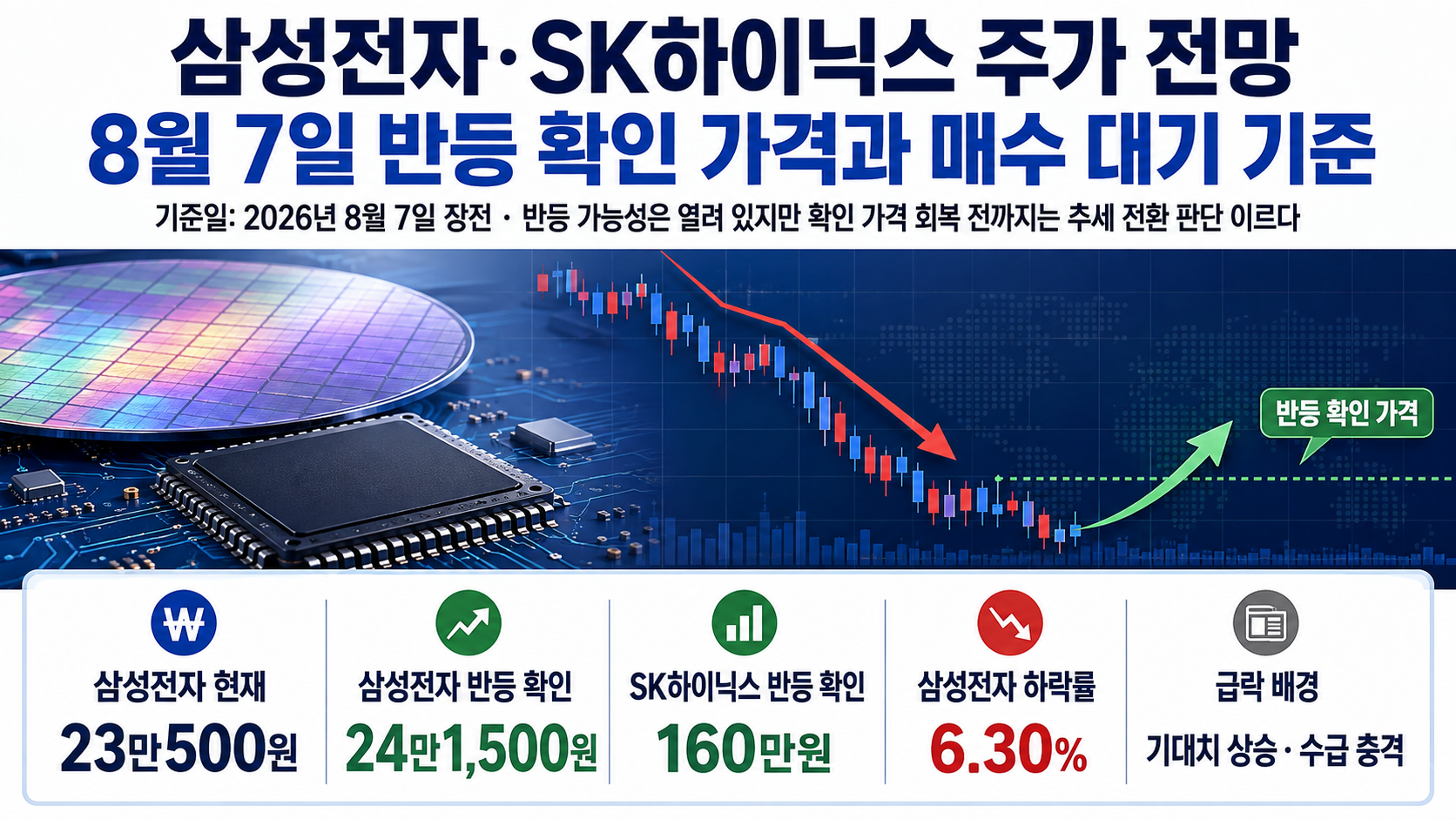
2026-08-07 Before the market opens, Samsung Electronics and SK Hynix remain sharply lower, driven more by elevated expectations and shocks to supply and demand dynamics than by deteriorating earnings. A rebound today remains possible, but it is difficult to conclude that the trend has reversed until Samsung Electronics recovers KRW 241,500 and SK Hynix recovers KRW 1,600,000.
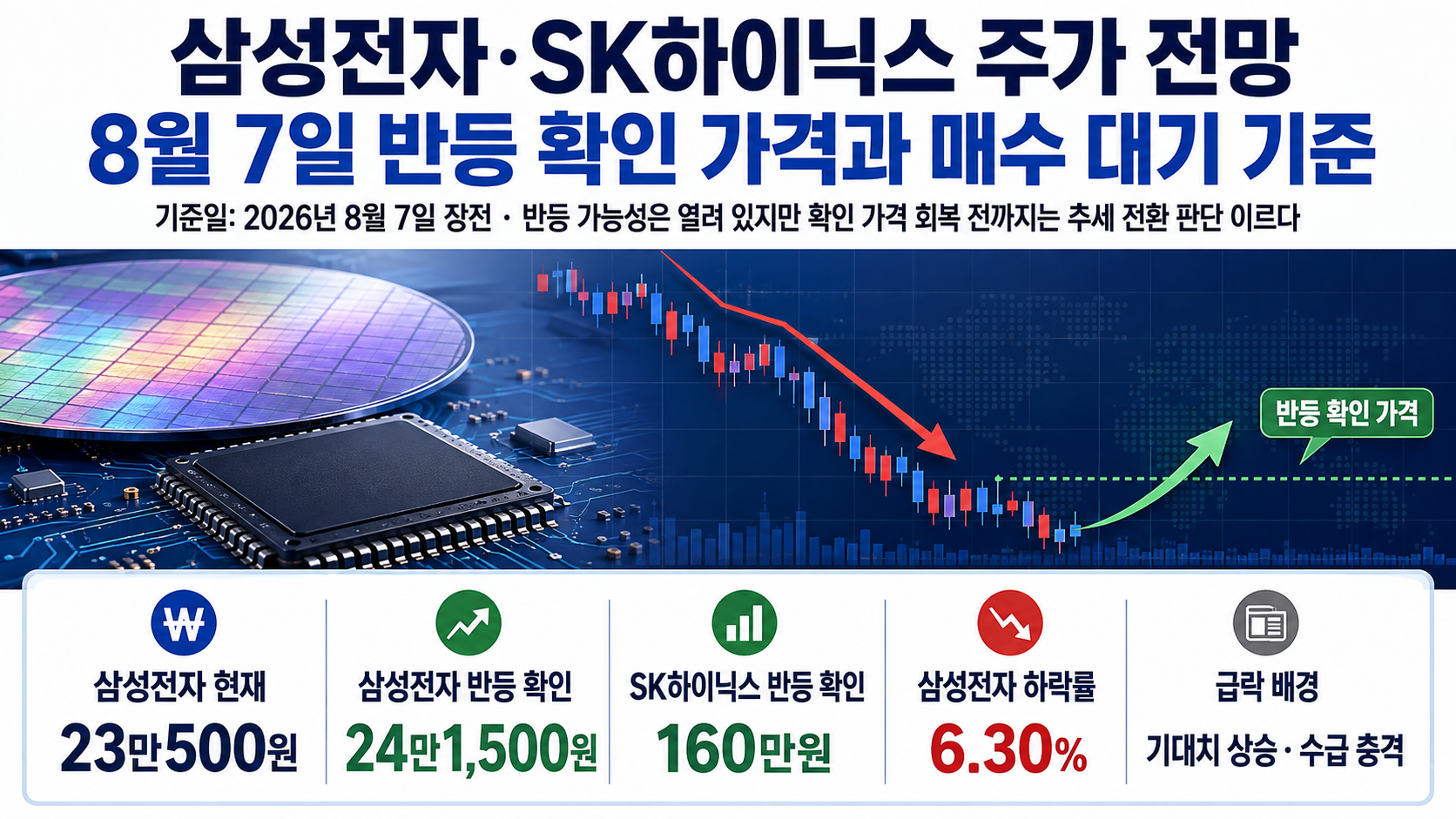
On August 6, Samsung Electronics closed at KRW 230,500, 6.30%, while SK Hynix closed at KRW 1,495,000, down 10.37%. Both stocks finished approximately 1% above their intraday lows, suggesting that buying pressure did not strengthen significantly into the close.
Which Price Levels Should Investors Watch First on August 7?
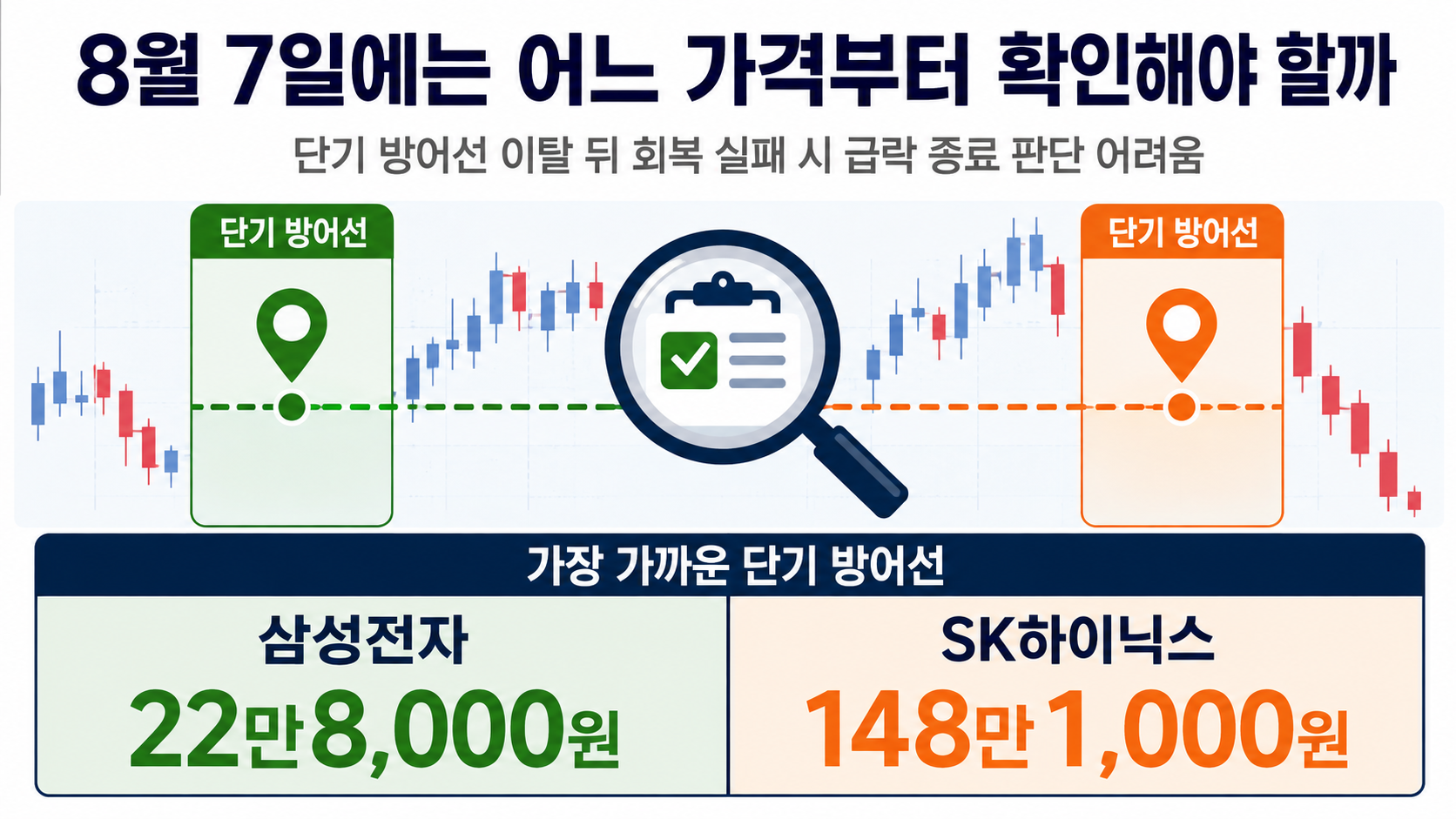
KRW 228,000 for Samsung Electronics and KRW 1,481,000 for SK Hynix are the nearest short-term support levels. Both prices represent the intraday lows recorded on August 6. If either stock falls below its respective level during regular trading and fails to recover, it would be difficult to conclude that the sharp decline has ended.
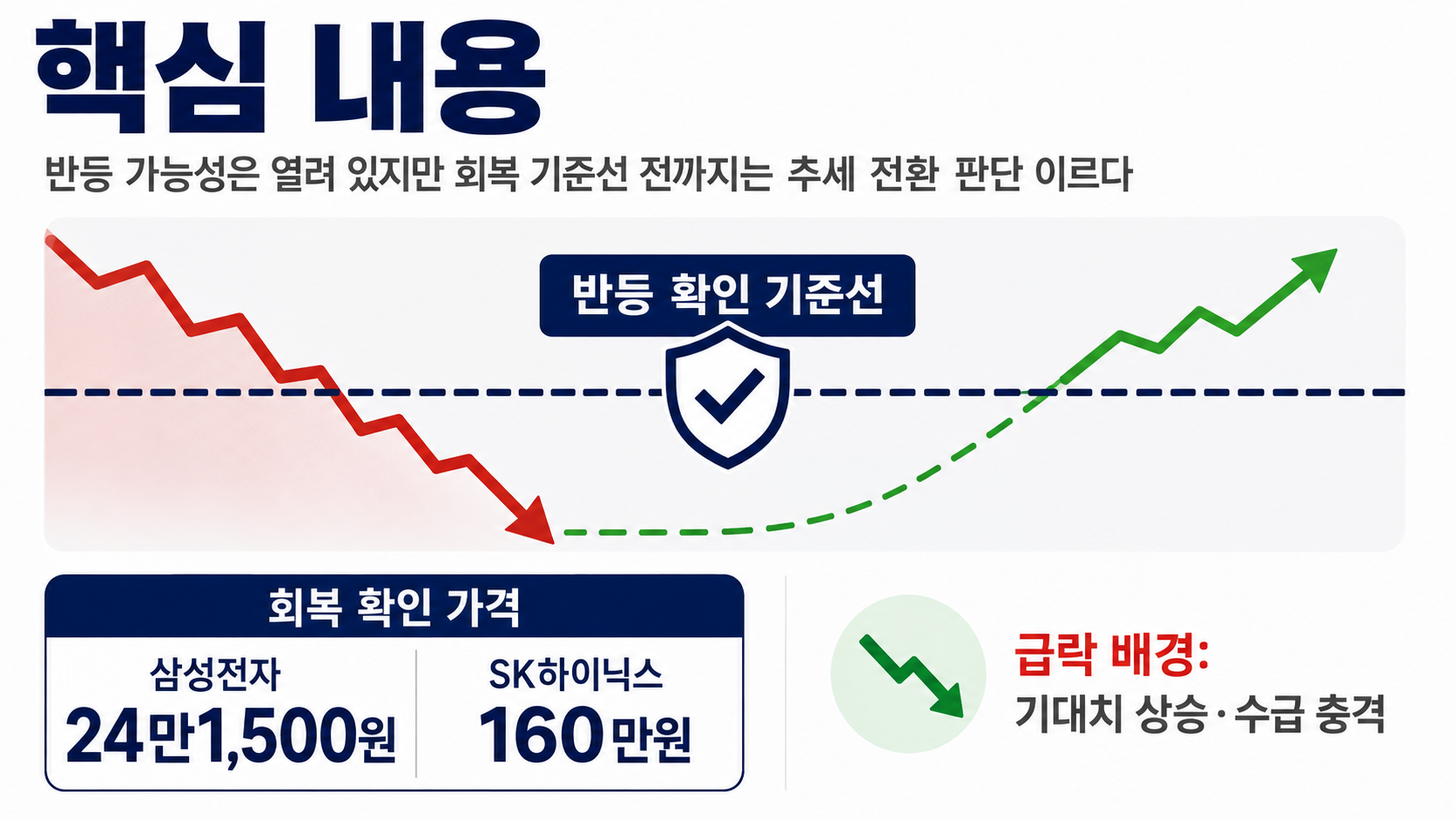
The first rebound confirmation level for Samsung Electronics is KRW 241,500, the previous session's opening price. The stock would then need to recover KRW 246,000, the closing price on August 5, before investors could reasonably conclude that it had meaningfully reversed the previous day's losses.
For SK Hynix, recovering KRW 1,600,000 is the first benchmark. A subsequent rise to KRW 1,668,000 would indicate that the stock had recovered a substantial portion of its decline on August 6.
According to the author's calculations, Samsung Electronics would need to rise 6.7% to recover from KRW 230,500 to KRW 246,000. SK Hynix would need to gain 11.6% to return from KRW 1,495,000 to KRW 1,668,000. This means SK Hynix requires greater rebound momentum than Samsung Electronics.
On the morning of August 7, investors should avoid determining market direction solely from the first executed trade in the Nextrade premarket session. The previous day, SK Hynix experienced another price distortion when a small transaction involving 11 shares was executed at the daily lower price limit shortly after the premarket opened, before the price quickly returned to its normal range.
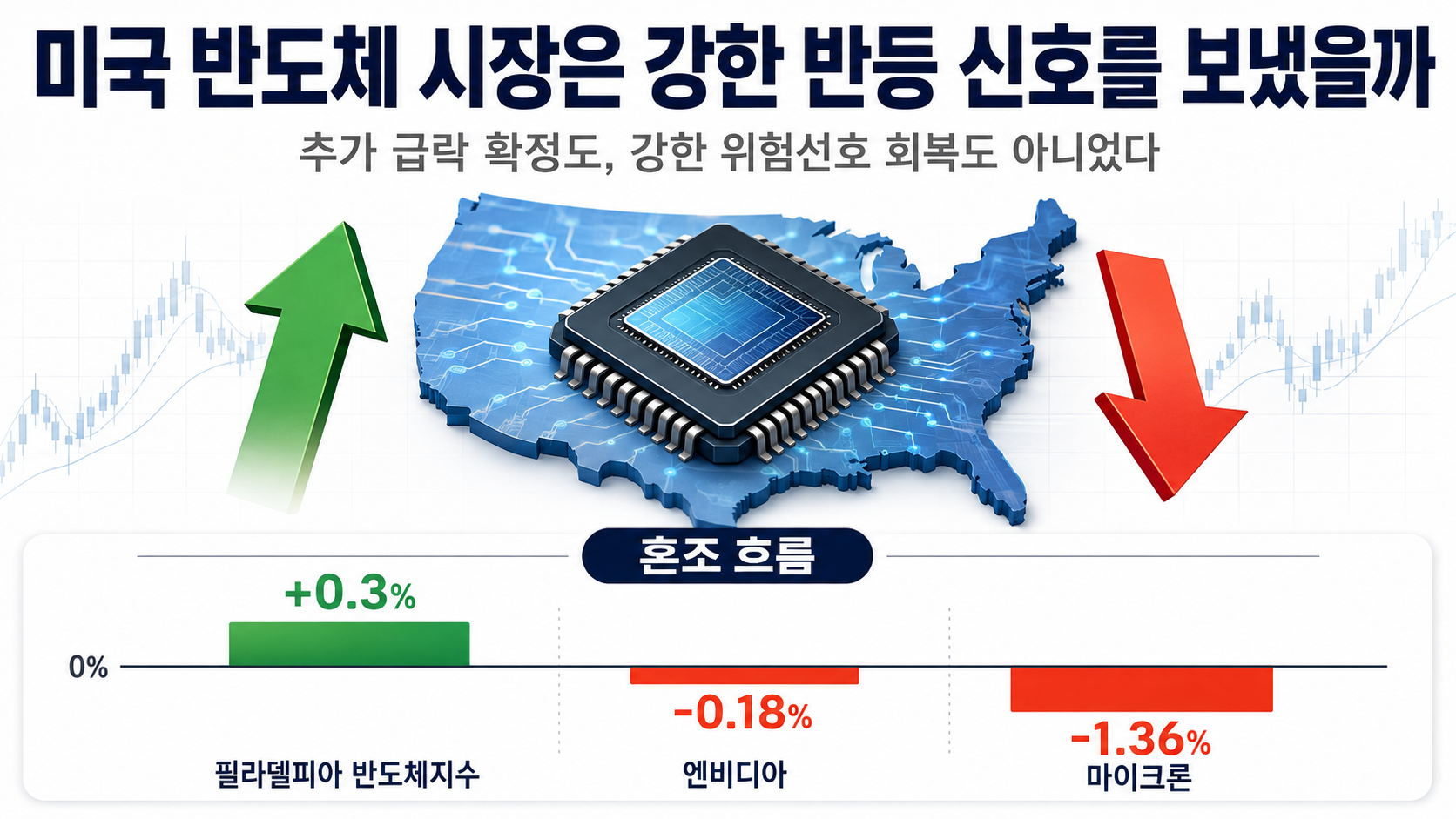
Did the US Semiconductor Market Signal a Strong Rebound?
The US market was not weak enough to confirm another sharp decline in Korean semiconductor stocks, but its performance was also insufficient to suggest a strong recovery in risk appetite. The Philadelphia Semiconductor Index rose approximately 0.3%, while Nvidia fell 0.18% and Micron declined 1.36%.
SanDisk and Western Digital experienced substantial share-price declines despite reporting earnings and revenue forecasts that exceeded market expectations. This suggests that stock prices continue to be driven less by the absolute strength of corporate results than by how far those results exceed investor expectations.
Therefore, a modest rebound in the US semiconductor index alone does not justify assuming that Samsung Electronics and SK Hynix will open sharply higher. Investors should also monitor foreign investor trading flows and whether the stocks recover their previous opening prices during regular trading.
Why Did Share Prices Fall Despite Record Earnings?
The underlying business performance of both companies remains strong. The problem is that much of their positive earnings performance had already been reflected in share prices, while the market is now demanding even stronger growth and greater shareholder returns.
Samsung Electronics reported consolidated revenue of 171 trillion KRW 500,000,000,000 and operating profit of KRW 89,500,000,000,000 in the 2 quarter of 2026. Its Device Solutions (DS) division, which oversees semiconductors, recorded revenue of KRW 127,500,000,000,000 and operating profit of KRW 89,200,000,000,000. Revenue and operating profit in its memory business also reached quarterly records.
According to the author's calculations, Samsung Electronics' DS division recorded an operating margin of approximately 70.0%. The calculation is KRW 89,200,000,000,000÷KRW 127,500,000,000,000×100.
SK Hynix announced revenue of KRW 79,318,700,000,000 and operating profit of KRW 60,542,600,000,000 for the 2 quarter. The company reported an operating margin of 76%, while revenue and operating profit increased 257% and 557%, respectively, compared with the same period a year earlier.
There are three main reasons why share prices remain weak despite strong earnings.
First, memory prices and profit growth have already reached elevated levels, raising concerns that their future pace of increase could slow.
Second, share prices rose rapidly during the first half of 2026, turning earnings announcements into opportunities for profit-taking rather than catalysts for new buying.
Third, investors believe that dividend and share buyback plans are not sufficiently specific relative to the companies' growing cash holdings. The two companies' combined year-end net cash is projected to reach USD 263,000,000,000, but their current shareholder return targets remain at approximately 50% of free cash flow.
Which Stock Offers a Better Opportunity: Samsung Electronics or SK Hynix?
SK Hynix may be more suitable for investors prioritizing upside momentum and concentrated exposure to memory semiconductors, while Samsung Electronics may better suit those who value business diversification and relatively lower volatility. Neither stock is inherently superior; the deciding factor is how much price fluctuation an investor can tolerate.
HBM and memory products for AI servers have a substantial impact on SK Hynix's earnings. The company began mass-production shipments of HBM4 in the 2 quarter and plans to expand production during the second half. It also stated that it had signed long-term supply agreements with approximately 10 customers. If the memory market boom continues, its earnings could show particularly strong growth momentum.
Conversely, SK Hynix shares may experience greater volatility if memory price forecasts weaken or investor sentiment toward AI spending deteriorates. From a closing price of KRW 1,718,000 on July 31 to KRW 1,495,000 on August 6, the stock declined KRW 223,000, or 13.0%, over 4 trading days.
Over the same period, Samsung Electronics declined from KRW 262,500 to KRW 230,500, falling KRW 32,000, or 12.2%. Although the difference between the two stocks' short-term percentage declines was not substantial, SK Hynix experienced the larger single-day drop on August 6.
Samsung Electronics is expanding HBM4 sales and supplying HBM4E samples while also operating businesses in foundry services, smartphones, displays, and home appliances. Its direct exposure to the memory boom may be more diluted than that of SK Hynix, but its dependence on any single business is also relatively lower.
How Should Existing Shareholders Respond?
Existing shareholders would be better served by prioritizing whether prices recover on a closing basis rather than focusing on a single day's rebound. If a stock surges intraday but subsequently falls below the previous session's opening price, the move may prove to be nothing more than a technical rebound.
For Samsung Electronics, investors can watch whether the stock holds KRW 228,000 and then recovers KRW 241,500 and KRW 246,000 in sequence. If it closes below KRW 228,000, the KRW 218,500 and KRW 202,000 ranges represent the next historical trading zones to monitor.
SK Hynix needs to defend KRW 1,481,000 before recovering KRW 1,600,000 and KRW 1,668,000. If the stock breaks below KRW 1,481,000 and fails to recover, investors should consider a wider potential trading range extending to the KRW 1,287,000–KRW 1,246,000 area, where a previous low formed in late July.
Buying additional shares simply because a stock has fallen significantly, without first defining an acceptable loss threshold and investment horizon, can increase exposure to volatility. Investors should establish their response to a breakdown below key levels before deciding on an entry price.
Should New Investors Buy Immediately After a Rebound?
New investors may reduce risk by waiting for support confirmation and trading volume to stabilize before entering in stages, rather than chasing a sharp rise immediately after the regular session opens at 9. The risk of committing a large position all at once during a downtrend is greater than the risk of missing the initial rebound.
The first approach is to enter a partial position after the stock holds its previous session's low and recovers its previous opening price.
The second approach is to wait for the stock to recover its previous closing price, then check whether that level provides support during a subsequent pullback.
The third approach is to postpone buying if the stock breaks below its previous low without recovering, and wait until a new support zone develops.
Recovering KRW 241,500 for Samsung Electronics and KRW 1,600,000 for SK Hynix could serve as initial decision benchmarks. However, these levels are not buy signals that guarantee profits. They are reference points for assessing whether selling pressure from the previous session has eased.
Three Factors That Could Change the Outlook for the Second Half of 2026
The direction of share prices during the second half is likely to depend more on memory prices, HBM4 supply, and shareholder return policies than on short-term chart patterns. If all three factors develop positively, the current correction could end up being temporary volatility within a broader earnings growth cycle. However, if even one falls short of expectations, share-price recovery could be delayed despite strong earnings.
The first factor is the pace of DRAM and NAND price increases. Even if prices continue rising, a slowdown in their rate of increase could prompt the market to price in a peak in earnings growth ahead of time.
The second factor is the actual revenue contribution from HBM4 and HBM4E. Samsung Electronics has announced expanded HBM4 sales and HBM4E sample shipments, while SK Hynix has announced mass-production shipments of HBM4 and plans to increase output during the second half.
The third factor is dividends and share buybacks. If both companies maintain their investment plans while introducing shareholder return measures that meet market expectations, those policies could provide an additional catalyst for higher valuations beyond earnings growth alone.
Samsung Electronics and SK Hynix Outlook: The Bottom Line in One Sentence
Samsung Electronics and SK Hynix continue to have strong medium- to long-term earnings fundamentals, but their short-term share prices are reflecting previously excessive expectations and adjustments in market supply and demand rather than their strong results. On August 7, investors should first check whether Samsung Electronics holds KRW 228,000 and SK Hynix defends KRW 1,481,000, then monitor whether they recover KRW 241,500 and KRW 1,600,000, respectively.
This article provides general information based on publicly available earnings reports and market prices. It does not guarantee profits or recommend buying or selling any particular stock. Actual investment decisions should take into account the investment horizon, risk tolerance, and portfolio allocation.
※ This article is provided for reference purposes to help readers understand market trends and does not constitute investment advice regarding any particular stock or asset. All final investment decisions and their consequences are the responsibility of the individual investor.