

How to Calculate Your Bybit Position’s Funding Fee After a Funding Rate Change: Check This Number Before Leverage
As of 2026-11-21, Bybit is changing the funding rate formula for perpetual contracts in stages, starting with November 24. The actual funding fee for a position is calculated as position value × the funding rate applied at settlement. However, the amount varies depending on each contract’s settlement interval and whether the new formula applies, so you should not assume the next settlement amount based only on the previous funding rate.

As of 2026-11-21, Bybit is changing the funding rate formula for perpetual contracts in stages, starting with November 24. The actual funding fee for a position is calculated as position value × the funding rate applied at settlement. However, the amount varies depending on each contract’s settlement interval and whether the new formula applies, so you should not assume the next settlement amount based only on the previous funding rate.
1. The position amount calculation stays the same even when the funding rate formula changes
On Bybit perpetual contracts, the funding fee is an amount that long and short position holders pay to or receive from each other at settlement.
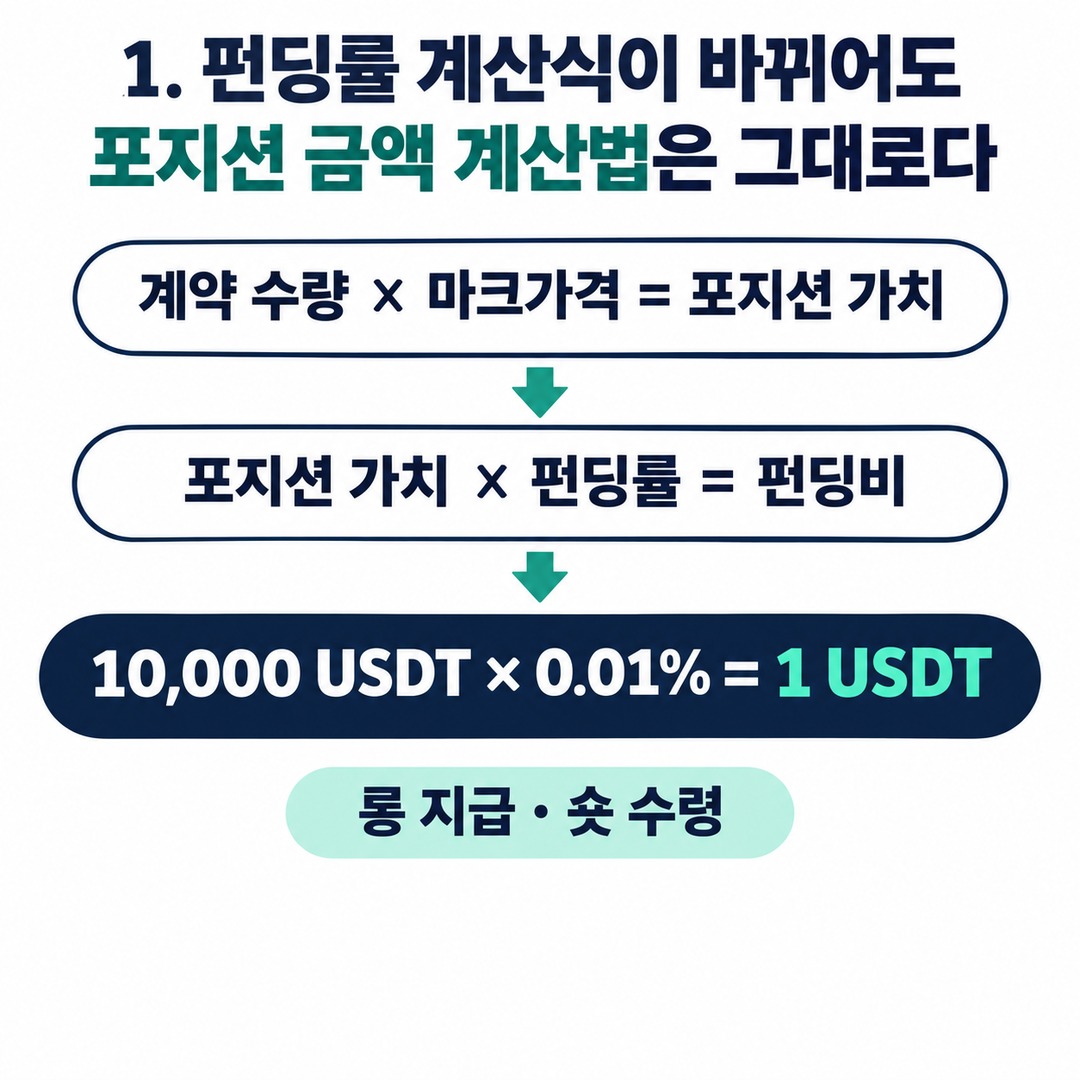
The basic formula is:
Funding fee = position value × funding rate
For USDT and USDC linear contracts, calculate position value by multiplying the contract quantity by the mark price at settlement.
Position value = contract quantity × mark price
The important point is that the calculation uses the actual position value, not the margin or leverage.
For example, if you hold a 10,000 USDT position and the funding rate is 0.01%:
10,000 × 0.0001 = 1 USDT
Therefore, at that settlement, the long position pays 1 USDT, and the short position receives 1 USDT.
However, if the funding rate is negative, the payment direction is reversed.
2. The funding rate formula changes starting 2026-11-24
In an announcement published on 2026-11-19, Bybit said it would change the funding rate formula for perpetual contracts. The key change is that the calculation, which previously used a 8-hour basis, will account for each contract’s actual funding settlement interval.
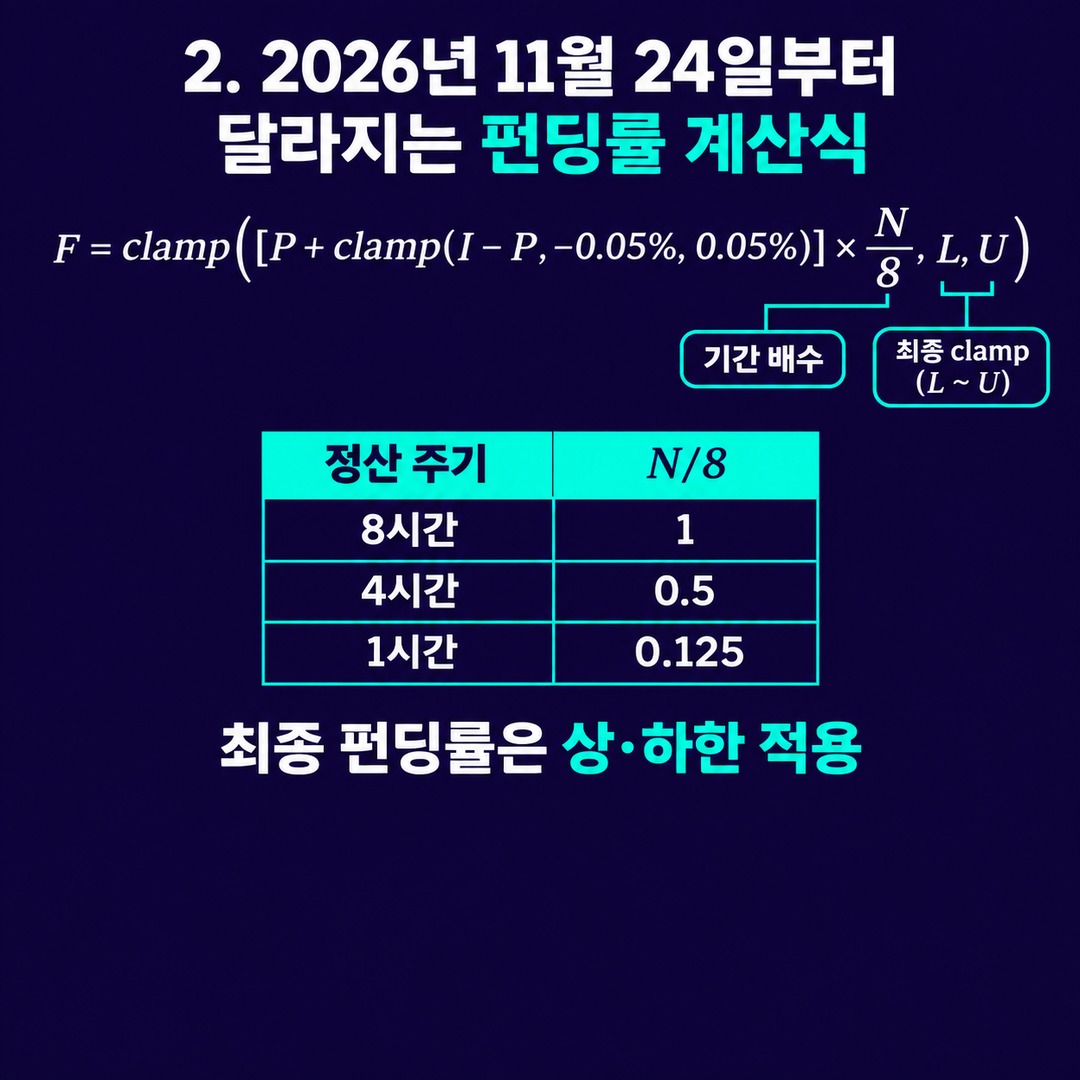
The formula being changed is as follows.
F=clamp([P+clamp(I−P,−0.05%,0.05%)]×N8,L,U)
The symbols mean the following:
| Symbol | Meaning |
|---|---|
| F | Final funding rate |
| P | Average premium index |
| I | Interest rate |
| N | Contract-specific funding interval (hours) |
| L | Funding rate floor |
| U | Funding rate cap |
The important part here is N ÷ 8.
8-hour contract: 8 ÷ 8 = 1
4-hour contract: 4 ÷ 8 = 0.5
1-hour contract: 1 ÷ 8 = 0.125
However, contract-specific caps and floors are applied again to the final funding rate. So you should not assume that every asset’s funding rate will simply be halved or become 1/8.
It is especially important to check the effect of the change for contracts with settlement intervals shorter than 8 hours.
3. How much could my funding fee change for 4-hour and 1-hour contracts?
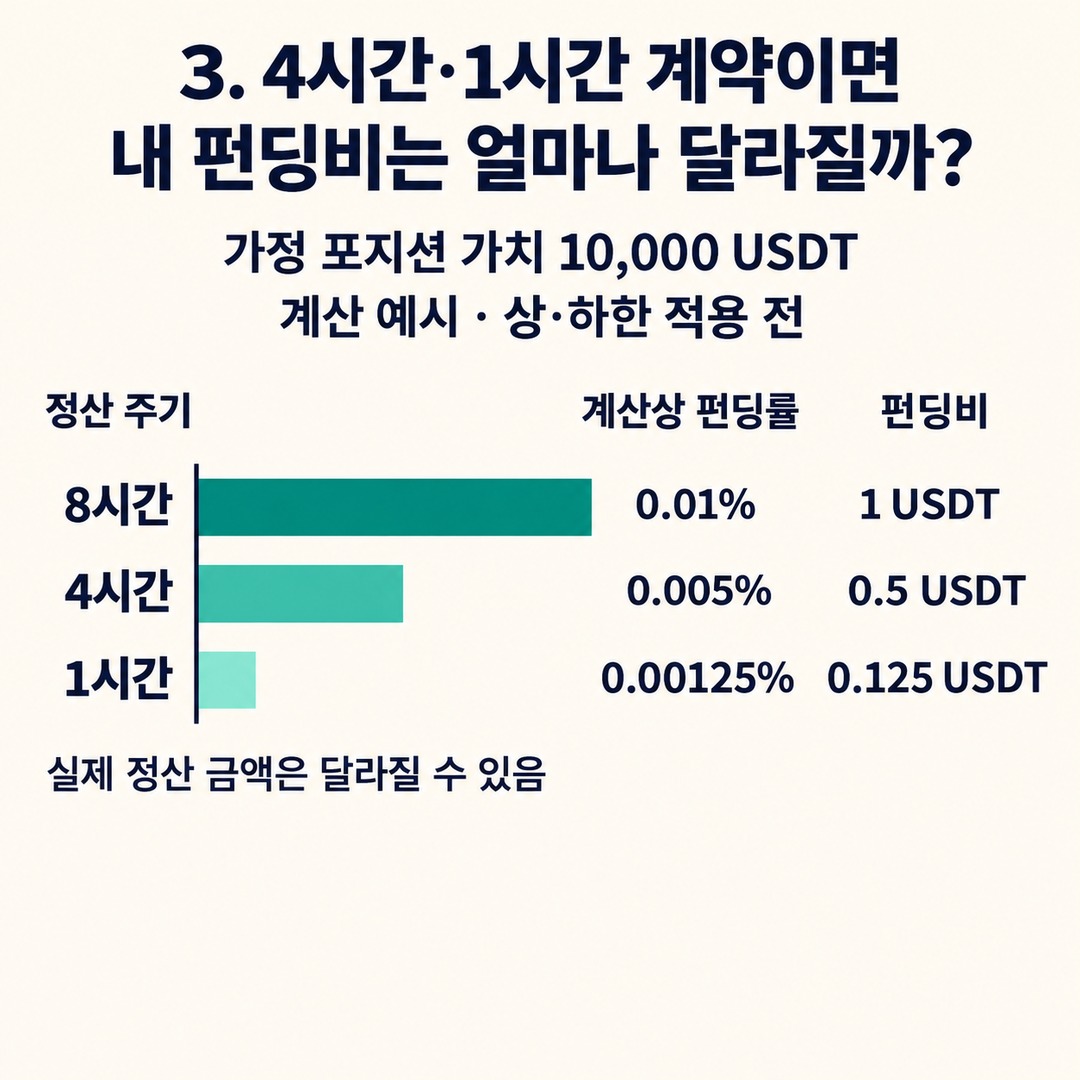
Calculating with an assumed position value makes the change easier to understand.
The following is a hypothetical example intended only to explain the calculation method; it does not predict actual market funding rates.
Assumptions
Position value: 10,000 USDT
Result under the old formula before applying the cap or floor: +0.01%
Only the settlement interval multiplier in the new formula is applied
Simple comparison before applying the new formula’s final cap or floor
| Settlement interval | Funding rate for this calculation | Funding fee |
|---|---|---|
| 8-hour | 0.01% | 1 USDT |
| 4-hour | 0.005% | 0.5 USDT |
| 1-hour | 0.00125% | 0.125 USDT |
The results above are the author’s calculations.
For example, if you hold a 10,000 USDT position on a 4-hour contract and the assumed funding rate is +0.005%:
10,000×0.00005=0.5 USDT
The calculation is that the long position pays 0.5 USDT, while the short position receives 0.5 USDT.
However, the actual settlement amount depends on the following three factors:
1. The actual funding rate at settlement
2. The contract’s current settlement interval
3. The final funding rate calculated under the new formula, including its cap and floor
Therefore, do not treat the amounts in the table above as amounts that will actually be charged to or credited to your account.
4. The change will not take effect for all coins at the same time on November 24
According to Bybit’s official announcement, 2026-11-19, the change will take place in three stages.
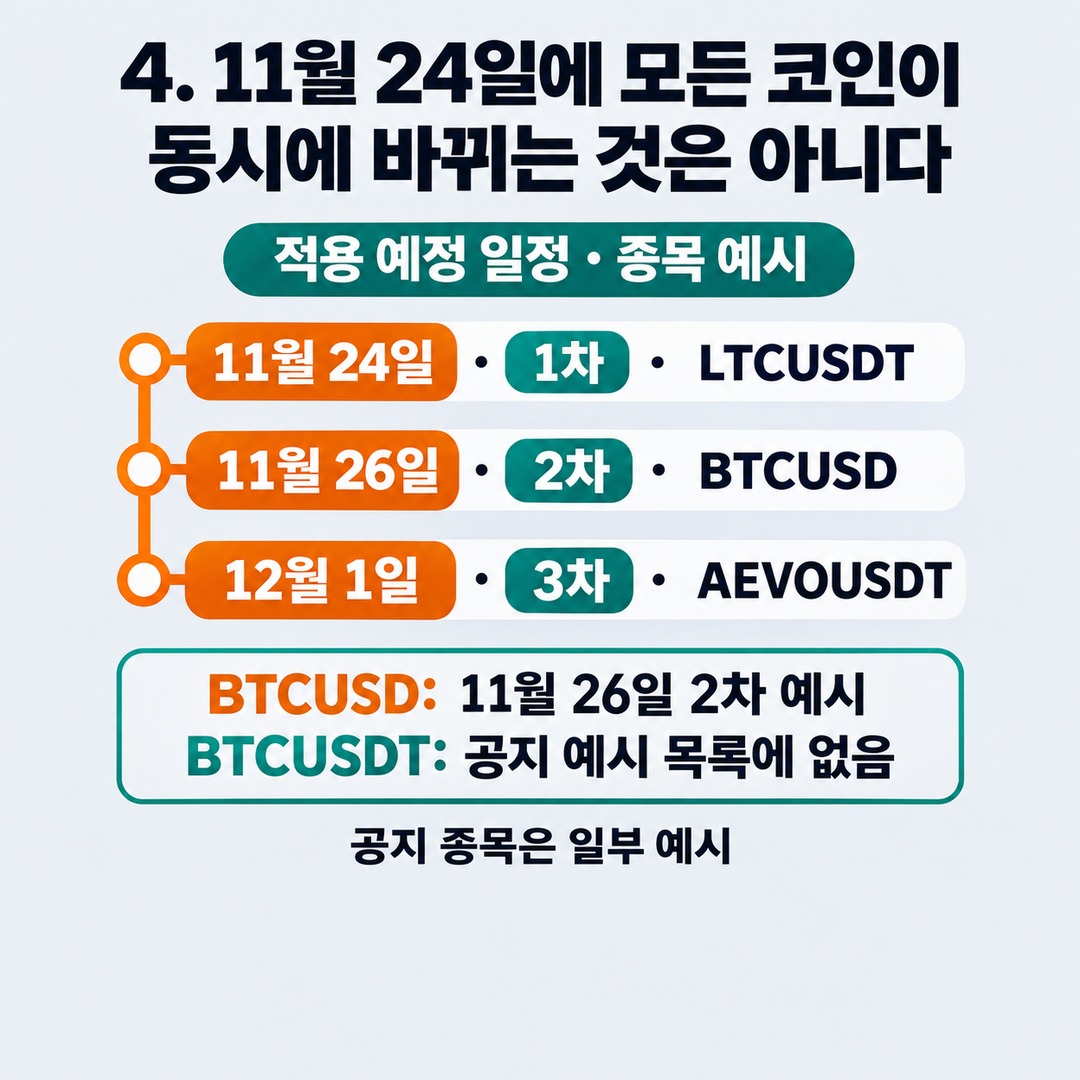
| Scheduled effective date | Change stage | Examples of contracts listed in the announcement |
|---|---|---|
| November 24 | 1 stage | LTCUSDT, AVAXUSDT, ATOMUSDT, NEARUSDT, ADAUSD |
| November 26 | 2 stage | BTCUSD, ETHUSD, SOLUSD, XRPUSD, ADAUSDT, ARBUSDT |
| December 1 | 3 stage | AEVOUSDT, AIOZUSDT, AKTUSDT, ARKKUSDT, ASMLUSDT, TRUMPUSDT |
As of 2026-11-21. These are some examples of contracts listed in the official announcement, not the complete list.
One point to watch in this schedule is that BTCUSD and BTCUSDT should not be treated as the same contract.
Among the examples in the official announcement, BTCUSD is included in the November 26 2-stage change, while BTCUSDT is not included in that example list.
So even if you hold a Bitcoin position, make sure to check the exact contract type.
Until the 3-stage transition is complete, contracts using the old formula and contracts using the changed formula may coexist.
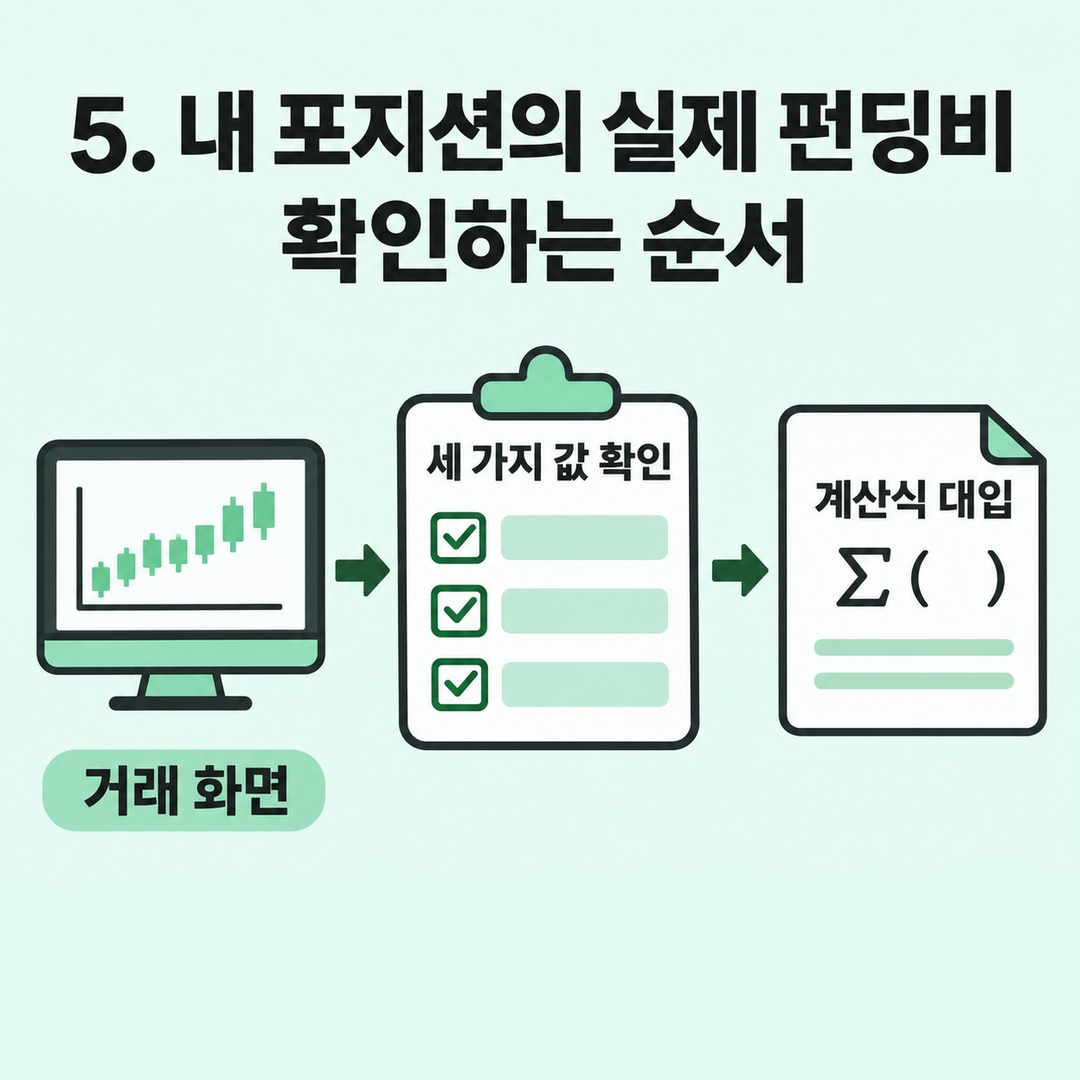
5. How to check the actual funding fee for your position
Before plugging values into the formula, it is a good idea to check three figures on Bybit’s trading screen.
First: Current Estimated Funding Rate
Check the estimated funding rate for the contract on its perpetual trading screen.
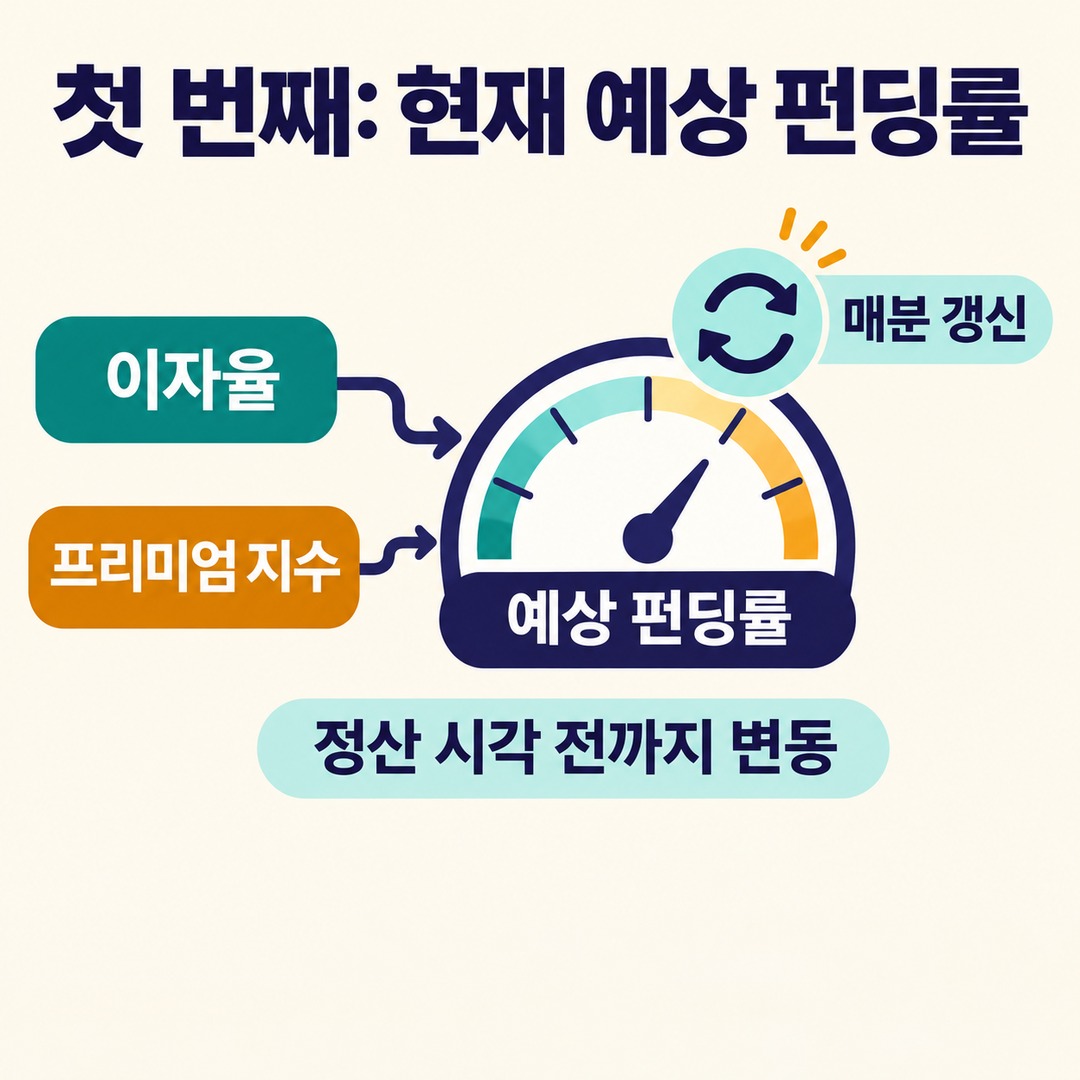
Bybit’s funding rate is not a fixed number. It changes until settlement time based on the interest rate and premium index, and according to Bybit’s official guidance, it is updated every minute.
Second: Current Funding Interval
Check the current funding settlement interval for the contract.
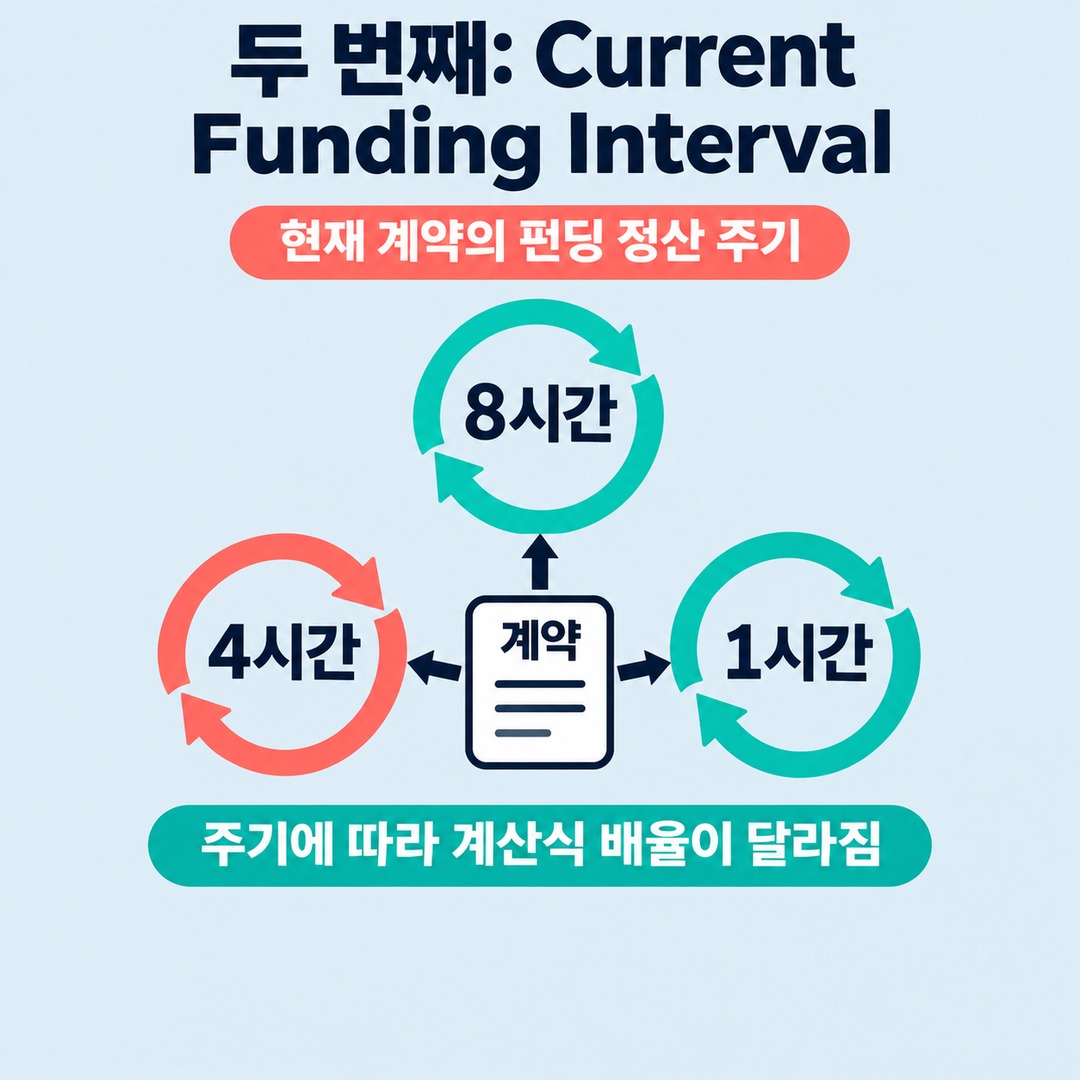
The multiplier in the new formula varies depending on whether the interval is 8 hours, 4 hours, or 1 hours.
Third: Next Settlement
Check the time of the next funding settlement.
You must hold the position at settlement to pay or receive a funding fee. If you close the position completely before settlement, no funding fee will be charged or received for that settlement.
Bybit notes that if you open or close a position within 5 seconds before or after settlement, it is not guaranteed to be included in that funding round because of the system’s settlement processing.
You can check actual settlement records in Trade History and Transaction Log in the Unified Trading Account (UTA).
6. Does higher leverage always mean a higher funding fee?
Leverage itself is not multiplied into the funding fee formula.
That is because the funding fee is calculated by multiplying the position value by the funding rate.
For example, for the same 10,000 USDT position:
| Item | 5x leverage | 10x leverage |
|---|---|---|
| Position value | 10,000 USDT | 10,000 USDT |
| Required margin (simple calculation) | 2,000 USDT | 1,000 USDT |
| Funding rate +0.01% | 1 USDT | 1 USDT |
This table is a hypothetical comparison assuming all other conditions are the same and excluding fees, additional margin, and other factors.
If the position value is the same, the funding fee calculation gives the same result even when leverage differs.
Conversely, if you open 5x and 10x positions using the same margin, their position values will differ, so their funding fees may differ as well.
In other words, when calculating the funding fee, check the position value based on the actual contract quantity and mark price before focusing on the leverage figure.
7. Other exceptions to check for your position
Bybit announced that this change does not alter the quantity or long/short direction of existing positions. It also does not recalculate funding fees that have already settled retroactively, and users do not need to take any separate action.
However, check the following separately:
Funding rate cap and floor: Contract-specific caps and floors still apply under the new formula.
Settlement interval: Check the contract’s default interval and the current interval shown on screen.
Funding rate sign: When it is positive, longs pay; when it is negative, shorts pay.
Contract type: Position value is calculated differently for USDT and USDC linear contracts than for inverse contracts.
Insufficient balance: If your available balance is insufficient, the funding fee may be deducted from your position’s initial margin. In isolated margin, the liquidation price may move closer to the mark price, increasing liquidation risk.
Inverse contracts use a different calculation formula from linear contracts.
Position value = contract quantity × mark price
For example, assume a BTCUSD inverse contract with 10,000 contracts, a mark price of 80,000 USD, and a funding rate of +0.01%:
10,000÷80,000=0.125 BTC
0.125×0.0001=0.0000125 BTC
This is a hypothetical calculation. Check the actual contract multiplier and the contract quantity convention shown on the trading screen.
What should you check first when calculating your position’s funding fee?
The key point in this change is to check each contract’s settlement interval together with the final funding rate actually applied, rather than looking only at the funding rate figure.
In particular, the new formula’s time multiplier applies to 4-hour and 1-hour contracts. Applying the pre-change estimated funding rate directly to the post-change settlement amount may therefore produce an inaccurate result.
To calculate the actual funding fee for an individual position, first check the latest estimated funding rate shown on the trading screen and the next settlement time. The estimated funding rate may change before settlement, so check the settlement record for the final amount.
Bybit announced the new formula and its phased implementation schedule in its official announcement, 2026-11-19. The exact formula is available in Bybit’s official notice about the funding rate change. Bybit’s funding rate guide explains how the current rate changes and the calculation criteria for each contract.
※ This article is for informational purposes to help readers understand market conditions and is not investment advice regarding any specific contract or asset. You are responsible for your own final decisions and investments.