

U.S. Stocks Fall in Early Trading on September 8 as Dow Drops 1% Amid Rising Oil Prices and Iran Tensions

As of 11:2 p.m. Korea time on 2026-09-08, early-session weakness is a more accurate description of the New York stock market than a rally. The S&P 500 was down approximately 0.2%, the Dow Jones Industrial Average fell about 1%, and the Nasdaq Composite declined roughly 0.2%. Meanwhile, international oil prices were rising as military tensions continued in the Middle East.
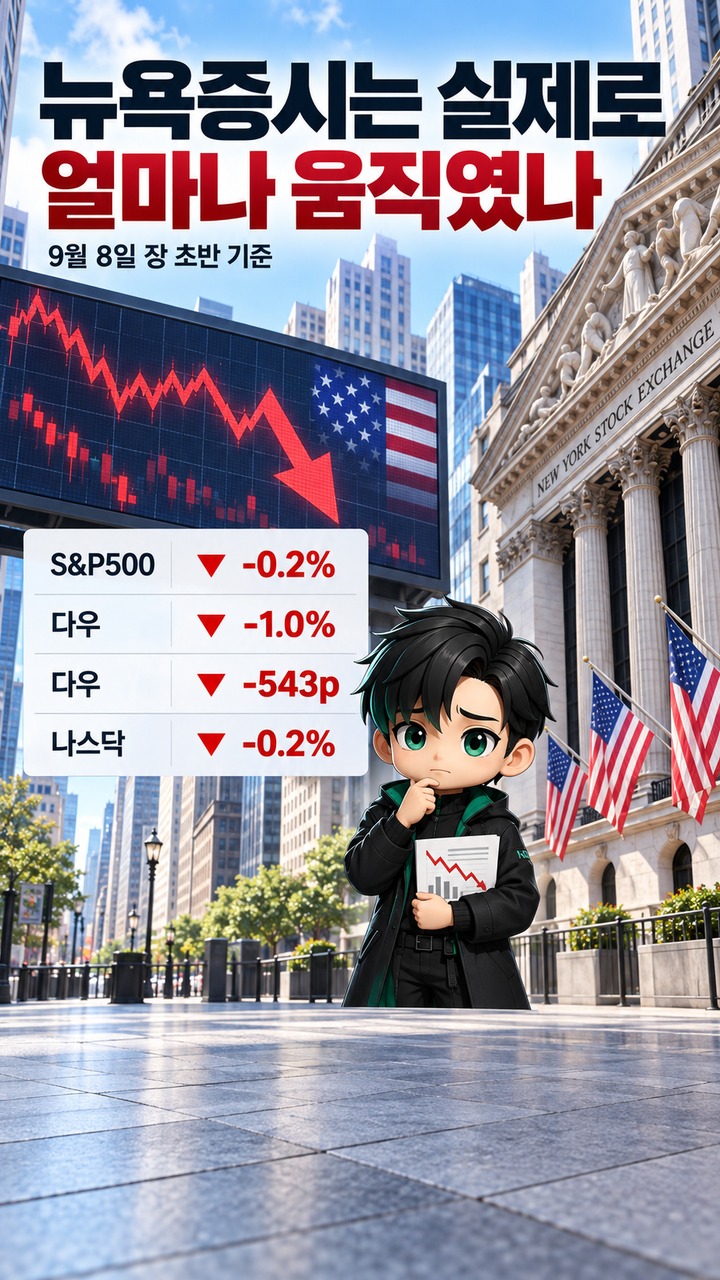
The U.S. regular trading session had only recently begun, so the day's closing prices had not yet been determined. Stocks could still rebound or their losses could change during the session. The key question is therefore not whether U.S. stocks rose despite tensions involving Iran, but how rising oil prices and interest-rate pressures were affecting stock prices in early trading.
How Much Did U.S. Stocks Actually Move?
On September 8, U.S. markets opened lower in their first trading session following the Labor Day holiday. Early figures showed the S&P 500 falling approximately 0.2%, while the Dow Jones Industrial Average lost around 543 points, or about 1%. The Nasdaq Composite also declined roughly 0.2%.
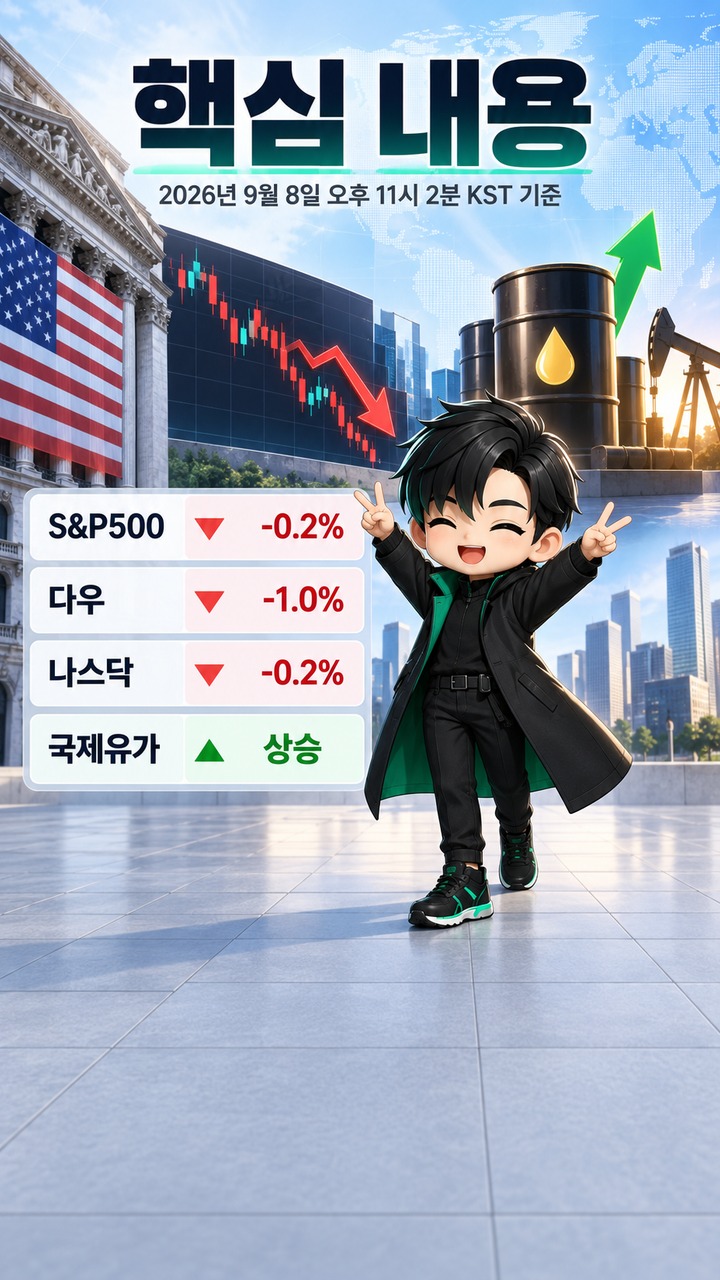
There were also substantial differences among the indexes immediately after the opening bell. Opening figures recorded at another point showed the Dow falling 0.57%, while the S&P 500 slipped only 0.01% and the Nasdaq briefly gained 0.08%. This indicates that market volatility was significant enough for index directions to change within the first several dozen minutes of trading.
These differences also explain why news reports may describe the market's direction differently. In a continuously moving market like Wall Street, combining futures, opening prices, intraday movements, and closing prices can produce conflicting descriptions of gains and losses on the same day.
Index performance figures displayed by S&P Dow Jones Indices on September 8 also showed the Dow Jones Industrial Average Total Return Index at -0.50% and the S&P 500 Total Return Index at -0.36%. However, real-time market reports and index providers may use different reporting standards. When comparing figures, it is important to check both the calculation time and the type of index.
Why Oil Prices Deserve Attention Before Stocks Amid Iran Tensions

One of the most notable factors in the September 8 market was international oil prices. Brent crude climbed to its highest level in 6 weeks during the session, approaching 100 dollars per barrel. U.S. West Texas Intermediate (WTI) crude also rose.
Brent crude was up 0.9% in early trading, according to AP. During an earlier trading period, Brent had reached approximately 98.48 dollars per barrel, while U.S. crude had climbed to around 93.79 dollars.
Higher oil prices do not automatically mean lower stock prices. However, rising crude prices can increase transportation and production costs for businesses while adding to consumers' energy expenses. That is why investors are monitoring oil prices alongside U.S. inflation indicators.
What the market currently reflects is not a simple relationship in which tensions involving Iran necessarily cause stocks to fall. Instead, military developments in the Middle East → concerns about crude oil supplies → rising oil prices → heightened inflation and interest-rate concerns are being reflected in market prices simultaneously. Reuters reported weaker global equities, higher oil prices, and elevated government bond yields on September 8.
Why Did the Dow Fall More Sharply While Nasdaq Losses Were Relatively Limited?
During early trading, the Dow Jones Industrial Average suffered larger losses than the S&P 500 and Nasdaq. Immediately after the opening bell, when the Dow fell 0.57%, the S&P 500 was nearly unchanged and the Nasdaq posted a modest gain. By the time AP checked the market later, the Dow was down 1%, the S&P 500 had lost 0.2%, and the Nasdaq was lower by 0.2%.

It would therefore be inaccurate to say that the entire U.S. stock market declined by the same magnitude. Each index has a different composition of companies and sector weightings, so the same news about the Middle East and rising oil prices can produce different market reactions.
Individual stocks also played a role. Reports indicated that declines in certain large companies, including Amgen, weighed on the Dow during early trading. In contrast, some technology stocks showed relative strength, allowing the Nasdaq to remain in positive territory briefly after the opening bell.
Rather than judging overall U.S. investor sentiment from a single index, examining the Dow, S&P 500, and Nasdaq separately provides a more accurate understanding of current market conditions.
Why Haven't Oil Prices Risen Further Despite Approaching 100 Dollars?
Although Brent crude is approaching 100 dollars, supply concerns are not the only factor determining prices. Information confirmed on September 8 indicated that crude oil flows through the Strait of Hormuz had not stopped completely. Alternative export routes used by Middle Eastern oil producers and increasing supplies from non-OPEC producers were also cited as factors limiting further price increases.
In other words, opposing forces are currently influencing the oil market. Conflict in the Middle East and attacks on energy facilities are pushing prices higher, while actual crude oil flows and supplies from other regions may limit the extent of those increases.
The same principle applies to the stock market. Rather than determining market direction from a single geopolitical development, investors need to examine how oil prices, government bond yields, corporate earnings, and economic indicators are moving together.
What Should Investors Watch Next in U.S. Stocks This Week?
More important than the intraday movements on September 8 are the upcoming U.S. inflation figures. The August Producer Price Index (PPI), which measures inflation at the producer level, is scheduled for release on Thursday, followed by the Consumer Price Index (CPI) on Friday. The Federal Reserve will make its monetary policy decision the following week.
When international oil prices remain elevated, inflation data can directly influence market expectations for interest rates. Reuters reported that the yield on the 10-year U.S. Treasury note was approximately 4.8% on September 8. Investors are reassessing the future path of interest rates ahead of the next Federal Reserve meeting.
For that reason, three distinct points in time must be considered when evaluating the New York stock market on September 8.
First, 11:2 p.m. Korea time represents the early part of the U.S. regular trading session. It is not the closing price.
Second, although the Nasdaq briefly traded in positive territory immediately after the opening bell, all major indexes were lower at the subsequent observation point. Describing the entire trading day with the single word 'rally' would therefore be misleading.
Third, developments in the Middle East are not the only factors that will influence the market's next move. Investors also need to monitor where oil prices settle, how U.S. inflation figures are reported, and whether government bond yields rise again.
The most accurate interpretation at this point is not that U.S. stocks have definitively risen despite tensions involving Iran, but that Wall Street is experiencing early-session weakness and heightened volatility while oil prices approach 100 dollars. Because market direction may change later in the session, investors should check real-time prices and the U.S. regular session's closing figures before making investment decisions.
※ This article is provided for informational purposes to help readers understand market developments. It does not constitute investment advice or a recommendation to buy or sell any particular security or asset. Readers are responsible for their own investment decisions and outcomes.