

U.S. and Japan Hold Rates Steady: U.S. at 3.50~3.75% and Japan at 1.0%, but Their Next Moves May Differ
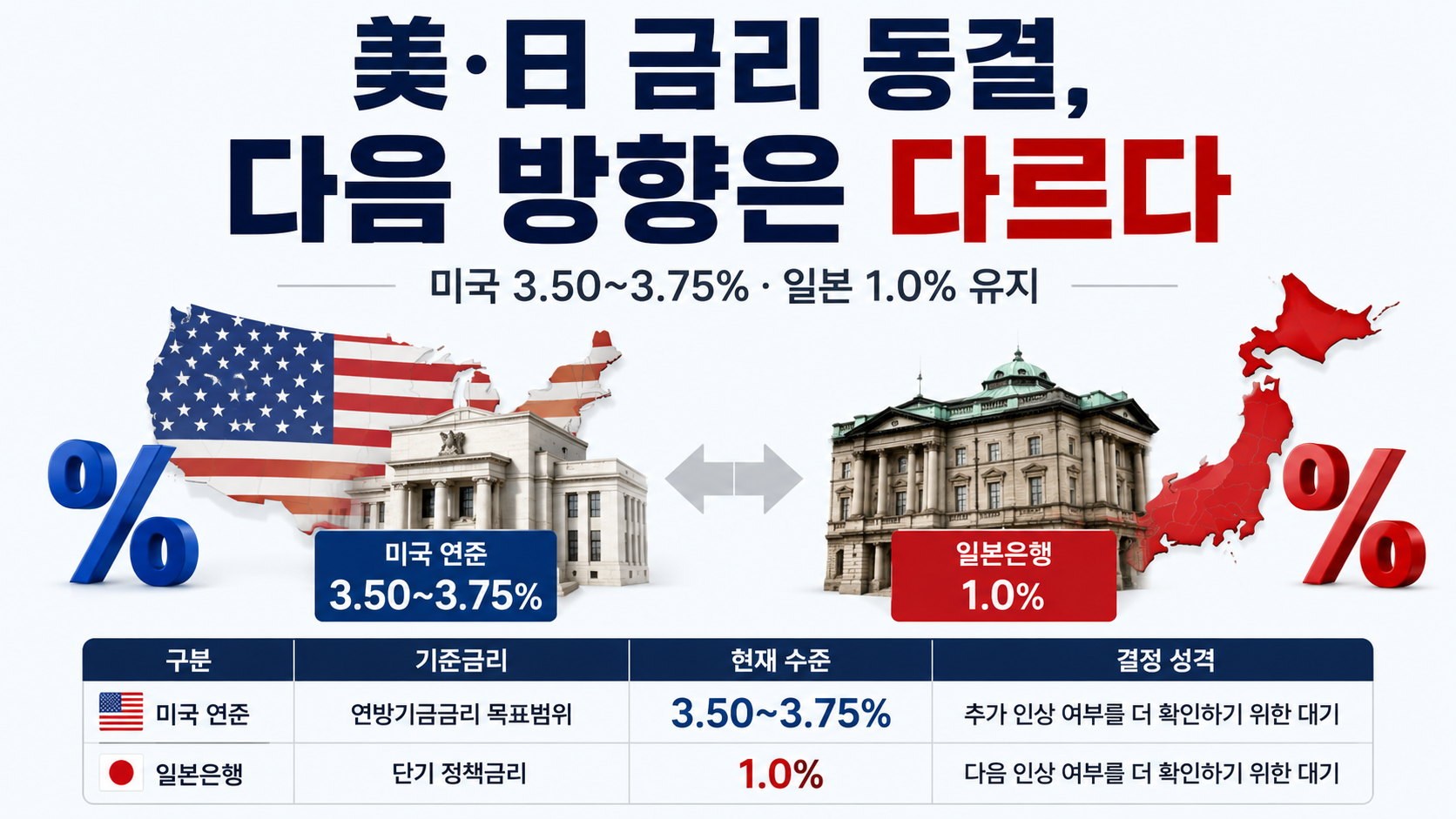
In late July, the central banks of the United States and Japan both left interest rates unchanged. The U.S. Federal Reserve maintained its federal funds rate target range at 3.50~3.75%, while the Bank of Japan kept its short-term policy rate at approximately 1.0%. However, rather than simply representing simultaneous pauses, the two decisions reflected different reasons for waiting to assess whether further rate increases would be necessary.
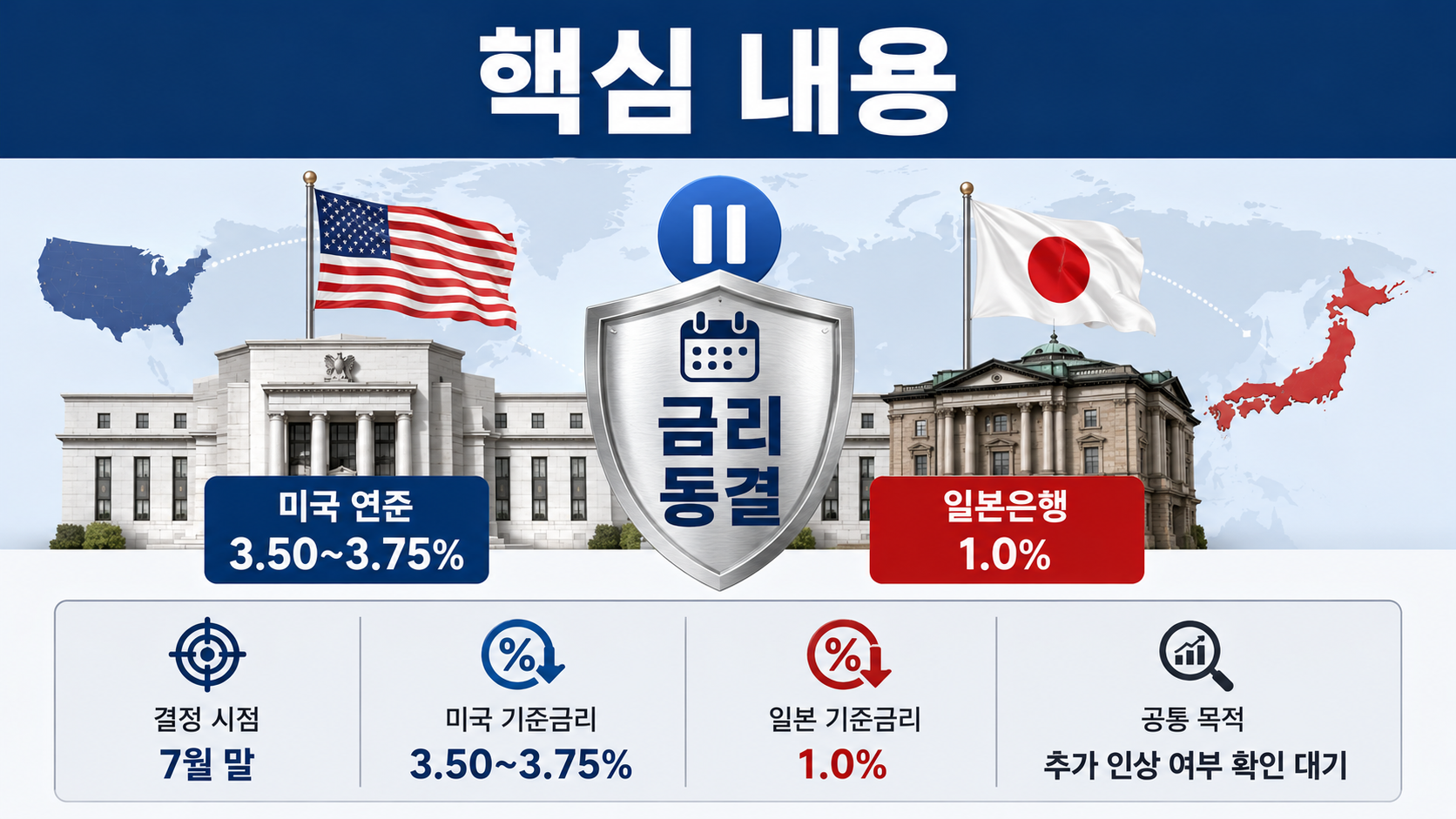
Why Did the Fed Pause at 3.50~3.75%?
With inflation still above its 2% target, the Federal Reserve chose to assess economic conditions and employment trends further rather than immediately raising rates again. The July FOMC vote was 9 to 3, with three members instead favoring an increase of 0.25% percentage points. This indicates that there was considerable support for further monetary tightening even within the decision to hold rates steady.
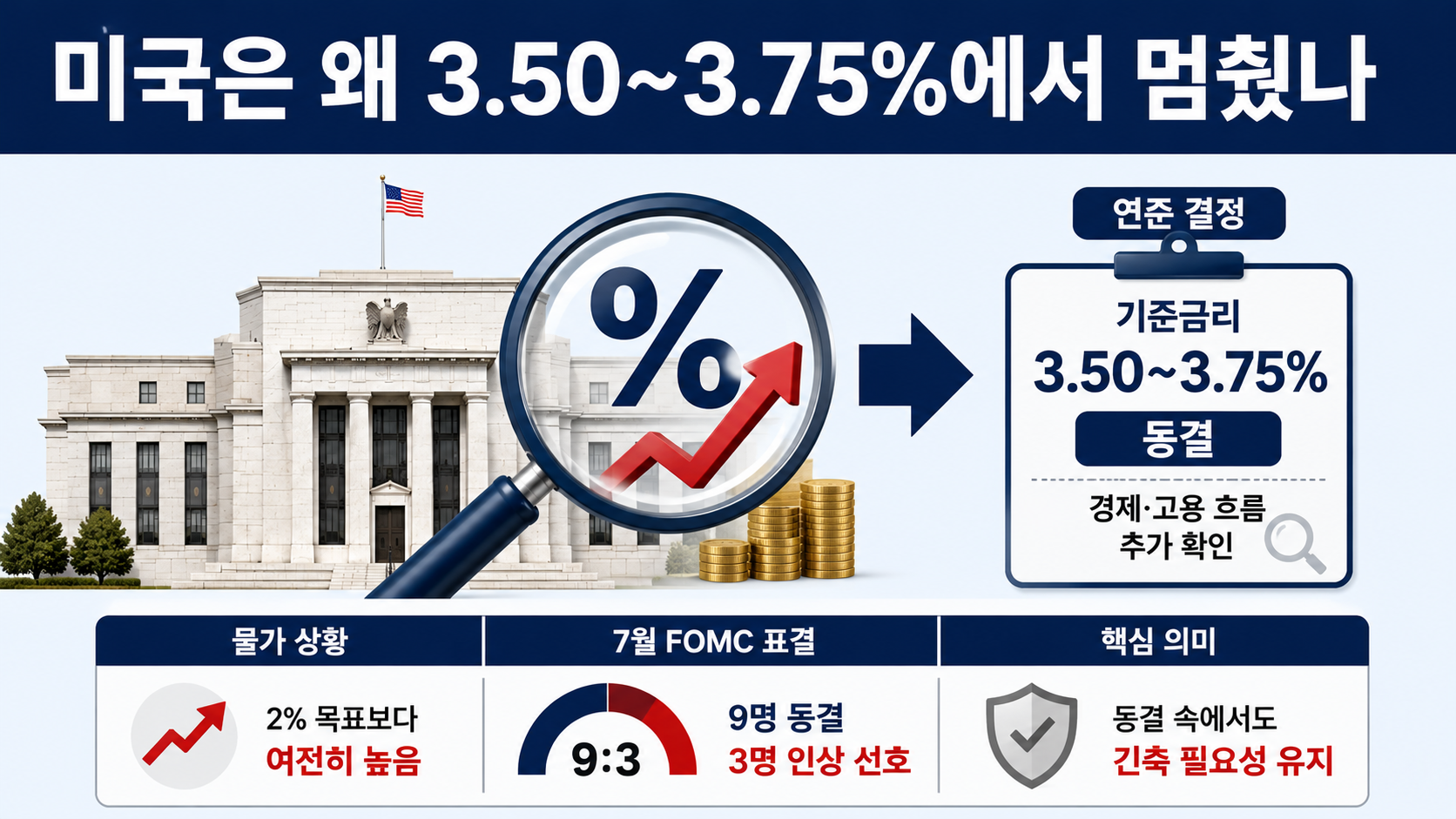
The Fed assessed that economic activity was expanding at a solid pace and that the unemployment rate had changed little. At the same time, it explained that supply shocks, including those involving energy, were keeping inflation elevated. As a result, the decision was more about monitoring whether inflation would strengthen again than preparing for interest rate cuts.
However, the July employment data released after the FOMC meeting changed the outlook.
U.S. nonfarm payroll employment in July declined by 2 ten-thousands and 3 thousands of workers from the previous month. Employment figures for May were revised downward by 6 ten-thousands and 6 thousands of workers, while those for June were lowered by 3 ten-thousands and 7 thousands, bringing the combined downward revision for the two months to 10 ten-thousands and 3 thousands. The unemployment rate was 4.1%.
Inflation alone still provides an argument for additional tightening, but weaker-than-expected employment could increase the economic risks associated with further rate hikes. Therefore, at the September meeting, policymakers will need to reassess whether inflation or employment poses the greater risk.
The Bank of Japan Maintained 1.0% but Has Not Abandoned Its Rate-Hike Path
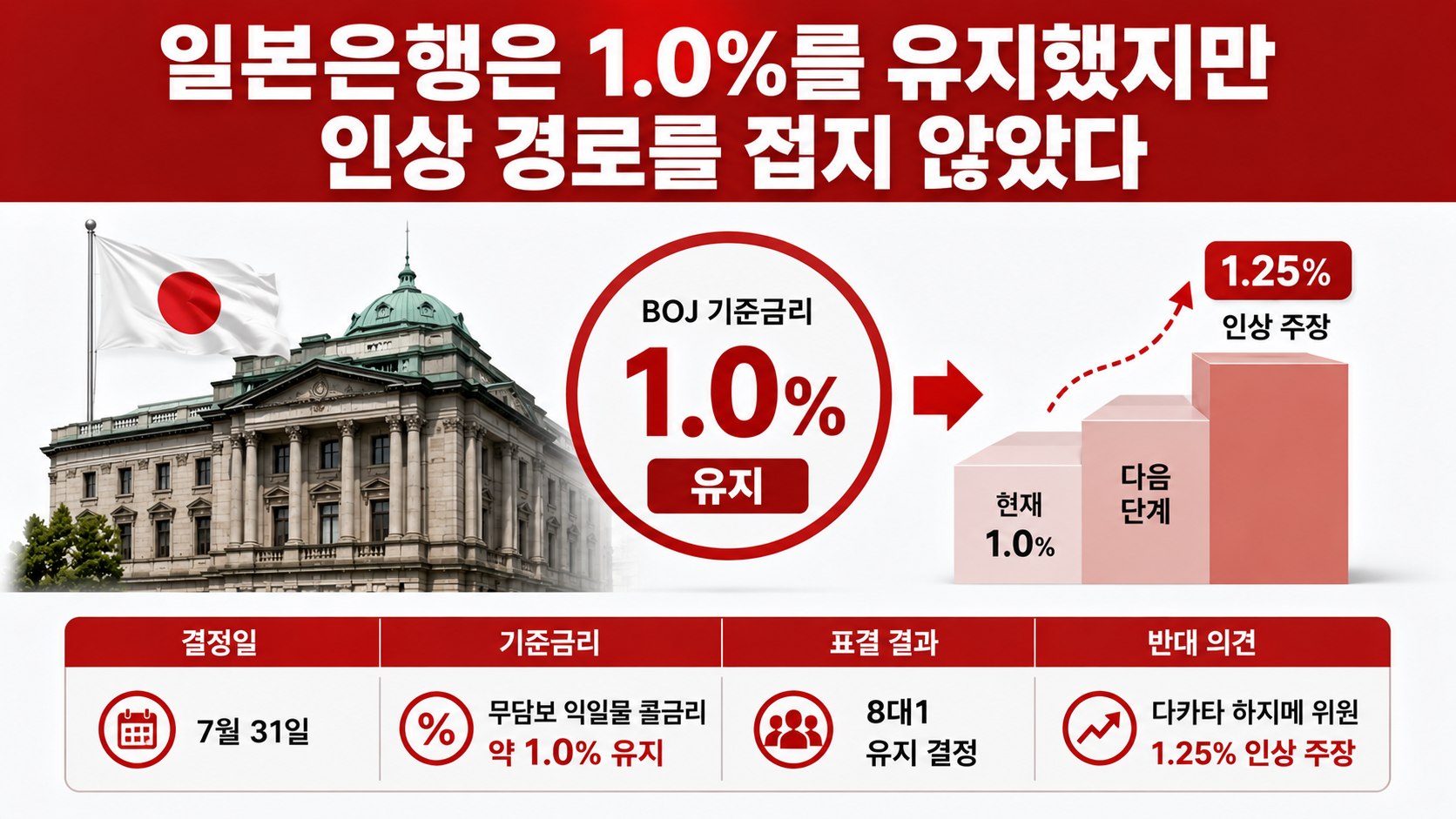
The Bank of Japan maintained the July 31 uncollateralized overnight call rate at approximately 1.0%. The vote was 8 to 1, with dissenting board member Hajime Takata arguing that the rate should be raised to 1.25%. BOJ
Japan's decision to hold rates steady does not mean its rate-hiking cycle has ended. The Bank of Japan continues to maintain that it may raise borrowing costs further if inflation risks increase. Markets also continue to consider the possibility of another rate increase before year-end if yen weakness and upward pressure on prices persist.
In a survey of experts conducted before the July policy meeting, 75 out of 87 respondents, or approximately 86%, expected the Bank of Japan's policy rate to rise to 1.25% by the end of 2026. This was only a forecast, not a confirmed policy timetable. Reuters
Both Central Banks Held Rates Steady, but the Differences Are Significant
Even a comparison of current policy rates reveals a substantial gap between the United States and Japan.
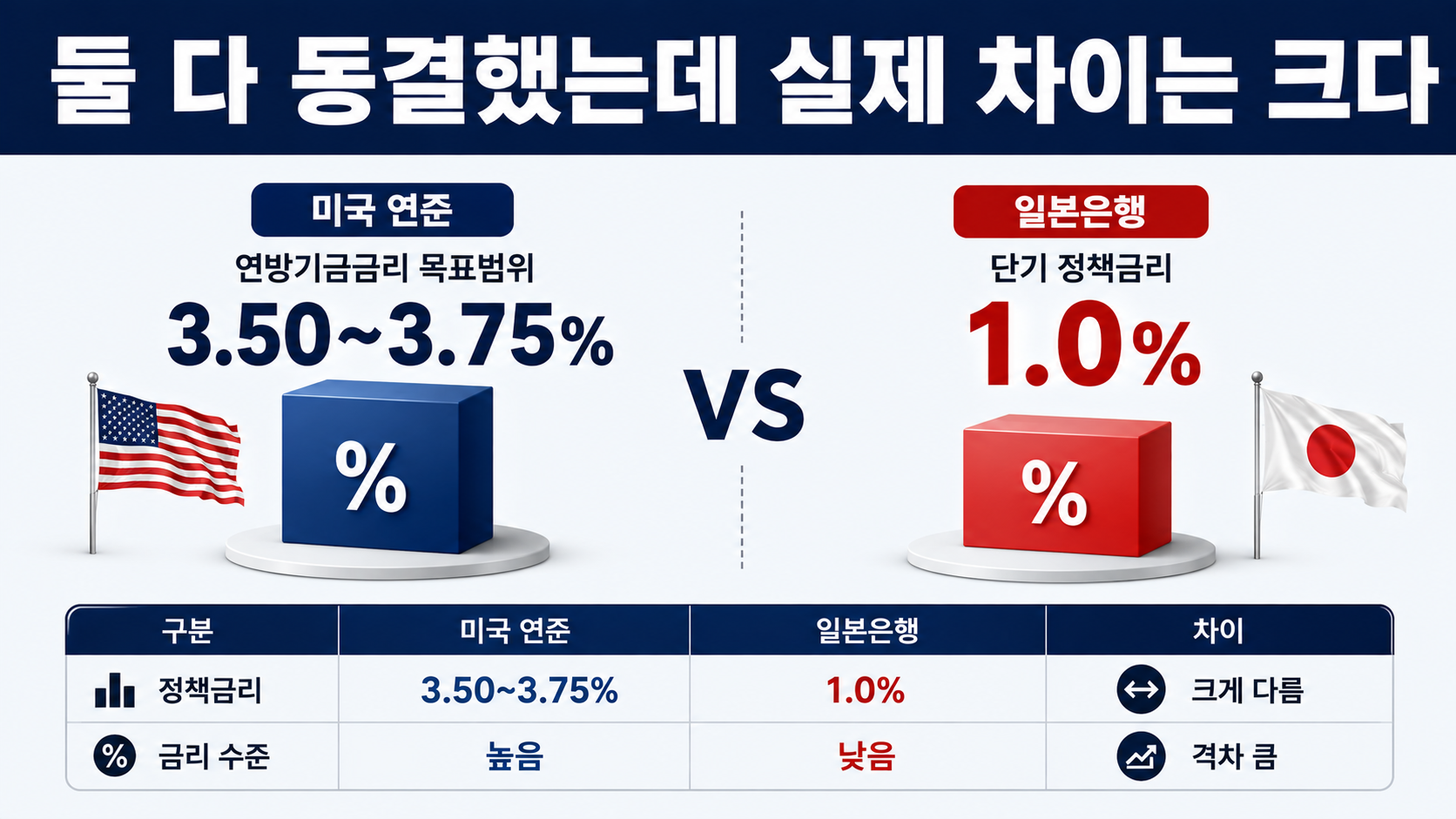
The U.S. rate stands at 3.50~3.75%, while Japan's is approximately 1.0%.
Author's calculations:
3.50% - 1.00% = 2.50% percentage points
3.75% - 1.00% = 2.75% percentage points
Therefore, based on the U.S. policy rate range, the interest rate differential between the United States and Japan is approximately 2.50~2.75% percentage points.
However, the direction of monetary policy is just as important as the current level of interest rates.
In the United States, policymakers have not completely ruled out further rate hikes because inflation remains elevated, but slowing employment has introduced a conflicting signal. Japan's interest rates are much lower than those in the United States, yet the Bank of Japan has left room for additional increases depending on inflation and movements in the yen.
Ultimately, although both decisions are described as a 'hold,' the U.S. decision represents a pause while weighing inflation against employment, whereas Japan's represents a period of assessing the timing of further rate hikes.
What Should Investors Watch First in September?
Both countries have their next policy meetings scheduled for September.
The U.S. FOMC meeting is scheduled for September 15–16, while the Bank of Japan's Monetary Policy Meeting will take place on September 17–18. With only two days separating the meetings, global financial markets could react in quick succession if inflation, employment, and exchange rates continue to change.
For the United States, upcoming inflation and employment data will be the most important indicators. Because employment weakened in July, a further slowdown in inflation could reduce the need for additional rate hikes. Conversely, if inflation strengthens again, discussions about monetary tightening could continue despite weaker employment.
For Japan, movements in the yen are important alongside the persistence of inflation. If yen weakness pushes import prices higher again and wages and service prices continue to rise, discussions about raising rates to 1.25% could intensify. However, the actual rate decision will depend on economic and inflation conditions immediately before the meeting.
Why a Rate Hold Should Not Automatically Be Interpreted as a Signal of Easing
The most important caution regarding these U.S. and Japanese interest rate decisions is the assumption that 'holding rates steady means rate cuts are approaching.'
In the United States, 3 of the 12 FOMC members had already advocated raising rates. In Japan, 1 of the 9 policy board members also supported an increase to 1.25%. Neither meeting was primarily driven by calls to lower current interest rates.
In particular, the situation changed again after the Fed's July decision because U.S. employment turned out to be weaker than expected. When assessing policy in September, it is important to place greater weight on newly released inflation and employment data than on statements made during the July meeting.
In summary, both the United States and Japan have kept interest rates unchanged, but that does not mean their monetary policy directions have converged. In September, a more accurate assessment will come from examining the combination of inflation and employment in the United States separately from inflation and yen movements in Japan.
---
※ This article is provided for informational purposes to help readers understand market trends and does not constitute investment advice or a recommendation to buy or sell any particular security or asset. All investment decisions and associated responsibilities rest with the individual investor.