

Why Do SK Hynix ADR and Korean Share Prices Differ? Exchange Rates and Investor Flows to Watch After the Nasdaq Listing
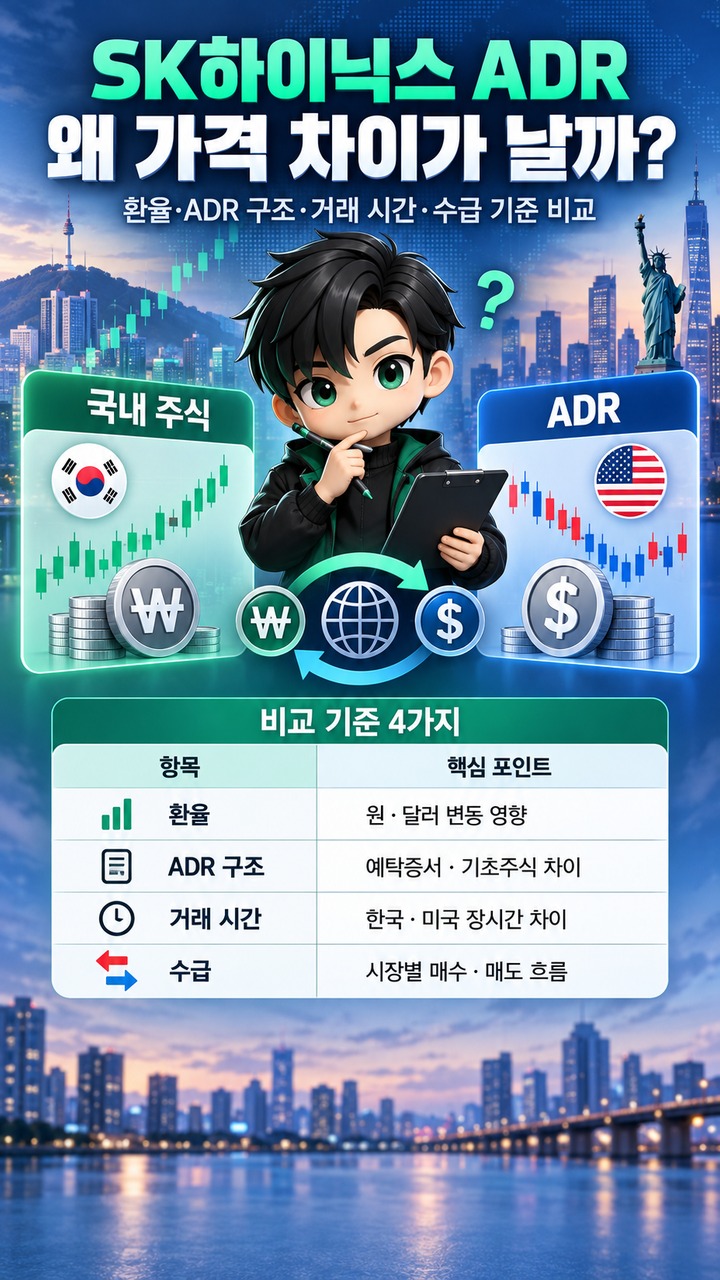
SK Hynix ADR prices and the prices of SK Hynix common shares traded on the Korea Exchange do not necessarily move in perfect alignment. Temporary price differences can arise because of exchange rates, trading hours, and differences in investor demand and trading activity. The key point is that the securities listed on the US Nasdaq are not shares in a separate company but American Depositary Receipts (ADRs) backed by Korean common shares.
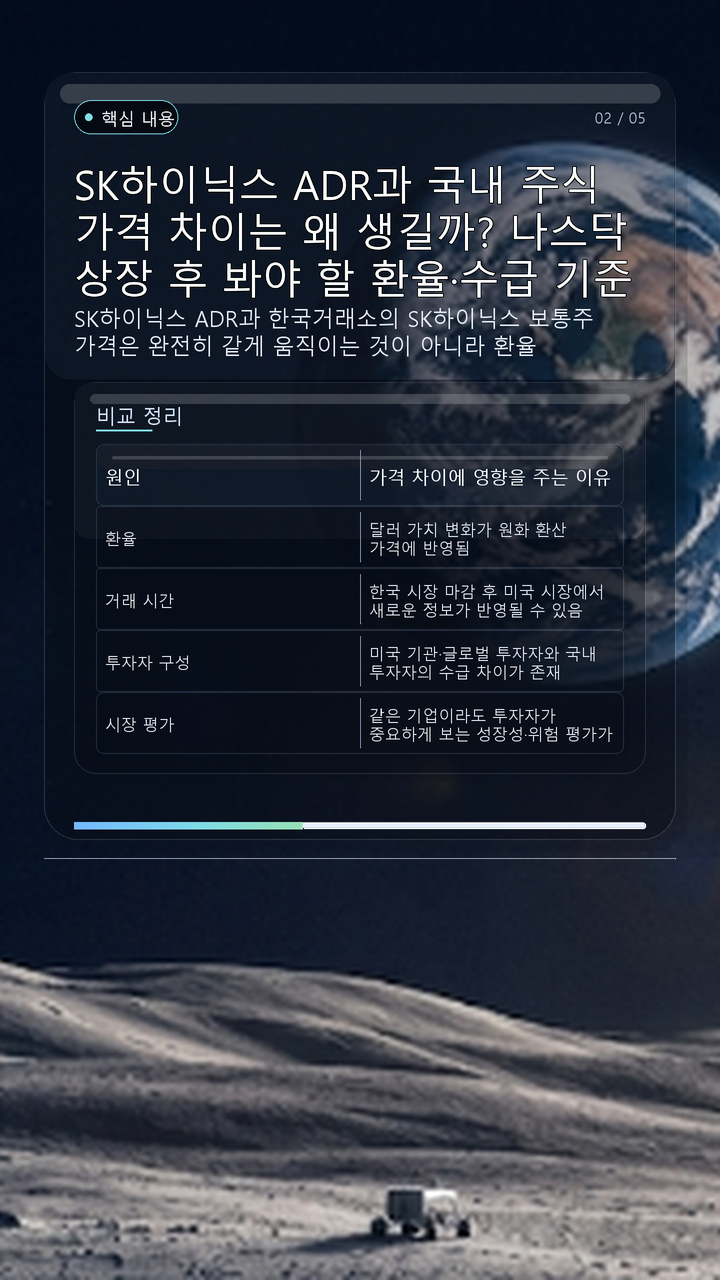
After hearing about the Nasdaq listing, investors may wonder whether a higher US share price will also push up the Korean share price and how prices in the two markets should be compared. Understanding these differences starts with examining the ADR structure and the method used to convert prices.
How Are SK Hynix ADRs Different From Korean Shares?
SK Hynix ADRs are depositary receipts that allow US investors to invest in SK Hynix in US dollars. Although traded in the US market, their underlying assets are SK Hynix common shares listed in South Korea.
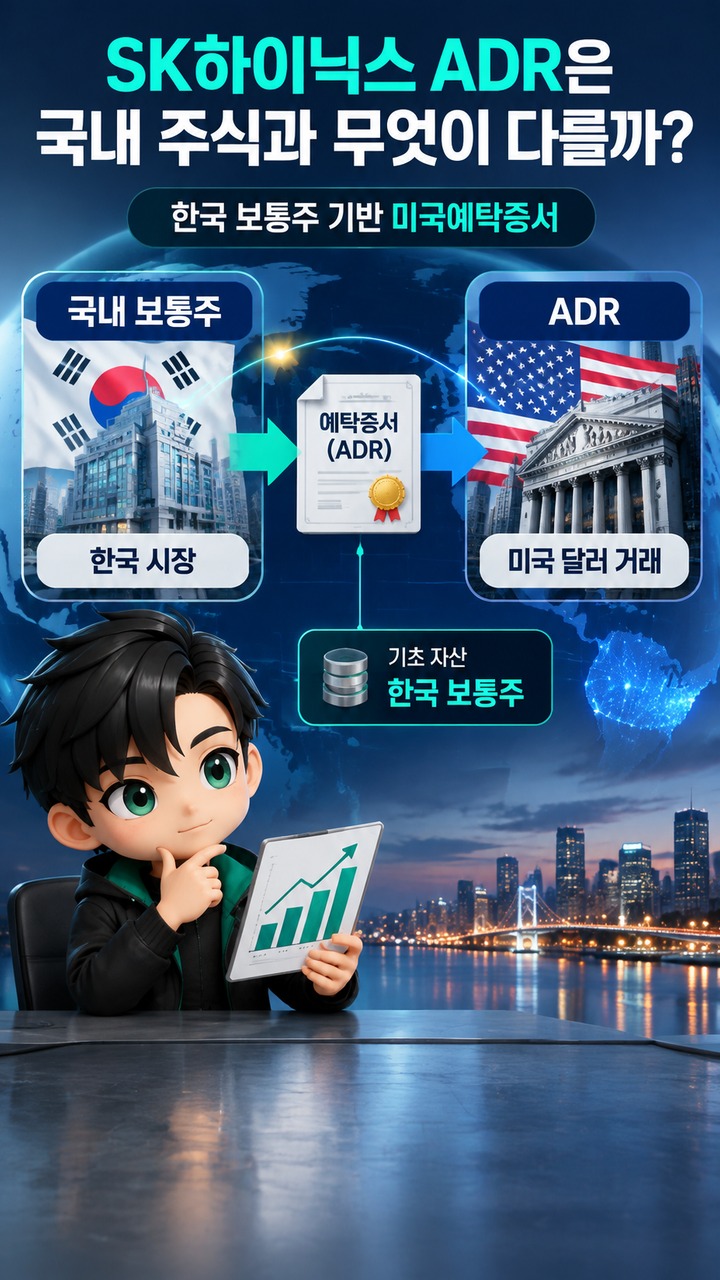
In other words, a new SK Hynix company has not been established in the United States. Instead, the structure makes Korean shares available for trading in the US market through depositary receipts.
For SK Hynix ADRs, the announced structure specifies that 1 US ADRs correspond to 0.1 Korean common shares. Therefore, investors should not compare the ADR price directly with the Korean share price without adjusting for the conversion ratio.
For example, the comparison formula is as follows.
ADR-implied Korean share price = (US ADR price × ADR conversion ratio × KRW/USD exchange rate)
If, as in the case of SK Hynix, 10 ADR represents 1 Korean common shares, the calculation should be:
Price of 10 US ADR × exchange rate = Value of 1 Korean shares
Why Can US Share Prices Be Higher or Lower Than Korean Share Prices?
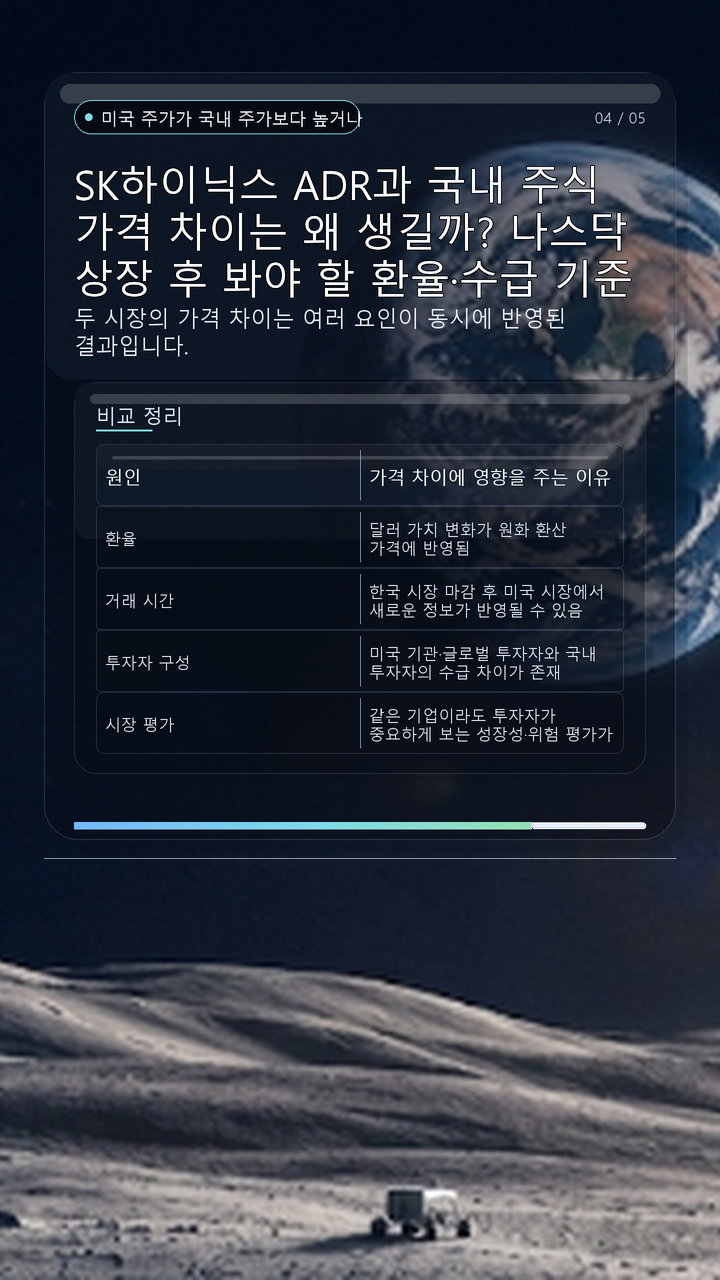
Price differences between the two markets reflect several factors operating simultaneously.
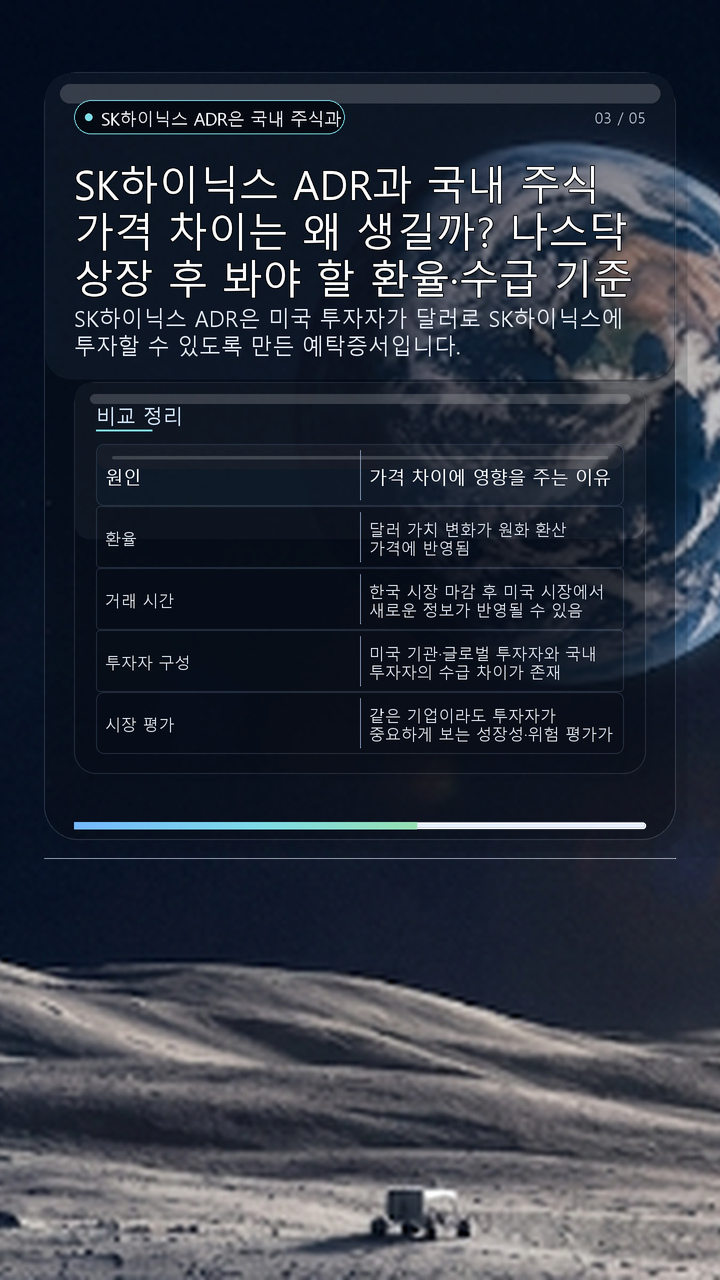
| Factor | Why It Affects Price Differences |
|---|---|
| Exchange rates | Changes in the value of the US dollar affect prices converted into Korean won. |
| Trading hours | New information may be reflected in US trading after the Korean market has closed. |
| Investor composition | Trading flows differ between US institutions and global investors and investors in the Korean market. |
| Market valuation | Even for the same company, investors may assess growth potential and risks differently. |
The US market attracts global investors trading in dollars, while the Korean market includes domestic and international investors trading in Korean won. Even when the underlying company is identical, differences in investor groups and trading conditions can produce short-term price gaps.
On the first trading day of SK Hynix ADRs, analysts also reported that the US market price, when converted into Korean won, was higher than the price of the company's Korean common shares. However, such differences should not be assumed to persist indefinitely.
Will Korean Shares Necessarily Follow When ADR Prices Diverge?
A higher US ADR price does not necessarily mean that Korean shares will rise by the same percentage.
Although prices may move toward narrowing the gap, several variables influence how that adjustment actually unfolds:
Differences in trading hours between the Korean and US markets
Changes in the KRW/USD exchange rate
Buying and selling activity by foreign and institutional investors
Changes in the outlook for the semiconductor industry
Corporate earnings and regulatory disclosures
In particular, ADRs have their own market prices because they trade in the United States. However, the value of the underlying company remains the same, so over the longer term, both securities are structured to reflect valuations of the same business.
Which Numbers Should SK Hynix Investors Monitor After the ADR Listing?
Following the ADR listing, investors should look beyond whether the US share price has risen and examine three factors together.
1. Compare the ADR-Implied Price With the Korean Share Price
For an accurate comparison, the US ADR price must be converted into its Korean share equivalent using the exchange rate and ADR conversion ratio.
2. Exchange Rate Movements
A stronger or weaker US dollar affects the Korean won value of an ADR even when its dollar-denominated price remains unchanged.
3. Trading Volume and Investor Composition
Investors should also examine how much actual trading activity develops in the US market and how global investors value the company.
An ADR listing can make a company more accessible to overseas investors, but it does not automatically determine the direction of its share price. Investors still need to consider corporate earnings, industry prospects, and broader market conditions.
Frequently Asked Questions
Q. Is Buying SK Hynix ADRs the Same as Buying Korean Shares?
Their economic values are linked, but they trade in different markets and currencies. ADRs are depositary receipts traded on US securities exchanges, while Korean shares trade in Korean won on the Korea Exchange.
Q. If the US ADR Price Is Higher, Does That Mean Korean Shares Are Undervalued?
A price difference alone is not enough to conclude that shares are undervalued or overvalued. Exchange rates, trading hours, and differences in investor composition must also be considered.
Q. What Does an ADR Listing Mean for Shareholders?
From the company's perspective, an ADR listing can provide broader access to US capital markets and create more opportunities to engage with global investors. SK Hynix described its ADR listing as a way to expand its US investor base and strengthen its position as a global AI memory company.
※ This article is provided for informational purposes to help readers understand market developments. It is not a recommendation to invest in any particular stock or asset. Investors are responsible for their own final decisions and investment outcomes.
Related Articles
SK Hynix Nasdaq Listing: Why It Appeared in New York's Times Square and What Has Changed
SpaceX Has Already Completed Its Nasdaq Listing, Making Musk's Trillionaire Status a Reality