

2027 Unemployment Benefits for 270 Days: If Payments Change to 6 Days per Week, It Could Take 10.5 Months…Can You Still Receive Everything Within 1 Year If You Apply Late?
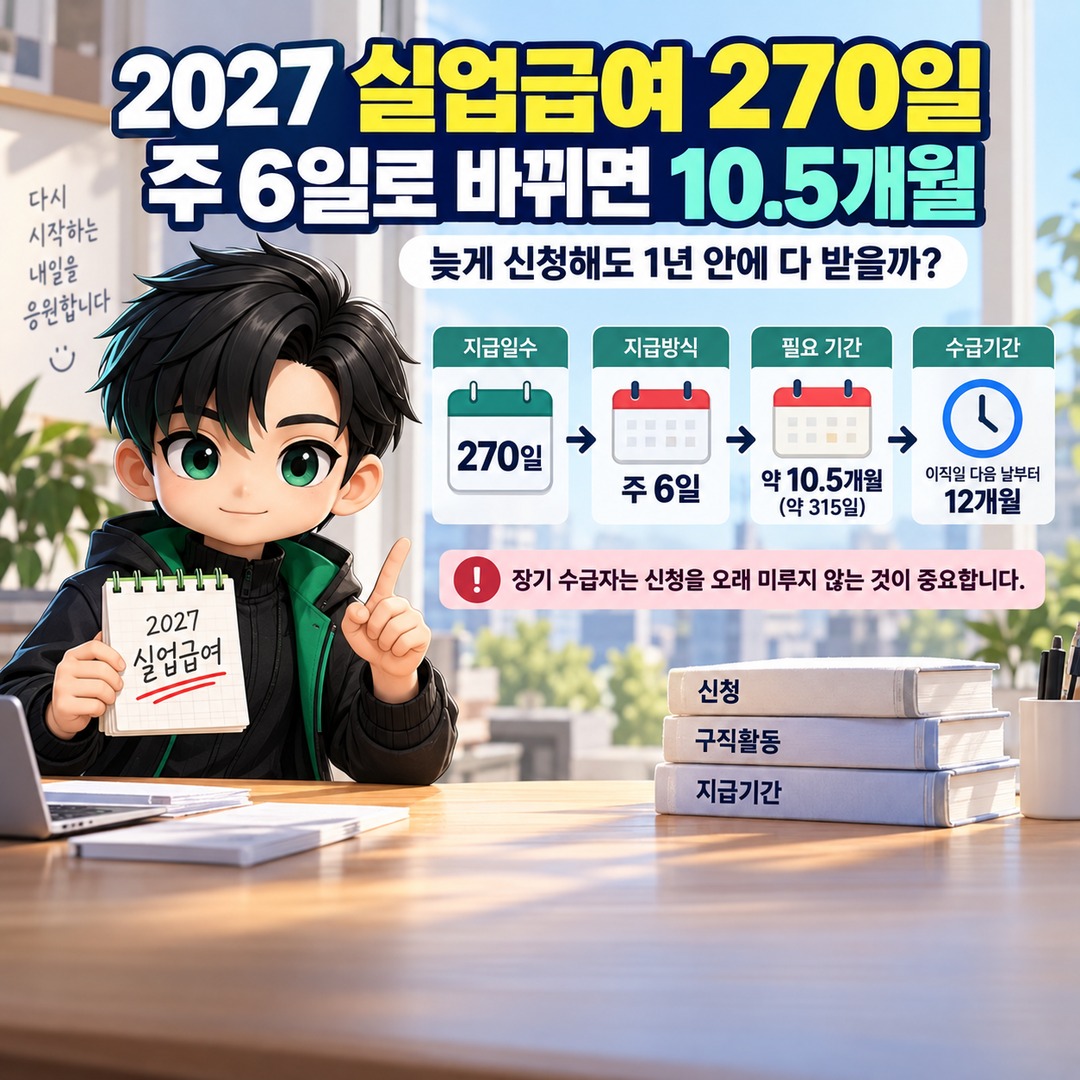
If unemployment benefits change to payments for 6 days per week under the government's 2027 reform proposal, receiving 270 days of job-seeking benefits would take approximately 315 calendar days, or about 10.5 months. However, the current system has a benefit eligibility period of 12 months beginning the day after separation from employment, making it particularly important for long-term recipients not to delay applying.
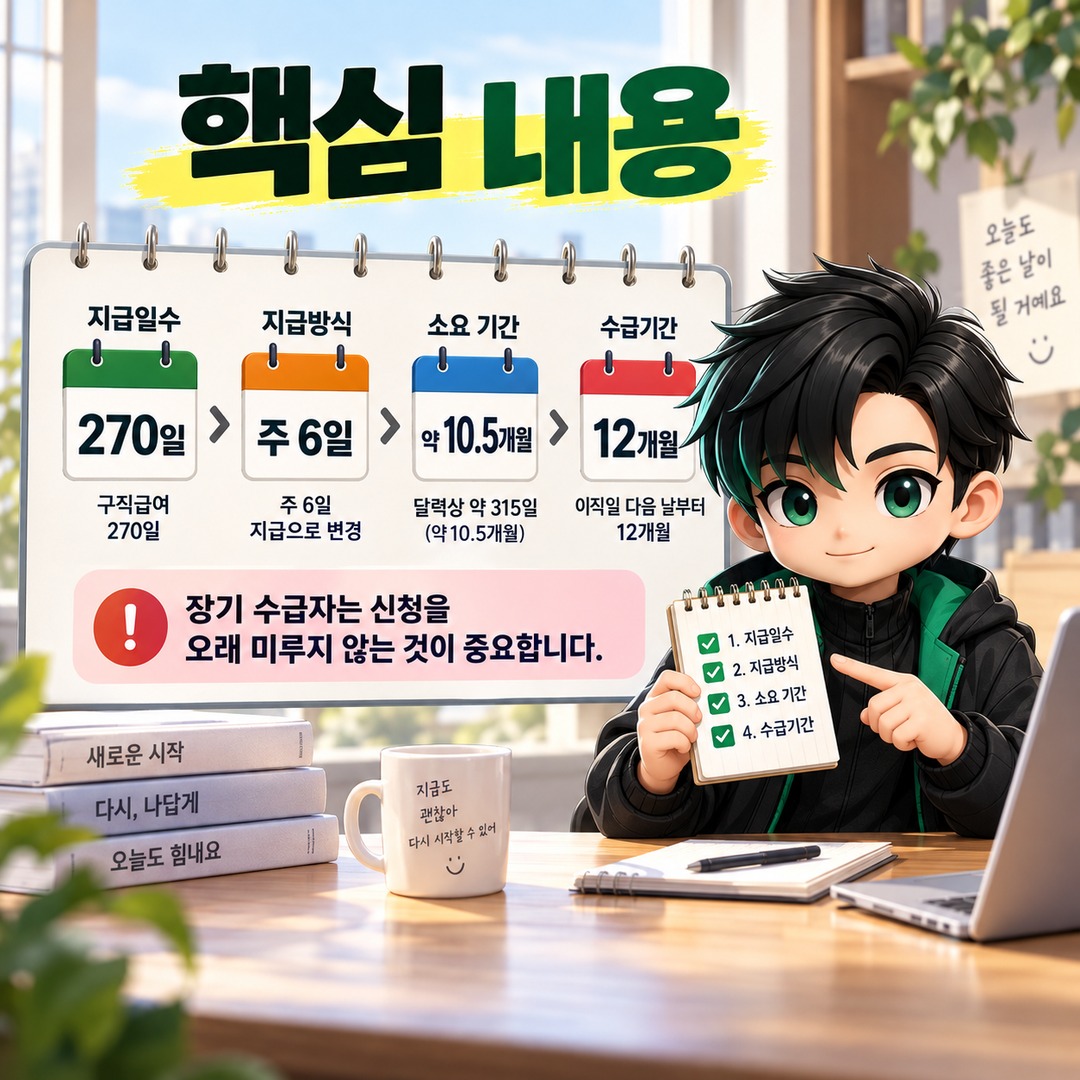
As of 2026-10-03, however, payments for 6 days per week have not yet been implemented. This is a reform proposal announced by the Ministry of Employment and Labor, and excluding unpaid rest days requires legislative amendments. The government has stated that it intends to proceed with the necessary steps, aiming to amend the relevant laws and subordinate regulations within the year.
Why Would Receiving 270 Days of Benefits Take Approximately 315 Days?
The central feature of the government's proposal is not to reduce the prescribed benefit duration from 270 days, but to change the number of payable days per week from 7 to 6.
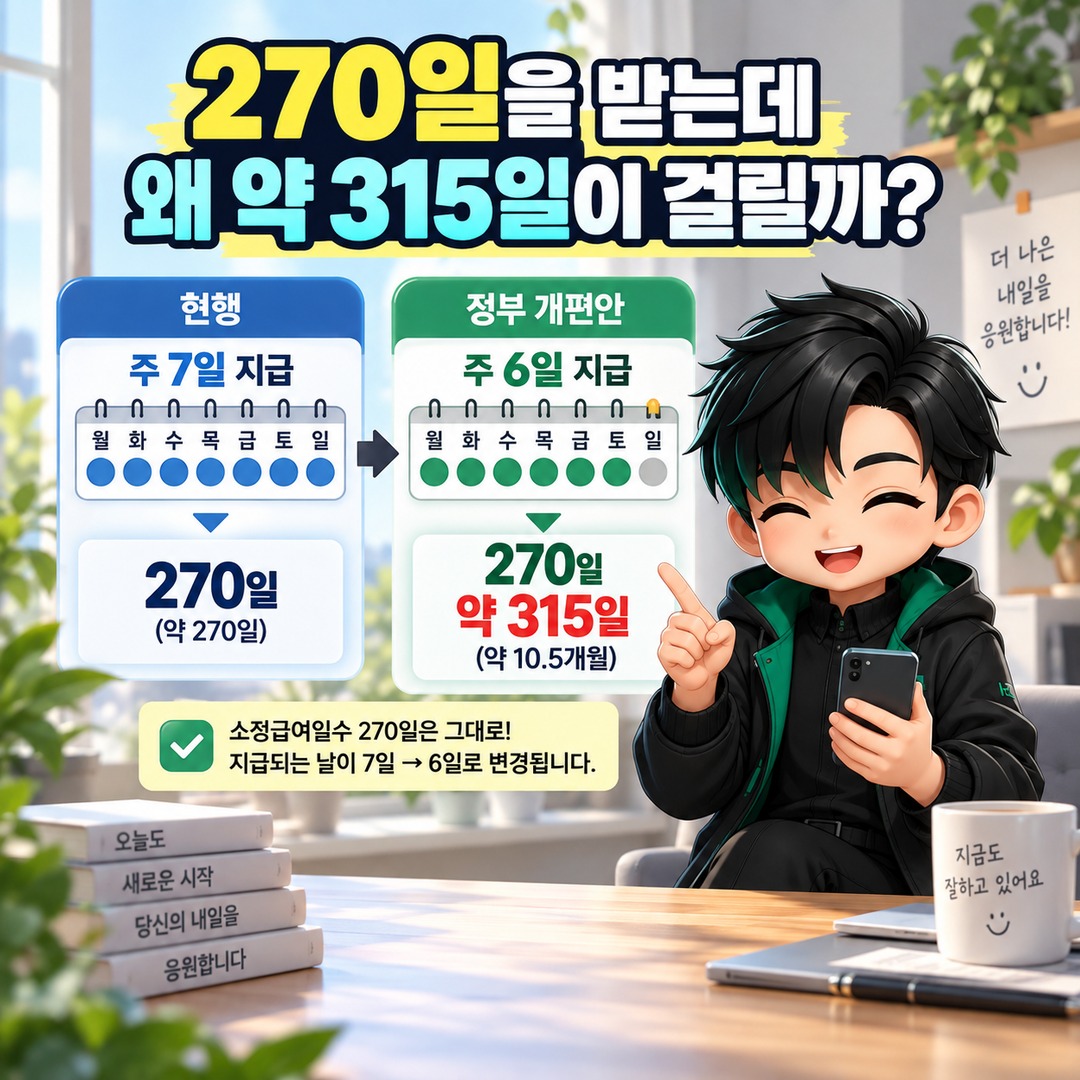
The Ministry of Employment and Labor has stated that even if payments change to 6 days per week, the total benefit amount and the total number of payable benefit days, 120–270 days, will remain unchanged.
For someone entitled to 270 days of benefits, the simplified calculation is as follows.
270 Days ÷ 6 Days per Week × 7 Days = Approximately 315 Days
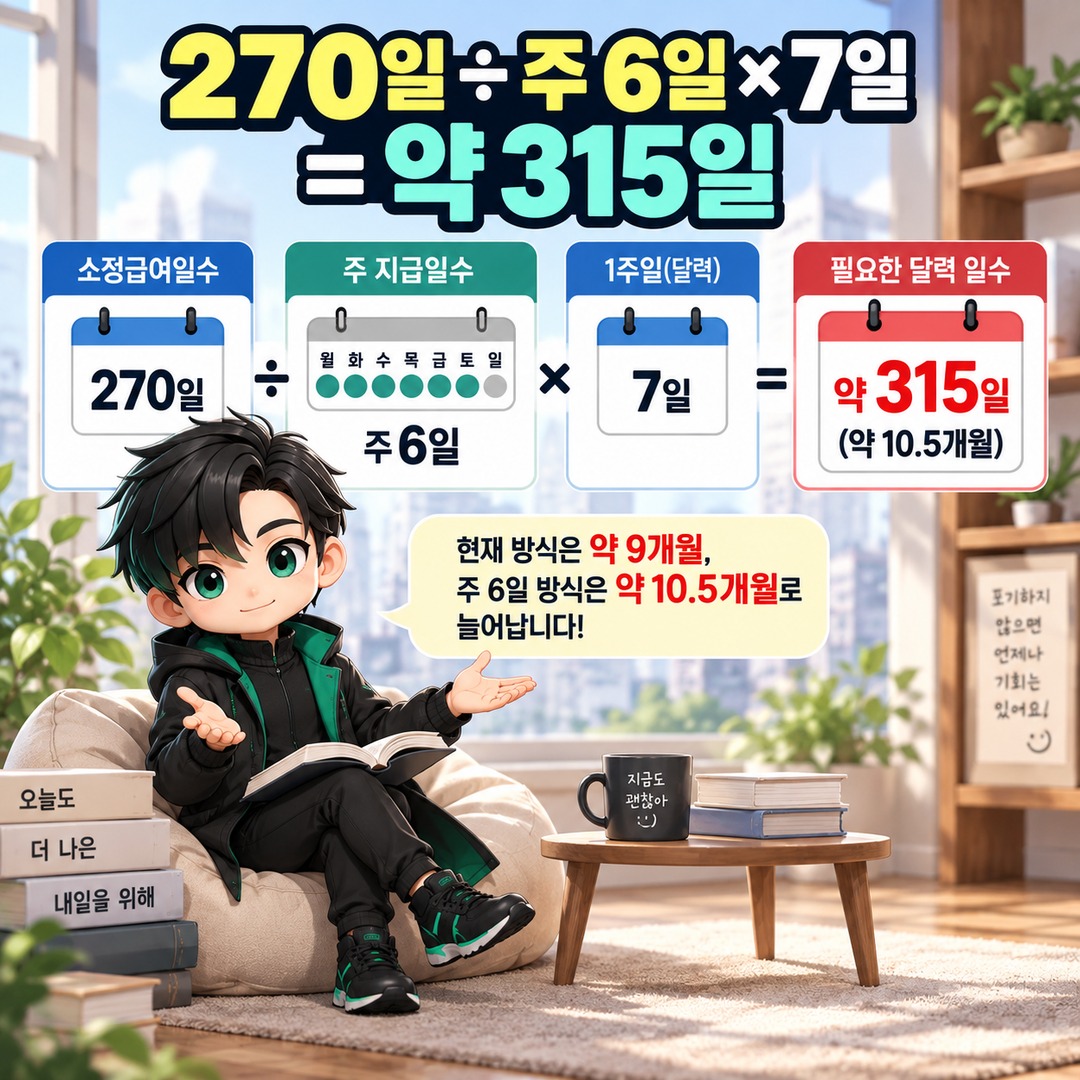
In other words, exhausting 270 payable benefit days would require approximately 315 calendar days. Under the current system, this takes about 9 months, but under the proposed 6-day-per-week system, it would increase to approximately 10.5 months. Media reports have also calculated that the actual benefit collection period for recipients entitled to the maximum 270 days would be approximately 10.5 months.
| Prescribed Benefit Duration | Simple Calendar-Day Conversion Based on 6 Days per Week |
|---|---|
| 120 days | Approximately 140 days |
| 150 days | Approximately 175 days |
| 180 days | Approximately 210 days |
| 210 days | Approximately 245 days |
| 240 days | Approximately 280 days |
| 270 days | Approximately 315 days |
These periods are the author's calculations using prescribed benefit days ÷ 6 × 7. The actual final payment date may vary depending on individual circumstances, including the date unemployment is reported, the unemployment recognition schedule, and whether the recipient becomes employed or performs work.
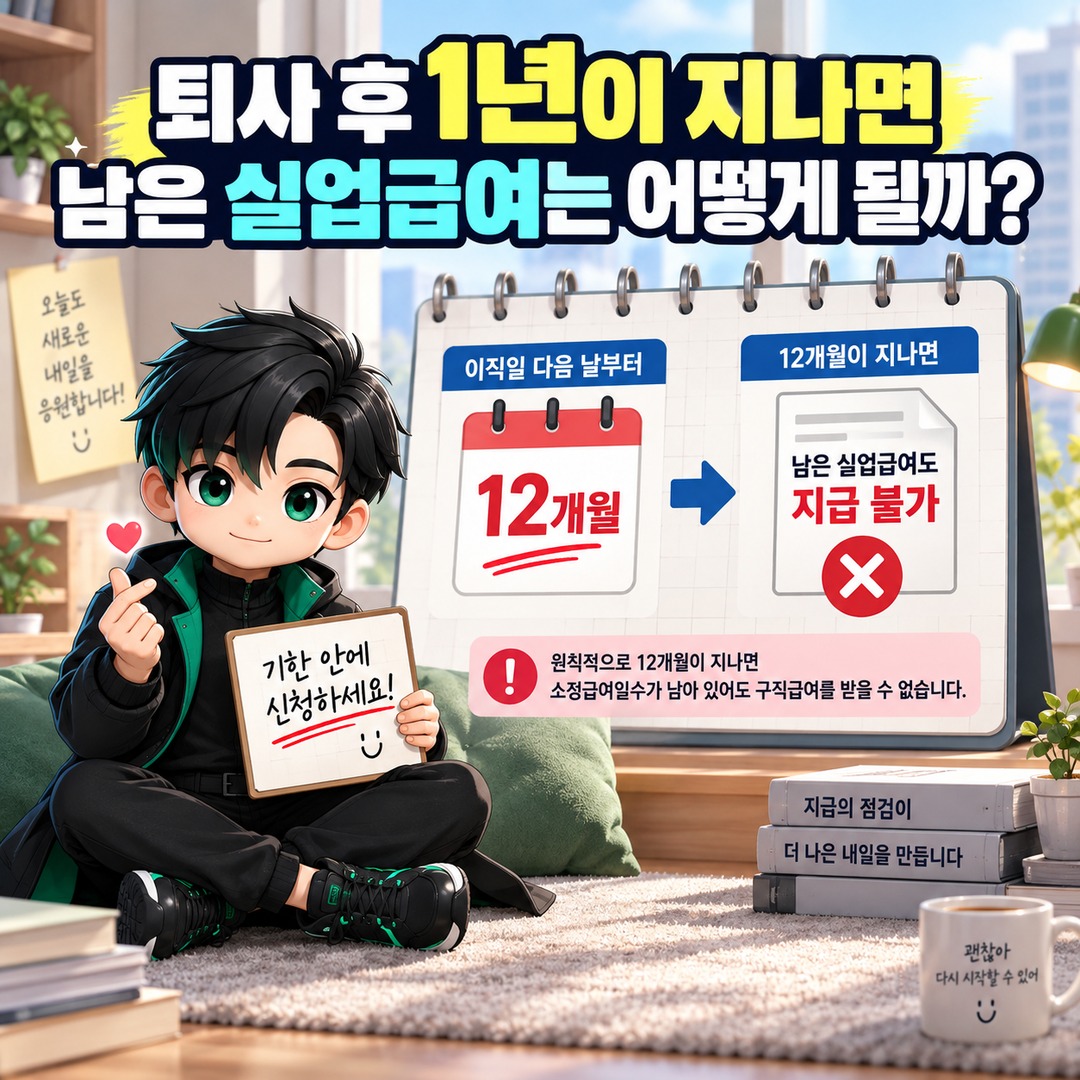
What Happens to Remaining Unemployment Benefits After 1 Year Has Passed Since Leaving a Job?
Under current rules, as a general principle, job-seeking benefits can no longer be received once 12 months have passed from the day after separation from employment, even if prescribed benefit days remain unused.
The Ministry of Employment and Labor also explains in its unemployment benefit application guidance that if more than 12 months have passed since the day after separation from employment, payments cannot be received even when prescribed benefit days remain.
It is important to distinguish between two periods that are frequently confused.
Prescribed benefit duration refers to the number of days for which a person is entitled to receive job-seeking benefits. Depending on factors such as age and the length of employment insurance coverage, this ranges from 120 to 270 days.
By contrast, the 12-month benefit eligibility period is the overall time limit within which those benefits can be claimed.
Therefore, being eligible for 270 days of benefits does not mean that a person can receive all 270 days regardless of when they apply.
How Much Time Would Someone Eligible for 270 Days Have After Leaving Their Job?
Assuming the proposed 6-day-per-week payment system is implemented without changes and the current 12-month benefit eligibility rule remains in place, long-term recipients would have less time to spare than they do now.
Using 365 days for a simplified comparison:
365 Days − Approximately 315 Days = Approximately 50 Days
That leaves a difference of only about that many days.
In addition, ordinary employees are generally subject to a waiting period of 7 days after reporting unemployment. Current guidance from the Ministry of Employment and Labor explains that benefits are paid for the period excluding this waiting period at the first unemployment recognition.
Therefore, a simplified calculation for someone eligible for 270 days of benefits would be:
315 Days + 7-Day Waiting Period = Approximately 322 Days
Subtracting this from 365 days leaves approximately 43 days.
However, this must not be interpreted as an official application deadline stating that applicants can apply up to 43 days after leaving their jobs. Actual circumstances can vary because of factors such as the weekdays on which benefits are payable, the date unemployment is reported, unemployment recognition schedules, and reemployment or other work activities.
Instead, the safer approach is to follow the Ministry of Employment and Labor's current guidance: report unemployment without delay after leaving employment and begin the process of obtaining recognition of benefit eligibility.
Why Recipients Eligible for 270 Days Need to Be More Careful Than Those Eligible for 150 Days
Payments for 6 days per week would extend the calendar period over which all recipients receive benefits, but the longer the prescribed benefit duration, the greater the extension.
For example, 150 days would require approximately 175 calendar days under a simple conversion.
150 ÷ 6 × 7 = 175 Days
By contrast, 270 days would require approximately 315 days.
270 ÷ 6 × 7 = 315 Days
Neither case involves reducing the legally prescribed number of benefit days. However, recipients eligible for 270 days would come much closer to the overall 12-month benefit eligibility limit.
Under current rules, the maximum prescribed benefit duration of 270 days applies to people aged 50 or older, or people with disabilities, who have been covered by employment insurance for at least 10 years. Those younger than 50 currently qualify for a maximum of 240 days, even if they have at least 10 years of coverage.
Payments for 6 Days per Week Have Not Been Confirmed to Begin Immediately in 2027
It is important to distinguish the relevant dates.
When the Ministry of Employment and Labor announced its employment insurance reform proposal on 2026-09-01, it proposed changing job-seeking benefit payments from 7 days per week to 6 days per week by excluding unpaid rest days. It also stated that the total benefit amount and total number of payable benefit days would be maintained.
However, as of 2026-10-03, this remains a reform proposal being pursued by the government. The Ministry's materials also classify the exclusion of unpaid rest days as a matter requiring legislative amendment. They explain that the government intends to support the legislative process in the National Assembly and proceed with follow-up measures, aiming to amend the relevant laws and subordinate regulations within the year.
Therefore, anyone preparing to leave their job should recheck whether the legislation has been finalized, the effective date, and how the changes interact with the 12-month benefit eligibility rule.
Ultimately, the Potential Final Payment Date Matters More Than the 270-Day Entitlement
In the unemployment benefit system, 120 days, 150 days, and 270 days represent the number of days for which benefits can be paid, while 12 months represents the overall period during which those benefits can be received.
If the reform introducing payments for 6 days per week takes effect, the same 270 payable days could be spread across approximately 315 calendar days. Long-term recipients should therefore check not only whether they qualify for 270 days, but also whether they can exhaust all remaining benefit days within 12 months from the day after separation from employment.
This is particularly important for anyone planning to take several months off after leaving a job before applying for unemployment benefits. It is better to check the rules before delaying an application. Current Ministry of Employment and Labor guidance also clearly states that recipients may lose access to remaining prescribed benefit days once the benefit eligibility period expires.
Because individual circumstances may affect eligibility for extensions or the actual final payment date, the most accurate way to confirm the applicable rules is through Employment 24 or the relevant local employment center.
※ This article is provided for reference purposes to help readers understand market trends and does not constitute an investment recommendation for any particular security or asset. Final investment decisions and responsibility rest with the individual.