

2026 Special Student Loan Debt Adjustment: If the Initial Payment Is Waived, Do You Still Have to Repay the Principal? First Payment and Scope of Reductions
Even if the initial payment is waived under the special student loan debt adjustment program, the loan principal is not thereby eliminated. In 2026, the Korea Student Aid Foundation’s special debt adjustment program reduces all or part of the delay compensation (damages resulting from delinquency) owed by long-term delinquent borrowers. Even eligible borrowers whose initial payment is waived must pay the first installment. In particular, applications are accepted until 2026-11-30
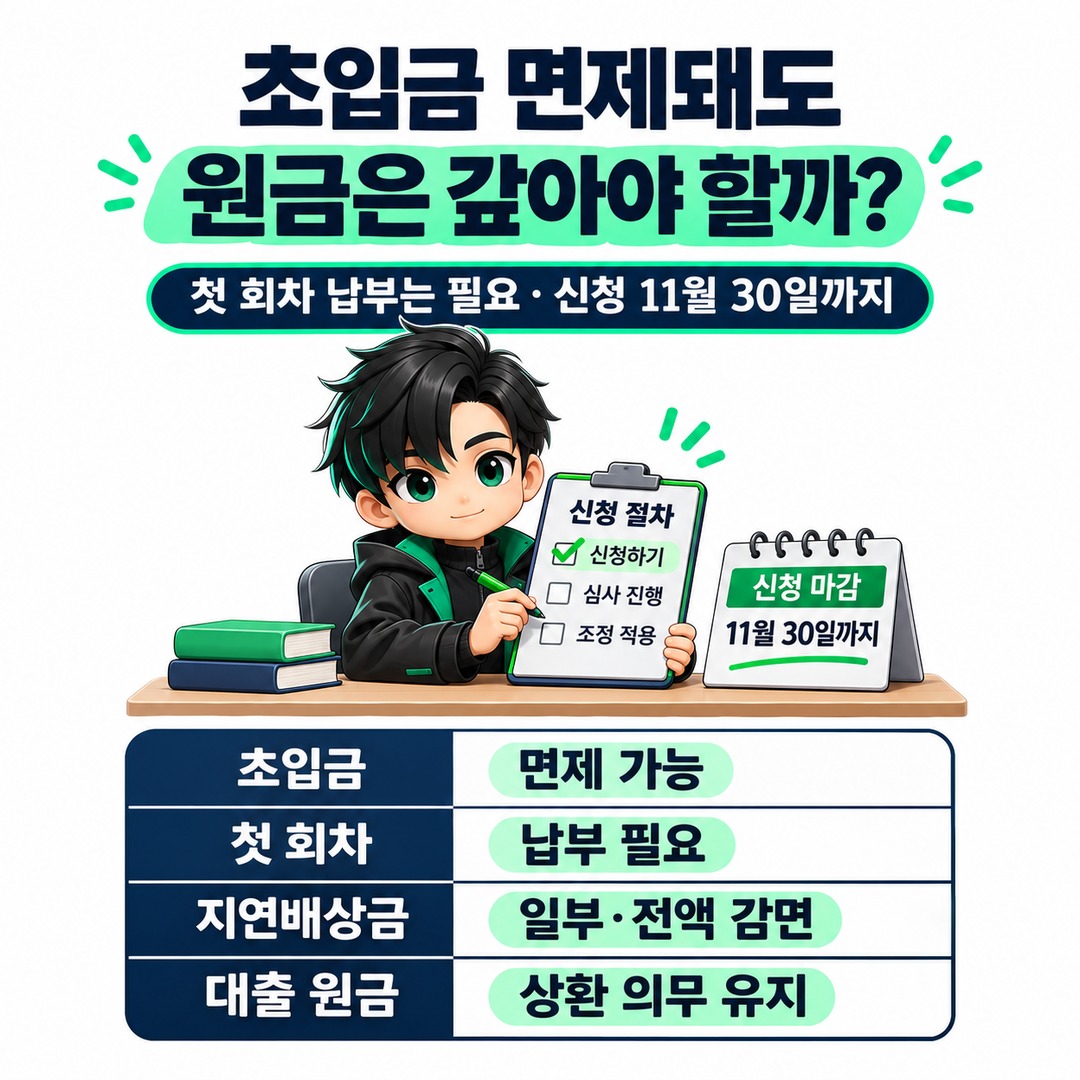
Even if the initial payment is waived under the special student loan debt adjustment program, the loan principal is not thereby eliminated. In 2026, the Korea Student Aid Foundation’s special debt adjustment program reduces all or part of the delay compensation (damages resulting from delinquency) owed by long-term delinquent borrowers. Even eligible borrowers whose initial payment is waived must pay the first installment.
In particular, this program, which accepts applications until 2026-11-30, covers not only young adults, recipients of basic livelihood assistance, near-poor households, and people with disabilities, but also general borrowers and borrowers with a good repayment record who meet certain conditions.
How Does Waiving the Initial Payment Differ from Forgiving Student Loan Principal?
The most important difference is what is reduced.
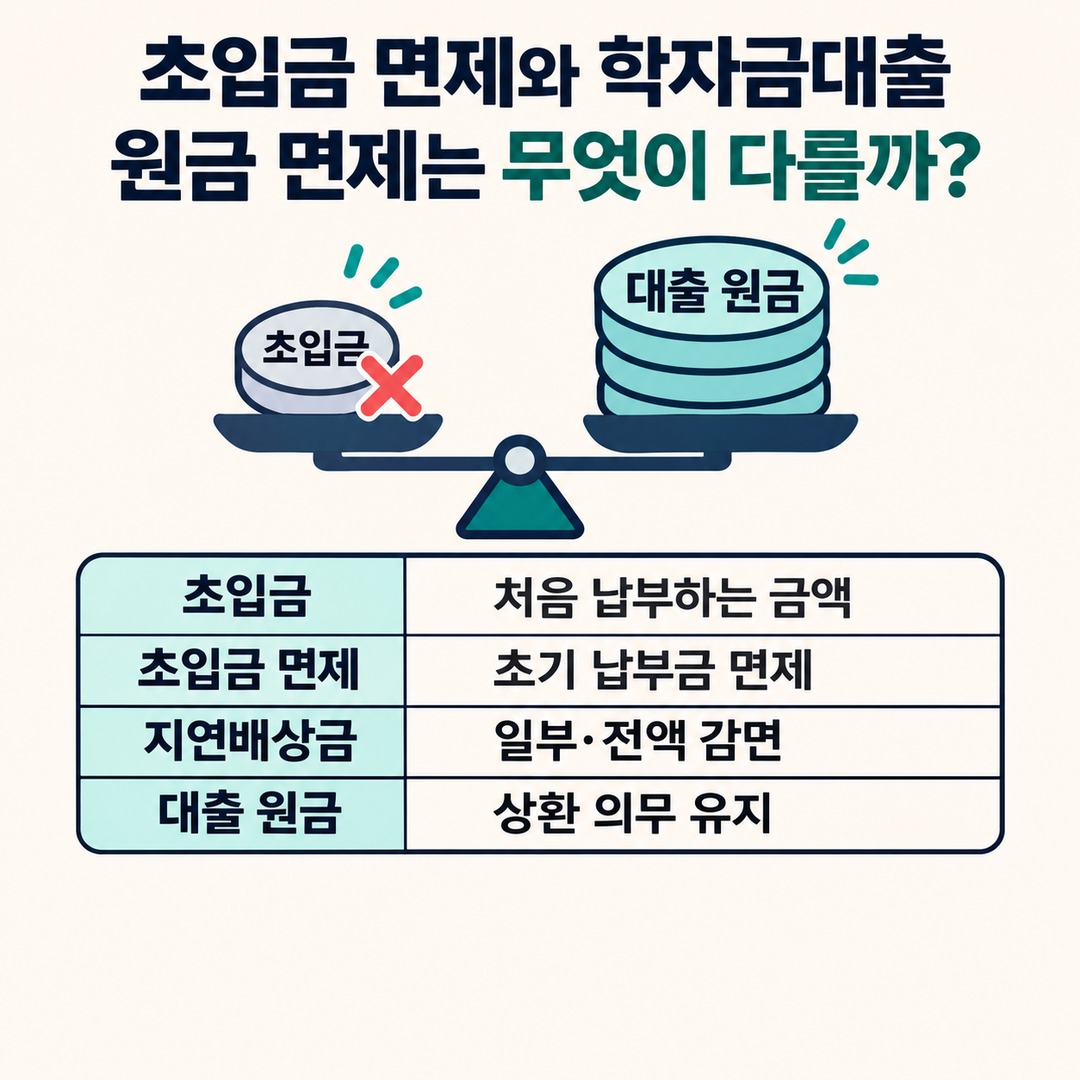
The initial payment is the amount paid upfront when entering into an installment repayment agreement with the Korea Student Aid Foundation. A reduction in delay compensation lowers damages incurred due to delinquency; it is different from debt forgiveness that eliminates the principal itself.
The special debt adjustment guidelines announced by the Korea Student Aid Foundation in 2026-09-14 also describe the support as a full or partial reduction of delay compensation.
| Category | Meaning |
|---|---|
| Initial payment waiver | Waiver of the upfront payment required when entering into an agreement |
| Reduction in delay compensation | Partial or full reduction of damages incurred due to delinquency |
| Principal repayment | The obligation to repay the existing loan principal remains in effect |
| First installment payment | Borrowers whose initial payment is waived must also pay the amount for installment 1 under the agreement |
Therefore, the fact that the initial payment is KRW 0 does not mean that the amount you will have to repay going forward will also be KRW 0.
Although the initial payment is waived for borrowers in socially vulnerable groups and borrowers with a good repayment record, they must separately pay the first installment under the agreement.
Who Is Eligible for the 2026 Special Debt Adjustment Program?
This special debt adjustment program is for borrowers with long-term delinquencies on student loans. Student loans for students from rural backgrounds and interest-free loans are excluded.
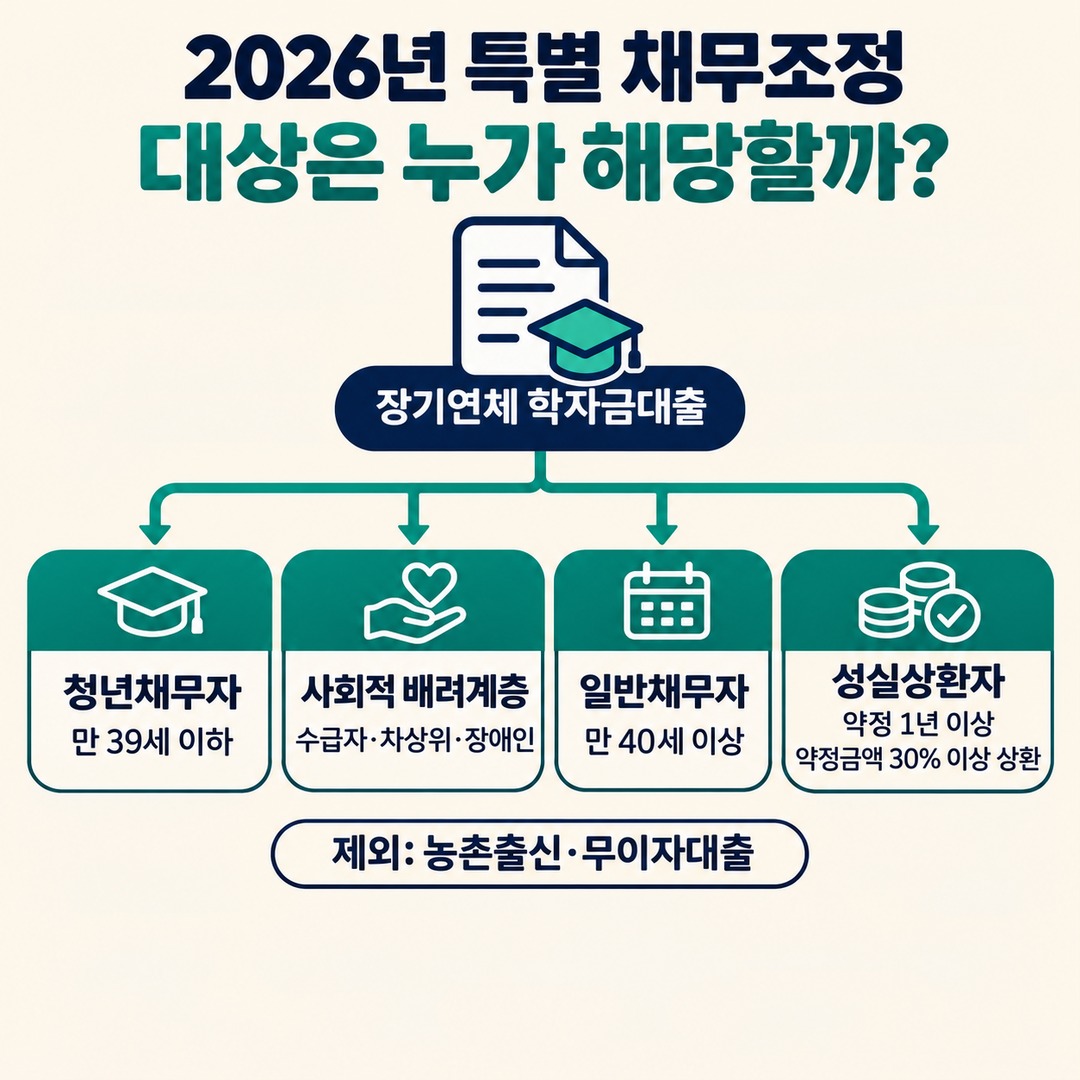
The Korea Student Aid Foundation divided eligible borrowers into four categories.
| Support category | Main eligibility requirements |
|---|---|
| Young borrowers | 39 years old or younger |
| Socially vulnerable groups | Recipients of basic livelihood assistance, near-poor households, and people with disabilities |
| General borrowers | 40 years old or older |
| Borrowers with a good repayment record | Installment repayment agreement maintained for at least 1 years, with at least 30% of the agreed amount repaid |
Young borrowers are those born after 1986-09-16.
Socially vulnerable groups include recipients of basic livelihood assistance, near-poor households, and people with disabilities. If eligibility cannot be confirmed through the electronic system, applicants must submit supporting documents for review.
Borrowers with a good repayment record are not simply people who have paid some amount in the past. They must have maintained an existing installment repayment agreement for at least 1 years and repaid at least 30% of the agreed amount.
Reduction terms may also vary based on factors such as income and assets, as well as age, so applicants should confirm which category applies to them before applying.
If You Qualify for an Initial Payment Waiver, How Much Must You Pay Starting in the First Month?
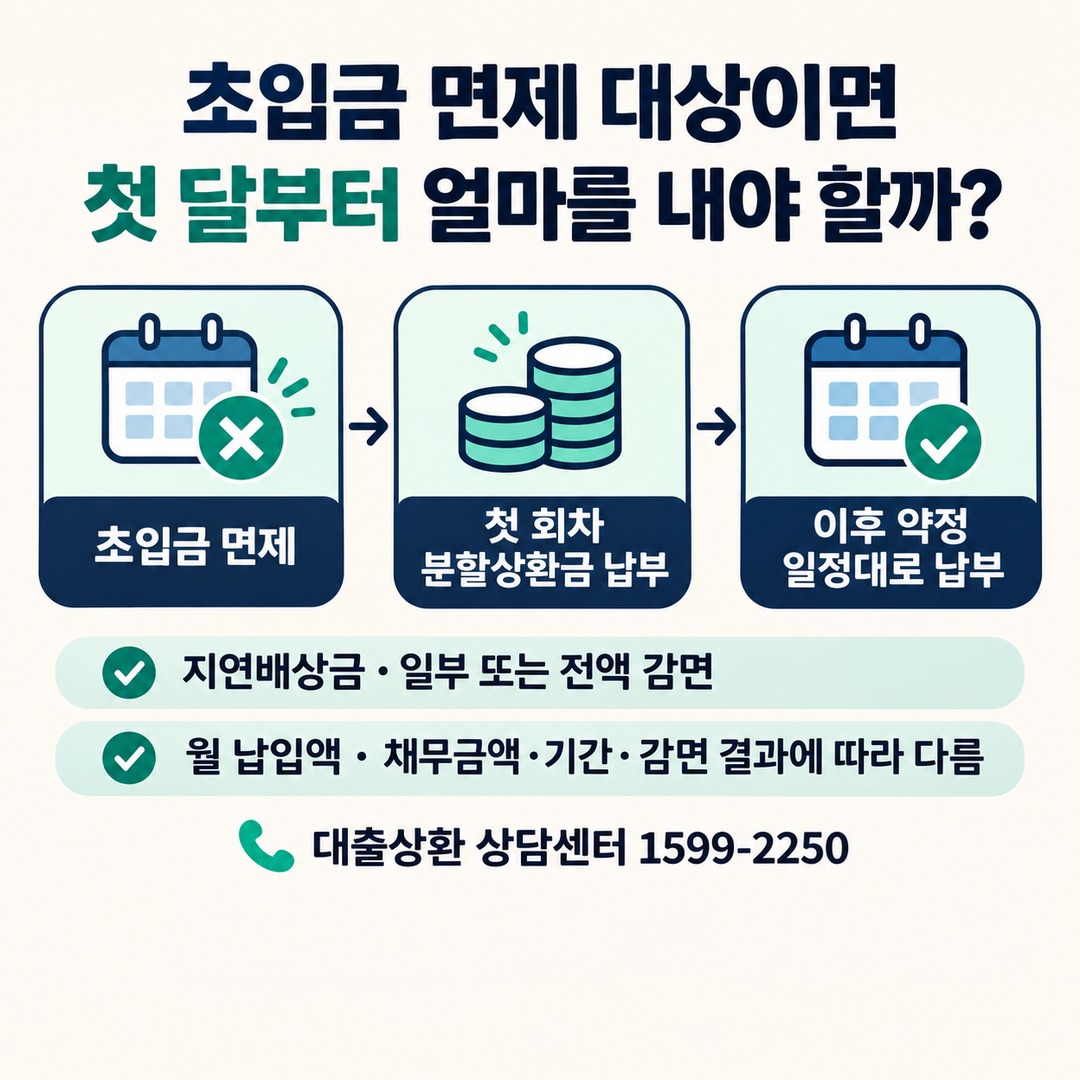
Qualifying for an initial payment waiver does not eliminate the first repayment installment.
The Korea Student Aid Foundation’s notice states that if the initial payment is waived, the borrower must pay the installment amount due for installment 1 under the agreement.
For example, the payments can be distinguished as follows:
Initial payment required to enter into the agreement: waived
First monthly installment: must be paid
Subsequent installments: paid according to the agreed schedule
Delay compensation: reduced in part or in full according to the approved reduction terms
One point to keep in mind is the actual monthly payment amount.
The same monthly payment does not apply to every applicant. It varies according to the amount of debt, the agreement term, and the approved reduction, so it should not be assumed to be a specific amount such as monthly KRW 20,000 or KRW 50,000.
Before applying, it is a good idea to contact the Korea Student Aid Foundation Loan Repayment Counseling Center (1599-2250) to confirm the following:
1. Your eligibility category for the special debt adjustment program
2. Whether an initial payment waiver or reduction applies
3. Final agreement amount
4. First installment amount
5. Monthly repayment amount and agreement term
The two programs have similar goals, but their forms of assistance and application requirements differ.
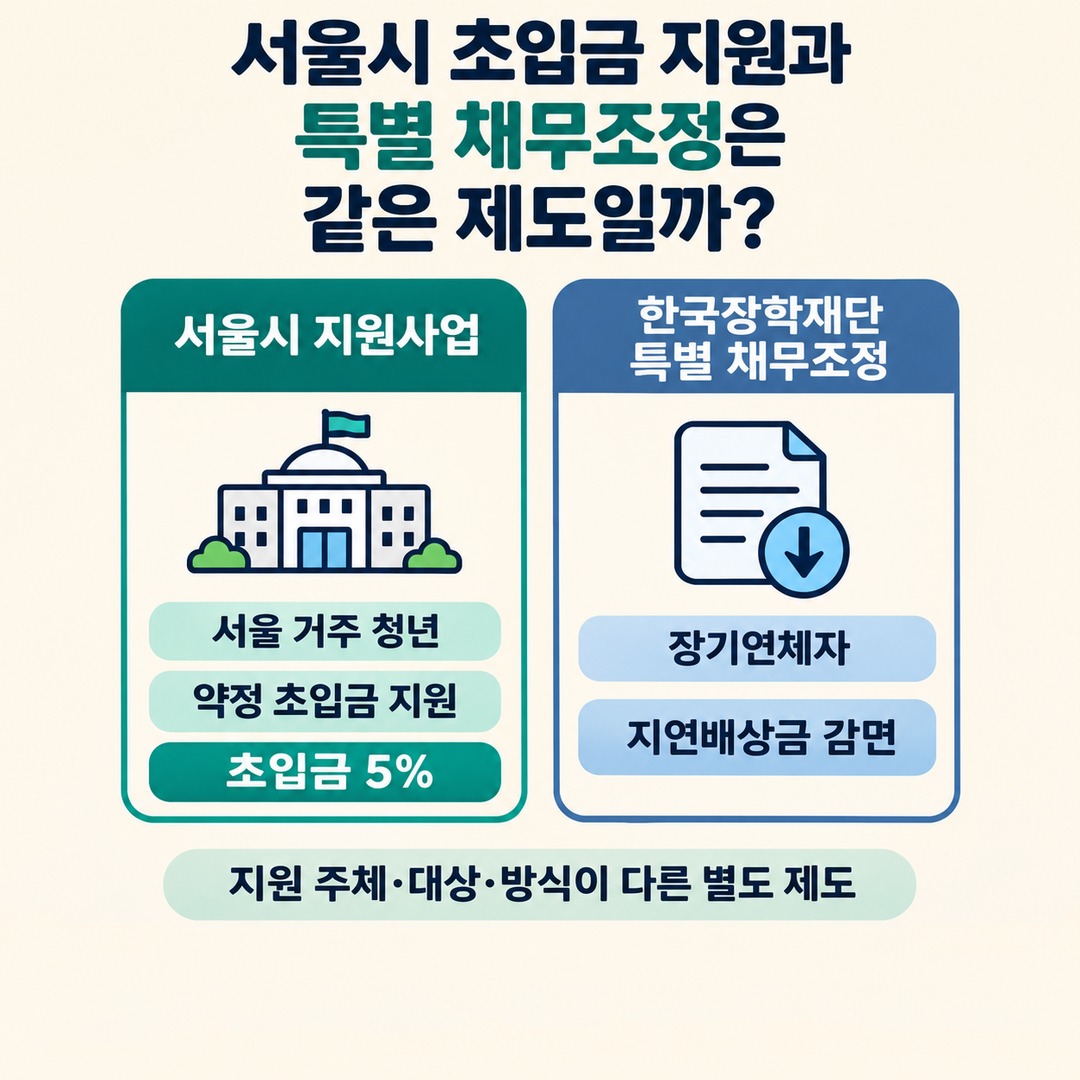
By contrast, the Korea Student Aid Foundation’s 2026 special debt adjustment program is a separate debt adjustment program that reduces delay compensation owed by long-term delinquent borrowers.
| Main support | Assistance with the initial payment under the agreement | Reduction in delay compensation |
|---|---|---|
| Form of support | 5% initial payment assistance | Reductions and initial payment terms applied by category |
Therefore, the conditions of one program should not be applied directly to the other.
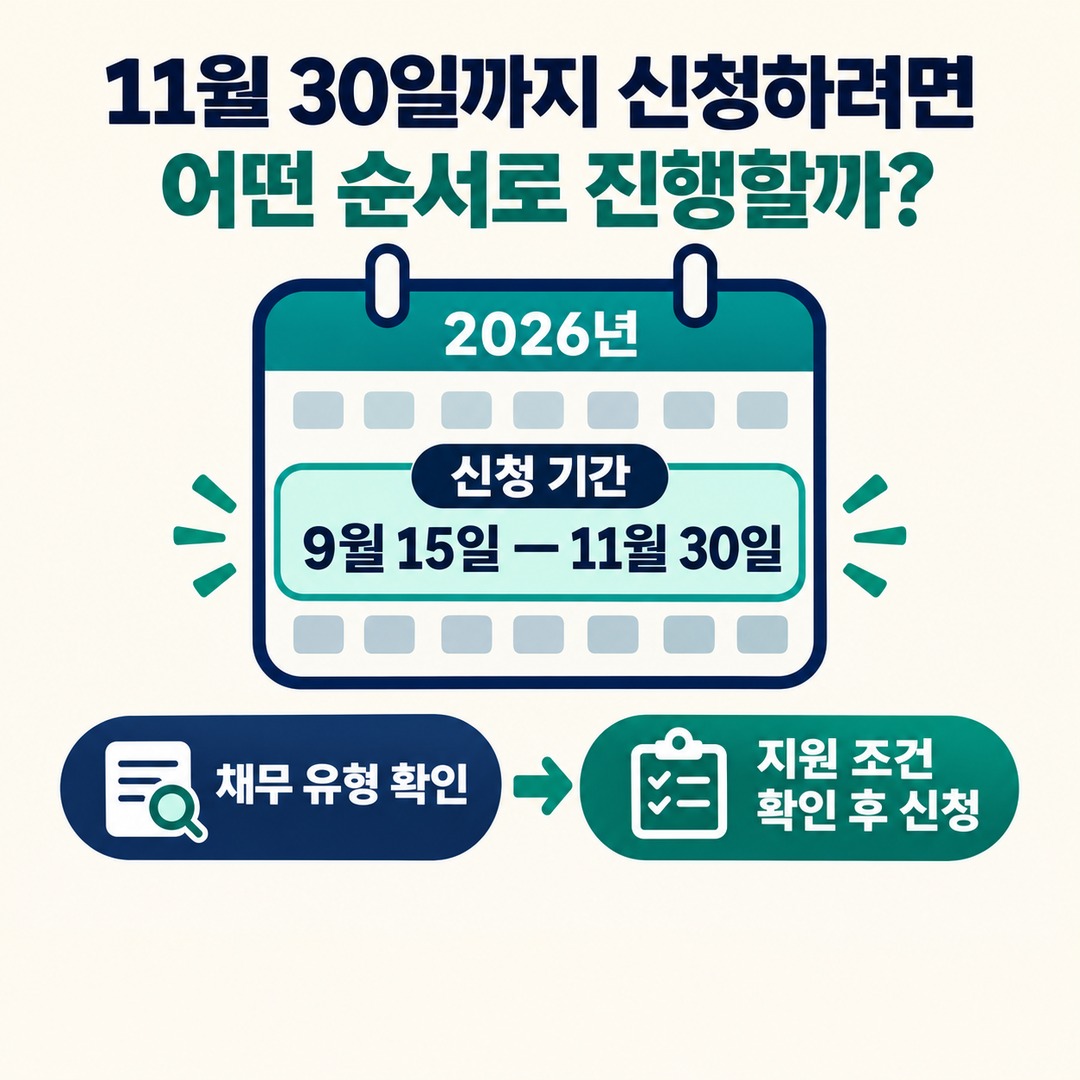
What Steps Should You Follow to Apply by November 30?
The application period for the 2026 special debt adjustment program runs from September 15 to November 30.
Before applying, it is important to check your debt category and the applicable support requirements.
Follow these steps to apply.
1. Contact the Korea Student Aid Foundation Loan Repayment Counseling Center at 1599-2250.
2. Check whether you qualify for the special debt adjustment program and which category applies.
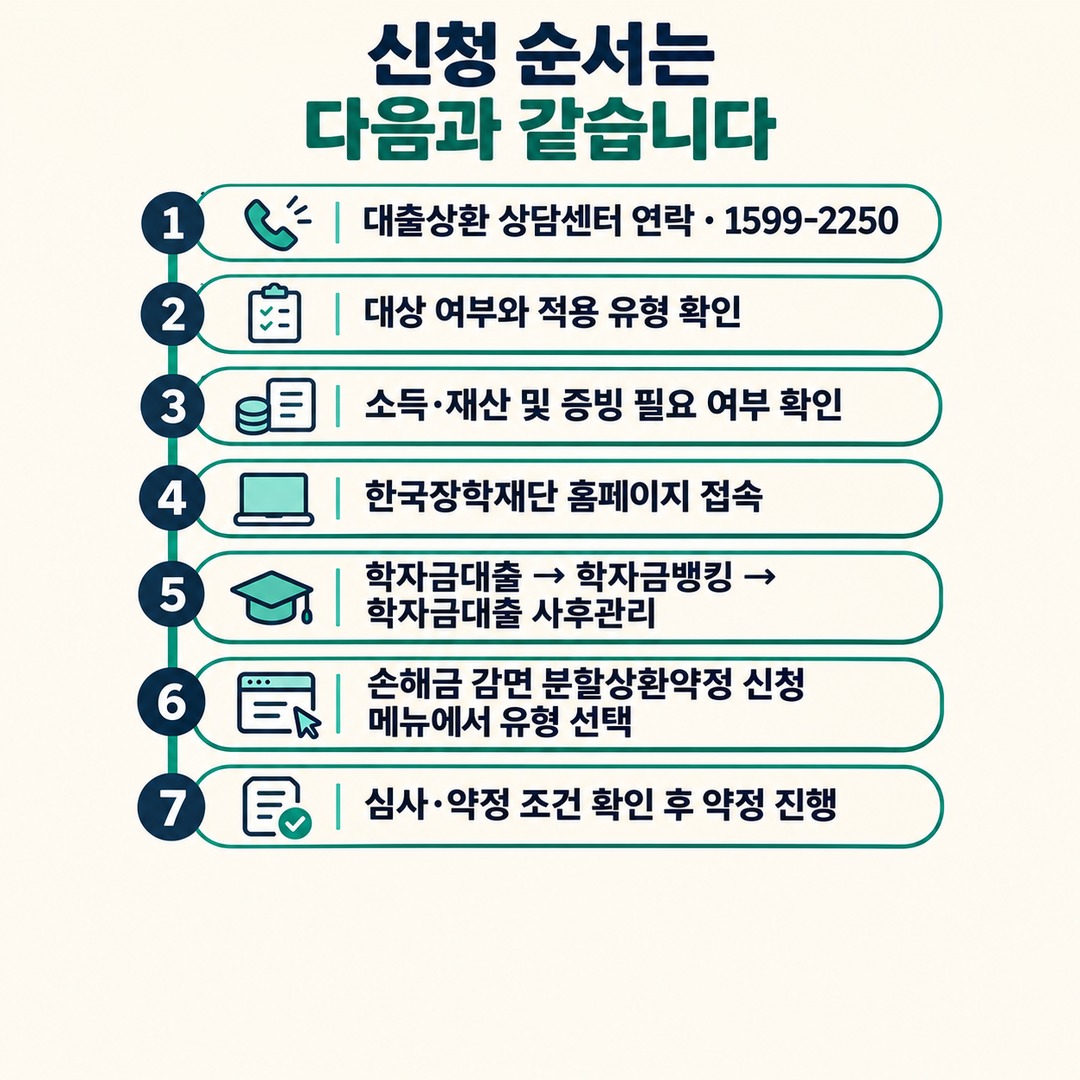
3. Check your income and assets, and whether supporting documents are required.
4. Visit the Korea Student Aid Foundation website.
5. Go to Student Loans → Student Loan Banking → Student Loan Post-Management.
6. Select the applicable category in the Apply for Installment Repayment Agreement with Reduction of Damages (Delay Compensation) menu.
7. Review the assessment and agreement terms, then proceed with the agreement.
Application period
2026-09-15–November 30
Contact information
Korea Student Aid Foundation Loan Repayment Counseling Center 1599-2250
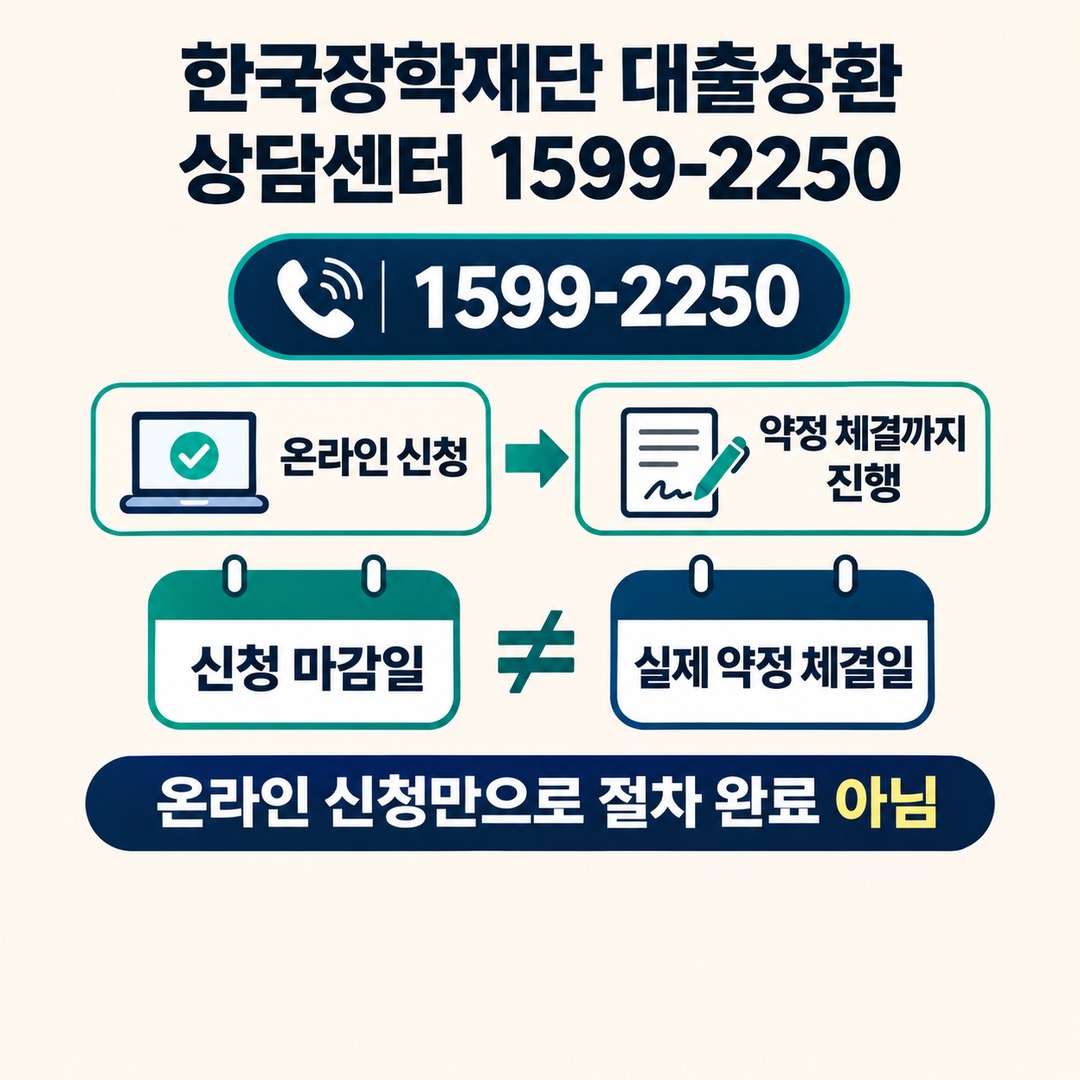
The application deadline and the actual date the agreement is signed are separate. Submitting an online application alone does not complete the debt adjustment and credit recovery processes; you must proceed through to signing the agreement.
Official information: Korea Student Aid Foundation
What Happens If You Fall Behind Again After Entering an Installment Repayment Agreement?
Entering into an agreement through the special debt adjustment program does not eliminate your obligation to make future payments.
According to the Korea Student Aid Foundation’s existing FAQ on installment repayments, if you fail to pay installments for 3 months or longer, the agreement may be terminated and credit caution information may be registered again.
Therefore, you should calculate the monthly repayment amount you will have to pay going forward as well as check the amount being reduced.
In particular, check the following:
The due date and amount of the first installment
The date each monthly payment is due
A monthly repayment amount you can sustain over the long term
Whether the agreement can be modified
Potential consequences of falling behind on payments again
If you enter into an agreement that is unaffordable relative to your ability to repay, the process of restoring your credit may become difficult again.
---
Frequently Asked Questions
Q. If the initial payment is waived, is my student loan principal also eliminated?
No. Waiving the initial payment and forgiving the principal are different. The main feature of this special debt adjustment program is a reduction in delay compensation; the obligation to repay the principal must be checked separately.
Q. Do recipients of basic livelihood assistance have to pay no initial payment at all?
The initial payment is waived for the socially vulnerable group category under the special debt adjustment program. However, the installment amount due for installment 1 under the agreement must still be paid.
Q. Can people who are already repaying in installments apply?
People who have an existing installment repayment agreement and have maintained it for at least 1 years and repaid at least 30% of the agreed amount can check whether they qualify for the good repayment record category. The reduction rate varies depending on the existing agreement category, and there are also restrictions on changing existing repayment information.
Q. Is credit caution information removed as soon as I apply?
It is not removed simply by applying. Applicants must check the review and installment repayment agreement procedures for their support category. The Korea Student Aid Foundation’s general installment repayment FAQ also distinguishes between approval of the agreement and the processing of credit information removal.
---
The most important thing to understand about the special student loan debt adjustment program is that waiving the initial payment is not the same as forgiving the principal.
Before the 2026-11-30 application deadline, check your eligibility category, the actual scope of the reduction, and the amount due for the first installment. In particular, rather than entering into an agreement based only on the reduction benefit, it is important to consider whether you will be able to afford the monthly payments going forward.