

Why the KOSPI Plunged on 2026-07-28: Circuit Breakers Triggered and 5 Things to Check
이 포스팅은 쿠팡 파트너스 활동의 일환으로, 이에 따른 일정액의 수수료를 제공받습니다.
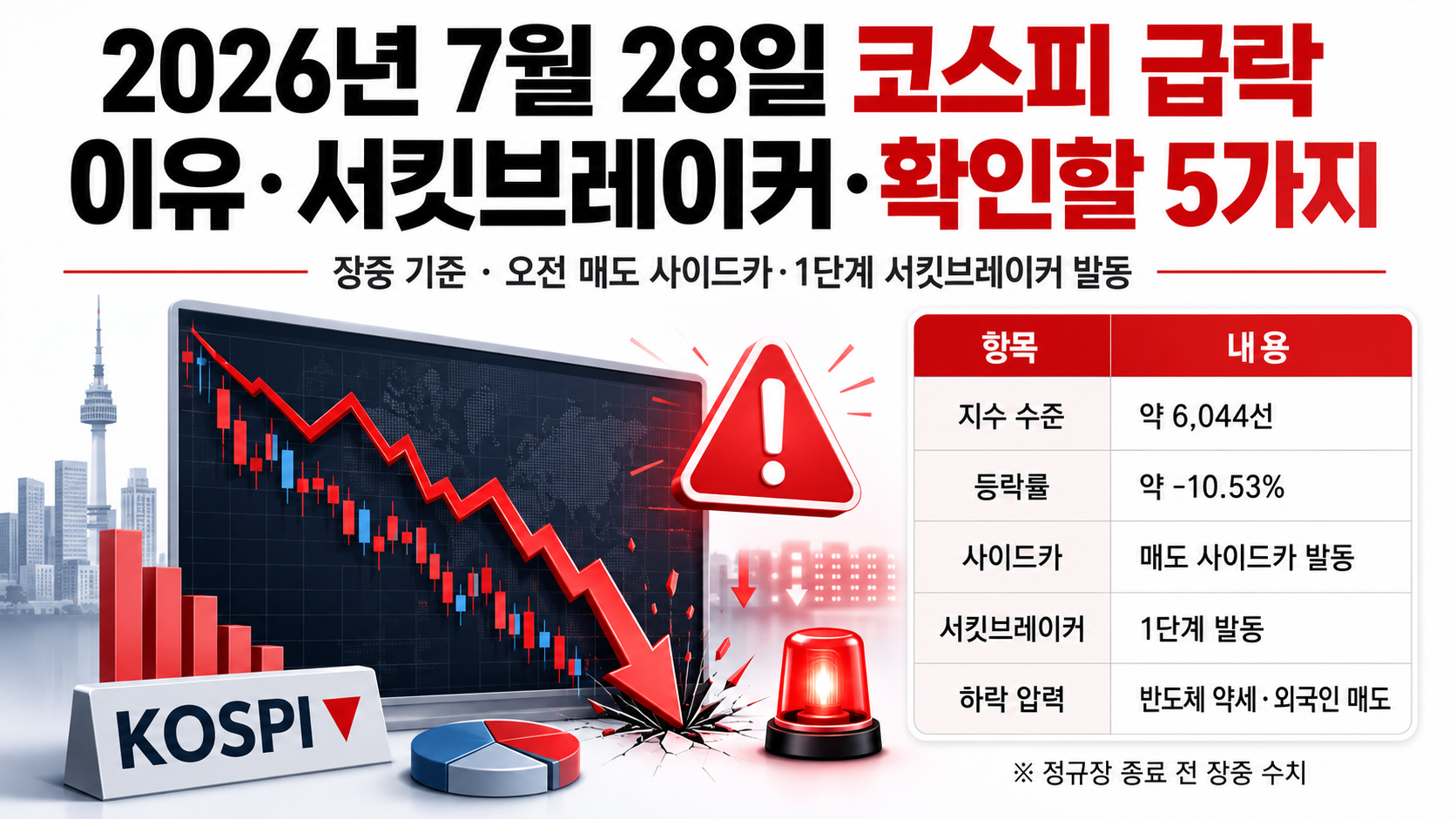
This article is based on the latest reports and official information available as of 2026-07-28 Korea Standard Time.
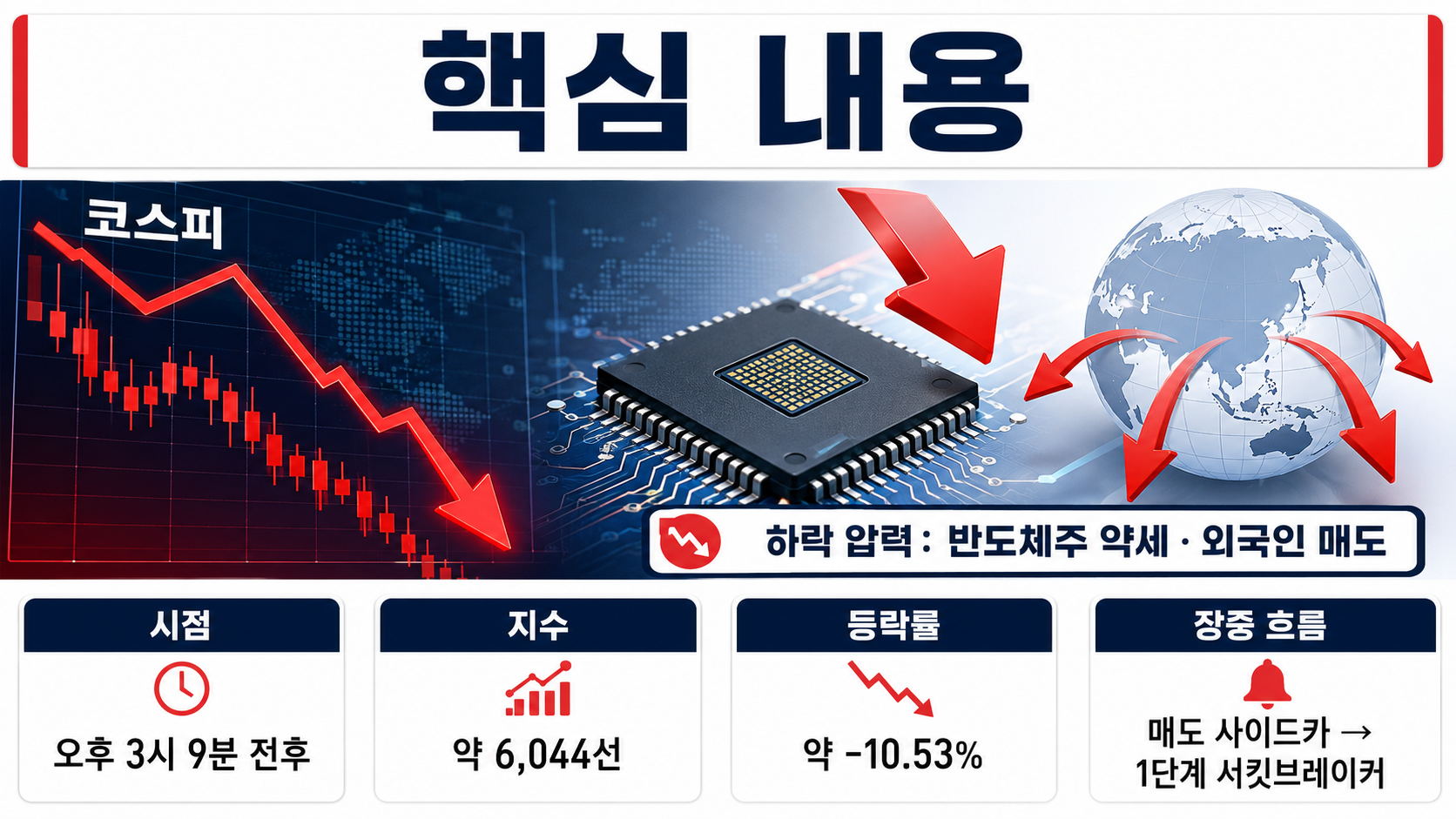
On 2026-07-28, the KOSPI fell to around the 6,044 level at approximately 3:9 p.m., down about 10.53% from the previous trading day. A sell-side sidecar and a Stage 1 circuit breaker were triggered in succession during the morning session. Weakness in semiconductor stocks and foreign investor selling are believed to have intensified the downward pressure.
However, these are intraday figures recorded before the regular trading session ended. The final closing level, trading amounts by investor category, and individual stock price changes may differ after the market closes at 3:30 p.m.
How Far Did the KOSPI Fall Today?
The KOSPI opened at 6,400.27, 5.26% below the previous trading day's closing level of 6,755.75. In the afternoon, the decline exceeded 10%, and both the KOSPI and KOSDAQ experienced unusual volatility, with circuit breakers triggered in both markets.
| Category | Index Level | Change From Previous Trading Day | Notes |
|---|---|---|---|
| Previous trading day's close | 6,755.75 | Reference value | July 27 |
| Opening level on July 28 | 6,400.27 | -355.48 points, -5.26% | Author's calculation |
| Around 15:09 | Approximately 6,044.10 | -711.65 points, -10.53% | Intraday figure |
| Confirmed intraday low | Approximately 6,014.89 | -740.86 points, -10.97% | Subject to intraday fluctuations |
The author's calculations are as follows.
Point change: Current index level - Previous trading day's closing level
Percentage change: Point change ÷ Previous trading day's closing level × 100
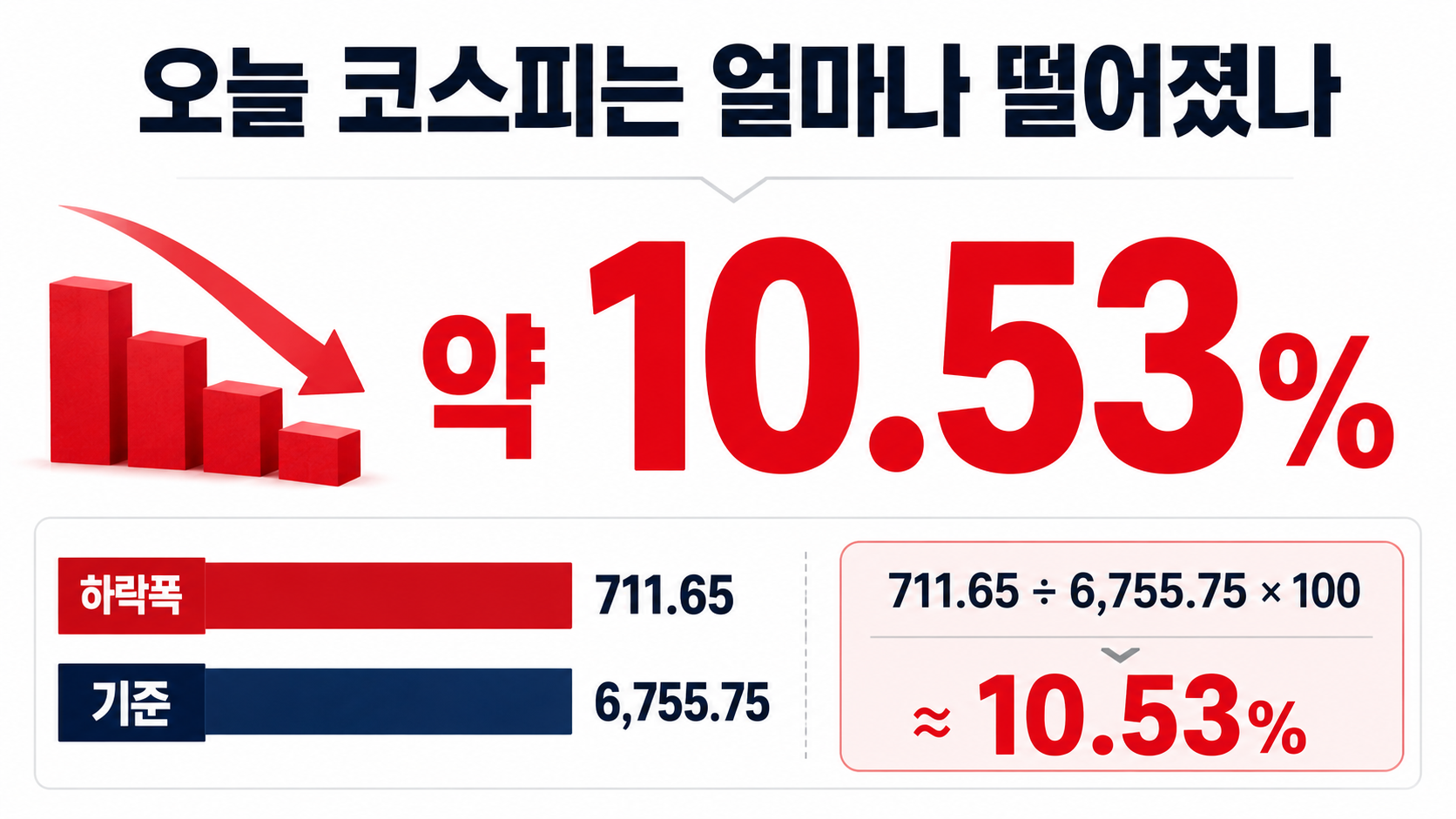
6,044.10 - 6,755.75 = -711.65 points
-711.65 ÷ 6,755.75 × 100 = approximately -10.53%
Intraday figures may vary slightly depending on whether a brokerage or financial information service provides real-time or delayed quotes. For final verification, it is safer to refer to the Korea Exchange's end-of-day data and the quotes provided by your brokerage.
What Caused the KOSPI to Plunge?
The sharp decline is being interpreted as the result of weakness in U.S. semiconductor stocks spreading to major Korean semiconductor companies, accompanied by concentrated selling by foreign investors. However, daily stock market movements are influenced by multiple factors simultaneously, including exchange rates, futures markets, investor sentiment, and profit-taking. It is therefore difficult to attribute the decline to a single cause.
Weakness in U.S. Semiconductor Stocks Spread to the Korean Market
Major semiconductor stocks weakened in the U.S. market the previous day. Concerns about the competitiveness of Chinese semiconductor companies and their expansion of equipment production were also cited as factors weighing on sentiment toward technology stocks.
Samsung Electronics and SK Hynix account for a substantial share of the Korean stock market's total capitalization. When both stocks record declines approaching double digits at the same time, the impact can extend beyond the individual companies and significantly move the entire KOSPI index.
Samsung Electronics and SK Hynix Recorded Steep Declines
During the afternoon session, Samsung Electronics and SK Hynix each fell by around 13%. Weakness extended beyond semiconductor stocks to several other sectors, including securities, electrical and electronics, shipbuilding, and automobiles, sharply increasing the number of declining stocks across the market.
A positive earnings outlook does not necessarily mean a stock will rise on a particular day. Stock prices also reflect expectations already priced into the market, future growth rates, investors' willingness to take risks, and supply-and-demand conditions.
Foreign Investor Selling Deepened the Index Decline
During the trading session, foreign investors recorded net sales worth several trillion won on the KOSPI. Although individual investors responded by buying, their net purchases may not be sufficient to prevent a steep decline when foreign selling is concentrated in large-cap stocks that carry significant weight in the index.
When assessing foreign investor trading activity, looking only at one day's net selling amount is insufficient. It is also important to examine the won-dollar exchange rate, net futures trading, cumulative trading flows over the past 5~10 trading days, and changes in foreign ownership of Samsung Electronics and SK Hynix.
The Difference Between Today's Sidecar and Circuit Breaker Activations
A sidecar temporarily restricts only program trading orders, while a circuit breaker halts trading across the entire market. Although the names may sound similar, they differ in both the types of trading affected and their activation criteria.
| Category | Sidecar | Circuit Breaker |
|---|---|---|
| Purpose | Reduce the impact of program trading | Mitigate sharp declines across the entire market |
| Main trigger | Sudden movements in the futures index | Sharp declines in the KOSPI or KOSDAQ spot index |
※ This article is provided for informational purposes to help readers understand market developments and does not constitute investment advice or a recommendation to buy or sell any particular stock or asset. All final investment decisions and responsibilities rest with the individual investor.
이 포스팅은 쿠팡 파트너스 활동의 일환으로, 이에 따른 일정액의 수수료를 제공받습니다.