

Pilsung Bridge Water Level Surges After Hwanggang Dam Release: 4 Things to Check Now in Yeoncheon and Paju
이 포스팅은 쿠팡 파트너스 활동의 일환으로, 이에 따른 일정액의 수수료를 제공받습니다.
This article is based on the latest reports and official information available as of 2026-07-22 Korea Standard Time.
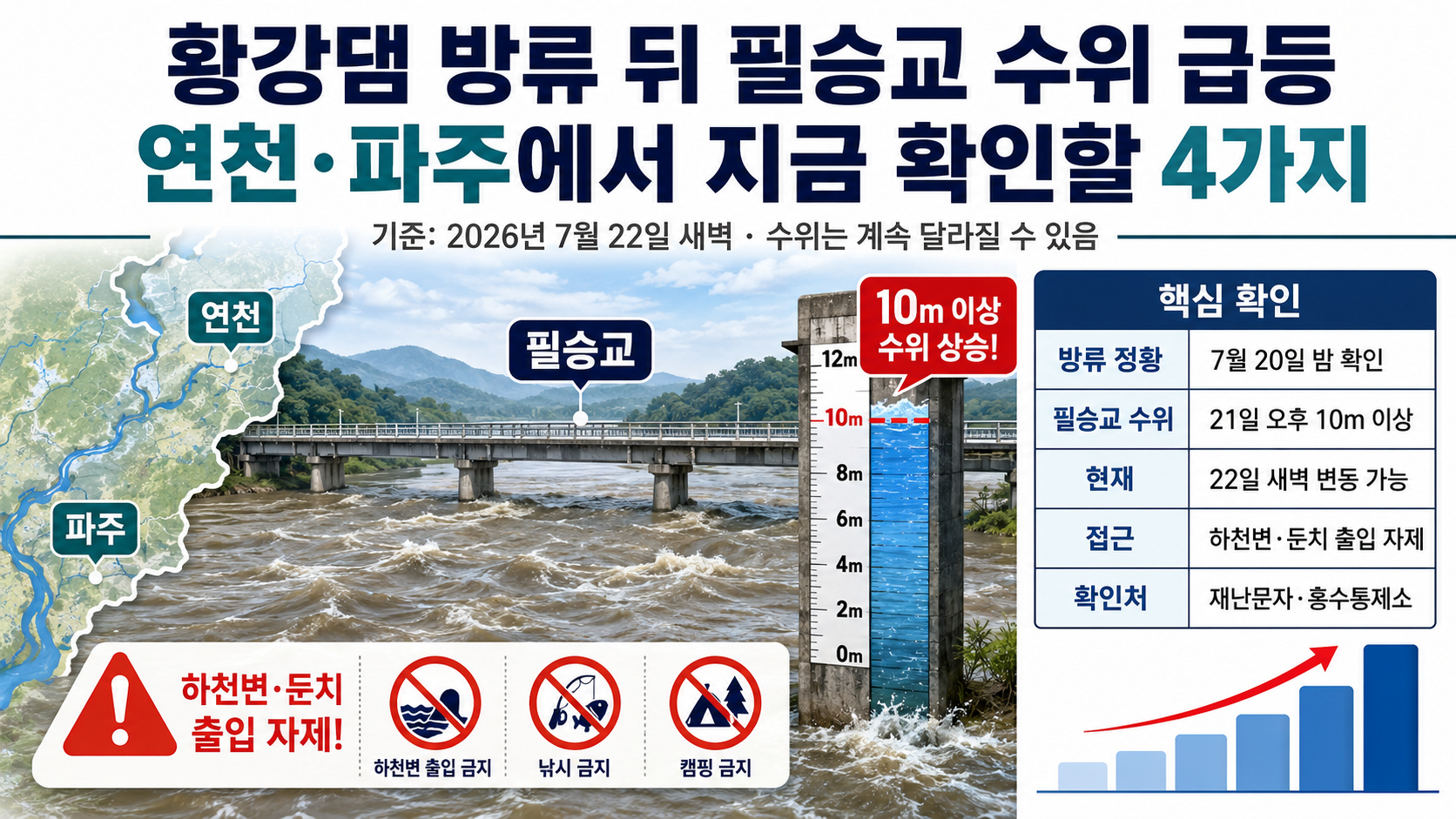
After signs of a water release from North Korea's Hwanggang Dam were detected on the night of 2026-07-20, the water level at Pilsung Bridge on the Imjin River rose above 10m by the afternoon of 21.
As of the early morning of July 22, water levels may continue to change. Avoid riversides, floodplains, fishing spots, and camping areas in Yeoncheon and Paju. Check the latest emergency alerts and observations from the Han River Flood Control Office before taking action.
What matters now is not yesterday's peak water level, but the latest readings from the observation station closest to your location.
What Happened at Hwanggang Dam?
The Ministry of Climate, Energy and Environment analyzed satellite imagery captured at 8:47 p.m. on July 20 and concluded that North Korea had released water from Hwanggang Dam in the upper reaches of the Imjin River.
North Korea did not notify South Korea in advance of the release. The government believes the water may have been discharged to regulate the reservoir level, considering rainfall in North Korea and forecasts of additional precipitation.
An important distinction must be made here.
The water release from Hwanggang Dam is based on a government announcement supported by satellite imagery analysis. However, publicly available information does not allow a precise breakdown of the volume released, the timing of floodgate openings, or the respective contributions of heavy rainfall and the dam release to rising downstream water levels.
The Hwanggang Dam release should not be identified as the sole cause without sufficient evidence, nor should undisclosed discharge volumes be estimated and presented as confirmed figures.
Water released from Hwanggang Dam flows past Pilsung Bridge, the northernmost observation point on the Imjin River in South Korea, before moving toward the Gunnam Flood Control Dam and downstream areas of Yeoncheon and Paju. Consequently, even if upstream water levels fall, downstream observation stations may record rising levels after a delay.
How Quickly Did the Water Level at Pilsung Bridge Rise?
Comparing publicly available observations at different times shows how rapidly the water level increased.
| Observation Time | Pilsung Bridge Water Level | Difference From Previous Reading |
|---|---|---|
| Around 5 p.m. on July 20 | 0.73m | Baseline |
| 6 a.m. on July 21 | 2.71m | Increase of 1.98m |
| 3:20 p.m. on July 21 | 10.10m | Increase of 7.39m from 6 a.m. |
| 6:40 p.m. on July 21 | 10.15m | Remained in the 10m range during the afternoon |
The increase from 0.73m to 2.71m means that the measured water level became approximately 3.7 times its previous reading. The absolute increase was 1.98m.
Comparing 2.71m at 6 a.m. with 10.10m at 3:20 p.m. shows an additional rise of 7.39m over approximately 9 hours and 20 minutes. As a simple ratio, this was also approximately 3.7 times.
However, these calculations compare observed water-level readings. They do not mean that water discharge, flow velocity, or potential damage increased by exactly 3.7 times.
The effects of rising water levels depend on river topography, inflow volumes, dam discharge, and rainfall conditions in tributary catchments.
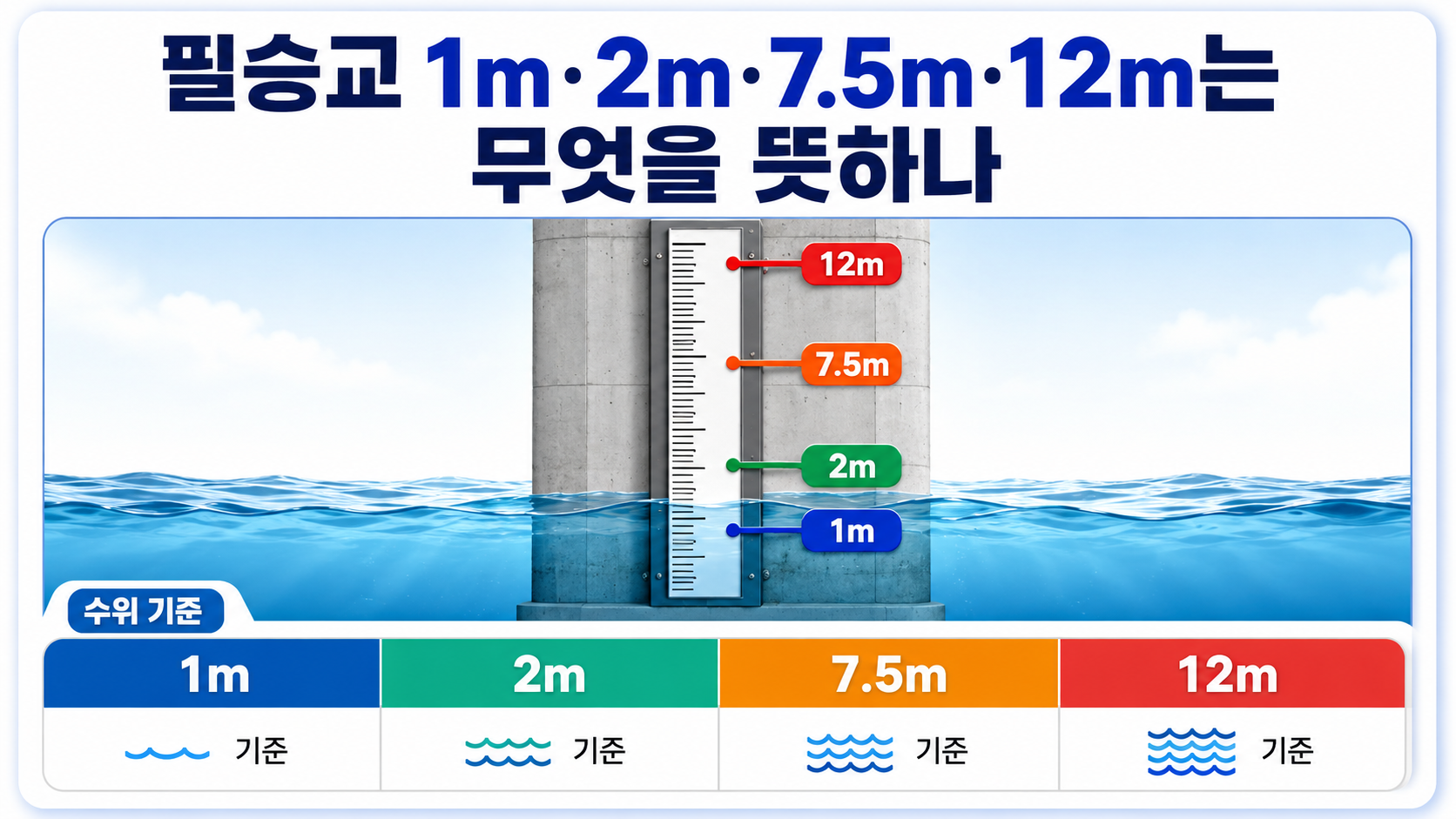
What Do the 1m, 2m, 7.5m, and 12m Levels at Pilsung Bridge Mean?
Each water-level threshold at Pilsung Bridge corresponds to a different response criterion.
| Pilsung Bridge Water Level | Management Criterion |
|---|---|
| 1.0m | Evacuation of people engaged in riverside recreation |
| 2.0m | Evacuation of people during the non-flood season |
| 7.5m | Concern level for border-area crisis response |
| 12.0m | Caution level for border-area crisis response |
The 2.71m reading recorded at 6 a.m. on 21 had already exceeded the 2m threshold for evacuation during the non-flood season.
The 10.1m reading at 3:20 p.m. was 2.6m above the 7.5m concern threshold for border-area crisis response. However, it remained 1.9m below the 12m caution threshold.
The 'concern' and 'caution' stages at Pilsung Bridge use different criteria from flood advisories and flood warnings issued for other observation points, such as Imjin Bridge.
If a news report mentions a 'flood warning,' check exactly which observation station and area the warning applies to. The water level at Pilsung Bridge alone should not be used to assume identical conditions throughout Yeoncheon and Paju.
What to Check Now in Yeoncheon and Paju, in Order
1. Check Emergency Alerts First
Emergency alerts issued by local governments provide information needed for immediate action, including restricted areas, evacuation zones, and bridge closures.
Check the most recently received alert rather than relying on an older message, and compare the locations mentioned in the alert with your current position.
2. Check Observation Times Alongside Real-Time Water Levels
The Han River Flood Control Office's real-time hydrological data provides water-level readings for major observation points, including Pilsung Bridge and Gunnam Dam.
Do not look at the water-level figure alone. Check the following information as well.
Observation time
Current water level
Whether the water level is rising or falling compared with the previous observation
Changes at nearby downstream observation points
Whether a flood advisory or warning has been issued
Screenshots of search results or news broadcasts may contain outdated information. It is safer to revisit the live monitoring page and verify that the observation timestamp is current.
3. Do Not Visit Riversides or Floodplains to Inspect Conditions
Avoid traveling to the riverbank simply to see the water conditions for yourself.
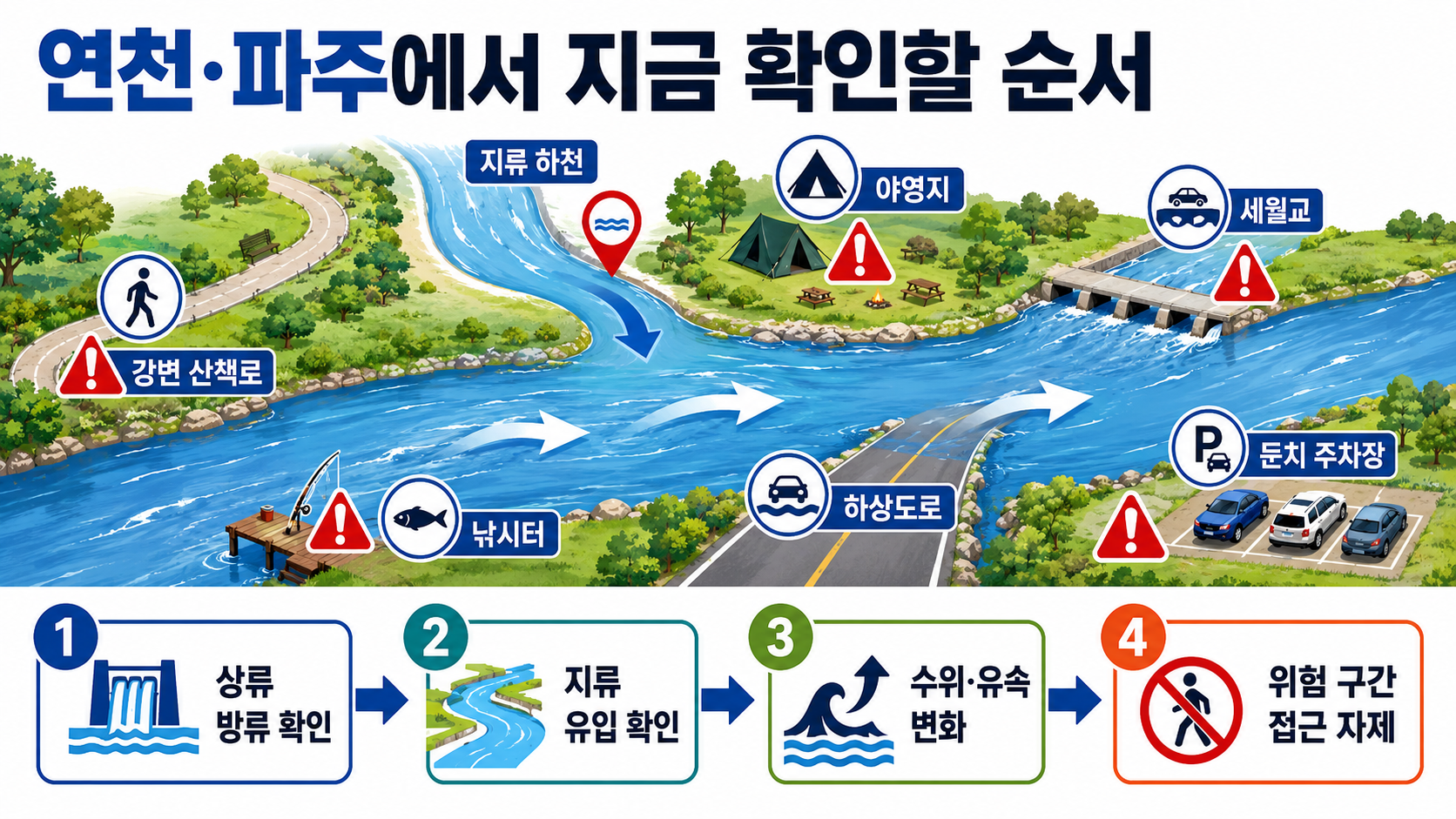
Even when the water appears shallow, upstream dam releases and tributary inflows can cause sudden changes in water levels and current speeds. The same precautions apply to riverside walking paths, fishing areas, campsites, low-water bridges, riverbed roads, and floodplain parking lots.
If your vehicle is parked near a river, move it to a safe area on higher ground before the road becomes flooded. If water has already begun rising, do not reenter a dangerous area to retrieve your vehicle. Instead, follow instructions from 119 or on-site safety personnel.
4. Do Not Return Immediately Just Because the Rain Has Stopped
Even if the rain has stopped where you are, it may still be raining upstream. Upstream conditions, including releases from Hwanggang Dam, can also affect downstream areas after a delay.
After evacuating or relocating, return only after confirming that the local government has lifted the relevant restrictions.
Clear skies do not necessarily mean that the river is safe.
Why Is Continued Monitoring Necessary Even With Gunnam Dam in Place?
Gunnam Flood Control Dam is designed to regulate water flowing downstream from the upper Imjin River. It temporarily stores incoming water and adjusts discharge volumes to reduce sudden rises in downstream water levels.
However, the presence of a dam does not eliminate every risk.
If a release from Hwanggang Dam coincides with heavy rainfall in northern Gyeonggi Province, inflows into Gunnam Dam can also change rapidly. If Gunnam Dam increases its discharge to regulate reservoir levels, downstream water-level changes must continue to be monitored.
Pilsung Bridge is an observation point used to quickly assess upstream flows entering South Korea, while Gunnam Dam is a facility that regulates inflow and discharge. Rather than treating their measurements as equivalent, they should be interpreted according to the sequence in which water moves downstream.
Common Misinterpretations of This Situation
First, appearing among real-time trending search terms does not necessarily mean that an incident has caused the greatest damage. Search volume may increase because news coverage, emergency alerts, and information searches by local residents all rise at the same time.
Second, the water levels reported in news articles reflect the time those articles were written. Levels may rise or fall several hours later, so previously reported readings should not be treated as current measurements.
Third, a falling water level at Pilsung Bridge does not mean downstream areas become safe at the same time. Conditions may differ depending on specific locations in Yeoncheon and Paju, the time required for water to move downstream, and inflows from tributaries.
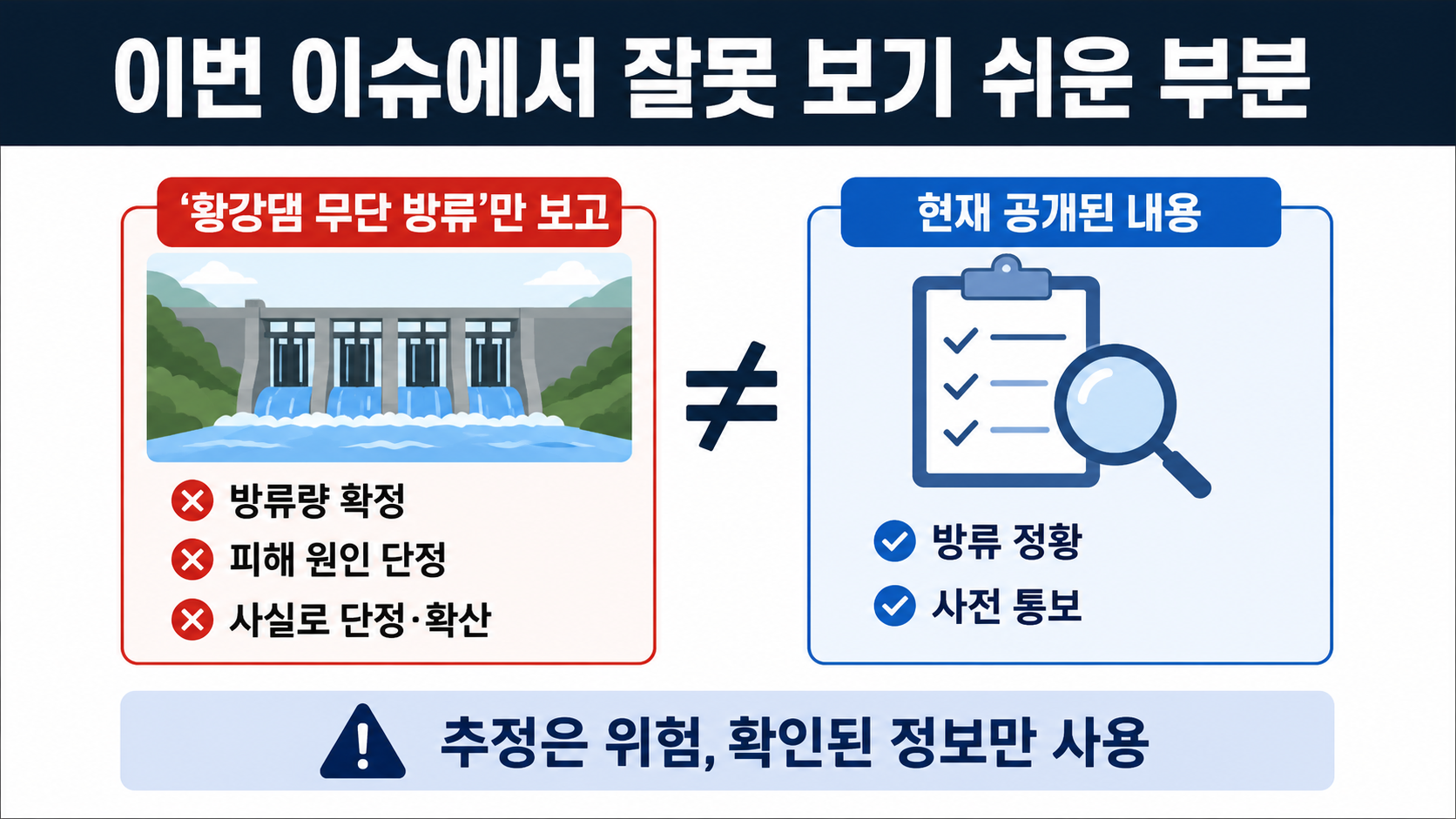
Fourth, the phrase 'unauthorized water release from Hwanggang Dam' should not be taken as confirmation of the discharge volume or the causes of damage. The information currently made public concerns indications of a release and the absence of advance notification
이 포스팅은 쿠팡 파트너스 활동의 일환으로, 이에 따른 일정액의 수수료를 제공받습니다.