

Homeplus-Affected Small Businesses: Repayment Deferral Application Procedures Differ for Direct and Bank-Intermediated Loans

When applying for repayment deferral on policy loans, small business owners affected by Homeplus must first determine whether their existing loan is a direct loan or a bank-intermediated loan. Direct loan borrowers apply through the Small Business Policy Funds website and then execute a revised loan agreement, while bank-intermediated loan borrowers must obtain a confirmation certificate and complete additional procedures with their financial institution or other relevant organization.
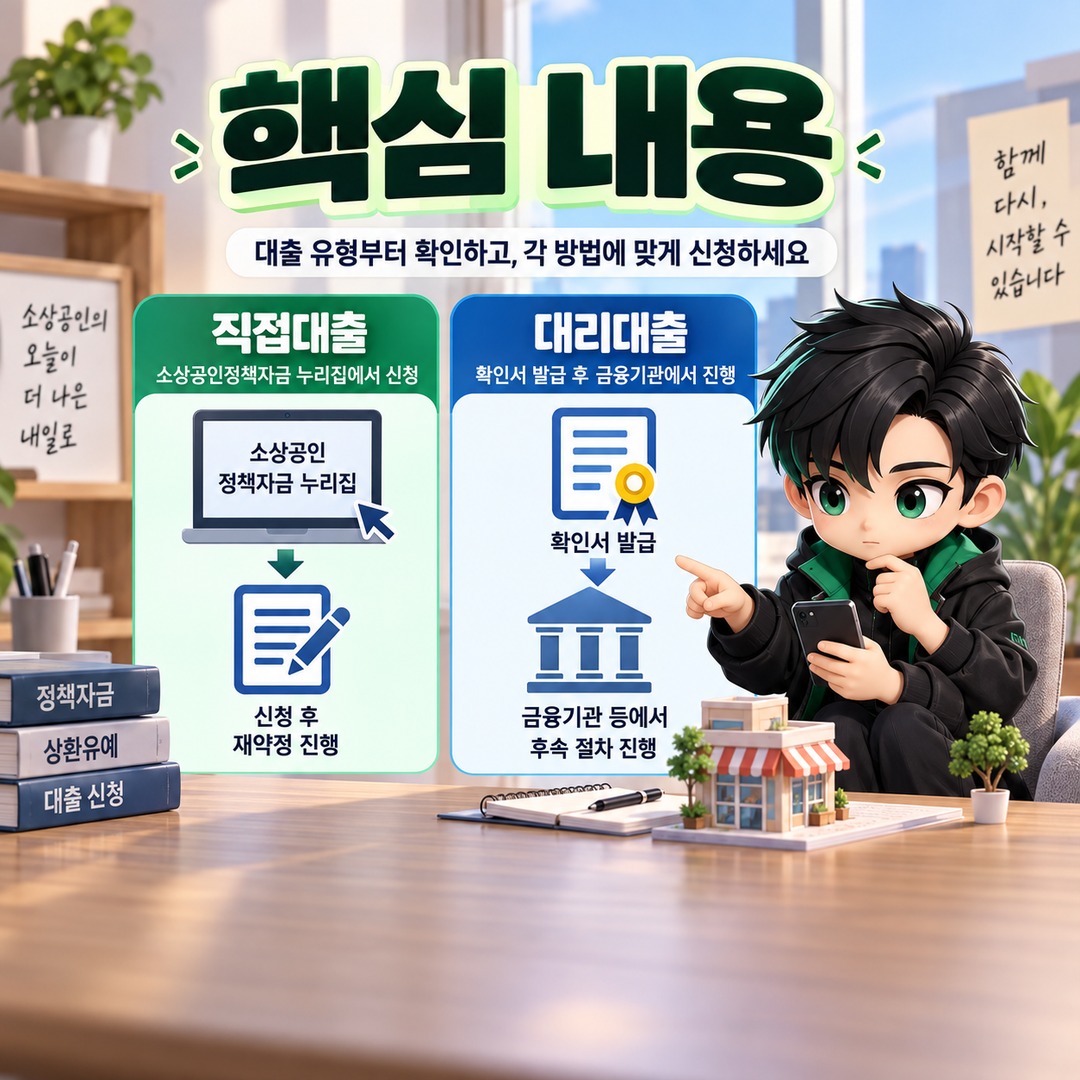
In particular, borrowers with guarantee-backed bank-intermediated loans may need to extend the guarantee period through the guarantee institution before visiting their bank.
The information is current as of 2026-10-06.
How Do Application Procedures Differ Between Direct and Bank-Intermediated Loans?
The biggest difference is which institution actually issued the loan.
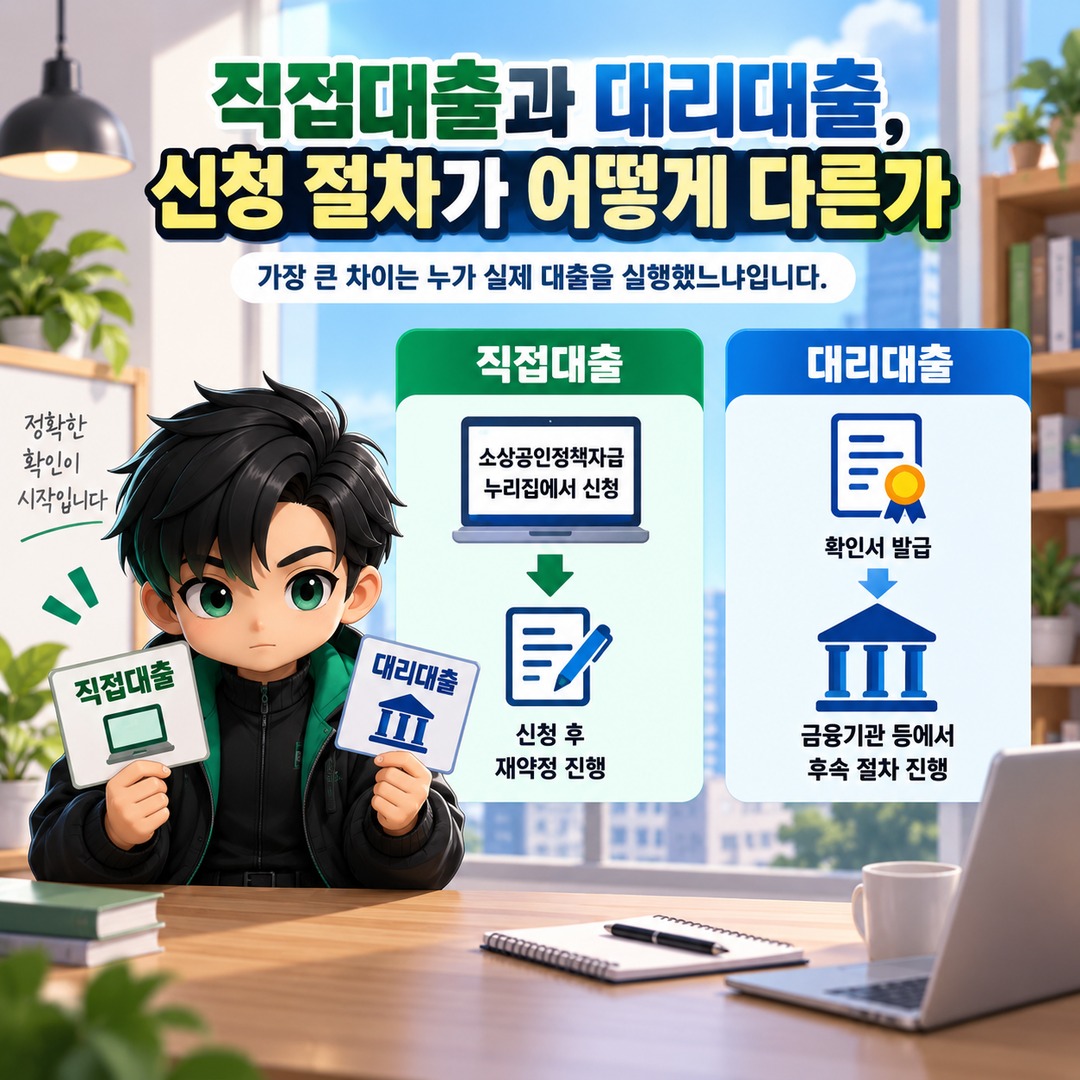
Borrowers with direct loans from the Korea SMEs and Startups Agency's Small Enterprise and Market Service (SEMAS) apply online through the Small Business Policy Funds website and then execute a revised loan agreement.
By contrast, borrowers with bank-intermediated loans must obtain a 'Loan Maturity Extension and Repayment Deferral Confirmation Certificate' through the Small Business Policy Funds website before completing additional procedures with their financial institution or another relevant organization.
| Existing Loan Type | First Step | Subsequent Procedure |
|---|---|---|
| SEMAS direct loan | Apply through the Policy Funds website | Execute a revised loan agreement |
| Bank-intermediated loan | Obtain a Loan Maturity Extension and Repayment Deferral Confirmation Certificate | Complete follow-up procedures with the financial institution or relevant organization |
| Guarantee-backed bank-intermediated loan | Obtain the confirmation certificate and consult the guarantee institution | Extend the guarantee period, then apply through the lending financial institution |
Therefore, rather than simply following another business's application process, it is safer to first verify the type of policy loan you currently hold.
Direct Loan Borrowers Must Complete a Revised Loan Agreement After Applying Online
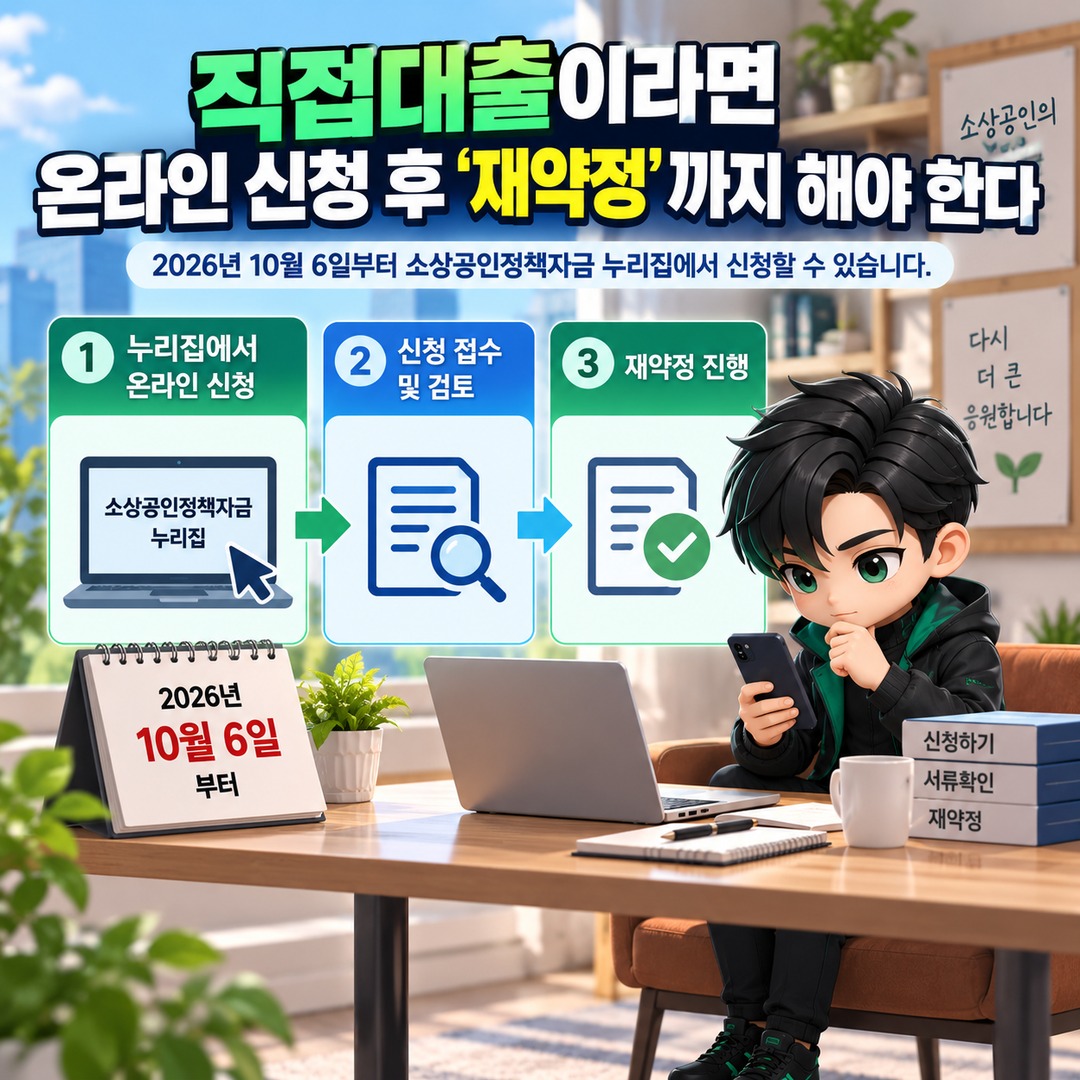
Direct loan borrowers can apply through the Small Business Policy Funds website starting 2026-10-06.
The procedure can be summarized as follows.
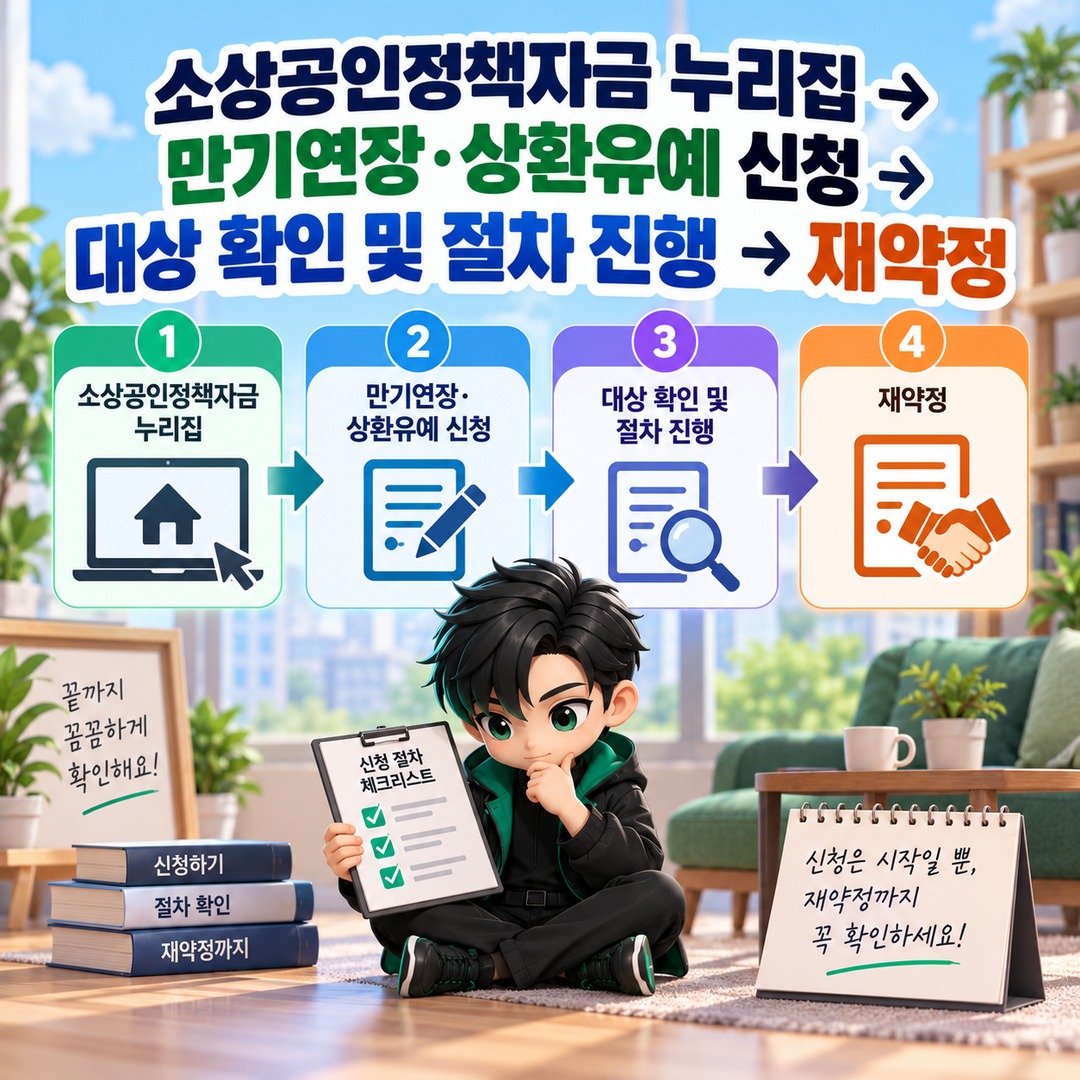
Small Business Policy Funds Website → Apply for Maturity Extension and Repayment Deferral → Eligibility Verification and Processing → Execute a Revised Loan Agreement
An easily overlooked point is that submitting the online application is not the final step. According to the published guidance, direct loan borrowers receive maturity extensions and repayment deferrals by executing a revised loan agreement after submitting their online application.
Therefore, rather than assuming that the existing repayment schedule changes immediately after submitting the application, borrowers should verify that the revised agreement has been completed.
For Bank-Intermediated Loans, Obtaining the Confirmation Certificate Is Not the Final Step
Borrowers with bank-intermediated loans must first obtain a 'Loan Maturity Extension and Repayment Deferral Confirmation Certificate' through the Small Business Policy Funds website.
Unlike direct loans, these loans are issued by a separate financial institution, so additional procedures must be completed after obtaining the confirmation certificate.
In particular, borrowers who obtained their loans using a guarantee certificate issued by a guarantee institution may face an additional step.
Obtain a Confirmation Certificate Through the Policy Funds Website → Extend the Guarantee Period Through the Guarantee Institution → Apply for Maturity Extension and Repayment Deferral at the Lending Financial Institution
In other words, obtaining the confirmation certificate alone does not complete the entire process for guarantee-backed loans.
If you are unsure whether your existing loan is an unsecured credit loan or a guarantee-backed loan, it is advisable to check with the financial institution that issued the loan or a small business policy loan consultation service first.
Repayment Deferral for 12 Months Does Not Mean Interest Payments Are Waived
The 'repayment deferral' provided under this support measure does not mean that all payments are suspended for 12 months.
Eligible borrowers can extend their loan maturity by 12 months. During the deferral period, principal repayments are suspended, but interest payments must continue.
For example, if an eligible borrower who previously paid both principal and interest each month receives repayment deferral, the principal portion of the monthly payment is postponed while interest payments continue.
Therefore, assuming that 'no loan payments whatsoever are required for 1 years' could lead to discrepancies in actual financial planning.
The interest payable on individual loans and their future repayment schedules may vary depending on interest rates, outstanding balances, and existing contractual terms. Borrowers should therefore confirm their revised repayment schedules when executing a revised agreement or applying through their financial institution.
Not All Homeplus-Related Loans Qualify for an Extension
This measure does not automatically extend all financial-sector loans related to Homeplus by 12 months.
According to the eligibility criteria announced on 2026-10-06, the support applies to small business owners operating stores within Homeplus or supplying goods and services to Homeplus who have been affected and hold eligible small business policy loans on which they are currently repaying principal or that mature within 2026.
Therefore, simply holding a general credit loan or another financial product does not automatically qualify a borrower for this SEMAS policy loan repayment deferral program.
Financial institutions have also provided separate financial assistance, including maturity extensions and repayment deferrals, to Homeplus partner businesses. It is therefore important to distinguish between SEMAS policy loan support and assistance provided by the broader financial sector.
What Should You Check Before Applying?
The first things to verify are the type and maturity date of your existing policy loan.
Start by reviewing your loan agreement or policy loan records to determine whether you have a direct loan from SEMAS or a bank-intermediated loan issued through a financial institution.
If you have a bank-intermediated loan, you should also check whether a guarantee certificate was used. This is because guarantee-backed loans require the guarantee period extension procedure to be completed through the guarantee institution first.
Applications opened through the Small Business Policy Funds website at 2 p.m. on 2026-10-06.
If you are unsure whether your individual loan qualifies or what procedures are required, it is safest to consult the relevant SEMAS guidance or the Small Business Integrated Call Center.
New Emergency Management Stabilization Funding and Repayment Deferral Are Different Programs
The Temporary Business Difficulties Fund previously provided to small business owners affected by Homeplus must be distinguished from the current maturity extension and repayment deferral measures.
The Temporary Business Difficulties Fund provides new financing to support business operations. Under the revised announcement issued on July 2026, dedicated support for Homeplus-affected small businesses was expanded to include a maximum funding limit of KRW 100,000,000 and a preferential interest rate 0.5% percentage points below the policy fund benchmark rate.
By contrast, the maturity extension and repayment deferral program launched on October 6 is a measure designed to postpone the principal repayment burden on eligible policy loans that borrowers already hold.
Therefore, 'borrowing new funds' and 'postponing repayment of an existing loan' should not be treated as the same type of support.
Ultimately, the First Question Is: 'What Type of Loan Do I Have?'
When applying for policy loan repayment deferral as a small business owner affected by Homeplus, the loan type is just as important as eligibility.
Direct loans require an online application followed by a revised loan agreement, while bank-intermediated loans require a confirmation certificate followed by additional procedures with the financial institution or relevant organization. For guarantee-backed bank-intermediated loans, borrowers must first arrange an extension of the guarantee period through the guarantee institution.
In addition, interest payments remain due during the 12-month repayment deferral period, making it important to confirm both the revised principal repayment dates and the interest payment dates.
As of 2026-10-06, please refer to the latest announcements and guidance on the Small Business Policy Funds website as the definitive source for detailed eligibility requirements and their application to individual loans.