

Extreme Heat Emergency Warning Criteria: What Must Happen Before the Feels-Like Temperature Reaches 38°C
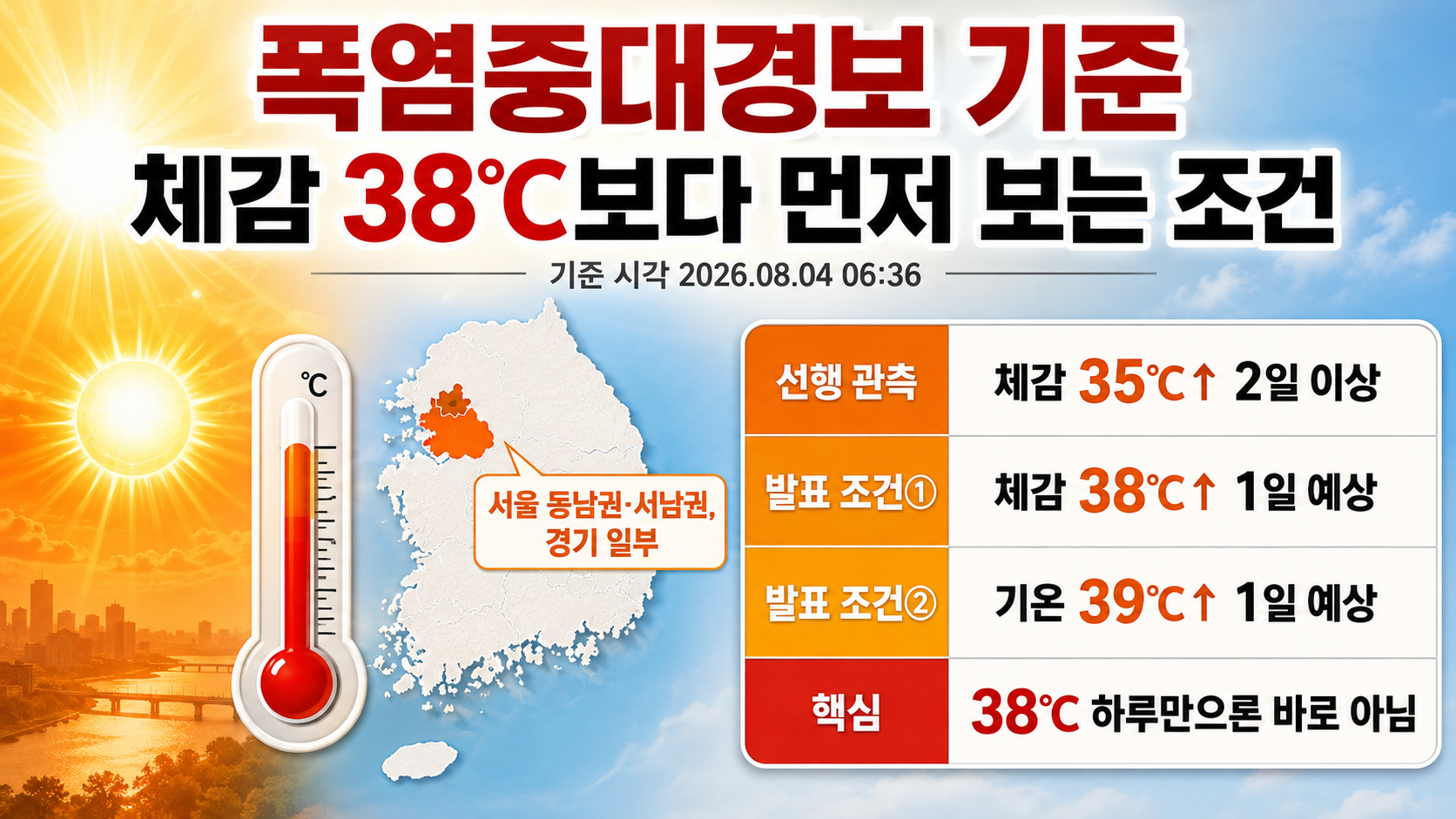
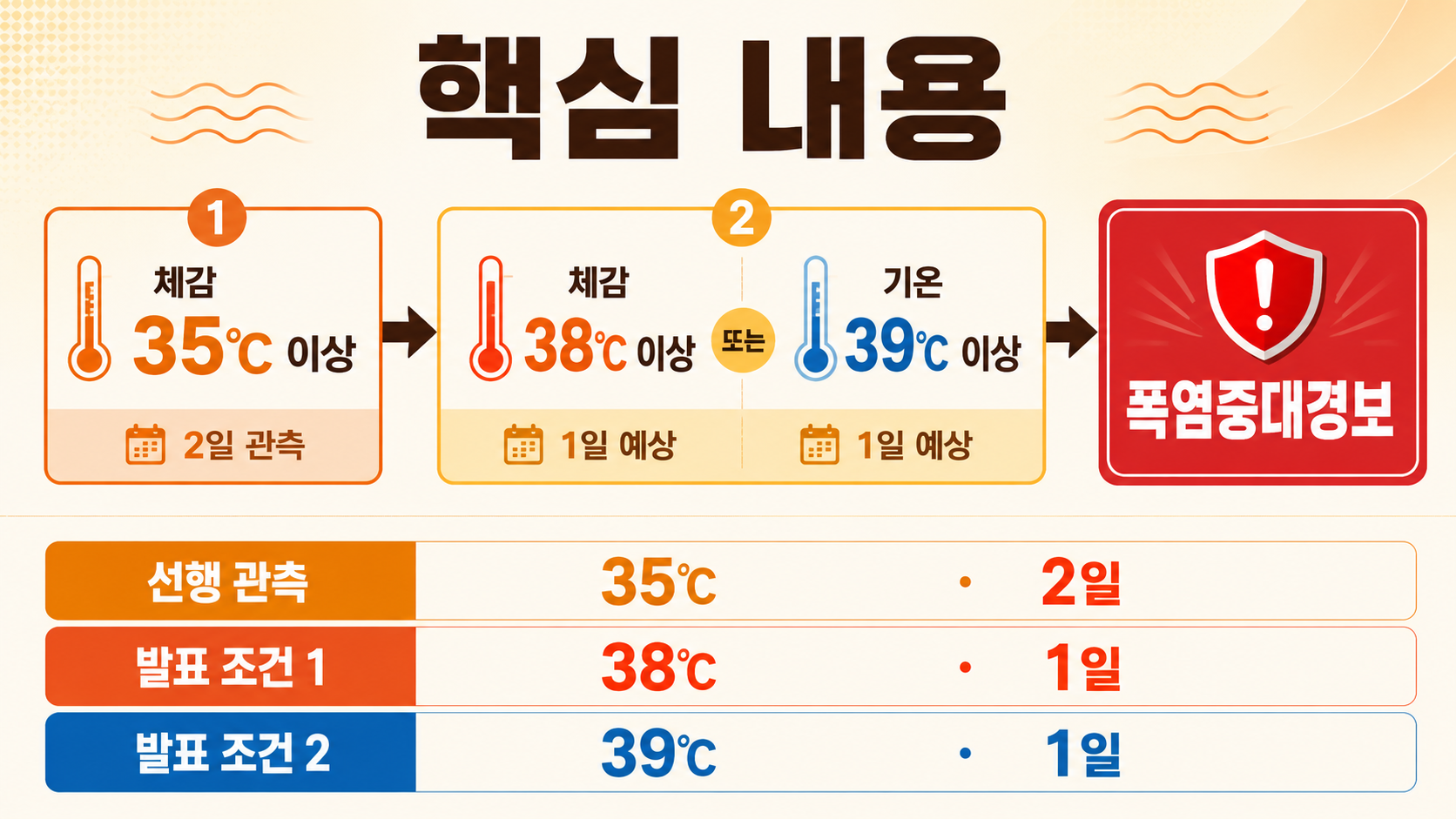
An extreme heat emergency warning is not issued simply because a feels-like temperature of 38°C is forecast for one day. It is issued when a region has already recorded a daily maximum feels-like temperature of 35°C or higher for at least two days, and either a feels-like temperature of 38°C or higher or an actual air temperature of 39°C or higher is expected for at least one day.
As of 6:36 a.m. on 2026-08-04, extreme heat emergency warnings had been announced for southeastern and southwestern Seoul, Osan, Hanam, and western Yeoju in Gyeonggi Province, eastern Gwangju, and parts of South Jeolla Province. The warnings are scheduled to take effect at 11 a.m. today.
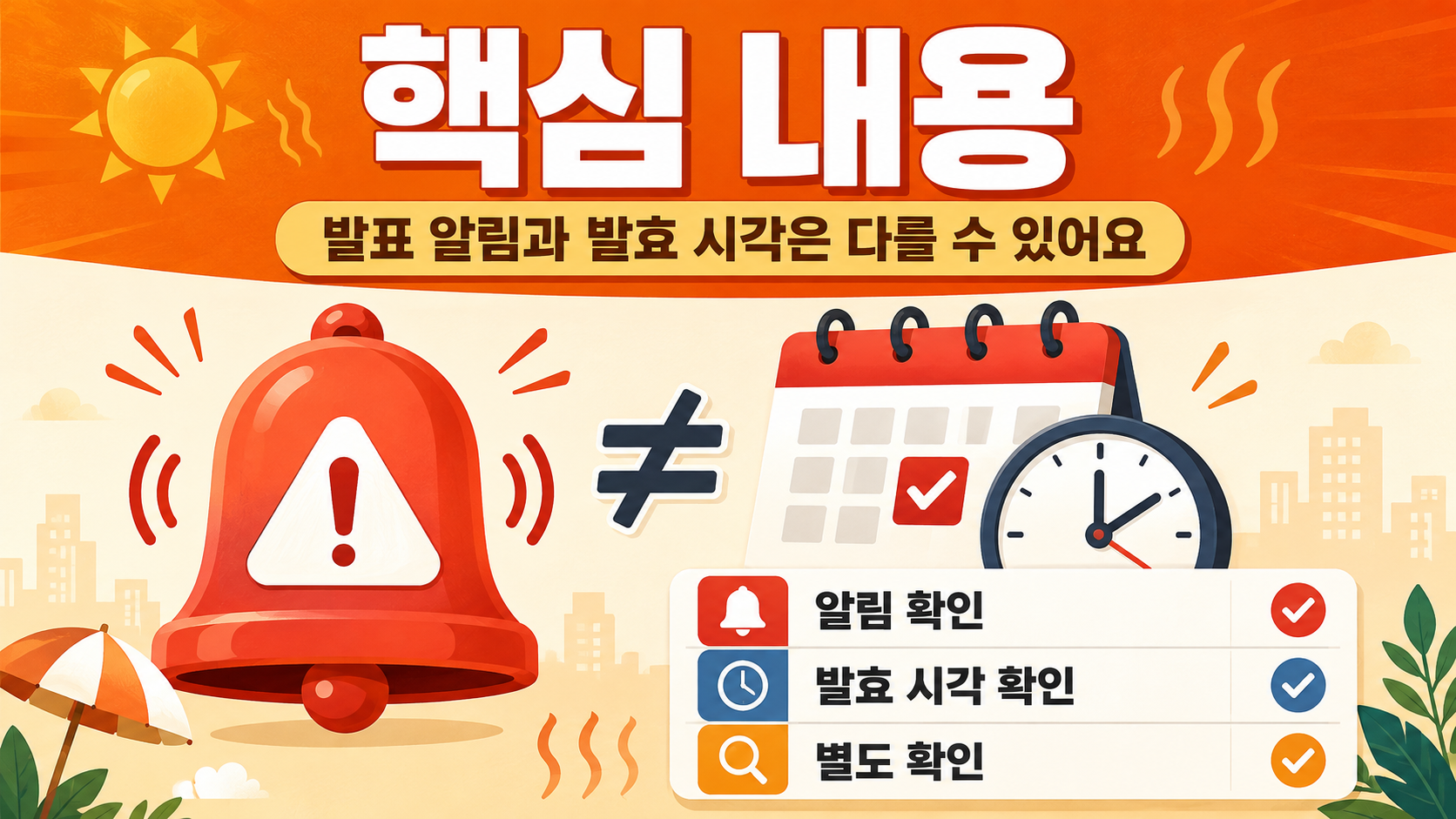
Even if you receive a notification that a warning has been issued, you must separately check when it actually takes effect.
There are three essential actions to remember during an extreme heat emergency warning.
STOP
Immediately stop or postpone outdoor activities and outdoor work, except for essential duties.
MOVE
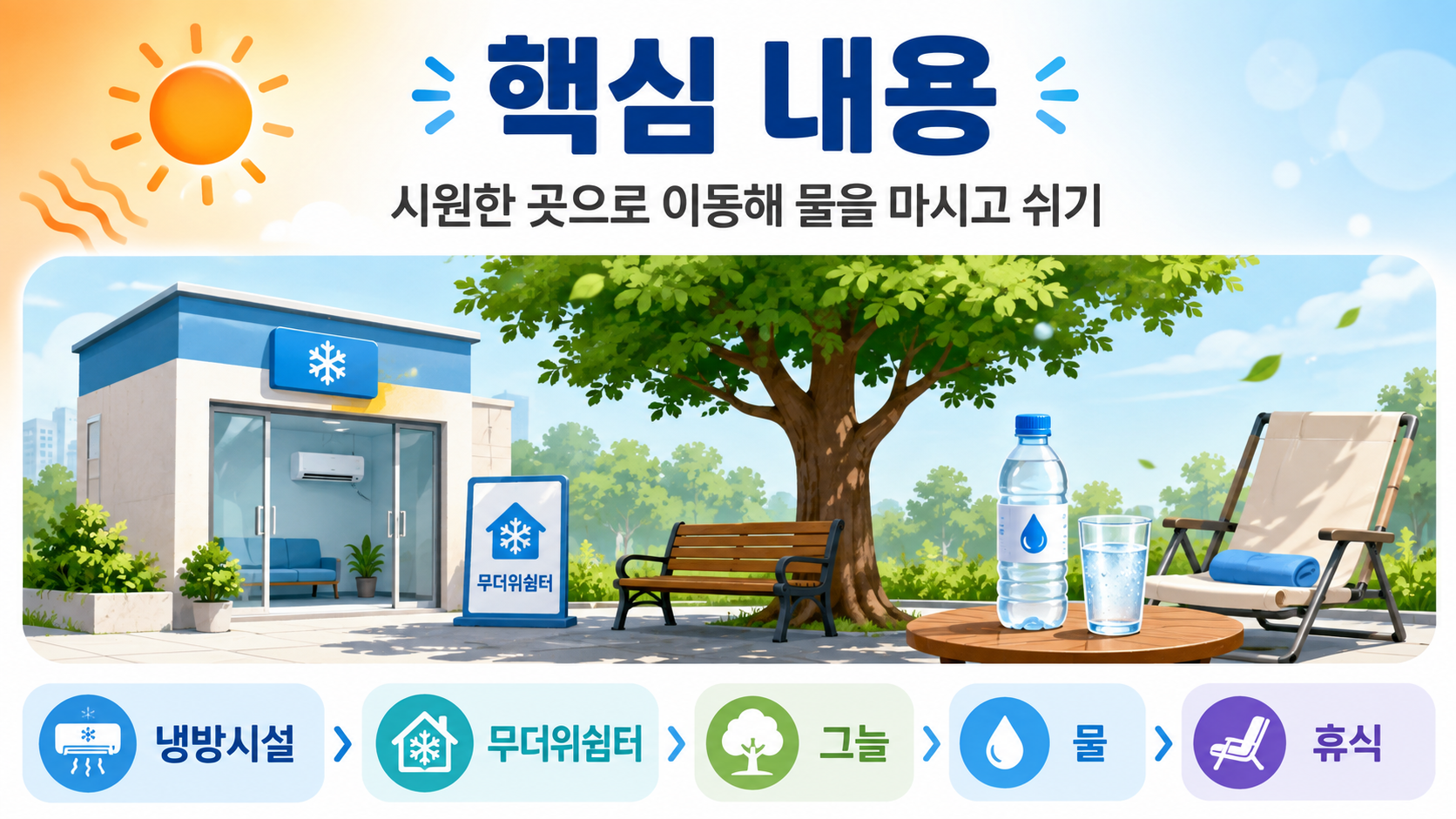
Move to a cool location, such as an air-conditioned facility, a designated heat shelter, or a shaded area. Drink water and rest.
CHECK
Check on family members, neighbors, and older adults who live alone. If someone develops symptoms of heat-related illness, such as confusion, a severe headache, or seizures, call 119 for emergency assistance.
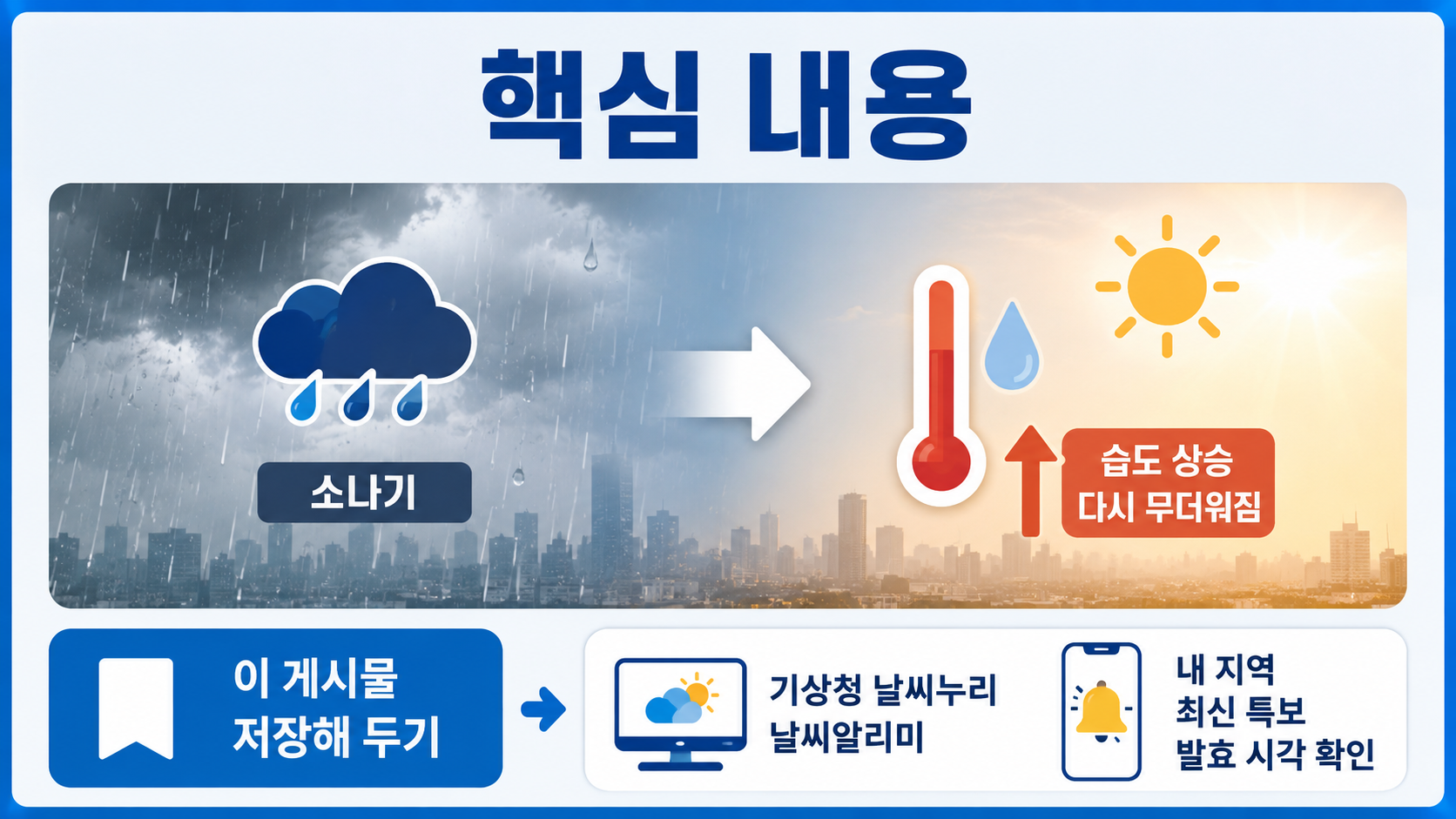
Even after a sudden rain shower, the heat can return as humidity rises once the rain stops. Save this post and, before heading outdoors, check the latest weather alerts and their effective times for your area through the Korea Meteorological Administration's Weather Nuri website or Weather Alert app.
---