

KOSPI Sell-Side Sidecar Triggered: Did Stock Trading Stop? Causes of the Sharp Decline and What to Check
이 포스팅은 쿠팡 파트너스 활동의 일환으로, 이에 따른 일정액의 수수료를 제공받습니다.
This article is based on the latest reports and official information available as of 2026-07-28 Korea Standard Time.
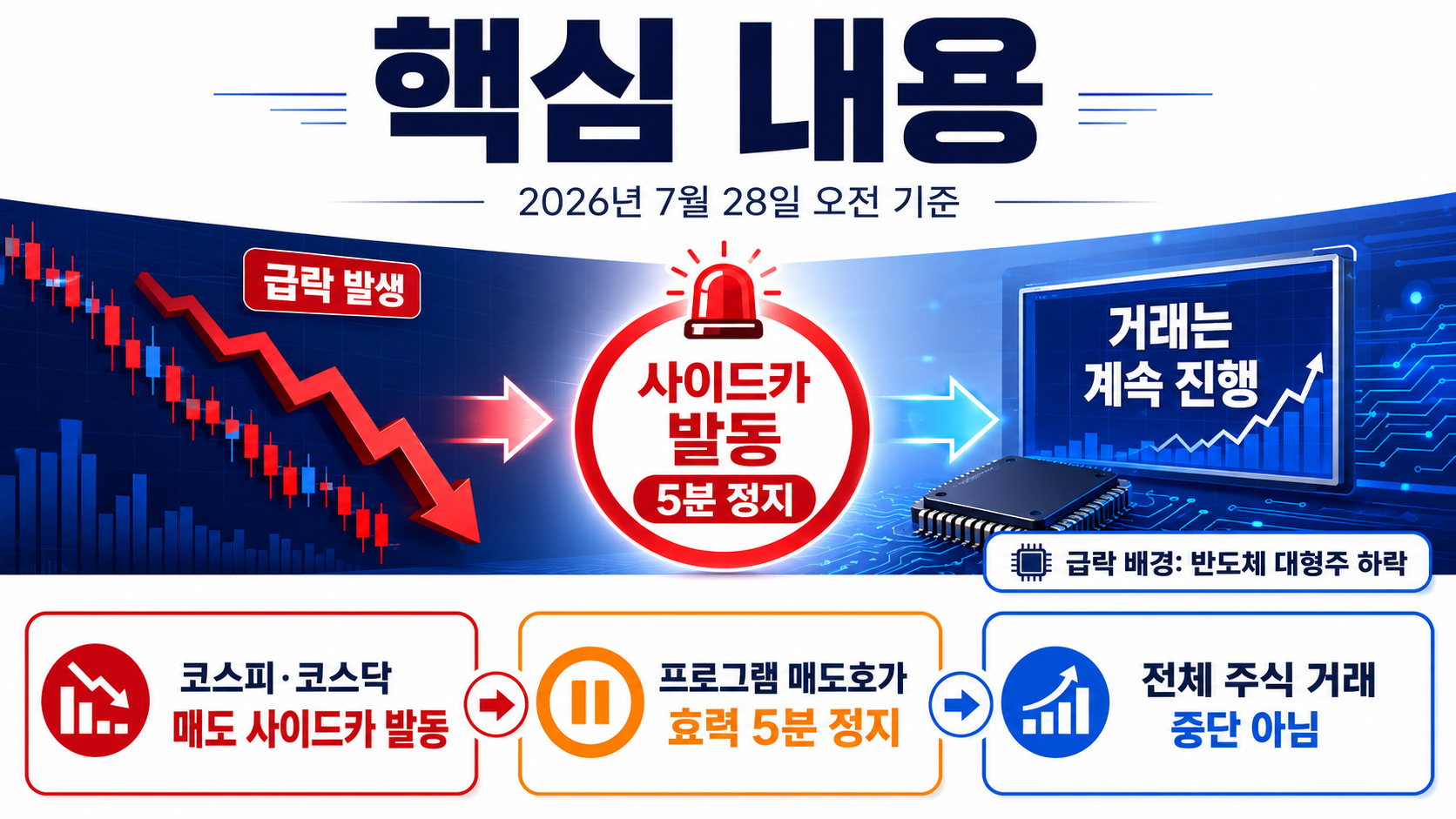
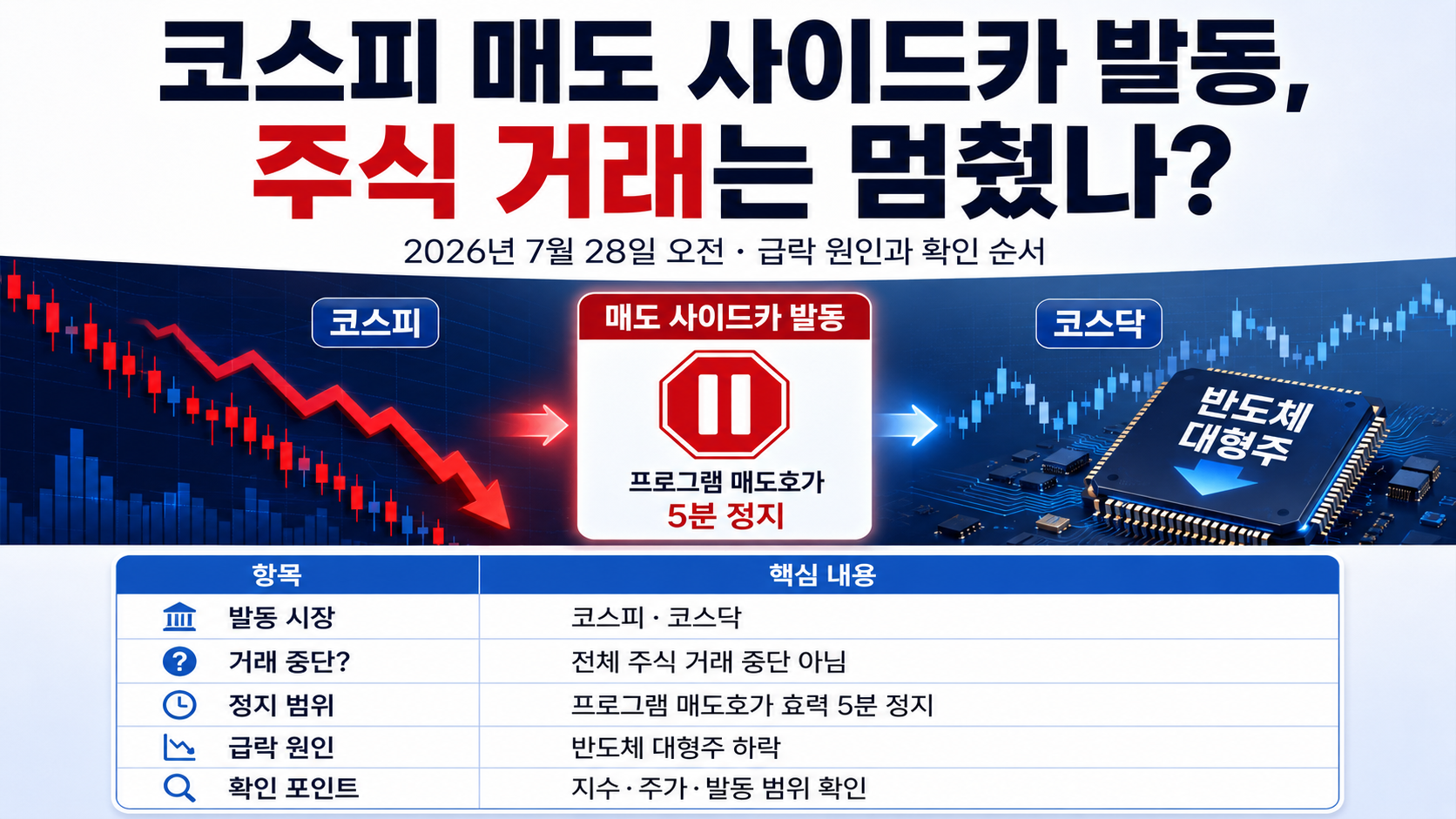
A sell-side sidecar was triggered on both the KOSPI and KOSDAQ on the morning of 2026-07-28, but not all stock trading was halted. Only the effectiveness of program sell orders was suspended for 5 minutes, while the sharp decline early in the session was largely driven by falling semiconductor heavyweights such as Samsung Electronics and SK Hynix.
The index levels and stock prices in this article reflect specific points during the morning trading session. Intraday prices and trading amounts by investor category may continue to change.
What Happened in the Korean Stock Market on the Morning of July 28?
The KOSPI opened at 6,400.27, down 5.26% from the previous trading day, before extending its losses. A sell-side sidecar was triggered in the KOSPI market at 9:6:2 a.m., followed by another sell-side sidecar in the KOSDAQ market at 9:14:47 a.m.
| Category | Time Checked | Confirmed Details |
|---|---|---|
| KOSPI opening | 9 a.m. | 6,400.27, down 5.26% from the previous trading day |
| KOSPI sidecar | 9:6:2 a.m. | Triggered by a 6.42% decline in Mini KOSPI 200 futures |
| KOSDAQ sidecar | 9:14:47 a.m. | KOSDAQ 150 futures down 6.07% and the spot index down 5.92% |
| KOSPI index | 9:45 a.m. | 6,252.99, down 7.44% from the previous trading day |
| Samsung Electronics | 9:49 a.m. | KRW 231,000, down 9.06% |
| SK Hynix | 9:49 a.m. | KRW 1,621,000, down 10.74% |
The KOSPI fell another 147.28 points from its opening level of 6,400.27 to 6,252.99 at 9:45 a.m.
Author's calculation:
(6,400.27 − 6,252.99) ÷ 6,400.27 × 100 = approximately 2.30%
In other words, after opening down more than 5%, the index declined by approximately another 2.30% from its opening level over roughly 45 minutes.
Does a Sell-Side Sidecar Stop Trading in My Stocks?
A sell-side sidecar does not suspend all ordinary stock trading. To reduce the impact of a sharp decline in futures prices spreading to program selling in the spot market, it suspends the effectiveness of program sell orders for 5 minutes.
A KOSPI sell-side sidecar is triggered when KOSPI 200 futures prices remain at least 5% below their reference price for 1 consecutive minutes.
The KOSDAQ has different conditions. KOSDAQ 150 futures prices must fall by at least 6%, while the KOSDAQ 150 spot index must simultaneously decline by at least 3%, with both conditions persisting for 1 consecutive minutes.
| Category | Sell-Side Sidecar | Circuit Breaker |
|---|---|---|
| Purpose | Reduce the impact of program trading | Slow a sharp market-wide decline |
| Trigger criteria | Changes in futures prices or both futures and spot indexes | Decline in the composite stock index |
| Trading affected | Program sell orders | Market-wide trading |
| Standard suspension period | 5 minutes | 20 minutes for stages 1 and 2 |
| Ordinary stock orders | Trading remains possible | Trading is suspended during the triggered stage |
A circuit breaker is a mechanism that halts market-wide trading in stages when the KOSPI or KOSDAQ composite index falls by 8%, 15%, or 20% or more from the previous day's closing level. Its impact is broader than that of a sidecar.
Therefore, seeing a 'Sidecar Triggered' notification on a brokerage platform does not mean you are completely unable to buy or sell stocks you own. However, when prices are moving rapidly, market orders may execute at less favorable prices than expected, so it is important to check current bid and ask quotes and review the order type.
What Caused the Sharp Decline in the KOSPI?
This decline is difficult to explain solely through a single piece of news about China's semiconductor industry. Analysts point to a combination of developments involving Chinese memory manufacturer ChangXin Memory Technologies, weakness in U.S. semiconductor stocks, reports about Chinese-made semiconductor equipment, and the Korean stock market's heavy concentration in major semiconductor companies.
Concerns About Intensifying Competition Following CXMT's Listing
Chinese DRAM manufacturer ChangXin Memory Technologies, known in English as CXMT, was listed on the Shanghai stock exchange in China on July 27.
CXMT raised CNY 57,920,000,000 through its initial public offering. Investors reacted more strongly to the possibility of expanding production capacity and developing technology using the proceeds than to the company's current financial performance.
This does not mean that CXMT has already surpassed Samsung Electronics or SK Hynix in technological capabilities or profitability. A more accurate interpretation is that stock prices began reflecting concerns that a well-funded Chinese memory manufacturer could expand its production facilities and intensify supply competition in the commodity DRAM market.
U.S. Semiconductor Stocks Also Declined
Before the Korean market opened, major semiconductor-related stocks in the United States, including Nvidia, ASML, and Micron, had also declined.
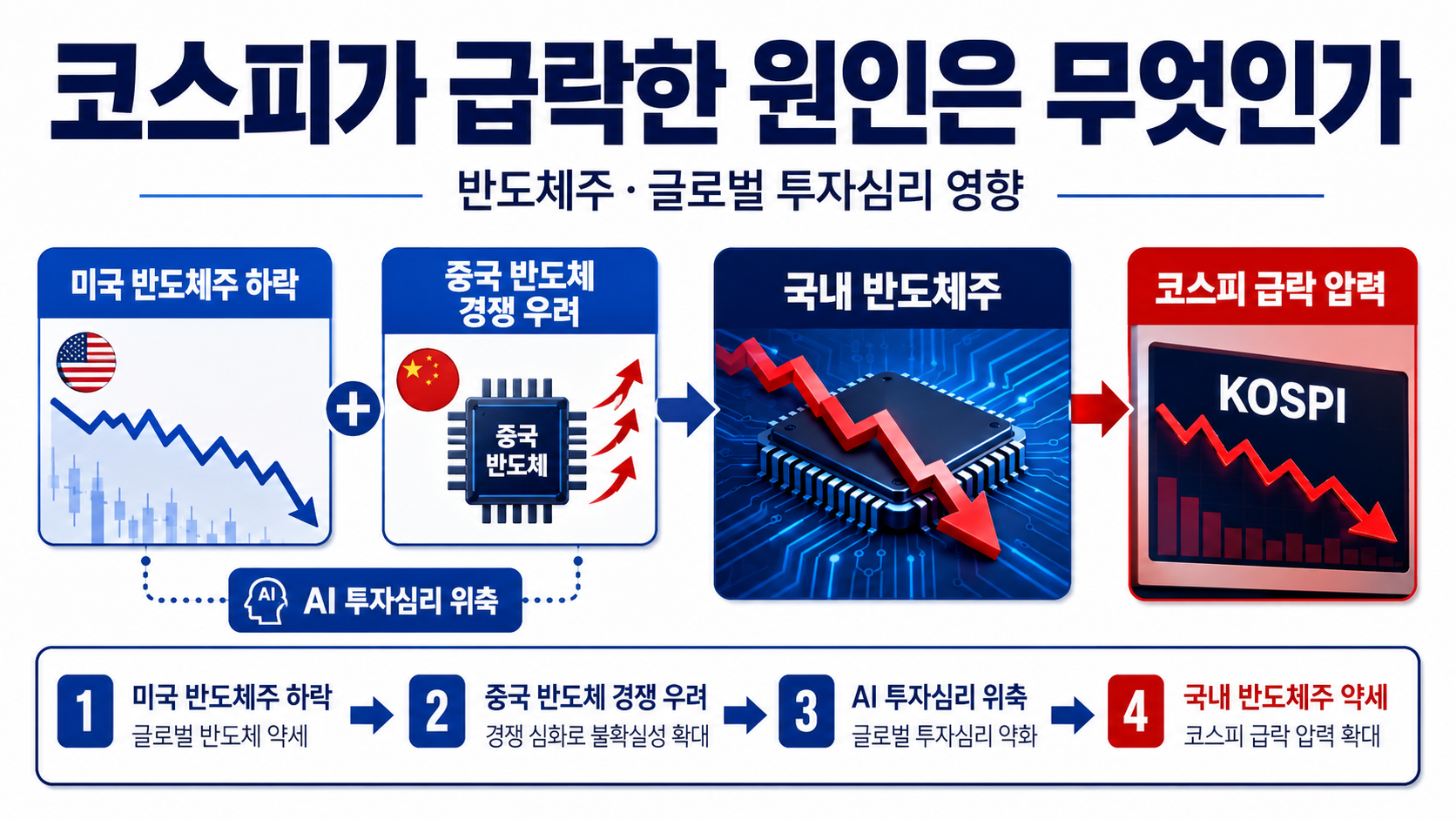
Korean semiconductor stocks are heavily influenced by the Philadelphia Semiconductor Index and global sentiment toward AI investment. With concerns about Chinese semiconductor competition already rising, declines in U.S. semiconductor stocks further accelerated the deterioration in Korean investor sentiment.
Limited Verification of Reports About Chinese-Made DUV Equipment
Reports that a Chinese state-backed company had begun producing immersion DUV lithography equipment also affected the market. DUV equipment is used in the lithography process to pattern semiconductor circuits onto wafers.
However, essential information, including the equipment manufacturer, actual performance, yield rates, and customer validation results, has not been sufficiently disclosed. Investors reacted to the possibility that Chinese memory manufacturers could reduce their equipment procurement difficulties, but the reports alone do not establish that the semiconductor technology gap between Korea and China has suddenly disappeared.
Securities industry assessments also suggested that the expected initial production volume would be limited compared with the production scale of leading global equipment manufacturers. Until verified production results and customer deployment outcomes become available, technological competitiveness and potential supply effects should be evaluated separately.
The Influence of Samsung Electronics and SK Hynix on the Index
Samsung Electronics and SK Hynix account for a very large share of the KOSPI. If both stocks fall by approximately 9–10% at the same time, the overall KOSPI can decline significantly even when losses in other stocks are relatively small.
Therefore, interpreting the KOSPI's 7%-range decline that day as meaning that the value of every Korean listed company deteriorated by the same proportion would misrepresent the actual market structure. The performance of semiconductor heavyweights should be examined separately from that of other sectors.
Five Things to Check First During a Market Sell-Off
When a sharp decline occurs, it is safer to review market mechanisms, order status, trading flows, and corporate earnings in sequence rather than attributing the entire move to a single news headline.
1. Check Whether It Is a Sidecar or a Circuit Breaker
A sidecar restricts only program orders for 5 minutes. A circuit breaker suspends trading across the entire market.
Confusing the two mechanisms can lead investors to mistakenly believe their orders have been canceled or that the entire market has closed.
2. Check Unfilled Orders and Order Types
In a rapidly changing market, bid and ask prices can move significantly within seconds.
If you have placed market orders, automated orders, scheduled orders, or conditional orders, you should check their status and actual execution prices. Quote volatility may also increase immediately after a sidecar is lifted as program orders begin affecting the market again.
3. Focus on Changes in the Earnings Outlook of Stocks You Own Rather Than the Index
A sharp index decline does not mean that every company's earnings outlook has deteriorated by the same amount.
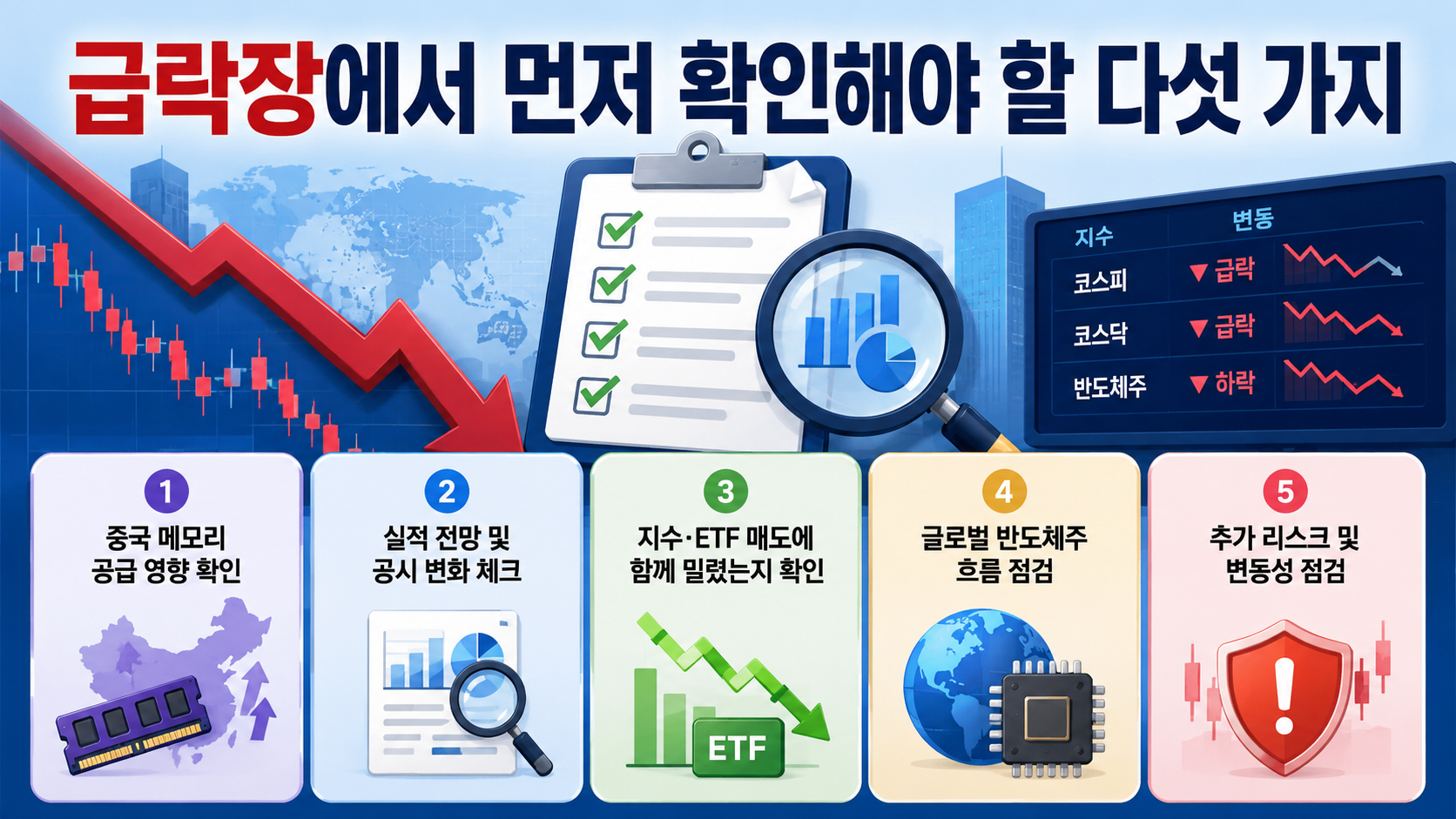
It is important to distinguish whether a company you own is directly affected by increased Chinese memory supply, whether its recent earnings forecasts or regulatory disclosures have changed, or whether its shares have simply been pulled down by broader index and ETF selling.
4. Recheck Foreign and Institutional Trading Flows After the Market Closes
Around 9:45 a.m., individual investors were net buyers, while foreign and institutional investors were net sellers. However, intraday trading flows change continuously, so final assessments should rely on figures recorded at the market close.
Examining futures market flows, net program trading, and foreign investors' net spot-market transactions together provides a more accurate picture of market conditions than simply looking at individual buying and foreign selling figures.
5. Review Leverage and Margin Balances
Products such as leveraged ETFs, inverse products, margin trading, and CFDs can experience profit and loss fluctuations that are greater than movements in the underlying index.
Leveraged ETFs, in particular, are designed to track daily returns, so their performance over longer holding periods may differ from the cumulative return of the underlying index. Caution is needed when investing solely in anticipation of a rebound after a sharp decline without first understanding the product's structure.
Does a Sidecar Trigger Mean the Market Will Soon Rebound?
No. A sidecar is not designed to reverse the direction of the market. It is a mechanism intended to reduce short-term shocks caused by program trading.
When program selling resumes after 5 minutes, the index may rebound or decline further. The number of sidecar activations alone cannot determine a market bottom or the timing of a rebound.
Does China's Semiconductor Expansion Mean Korean Semiconductor Competitiveness Is Finished?
The information currently available does not support such a definitive conclusion.
CXMT's listing and fundraising increase the possibility of production expansion in China's memory industry. However, actual competitiveness depends on multiple factors, including process technology, manufacturing yields, product reliability, high-bandwidth memory capabilities, equipment procurement, and customer certification.
Likewise, reports that Chinese-made DUV equipment has entered production and evidence that it can be used competitively in actual mass-production lines represent different stages. Additional verification is needed regarding equipment performance, yields, the number of installed units, and customer deployment results.
What to Check After the Market Closes
After the market closes on July 28, the following information should be reviewed again.
Final closing levels and intraday lows of the KOSPI and KOSDAQ
Final net trading amounts for foreign, institutional, and individual investors
Program trading activity and futures market flows
Closing prices and trading volumes of Samsung Electronics and SK Hynix
CXMT's share price performance after its listing and its official business plans
Whether the manufacturer, performance, and supply track record of Chinese-made DUV equipment have been disclosed
This article is informational content explaining intraday market data from the morning of 2026-07-28. It does not recommend buying or selling any particular stock or guarantee investment returns. Intraday figures and market assessments may change following subsequent announcements.
※ This article is provided for reference to help readers understand market developments and does not constitute investment advice concerning any particular stock or asset. All final investment decisions and associated responsibilities rest with the individual investor.
이 포스팅은 쿠팡 파트너스 활동의 일환으로, 이에 따른 일정액의 수수료를 제공받습니다.