

Chipflation Pushes Up Laptop and PC Prices: What Does the Forecast of Up to 40% in 2026 Mean?
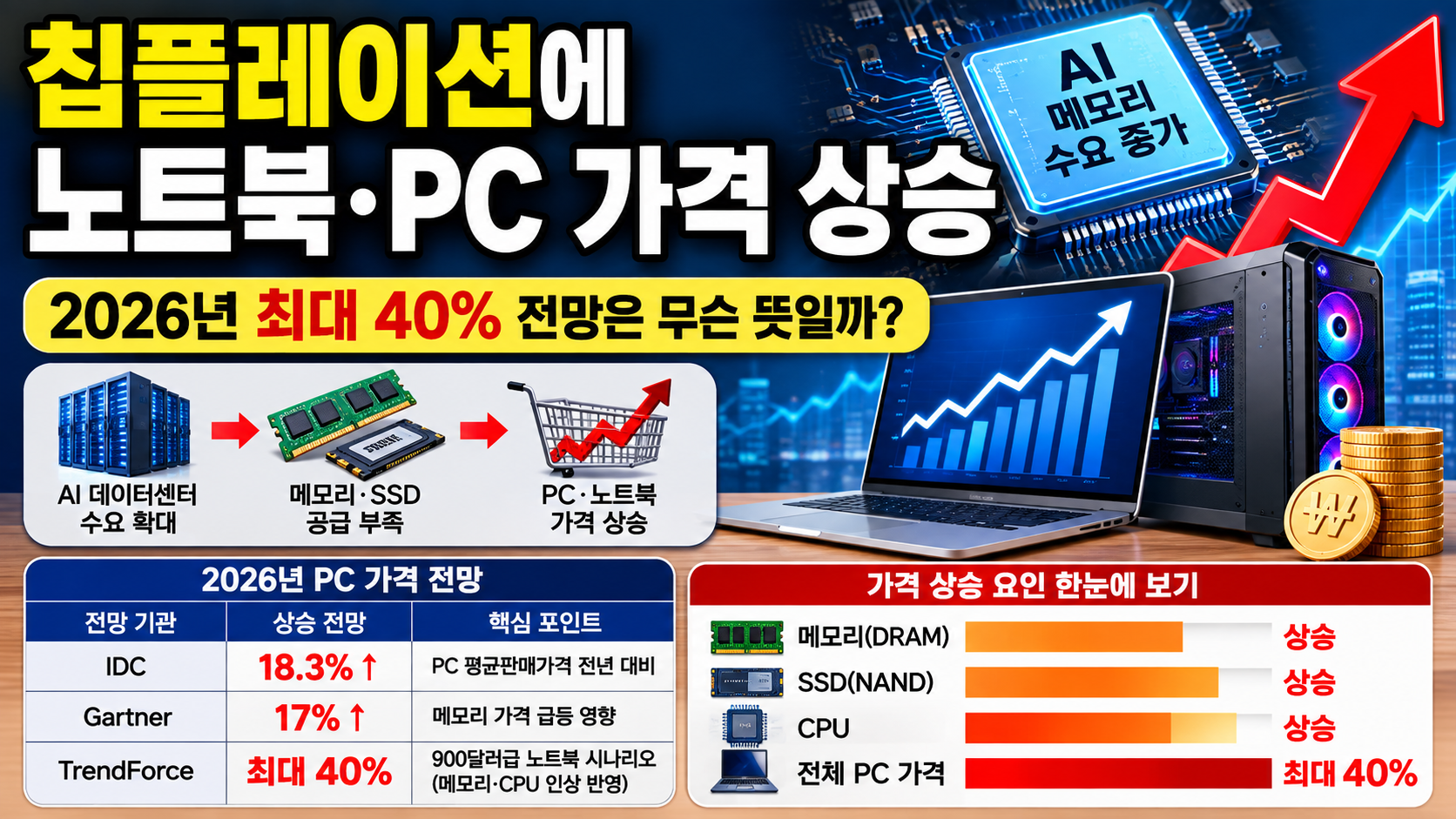
As of August 2026, laptop and PC prices face a greater risk of remaining elevated or rising further in the near term than of declining. However, this does not mean that “today is definitely the cheapest day to buy.” Even as memory shortages persist, individual models may become cheaper due to product generation changes, inventory discounts, exchange rates, and manufacturers’ pricing policies.
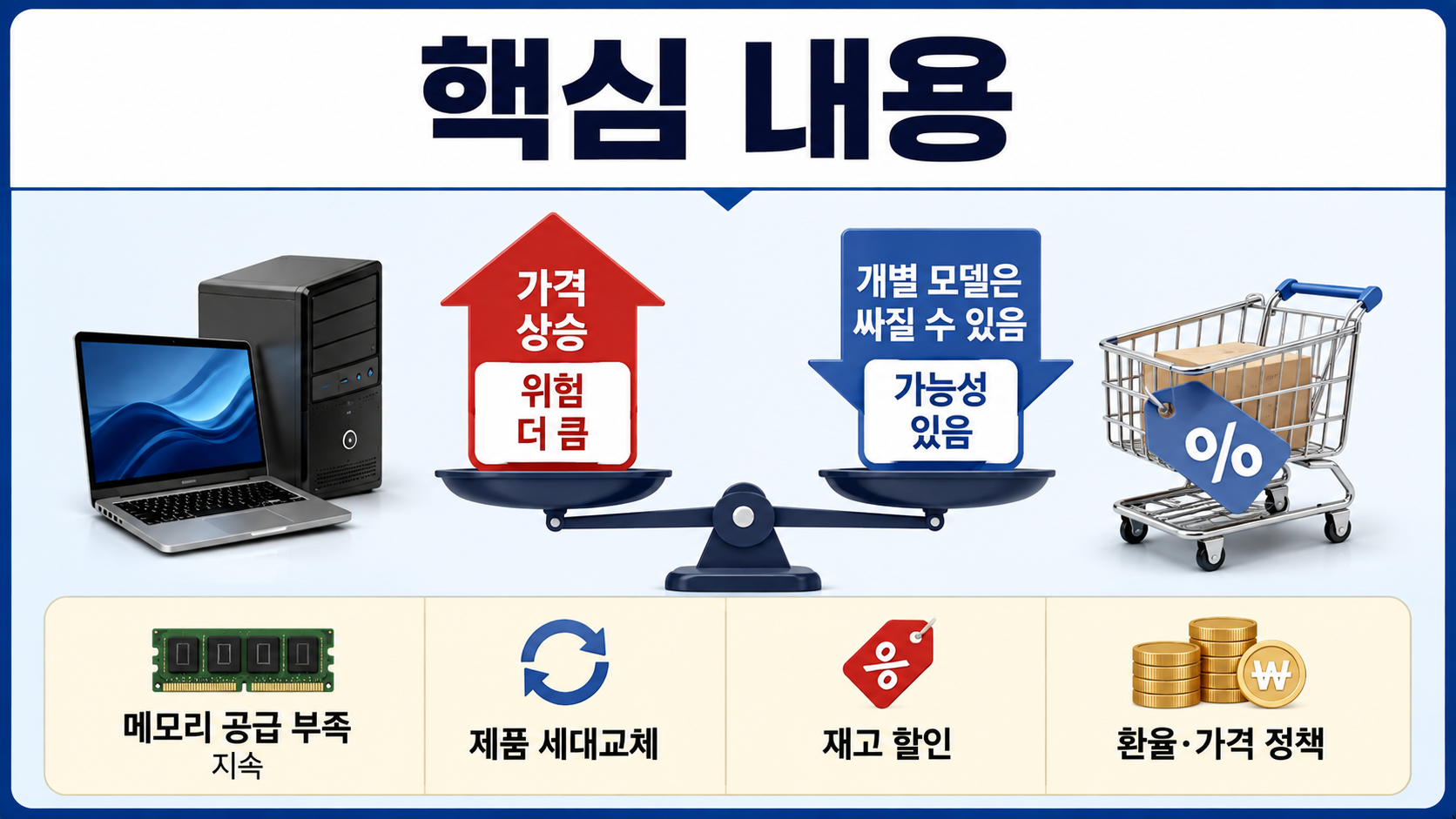
What matters is understanding why prices are rising. This time, the problem is not simply that a particular CPU or GPU has become expensive. AI data centers require enormous quantities of high-performance memory, tightening DRAM and NAND supplies. Those costs are spreading beyond servers to consumer products such as laptops and desktop computers.
The term used to describe this phenomenon is “chipflation.”
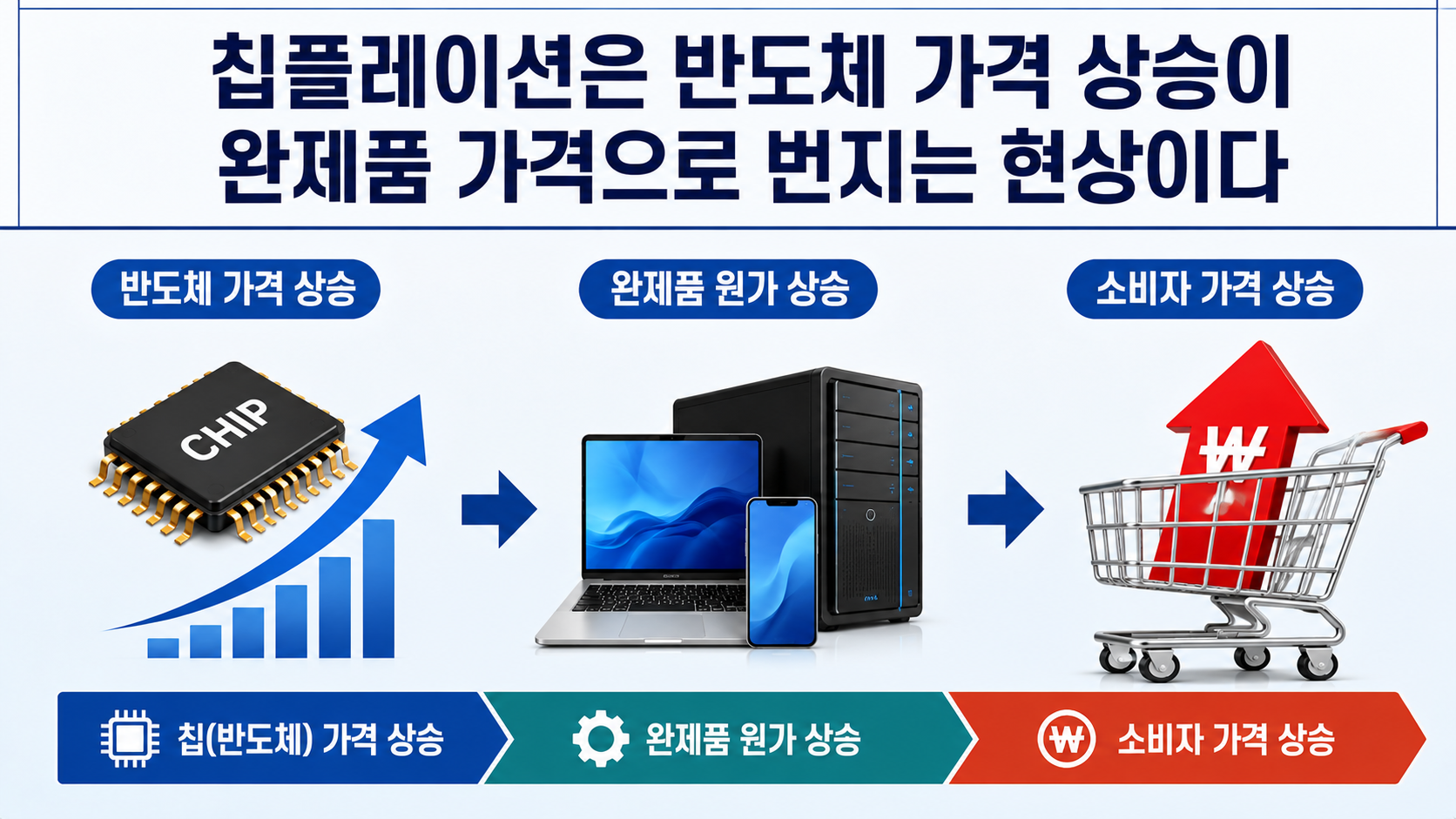
Chipflation Occurs When Rising Semiconductor Prices Spread to Finished Products
Chipflation combines the words “chip” and “inflation.” It describes a phenomenon in which rising semiconductor prices increase the production costs of finished products such as PCs, laptops, smartphones, and servers, ultimately affecting consumer prices.
In 2026, memory is particularly central to this trend.
Both DRAM, which provides working space for programs running on computers, and NAND flash, which is used in SSDs to store data, are essential components of laptops and desktops.
In the past, there was a widespread expectation that advances in semiconductor technology would make it possible to purchase the same amount of memory at progressively lower prices. Now, the rapid expansion of AI infrastructure is reversing that trend.
Large data centers require far more memory than ordinary PCs. At the same time, demand is growing for high-bandwidth memory (HBM) used in AI, high-capacity server DRAM, and enterprise SSDs.
When memory manufacturers concentrate their production capacity on high-value AI and server products, general-purpose memory used in consumer PCs can also face supply pressure.
In other words, even people who do not directly use AI services may be indirectly affected when purchasing a new laptop or PC.
How Much Could Laptop Prices Actually Rise?
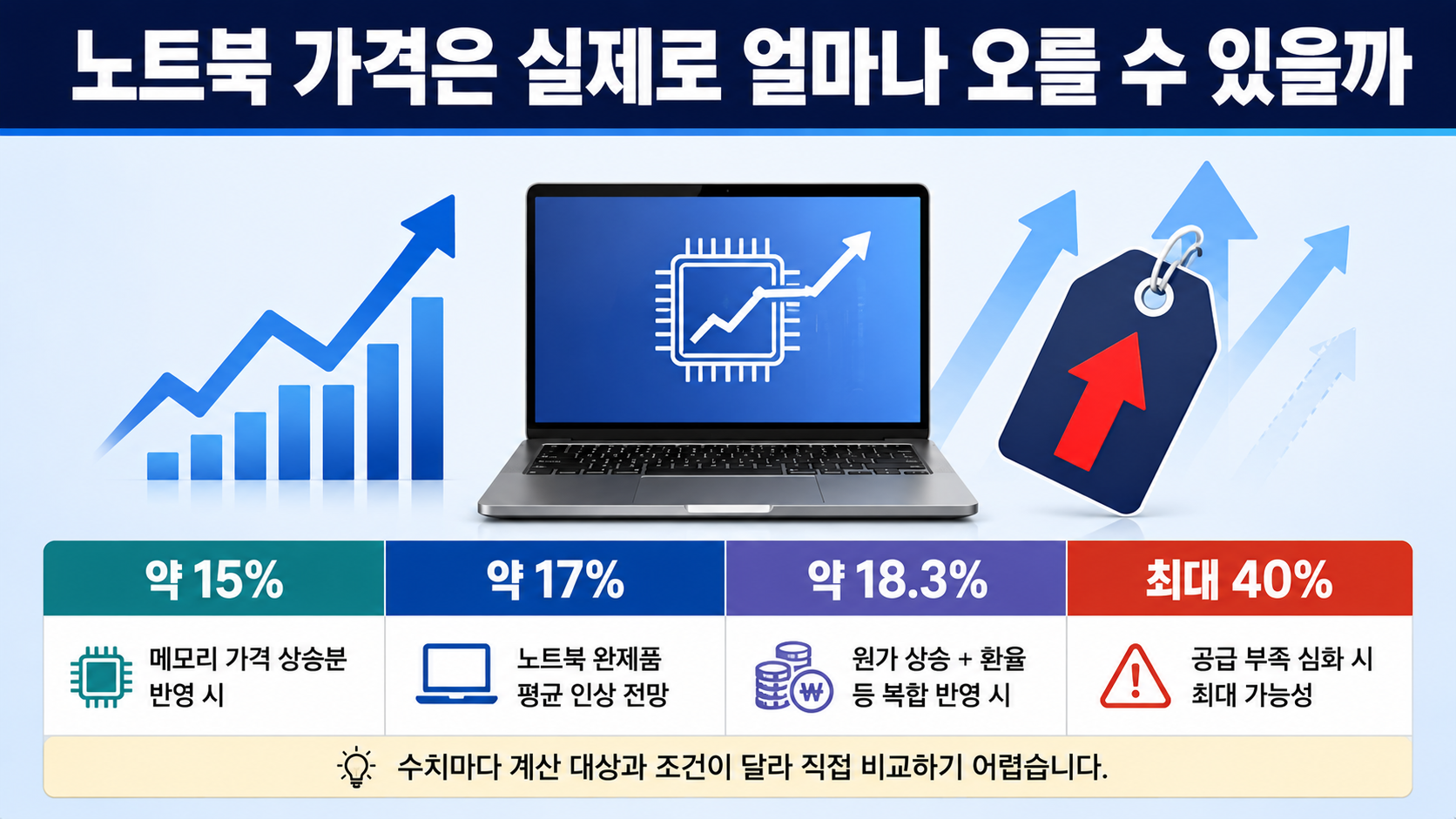
Reducing the market outlook for 2026 to a single number can be misleading. Current forecasts include figures of approximately 15%, 17%, 18.3%, and as much as 40%. These figures appear together because they measure different things.
A forecast examining the average selling price across the entire PC market suggests that prices in 2026 could be approximately 18.3% higher than the previous year. Another market forecast predicts that PC prices will rise by approximately 17% compared with 2025 due to sharply increasing memory prices.
However, an analysis suggesting that laptop prices could rise by as much as 40% does not mean that every laptop will become 40% more expensive across the board.
It is a scenario based on a mainstream laptop previously priced at USD 900. Assuming manufacturers and distributors maintain their existing profit margin structures, passing higher memory costs through to retail prices could result in an increase of more than 30%. If CPU price increases are also reflected, the total increase could approach 40%.
For example, simply applying 40% to USD 900 produces the following calculation.
USD 900 × 40% = USD 360
USD 900 + USD 360 = USD 1,260
Author's calculation: Assuming the entire price increase is passed on to consumers under otherwise identical conditions, a product priced at USD 900 would reach approximately USD 1,260.
However, this does not mean actual retail prices will necessarily change in this way. Manufacturers may absorb some of the costs, reduce memory or storage capacity, continue using older CPUs, or respond by cutting back on promotions.
Therefore, the figures “up to 40%” and “market average in the 17–18% range” are not necessarily contradictory. The former is a scenario based on assumed cost increases for a particular laptop, while the latter forecasts average price movements across the entire PC market.
Why Is Memory for Ordinary Laptops Becoming Scarce as AI Expands?
HBM used for AI and DRAM used in laptops are not exactly the same products. Nevertheless, both are affected because semiconductor manufacturing capacity is not unlimited.
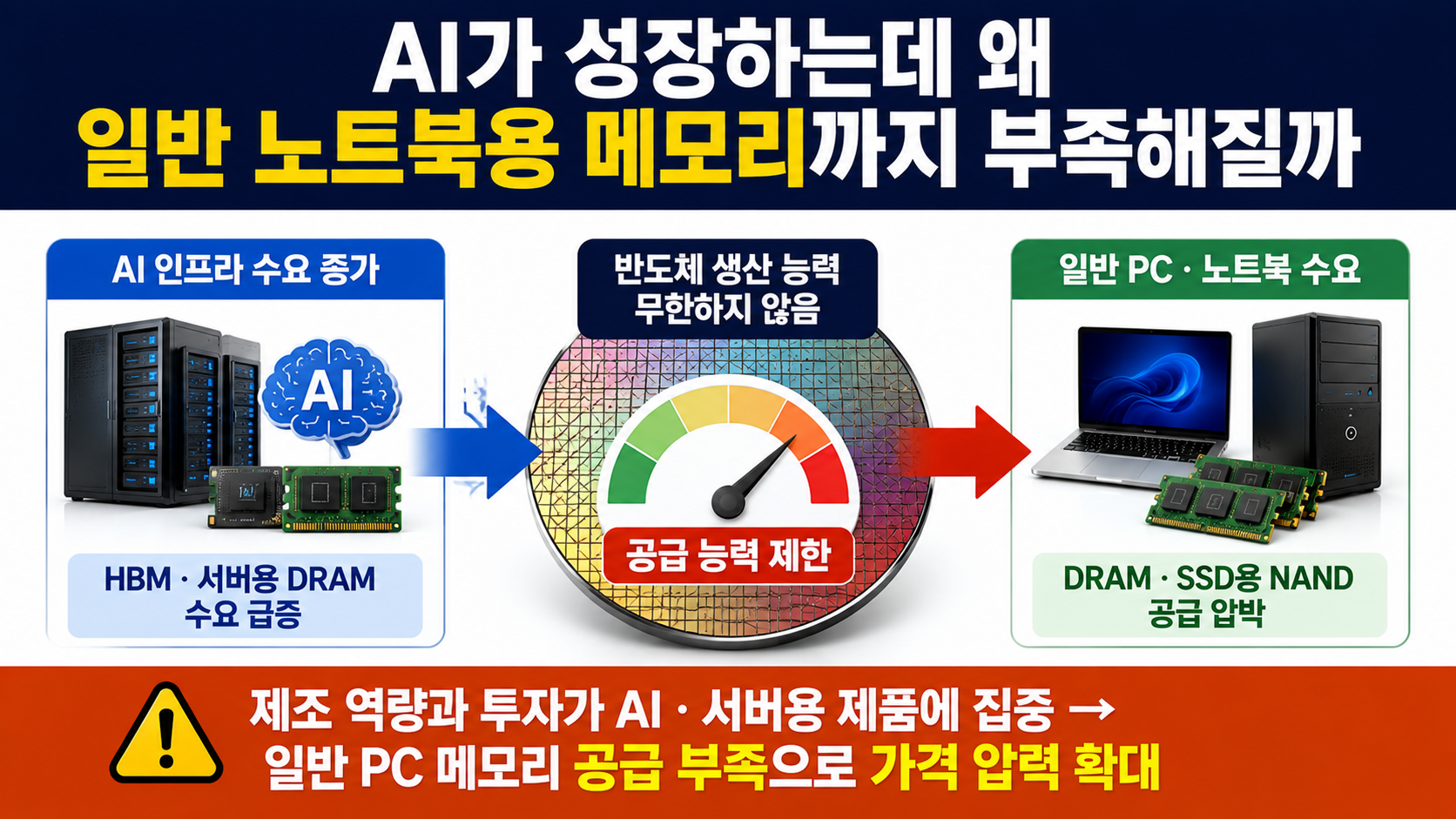
For memory manufacturers, strong demand and higher added value create greater incentives to concentrate production and investment on AI and server products. At the same time, if major cloud companies and data center operators attempt to secure their future requirements through long-term supply arrangements, the amount of available supply could shrink further.
Samsung Electronics also confirmed strong memory demand driven by expanding AI infrastructure in its first-half 2026 earnings materials and anticipated continued strong demand for server DRAM and SSDs in the second half.
Rather than simply saying, “AI chips are getting more expensive, so laptops are getting more expensive too,” it is more accurate to understand that changes in manufacturing capacity and investment priorities are reshaping the pricing structure of the entire memory market.
The impact does not stop with RAM.
When SSD prices rise, models with larger storage capacities become more expensive to produce. If CPU prices also increase, manufacturers have fewer opportunities to offset costs by saving money on other components. Budget laptops may be particularly sensitive to these changes because their profit margins are already relatively small.
How Accurate Is the Claim That “Today Is the Cheapest Day to Buy”?
Looking at the overall direction of the market, it is difficult to dismiss the possibility that PCs will become more expensive over the next several months. However, that does not mean people should rush to buy computers they do not need simply because prices are expected to rise.
PC prices are not determined by memory costs alone.
When new products are released, previous-generation models often receive inventory clearance discounts. Individual manufacturers may offer discounts to boost sales, while consumers in South Korea are also affected by the won-dollar exchange rate and retail inventory levels.
Purchasing decisions should therefore distinguish between “prices across the overall market” and “the price of the specific model I want to buy.”
If you must replace your computer within 1–3 months for work or school, and you have already determined your desired specifications and budget, waiting indefinitely for memory prices to fall sharply again could be risky.
Conversely, if your current computer still meets your needs and you are waiting for the next generation of CPUs or GPUs, there is no need to bring forward your purchase solely because of price forecasts. The discount on an older model following a new product launch could outweigh the increase in component costs.
The statement “today is the cheapest day to buy” is best understood as an expression emphasizing the risk of rising market prices. It should not be interpreted as meaning that every computer becomes more expensive every day.
If You Are Buying a Laptop or PC Now, Decide on the Specifications First
When prices are unstable, the first step should not be browsing online stores. It should be determining the specifications you actually need.
For a laptop, it is better to decide on RAM capacity, SSD capacity, CPU class, whether a GPU is necessary, screen size, and weight before comparing products.
For example, someone who primarily writes documents and browses the web does not necessarily need a high-performance dedicated GPU. Conversely, someone working with video editing or 3D tasks may face higher upgrade costs later if they choose a model with insufficient memory simply because it is cheaper.
Memory capacity is especially important when purchasing laptops with RAM soldered to the motherboard, since it cannot be replaced. For storage, buyers should also check whether the device has an additional SSD slot.
Desktop computers are somewhat different. Instead of looking only at the price of a prebuilt PC, buyers can compare the prices of the CPU, motherboard, RAM, SSD, and graphics card separately.
If you already have a capable CPU and graphics card, another option is to upgrade only the RAM or SSD as needed rather than replacing the entire computer. However, because memory and SSDs themselves are affected by rising prices, it is important to compare current prices for individual components.
Will Prices Fall Again If You Wait Until 2027?
Based on market forecasts available as of August 2026, it would be difficult to assume that prices will return to their previous levels in the short term.
Some market forecasts suggest that meaningful relief from memory supply shortages may not arrive until after the end of 2027. The stabilization of the PC market could take even longer.
However, this does not establish that every PC will be more expensive in 2027 than in 2026.
Semiconductor prices can change direction depending on production capacity expansion, the pace of AI investment, manufacturers’ inventory levels, and declining consumer demand. If consumers refuse to accept higher prices, manufacturers may also adjust specifications or strengthen discount programs.
Therefore, the variables worth monitoring go beyond DRAM prices alone.
It is important to examine when memory shortages actually ease, whether average PC selling prices continue to rise, whether manufacturers reduce RAM and SSD capacities while maintaining the same prices, and how domestic exchange rates and retail prices change.
These factors also provide the most practical basis for people who need to replace their computers.
Rather than waiting to predict the lowest price several years from now, it is better to select 2–3 models with the specifications you need and compare their actual selling prices. Even if the sticker price appears unchanged, a reduction in RAM or SSD capacity is effectively similar to a price increase.
Chipflation in 2026 is about more than simply saying that “semiconductor companies are doing well.” The key point is that memory demand originating in AI data centers is now affecting the production costs, specifications, and retail prices of laptops and PCs.
If you need a computer now, a more practical approach than deciding to “wait no matter what until prices fall” is to establish your required specifications and budget, then track the prices of currently available models that meet those conditions. Conversely, if you do not need to replace your computer, there is no reason to accelerate a purchase solely because prices are forecast to rise.
Ultimately, the question you should be asking is not “Is today the cheapest day in history?” but “Will I still be able to buy the specifications I need at this price under the same conditions several months from now?”
※ This article is provided for reference to help readers understand market trends and does not constitute investment advice regarding any particular stock or asset. Final decisions and responsibility for investments rest with the individual.