

Youth Future Savings Account Application Categories: Should You Choose General Income Earner, SME Employee, or Small Business Owner?
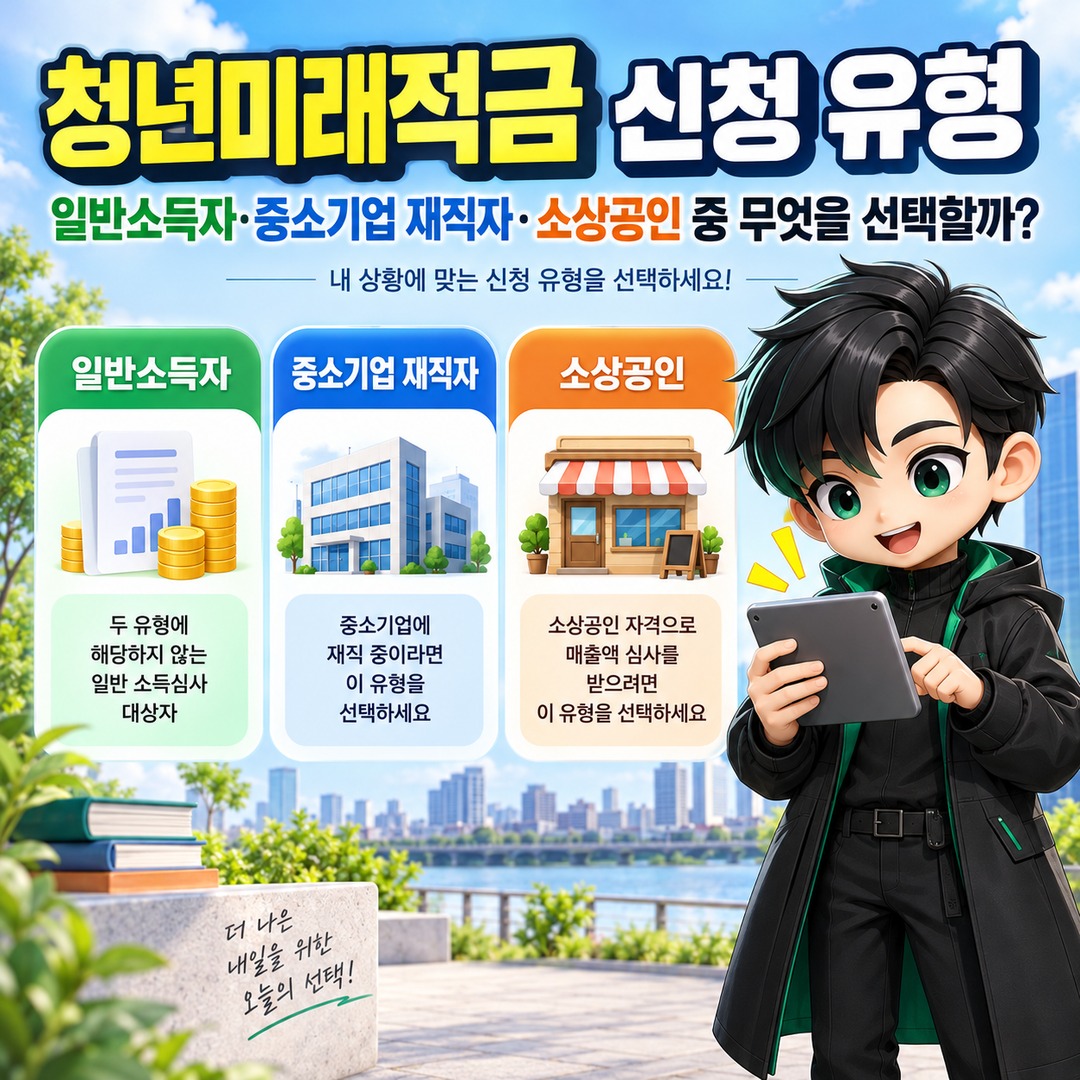
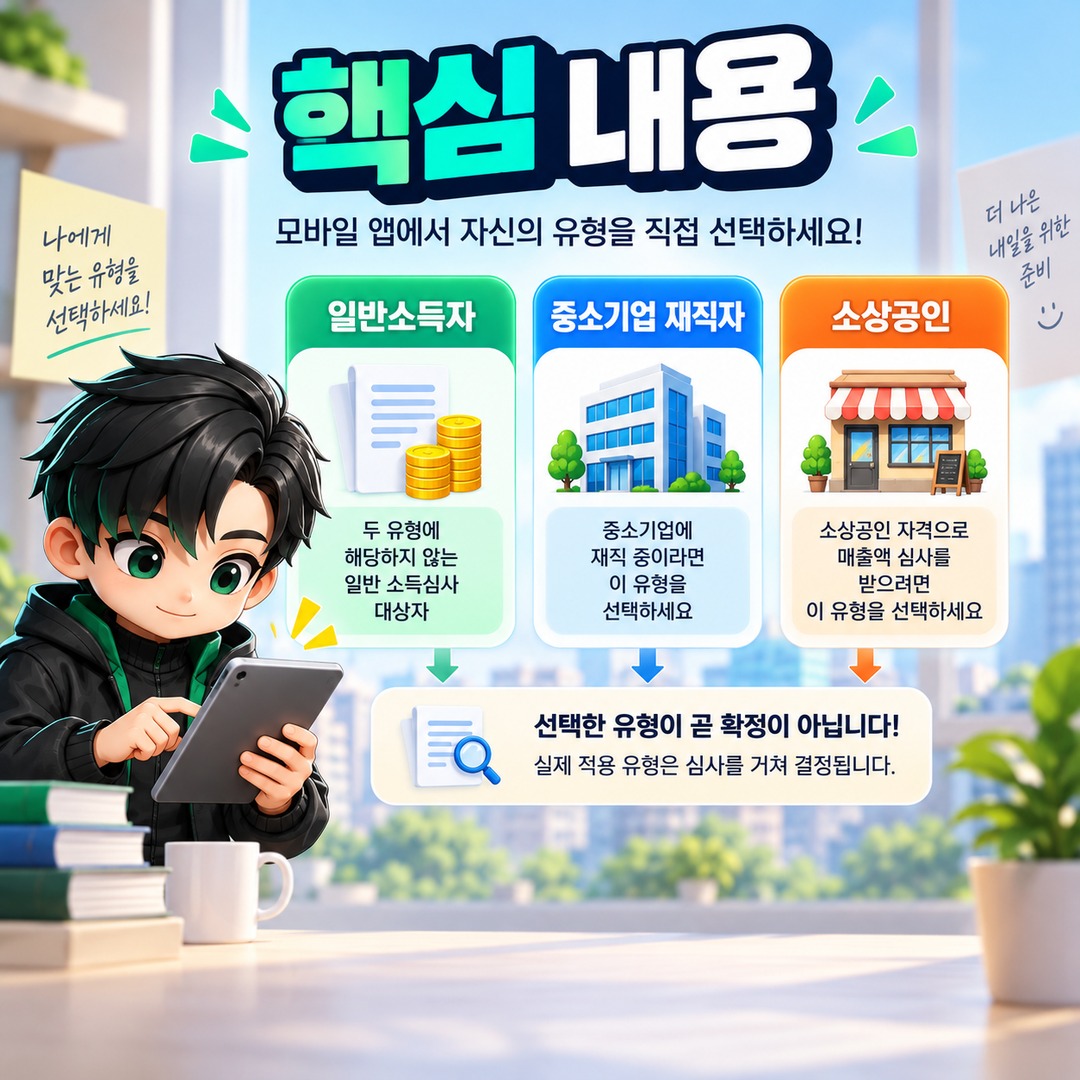
During the 2 application round for the Youth Future Savings Account, applicants must select their own category—general income earner, SME employee, or small business owner—in the mobile app. Those currently employed by an SME should select 'SME Employee'; those seeking an assessment based on their status as a small business owner and business revenue should select 'Small Business Owner'; and applicants subject to the standard income assessment who do not fall into either category should select 'General Income Earner'. The category selected does not automatically determine whether an applicant qualifies for the standard or preferential plan. The actual plan classification is determined through the eligibility review.
The 2 application round, which began on 2026-10-07, will continue until October 16. Applicants whose birth year ends in an odd digit can apply on October 7, while those whose birth year ends in an even digit can apply on October 8. From October 12 through 16, applications are open regardless of birth year. Applications are accepted from 9 a.m. to 6:30 p.m.
If You Work for an SME, Select 'SME Employee'
If you currently work for an eligible small or medium-sized enterprise (SME), you should select 'SME Employee' during the application process. Your personal and household income will then be reviewed, along with whether your employer qualifies as an eligible SME.
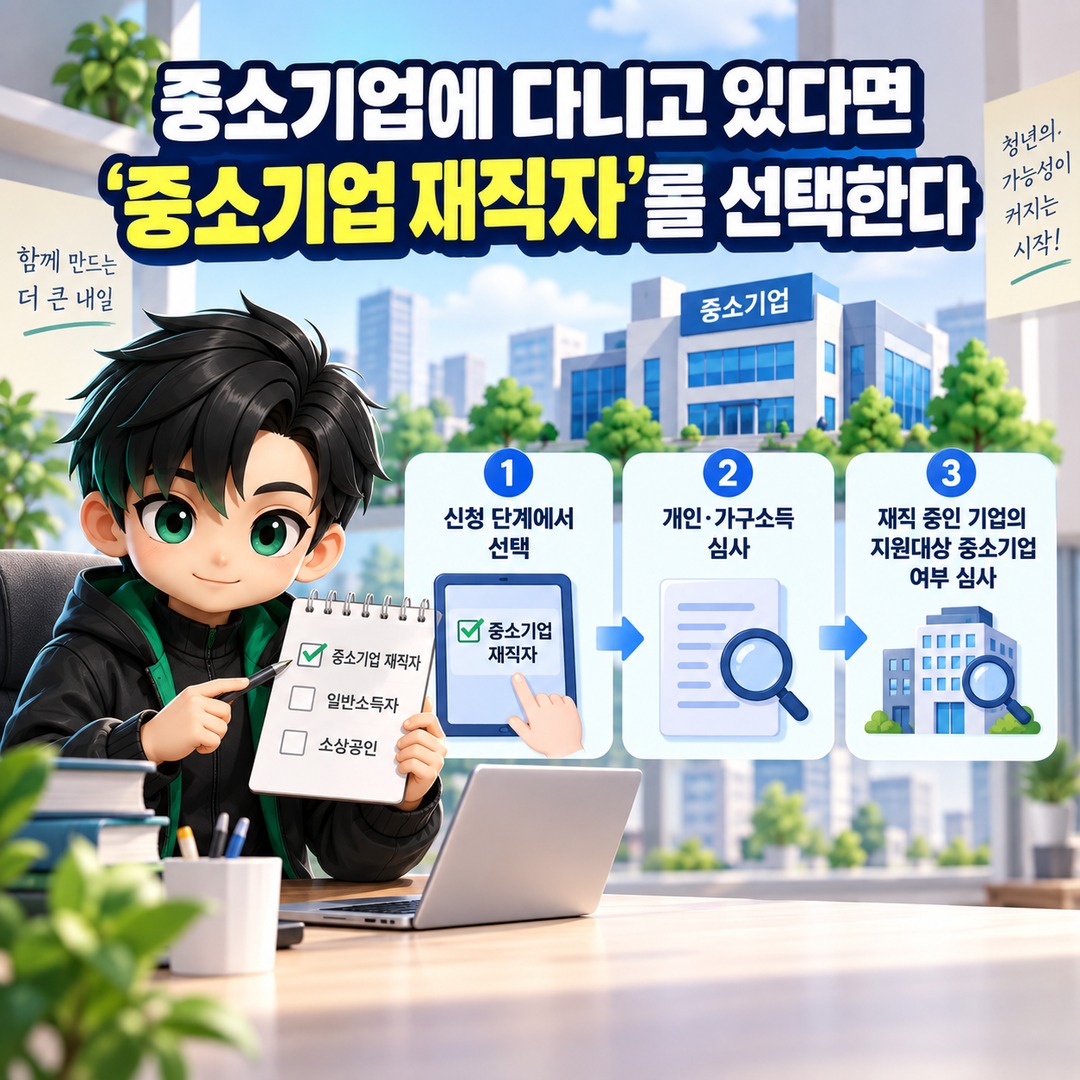
SME employees who meet the requirements may qualify for the preferential plan, which offers a government contribution matching rate of 12%. For existing SME employees, the preferential plan's income threshold is total annual salary of KRW 36,000,000 or less, or comprehensive income of KRW 26,000,000 or less. Applicants must also meet the household income requirements. Newly hired SME employees undergo a preferential eligibility assessment under separate criteria.
If SME employment status cannot be verified electronically, applicants may be asked to submit an additional SME Certificate. According to guidance from the Financial Services Commission (FSC), the employer is responsible for obtaining this certificate, and issuance may take approximately a week or longer.
The preferential plan for SME employees does not assess employment conditions only at enrollment. Existing SME employees who enroll in the preferential plan must satisfy the SME employment requirement for a total of at least 29 months between enrollment and one month before maturity. Up to 2 job changes are permitted during this period. Those who fail to meet the employment requirement may be switched to the standard plan at maturity.
If You Operate a Business and Want to Be Assessed as a Small Business Owner, Select 'Small Business Owner'
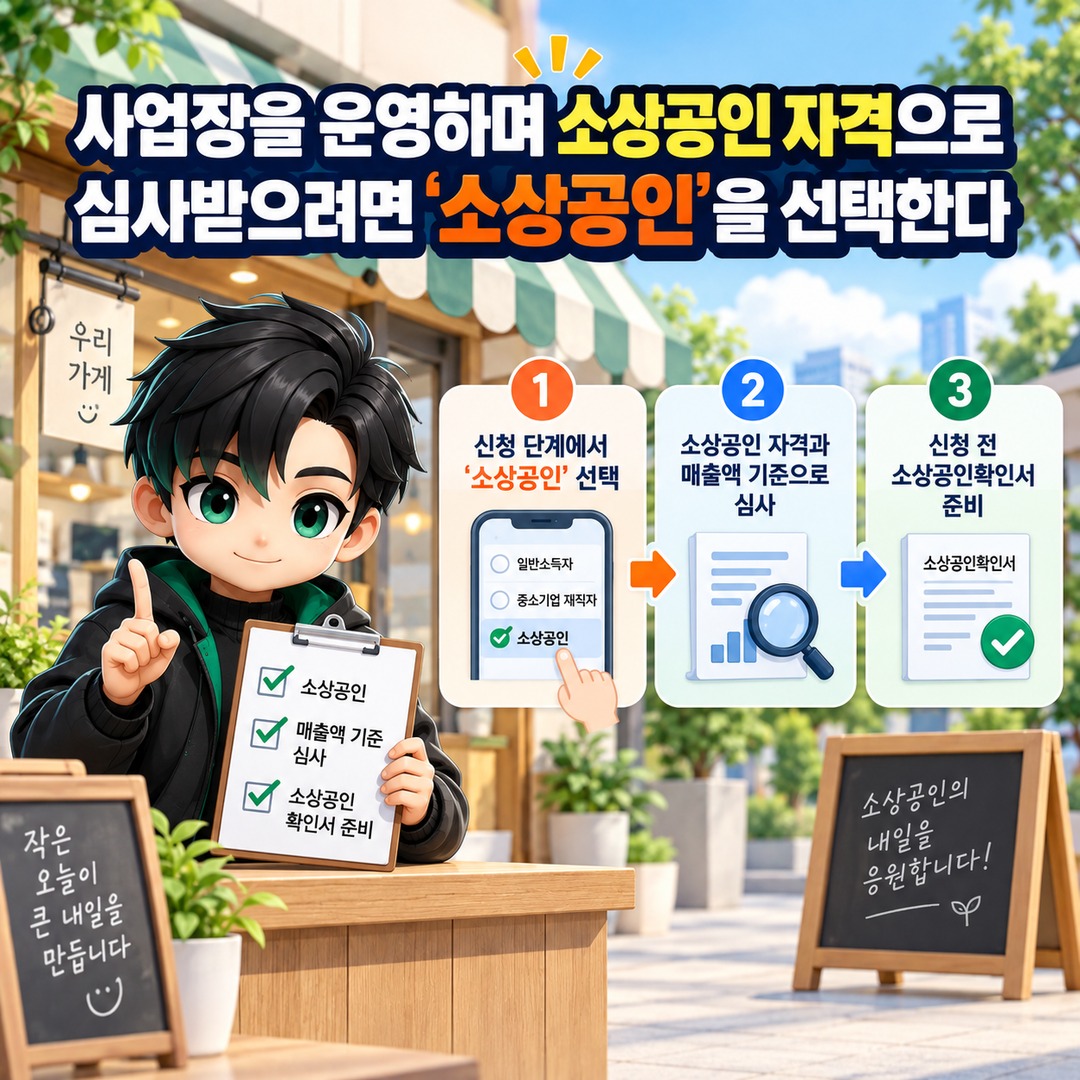
If you operate a business and want your eligibility assessed based on small business status and revenue, you should select 'Small Business Owner'. The important point is that you need to prepare a Small Business Certificate before submitting your application.
If you operate 2 or more business establishments, a Small Business Certificate is required for every establishment. Even if you already have a certificate, it cannot be used for the assessment if its 1-year validity period has expired. The FSC advises that certificate issuance takes approximately 7 days on average and may take longer when application volumes are high.
Small business owners are classified into either the standard or preferential plan based on business revenue, household income, and other criteria. Under the current rules, those with annual revenue of KRW 300,000,000 or less may qualify for assessment under the standard plan. Those who meet the preferential plan requirements, including annual revenue of KRW 100,000,000 or less, may qualify for government contributions at the 12% matching rate.
Selecting the small business owner category does not necessarily mean that applicants who fail to meet the small business requirements are automatically ineligible to enroll. The FSC explains that applicants who do not meet the small business criteria may still enroll as general income earners if they satisfy the applicable requirements, including comprehensive income criteria.
However, applicants who do not currently operate a business, or whose operating business falls within an industry excluded from small business policy financing, cannot enroll under the small business owner category.
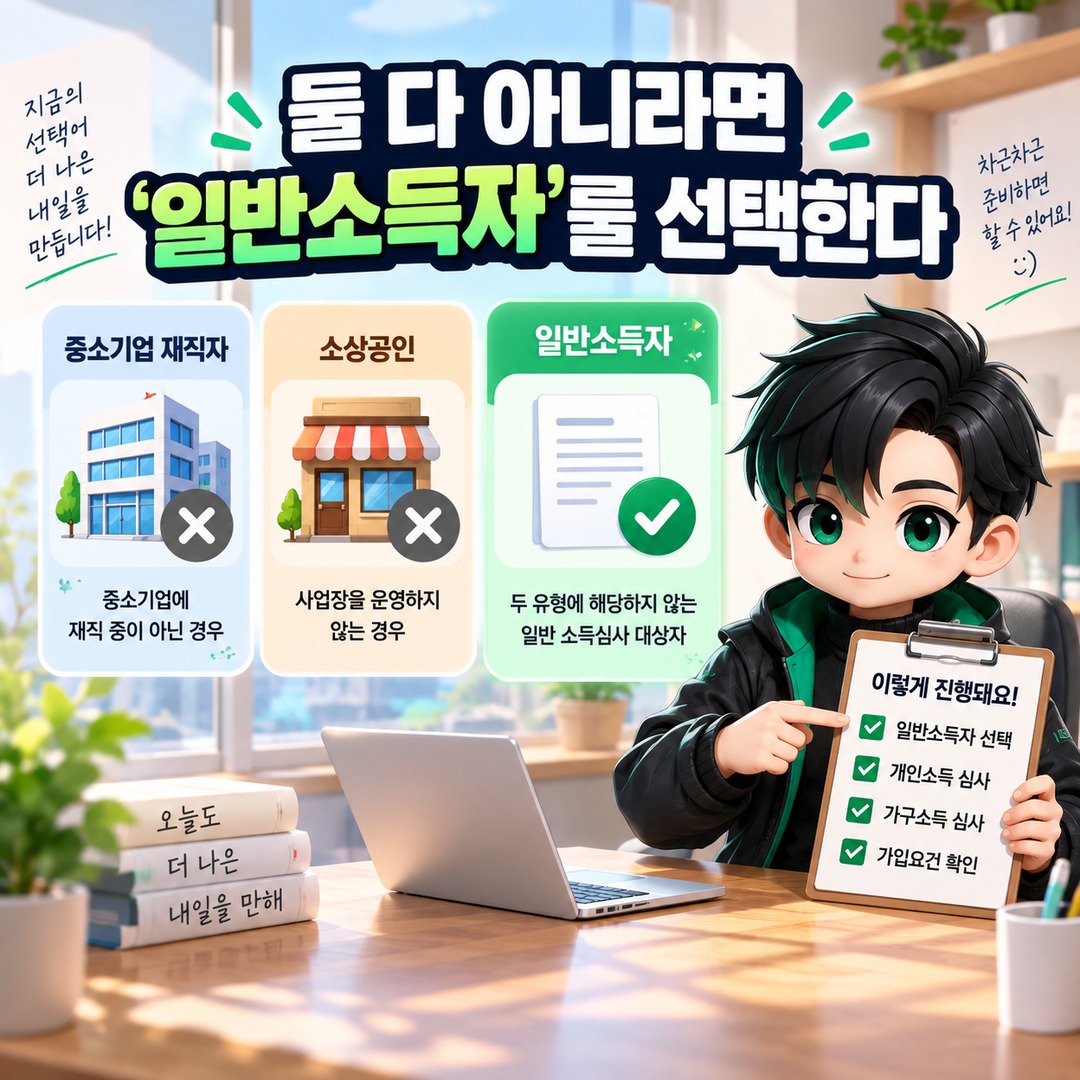
If Neither Category Applies, Select 'General Income Earner'
Applicants subject to the standard income assessment who are neither SME employees nor small business owners should select 'General Income Earner'. After applying, their eligibility will be reviewed based on personal income, household income, and other enrollment requirements.
For the 2 enrollment round in 2026, eligibility is assessed using income finalized by the National Tax Service for 2025. The overall income eligibility threshold is total annual salary of KRW 75,000,000 or less, or comprehensive income of KRW 63,000,000 or less. Household income requirements also apply. General income earners with total annual salary of KRW 60,000,000 or less, or comprehensive income of KRW 48,000,000 or less, may qualify for standard-plan government contributions if they meet the relevant requirements.
Applicants whose total annual salary exceeds KRW 60,000,000 but does not exceed KRW 75,000,000, or whose comprehensive income exceeds KRW 48,000,000 but does not exceed KRW 63,000,000, fall within an income bracket that is currently ineligible for government contributions even if other requirements are met. Only tax benefits are available in this bracket.
Application Categories Are Not the Same as Standard and Preferential Plans
It is much easier to understand the system when the three options shown on the application screen are distinguished from the final benefit classifications.
General Income Earner, SME Employee, and Small Business Owner are application categories that applicants select to identify the eligibility criteria under which they will be assessed.
By contrast, Standard Plan, Preferential Plan, and Not Eligible for Government Contributions are final enrollment and support classifications determined after reviewing income, household income, SME employment status, small business eligibility, and other requirements. The FSC also explains that applicants select the category that applies to them from the three available options, after which the review process determines whether they qualify for the standard or preferential plan.
Therefore, applicants should not arbitrarily select 'SME Employee' or 'Small Business Owner' simply because they want to receive government contributions at the 12% matching rate. Instead, they should choose the application category that reflects their current employment or business circumstances and undergo the eligibility assessment to determine whether they qualify for the preferential plan.
How to Choose the Right Category on the Application Screen
If you are an employee and your employer is an eligible SME → SME Employee. If you operate your own business and want to be assessed based on small business status and revenue criteria → Small Business Owner. If neither category applies and you are subject to the standard income assessment → General Income Earner.
In particular, working for a small business does not automatically mean you should select the small business owner category. The small business owner application process assesses the revenue, industry classification, and Small Business Certificate of a business operated by the applicant. Employees working for an SME should check their eligibility under the SME employee category.
What Happens If You Select the Wrong Category or the Assessment Result Is Different from What You Expected?
For the 2 recruitment round, a preliminary assessment notification process has been established so applicants can compare their selected category with the assessment results. Preliminary assessment results are scheduled to be announced from October 30 through November 2. Applicants who disagree with the results are expected to have an opportunity to submit supporting explanations from November 2 through 5. These dates may change depending on the progress of the assessment.
Final enrollment assessment results are expected to be communicated individually from November 12 through 13. Applicants notified that they are eligible to enroll must open their accounts between November 16 and 27.
Ultimately, the first question to consider on the application screen is not 'Which category offers greater benefits?' but rather 'Am I currently an employee, an employee of an eligible SME, or a small business owner operating my own business?' Applicants should select the category that matches their actual circumstances and then undergo the assessment of income, household, employment, and revenue requirements to determine their final classification under the standard or preferential plan.
Related Articles
Youth Future Savings Account: Missed October 7? Applications Reopen on 12, with a Deadline of 16