

When to Raise Your Stop-Loss After a Stock Breakout: Breakeven vs. Trailing Stops

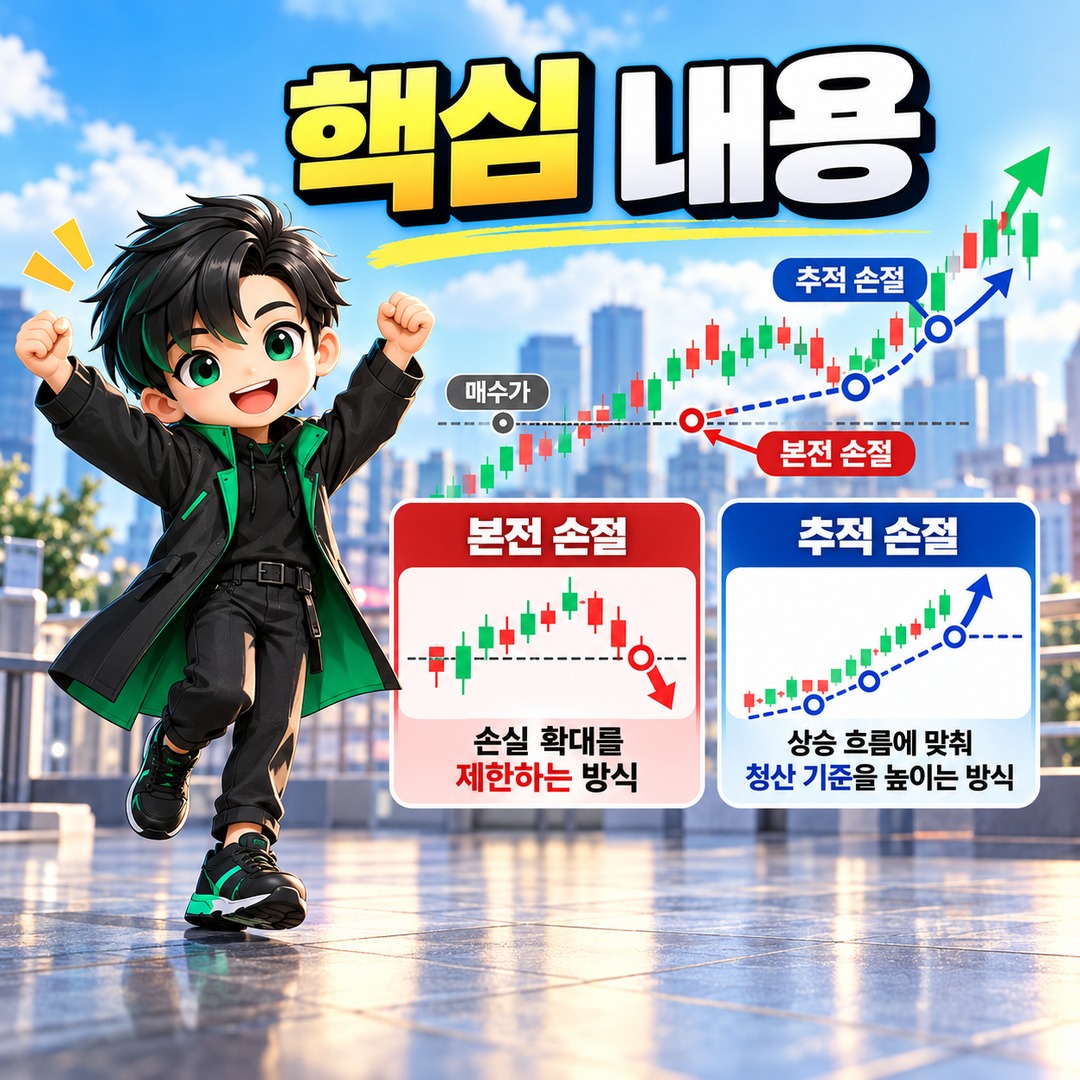
A profitable stock breakout trade does not mean you need to immediately raise your stop-loss to your entry price. A breakeven stop aims to limit further losses, while a trailing stop raises the exit threshold as the stock advances. Rather than relying solely on your percentage gain, it is more reasonable to consider the price structure after the breakout and the amount of risk you can tolerate when deciding when to raise your stop-loss.
As of 2026-10-22, there is no universally established percentage gain at which investors should raise their stop-loss levels for every stock. Particularly with stocks that experience significant fluctuations immediately after a breakout, raising the stop-loss too quickly can trigger a sale during an otherwise normal price correction.
When Should You Raise Your Stop-Loss After a Profitable Breakout Trade?
The appropriate time to raise a stop-loss can be determined by whether price movements have confirmed a change that justifies reducing the risk established in the original trading plan, rather than simply by whether the stock price has risen.

Breakout trading is a strategy that seeks to capitalize on a stock moving above a previous high or an established price range. After a breakout, however, the stock may continue rising, retest the breakout level, or fall back into its previous trading range.
Therefore, changing the original stop-loss simply because the stock is trading above the purchase price alters the structure of the initial trading plan.
For example, assume you purchase a stock at KRW 10,000 and set your initial stop-loss at KRW 9,500.
If the stock rises to KRW 10,200, the unrealized return is 2%. However, raising the stop-loss to KRW 10,000 at that point means that a correction back to the entry price would be enough to trigger the exit condition.
Alternatively, if the stock rises further and then establishes a new low above its previous low, you could consider reassessing the stop-loss using that new low as a reference.
This price-structure-based adjustment differs from mechanically raising the stop-loss to the purchase price. However, the formation of a new low does not guarantee that the stock will continue rising.
Does a Breakeven Stop Protect Your Profits?

A breakeven stop involves raising the stop-loss threshold to approximately the purchase price to reduce potential losses from a subsequent decline. However, placing a stop order at the breakeven price does not mean that the actual trading result will necessarily be KRW 0.
If the purchase price is KRW 10,000 and the stop-loss threshold is also KRW 10,000, there is no trading profit based on the price difference alone.
However, actual transactions may involve brokerage commissions, taxes, and differences between the intended and executed prices. As a result, even if the stock is sold at the purchase price, the final trading result may still be a loss.
Key characteristics of a breakeven stop include:
The stop-loss price is easy to understand because it is based on the purchase price.
The risk-management threshold can be moved above the initial stop-loss level.
If the stock fluctuates immediately after the breakout, the position may be closed prematurely.
Placing a stop order does not guarantee the actual selling price.
When considering a breakeven stop, it is useful to examine whether the area around the purchase price represents a meaningful support level, rather than focusing only on the current percentage gain.
This is because an investor's individual execution price does not necessarily function as a support level in the broader market.

How Is a Trailing Stop Different From a Breakeven Stop?
A trailing stop raises the stop-loss threshold as the stock moves in a favorable direction. When the stock moves in the opposite direction, the previously raised stop-loss threshold generally remains unchanged.
This approach is known as a trailing stop.
A common method is to place the stop-loss threshold a fixed amount or percentage below the highest price reached.
For example, if the stock price is KRW 12,000 and the trailing distance is set to 5%, the calculated stop-loss threshold is KRW 11,400.
If the stock subsequently rises to KRW 13,000, the trailing stop-loss based on the same 5% distance moves up to KRW 12,350.
Conversely, even if the stock falls to KRW 12,500, the previously established KRW 12,350 threshold does not move back down.
These figures are hypothetical calculations intended solely to illustrate how trailing stops work. They do not represent actual execution prices or investment performance.
The differences between breakeven stops and trailing stops can be summarized as follows.
| Category | Breakeven Stop | Trailing Stop |
|---|---|---|
| Price reference | Around the purchase price | Rising stock price or price structure |
| Adjustment method | Moves to the breakeven price | Moves upward as the price changes favorably |
| Primary purpose | Limit further losses | Protect part of the gains during an advance |
| Main consideration | Premature exit | Even short-term fluctuations may trigger an exit |
A breakeven stop adjusts risk around the purchase price, while a trailing stop manages risk using changing price levels as the stock advances.
It is not possible to generalize that one method consistently produces higher returns. Results depend on the stop-loss distance, the stock's volatility, and the trading timeframe.
What If a Stock Rises From an Entry Price of KRW 10,000 to KRW 12,000?
Even for the same stock, the amount of price retracement allowed depends on where the stop-loss threshold is placed.
The following is a calculation example, not an actual stock trade or real trading result.
Assume an entry price of KRW 10,000, an initial stop-loss of KRW 9,500, and a subsequent high of KRW 12,000.
The initial risk amount is KRW 500 per share.
When the stock reaches KRW 12,000, the unrealized gain is KRW 2,000 per share, equivalent to 4 times the initial risk amount, or 4R. Here, R represents the amount of risk per share that the trader initially agreed to accept.
At this point, three stop-loss thresholds can be compared.
| Stop-Loss Strategy | Stop Price | Relative to Entry Price |
|---|---|---|
| Maintain initial stop-loss | KRW 9,500 | -5% |
| Breakeven stop | KRW 10,000 | 0% |
| Trailing stop 5% below the highest price | KRW 11,400 | +14% |
Author's calculations. This simplified comparison excludes commissions, taxes, and slippage and assumes execution occurs at each specified stop-loss price.
The important consideration in this comparison is not the current unrealized percentage return.
If the stock has risen to KRW 12,000, maintaining the initial stop-loss allows a substantial decline from the highest price. By contrast, setting a trailing stop-loss at KRW 11,400 creates an exit condition when the stock falls 5% from its high.
However, this does not mean that a trailing stop of 5% is always the better choice.
If a stock typically experiences large daily price swings, a decline of 5% may simply be a temporary movement within an ongoing uptrend.
Ultimately, the stop-loss distance should be evaluated not only in terms of the profits an investor wants to preserve but also in relation to the stock's normal price fluctuations.
Should the Stop-Loss Change After a Pullback Following a Breakout?
When a pullback forms after a breakout, the recent low can serve as a reference for adjusting the stop-loss. However, caution is necessary when it is difficult to determine whether the pullback has been completed or whether the price movement is merely a temporary rebound.
For example, assume a stock purchased at KRW 10,000 rises to KRW 11,000, corrects to KRW 10,600, and subsequently begins rising again.
In this case, the area around KRW 10,600 provides price information as the low of the previous correction.
An investor who trades based on price structure may use a breakdown below that low as a signal when deciding whether to exit.
By contrast, a fixed-percentage trailing stop calculates its threshold according to a predetermined percentage, regardless of the recent low.
The two methods use different reference points.
A price-structure-based stop refers to the highs and lows on the chart, while a percentage-based trailing stop uses a predetermined price distance.
Which method is appropriate depends on the trading timeframe and strategy. Even when a stop-loss is placed below a recent low, a sharp decline may prevent execution at the planned price.
What Problems Can Arise From Raising a Stop-Loss Too Quickly?
Raising a stop-loss too quickly can cause a position to be sold during a temporary price decline, even while the broader uptrend remains intact.
In breakout trading, prices can move rapidly immediately after entry. Tightening the stop-loss excessively may therefore conflict with the original trading plan.
Conversely, if substantial unrealized gains have accumulated but the initial stop-loss remains unchanged, an investor may give back a significant portion of those gains.
It is therefore useful to compare the following three considerations.
First, calculate how much the trading account would lose if the price declined to the current stop-loss level.
Second, determine whether the new stop-loss is merely a psychologically comfortable price or is supported by the actual price structure.
Third, assess whether the position can still withstand normal price fluctuations after the stop-loss adjustment.
Raising the stop-loss is not the only option in this process. Investors may also consider reducing part of their position to adjust their overall risk exposure.
However, partial selling also affects transaction costs and the proportion of the position that remains exposed to any subsequent advance.
Can Automatic Trailing Stop Orders Prevent Losses?
An automatic trailing stop order is a tool for managing stop-loss thresholds, not a mechanism that guarantees a particular loss limit or profit.
Investor education materials from the U.S. Securities and Exchange Commission (SEC) explain that a standard stop order becomes a market order when its specified stop price is reached, and the actual execution price may differ from the specified price.
A stop-limit order, meanwhile, restricts execution at prices less favorable than the specified limit but carries the risk that the order may not be executed at all.
Before using an automatic trailing stop feature, investors should verify whether their brokerage supports the order type, which price triggers the order, and how it operates during regular trading hours and extended-hours sessions.
Particularly during sharp declines or price gaps, investors should not assume that raising a stop-loss automatically protects their principal or unrealized gains.
A Practical Sequence for Managing Profits in Breakout Trading
In breakout trading, establishing the conditions for changing a stop-loss in advance is more important than focusing solely on the timing of the adjustment.
Before entering a trade, determine the entry price, initial stop-loss, and risk amount per share.
After purchasing the stock, rather than changing the stop-loss simply because the price has risen, observe whether the breakout level holds and whether new highs and lows are forming.
When subsequently choosing between a breakeven stop and a trailing stop, calculate the potential decline to the revised stop-loss and the expected transaction costs.
If a stop order is actually submitted, its order type and validity period should also be checked.
Setting a stop-loss too close to the current price in an effort to protect profits may end the trade earlier than expected. Conversely, placing it too far away may result in giving back substantial unrealized gains.
Managing profits in breakout trading is not simply a matter of raising the stop-loss above the purchase price. It involves specifically determining how much of a retracement to allow within the current price structure and how much risk the trading account can bear during that process.
※ This article is provided for informational purposes to help readers understand market behavior and does not constitute an investment recommendation regarding any specific stock or asset. All investment decisions and associated responsibilities rest with the individual investor.