

Why Electricity Bill Calculator Estimates Differ from Actual Bills: How to Check Meter Reading Dates and Contract Types
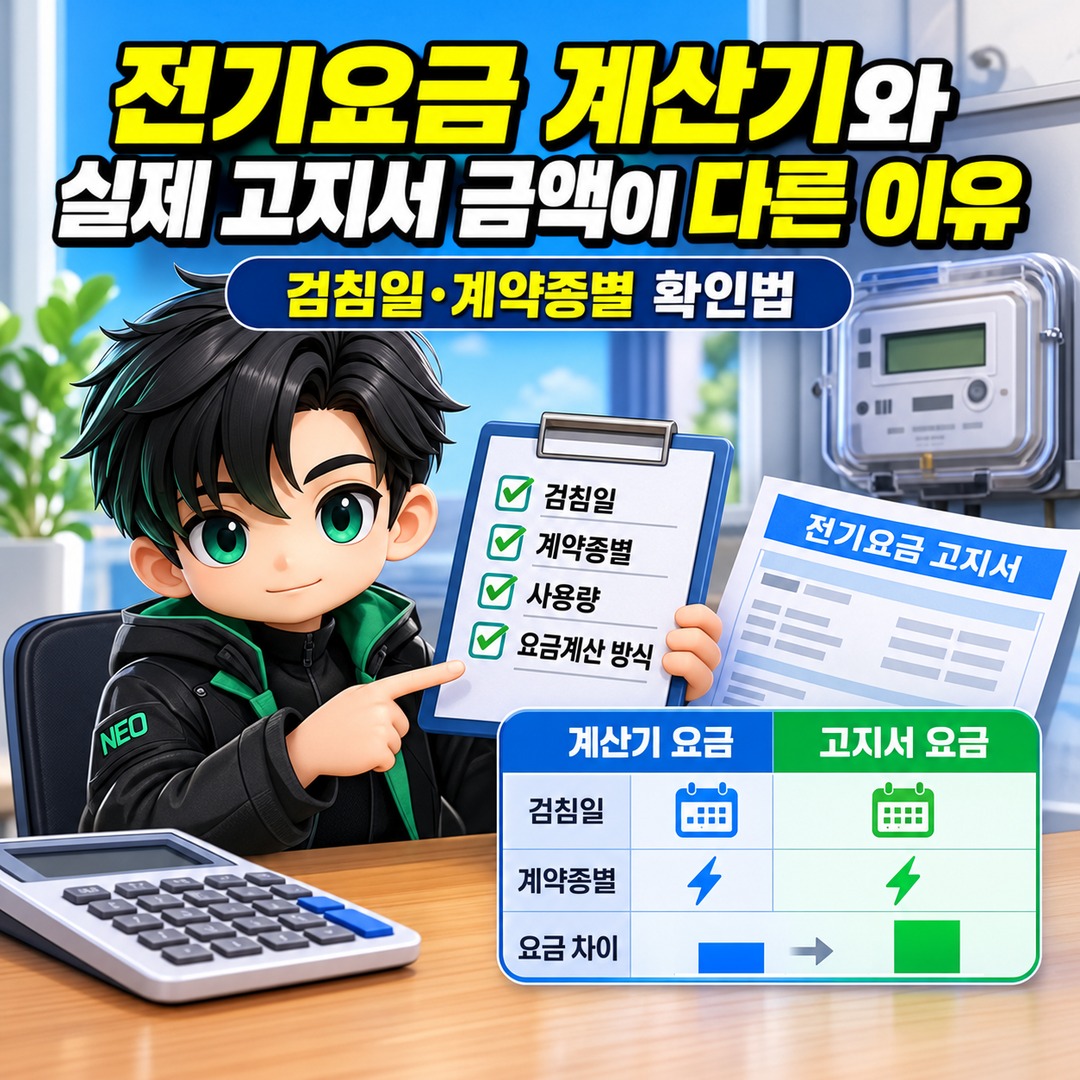
If you enter your electricity consumption into a calculator for October 2026 but the result differs from your actual bill, the first things to check are the billing period determined by your meter reading date and whether your residential electricity contract is classified as low-voltage or high-voltage. Even with identical electricity consumption, the final amount payable can vary depending on the applicable period, progressive rate tiers, discounts, and additional billing items.
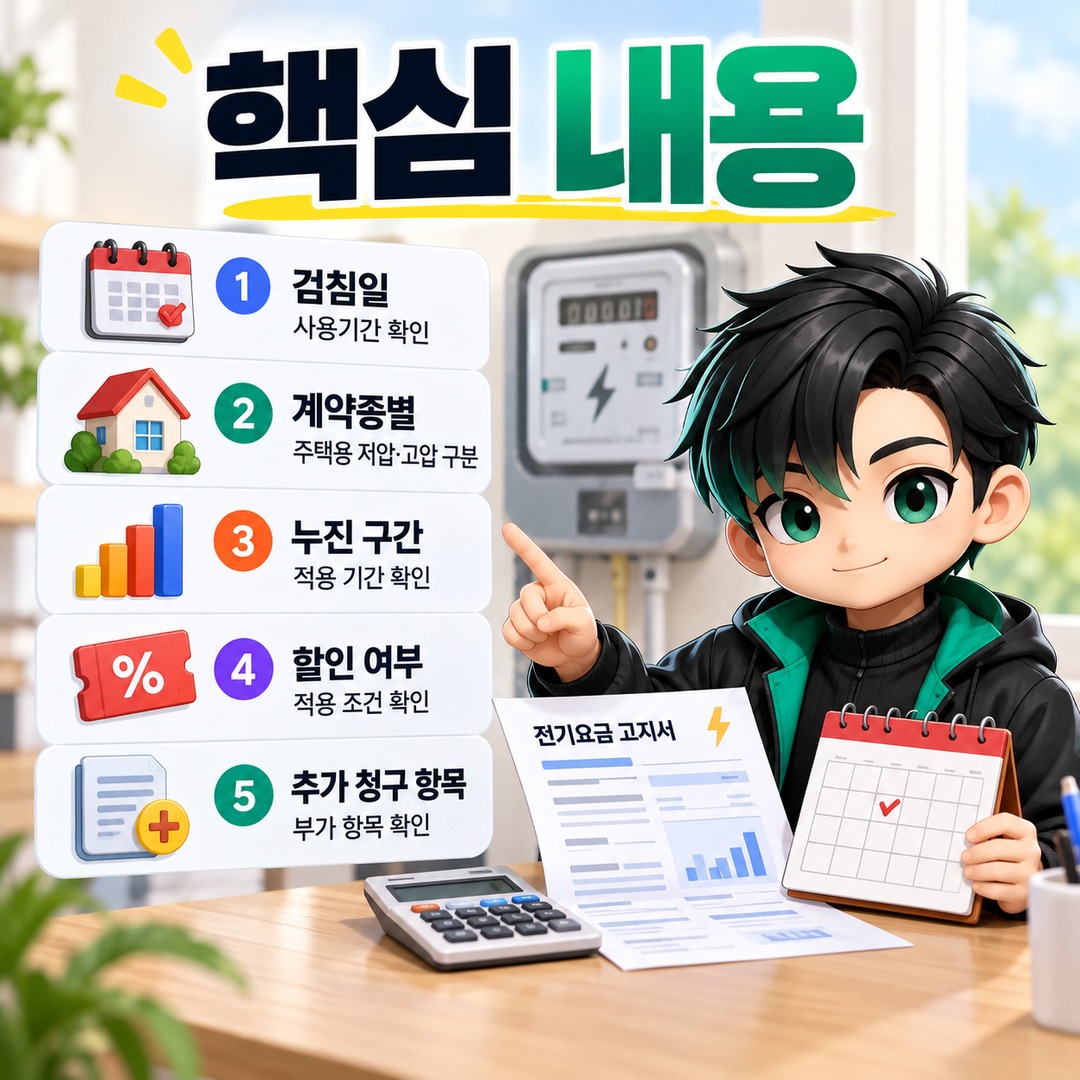
In particular, the relaxed summer progressive rate tiers apply to residential electricity charges from 7 to August, while the standard progressive rate tiers apply in October. Selecting the wrong consumption month in a calculator or failing to account for the meter reading date can create discrepancies with the actual bill.
*Verification reference: 2026-10-10, based on South Korean residential electricity rates*
1. The Most Common Reasons Electricity Calculator Estimates Differ from Actual Bills
Electricity bill calculators display estimated charges based on the consumption figures and rate conditions entered. Actual bills, however, reflect the household's meter reading period, contract type, discounts, and billing conditions.
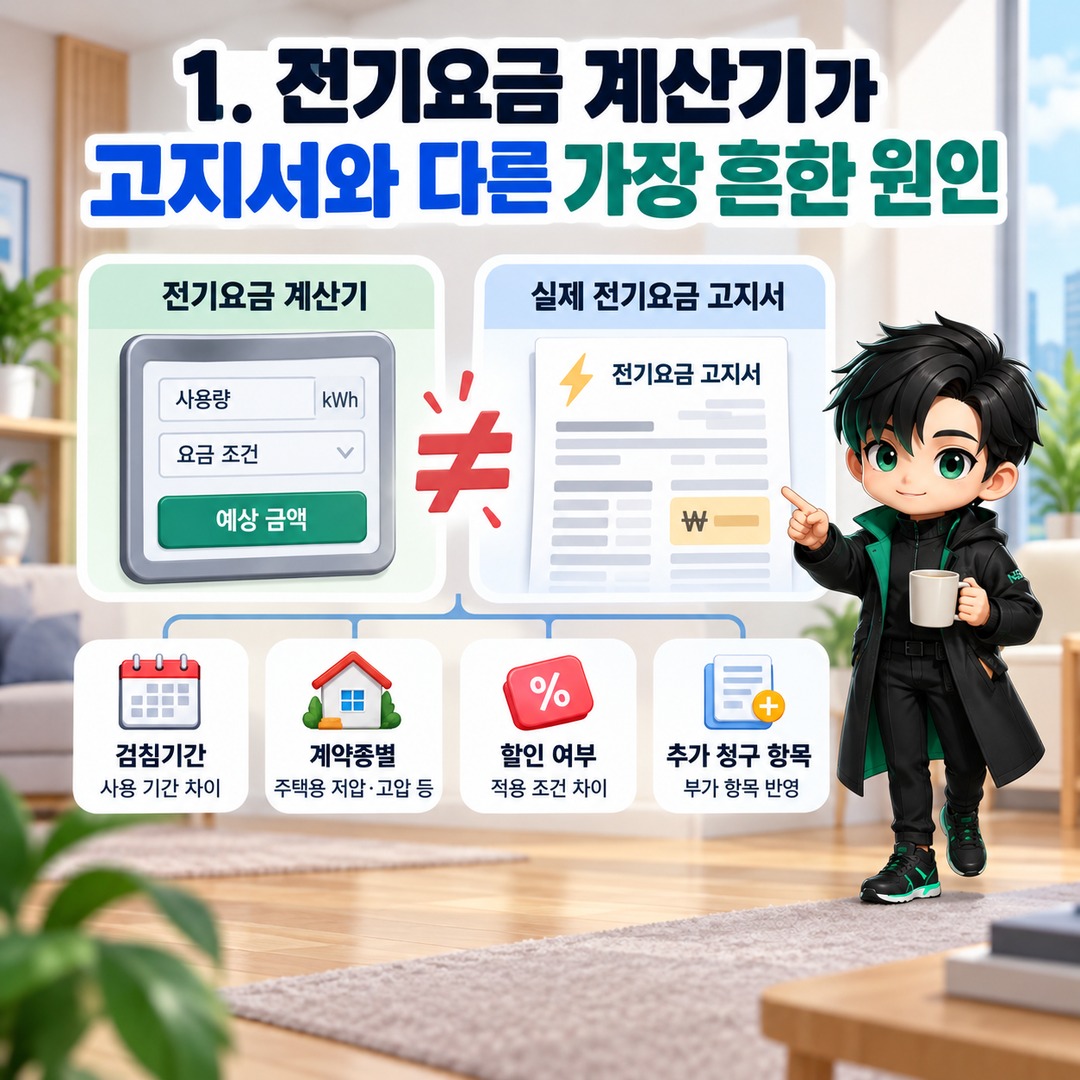
When investigating a discrepancy, it is useful to compare the following items.
| Item to Check | Why the Amount May Differ |
|---|---|
| Meter reading date | The actual consumption period may differ from a calendar month |
| Contract type | Different rate schedules for residential low-voltage and high-voltage electricity |
| Consumption month | Differences between summer and standard progressive rate tiers |
| Welfare discounts | Whether eligible household discounts have been applied |
| Additional charges | Differences in combined charges, such as electricity used in common areas |
For example, you might enter 350kWh of electricity consumption for October into a calculator, while the actual bill records consumption from mid-September through mid-October.
In that case, you should check whether the calculator's 'October' selection matches the rate conditions applied to the actual bill.
2. Can a October Electricity Bill Include Consumption from September?
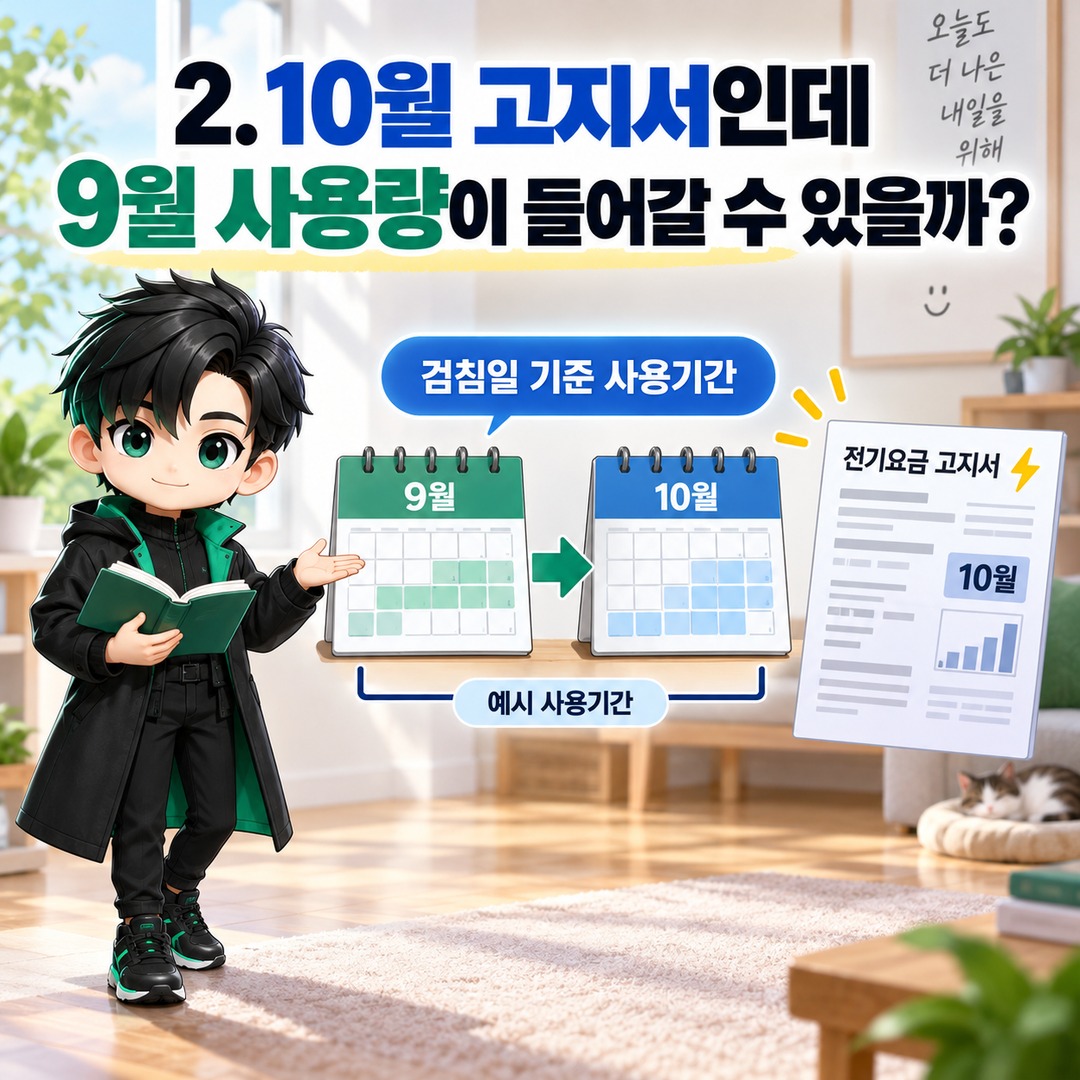
Yes. Electricity charges are not necessarily calculated based on power consumed from 1 of each month through the last day of that month. Instead, the consumption period may be determined by the customer's meter reading date.
For example, if a household's meter is read on 15 of every month, a single billing period may run from mid-September through mid-October.
Therefore, you should not determine the consumption period solely from the billing month printed on the statement.
There are three pieces of information to check:
The consumption period shown on the electricity bill
The previous and current meter reading dates
The actual electricity consumption (kWh) during that period
In particular, when a meter reading period crosses from August into September, it is important to check how the summer and standard progressive rate tiers apply.
If a basic calculator applies the same seasonal rate tiers to an entire month, its estimate may differ from the actual billed amount.
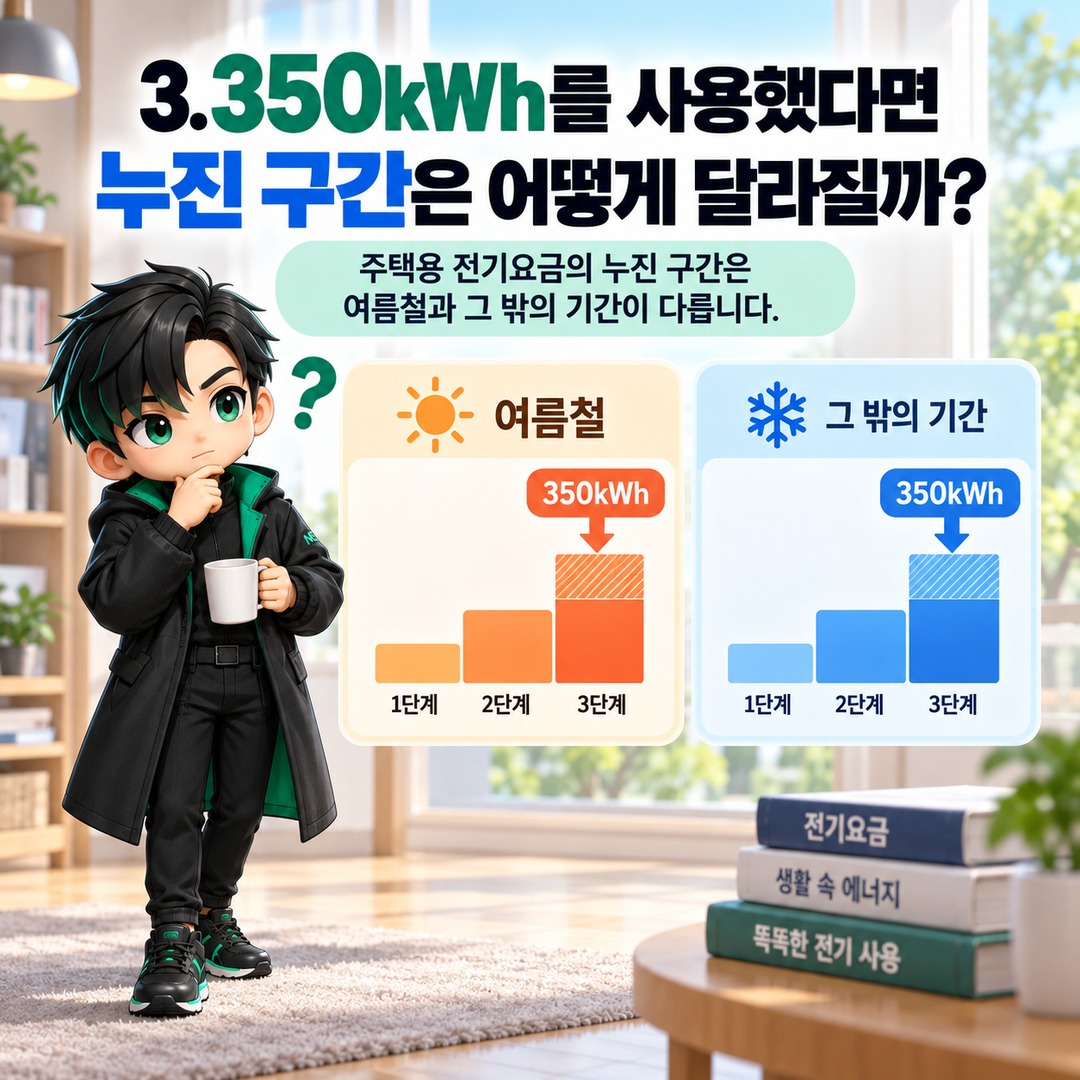
3. How Do Progressive Rate Tiers Change When You Use 350kWh?
The progressive rate tiers for residential electricity differ between summer and other periods.
A comparison of the standard residential progressive rate tiers and summer tiers applicable in October 2026 is shown below.
| Tier | 7–August | October |
|---|---|---|
| Tier 1 | Up to 300kWh | Up to 200kWh |
| Tier 2 | Over 300kWh and up to 450kWh | Over 200kWh and up to 400kWh |
| Tier 3 | Over 450kWh | Over 400kWh |
When electricity consumption is 350kWh, the highest applicable tier is 2 in both periods.
However, the amount of electricity allocated to each tier differs.
Summer Consumption of 350kWh
Tier 1: 300kWh
Tier 2: 50kWh
October Consumption of 350kWh
Tier 1: 200kWh
Tier 2: 150kWh
According to the author's calculations, even with the same consumption of 350kWh, 100kWh more electricity is charged at the higher Tier 2 rate in October than during summer.
Therefore, you should not assume that the electricity consumption charge will be identical simply because the highest applicable progressive rate tier is the same.
This comparison illustrates the differences between seasonal progressive rate tiers. Actual billed amounts must also account for the basic charge and other billing components.
4. How Much Does an Electricity Calculator Estimate for 350kWh?
Applying the standard residential low-voltage progressive rate tiers for October 2026 and calculating only the basic charge and electricity consumption charge produces KRW 57,790.
The calculation is as follows.
| Item | Calculated Amount |
|---|---|
| Basic charge | KRW 1,600 |
| Tier 1: 200kWh × KRW 120 | KRW 24,000 |
| Tier 2: 150kWh × KRW 214.6 | KRW 32,190 |
| Total | KRW 57,790 |
This is the author's calculation, not the final amount payable.
Actual electricity bills also include climate and environmental charges, fuel cost adjustment charges, value-added tax, and contributions to the Electric Power Industry Infrastructure Fund.
Therefore, it is normal for KRW 57,790 to differ from the final amount payable shown on the actual electricity bill.
For an accurate comparison, the calculator must include the same billing components as the actual statement.
5. How to Check Your Actual Electricity Bill Through KEPCO ON
If the calculated amount differs from the actual bill, it is advisable to check the billing details through KEPCO ON, the official service provided by Korea Electric Power Corporation (KEPCO).
Steps to Check
1. Visit the official KEPCO ON website.
2. Log in and confirm your electricity service address or customer number.
3. Select the relevant billing month from the electricity bill inquiry menu.
4. Check electricity consumption, the consumption period, contract type, and billed amount.
5. Compare the calculator's input conditions with the actual billing conditions.
If electricity charges are included in your apartment maintenance fees, you should also review the maintenance fee statement.
Depending on the apartment complex's electricity supply contract, the method used to calculate electricity charges for individual households may differ. Electricity used in common areas may also be billed as a separate item.
When comparing calculator estimates with actual charges, it is important to distinguish between household electricity charges and common-area electricity charges rather than looking only at the total amount.
6. What to Check When Your Electricity Bill Is Higher Than Expected
A higher-than-expected electricity bill is not always caused by the progressive rate system.
First, check whether the consumption recorded on the bill matches your actual electricity usage.
If Electricity Consumption Itself Has Increased
Check whether you have been using appliances such as air conditioners, electric heaters, dehumidifiers, or dryers for longer periods.
For example, if an appliance with a power consumption rating of 1kW is used for 2 hours per day over 30 days, its electricity consumption would be 60kWh based on a simple calculation.
`1kW × 2 hours × 30 days = 60kWh`
However, actual power consumption may vary depending on the appliance's operating conditions and mode of operation.
If Consumption Is Similar but the Amount Charged Has Increased
Check the meter reading period, progressive rate tiers, electricity rates, and whether discounts have been applied.
In particular, when comparing summer with standard billing periods, the amount of electricity allocated to each tier may differ even when total consumption is identical.
If Recorded Consumption Is Abnormally High
You can also investigate the possibility of a meter reading error or a malfunctioning electricity meter.
KEPCO advises customers that they can request an investigation through its customer service center if they suspect a meter reading error or notice an abnormal increase in electricity consumption.
For electricity billing inquiries, contact the KEPCO Customer Service Center at 123, without an area code.
7. Frequently Asked Questions
Q. If an electricity calculator estimate differs from my actual bill, does that mean the calculator is wrong?
Not necessarily. A calculator estimates charges based on the conditions entered. If the meter reading period, discounts, contract type, or other conditions differ from the actual billing conditions, the results may also differ.
Q. Should electricity charges for all apartments be calculated using residential high-voltage rates?
No. Not every apartment household is subject to the same electricity billing method. You should confirm the apartment complex's electricity supply contract and the applicable household billing method with the management office or KEPCO.
Q. Can I request a review if I believe there is a problem with my electricity bill?
Yes. If you have questions about your electricity consumption or meter reading results, you can contact KEPCO after confirming your customer number and the relevant billing month. If the charges are included in apartment maintenance fees, it is also advisable to request a detailed breakdown from the management office.
8. The Most Important Takeaway When Comparing Electricity Bills
If an electricity calculator estimate differs from the actual billed amount, start by checking these three things.
First, confirm that the electricity consumption entered into the calculator matches the actual consumption shown on the bill. Second, verify that the meter reading dates and consumption periods match. Third, compare the residential low-voltage or high-voltage classification, discounts, and additional billing components.
Checking these three factors can help you determine whether the discrepancy is simply due to different calculation conditions or whether your actual electricity consumption or billing details require further investigation.
---
Korea Electric Power Corporation Official Website — Electricity rate systems and rate information
KEPCO ON — Electricity bill inquiries and customer services
KEPCO Guide to Relaxed Summer Progressive Electricity Rates for Residential Customers — Explanation of seasonal progressive rate tiers