

Where Is the Extreme Heat Emergency Warning in Effect Today? Affected Areas and Safety Guidelines for July 27
이 포스팅은 쿠팡 파트너스 활동의 일환으로, 이에 따른 일정액의 수수료를 제공받습니다.
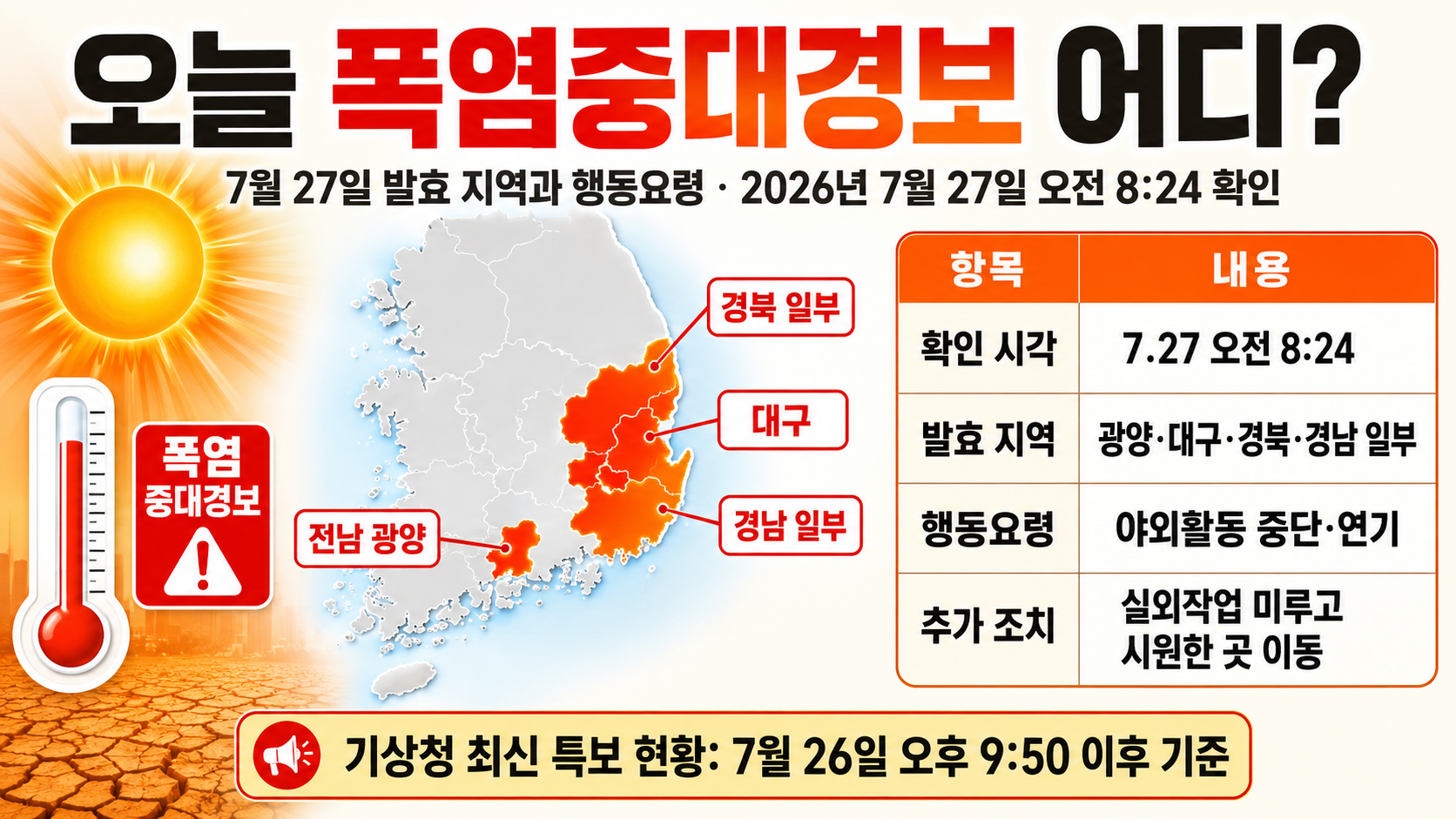
This article is based on the latest available news reports and official sources as of 2026-07-27 Korea Standard Time.
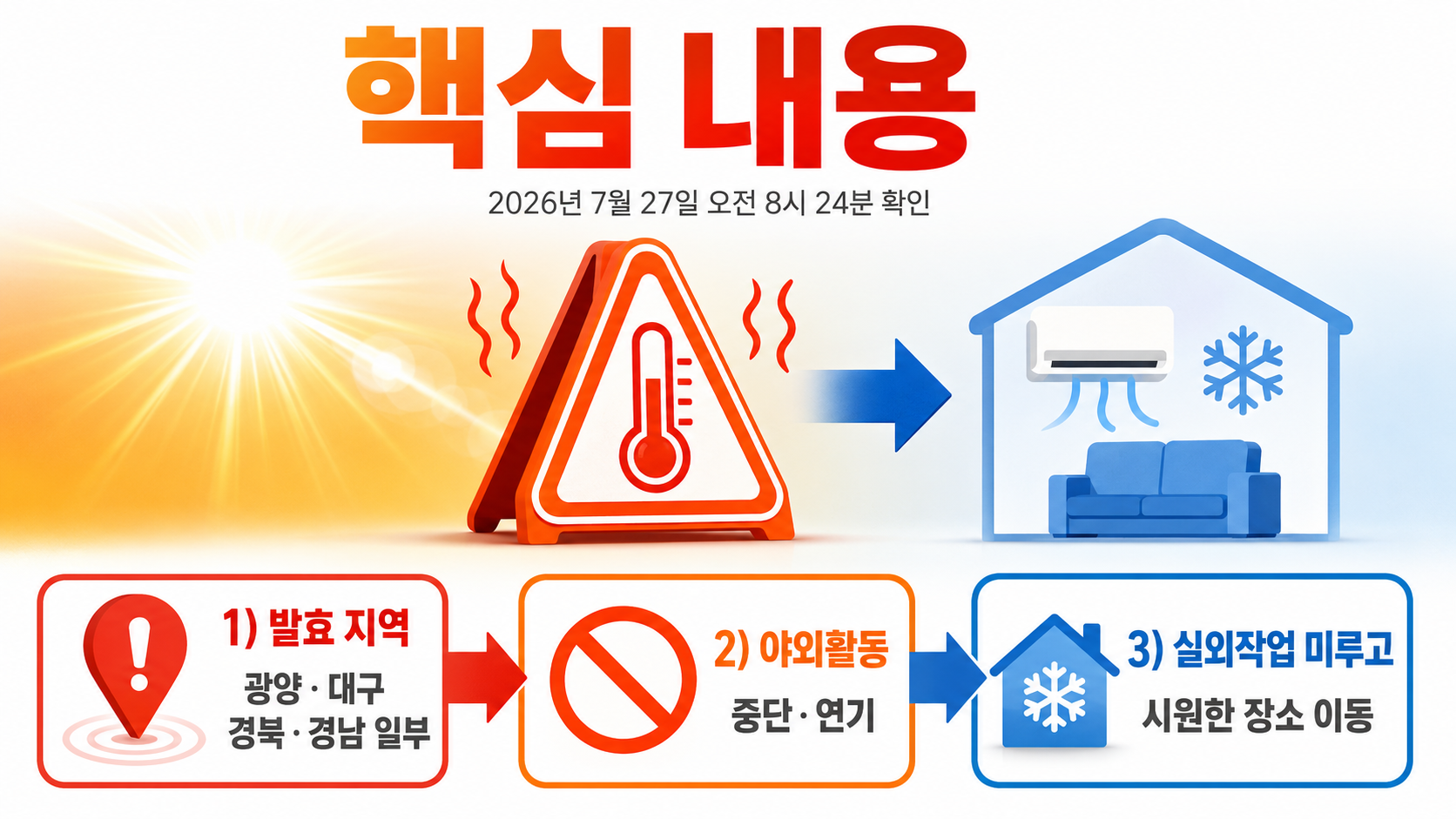
As of 8:24 a.m. on 2026-07-27, an extreme heat emergency warning is in effect for Gwangyang in South Jeolla Province and parts of Daegu, North Gyeongsang Province, and South Gyeongsang Province. In affected areas, residents should immediately stop or postpone nonessential outdoor activities and work and move to a cool location.
The latest weather warning status displayed by the Korea Meteorological Administration (KMA) is based on information updated after 9:50 p.m. on July 26. Heat warnings may be expanded, reduced, or lifted at any time as temperatures and apparent temperatures change. For safety, check the latest alerts again immediately before going outside.
Which Areas Are Under an Extreme Heat Emergency Warning Today?
An extreme heat emergency warning is currently in effect for Gwangyang in South Jeolla Province, Daegu excluding Gunwi, and parts of North and South Gyeongsang Provinces. Because warning zones may be divided even within the same city or county, it is important to check specific designations such as 'parts of Gyeongju' or 'central Hapcheon.'
| Region | Areas Under an Extreme Heat Emergency Warning |
|---|---|
| South Jeolla Province | Gwangyang |
| Daegu Metropolitan City | All areas except Gunwi |
| North Gyeongsang Province | Gyeongsan, Cheongdo, Goryeong, Pohang, north-central Gyeongju, southern Gyeongju |
| South Gyeongsang Province | Yangsan, Gimhae, Miryang, Uiryeong, Haman, Changnyeong, central Hapcheon |
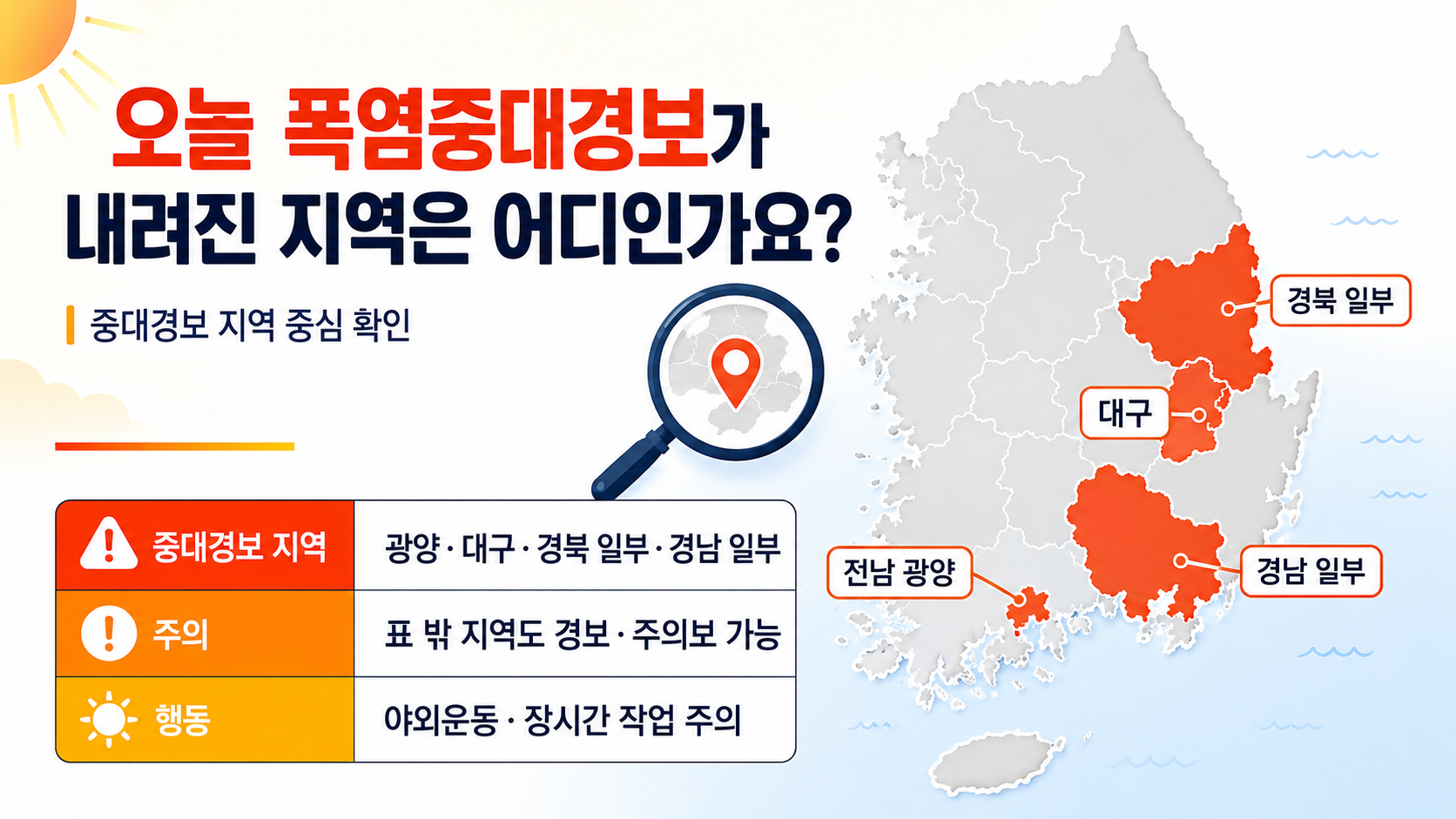
Areas not listed in the table may still be under a heat wave warning or heat wave advisory. Do not assume that outdoor exercise or prolonged outdoor work is safe simply because your area is not under an extreme heat emergency warning.
The KMA's weather warning map allows you to check not only your city or county but also the specific warning zone covering your location. In areas such as Gyeongju, Hapcheon, and Daegu, where individual districts may be designated separately, checking the warning against your exact address is more accurate.
How Much More Dangerous Is an Extreme Heat Emergency Warning Than a Heat Wave Warning?
The extreme heat emergency warning is the highest level of the heat alert system introduced in June 2026. It is issued when exceptionally high temperatures are expected in areas that have already experienced prolonged heat wave warning conditions, creating a risk of severe heat-related illness even among healthy people.
| Alert Level | Korea Meteorological Administration Issuance Criteria |
|---|---|
| Heat Wave Advisory | When the daily maximum apparent temperature is expected to reach 33°C or higher for at least 2 days |
| Heat Wave Warning | When the daily maximum apparent temperature is expected to reach 35°C or higher for at least 2 days |
| Extreme Heat Emergency Warning | When an area has recorded a daily maximum apparent temperature of 35°C or higher for at least 2 days and is expected to experience a maximum apparent temperature of 38°C or higher, or a maximum air temperature of 39°C or higher, for at least one day |
Author's calculation: Comparing apparent temperature thresholds alone, the extreme heat emergency warning threshold of 38°C is 3°C higher than the heat wave warning threshold of 35°C and 5°C higher than the heat wave advisory threshold of 33°C.
Calculation: 38°C − 35°C = 3°C
Calculation: 38°C − 33°C = 5°C
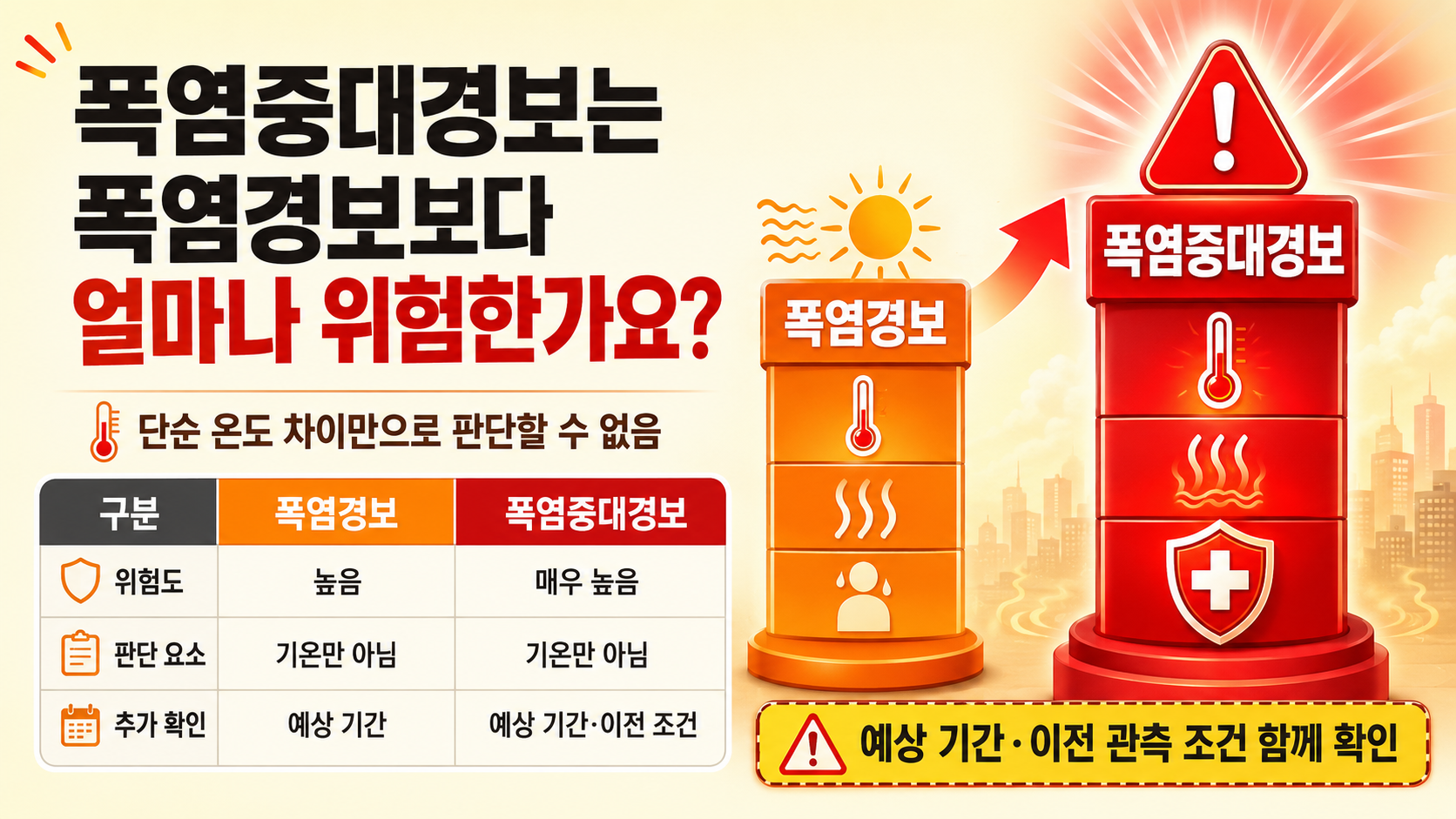
However, each alert level has different requirements regarding the forecast duration and previously observed conditions. Whether an extreme heat emergency warning should be issued cannot be determined from temperature differences alone.
What Should You Do First After Receiving an Extreme Heat Emergency Warning Alert?
When an extreme heat emergency warning takes effect, the key is to follow three steps: 'Stop, Move, and Check.' This is not a situation in which you should endure the heat to finish your planned activities. Instead, you should immediately adjust your schedule and work arrangements.
1. Stop
Immediately stop or postpone nonessential outdoor exercise, farming, grave-site maintenance, hiking, outdoor events, and outdoor work.
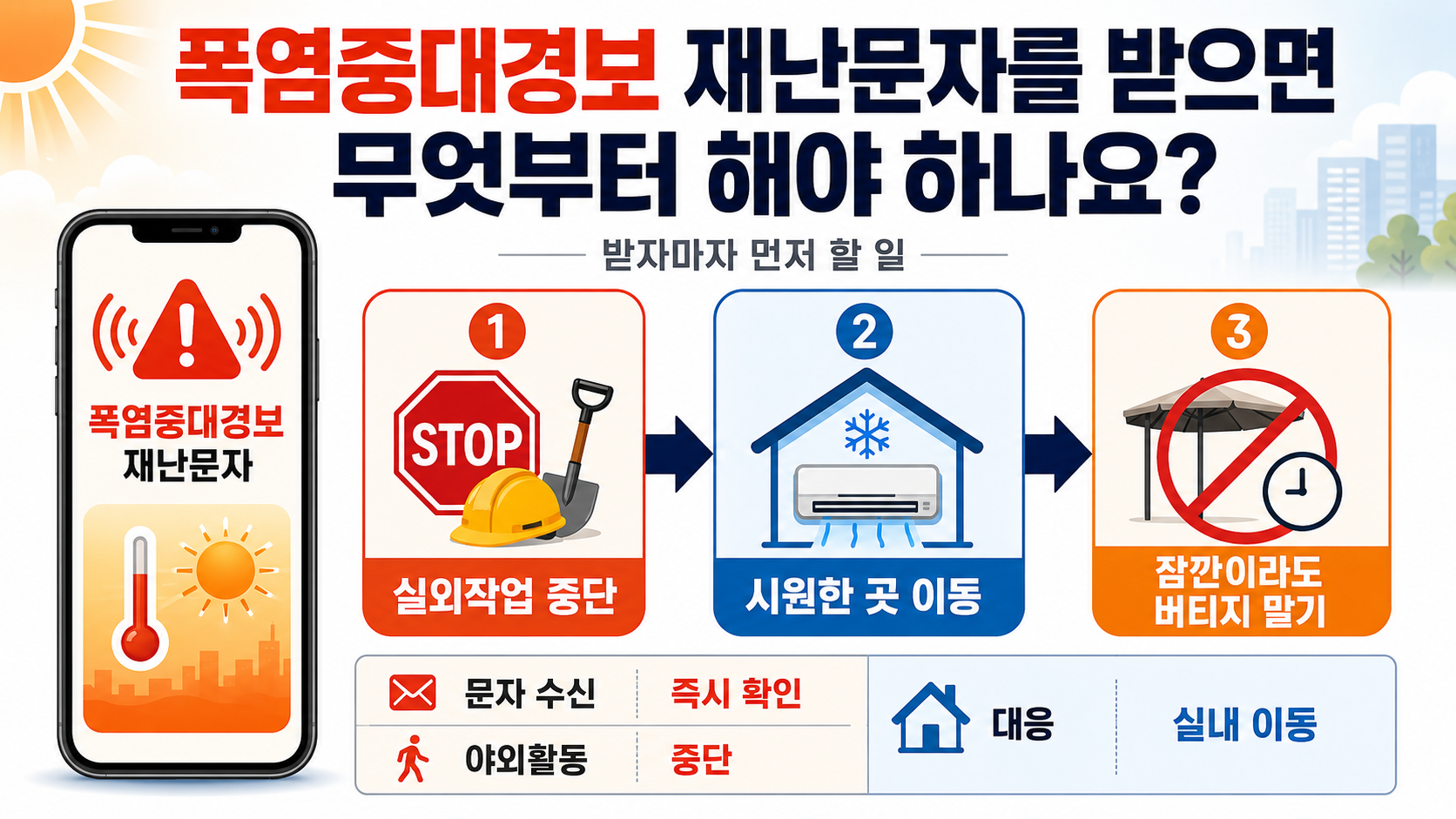
It is important not to keep pushing yourself simply because you are working for only a short time or working in the shade.
이 포스팅은 쿠팡 파트너스 활동의 일환으로, 이에 따른 일정액의 수수료를 제공받습니다.