

Scott Galloway's August Crash Forecast: The KOSPI Plunged, but the S&P500 Told a Different Story
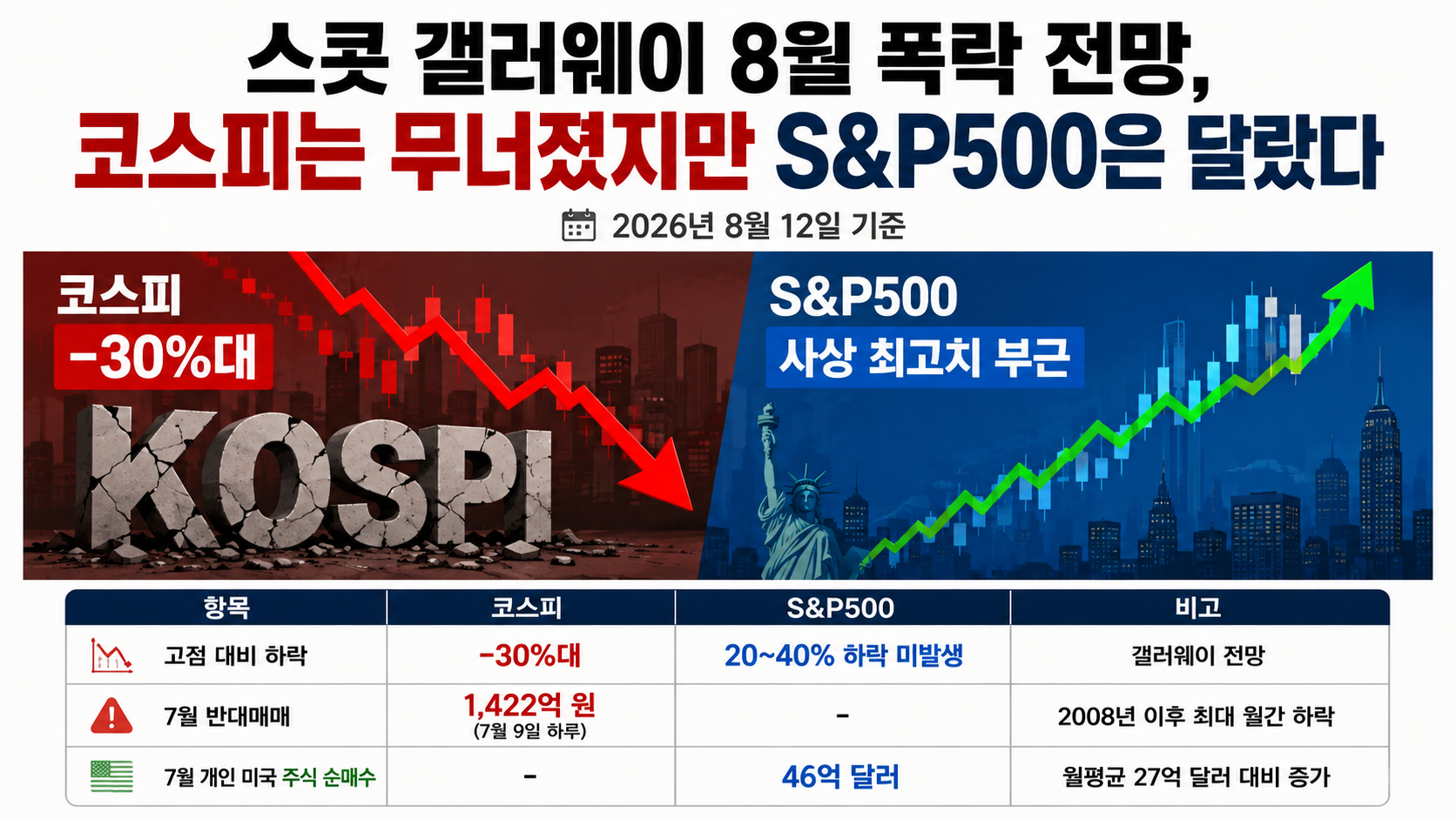
As of 2026-08-12, it is difficult to conclude that the 'August financial market crisis' Scott Galloway warned about earlier this year has unfolded exactly as predicted. South Korea's stock market did experience leveraged position liquidations and a sharp decline in semiconductor stocks, but the 20~40% drop from its peak that Galloway predicted for the S&P500 has not occurred.
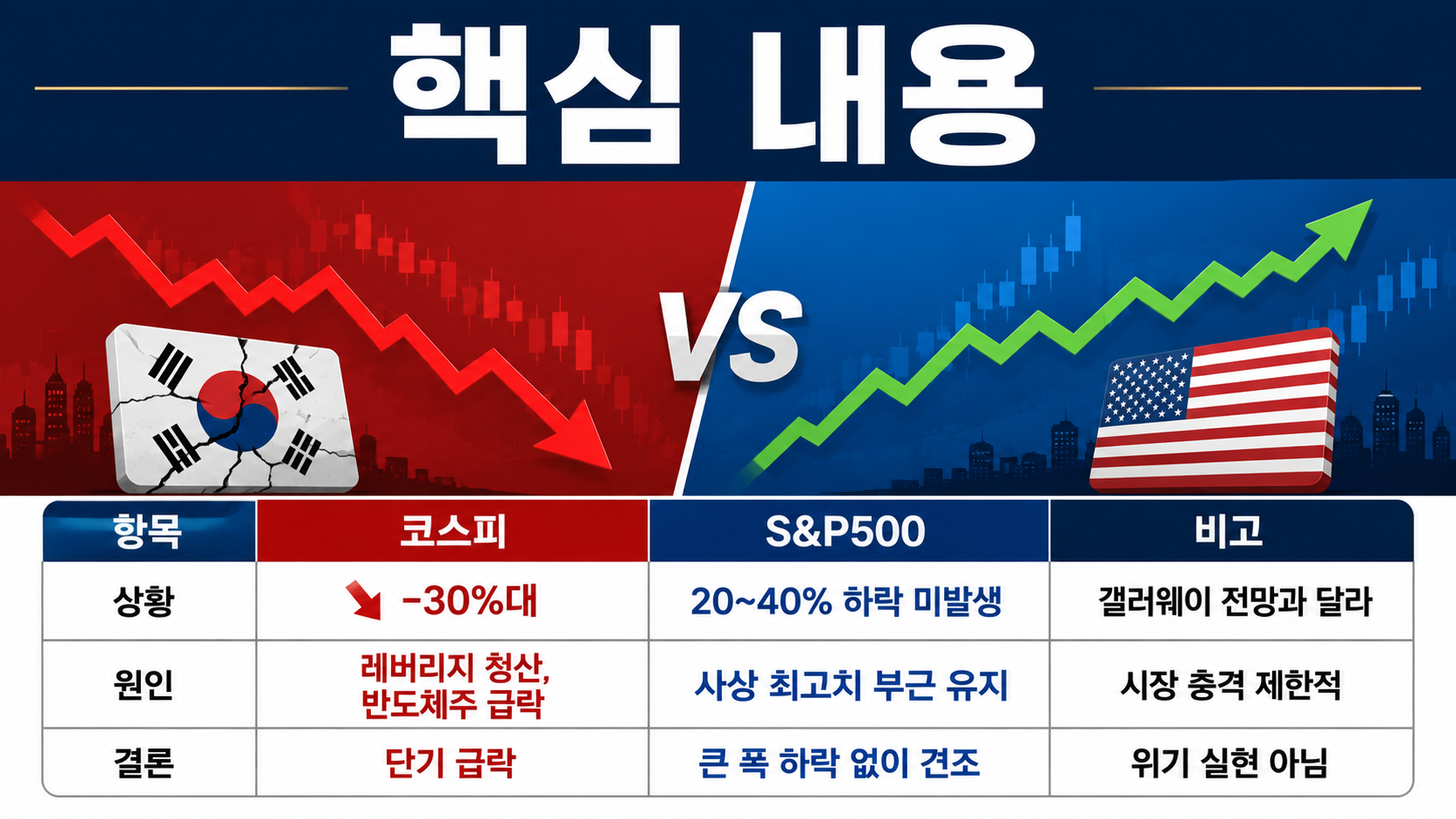
There is another important distinction. The online statement that 'Korean retail investors mistook leverage for intelligence' and Galloway's 'August crash forecast' are not part of the same statement.
The two narratives must be examined separately to understand the current market accurately.
What Did Galloway Actually Predict Would Happen in August?
The central focus of Scott Galloway's forecast was not Korean retail investors, but international oil prices and emerging-market debt.
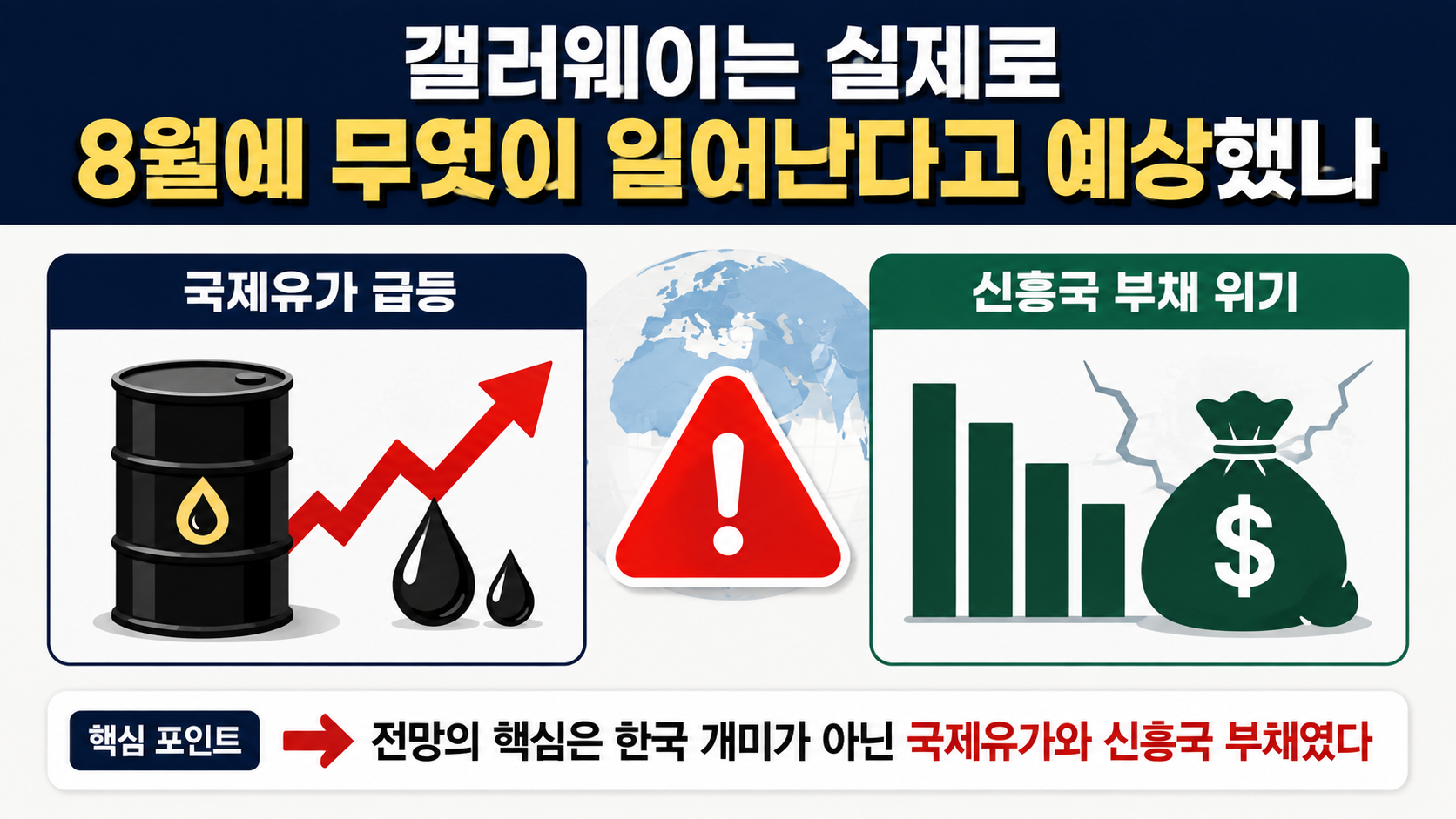
In March 2026, he predicted that if the war in the Middle East kept oil prices elevated, certain emerging economies with heavy dependence on energy imports and substantial dollar-denominated debt could come under pressure first.
The scenario he outlined was quite specific.
First, debt problems in emerging markets would intensify. Losses would then spread to European financial institutions holding the affected bonds, destabilizing credit markets. Under this scenario, what initially appeared to be a market shock caused by war could come to be recognized as a problem affecting the global financial system around August.
One of his most aggressive predictions at the time was that the S&P500 could fall 20~40% from its peak. He also projected that the value wiped out across financial markets could reach USD 10,000,000,000,000.
However, Galloway himself included a caveat acknowledging that his market predictions are frequently wrong. His remarks should therefore be understood as a highly pessimistic scenario rather than a definitive prediction of the future.
Has That Forecast Proven Correct as of August 12?
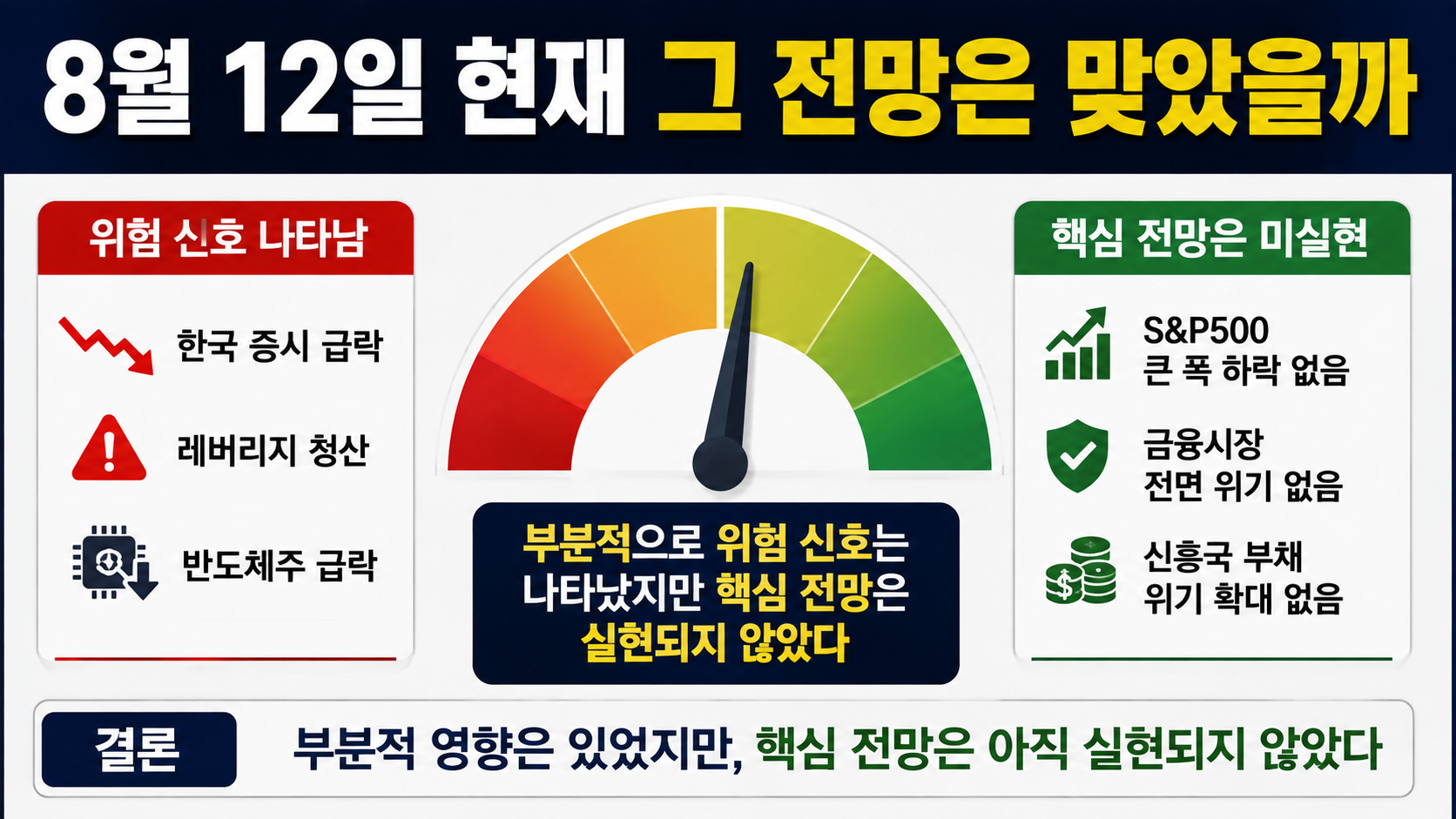
The most accurate assessment so far is that some warning signs have emerged, but the central prediction has not materialized.
South Korea experienced a major shock. The KOSPI went through a period in which it fell more than 30% from its June peak, and in July it recorded its largest monthly decline since 2008.
The market's heavy concentration in semiconductor stocks amplified the shock. Declines in Samsung Electronics and SK Hynix dragged down the overall index, while forced reductions in positions involving margin trading and leveraged products added further pressure.
In July 9, the daily value of forced liquidations related to unpaid securities account balances surged to KRW 142,200,000,000. Cumulative forced liquidations in July 1–8 had totaled KRW 202,000,000,000, meaning that approximately 70% of that amount was added in just one day.
Author's calculation: KRW 142,200,000,000 ÷ KRW 202,000,000,000 × 100 ≈ 70.4%
This illustrates how quickly a sharp market decline can trigger forced selling among leveraged investors.
The US stock market, however, presented a completely different picture.
In August 11, the US S&P500 closed at 7,728.20. Although it declined 0.32% that day, it had been trading near record highs until just a few days earlier.
That is a substantial difference from Galloway's predicted '20~40% decline from the August peak.'
Therefore, it would be premature either to claim that 'Galloway's August global crash forecast was correct' based on the Korean market's plunge or to conclude that all his warnings about risk were wrong.
South Korea did experience leverage-related liquidations similar to the risks he had warned about, but the disruption has not progressed to the point of spreading across the broader US market.
Did Galloway Really Say That 'Korean Retail Investors Mistook Leverage for Intelligence'?
Based on the information currently available, this expression should not be definitively attributed to Scott Galloway as a direct quotation.
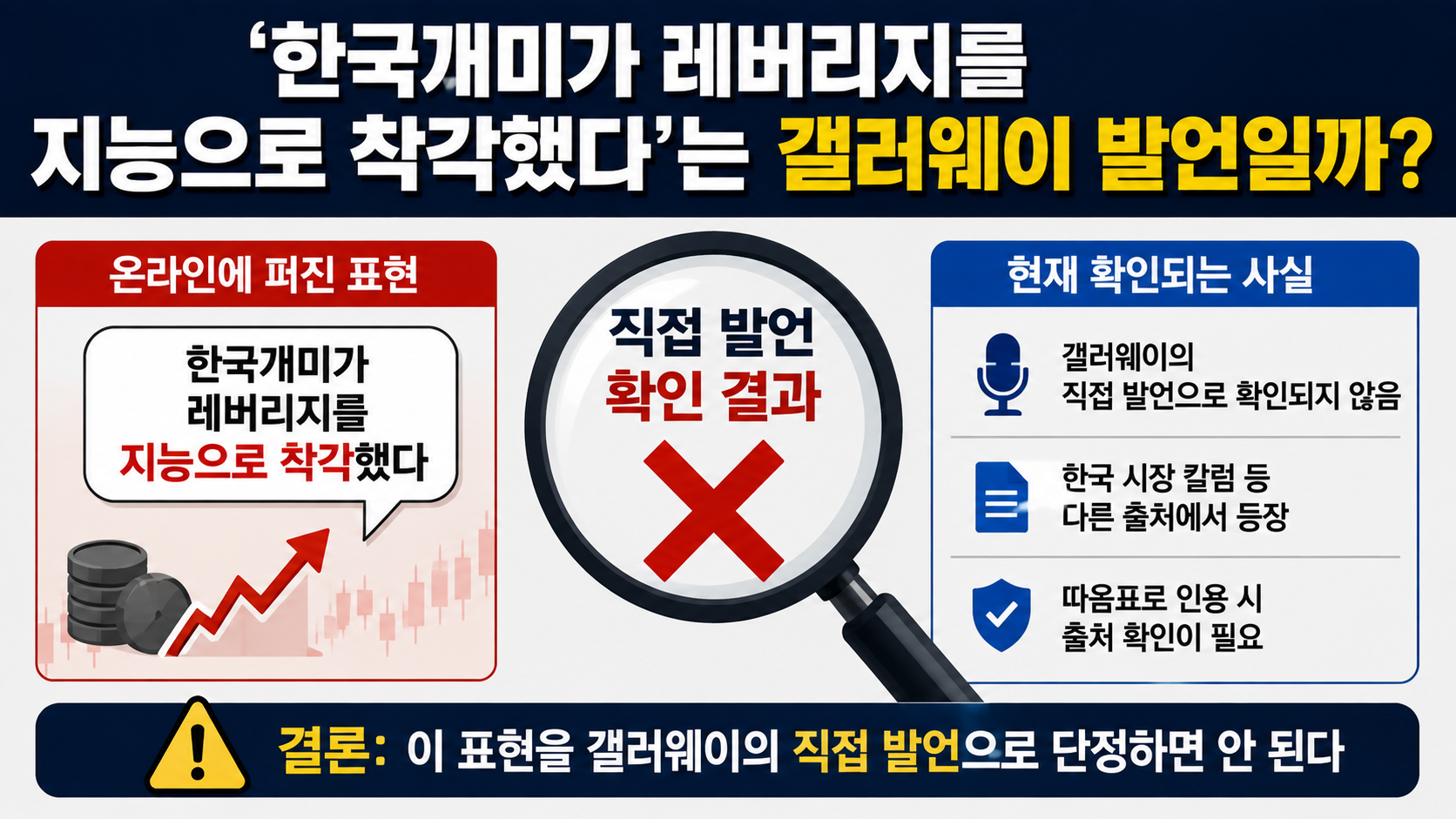
A separate market commentary analyzing excessive investment enthusiasm surrounding AI and semiconductor stocks in South Korea explained that leverage during a bull market can make investors' judgment appear better than it actually is.
The underlying observation is quite relevant to what happened in the Korean market.
The problem is identifying who actually said it.
Unless it can be verified that Galloway specifically referred to Korean retail investors and used the same expression, it would be more accurate to avoid presenting the wording in quotation marks as though it were his direct statement.
Galloway's verifiable August forecast and the leverage problems in the Korean stock market can be analyzed together, but they cannot be combined into a single quotation.
How Much Leverage Were Korean Retail Investors Using?
Korean retail investors' aggressive appetite for leverage did not suddenly emerge after the recent market decline began.
From the first half of this year, investors had been pouring money into leveraged products at home and abroad to capitalize on rising semiconductor stocks.
In June 8–12, the US-listed equity product most heavily purchased on a net basis by Korean investors was SOXL, which tracks 3 times the daily movement of a US semiconductor index. Net purchases during this period reached USD 1,750,000,000.
Within South Korea, leveraged products designed to magnify the daily returns of individual stocks such as Samsung Electronics and SK Hynix also became popular.
The key phrase here is 'daily returns.'
Holding a 2-times leveraged ETF over an extended period does not guarantee a cumulative return exactly twice that of the underlying asset. Because the product resets its target leverage every day, compounding effects can work against investors in markets experiencing large price fluctuations.
For example, if 100 falls by 20%, it becomes 80.
To return to the original 100, it must rise by 25%, not 20%.
If leverage increases the loss to 40%, 100 becomes 60. Returning to 100 would then require a gain of approximately 66.7%.
Author's calculation: (100 ÷ 60 - 1) × 100 = approximately 66.7%
As losses deepen, the percentage gain required to recover the original investment rises much more rapidly.
A similar phenomenon actually occurred in domestic single-stock leveraged products in June. Some investors who bought SK Hynix leveraged products at their peaks needed a rebound of approximately 19.3% to recover a 16.2% loss based on the product's price.
This is why investors in leveraged products cannot safely assume that their losses will quickly disappear once the underlying stock price starts rising again.
Why Was the KOSPI's Decline So Severe?
Explaining the crash simply by saying that 'retail investors took excessive risks' overlooks several important factors.
The first is index concentration.
In a market where major semiconductor companies such as Samsung Electronics and SK Hynix have an exceptionally large influence, substantial simultaneous movements in both stocks inevitably increase volatility across the KOSPI.
The second is leverage.
During a rising market, leveraged products amplify buying pressure. When the market reverses direction, however, the opposite effect occurs. If product rebalancing, derivatives hedging, margin position liquidations, and forced selling happen simultaneously, falling prices can trigger additional selling.
The third is foreign capital outflows.
In July, foreign investors sold approximately USD 6,260,000,000 worth of Korean stocks on a net basis. A major factor was growing concern about AI investment and semiconductor demand in technology-heavy markets such as Taiwan and South Korea.
The combination of expanding retail leverage, foreign selling, and semiconductor concentration created an environment in which index fluctuations could become much larger than changes in individual companies' earnings alone would suggest.
Did Korean Investors Abandon Leverage After the Crash?
Interestingly, the sharp decline in the domestic market did not eliminate retail investors' appetite for risk.
In July, Korean retail investors' net purchases of US stocks increased to USD 4,600,000,000. That was approximately USD 1,900,000,000 more than the monthly average of USD 2,700,000,000 in 2025.
Author's calculation: (USD 4,600,000,000 - USD 2,700,000,000) ÷ USD 2,700,000,000 × 100 ≈ 70.4% increase
This suggests that some investors who suffered losses in the Korean market shifted toward US stocks rather than withdrawing from risky assets altogether.
As a result, monitoring the KOSPI alone will no longer provide a complete picture of Korean retail investors' exposure to risk.
It is also necessary to watch whether money is flowing back into leveraged ETFs tied to US semiconductor and technology stocks, alongside domestic margin trading activity.
How Should Investors Interpret Claims That 'Another Crash Will Happen in August'?
As of August 12, there is no basis for claiming that another crash will definitely occur in August.
What Galloway presented was not a prophecy that stock prices would collapse on a specific date. It was a cascading crisis scenario in which the war in the Middle East and rising oil prices would affect emerging-market debt, European financial institutions, and credit markets.
So far, the US market has not experienced the 20~40% decline in the S&P500 that he predicted.
That does not mean the underlying risks have disappeared entirely.
Even in August 11, uncertainty surrounding negotiations between the United States and Iran pushed international oil prices higher again, while US stocks declined slightly. South Korea's market is also still recovering from the shock of July, making it difficult to conclude that volatility has fully returned to normal levels.
What matters now is less whether 'Galloway's prediction was right' and more whether the actual channels through which financial stress could spread are becoming active.
A more useful approach is to examine, in sequence, whether oil prices rise again for a prolonged period, financing conditions deteriorate for emerging economies with substantial dollar-denominated debt, credit risks at financial institutions increase, and US corporate earnings weaken faster than expected.
Korean investors can also monitor foreign investor flows, outstanding margin balances, the scale of forced liquidations, and volatility in Samsung Electronics and SK Hynix.
The Most Important Question Is Not 'Who Predicted It Correctly?'
In 2026, the Korean stock market provided an extreme demonstration that a good investment idea and a safe investment structure are not the same thing.
Believing in the long-term growth potential of AI and memory semiconductors is an entirely different decision from financing that belief with debt and 2-times or 3-times leverage.
Even if an investor's long-term assessment of the underlying asset ultimately proves correct, a major interim decline may leave a leveraged investor unable to wait for the recovery. If forced selling or liquidation occurs, the investor may be unable to benefit even if the stock price subsequently rebounds.
Institutional investors are not exempt. In July, there were also cases of overseas hedge funds suffering major losses and margin calls after concentrating their investments in AI-related stocks while using borrowed funds.
The most enduring question from this Korean stock market crash, therefore, is not whether the outlook for AI was correct.
In leveraged investing, what matters more than how much I earn when I am right is whether my investment structure allows me to remain in the market when I am wrong.
As of August 2026, Scott Galloway's global market crash scenario has not materialized as predicted. However, the risks of leverage and concentrated investing exposed earlier in the Korean market are no longer hypothetical. They have already become real events.
Even if markets rise again, these two facts should be remembered separately.
※ This article is based on publicly available information verified through 2026-08-12 11:35 Korea Standard Time and does not recommend buying or selling any particular stock or ETF. Losses from leveraged products can increase more rapidly than those from ordinary stocks or ETFs, and investors may lose their principal.
※ This article is provided for informational purposes to help readers understand market developments and does not constitute investment advice regarding any particular security or asset. Final investment decisions and responsibility rest with the individual investor.