

Preventing Water Meter Freezing: At What Temperature Should You Leave the Tap Running? Cold Wave Guidelines by Alert Level
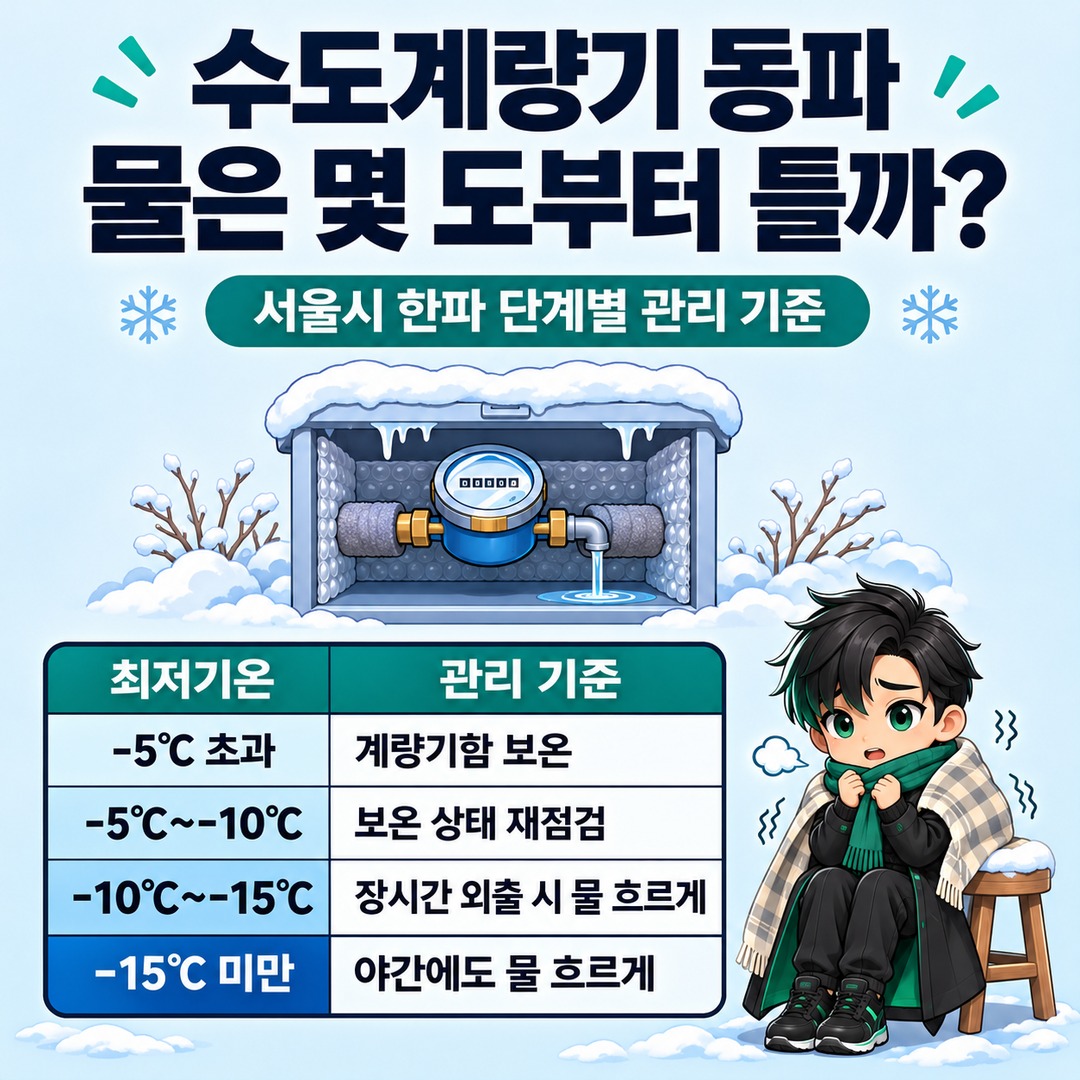
Insulating the water meter box may not be enough to prevent the meter from freezing in winter. During a cold wave, especially when the minimum temperature falls below 10℃, you may need to leave a small stream of water running depending on the temperature and how long you will be away. This article covers practical steps, from insulating the meter to when to leave the tap running and what to do if the meter has already frozen.
1. At what temperature below zero is a water meter at risk of freezing?
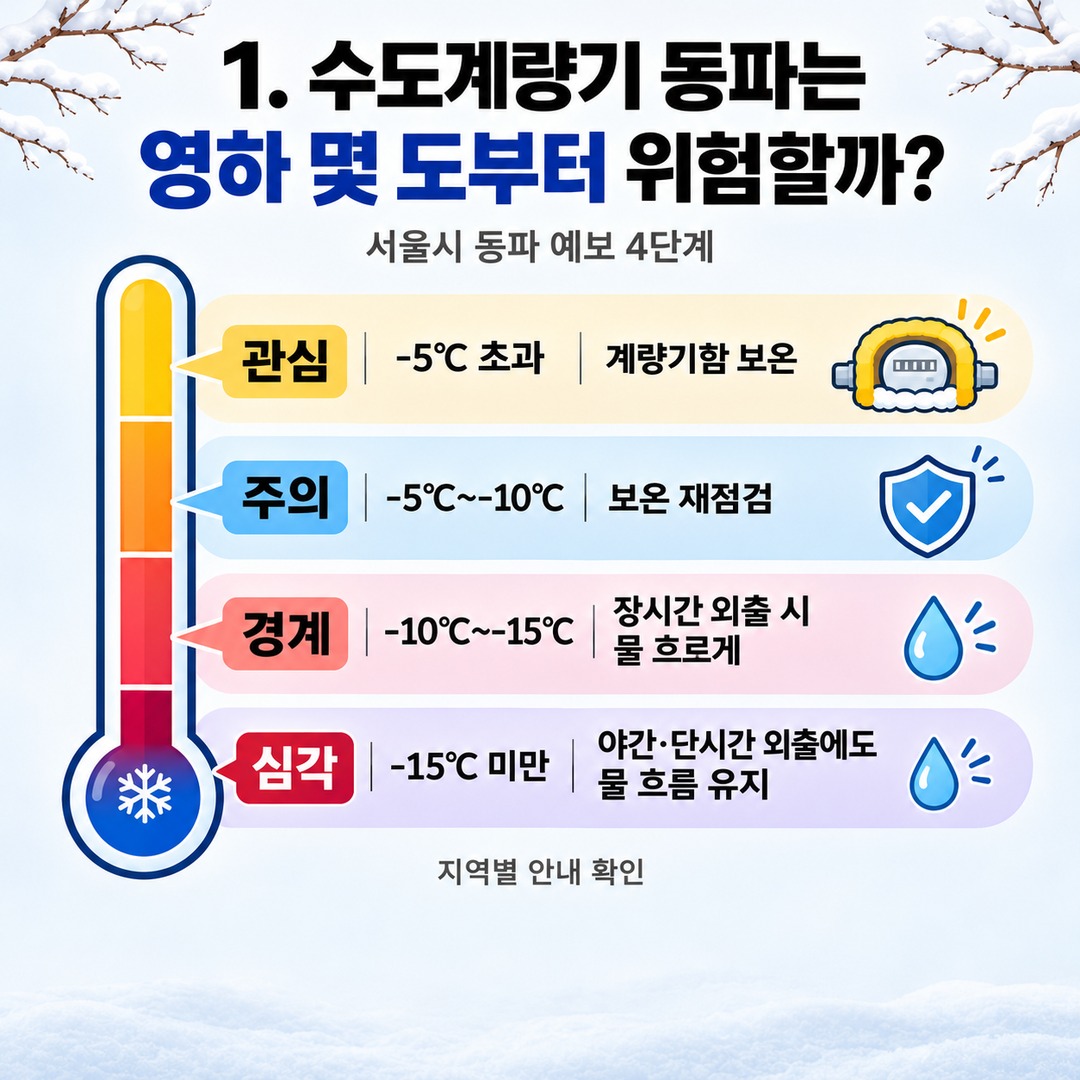
| Level | Daily minimum temperature | What to do |
|---|---|---|
| Advisory | Above -5℃ | Insulate the meter box |
| Caution | -5℃ to -10℃ | Recheck the insulation |
| Warning | -10℃ to -15℃ | Leave a small stream of water running when away for an extended period |
| Severe | Below -15℃ | Keep water running even during brief or overnight absences |
2. How should you insulate the water meter box?
The key to insulating the meter box is not only filling the space inside, but also sealing gaps that let cold air in.
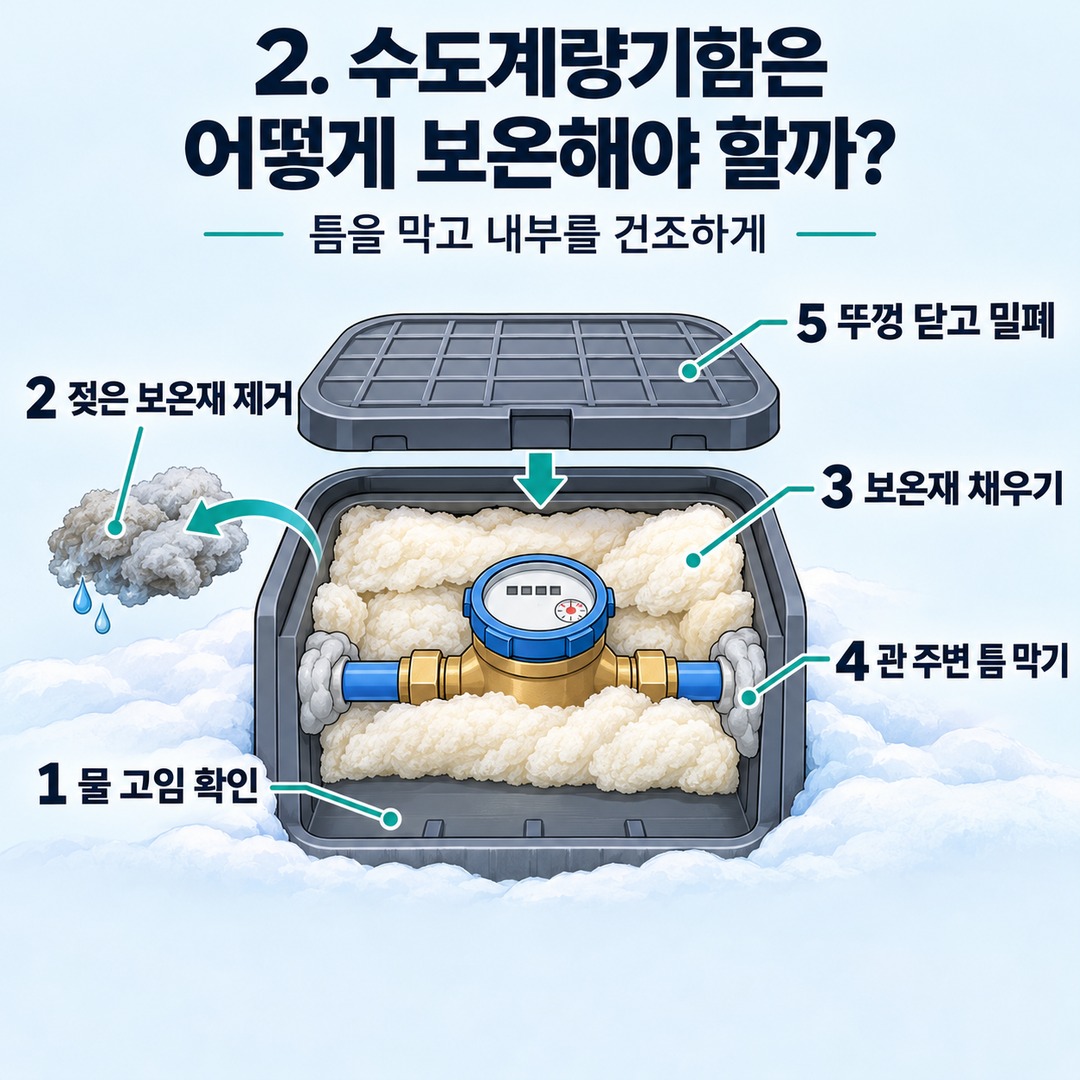
Check it in this order:
1. Open the meter box and check whether water has collected inside.
2. Remove any wet old clothing or existing insulation.
3. Place moisture-resistant insulation or bubble wrap inside.
4. Seal gaps around where the water pipe passes through the meter box.
5. Close the lid and seal any points where cold air can enter from outside.
It is especially important to check the insulation carefully in corridor-style apartments, homes with meters installed on an exterior wall, and buildings with exposed outdoor water pipes.
3. How much should you let the water run during a cold wave?
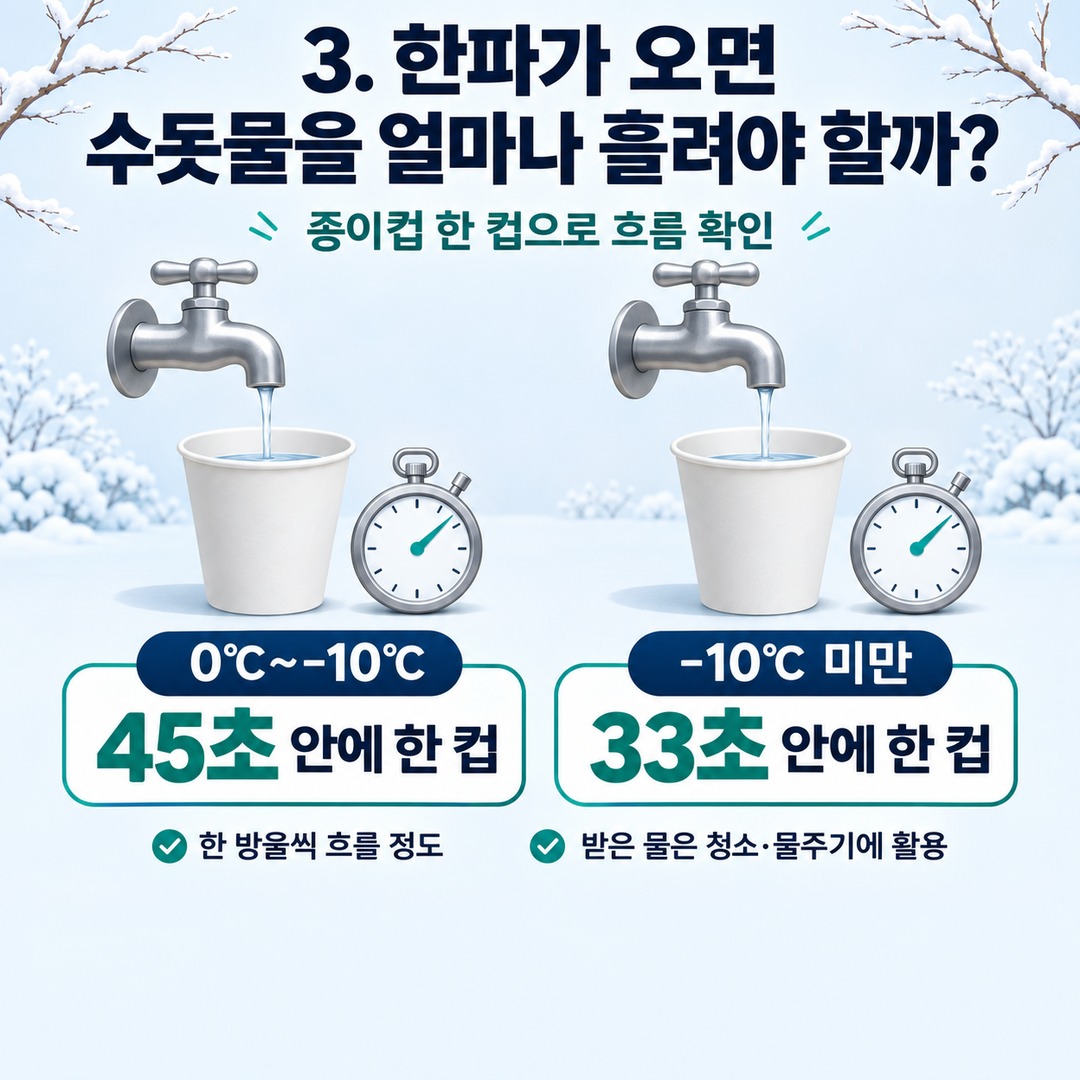
| Minimum temperature | Water flow check |
|---|---|
| 0℃ to -10℃ | Fill one paper cup within 45 seconds |
| Below -10℃ | Fill one paper cup within 33 seconds |
Keep these points in mind:
Check whether a slow drip is sufficient.
Take steps to keep the water pipes connected to the meter from freezing as well.
If you will be away for an extended period, check both the insulation and water flow before leaving.
Follow local freeze forecasts and any separate guidance from your regional waterworks authority.
While the water is running, collect it for cleaning or watering plants to reduce waste.
4. What should you do if the water meter has already frozen?
Avoid pouring hot water directly onto a frozen water meter. A sudden change in temperature could damage it.
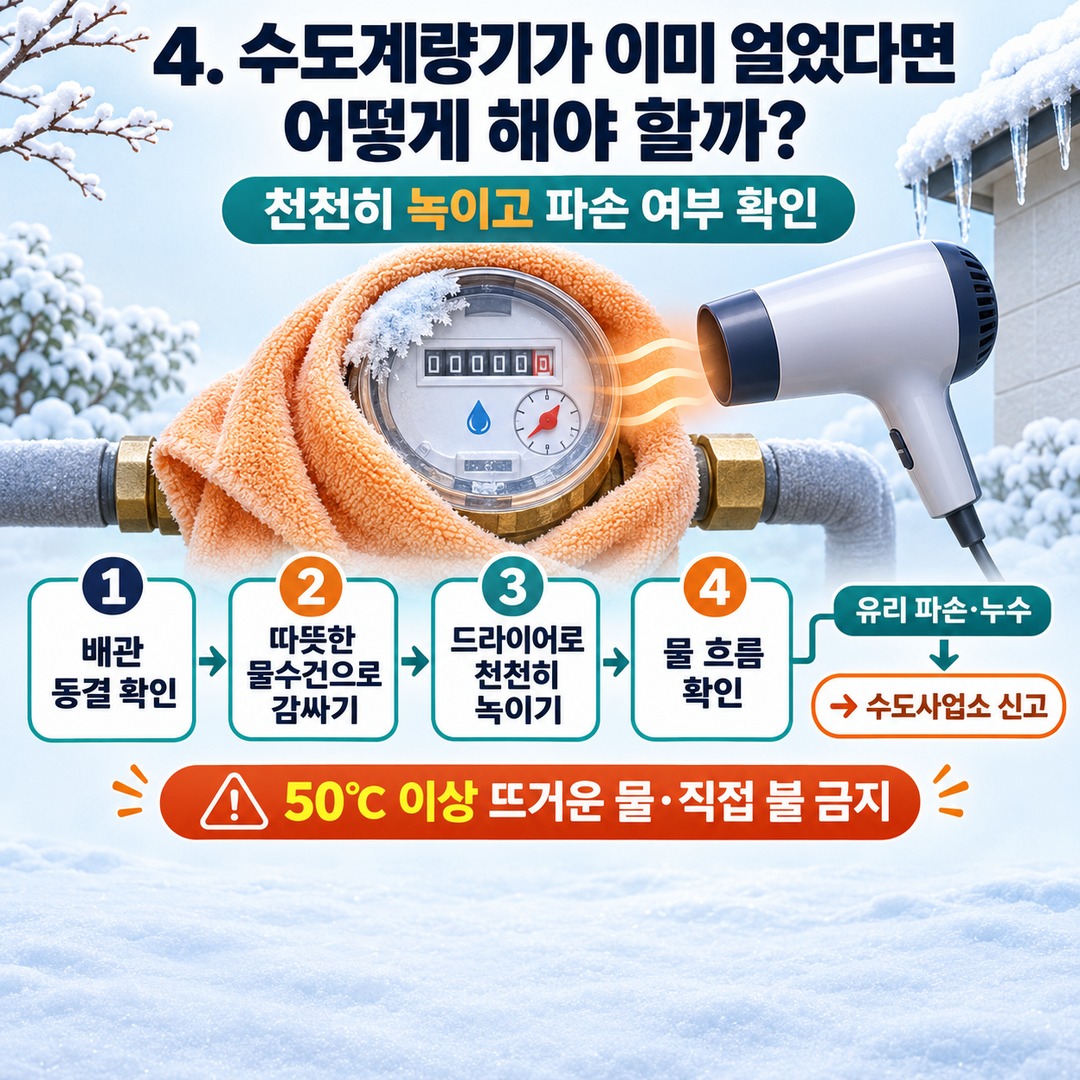
1. Check whether the pipes connected to the water meter have frozen.
2. Wrap the frozen area with a warm, damp towel.
3. If using a hair dryer, thaw the area gradually without concentrating the heat in one spot.
4. Check whether the water is flowing again.
5. If the meter glass is cracked or a leak occurs, report it to your local waterworks office.
Avoid using hot water at or above 50℃ or applying a direct flame. Namyangju City also advises that thawing a meter at 50℃ or higher may cause damage and require the meter to be replaced. New York City Hall+2
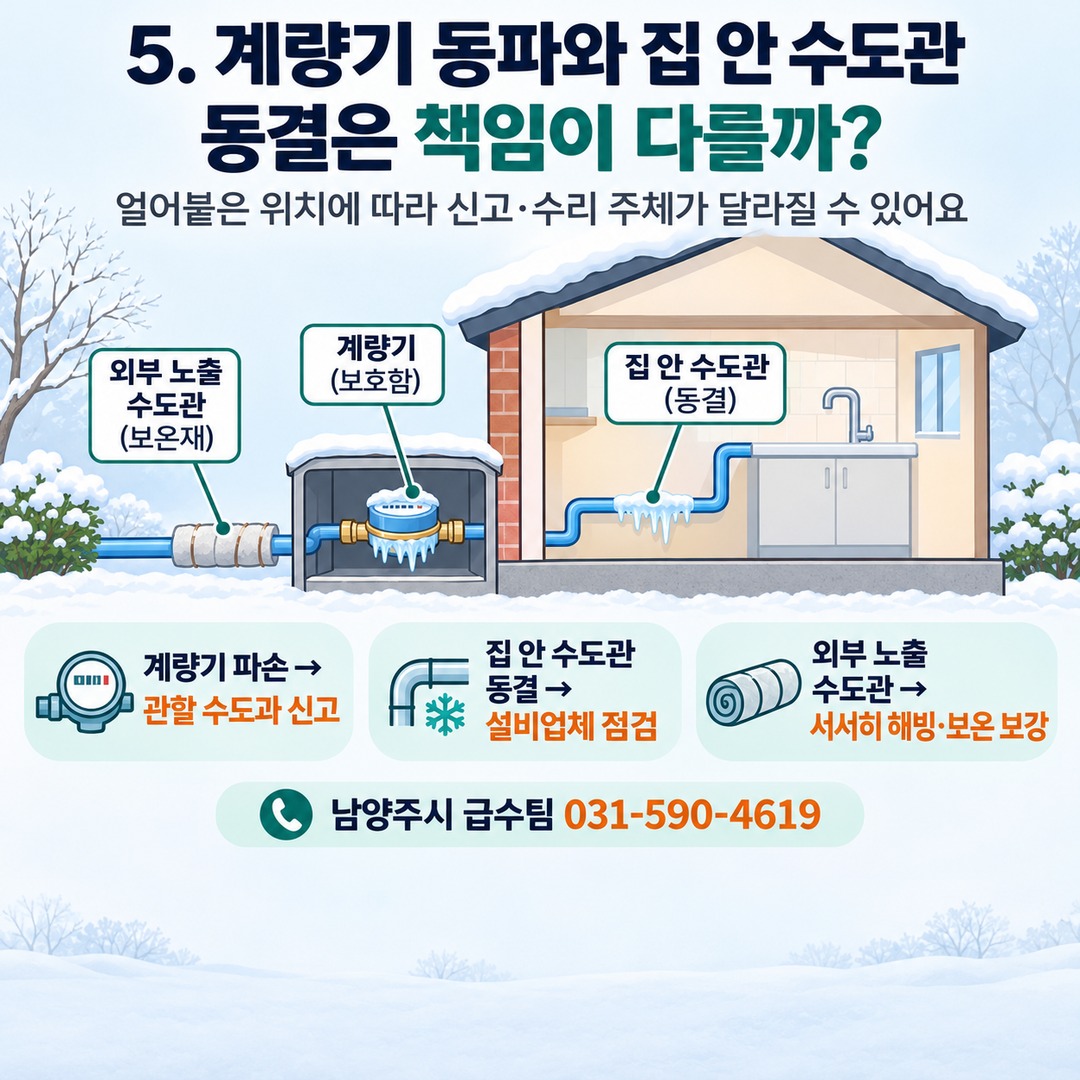
5. Does responsibility differ depending on whether the meter or an indoor water pipe has frozen?
Who to contact and who handles repairs may depend on whether the water meter or a pipe inside the home has frozen.
According to guidance published by Namyangju City, its Waterworks Management Center handles meter replacement when a water meter freezes, while frozen pipes inside a home need to be repaired by a nearby plumbing service.
| Where the problem occurred | What to do |
|---|---|
| Damaged water meter | Report it to your local waterworks department |
| Water meter enclosure frozen | Check the insulation and report the issue |
| Water pipe inside the home frozen | Have a plumbing service inspect it |
| Exposed outdoor water pipe frozen | Thaw it gradually and improve the insulation |
Namyangju residents can contact the Water Supply Team at 031-590-4619 with questions about frozen water meters. Residents elsewhere can contact their local government’s waterworks department. New York City Hall+1
6. A freeze prevention checklist to review before winter
It is best to check ahead of time, before temperatures drop, rather than waiting until a cold wave begins.
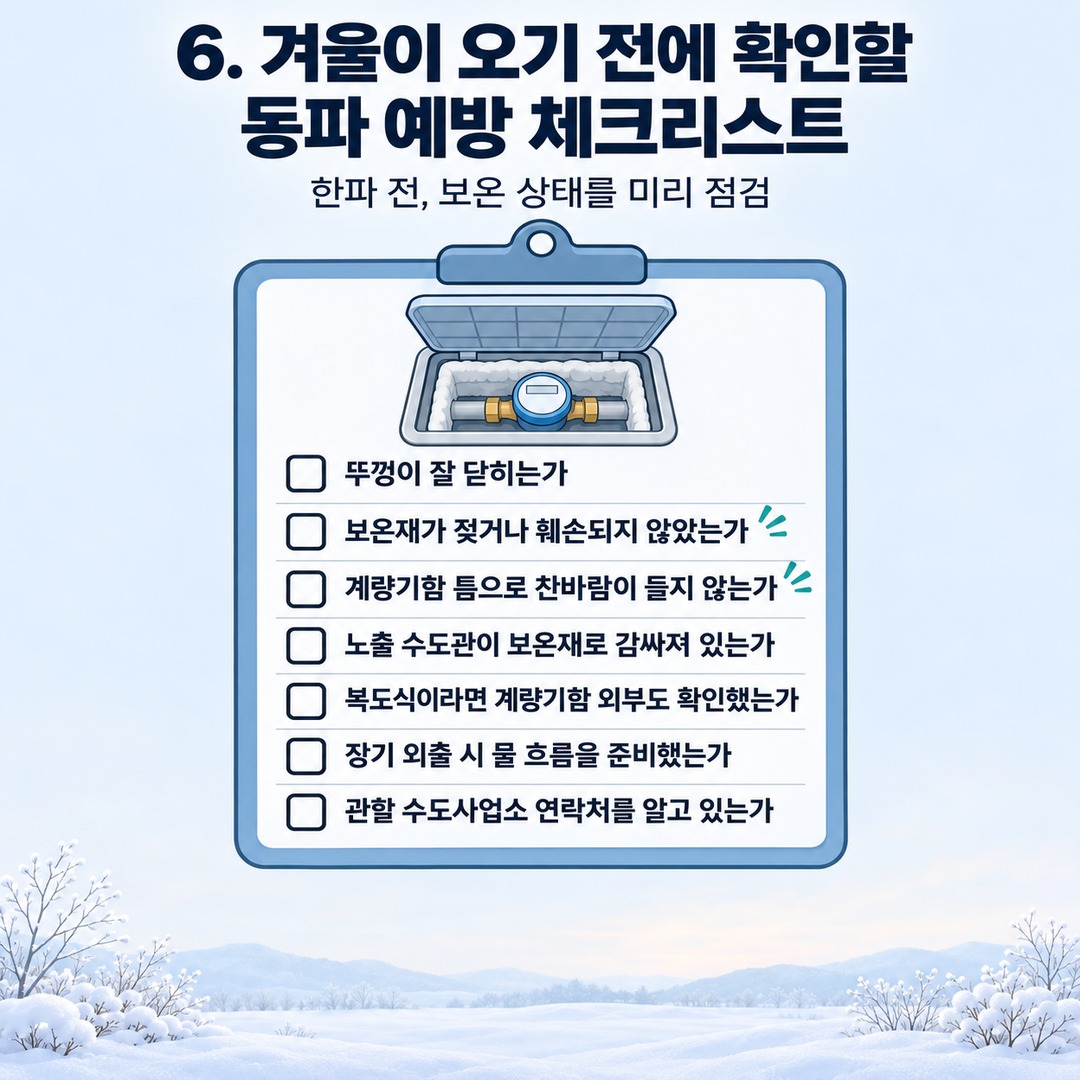
Does the water meter box lid close properly?
Is the insulation inside dry and undamaged?
Are there any gaps around the meter box where cold air can get in?
Are exposed outdoor water pipes wrapped in insulation?
If you live in a corridor-style apartment building, have you checked the insulation on the outside of the meter box?
Are you prepared to leave the water running when you will be away for an extended period?
Do you know which local waterworks office to contact if a freeze occurs?
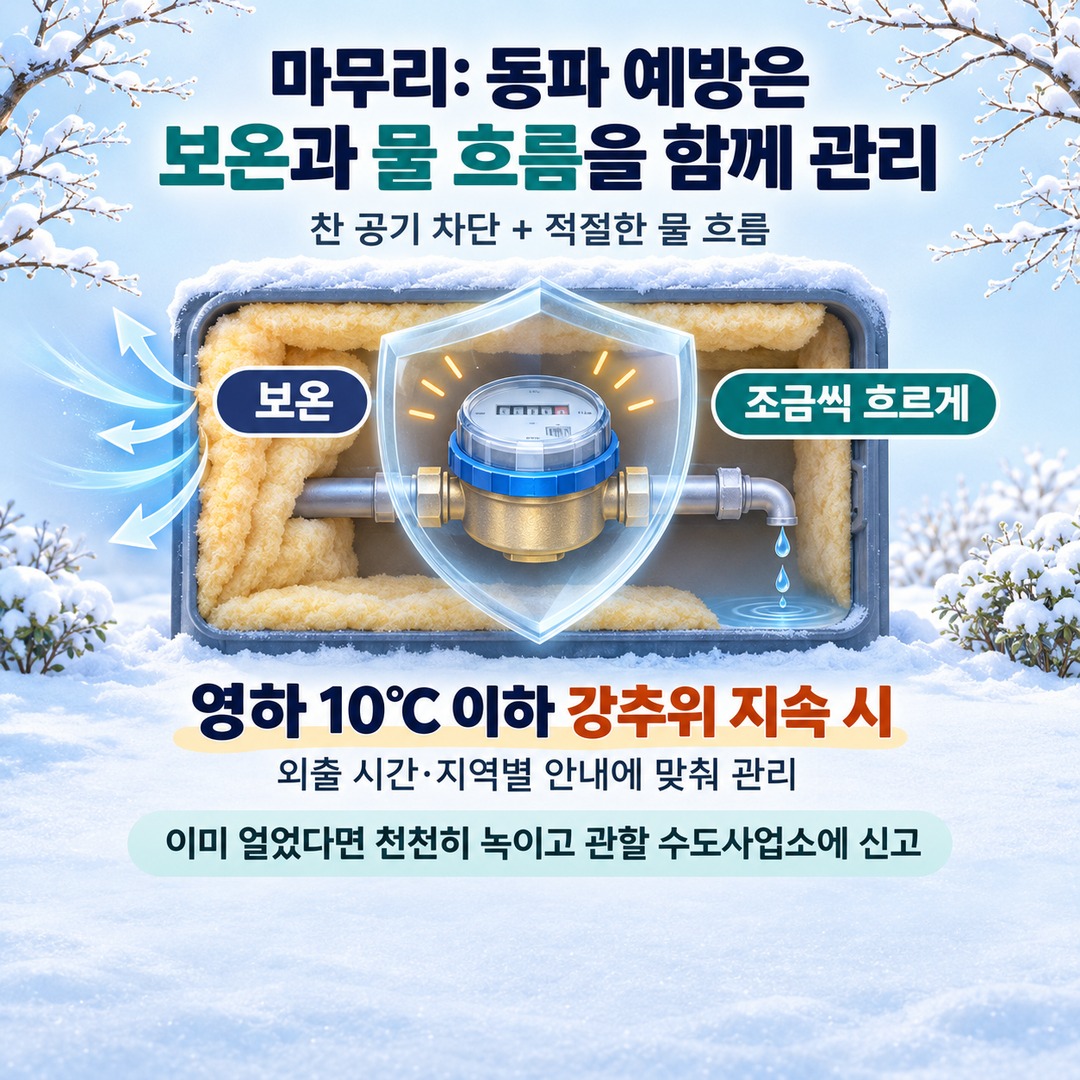
If your water meter has frozen in the past, check the gaps in its protective enclosure and the condition of the insulation closely to help prevent the problem from recurring.
Conclusion: Prevent freezing by managing both insulation and water flow
The most important steps in preventing a water meter from freezing are keeping cold air out and maintaining an appropriate flow of water.
Insulate the inside of the meter box during ordinary weather. When severe cold of 10℃ below zero or lower persists, let a small stream of water run according to how long you will be away and local guidance.
If the meter has already frozen, do not pour hot water over it or try to take it apart. It is safer to thaw it gradually or report the problem to your local waterworks office.
In winter, check the boiler pipes and outdoor water pipes as well as the water meter. A quick inspection beforehand can help reduce the risk of a sudden water outage and the inconvenience of repairs.
Official sources consulted
2. Namyangju City Hall — How to insulate a water meter and what to do if it freezes
3. Namyangju City Hall — Cold wave response guidelines
4. Hanam City — Winter water facility freeze prevention guidance
Information verified as of 2026-11-07. Temperature-based guidance may vary according to each local government's official recommendations.