

Looking for Short Track World Tour-Related Stocks? Examine Corporate Connections Before the Sporting Event
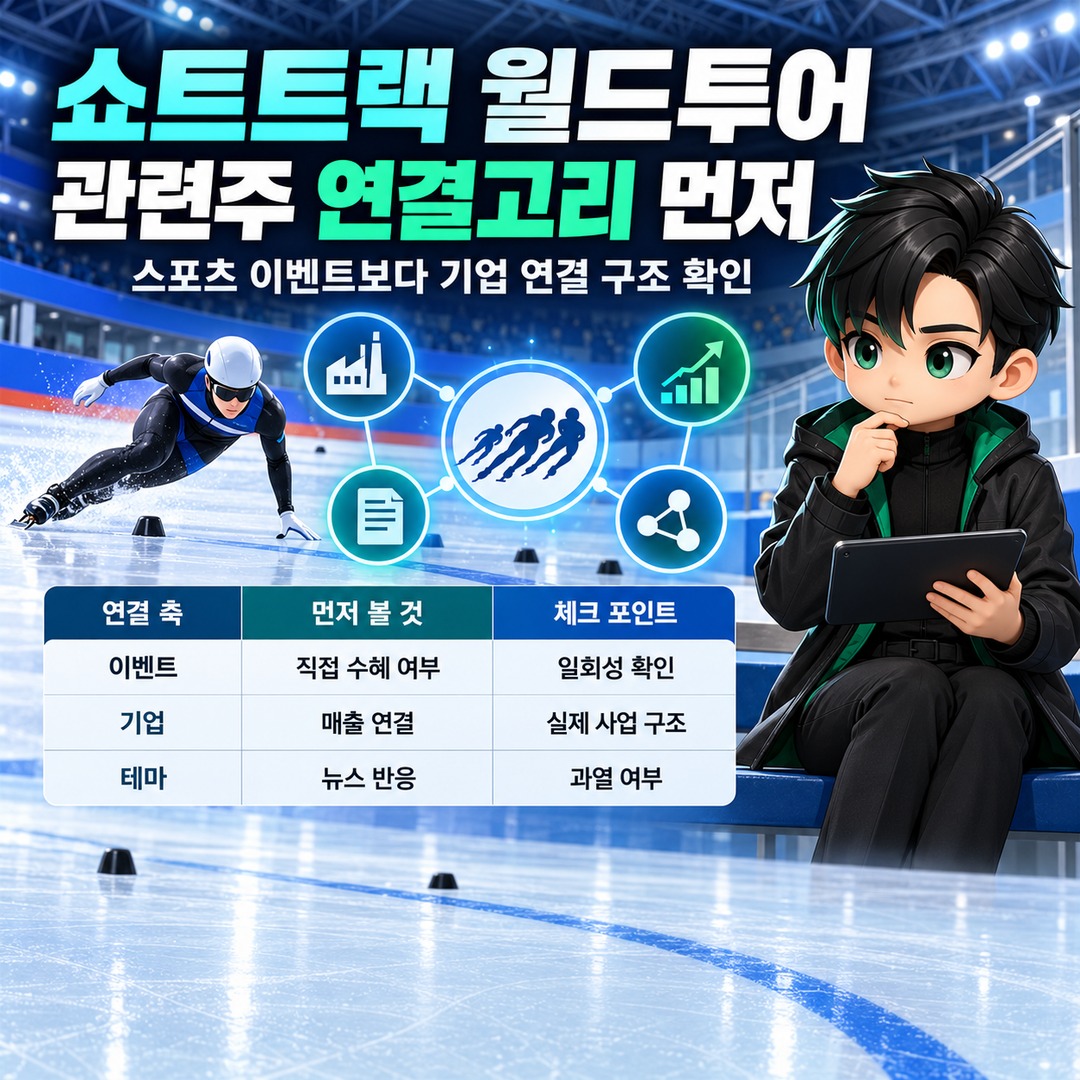
News of the Short Track World Tour being held in Seoul may spark interest in related stocks, but hosting an international sporting event alone is not enough to predict a rise in any particular company's share price. When evaluating potential investments, it is necessary to examine how the event could affect corporate revenue, contracts, brand exposure, and business performance.

The connection between sporting events and the stock market is not simply "event hosted = beneficiary stocks." Instead, it depends on whether sponsorship agreements, event operations, equipment supply, advertising benefits, and increased consumption translate into actual business results.
What Should You Check First When Looking for Short Track World Tour-Related Stocks?
When evaluating stocks associated with the Short Track World Tour, the first priority should be verifying actual business connections rather than focusing on company names.
The International Skating Union (ISU) Short Track World Tour is an international competition organized according to schedules in different host countries, and international competitions have also been held in South Korea.
However, the fact that a competition is taking place does not mean that every company in the following categories will benefit directly.
Whether the company has signed an official sponsorship agreement
Whether the company generates revenue from event operations
Whether sports marketing expenditures actually lead to increased brand value
Whether an increase in sales of related products can be verified
Stock prices may reflect expectations about the future, but expectations and actual financial performance are not the same thing.
How Do Different Types of Sporting Event-Related Stocks Respond?
Companies associated with sporting events can be divided into several broad categories.
| Category | What to Check |
|---|---|
| Sponsoring companies | Whether they have official event partnerships or advertising contracts |
| Sporting goods companies | Whether sales of equipment, apparel, and other sporting goods increase |
| Media and content companies | Whether they have connections to broadcasting or content businesses |
| Consumer-related companies | Whether increased spectator numbers translate into revenue |
For example, an international sporting event may generate greater advertising exposure or brand recognition. However, its actual impact on share prices may vary depending on the size of the contracts, the contribution to overall corporate performance, and the level of market expectations.
Why Hosting a Short Track Competition Does Not Automatically Increase Earnings
Sporting events are concentrated within a limited period.
Even if public interest increases during the competition, several steps must occur before that attention is reflected in a company's financial results.
Event takes place → Corporate exposure increases → Consumer behavior changes → Revenue increases → Financial results reflect the increase
If any link in this process fails to materialize, the event is unlikely to remain a lasting driver of the stock price.
In particular, sponsorship arrangements or event-related expectations that are already known to the market may have been priced into shares before the event actually takes place.
Therefore, it is more important to ask "Which financial figures will change for which companies?" than simply "Is the event taking place?"
5 Things to Check When Evaluating Short Track-Related Stocks
1. Verify Official Contracts
The first thing to check is whether a direct connection exists between the company and the competition.
Classifying a company as a related stock simply because it operates in the same sports sector may misrepresent its actual business relationship with the event.
2. Check Revenue Size and Contribution
The proportion of total corporate revenue generated by the relevant business is also important.
For large companies, even when sports marketing produces positive results, the impact on overall financial performance may be limited.
3. Distinguish One-Time Events From Recurring Business
Hosting an international competition can attract attention, but that is different from having a recurring revenue structure.
From a long-term investment perspective, investors should examine sustainable business models rather than focusing on one-off events.
4. Check Whether the Event Is Already Priced In
The stock market sometimes reflects expectations before an official announcement is made.
Therefore, rather than assuming the cause of a price movement based solely on what happens after the news is released, investors should also examine trading volume, earnings announcements, and corporate disclosures.
5. Examine Profitability and Risk Factors
Even sports-related companies face various risks, including costs, economic downturns, changes in consumer spending, and contract expirations.
Caution is needed when forecasting profits based on a single event.
What Else Should You Examine After the Short Track World Tour?
International sporting events held in Seoul can provide an opportunity to stimulate interest in the local economy and sports industry. The Seoul Metropolitan Government includes the 2026/27 ISU Short Track World Tour 4 event in its international sporting events schedule for 2026.
However, from a stock investment perspective, the following information still needs to be verified.
Whether official sponsorship announcements have been made
Information contained in corporate disclosures
Changes in sales of related products
Impact on quarterly financial results
Differences between market expectations and actual outcomes
When looking for stocks related to the Short Track World Tour, the key question is not "Which stock will rise?" but rather "Which companies have a business structure that allows them to generate actual revenue?"
※ This article is provided for informational purposes to help readers understand market trends and does not constitute investment advice or a recommendation to buy any particular stock or asset. Final investment decisions and responsibility rest with the individual investor.
Related Articles
How to Identify a Stock Market Bottom: 4 Signals to Check Before RSI 30
What Is a Gap Up? Understanding a Higher Opening Stock Price and How to Identify Gap Filling