

What Happens If a U.S. Stock Plunges in Premarket Trading After You Set a Stop-Loss Order? Why Your Stop-Loss May Not Trigger
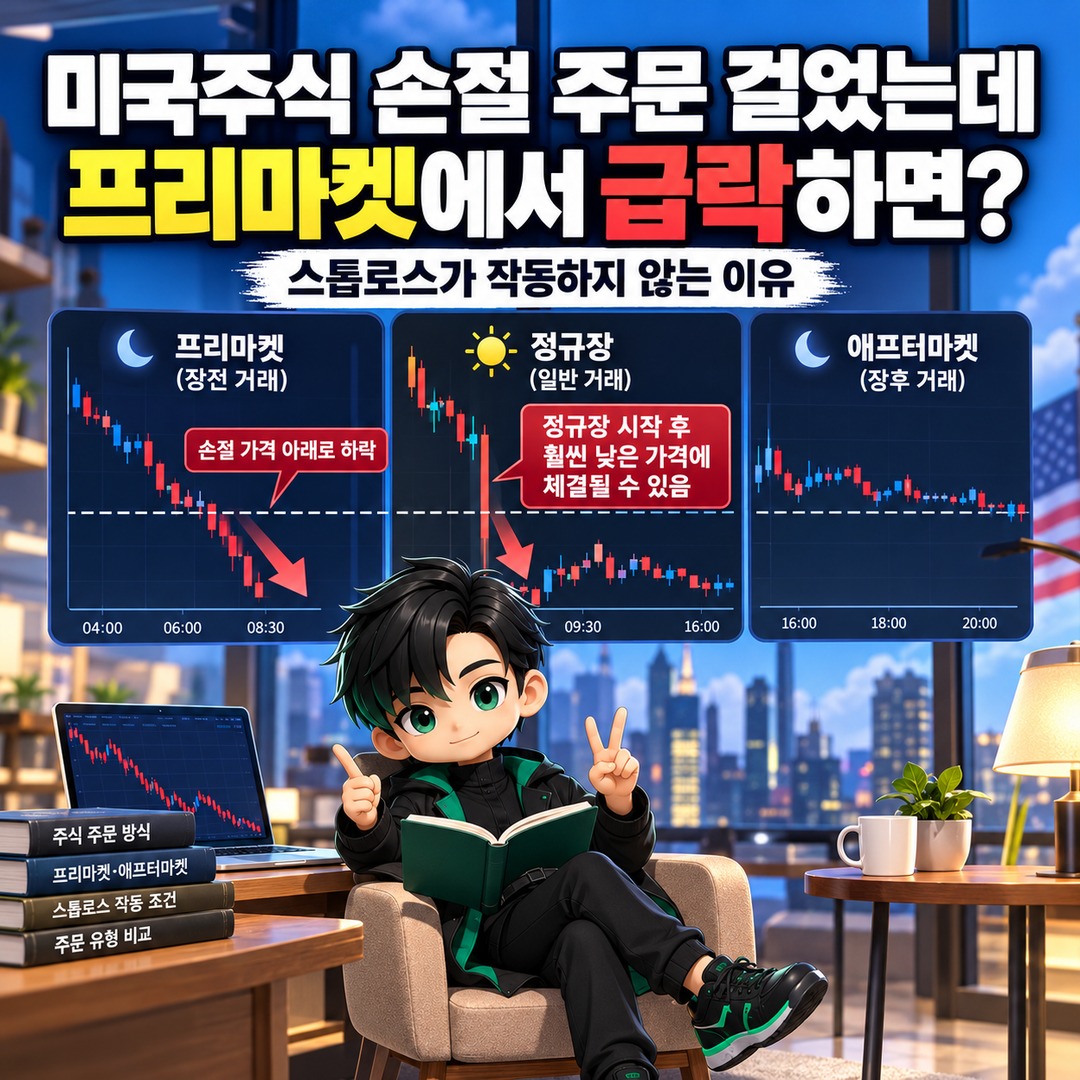
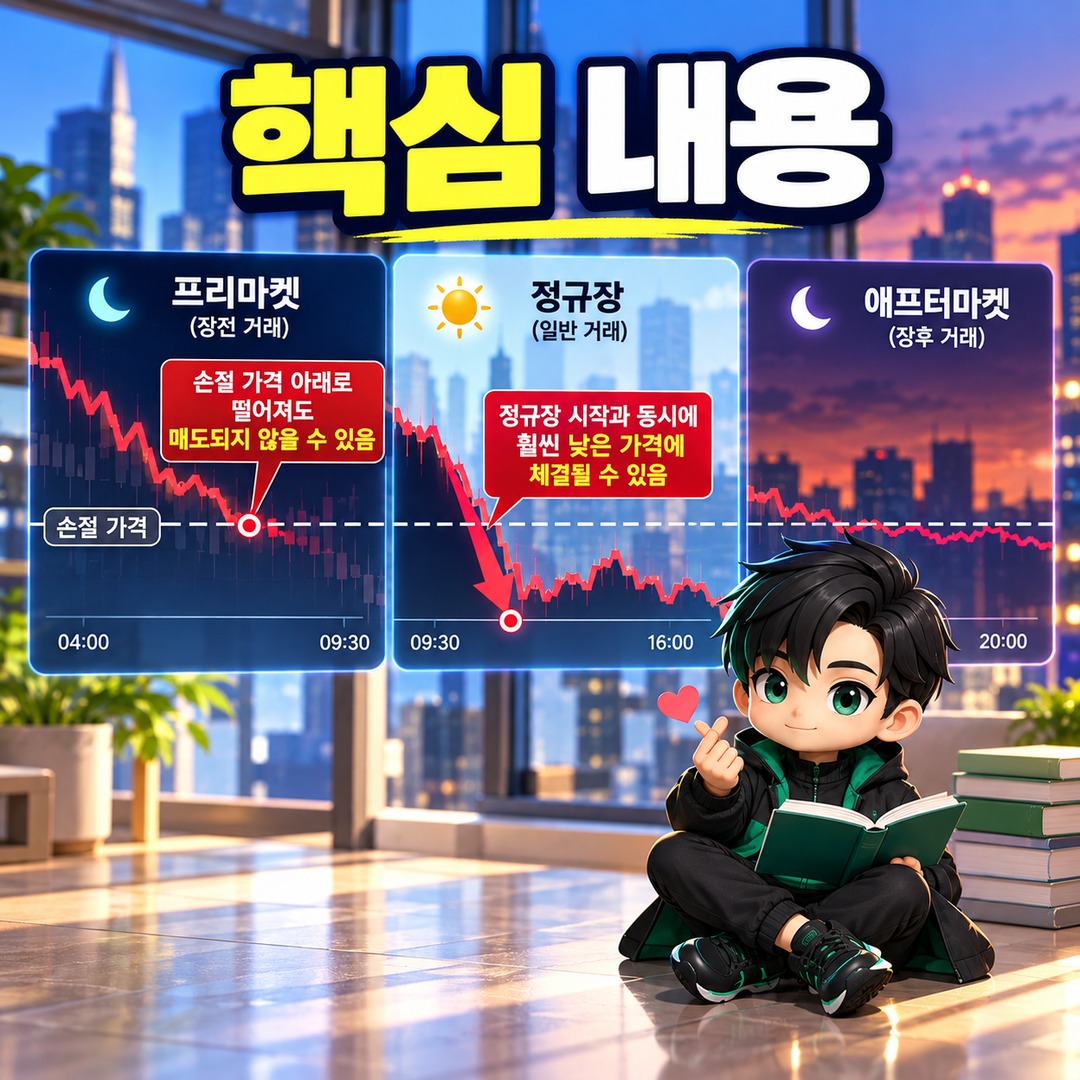
Even if you have placed a stop-loss order for a U.S. stock, the shares will not necessarily be sold when the price falls below your stop price during premarket or after-hours trading. Standard stop orders may trigger only during regular trading hours, and an order could execute at a price far below the stop price when the regular session opens.
As of 2026-10-20, we will examine situations that can occur in practice, based on investor guidance from the U.S. Securities and Exchange Commission (SEC) and brokerage order rules.
1. Why Wasn't My Stock Sold When It Fell Below My Stop Price in Premarket Trading?
The first thing to check is which trading sessions your order applies to.
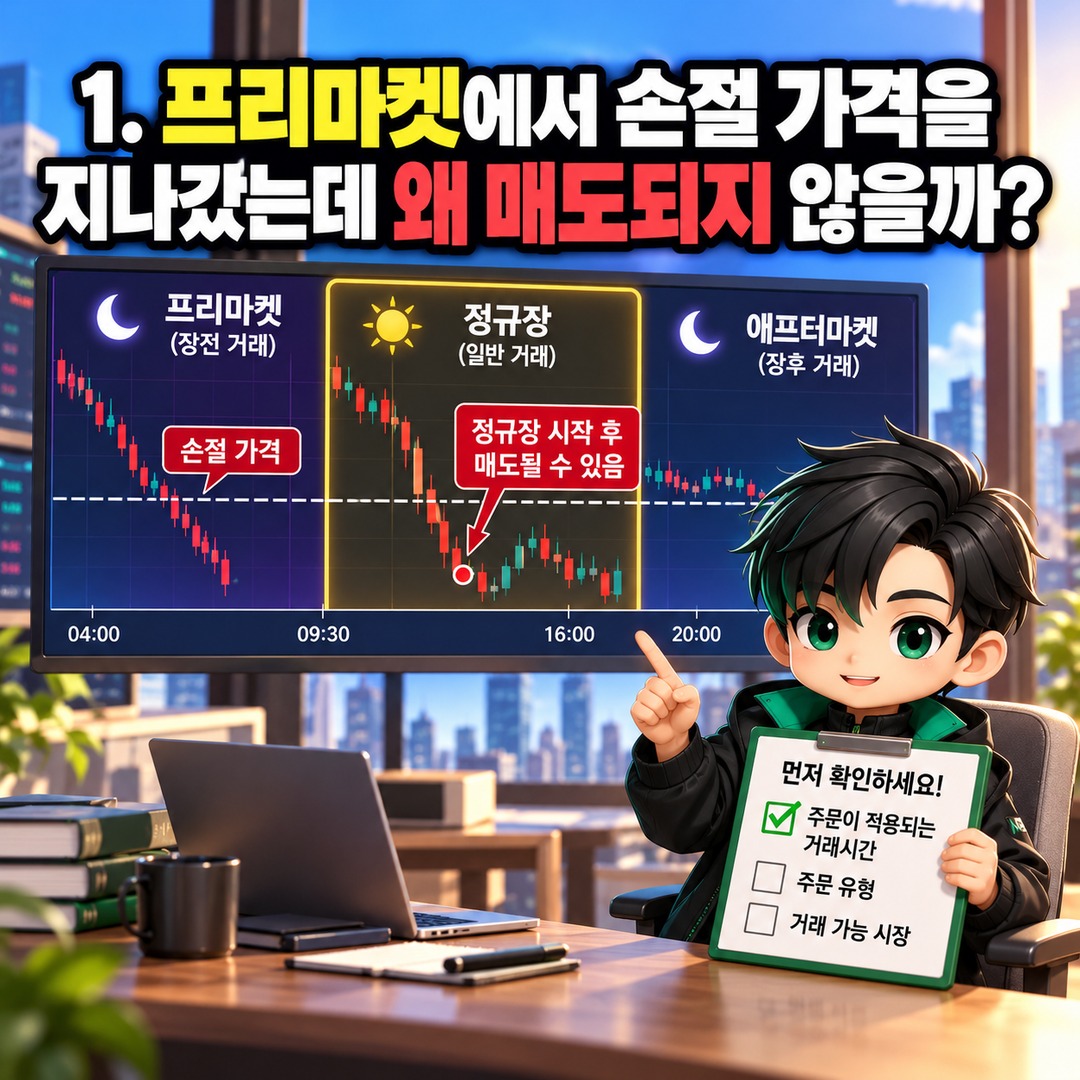
U.S. stocks can be traded during premarket and after-hours sessions as well as regular market hours, but not every order type works during every trading session.
For example, U.S. brokerage Charles Schwab states that standard stop orders are triggered only during regular trading hours, from 9:30 a.m. to 4 p.m. Eastern Time.
As a result, the following situation could occur.
Previous day's stock price: USD 100
Stop-loss price set: USD 95
Next day's premarket stock price: USD 90
Opening price of the regular session: USD 88
Even if the stock has already fallen below USD 95 during premarket trading, a stop order restricted to regular trading hours may not trigger during that session.
Once regular trading begins, the order may become active depending on the brokerage's trigger criteria. However, this does not mean the shares will be sold at USD 95.
A stop-market order converts into a market order once triggered, so the actual execution price depends on available bids and market liquidity at that time.
Reference: Charles Schwab's Guide to Stop Orders
2. How Much Does Your Loss Change If You Set a Stop at USD 95 but Sell at USD 88?
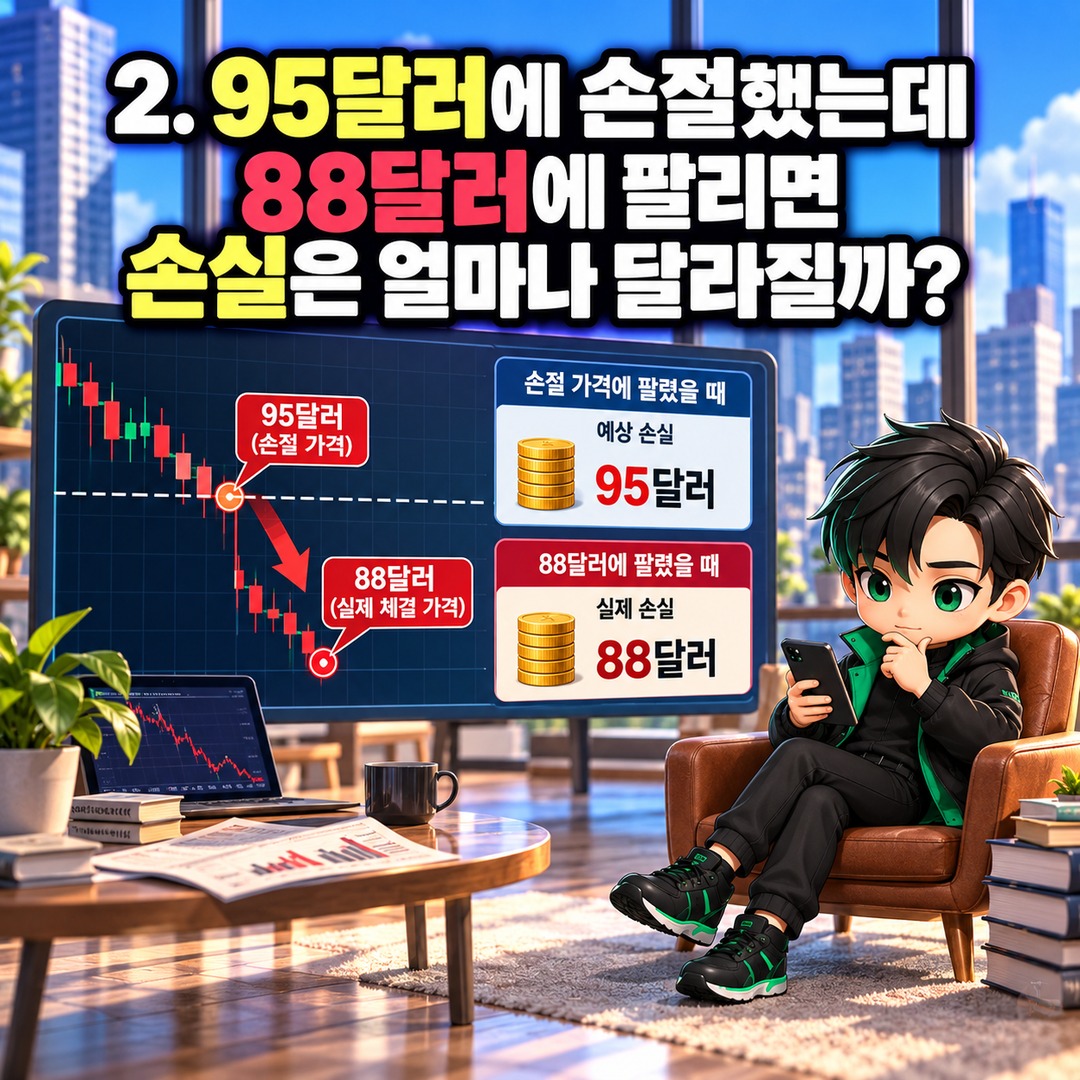
When the stop price and actual execution price differ, the resulting loss will also differ from the expected loss.
Suppose a hypothetical investor purchased 20 shares of a U.S. stock at USD 100 per share.
Hypothetical example · Excluding fees and exchange-rate fluctuations
Loss if executed at USD 95
USD 100
Loss if executed at USD 88
USD 240
Additional loss compared with expectations
USD 140
| Item | Loss Amount |
|---|---|
| Execution at USD 95 | 100 |
| Execution at USD 88 | 240 |
The calculations are as follows.
If executed at USD 95:
(USD 100 - USD 95) × 20 shares = USD 100 loss
If executed at USD 88:
(USD 100 - USD 88) × 20 shares = USD 240 loss
The difference between the two results is USD 140.
Execution at a less favorable price than the specified stop price is commonly known as slippage.
The U.S. SEC also explains that a stop price is a trigger price, not a guaranteed execution price.
In particular, when stock prices fluctuate sharply following earnings announcements or major company-related news, the gap between the stop price and the actual selling price can widen considerably.

3. When Does the Regular U.S. Stock Market Session Begin in Korean Time?
If a stop-loss order triggers only during regular trading hours, you need to know exactly when the regular U.S. market session begins.
The standard regular trading hours for the U.S. stock market are 9:30 a.m. to 4 p.m. Eastern Time.
Converted to Korea Standard Time, the schedule is as follows.
| Period | Regular Session Opens | Regular Session Closes |
|---|---|---|
| During U.S. daylight saving time | 10:30 p.m. | 5 a.m. the following day |
| During U.S. standard time | 11:30 p.m. | 6 a.m. the following day |
U.S. daylight saving time is in effect as of 2026-10-20. U.S. daylight saving time ends on 2026-11-01.
However, the actual operating hours of day-market, premarket, and after-hours trading services offered by Korean brokerages may vary depending on the brokerage and trading service.
The important point is that the hours during which stocks can be traded are not necessarily the same as the hours during which stop orders can trigger.
For example, Toss Securities provides separate information about its U.S. stock day-market, premarket, and after-hours trading schedules. However, a trading-hours notice alone does not establish that a particular stop-loss order will work during every session.
Reference: Toss Securities Overseas Stock Trading FAQ
4. 4 Other Reasons a Stop-Loss Order May Not Trigger
If the stock appears to have reached your stop price but the order did not activate, you should check the following conditions in addition to trading hours.
① The Order Has Expired
U.S. stock orders generally have time-in-force conditions such as DAY and GTC.
A DAY order is valid only for the designated trading day and is canceled at the specified time if it remains unfilled.
A GTC (Good-Til-Canceled) order remains active for a certain period until it is executed or canceled, but the maximum duration and applicable conditions vary by brokerage.
Therefore, you should check whether an order placed the previous day is still active the next day.
② The Displayed Price Differs From the Order's Trigger Criteria
According to the U.S. SEC, brokerages may use different criteria to trigger stop orders.
Some brokerages use the most recent transaction price, while others determine whether to trigger an order based on bid or ask quotations.
Just because a particular price appears on a chart does not mean stop-loss orders at every brokerage will trigger simultaneously.
③ A Trading Halt Prevents the Order From Executing
Trading in a U.S. stock may be temporarily suspended because of significant company disclosures or market conditions.
Since normal trade execution is not possible during a trading halt, a stop-loss order may not execute at the desired time.
Even after trading resumes, the reopening price may differ substantially from the original stop price.
④ The Stop-Limit Order's Limit Price Condition Is Not Met
A stop-limit order converts into a limit order once the stop price is reached.
For example, if the trigger price is USD 95 and the sell limit price is USD 94, the order can execute only if buyers are available at USD 94 or higher after it triggers.
If the stock immediately falls to USD 88 and there are no buy orders at USD 94 or higher, the sell order may remain unfilled.
Therefore, a stop-limit order can restrict the execution price, but it does not guarantee that the shares will be sold.
5. Which Order Conditions Should You Check If You're Worried About a Premarket Plunge?
Managing the risk of losses during premarket trading requires more than simply setting a stop price.
You should first check which order features your brokerage actually offers.
| Item to Check | What to Verify |
|---|---|
| Order type | Stop-market, stop-limit, or limit order |
| Applicable trading hours | Whether the order is restricted to regular hours or supports extended-hours trading |
| Time in force | DAY, GTC, etc. |
| Trigger criteria | Most recent transaction price, bid/ask quotations, etc. |
| Handling of unfilled orders | Whether the order remains active, is canceled, or carries over to the next session |
Some brokerages support extended-hours limit orders that allow investors to sell directly during premarket trading.
However, an extended-hours limit order works differently from a standard stop order. It is not the same as a feature that automatically triggers a stop-loss order when the price falls below a specified level.
In addition, extended-hours trading may have lower trading volume and wider bid-ask spreads than regular trading hours, making it difficult to sell at the desired price.
The U.S. SEC identifies insufficient liquidity, high volatility, and wide bid-ask spreads as major risks of extended-hours trading.
Reference: U.S. SEC Investor Guidance on Extended-Hours Trading
6. What Should You Check in Your Brokerage App If You've Already Placed a Stop-Loss Order?
If you currently have a stop-loss order in place, it is advisable to review your order history in the following sequence.
1. Check the order status: Determine whether the order is accepted, pending, triggered, unfilled, partially filled, or canceled.
2. Check the applicable trading hours: See whether the order applies only to regular trading hours or also supports extended-hours trading.
3. Check the trigger price and limit price: If it is a stop-limit order, verify both prices separately.
4. Check the time in force: Verify whether a DAY order has expired or the validity period of a GTC order has ended.
5. Check execution history: If only part of the order was filled, check the remaining quantity and order status.
The order names and menu layouts displayed in brokerage apps vary by provider.
In particular, even if an order is labeled 'Scheduled Sell,' 'Automatic Sell,' or 'Stop-Loss,' you should not assume that the actual trigger conditions and order submission methods are identical.
If the feature description does not clearly specify the applicable trading hours and order validity period, the most reliable approach is to contact the brokerage's customer service team and ask about the specific order conditions.
7. Frequently Asked Questions
Q. If a stock falls below my stop price during premarket trading, will it be sold as soon as the regular session opens?
Not necessarily.
If a stop order restricted to regular trading hours is still valid and meets the brokerage's trigger conditions, it may become active. However, whether the order actually executes and at what price depends on factors such as trading halts, order expiration, insufficient liquidity, and order type.
Q. If I select GTC, will my stop-loss automatically trigger during premarket trading?
No.
GTC primarily refers to how long an order remains active. It is separate from the conditions that determine whether an order can trigger during extended-hours trading.
Q. If I set my stop price below 5%, is my maximum loss also limited to 5%?
No.
A stop-market order may execute at a price below its trigger price. Conversely, a stop-limit order may remain unfilled because of its limit price condition, potentially resulting in even greater losses.
Conclusion: The Conditions Under Which an Order Actually Works Matter More Than the Stop Price
A stop-loss order for a U.S. stock does not guarantee that the shares will be sold at the specified price whenever the market reaches that level.
Especially when stock prices plunge during premarket or after-hours trading, you need to check the applicable trading hours, trigger criteria, time in force, and order type together.
Placing a Stop-Loss Order and Actually Being Able to Limit Your Losses Are Two Different Things.
Before placing an order, it is important to verify your brokerage's specific conditions and account for the possibility of sharp price movements and unfilled orders.
※ This article is provided for informational purposes to help readers understand market behavior. It is not an investment recommendation concerning any particular stock or asset. You are responsible for your own final investment decisions and their outcomes.